
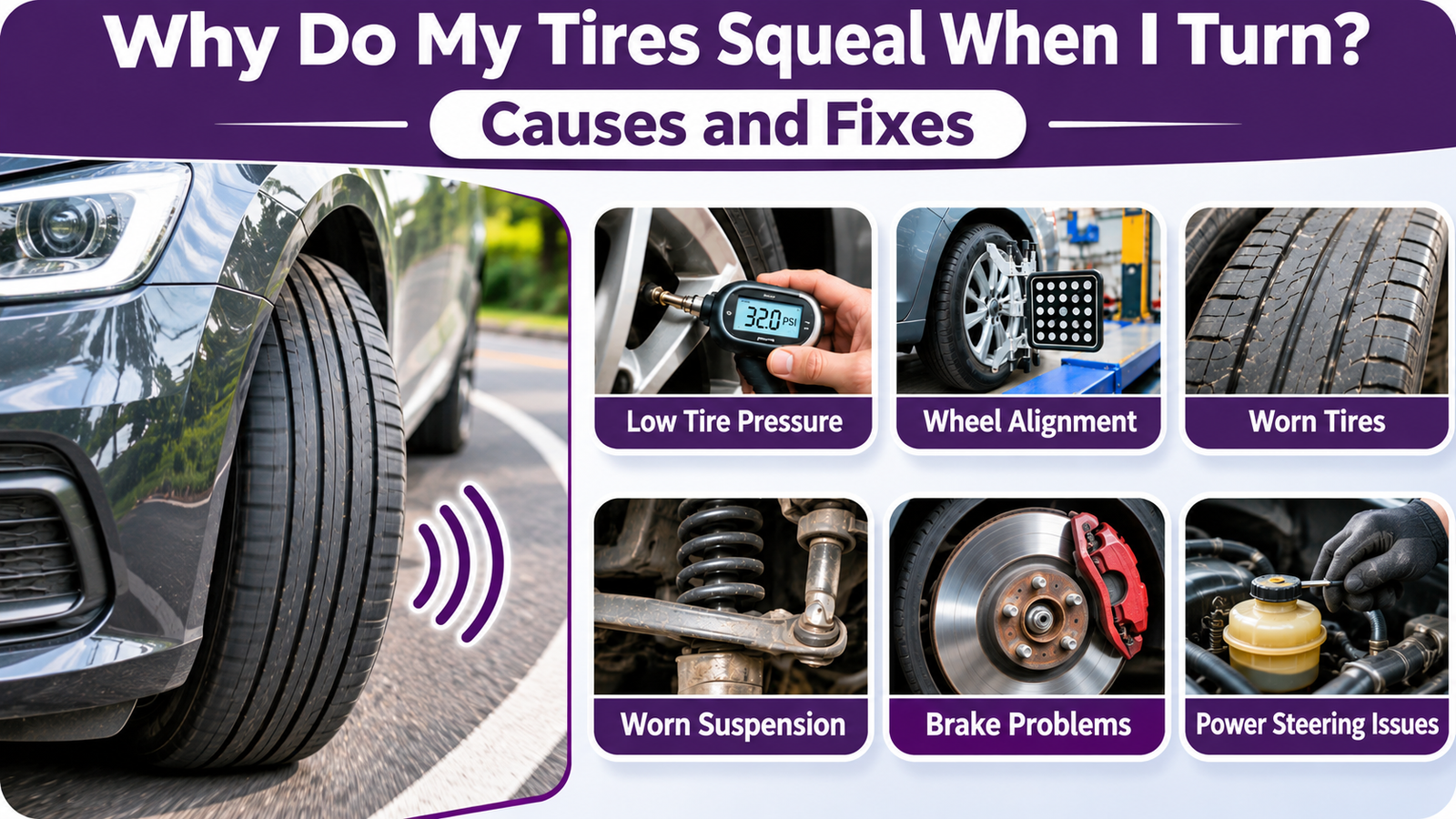
Hearing your tires squeal when turning can be frustrating, especially when driving slowly or making a sharp corner. Sometimes, the noise comes from normal tire friction against the road. However, it can also indicate low tire pressure, poor wheel alignment, worn suspension components, or steering problems. Understanding why your tires squeal when you turn helps you identify potential issues before they become expensive repairs. This guide explains the most common causes, why squealing happens at different speeds, and how to fix the problem safely.
Why Do Tires Squeal When Turning?
Tires squeal when turning because of friction between the rubber and the road surface. During a turn, the tires experience sideways forces while maintaining contact with the pavement. When the rubber briefly slips or scrubs against the road, it can produce a high-pitched squealing sound.
Occasional squealing during sharp turns may be harmless. However, frequent squealing during normal driving can indicate a mechanical or tire-related problem.
9 Common Causes of Tires Squealing When Turning
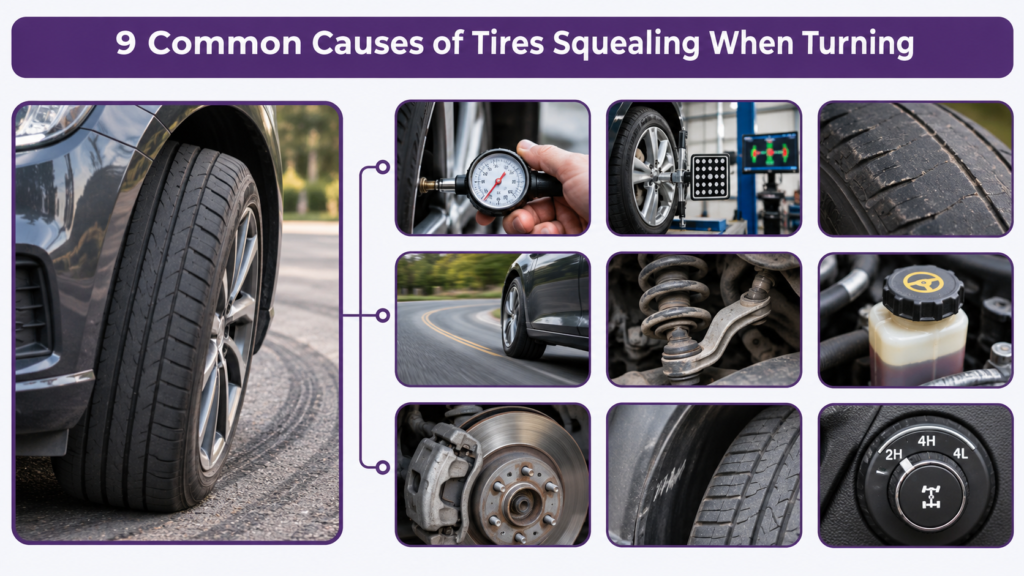
Several factors can make car tires squeal when turning, including tire condition, steering components, and driving habits. Identifying the actual cause requires observing when the noise occurs and whether other symptoms appear.
1. Low Tire Pressure
Underinflated tires are a common reason for excessive tire noise during cornering. When tire pressure drops, the sidewalls flex more than intended, changing how the rubber contacts the pavement.
This additional movement can contribute to tire scrub, particularly during tight turns.
Other symptoms include uneven tread wear, reduced steering response, and increased rolling resistance.
Check tire pressure when the tires are cold and inflate them according to the vehicle manufacturer’s recommendation on the driver’s door placard.
2. Incorrect Wheel Alignment
Poor wheel alignment can cause tires to scrub sideways rather than roll smoothly.
If the toe or camber angles are incorrect, the tires may experience additional friction during turns. This can create squealing noises and accelerate tread wear.
Common warning signs include a crooked steering wheel, uneven tire wear, or the vehicle pulling toward one side.
A professional wheel alignment can correct the angles and improve handling.
Michelin USA+1
3. Worn or Hardened Tires
Old tires can lose some of their original flexibility as the rubber ages.
Worn tread, hardened rubber, or uneven wear patterns can affect traction and produce unusual sounds during cornering.
Inspect your tires for cracking, exposed cords, unusual wear patterns, and insufficient tread depth.
If deterioration is significant, replacing the affected tires is safer than continuing to drive with them.
4. Sharp Turning or Excessive Speed
Turning too quickly creates greater sideways forces on the tires.
When these forces exceed the available grip, the rubber begins to slide against the road, producing the familiar squealing noise.
This commonly happens during sharp corners, sudden steering movements, and aggressive driving.
Reducing your speed before entering a corner and steering smoothly can prevent unnecessary tire squealing.
5. Worn Suspension Components
Your vehicle’s suspension helps maintain consistent tire contact with the road.
Worn ball joints, bushings, tie rods, or other suspension components can affect wheel positioning and produce squeaking noises during turns.
You might also notice loose steering, clunking, vibrations, or uneven tire wear.
These problems require professional inspection because damaged steering or suspension components can affect vehicle control.
6. Power Steering Problems
Sometimes, the squealing sound comes from the steering system rather than the tires.
Vehicles with hydraulic power steering may produce whining or squealing noises because of low steering fluid, a failing pump, or a slipping drive belt.
These sounds often become noticeable when turning the steering wheel at low speeds.
Check the steering system if your vehicle also feels unusually difficult to steer. Electric power steering systems do not use hydraulic power steering fluid.
Your AAA Network+1
7. Brake System Problems
Worn brake pads, sticking calipers, or a bent brake dust shield can produce high-pitched noises near the wheels.
These sounds can resemble tire squealing, particularly when the vehicle’s weight shifts during a turn.
If the noise also occurs while braking or driving straight, the brake system should be inspected.
Ignoring brake-related sounds can lead to additional damage and reduced braking performance.
8. Tire Rubbing Against Vehicle Components
Oversized tires, incorrect wheel offsets, or damaged wheel-well liners can cause rubbing during sharp turns.
This problem is particularly common on modified vehicles, lifted trucks, and SUVs fitted with larger tires.
Look for rubbing marks around the wheel wells and tire sidewalls.
A mechanic can determine whether clearance problems or damaged components are responsible.
9. Four-Wheel-Drive Drivetrain Binding
Some trucks and SUVs equipped with part-time four-wheel drive can experience tire scrubbing during tight turns on dry pavement.
When four-wheel drive locks the front and rear drivetrains together, the tires may be forced to slip slightly to compensate for different turning distances.
This can produce squealing, hopping, or binding sensations.
Follow the manufacturer’s instructions regarding four-wheel-drive modes. Part-time 4WD is generally unsuitable for dry pavement.
Why Do My Tires Squeal When I Turn Slowly?
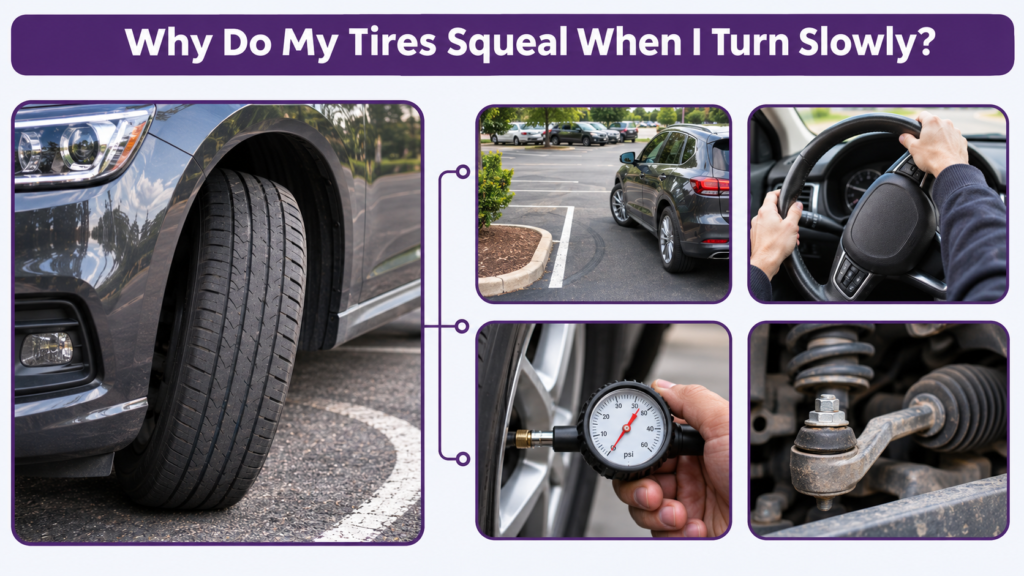
Tires squealing when turning slowly can be confusing because the vehicle is moving at a relatively low speed. However, slow-speed turning can still generate substantial tire scrub, especially when the steering wheel is turned sharply.
Some common explanations include:
- Parking lot turns: Tight steering angles cause the tires to scrub against smooth concrete or pavement.
- Dry steering: Turning the steering wheel while the car is stationary can create considerable friction.
- Low tire pressure: Underinflated tires may deform excessively during slow turns.
- Steering problems: Worn belts or hydraulic power steering components can produce noises when steering effort increases.
- Suspension issues: Dry or worn bushings and joints may squeak when the wheels change direction.
If your tires squeal when turning at low speed only on a particular surface, the pavement may be contributing to the noise.
However, repeated squealing on different surfaces deserves further investigation.
Why Do Front Tires Squeal When Turning?
Front tires handle steering forces, making them particularly susceptible to tire scrub during corners.
When front tires squeal, the problem may involve inflation pressure, wheel alignment, worn steering components, or excessive cornering forces.
If only one front tire makes noise, inspect that wheel for uneven wear, rubbing, or nearby mechanical problems.
Front Left Tire Squealing When Turning
A front left tire squealing when turning left or right may indicate a problem specific to that wheel.
Possible causes include incorrect tire pressure, brake contact, worn suspension components, or insufficient tire clearance.
The direction of the turn changes the load on each wheel, which may explain why the noise happens only in one direction.
Front Right Tire Squealing When Turning
When the right front tire squeals during a turn, check its pressure and tread condition first.
If these appear normal, possible causes include steering joints, brake hardware, or a tire rubbing against the wheel well.
A professional inspection can identify the actual source before unnecessary parts are replaced.
Why Do Rear Tires Squeal When Turning?
Although front tires handle steering, rear tires also experience sideways forces during cornering.
Rear tire squealing can result from poor tire grip, incorrect inflation, suspension problems, or alignment issues.
Rear-wheel-drive vehicles may also experience tire squeal when accelerating aggressively through a corner.
If a rear tire consistently squeals during gentle turns, inspect the tread condition, rear alignment, and suspension components.
Why Do New Tires Squeal When Turning?
New tires can sometimes produce different sounds compared with the tires they replaced.
Differences in rubber compound, tread pattern, tire dimensions, and road surface can influence tire noise.
However, new tires should not automatically squeal during every normal turn.
If the noise began immediately after installation, consider these possibilities:
- Incorrect inflation pressure after installation.
- Wheel alignment problems that existed before replacement.
- A tire model with different traction or noise characteristics.
- Incorrect tire size or insufficient wheel-well clearance.
- Mechanical problems that became noticeable after installation.
Have the installation checked if the sound persists, particularly when accompanied by rubbing, vibration, or handling changes.
How to Stop Tires From Squealing When Turning
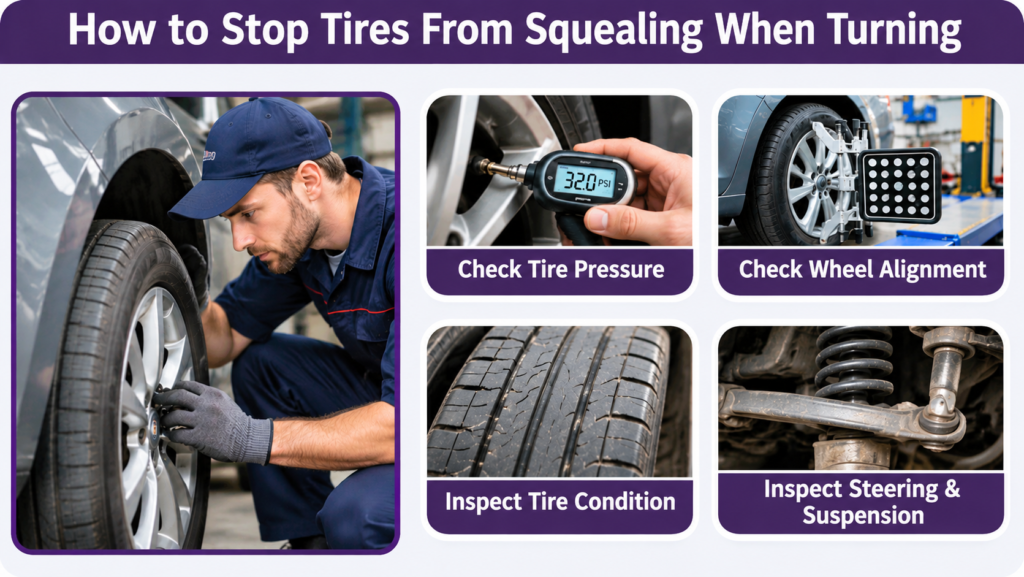
Stopping tire squealing depends on identifying the underlying cause. Simple maintenance may resolve some problems, while others require professional repairs.
Follow these steps to reduce unwanted tire noise:
1. Check tire pressure. Use a reliable pressure gauge and follow your vehicle’s recommended cold inflation pressure.
2. Inspect tire condition. Look for uneven tread wear, cracks, bulges, or visible damage.
3. Check wheel alignment. Schedule an alignment inspection if your vehicle pulls sideways or wears tires unevenly.
4. Reduce cornering speed. Slow down before sharp turns and avoid sudden steering movements.
5. Inspect steering components. Have unusual steering noises, stiffness, or looseness investigated.
6. Check the brakes. Ask a technician to examine brake pads, calipers, and dust shields if the squealing sounds metallic.
7. Inspect tire clearance. Make sure tires do not rub against wheel wells, suspension components, or body panels.
Regular tire maintenance and smooth driving habits help reduce noise and prevent premature wear.
Is It Normal for Tires to Squeal When Turning?
Occasional tire squealing can be normal, particularly during sharp turns on smooth pavement.
However, frequent or unusually loud squealing during ordinary driving should not be ignored.
Pay attention to these warning signs:
- Squealing occurs during gentle turns at low speeds.
- The steering wheel feels unusually stiff or loose.
- One tire makes significantly more noise than the others.
- The vehicle pulls sideways or develops vibrations.
- Tires show uneven wear, cracking, or other visible damage.
- Squealing is accompanied by grinding, clunking, or burning smells.
If the vehicle becomes difficult to steer, a tire is visibly damaged, or braking performance changes, stop driving when safe and arrange professional assistance.
FAQs
1. Why Do My Tires Squeal When I Turn Right?
Tires may squeal when turning right because of uneven tire pressure, wheel alignment problems, worn suspension components, or tire rubbing. Turning right changes the load on individual wheels, potentially revealing an existing problem. Inspect the tires and steering system if the noise occurs repeatedly.
2. Why Do My Tires Squeal When I Turn Left?
Squealing during left turns may result from excessive tire scrub, damaged steering components, brake contact, or incorrect wheel alignment. If the noise comes from only one wheel, a localized problem may be responsible. A tire and suspension inspection can help identify the cause.
3. Why Do My Tires Squeal When Turning in a Parking Lot?
Parking lots often have smooth concrete surfaces that can produce noticeable tire squealing during tight turns. The sound may be harmless tire scrub. However, persistent squealing accompanied by steering stiffness, rubbing, or vibrations may indicate an underlying mechanical problem requiring inspection.
4. Why Do My Truck Tires Squeal When I Turn?
Truck tires may squeal because of tire pressure problems, alignment issues, large tire sizes, or aggressive cornering. On trucks with part-time four-wheel drive, drivetrain binding during tight turns on dry pavement can also cause tire scrubbing and unusual noises.
5. Can Bad Wheel Alignment Cause Tires to Squeal?
Yes. Incorrect wheel alignment can force tires to scrub sideways against the pavement, creating additional friction and potentially squealing during turns. Misalignment can also cause uneven tread wear and steering problems. Correcting alignment helps improve tire contact, handling, and overall tire life.