
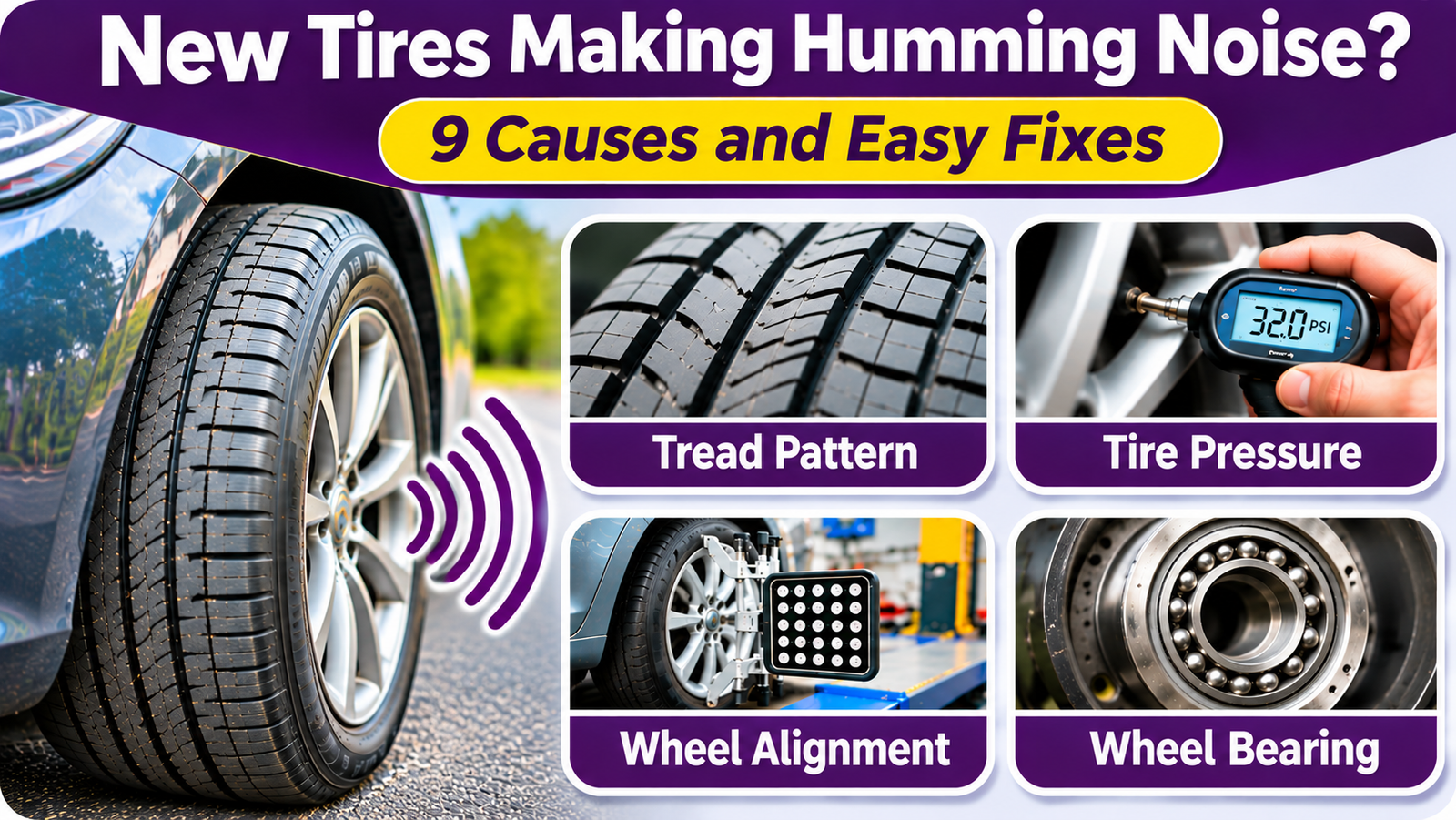
New tires making a humming noise can be surprising, especially when you expect a quieter and smoother ride after replacing your old tires. A slight humming sound while driving is sometimes normal because of tire tread design, road friction, or different rubber compounds. However, loud or continuous humming may indicate incorrect tire pressure, wheel alignment problems, uneven wear, or failing wheel bearings. Understanding why your tires are making a humming noise helps you identify whether the sound is harmless or requires attention. This guide explains common causes, symptoms, and practical solutions.
Why Are My Tires Making a Humming Noise?
Tires produce humming sounds when their tread patterns interact with the road surface. As the wheels rotate, tread blocks repeatedly contact the pavement, creating vibrations and air movement that generate noise.
Some tires naturally produce more humming than others, depending on their construction, tread design, and driving conditions.
A consistent, gentle hum may be normal. However, a loud humming noise that increases with speed or changes during turns could indicate an underlying problem.
9 Common Causes of Tires Making a Humming Noise
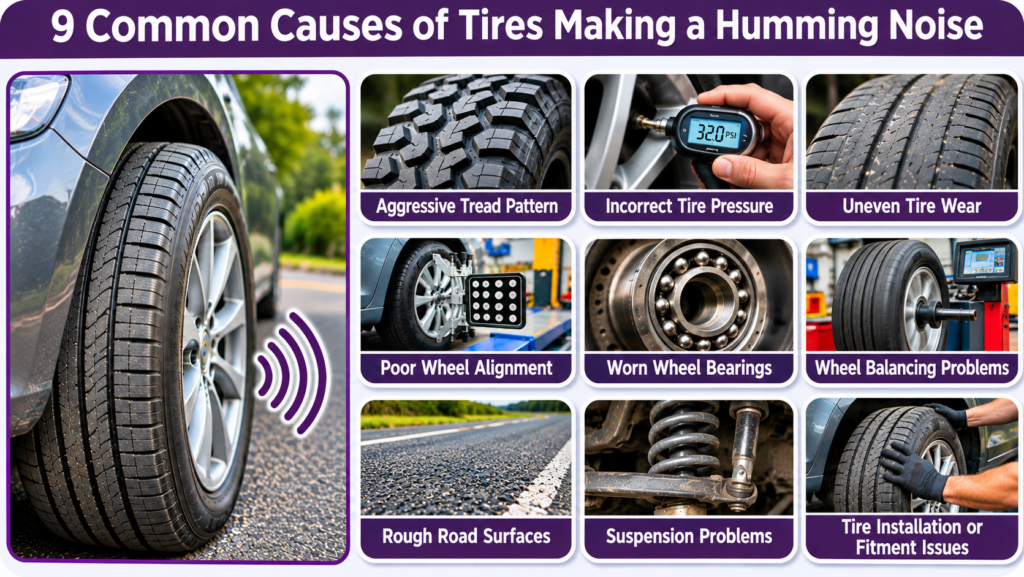
Several tire-related and mechanical problems can produce humming sounds while driving. Some are harmless characteristics of the tires, while others require maintenance or repairs. Identifying the correct cause depends on the sound’s intensity, driving speed, tire condition, and whether the noise started after installing new tires.
1. Aggressive Tire Tread Pattern
Tread design is one of the most common reasons tires make humming noises.
Tires with large tread blocks, deep grooves, or aggressive patterns can produce more road noise than tires designed for comfortable highway driving.
All-terrain, mud-terrain, and certain winter tires are particularly noticeable.
As the tread repeatedly contacts the pavement, vibrations and moving air can create a continuous humming or roaring sound.
Tire Rack
2. Incorrect Tire Pressure
Improper tire inflation can change how the tire contacts the road.
Underinflated tires flex excessively, while overinflated tires can alter the contact patch and ride characteristics.
Both conditions may contribute to increased road noise and irregular tire wear.
Check tire pressure when the tires are cold and follow the vehicle manufacturer’s recommended pressure rather than the maximum pressure printed on the tire sidewall.
3. Uneven Tire Wear
Uneven tread wear can cause a rhythmic humming or droning sound while driving.
Common wear patterns include:
- Cupping: Scalloped depressions around the tire tread.
- Feathering: Tread blocks worn into uneven, angled edges.
- Heel-and-toe wear: Different wear levels across individual tread blocks.
- Shoulder wear: Excessive wear along the inner or outer tread edges.
These patterns change how the tire contacts the road and may become progressively louder.
4. Poor Wheel Alignment
Incorrect wheel alignment can force tires to travel at slightly improper angles.
Over time, this creates uneven tread wear, which can lead to humming noises.
Additional symptoms may include a crooked steering wheel, uneven tire wear, or the vehicle pulling toward one side.
Professional wheel alignment can help prevent additional wear, although it cannot reverse existing tread damage.
5. Worn Wheel Bearings
A failing wheel bearing can produce humming, growling, or rumbling noises that resemble tire noise.
The sound often becomes louder as vehicle speed increases and may change when turning.
Wheel bearing problems can also cause vibration or looseness.
Because a damaged bearing can affect vehicle safety, persistent humming from one wheel should be inspected promptly.
moogparts.com
6. Wheel Balancing Problems
Improperly balanced wheels can create vibrations at certain speeds.
Although wheel imbalance usually causes shaking rather than a pure humming sound, the vibration may amplify tire noise inside the vehicle.
If humming is accompanied by steering wheel vibration or noticeable shaking after tire installation, ask a technician to check wheel balance.
7. Rough Road Surfaces
Road texture significantly affects tire noise.
Coarse asphalt, grooved concrete, and uneven pavement can generate more noticeable humming than smooth roads.
If the humming disappears when moving onto a different road surface, tire-to-pavement interaction may be responsible.
This is usually normal when the tires are otherwise in good condition.
8. Suspension Problems
Worn shock absorbers, struts, or suspension bushings can allow irregular tire movement and contribute to uneven tread wear.
As these wear patterns develop, humming may become noticeable during normal driving.
Look for excessive bouncing, unusual vibrations, or irregular tread surfaces.
A mechanic can inspect the suspension and determine whether damaged components need replacement.
9. Tire Installation or Fitment Issues
Humming that starts immediately after tire replacement may be associated with installation or fitment.
Incorrect tire size, unsuitable tread type, improper inflation, or a directional tire mounted in the wrong rolling direction can affect noise and performance.
If the noise is unusually loud, return to the tire installer and request an inspection.
Why Are Brand New Tires Making a Humming Noise?
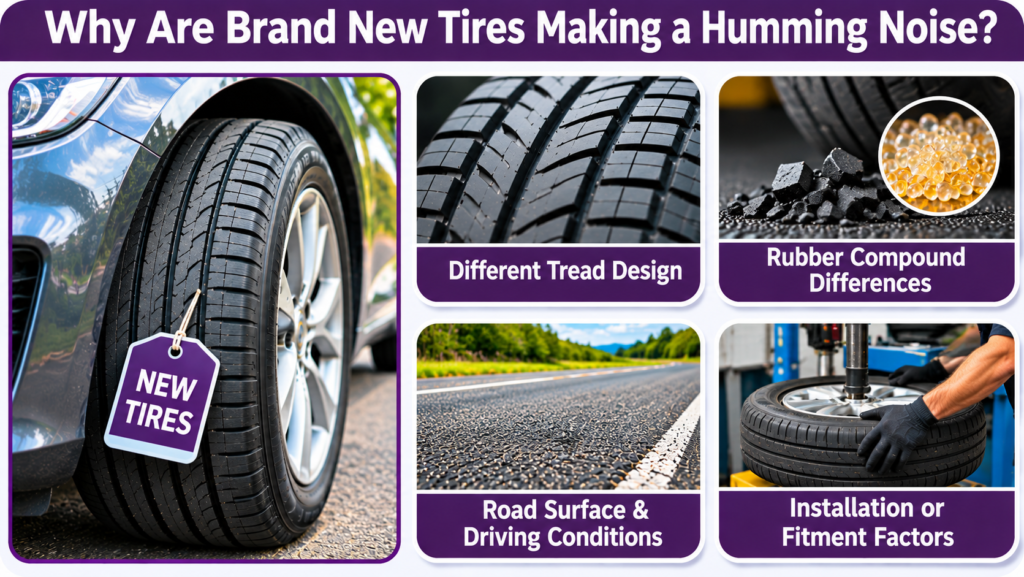
Brand new tires may produce more noticeable road noise because their tread pattern, rubber compound, or construction differs from the previous tires.
Even when both sets are the same size, their sound characteristics can vary considerably.
Different Tread Design
A tire with larger tread blocks or deeper grooves may produce a stronger hum than a touring tire designed for quiet driving.
This does not necessarily indicate a defect.
However, if only one new tire makes an unusual sound, it should be checked for damage, improper mounting, or other problems.
New Tire Noise Versus Mechanical Noise
New tire noise generally changes with road texture and speed.
Mechanical humming caused by wheel bearings or other rotating components may persist across different road surfaces.
New tires can make existing mechanical sounds more noticeable, so avoid assuming that every noise after replacement comes from the tires.
Why Do Front or Rear Tires Make a Humming Noise?
Humming noises can originate from either axle. Their location sometimes provides clues about the underlying problem, although sound can travel through the vehicle’s body and make the exact source difficult to identify.
Front Tires Making Humming Noise
Front tire humming can result from tread noise, uneven wear, wheel alignment problems, or worn wheel bearings.
If the noise changes while turning, a wheel bearing or another wheel-related component may need inspection.
A humming sound from the front right tire does not automatically mean that tire is defective.
Rear Tires Making Humming Noise
Rear tire humming can occur because of irregular tread wear, incorrect inflation, or rear wheel bearing problems.
On some vehicles, differential noise can also resemble humming from the rear tires.
If your rear tires are making a humming noise that becomes louder at highway speeds, professional diagnosis can help distinguish tire noise from drivetrain problems.
Why Do Tires Make Humming Noises While Driving?
Humming noises are often more noticeable at higher speeds because the tires rotate faster and interact with the pavement more frequently.
A steady hum that changes significantly between smooth and rough pavement often indicates ordinary road noise.
However, loud humming that continues regardless of the road surface may indicate another issue.
Pay attention to the following symptoms:
- Humming becomes louder as vehicle speed increases.
- Noise changes when steering left or right.
- Vibrations appear through the steering wheel or seats.
- The sound seems concentrated near one wheel.
- Humming begins immediately after tire replacement or rotation.
These observations can help a technician identify the source more accurately.
Why Are Tires Making Humming Noise After Rotation?
Tires making humming noise after rotation may have uneven wear patterns developed in their previous positions.
Moving those tires to another axle can change how their tread interacts with the pavement, making the noise more noticeable.
Minor changes in road noise after rotation can occur, but unusually loud humming should not be dismissed.
Check the tire pressures, rotation pattern, and wheel installation. If vibrations also appear, have the wheels and suspension inspected.
Regular rotation helps promote even tire wear and reduces the likelihood of developing persistent tread noise.
How to Stop Tires From Making a Humming Noise
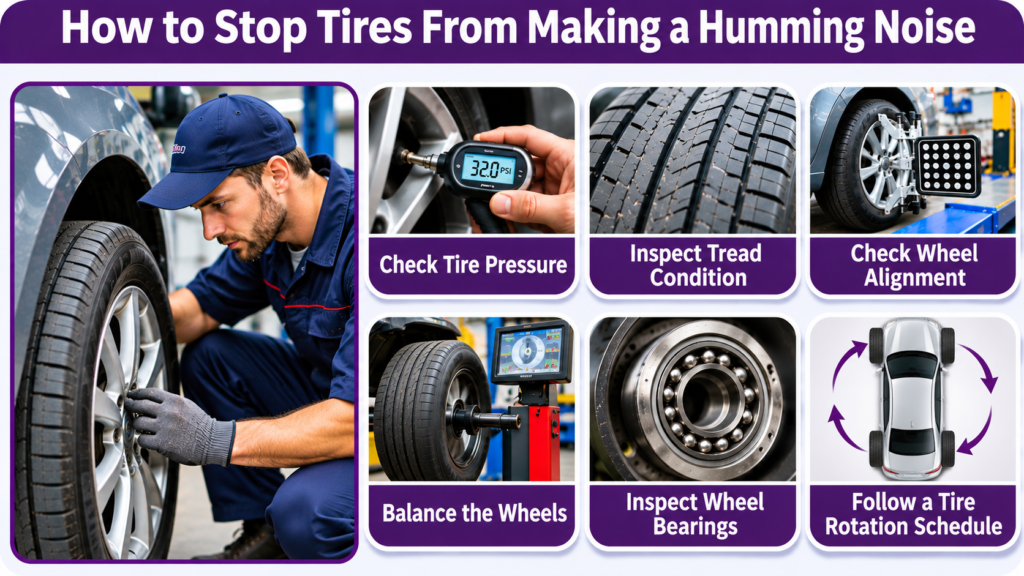
Reducing tire humming requires identifying the reason behind the sound. Normal tread noise may not disappear completely, but many maintenance-related problems can be corrected.
Follow these steps:
1. Check tire pressure: Inflate all tires according to the vehicle manufacturer’s cold-pressure recommendations.
2. Inspect tread condition: Examine each tire for cupping, feathering, cracks, bulges, or other damage.
3. Check wheel alignment: Correct improper alignment to prevent further uneven wear.
4. Balance the wheels: Have wheel balance inspected if humming is accompanied by vibration.
5. Inspect wheel bearings: Ask a mechanic to investigate humming that changes during turns or becomes progressively louder.
6. Follow tire rotation intervals: Rotate tires according to the vehicle and tire manufacturer’s guidance.
7. Check tire installation: Confirm the correct size, mounting direction, and proper fitment.
8. Consider quieter tires: When replacement is necessary, select a tire designed for low road noise and your driving conditions.
Tire Humming Noise vs. Wheel Bearing Noise
Tire humming and wheel bearing noise can sound remarkably similar. However, certain characteristics may help distinguish them.
| Feature | Tire Humming Noise | Wheel Bearing Noise |
| Sound | Humming or road roar | Humming, growling, or rumbling |
| Road surface | Often changes noticeably | May remain relatively consistent |
| Vehicle speed | Generally becomes louder | Often becomes louder |
| Turning | May change with tire loading | Frequently changes with turning load |
| Common cause | Tread design or irregular wear | Worn or damaged bearing |
| Solution | Tire maintenance or replacement | Bearing inspection and repair |
These differences are clues rather than definitive tests. A professional inspection may be necessary to identify the cause accurately.
Is It Safe to Drive With Tires Making a Humming Noise?
A mild, consistent humming sound caused by normal tread contact is generally not dangerous.
However, loud or rapidly increasing humming may indicate a problem that affects handling or vehicle safety.
Do not ignore humming accompanied by strong vibrations, grinding noises, steering looseness, or visible tire damage.
If the vehicle becomes difficult to control or a tire appears damaged, stop somewhere safe and arrange assistance rather than continuing to drive.
FAQs
1. Is It Normal for New Tires to Make a Humming Noise?
Yes, some new tires naturally produce humming sounds because of their tread design and rubber construction. Deep-tread or aggressive tires are often louder than touring tires. However, unusually loud humming, especially when accompanied by vibration or pulling, should be inspected rather than considered normal.
2. Why Are My Winter Tires Making a Humming Noise?
Winter tires often have deeper grooves, numerous tread edges, and rubber compounds designed for cold conditions. These characteristics can create more road noise on dry pavement. Some humming is normal, but excessive noise may indicate uneven wear, incorrect inflation, or another tire-related problem.
3. Why Is Only One Tire Making a Humming Noise?
Humming from one wheel area may indicate uneven tread wear, tire damage, a worn wheel bearing, or another mechanical issue. Sound can travel through the vehicle, making the source difficult to pinpoint. Have the affected wheel and surrounding components inspected if the noise persists.
4. Can a Spare Tire Make a Humming Noise?
Yes, a spare tire can produce a different humming sound because its tread design, dimensions, or construction may differ from the regular tires. Temporary spare tires also have specific speed and distance restrictions. Follow the manufacturer’s limits and replace the temporary spare promptly.
5. Will Humming Noise From New Tires Go Away?
Some minor changes in tire noise may occur as new tires accumulate mileage, but a naturally noisy tread pattern may continue producing a noticeable hum. If the sound becomes louder, persists unusually, or includes vibration, have the tires, wheel balance, alignment, and bearings inspected.