
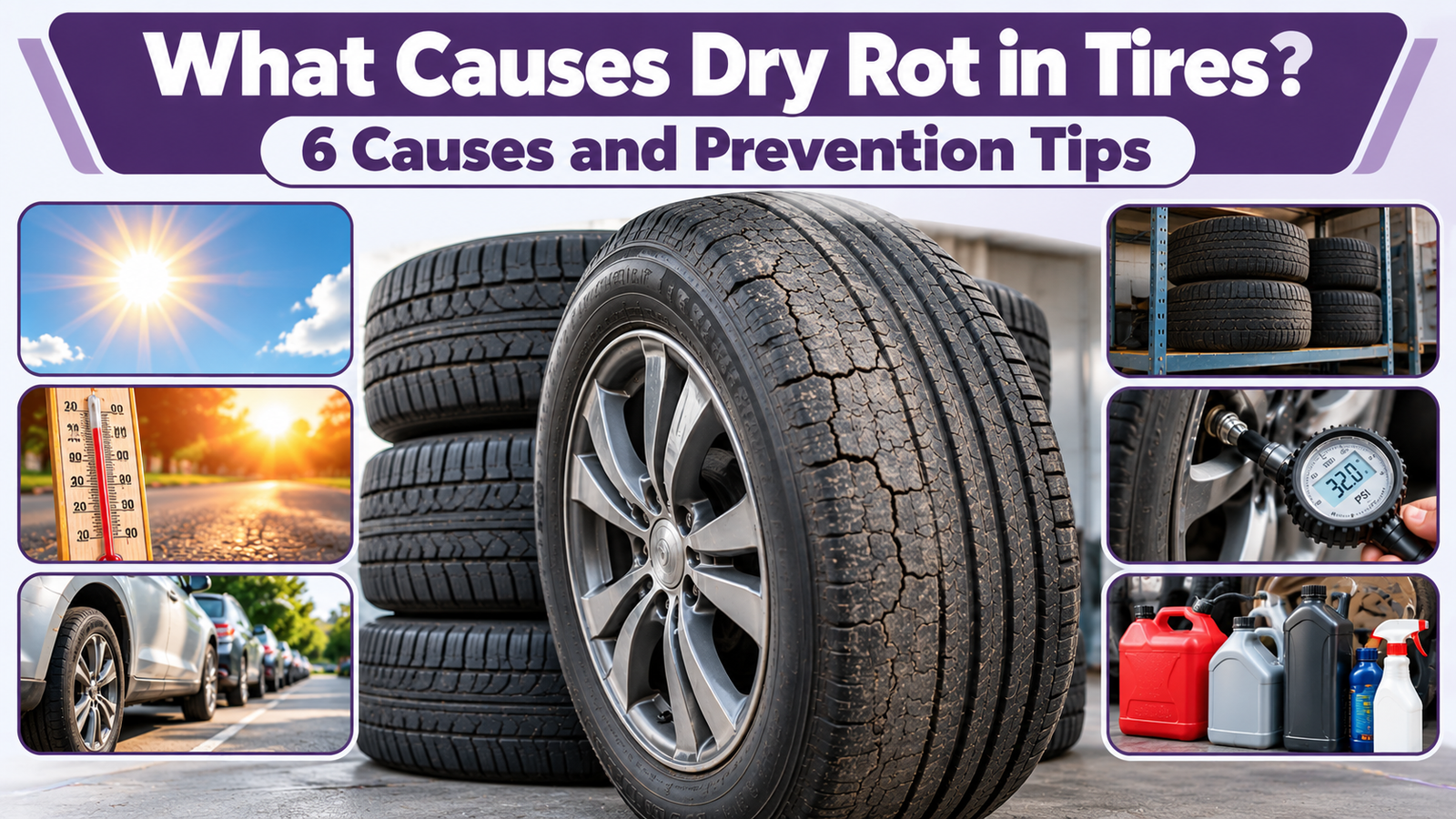
Tire dry rot is a common problem that can affect vehicle safety, performance, and tire lifespan. But what causes dry rot in tires? The primary causes include prolonged sunlight exposure, excessive heat, ozone, natural rubber aging, and improper storage. Even tires with plenty of tread remaining can develop cracks and deterioration over time. Understanding these causes helps drivers protect their tires and recognize early warning signs. This guide explains why tires dry rot, how different conditions accelerate damage, and the most effective ways to prevent premature tire deterioration.
What Causes Dry Rot in Tires?
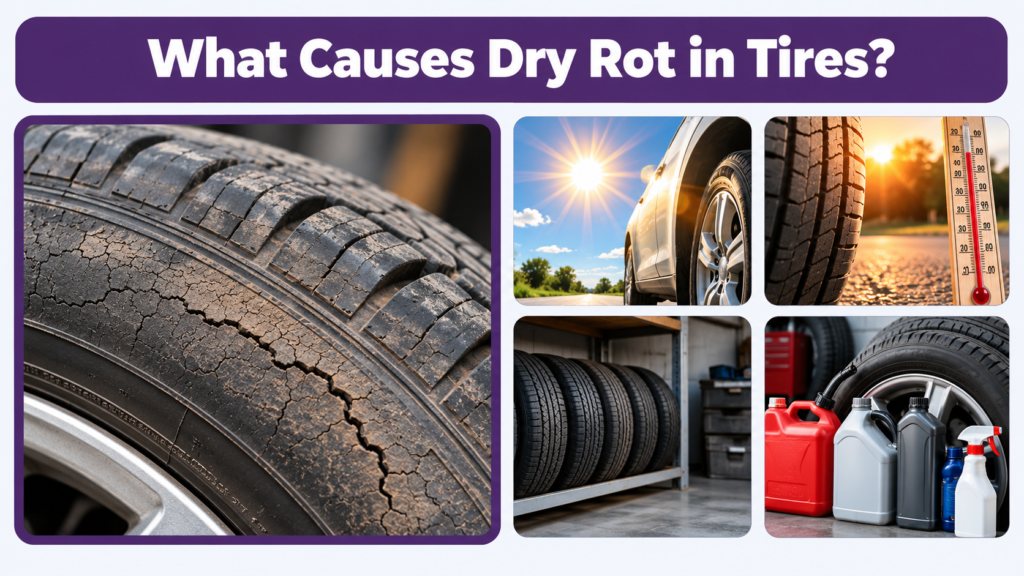
Tire dry rot occurs when rubber compounds gradually deteriorate due to aging and environmental exposure. This process can cause surface cracking, reduced flexibility, and potentially more serious tire damage. Unlike wood rot, tire dry rot does not involve fungal decay. Several factors contribute to the condition, and exposure to multiple damaging conditions can accelerate deterioration.
1. Prolonged Sunlight and UV Exposure
Ultraviolet radiation from sunlight contributes to rubber aging. Tires parked outdoors for extended periods experience continuous exposure to sunlight and environmental conditions.
Over time, these conditions can weaken exposed rubber surfaces and contribute to cracking. Sidewalls are especially vulnerable because they remain exposed while the vehicle is parked.
Vehicles stored outside without shade or tire covers may experience faster deterioration than those protected from direct sunlight.
2. Extreme Heat and Temperature Changes
High temperatures accelerate the chemical reactions responsible for tire aging. Tires exposed to intense summer heat, hot pavement, or poorly ventilated storage areas may deteriorate faster.
Repeated temperature fluctuations can also place additional stress on tire materials.
Although tires are designed to handle normal operating temperatures, prolonged exposure to excessive heat increases the risk of premature aging.
3. Ozone and Oxygen Exposure
Ozone is an important contributor to tire rubber deterioration. It reacts with certain rubber compounds and can produce small surface cracks.
Electric motors, generators, and some electrical equipment can produce ozone, making nearby storage locations unsuitable.
Oxygen also contributes to gradual rubber aging through oxidation. Manufacturers add protective compounds to tires, but these cannot prevent deterioration indefinitely.
4. Long Periods Without Driving
Tires continue aging even when vehicles remain parked. Infrequently used cars, trailers, recreational vehicles, and spare tires may develop deterioration despite having substantial tread depth.
Extended storage increases the time tires spend exposed to their surroundings.
Protective tire compounds help resist environmental damage, but limited use does not eliminate the effects of heat, ozone, and oxidation.
5. Improper Tire Maintenance
Incorrect tire pressure and neglected maintenance can contribute to premature tire damage.
Underinflated tires generate excessive heat and experience increased flexing while driving. This can damage internal components and shorten tire life.
Although underinflation is not the primary chemical cause of dry rot, it can worsen tire deterioration and create additional safety problems.
6. Chemical Exposure and Aging
Certain chemicals can damage tire rubber, particularly when exposure is prolonged.
Common harmful substances include:
- Petroleum-based solvents and fuel
- Oil and grease contamination
- Harsh cleaning chemicals
- Incompatible tire treatment products
- Industrial chemicals used near storage areas
Natural aging also changes rubber properties over time, even when tires receive appropriate maintenance.
Does Tire Shine Cause Dry Rot?
Tire shine and dressing products are frequently blamed for dry rot, but not every product causes rubber deterioration. Their effects depend on the ingredients, application method, and compatibility with tire materials. Tire dressings are cosmetic treatments rather than repairs, and no tire shine product can restore rubber already damaged by aging or cracking.
Can Tire Dressing Damage Rubber?
Some incompatible chemical formulations may contribute to rubber deterioration or surface damage. Products containing aggressive solvents or petroleum-based ingredients deserve particular caution.
However, properly formulated tire-care products do not automatically cause dry rot.
Drivers should use products approved for automotive tires and follow the tire manufacturer’s cleaning recommendations.
Does Tire Foam Cause Dry Rot?
Tire foam does not necessarily cause dry rot. The risk depends on the product formulation rather than whether the cleaner comes as foam, gel, or spray.
Avoid products that contain chemicals unsuitable for tire rubber.
For routine maintenance, mild soap, water, and a soft brush are generally sufficient. Tire manufacturers do not require cosmetic dressings to preserve tires during storage.
Does Parking on Concrete Cause Tires to Dry Rot?
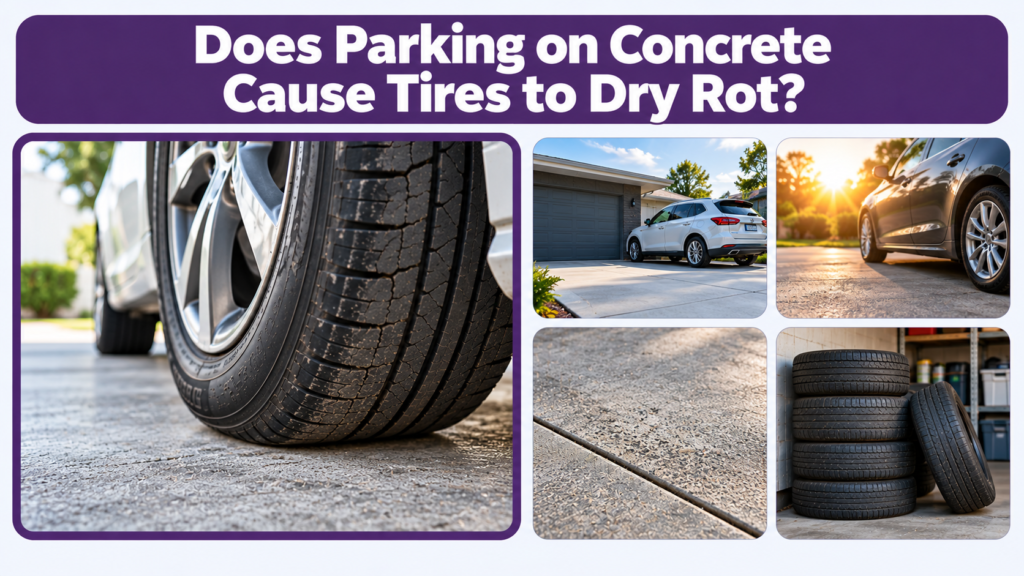
Parking on concrete does not directly cause tire dry rot. Modern tire compounds are designed to withstand contact with ordinary paved surfaces. However, environmental conditions around the parking location can influence deterioration. Excessive heat, sunlight, moisture, and long storage periods may contribute to tire aging regardless of the surface beneath the vehicle.
Why Do Tires Crack While Parked?
A vehicle parked for months may develop tire problems because of surrounding conditions rather than direct contact with concrete.
Outdoor parking exposes tires to sunlight, temperature changes, and ozone. Prolonged stationary loading can also produce temporary flat spots.
For long-term storage, choose a clean, level, well-drained area and follow the vehicle manufacturer’s storage recommendations.
Can Dry-Rotted Tires Cause Shaking or Vibration?
Dry-rotted tires can be associated with shaking or vibration, particularly if deterioration is accompanied by structural damage, deformation, or separation. However, surface cracking alone does not necessarily produce noticeable vibrations. Drivers should never assume dry rot is the only explanation for shaking because several unrelated tire and suspension problems can cause similar symptoms.
Can Dry Rot Cause Steering Wheel Vibration?
Severe tire damage may produce vibrations that become more noticeable at certain driving speeds.
Possible contributing problems include tire deformation, internal separation, wheel imbalance, or uneven tread wear.
If the steering wheel begins shaking unexpectedly, reduce speed safely and arrange a professional inspection. Continuing to drive with a potentially damaged tire increases the risk of failure.
Can Dry Rot Cause Tires to Lose Air?
Yes. Severe cracking or deterioration can eventually compromise a tire’s ability to retain air.
However, pressure loss may also result from punctures, leaking valves, damaged wheels, or bead-sealing problems.
Tires that repeatedly lose pressure require professional inspection. Visible sidewall cracking combined with air loss is especially concerning.
What Are the Signs of Tire Dry Rot?
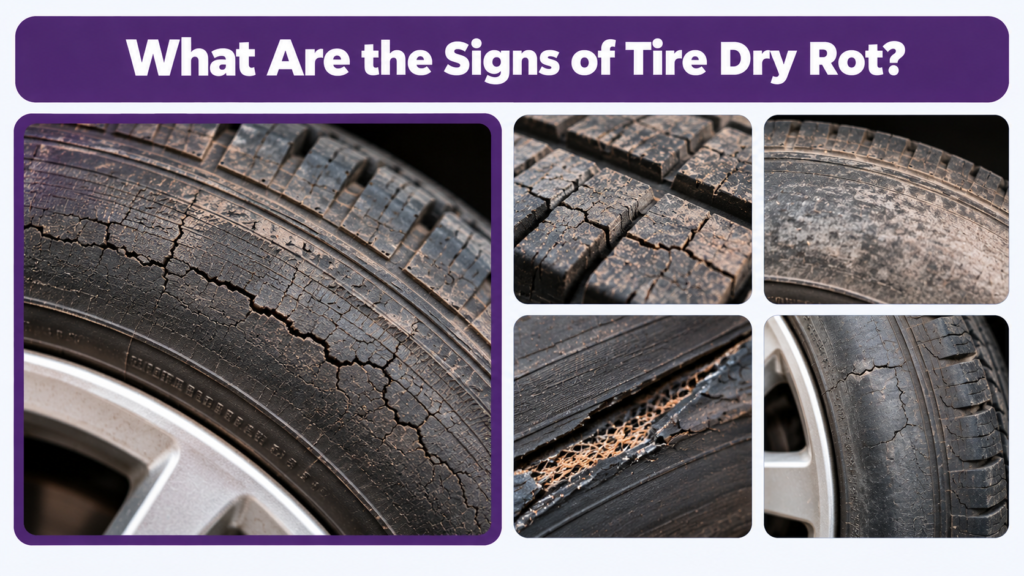
Recognizing tire dry rot early helps drivers avoid continued use of potentially unsafe tires. Damage often becomes visible along the sidewalls or between tread blocks. However, tire aging may also affect internal components without obvious external warning signs. Inspecting tires regularly is important even when tread depth appears sufficient.
Common warning signs include:
- Sidewall cracks: Small lines or deeper splits appear along exposed rubber.
- Tread cracking: Cracks develop between tread blocks or around the tire shoulders.
- Surface discoloration: Rubber may appear faded, although fading alone does not prove dry rot.
- Reduced air retention: Damaged tires may struggle to maintain recommended pressure.
- Visible structural damage: Bulges, exposed cords, or deep splits indicate serious problems.
Any suspicious cracking should be evaluated by a qualified tire technician.
How to Prevent Dry Rot in Tires
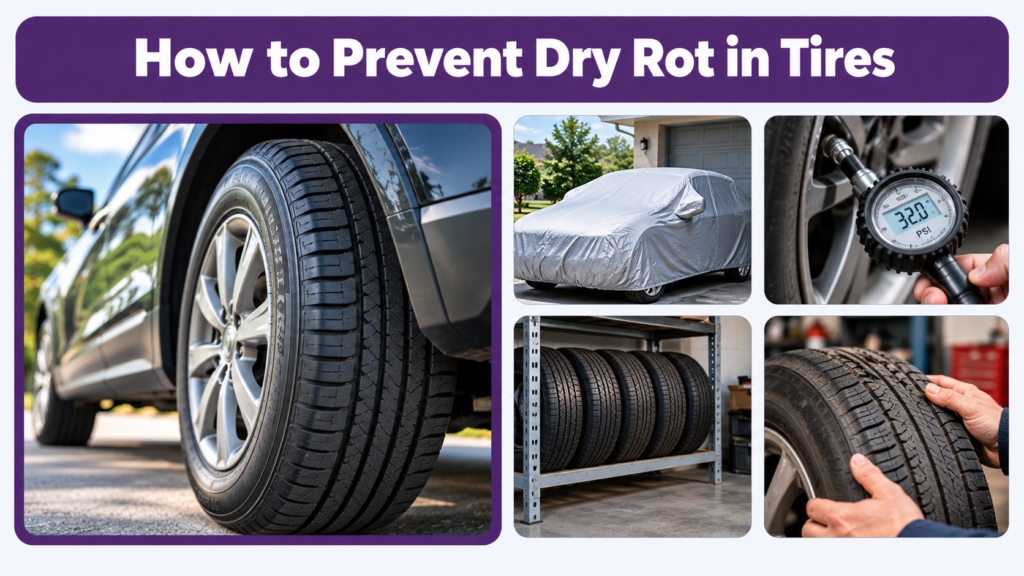
Although tire aging cannot be stopped, appropriate maintenance and storage practices help slow unnecessary deterioration. Protecting tires from excessive sunlight, heat, ozone, and chemical exposure is particularly important for vehicles that remain unused for extended periods. Routine inspections also help identify problems before they become severe.
Best Ways to Prevent Tire Dry Rot
- Park in shaded areas: Use covered parking to reduce direct sunlight and heat exposure.
- Maintain correct tire pressure: Check cold inflation pressure monthly using the vehicle manufacturer’s specifications.
- Store tires properly: Keep unused tires in a cool, dry, dark, and moderately ventilated location.
- Avoid chemical contamination: Prevent contact with solvents, fuel, grease, and harsh cleaning products.
- Keep tires away from ozone sources: Avoid storage near ozone-generating electrical equipment.
- Inspect tires regularly: Look for cracks, abnormal wear, bulges, and other physical damage.
- Follow vehicle maintenance recommendations: Perform necessary tire rotations, balancing, and alignment checks.
These precautions can extend useful tire life, but they cannot repair existing cracks or reverse rubber aging.
When Should Dry-Rotted Tires Be Replaced?
Dry-rotted tires should be replaced when deterioration compromises their safety. Deep cracking, exposed reinforcement, bulges, or signs of structural separation require immediate attention. Even minor visible cracks deserve professional evaluation. Tire age is another important consideration because rubber can deteriorate internally without obvious surface damage.
How to Check Tire Age and Replacement Needs
Look for the DOT Tire Identification Number on the sidewall. Its final four digits identify the manufacturing week and year.
For example, 2422 indicates a tire manufactured during the 24th week of 2022.
Some manufacturers recommend tire replacement after six to ten years regardless of tread depth. Follow the recommendations for your specific vehicle and tires, and replace damaged tires sooner when necessary.
FAQs
1. What Causes Dry Rot on Tire Sidewalls?
Tire sidewall dry rot commonly results from sunlight, ozone, heat, and natural rubber aging. Sidewalls are particularly exposed to environmental conditions while vehicles are parked. Cracking may develop gradually, especially when tires experience prolonged outdoor storage or excessive temperatures.
2. Can Dry Rot Cause a Flat Tire?
Yes. Severe dry rot can produce cracks that compromise tire integrity and potentially cause air leakage or failure. However, not every cracked tire loses pressure immediately. Any tire showing significant cracking should receive professional evaluation rather than continued use.
3. What Causes Motorcycle Tires to Dry Rot?
Motorcycle tires experience dry rot from the same aging factors affecting car tires, including ozone, sunlight, heat, and improper storage. Infrequently used motorcycles may experience deterioration despite low mileage. Regular inspections are particularly important because tire condition directly affects handling and stability.
4. Can New Tires Develop Dry Rot?
Yes. Relatively new tires can develop premature cracking under harsh environmental conditions or because of material-related problems. However, early cracks should not automatically be considered normal dry rot. A tire professional should inspect unexpected deterioration and determine whether replacement or warranty evaluation is appropriate.
5. Can You Reverse Dry Rot in Tires?
No. Existing dry rot cannot be reversed using tire shine, conditioners, oils, or other surface treatments. These products cannot restore damaged rubber compounds or weakened internal components. Tires with significant cracking or structural deterioration require replacement to maintain safe driving conditions.