
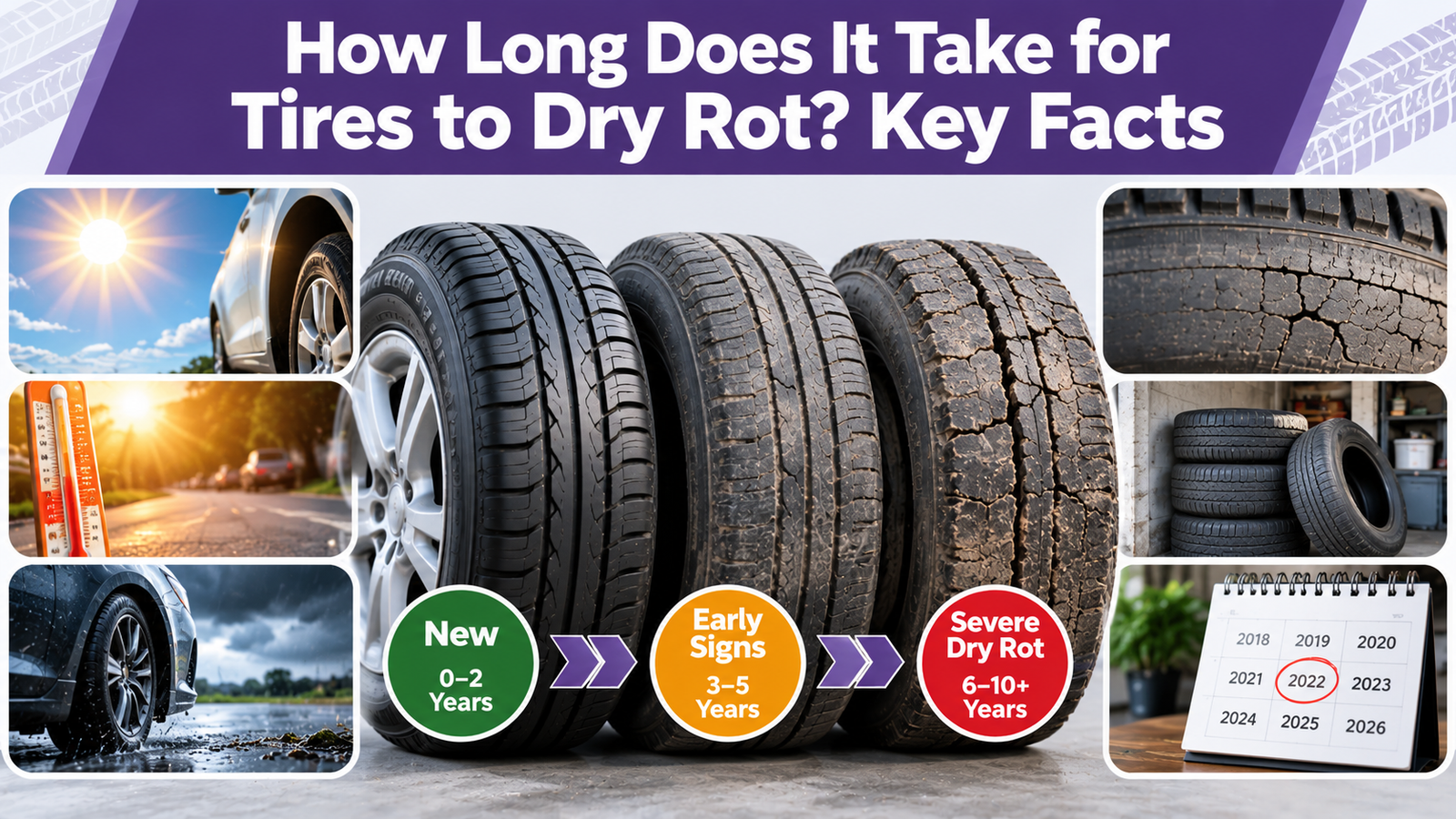
Tire dry rot is a common problem that can affect both frequently driven vehicles and cars sitting unused for months. But how long does it take for tires to dry rot? The answer depends on tire age, weather conditions, storage, and maintenance. Some tires develop visible cracks relatively early, while others remain in good condition for years. Understanding how dry rot develops helps you recognize warning signs, prevent premature deterioration, and determine when replacement becomes necessary. This guide explains tire dry rot timelines, causes, driving risks, and prevention methods.
How Long Does It Take for Tires to Dry Rot?
Tires can begin deteriorating within months under particularly harsh storage conditions, although visible dry rot often develops gradually over several years. There is no universal timeline because rubber ages differently depending on temperature, sunlight, ozone exposure, and usage. A tire’s manufacturing date provides useful information, but age alone cannot establish whether cracking has developed or how severe it is.
How Long Before Tires Start Dry Rotting?
Tires begin aging after manufacture, even when they are not used. However, the chemical aging process does not necessarily produce visible cracks immediately.
After five years of use, manufacturers such as Michelin recommend annual professional inspections. Some vehicle manufacturers recommend replacement around six years, while several tire manufacturers recommend replacement no later than ten years after manufacture.
These are inspection and replacement guidelines, not guaranteed dry rot timelines.
Can Tires Dry Rot in Less Than Two Years?
Yes. Tires exposed to intense sunlight, excessive heat, ozone, or unsuitable storage conditions can develop premature surface cracking.
Repeated exposure to harsh environmental conditions accelerates rubber deterioration. However, visible cracks on relatively new tires should not automatically be attributed to normal aging. Manufacturing defects, chemical exposure, and other damage may also contribute.
What Causes Tires to Dry Rot?
Tire dry rot refers to the cracking and deterioration associated with rubber aging and environmental exposure. Unlike wood rot, it is not caused by fungal decomposition. Tires contain protective compounds that help resist ozone and weathering, but their protection is not unlimited. Several environmental and maintenance factors can accelerate deterioration, especially when they occur together.
Most Common Causes of Tire Dry Rot
- UV exposure: Prolonged sunlight can accelerate deterioration of exposed rubber surfaces.
- High temperatures: Excessive heat speeds up chemical aging and can reduce rubber durability.
- Ozone exposure: Ozone reacts with rubber and may produce characteristic surface cracks.
- Improper storage: Leaving tires outdoors or near heat-producing equipment increases aging risks.
- Incorrect tire pressure: Underinflation can cause excessive flexing and heat buildup during use.
- Chemical contamination: Petroleum products, solvents, and certain cleaners can damage tire compounds.
How Long Can Tires Sit Before Dry Rot?
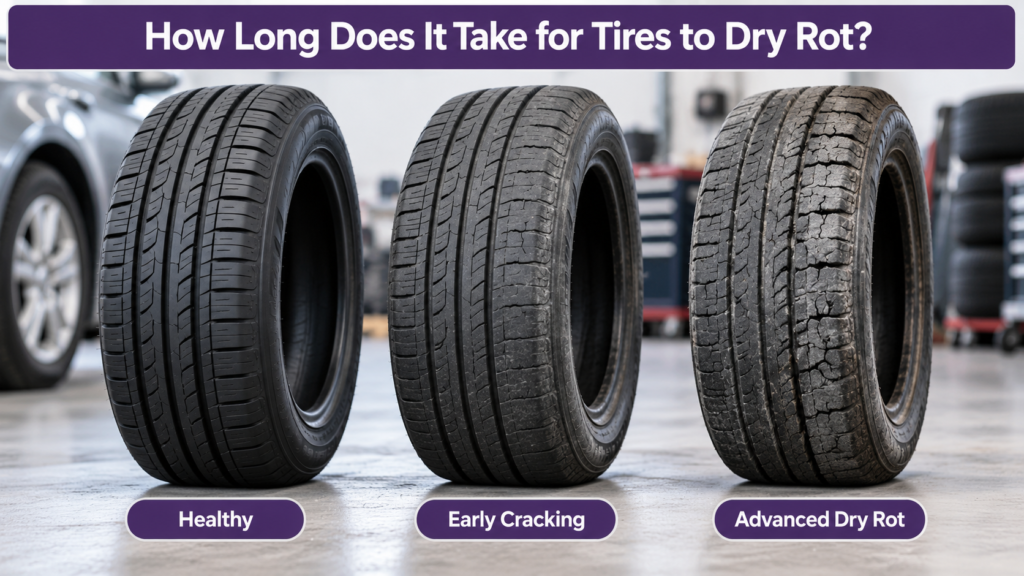
Tires can sit unused for months or years without developing visible dry rot if stored properly. However, inactivity does not stop rubber aging. Storage conditions are especially important for spare tires, seasonal tire sets, recreational vehicles, and cars that remain parked for extended periods. A tire with substantial tread can still become unsafe because of age-related deterioration.
Tires Sitting Outdoors
Tires parked outdoors experience sunlight, ozone, changing temperatures, and weather exposure.
Surface dryness and cracking may appear after prolonged exposure, potentially within months under unfavorable conditions. However, there is no reliable number of months that guarantees dry rot.
Vehicles parked for extended periods should receive regular tire inspections, even when they are rarely driven.
Tires Stored Indoors
Properly stored tires can retain their properties for several years. A cool, dry, dark location helps slow deterioration.
Keep tires away from sunlight, electric motors that may generate ozone, heating equipment, and petroleum-based chemicals. Inspect them before returning them to service, regardless of how long they have been stored.
What Are the Signs of Dry Rot on Tires?
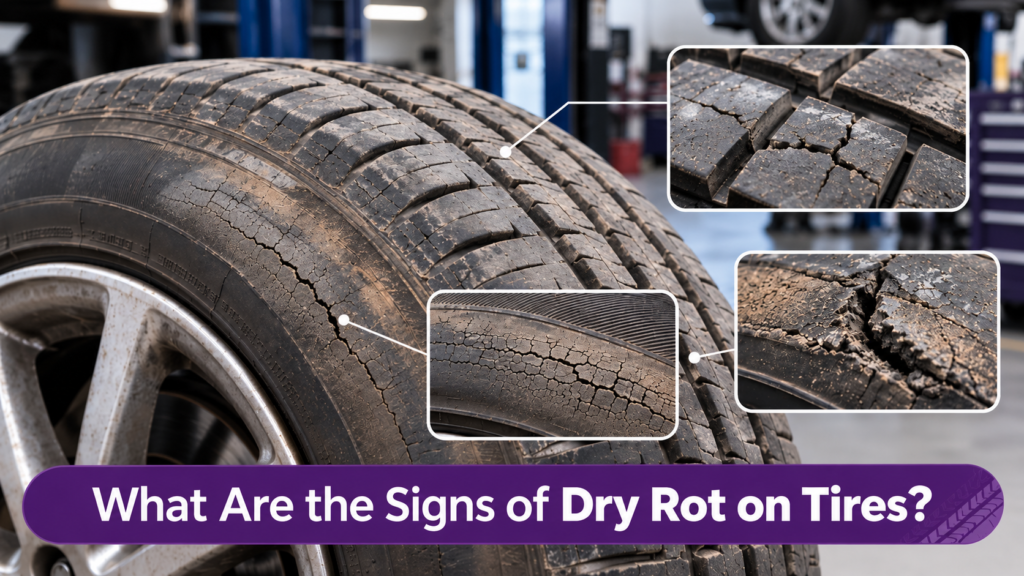
Visible cracks are among the most recognizable warning signs of tire dry rot. They commonly appear along the sidewalls, between tread blocks, or around the shoulder areas. However, internal tire aging may occur without obvious external damage. Regular inspections are important because a tire that looks acceptable from a distance may still require professional evaluation.
Common Warning Signs
- Sidewall cracking: Thin lines or deeper cracks appear along the tire’s sidewall.
- Tread-area cracking: Small splits develop between tread blocks or within rubber grooves.
- Discolored rubber: Exposed surfaces may become faded, although discoloration alone does not prove dry rot.
- Visible structural damage: Deep splits, exposed cords, or abnormal bulges indicate serious tire problems.
- Air pressure problems: Repeated unexplained pressure loss may indicate damage requiring inspection.
Small surface cracks do not reveal the full extent of deterioration. Have any suspicious cracking inspected by a qualified tire technician.
How Long Can You Drive on Dry-Rotted Tires?
There is no guaranteed safe driving distance or time for dry-rotted tires. Their remaining serviceability depends on the condition of the rubber, location and severity of cracks, tire construction, and possible internal damage.
A tire might continue operating despite visible cracking, but this does not establish that it is safe for highway driving or extended trips.
Is It Safe to Drive With Minor Dry Rot?
Very fine surface cracking may differ from deep structural damage, but drivers cannot reliably determine safety from appearance alone.
If you notice dry rot, arrange a professional inspection before continuing normal use. Avoid assuming that a tire is safe simply because it maintains air pressure or has sufficient tread.
Can Dry-Rotted Tires Cause Blowouts?
Yes. Advanced deterioration can weaken tire components and increase the possibility of tire failure.
Deep sidewall cracks, bulges, exposed cords, and unusual vibration are serious warning signs. Do not continue driving on visibly damaged tires. Arrange safe transport or professional roadside assistance when necessary.
How to Prevent Tires From Dry Rotting
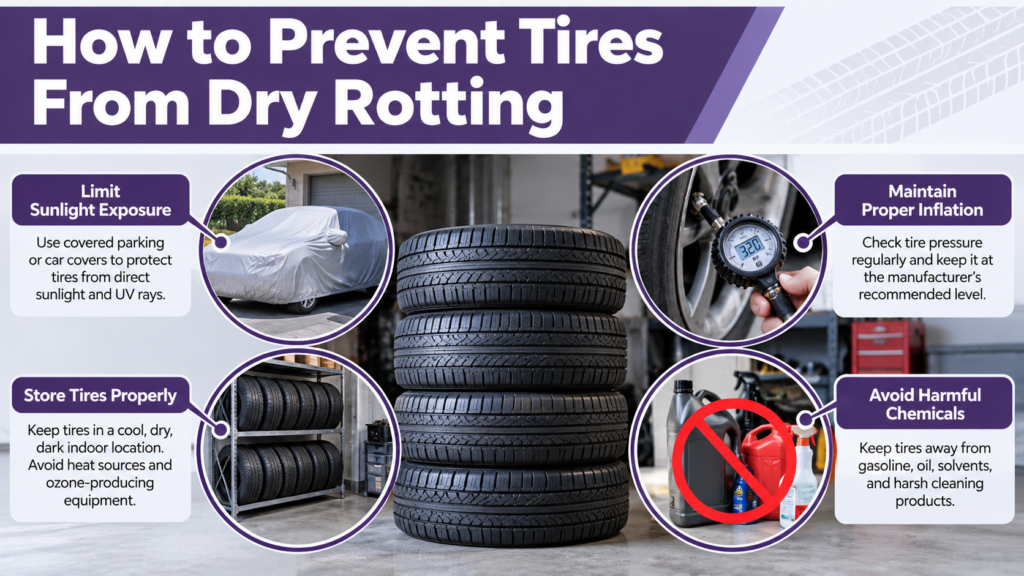
Although tire aging cannot be stopped completely, proper care can reduce unnecessary deterioration. The most effective approach involves protecting rubber from excessive environmental exposure while keeping tires correctly inflated and regularly inspected. Storage practices are particularly important for vehicles used seasonally, such as trailers, motorcycles, recreational vehicles, and collector cars.
Effective Tire Dry Rot Prevention Tips
- Limit direct sunlight: Use covered parking or suitable tire covers when vehicles remain parked for extended periods.
- Maintain proper inflation: Check cold tire pressure monthly and follow the vehicle manufacturer’s recommendations.
- Store tires indoors: Choose a cool, clean, dry, dark storage area whenever possible.
- Avoid harmful chemicals: Keep tires away from solvents, gasoline, oil, and incompatible cleaning products.
- Inspect tires regularly: Examine the sidewalls, tread grooves, and shoulders for cracking or abnormal wear.
- Follow maintenance schedules: Rotate tires when appropriate and maintain correct alignment and vehicle loading.
These precautions can help preserve tire condition but cannot reverse existing dry rot.
When Should You Replace Tires With Dry Rot?
Tires showing significant cracking, exposed reinforcement, bulges, or other structural damage should be removed from service. Even without obvious deterioration, aging tires deserve increased attention. Replacement decisions should consider tire condition, manufacturer recommendations, vehicle requirements, and the tire’s manufacturing date rather than tread depth alone.
How to Check Tire Age
Locate the DOT Tire Identification Number on the sidewall. The final four digits identify the manufacturing week and year.
For example, 2522 means the tire was manufactured during the 25th week of 2022.
Michelin recommends annual professional inspections after five years of use and replacement by ten years after manufacture. Follow an earlier replacement limit if specified by your vehicle or tire manufacturer.
Do Car, Motorcycle, and Trailer Tires Age Differently?
Car, motorcycle, and trailer tires all experience rubber aging, but their operating conditions differ.
Trailer tires and spare tires may age while receiving little tread wear because they are used infrequently. Motorcycle tires also require careful attention because their condition directly affects stability and handling.
Always follow tire-specific guidance rather than assuming every tire has the same usable lifespan.
FAQs
1. How Long Do Tires Last Before They Dry Rot?
There is no exact age when all tires develop dry rot. Environmental exposure and maintenance significantly influence deterioration. Tires should receive closer attention as they age, including professional inspections after five years of service and replacement according to manufacturer recommendations.
2. How Long Can You Store Tires Without Dry Rotting?
Properly stored tires may remain serviceable for several years without visible dry rot. Keep them indoors in a cool, dry, dark location away from ozone sources and chemicals. Inspect their age and condition before installation because storage does not prevent aging completely.
3. How Long Will Dry-Rotted Tires Last?
There is no dependable remaining lifespan for dry-rotted tires. Minor surface cracking and severe structural deterioration present different risks, and hidden damage may exist. A professional inspection is necessary to determine whether continued use is appropriate or immediate replacement is required.
4. Can You Fix Dry Rot on Tires?
No. Existing tire dry rot cannot be permanently reversed with tire dressings, conditioners, or cleaning products. Cosmetic treatments do not restore weakened rubber. Tires with significant cracking or structural damage must be replaced rather than repaired for continued road use.
5. How Long Does It Take Trailer Tires to Dry Rot?
Trailer tires do not follow a fixed dry rot timeline. Extended outdoor parking, heat, sunlight, and infrequent use can accelerate aging. Inspect trailer tires regularly, check their manufacturing dates, and replace them when damage or applicable manufacturer age limits require it.