
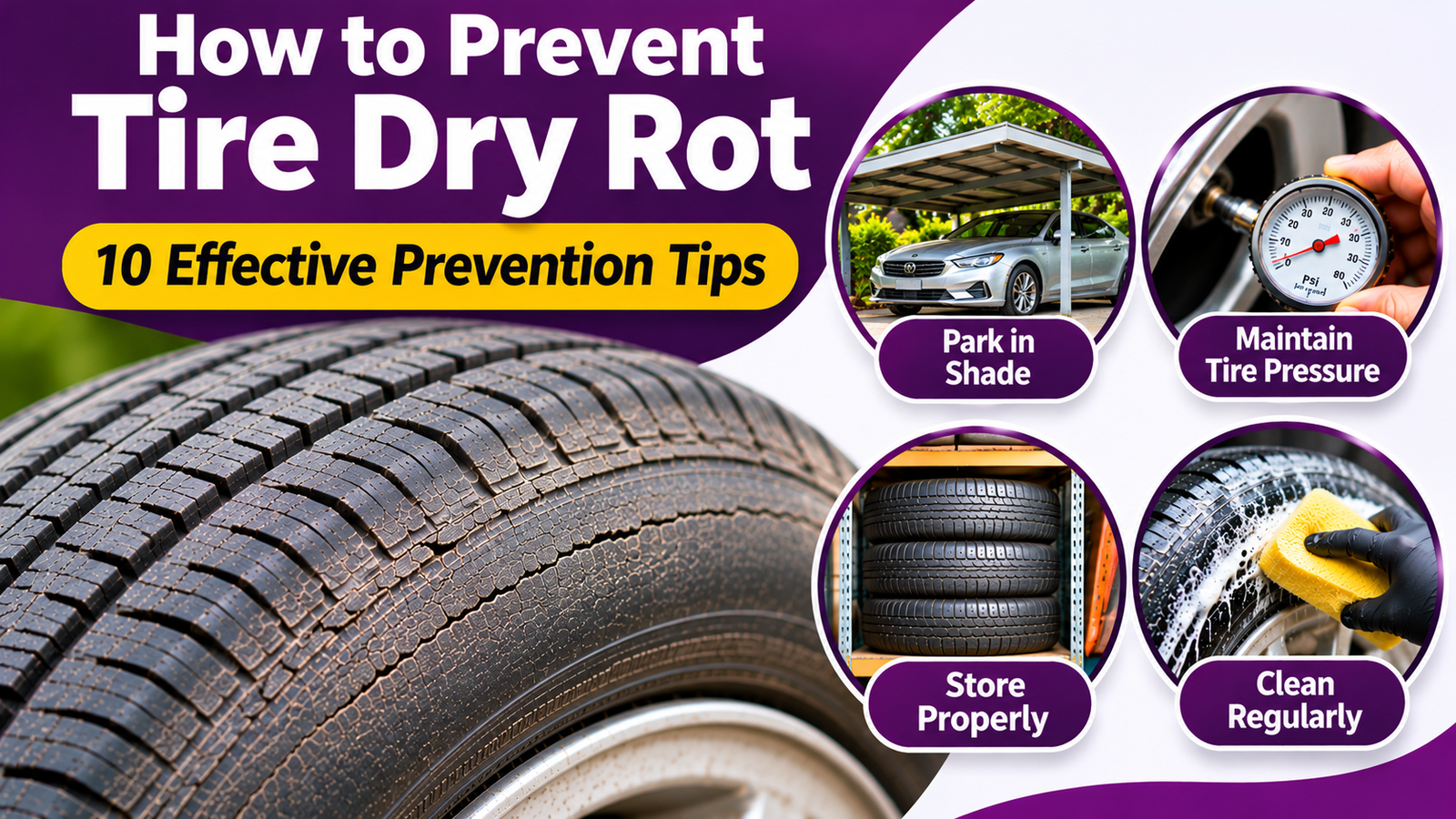
Tire dry rot is a common problem that gradually weakens tire rubber, causing cracks, brittleness, and premature deterioration. It can affect vehicles that are driven regularly, but tires left unused for extended periods are also vulnerable. Exposure to sunlight, high temperatures, ozone, and improper maintenance can accelerate the aging process. Fortunately, several preventive measures can help slow tire deterioration and extend its usable life. Learning how to prevent tire dry rot can help protect your investment, maintain vehicle safety, and reduce the risk of unexpected tire damage.
What Causes Tire Dry Rot?
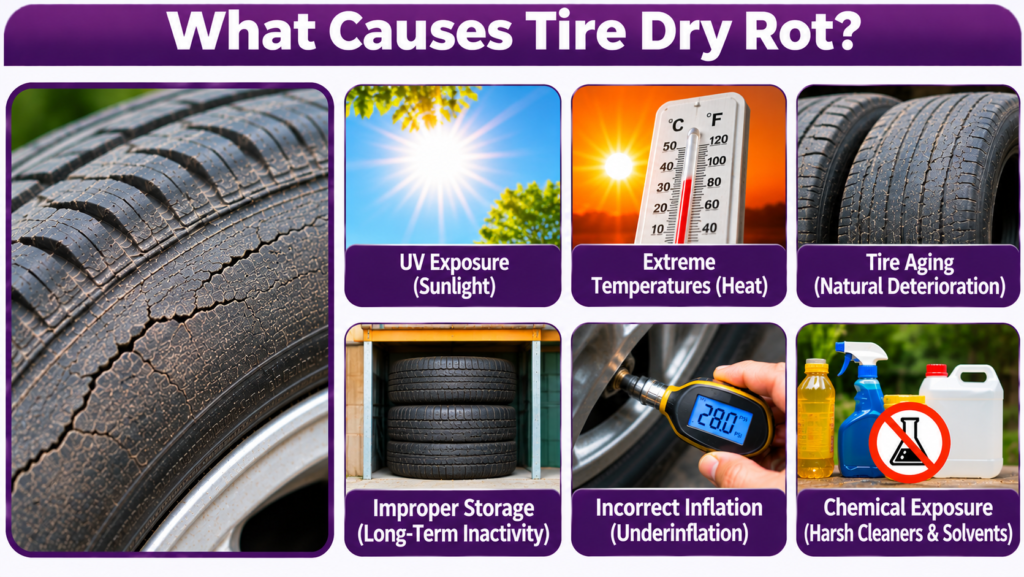
Tire dry rot occurs when rubber deteriorates because of aging and environmental exposure. Over time, chemical reactions gradually change the rubber’s properties, making it less flexible and more susceptible to cracking.
Several conditions can accelerate this process:
- UV exposure: Prolonged sunlight contributes to surface deterioration.
- Extreme temperatures: Excessive heat accelerates rubber aging.
- Ozone exposure: Ozone reacts with rubber and can contribute to cracking.
- Improper storage: Unprotected tires may deteriorate faster during extended storage.
- Incorrect inflation: Underinflation increases flexing and heat buildup during driving.
- Chemical exposure: Harsh solvents and unsuitable cleaning products may damage rubber.
Although tire aging cannot be completely prevented, proper maintenance can significantly reduce avoidable deterioration.
10 Best Ways to Prevent Tire Dry Rot
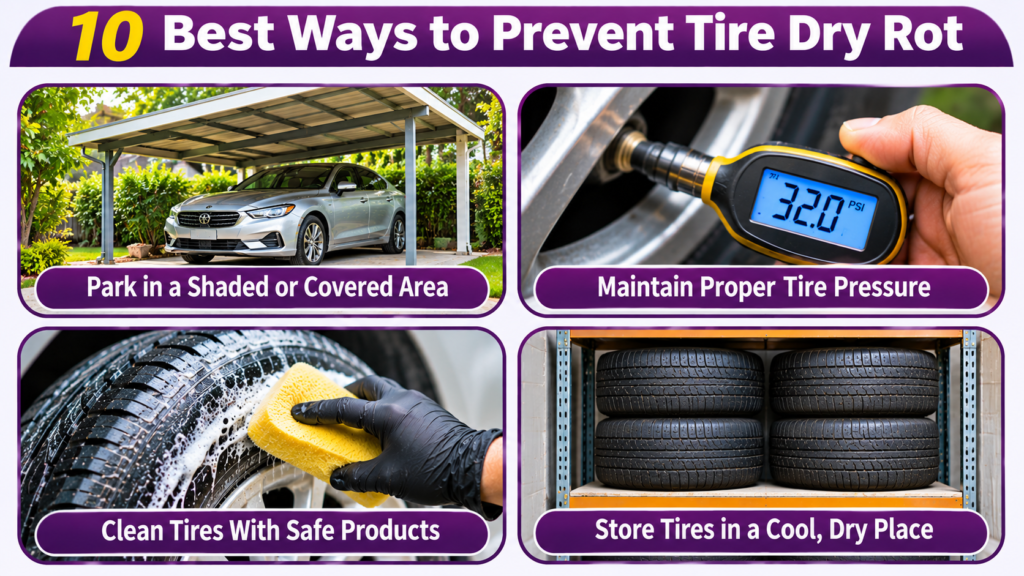
Preventing tire dry rot involves protecting rubber from environmental damage, maintaining proper inflation, and following suitable storage practices. These ten methods can help tires remain in better condition throughout their service life.
1. Park Your Vehicle in a Shaded Area
Direct sunlight exposes tire rubber to ultraviolet radiation, which can accelerate surface aging. Vehicles parked outdoors for extended periods are especially vulnerable to prolonged exposure.
Whenever possible, park inside a garage, covered carport, or shaded location. Indoor parking also helps reduce exposure to extreme weather conditions.
If covered parking is unavailable, consider appropriate UV-resistant tire covers when the vehicle will remain stationary for an extended period.
2. Maintain Proper Tire Pressure
Correct tire pressure helps tires operate within their intended temperature and load limits. Underinflated tires experience excessive sidewall flexing, increasing heat buildup during driving.
Check tire pressure at least once a month and before long journeys. Always measure pressure when the tires are cold.
Use the recommended pressure printed on the vehicle’s tire information placard rather than the maximum pressure molded into the tire sidewall.
3. Drive Your Vehicle Regularly
Vehicles left unused for long periods can experience storage-related tire problems, including flat spotting and prolonged environmental exposure.
Driving the vehicle periodically under normal conditions can help avoid some problems associated with extended inactivity.
However, regular driving does not stop rubber aging or reverse existing dry rot. Tires still require routine inspections and eventual replacement.
4. Clean Your Tires Properly
Accumulated dirt, road contaminants, and certain chemicals can affect tire surfaces over time. Cleaning helps remove substances that may contribute to deterioration.
Use mild soap, water, and a soft brush to clean the tires. Rinse thoroughly and allow them to dry.
Avoid petroleum-based solvents, gasoline, harsh degreasers, and other chemicals that may damage tire rubber.
5. Avoid Extreme Heat Exposure
High temperatures accelerate the chemical reactions responsible for rubber aging. Tires repeatedly exposed to excessive heat may deteriorate faster.
Whenever possible, store vehicles away from direct sunlight and extremely hot environments.
Maintaining correct inflation, avoiding overloading, and following appropriate driving practices also help limit excessive operating temperatures.
6. Store Unused Tires Correctly
Proper storage is especially important for seasonal tires, spare tires, and vehicles that remain unused for several months.
Keep unmounted tires in a cool, dry, clean indoor environment away from sunlight and electrical equipment that produces ozone.
Tires without rims should generally stand upright, while mounted tires can be stored according to the tire manufacturer’s instructions. Avoid placing heavy objects on them or exposing them to chemicals.
7. Use Appropriate Tire Protection Products
Some tire protection products are designed to help reduce environmental exposure, but they cannot prevent natural rubber aging.
Choose products specifically approved for automotive tire use. Follow the manufacturer’s instructions and avoid applying dressings to the tread surface, where they could reduce traction.
Remember that tire shine or rubber conditioners cannot repair existing cracks or restore deteriorated rubber.
8. Keep Tires Away From Ozone Sources
Ozone contributes to rubber cracking by reacting with certain compounds in the tire material.
Avoid storing tires near electric motors, welding equipment, generators, and other sources of ozone.
Even when tires are protected from sunlight, exposure to ozone-producing equipment can accelerate deterioration. Select a clean, ventilated storage area without nearby electrical equipment that could affect the rubber.
9. Inspect Tire Sidewalls Regularly
Regular visual inspections help identify early signs of deterioration before more serious problems develop.
Look for these warning signs:
- Thin cracks along the sidewalls.
- Small splits between tread blocks.
- Deep cracks or exposed tire cords.
- Unusual bulges or surface separation.
- Discoloration combined with visible cracking.
If you notice cracking, have the tires evaluated by a qualified tire professional. Do not continue driving on tires with deep cracks, exposed cords, or structural damage.
10. Replace Tires Before They Become Unsafe
Even with excellent maintenance, tires eventually deteriorate because rubber naturally ages.
Check the manufacturing date using the final four digits of the DOT tire identification number. For example, 3522 means the tire was manufactured during the 35th week of 2022.
Follow the tire and vehicle manufacturers’ age-related inspection and replacement recommendations. Some manufacturers recommend replacement after ten years regardless of remaining tread depth.
How to Prevent Tire Dry Rot During Long-Term Storage
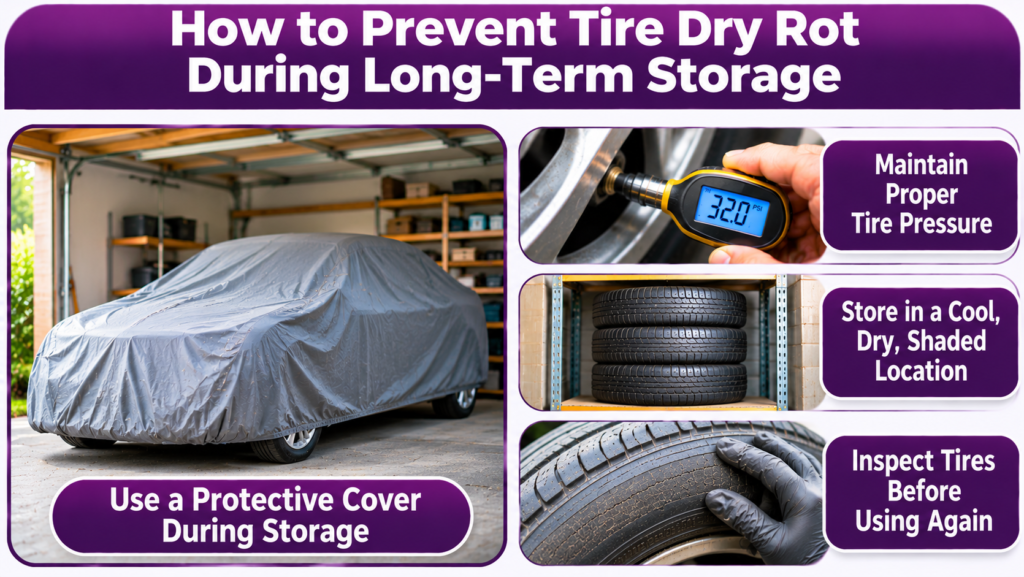
Vehicles stored for several months require additional attention because their tires remain exposed to environmental conditions without regular use.
Clean the tires thoroughly before storage and maintain the recommended inflation pressure. Choose a sheltered location protected from sunlight, heat, and moisture.
For particularly long storage periods, consult the vehicle manufacturer’s recommendations for reducing prolonged tire loading. Never leave a vehicle supported only by a jack.
Before returning the vehicle to regular use, inspect every tire for cracks, deformation, and air-pressure problems.
Can Tire Dry Rot Be Reversed?
Unfortunately, tire dry rot cannot be reversed once rubber deterioration has occurred. Cracks indicate changes in the material that surface treatments cannot repair.
Some tire conditioners may temporarily make the rubber look darker or smoother. However, these products do not restore the tire’s original strength or flexibility.
If the tire shows substantial cracking, exposed cords, bulging, or structural separation, replacement is necessary. Minor cracking should be evaluated professionally to determine whether the tire remains suitable for use.
FAQs
1. Does Tire Shine Prevent Dry Rot?
Tire shine does not reliably prevent dry rot. Certain compatible tire care products may provide surface protection, but they cannot stop the natural aging process. Proper storage, reduced UV exposure, and regular maintenance are more important than cosmetic tire treatments.
2. Does Keeping Tires Inflated Prevent Dry Rot?
Maintaining correct tire pressure helps prevent excessive flexing and heat buildup while driving, but it does not completely prevent dry rot. Rubber can deteriorate even when tires remain properly inflated. Protecting tires from sunlight, ozone, and extreme temperatures is equally important.
3. How Can You Prevent Dry Rot on Trailer Tires?
Store trailers under cover whenever possible, use appropriate tire covers, and maintain the recommended inflation pressure. For long-term storage, follow the trailer manufacturer’s guidance on supporting the vehicle and reducing tire loading. Inspect the tires before every trip.
4. Can Tires Dry Rot While Sitting in a Garage?
Yes, tires can develop dry rot inside a garage because rubber naturally ages. Excessive heat, poor ventilation, and nearby ozone-producing electrical equipment may accelerate deterioration. A cool, clean, dry garage provides better protection than an environment exposed to sunlight or extreme temperatures.
5. How Often Should You Check Tires for Dry Rot?
Inspect tires at least once a month and before long journeys. Pay close attention to the sidewalls, tread grooves, and manufacturing date. Older tires or vehicles used infrequently may require more careful inspection by a qualified tire professional.