
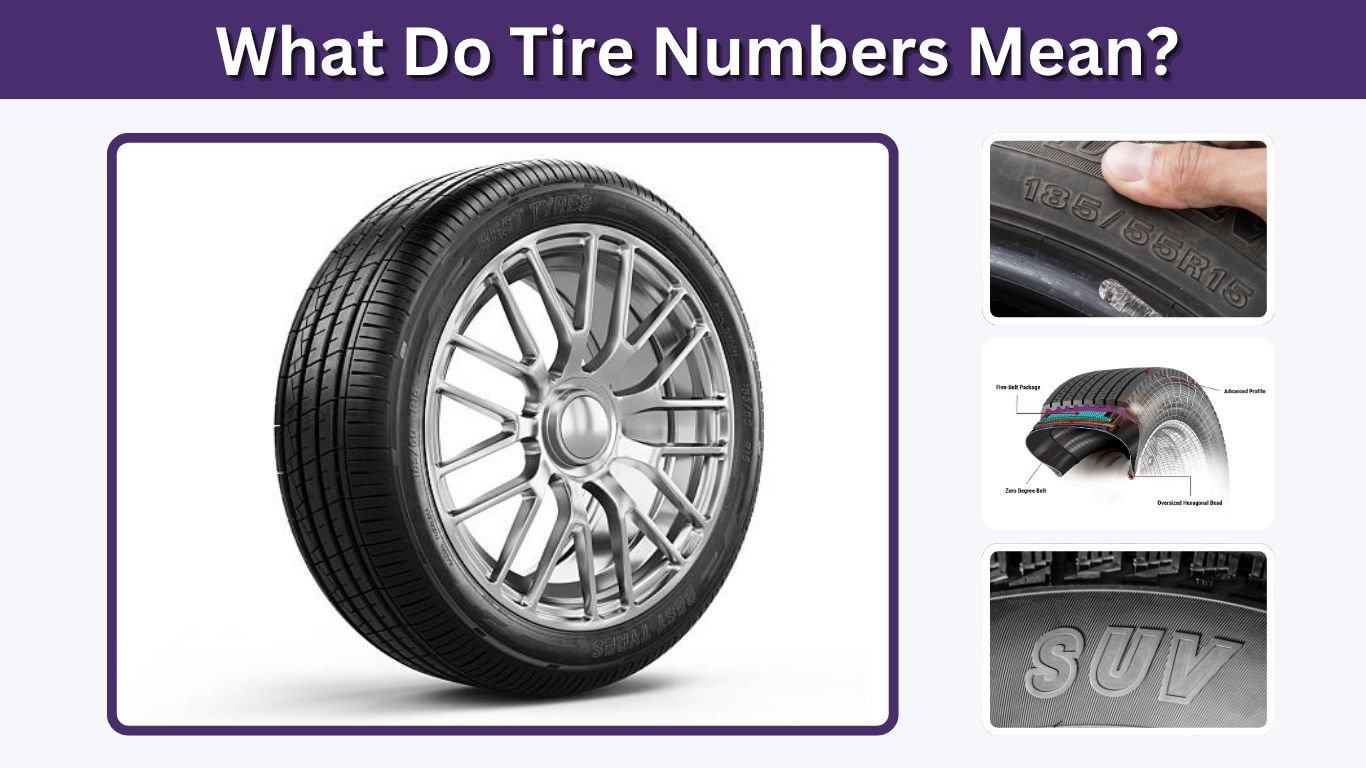
Have you ever looked at your car tires and wondered what all those numbers and letters mean? Tire sidewalls contain important information about size, construction, weight capacity, speed rating, and manufacturing date. Understanding these markings helps you choose replacement tires, maintain proper vehicle performance, and avoid costly mistakes. Whether you’re checking your current tires or comparing new ones, learning to read tire numbers is surprisingly simple. This guide explains what tire numbers mean, how tire sizes work, and what every major sidewall marking tells you.
What Do Tire Numbers Mean?
Tire numbers are standardized codes that describe a tire’s dimensions, construction, load capacity, and performance ratings. Most passenger vehicle tires display a combination of numbers and letters on their sidewalls. These markings help drivers and tire professionals identify compatible tires and understand their operating limitations. Knowing their meanings is essential when replacing tires or checking vehicle specifications.
Understanding a Common Tire Number Example
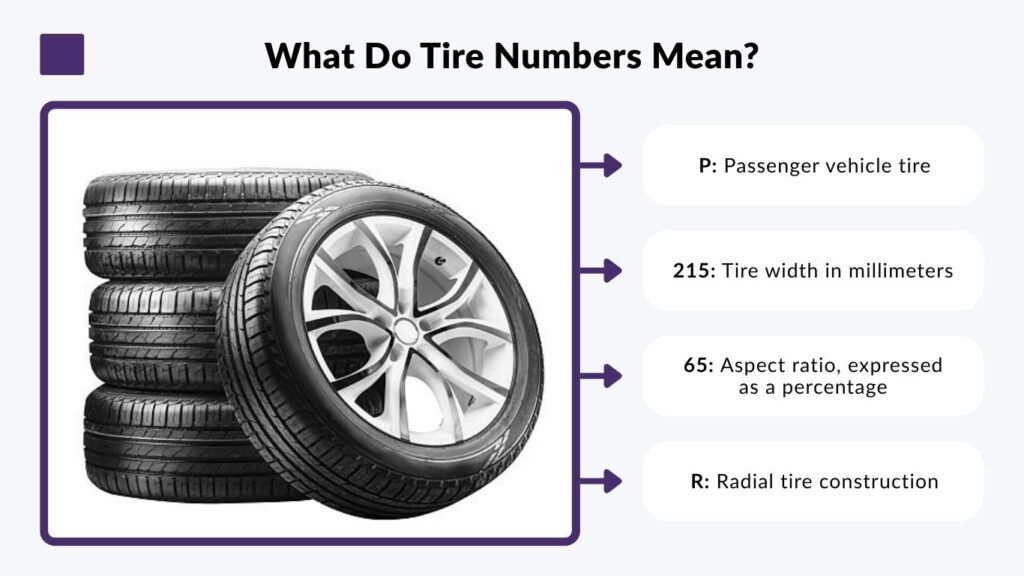
Consider a tire marked P215/65R15 95H. Each section communicates something different about the tire.
- P: Passenger vehicle tire
- 215: Tire width in millimeters
- 65: Aspect ratio, expressed as a percentage
- R: Radial tire construction
- 15: Wheel diameter in inches
- 95: Load index
- H: Speed rating
Together, these markings identify the tire’s basic dimensions and important operating capabilities. They also make it easier to compare different tire models without relying on appearance alone.
What Do the Three Numbers on a Tire Mean?
The three main numbers in a typical tire size identify its width, aspect ratio, and wheel diameter. For example, the numbers in 215/65R15 are 215, 65, and 15. Although all three describe tire size, they use different measurements. Understanding their relationship helps explain why seemingly similar tires may not fit the same vehicle.
First Number: Tire Width
The first number represents the tire’s nominal section width in millimeters. In a 215/65R15 tire, the number 215 indicates a width of approximately 215 millimeters.
Section width is measured from one sidewall to the other under specified conditions, rather than across the tire’s tread alone.
Wider tires may offer a different contact patch and handling characteristics, depending on tread design, inflation pressure, and other factors. However, wider tires are not automatically better.
Always consider wheel compatibility and manufacturer recommendations before changing tire width.
Second Number: Aspect Ratio
The second number represents the tire’s aspect ratio. This measurement expresses the sidewall height as a percentage of the tire’s width.
For example, a 215/65R15 tire has an aspect ratio of 65. Its nominal sidewall height is approximately 65% of 215 millimeters, or 140 millimeters.
Higher aspect ratios generally indicate taller sidewalls, which can provide more cushioning over uneven roads.
Lower aspect ratios typically produce shorter sidewalls and may improve steering response, although actual ride comfort depends on several tire and vehicle characteristics.
Third Number: Wheel Diameter
The third number identifies the wheel diameter that the tire is designed to fit, measured in inches.
For a 215/65R15 tire, the number 15 means the tire requires a 15-inch wheel.
This measurement is especially important because the tire’s bead diameter must match the wheel exactly.
A tire designed for a 16-inch wheel cannot be installed correctly on a 15-inch wheel. Even when the tire width and aspect ratio appear similar, the wheel diameter must be compatible.
What Do the Letters on a Tire Mean?
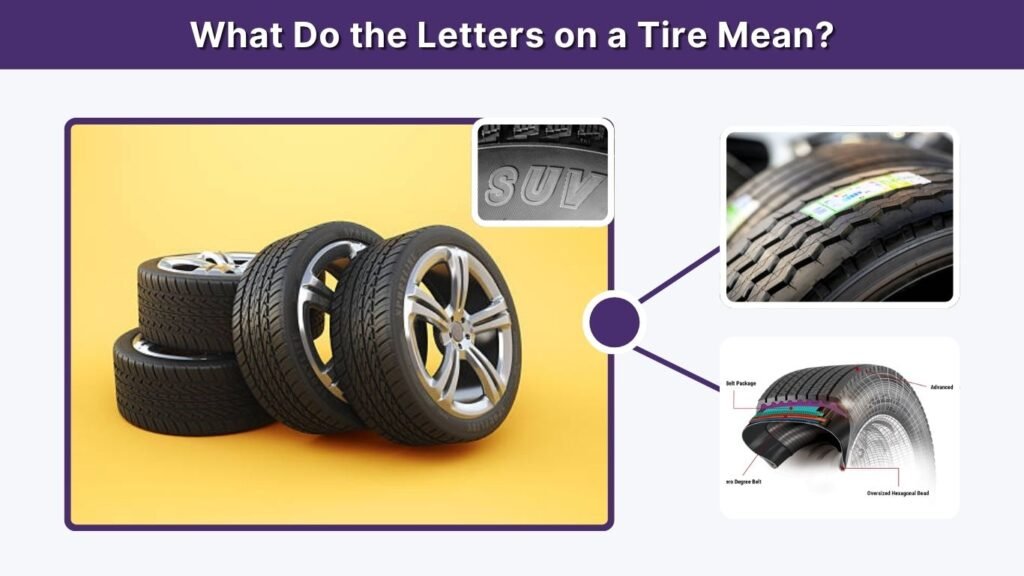
Letters on tire sidewalls describe tire type, internal construction, and performance characteristics. Some appear before the size numbers, while others appear between or after them. Common examples include P, LT, R, T, and H. Each has a specific meaning, and recognizing these symbols helps drivers understand the type of tire installed on their vehicle.
P and LT: Tire Classification
A letter appearing before the tire size often identifies its intended vehicle category.
A P indicates a passenger tire manufactured according to P-metric standards. These tires are commonly used on cars, minivans, and many SUVs.
LT stands for light truck. LT-metric tires are designed for applications that may require different load-carrying characteristics, including certain pickups and commercial vehicles.
Some passenger tires have no initial letter. These commonly follow Euro-metric sizing standards.
R and D: Tire Construction
The letter between the aspect ratio and wheel diameter indicates tire construction.
R means radial construction. Radial tires have internal reinforcing cords arranged approximately perpendicular to the direction of travel.
Radial construction is standard on most modern passenger cars because it offers effective handling, durability, and heat management.
D indicates diagonal or bias-ply construction, which is more common in certain specialty applications.
These letters describe construction rather than driving speed.
What Do the Numbers After Tire Size Mean?
After the basic tire size, you will usually find another number followed by a letter, such as 95H or 102V. These markings are called the tire’s service description. They identify its load index and speed rating. Both are important safety specifications and should meet the vehicle manufacturer’s requirements when replacement tires are selected.
Tire Load Index Explained
The load index indicates how much weight an individual tire can support under specified conditions.
For example, a tire with a load index of 95 has a maximum rated capacity of approximately 1,521 pounds (690 kilograms).
A higher load index generally corresponds to greater weight-carrying capacity, but the number itself is not a direct measurement in pounds.
Load capacity also depends on correct inflation and the applicable tire standards. Replacement tires must satisfy the vehicle’s load requirements, including any relevant load range specifications.
Tire Speed Rating Explained
The speed rating identifies a tire’s tested speed capability under specified conditions.
Common passenger tire speed ratings include:
- S: Up to 112 mph
- T: Up to 118 mph
- H: Up to 130 mph
- V: Up to 149 mph
- W: Up to 168 mph
- Y: Up to 186 mph
These ratings do not recommend driving at those speeds. Road conditions, tire wear, inflation, and vehicle limitations remain important.
Choose replacement tires with speed ratings that meet the manufacturer’s specifications.
What Do Other Numbers on a Tire Sidewall Mean?
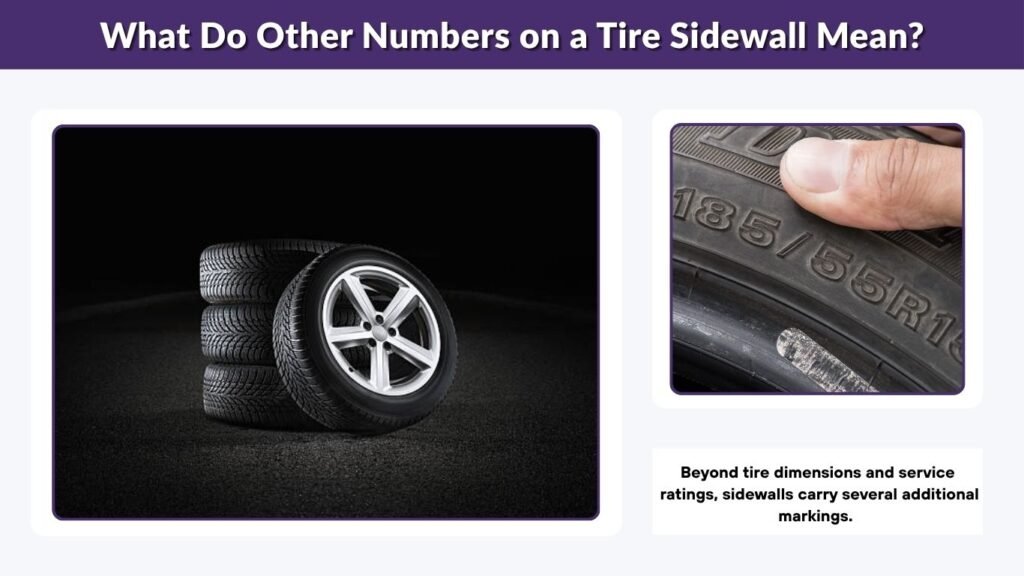
Beyond tire dimensions and service ratings, sidewalls carry several additional markings. These may identify the manufacturing date, maximum inflation pressure, load limits, and treadwear characteristics. Although drivers often focus on tire size, the other numbers provide valuable information when inspecting tires, evaluating used vehicles, or understanding maintenance requirements.
DOT Numbers and Tire Manufacturing Date
The DOT identification code helps identify a tire’s manufacturing information.
For tires manufactured since 2000, the final four digits of the complete DOT Tire Identification Number indicate the production week and year.
For example, 2324 means the tire was manufactured during the 23rd week of 2024.
The complete DOT code may appear on only one sidewall, so checking the opposite side may be necessary.
Knowing the manufacturing date helps when evaluating tire age. However, age alone does not determine condition; storage, maintenance, damage, and manufacturer recommendations also matter.
Maximum Tire Pressure Numbers
Many tires display a maximum permissible inflation pressure, usually expressed in PSI or kilopascals.
This marking should not be confused with the vehicle’s recommended operating pressure.
The correct everyday inflation pressure is generally listed on the vehicle’s tire information placard, usually inside the driver’s door opening, or in the owner’s manual.
Inflating tires to their sidewall maximum instead of the vehicle’s recommendation may adversely affect handling, comfort, and tire performance.
Check inflation when the tires are cold.
Treadwear, Traction, and Temperature Ratings
Many passenger tires also feature Uniform Tire Quality Grading (UTQG) markings.
These include treadwear, traction, and temperature grades.
Treadwear is a comparative rating based on standardized testing, not a guaranteed mileage lifespan. Traction grades indicate performance in specified wet braking tests, while temperature grades relate to a tire’s ability to resist and dissipate heat.
These ratings can help with comparisons, but they should not replace independent tire testing or vehicle fitment requirements.
How to Find the Correct Tire Numbers for Your Car
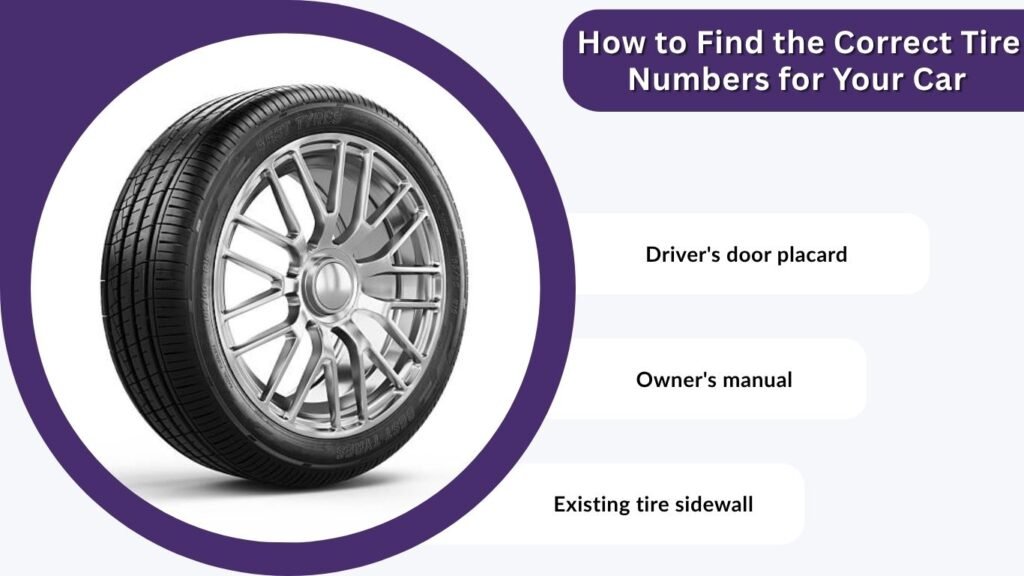
Finding the correct tire size is easier when you know where to look. The numbers on your existing tires are a useful starting point, but they may not always reflect the vehicle’s original specifications. Checking the manufacturer’s information helps prevent incorrect replacements and confirms the appropriate tire dimensions and ratings.
Where to Check Your Recommended Tire Size
The most reliable sources include:
- Driver’s door placard: Usually displays original tire dimensions and recommended cold inflation pressure.
- Owner’s manual: Provides approved tire specifications and relevant operating instructions.
- Existing tire sidewall: Shows the size currently installed, which should be checked against manufacturer recommendations.
If you’re considering a different tire size, consult a qualified tire professional about wheel fitment, clearance, speedometer accuracy, and load requirements.
FAQs
1. What Do the First Three Numbers on a Tire Mean?
The three principal size numbers identify tire width, aspect ratio, and wheel diameter. For example, 225/60R17 represents a 225-millimeter section width, 60% aspect ratio, and 17-inch wheel diameter.
2. What Do the Last Numbers on a Tire Mean?
Numbers after the wheel diameter commonly represent the load index. In 215/65R15 95H, the number 95 identifies the tire’s rated load-carrying capacity, while H is the speed rating.
3. What Do the Four Numbers on a Tire Mean?
If you are referring to the four-digit DOT date code, those numbers identify the manufacturing week and year. For example, 3525 means the 35th week of 2025.
4. Can I Use Tires With Different Numbers?
Sometimes, but replacement sizes must satisfy the vehicle’s fitment, load, and speed requirements. Different numbers can affect clearance, handling, and vehicle systems. Confirm compatibility before making changes.
5. Are Tire Numbers the Same for Every Vehicle?
No. Cars, trucks, motorcycles, bicycles, and specialty vehicles may use different tire-sizing systems. Even among passenger cars, tire dimensions and performance ratings vary according to manufacturer specifications.