
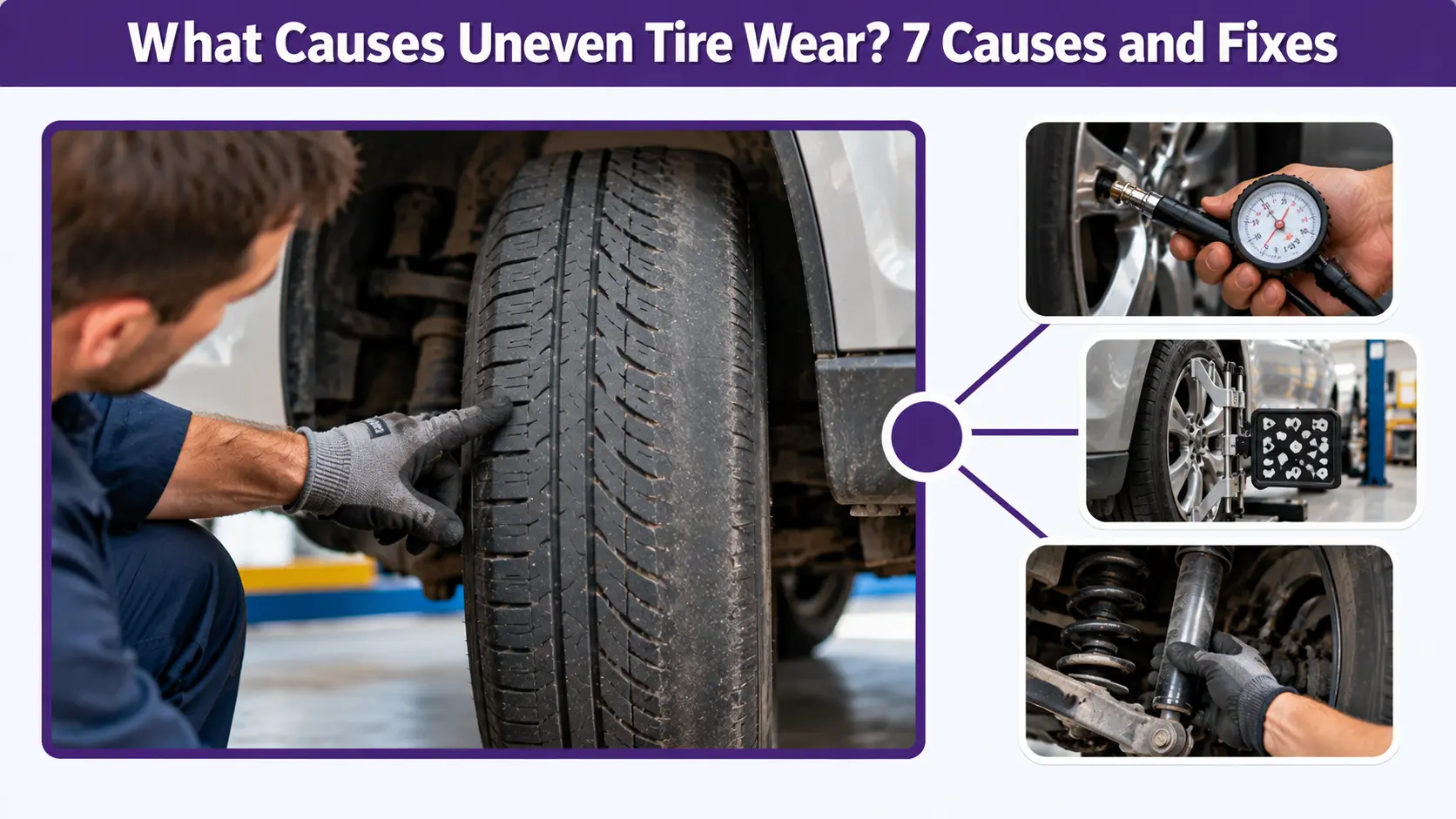
Uneven tire wear is a common problem that can affect your vehicle’s safety, handling, and tire lifespan. If you notice that one side of your tire is wearing faster than the other, the problem may be caused by incorrect tire pressure, poor wheel alignment, or worn suspension components. Sometimes, irregular tire wear develops gradually without obvious warning signs. Understanding what causes uneven tire wear can help you identify problems early and avoid expensive repairs. This guide explains common causes, different wear patterns, and effective ways to fix and prevent uneven tire wear.
What Is Uneven Tire Wear?
Uneven tire wear occurs when certain areas of a tire’s tread wear down faster than others. Instead of wearing uniformly across its surface, the tire may develop smooth edges, worn centers, or irregular patches.
This problem often indicates that the tire is not maintaining consistent contact with the road. Incorrect inflation pressure, wheel alignment problems, and suspension issues are common contributing factors.
Uneven wear can reduce traction, increase road noise, and shorten tire life. Identifying the wear pattern early makes it easier to investigate the underlying cause.
What Causes Uneven Tire Wear? 7 Common Causes
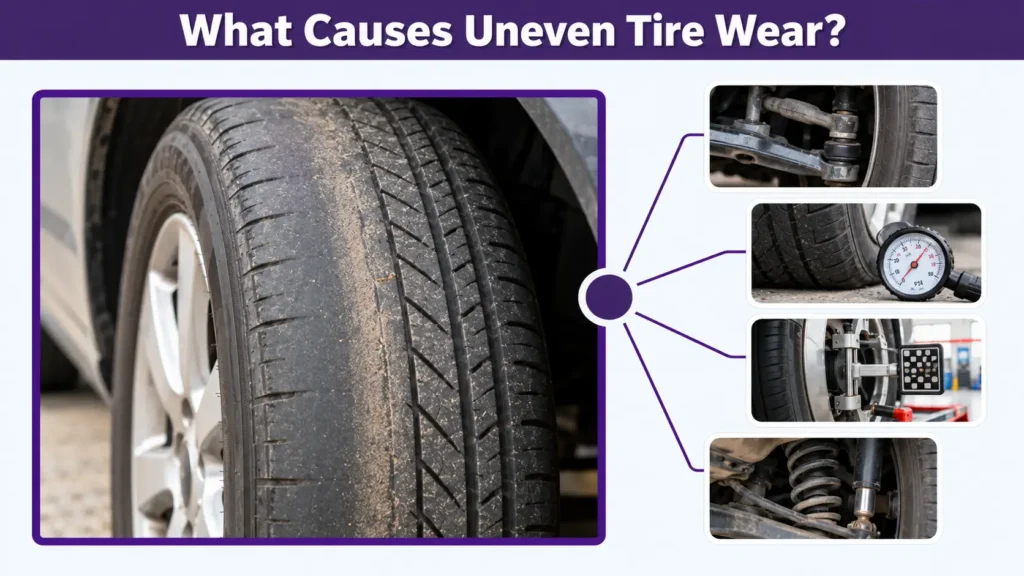
Several mechanical and maintenance problems can cause uneven tire wear. Some result from everyday driving habits, while others develop because of worn vehicle components.
Understanding these causes can help you recognize potential problems before they become more serious.
1. Incorrect Tire Pressure
Incorrect tire inflation is one of the most common causes of uneven tire wear.
When tires are underinflated, their shoulders tend to experience increased wear. Overinflated tires may develop excessive wear along the center of the tread.
Check tire pressure at least once a month when the tires are cold. Always follow the recommended PSI listed on your vehicle’s driver’s door label or owner’s manual.
2. Poor Wheel Alignment
Wheel misalignment occurs when the wheels are not positioned at the manufacturer’s specified angles.
Incorrect camber can contribute to excessive wear on one edge of a tire, while incorrect toe settings can create feathered tread patterns.
You may also notice your vehicle pulling to one side or the steering wheel sitting off-center.
A professional wheel alignment can correct adjustable alignment angles and help prevent further damage.
3. Worn Shock Absorbers or Struts
Shock absorbers and struts help control suspension movement and maintain consistent contact between tires and the road.
When these components become worn, the tires may bounce excessively, producing irregular patches of tread wear.
This pattern is often called tire cupping or scalloping.
A mechanic should inspect the suspension before replacing components because wheel imbalance and other mechanical problems can produce similar symptoms.
4. Unbalanced Wheels
Wheel imbalance occurs when the weight of the tire and wheel assembly is not evenly distributed.
This can cause vibration while driving, particularly at certain speeds. Repeated vibration may contribute to irregular tread wear and reduce ride comfort.
A tire technician can use a balancing machine to identify weight differences and install appropriate balancing weights.
Bent wheels or damaged tires may require additional repairs.
5. Skipping Tire Rotation
Front and rear tires often experience different forces during steering, braking, and acceleration.
Without regular tire rotation, some tires may wear faster than others, especially on vehicles where one axle handles most of the driving force.
Many vehicles benefit from tire rotation every 5,000–8,000 miles, although the manufacturer’s recommended interval takes priority.
Regular rotation helps distribute wear more evenly when the vehicle’s tire configuration permits it.
6. Worn Steering and Suspension Parts
Damaged ball joints, control arm bushings, tie rods, and wheel bearings can affect wheel movement and alignment.
When these components become loose or worn, the tires may not maintain their intended position against the road.
The resulting movement can accelerate irregular tread wear.
A professional inspection is necessary to identify the faulty component before repairing the vehicle or correcting its alignment.
7. Aggressive Driving and Overloading
Frequent hard cornering, sudden braking, and aggressive acceleration can increase tire wear.
Sharp turns place additional forces on tire shoulders, while severe braking may occasionally produce flat spots.
Carrying excessive weight can also increase tire stress and accelerate wear, particularly when inflation is inadequate for the load.
Smooth driving, proper loading, and regular maintenance can help limit unnecessary tire deterioration.
Common Uneven Tire Wear Patterns and Their Causes
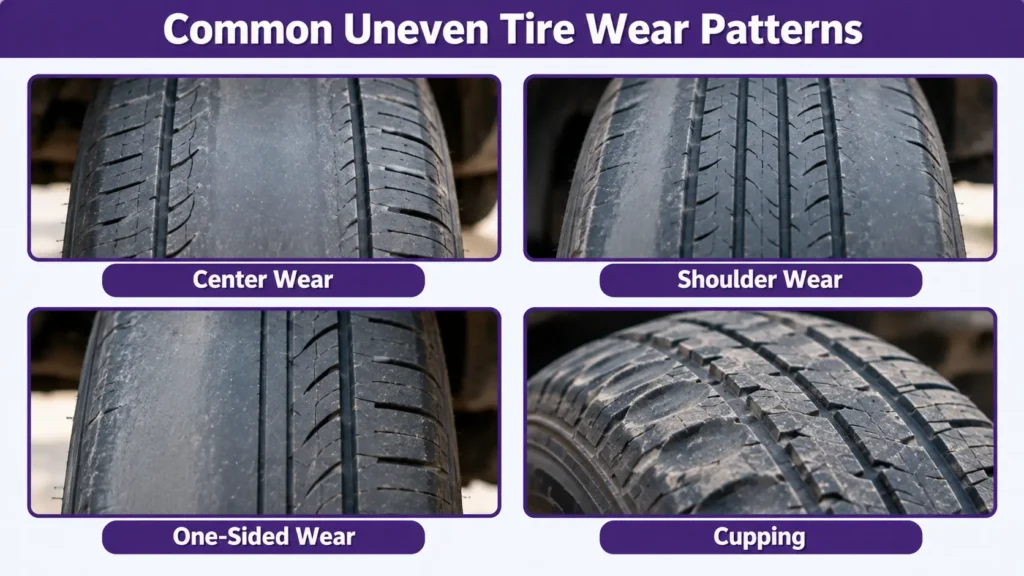
Different tire wear patterns can provide useful clues about possible mechanical problems.
For example, excessive center wear often suggests an inflation issue, while one-sided wear may indicate alignment problems.
However, visual patterns alone cannot confirm the exact cause. A professional inspection may be necessary.
| Tire Wear Pattern | Possible Cause |
| Center tread wear | Overinflation |
| Both shoulder edges wearing | Underinflation |
| Inside edge wearing faster | Negative camber or toe misalignment |
| Outside edge wearing faster | Alignment issues or hard cornering |
| Cupping or scalloping | Suspension problems or wheel imbalance |
| Feathered tread edges | Incorrect toe alignment |
| Isolated flat spots | Severe braking or other mechanical issues |
Check the entire tire surface rather than inspecting only the most visible tread area.
What Causes Uneven Tire Wear on Front and Rear Tires?
Front and rear tires perform different functions, depending on the vehicle’s drivetrain and suspension design. These differences can influence how tire wear develops over time.
Uneven Wear on Front Tires
Front tires are responsible for steering and often handle a significant share of braking forces.
On front-wheel-drive vehicles, they also transmit engine power to the road.
Incorrect front wheel alignment, worn steering components, and improper inflation can contribute to accelerated or uneven front tire wear.
Uneven Wear on Rear Tires
Rear tire wear can develop because of rear suspension problems, incorrect alignment, wheel imbalance, or missed rotations.
Some vehicles have independent rear suspension systems with adjustable alignment angles.
If one rear tire wears significantly faster than the other, have the rear suspension and alignment inspected.
How to Fix Uneven Tire Wear

Fixing uneven tire wear begins with identifying the underlying problem. Simply replacing worn tires without correcting the cause may allow the same pattern to develop again.
Follow these steps to address the problem:
- Check tire pressure: Adjust cold tire pressure to the vehicle manufacturer’s recommended PSI.
- Inspect wheel alignment: Have a technician measure and correct alignment angles when necessary.
- Examine suspension components: Repair or replace damaged shocks, struts, bushings, and steering components.
- Balance the wheels: Correct wheel imbalance and investigate vibration or bent rims.
- Rotate or replace tires: Follow the approved rotation pattern and replace tires that are unsafe or excessively worn.
Correcting the mechanical issue can prevent additional uneven wear, but it cannot restore rubber that has already worn away.
How to Prevent Uneven Tire Wear
Preventive maintenance helps extend tire life and reduces the likelihood of unexpected tire problems.
Regular inspections also make it easier to recognize mechanical issues before they cause severe tread damage.
Important prevention tips include:
- Maintain correct inflation: Check tire pressure monthly and before long trips.
- Rotate tires regularly: Follow your vehicle manufacturer’s rotation schedule.
- Inspect tread depth: Measure several grooves across each tire, including the inner and outer areas.
- Address handling problems: Have pulling, steering vibration, or unusual tire noise investigated promptly.
- Avoid excessive loads: Follow the vehicle’s maximum load recommendations.
- Drive smoothly: Reduce unnecessary hard braking, rapid acceleration, and aggressive cornering.
Consistent maintenance helps preserve traction, handling, and overall tire performance.
When Should You Replace Unevenly Worn Tires?
Unevenly worn tires do not always need immediate replacement, but their condition should be professionally assessed.
The National Highway Traffic Safety Administration recommends replacing tires when their tread reaches 2/32 inch (1.6 mm). Replacement may be advisable earlier when wet-weather traction is a concern.
Tires with exposed cords, sidewall bulges, serious cuts, or significant structural damage should not remain in service.
If the uneven wear is minor and sufficient tread remains, correcting the underlying problem may allow continued use after a qualified inspection.
FAQs
1. Can Low Tire Pressure Cause Uneven Tire Wear?
Yes. Low tire pressure can cause excessive wear along both shoulders because the tire flexes more than intended. Maintaining the manufacturer’s recommended cold PSI helps reduce this problem.
2. Why Are My Tires Wearing on the Inside Edge?
Inside tire wear commonly results from incorrect camber or toe alignment. Worn suspension components can also contribute. A professional alignment and suspension inspection can identify the cause.
3. Can Bad Wheel Alignment Cause Uneven Tire Wear?
Yes. Incorrect alignment angles can cause one edge or certain tread blocks to wear faster. Proper alignment helps distribute road contact more evenly and reduces unnecessary tread wear.
4. What Causes Tire Cupping?
Tire cupping can develop because of worn suspension components, wheel imbalance, alignment issues, or other conditions that disrupt consistent tire contact with the road.
5. Will Tire Rotation Fix Uneven Tire Wear?
Tire rotation may help reduce further uneven wear in suitable cases, but it cannot reverse existing tread damage. The underlying cause must also be corrected, and severely worn tires may need replacement.