
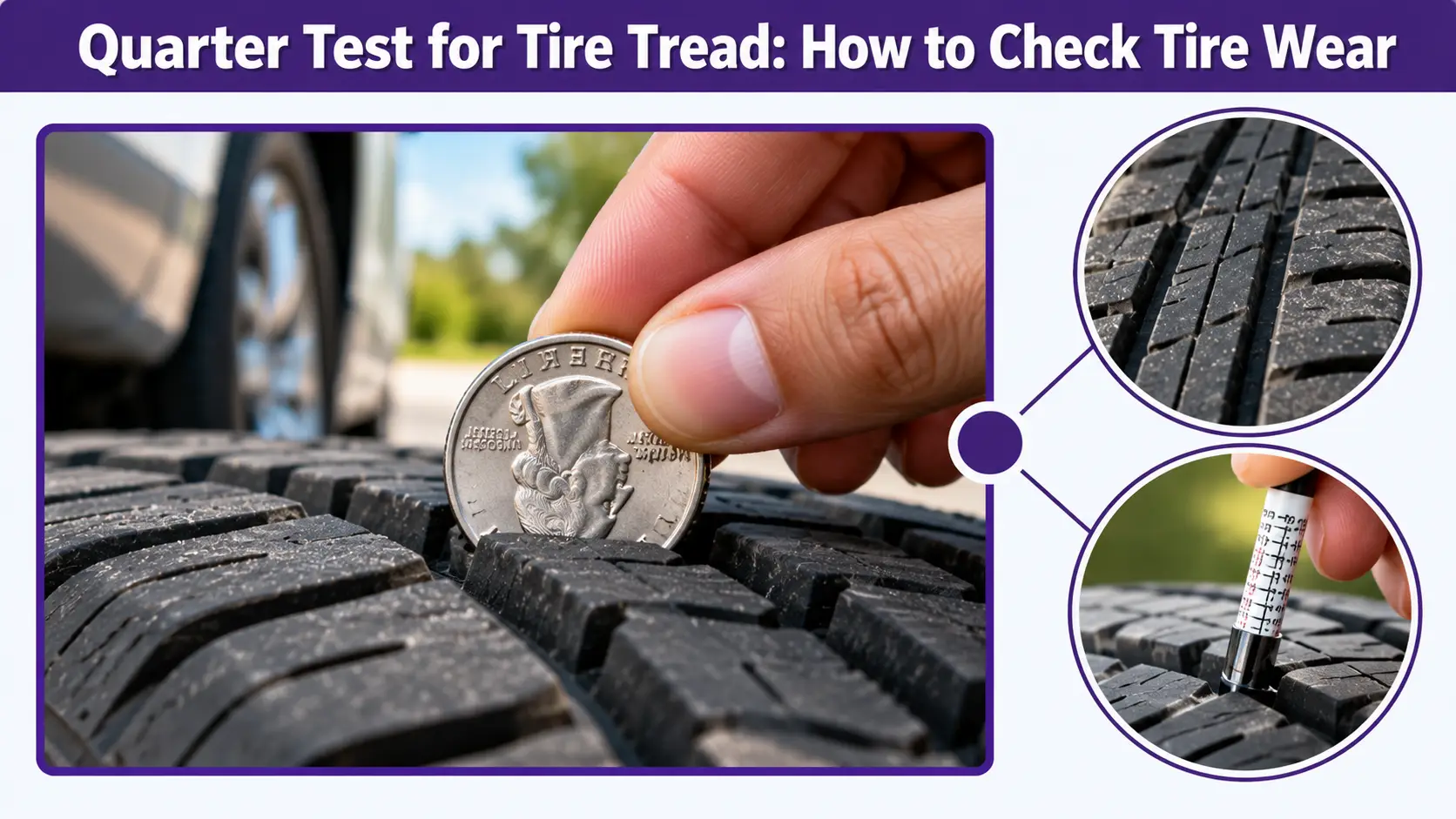
The quarter test for tire tread is a simple way to check whether your tires have enough tread for safer driving, especially on wet roads. Using an ordinary U.S. quarter, you can estimate whether your tire tread is above or below 4/32 of an inch. This quick inspection helps identify worn tires before they become dangerously shallow. Whether you drive daily or occasionally, understanding how to perform the quarter test can help prevent tire-related problems. This guide explains the steps, results, and recommended tread depths.
What Is the Quarter Test for Tire Tread?
The quarter test is an easy method for checking tire tread depth without specialized equipment. It uses George Washington’s portrait on a U.S. quarter as a reference for approximately 4/32 inch (3.2 mm) of remaining tread.
Tires need sufficient tread to maintain traction, particularly on wet roads. As tread wears down, its ability to channel water away from the contact patch decreases.
The basic quarter test results are:
- Washington’s head partly covered: Tread depth is approximately 4/32 inch or greater at that location.
- Top of Washington’s head visible: Tread depth is approximately 4/32 inch or less.
- Different results across the tire: Uneven wear may require a professional inspection.
The quarter test provides an estimate rather than an exact measurement. A tread-depth gauge is better when accurate readings are needed.
How to Check Tire Tread With a Quarter
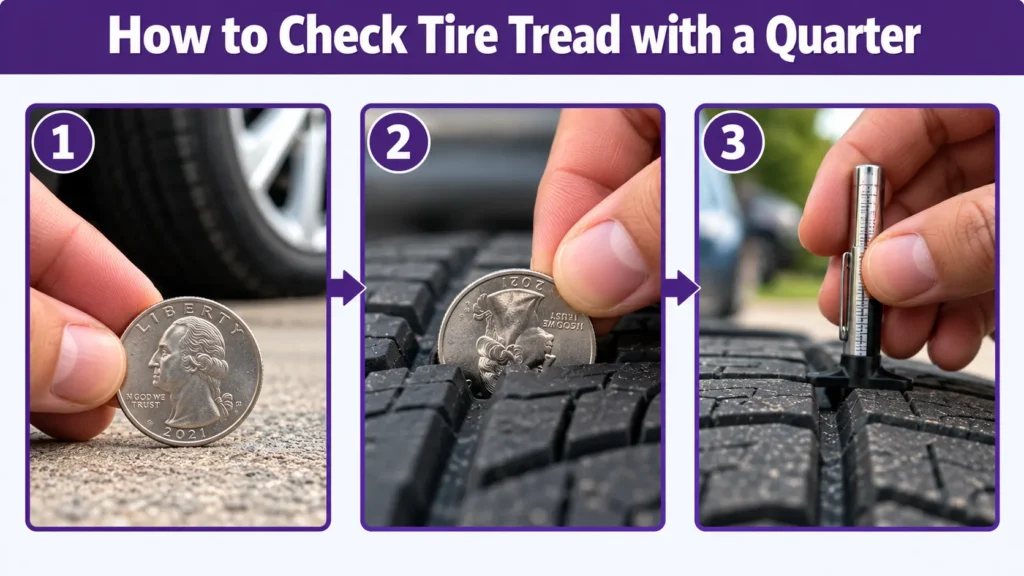
Checking tire tread with a quarter takes only a few minutes. The process requires no mechanical knowledge and can be performed at home.
Before starting, park your vehicle on a flat surface, turn off the engine, and secure the parking brake.
Step-by-Step Quarter Tire Tread Test
- Get a U.S. quarter: Use a regular quarter showing George Washington’s portrait.
- Find a main tread groove: Choose a deep circumferential groove rather than a narrow surface slit.
- Position the quarter upside down: Hold the coin with Washington’s head pointing toward the bottom of the groove.
- Insert the quarter: Push the coin straight into the groove until its edge reaches the bottom.
- Examine Washington’s head: Check whether the surrounding rubber covers the top of his head.
- Repeat the test: Check several grooves across the tread width and multiple locations around each tire.
Testing multiple locations is important because tire tread does not always wear evenly.
How to Read the Quarter Test Results
If the tread covers the top of Washington’s head, the tire has approximately 4/32 inch or more of tread remaining at that point.
If you can see the entire top of his head, the tread has reached approximately 4/32 inch or less. Consider replacing the tire, particularly if you frequently drive in rainy conditions.
A passing quarter test does not guarantee that a tire is safe. Damage, age, uneven wear, and other problems can still make replacement necessary.
Why Is 4/32 Inch Tire Tread Depth Important?
Tire tread depth directly affects how effectively a tire handles water on the road. Deeper tread grooves provide space for water to escape, helping the rubber maintain contact with the road surface.
At approximately 4/32 inch, many tires begin showing noticeably reduced wet-weather performance compared with newer tires.
Wet-Road Traction and Hydroplaning
When roads are wet, tires must move water away from beneath their contact patches.
As tread depth decreases, a tire’s water-dispersing ability becomes less effective. This can increase the risk of hydroplaning, especially at higher speeds or where water accumulates.
Stopping distances may also increase. For this reason, many tire specialists recommend considering replacement when tread reaches approximately 4/32 inch, rather than waiting for the minimum wear limit.
Minimum Tire Tread Depth
The U.S. National Highway Traffic Safety Administration recommends replacing tires when tread reaches 2/32 inch (1.6 mm).
That depth is also the legal minimum in many U.S. states, although requirements can vary by jurisdiction and tire application.
For snowy driving, deeper tread may be necessary. Tires approaching 6/32 inch can already have noticeably reduced traction in snow and slush.
Quarter Test vs. Penny Test: What’s the Difference?
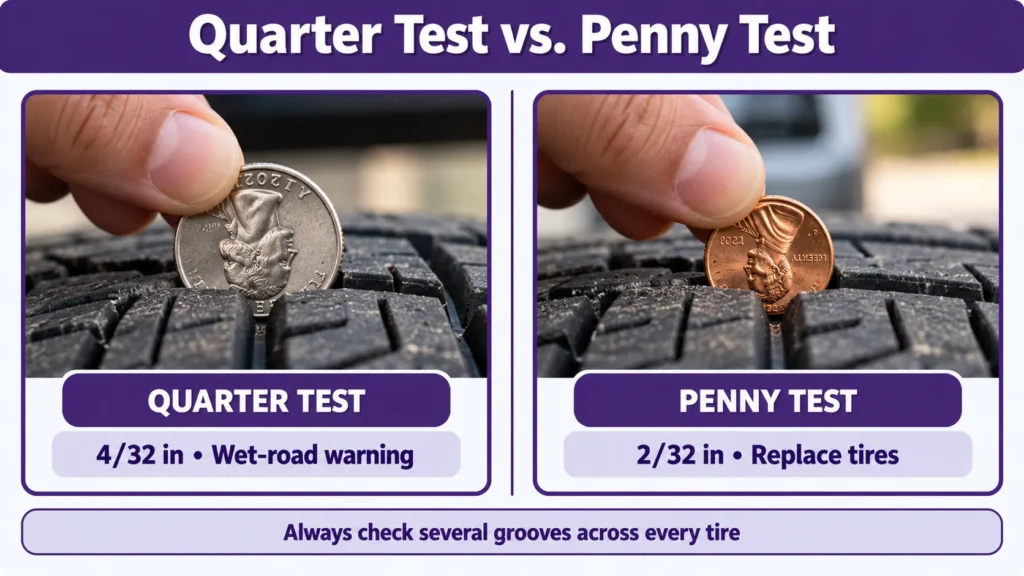
The quarter test and penny test are common ways to estimate tire tread depth. Both involve placing a coin upside down into a tread groove, but they indicate different thresholds.
The quarter test provides an earlier warning of reduced wet-weather traction, while the penny test identifies tires approaching the minimum replacement depth.
| Feature | Quarter Test | Penny Test |
| Coin used | U.S. quarter | U.S. penny |
| Portrait | George Washington | Abraham Lincoln |
| Reference depth | 4/32 inch | 2/32 inch |
| Approximate depth | 3.2 mm | 1.6 mm |
| Primary purpose | Earlier wet-weather warning | Minimum tread warning |
Which Tire Tread Test Is Better?
For everyday safety inspections, the quarter test is generally more useful because it identifies potentially problematic tread wear sooner.
The penny test remains valuable for recognizing tires that have reached the minimum replacement threshold.
However, neither coin test measures tread depth precisely. For an accurate assessment, use a dedicated tread-depth gauge.
Other Ways to Measure Tire Tread Depth
Although the quarter test is convenient, several other inspection methods can provide useful information about tire condition.
These methods are especially helpful when the quarter test gives uncertain results or shows possible uneven tread wear.
Using a Tire Tread Depth Gauge
A tread-depth gauge measures the remaining groove depth directly, usually in millimeters or thirty-seconds of an inch.
Place the measuring probe into a main tread groove and rest the gauge base against the surrounding tread blocks.
Record measurements at several points around and across the tire. Compare the lowest readings with recommended replacement thresholds.
Checking Tire Wear Indicator Bars
Many tires have built-in treadwear indicators located inside their main grooves.
These small raised rubber bars usually indicate approximately 2/32 inch of remaining tread.
When the tread surface becomes level with the indicators, the tire should be replaced.
Looking for Uneven Tire Wear
Uneven tread wear may indicate incorrect inflation pressure, poor wheel alignment, or worn suspension components.
Inspect both shoulders and the center of the tread. If one section is substantially more worn than another, arrange a professional inspection.
When Should You Replace Your Tires?
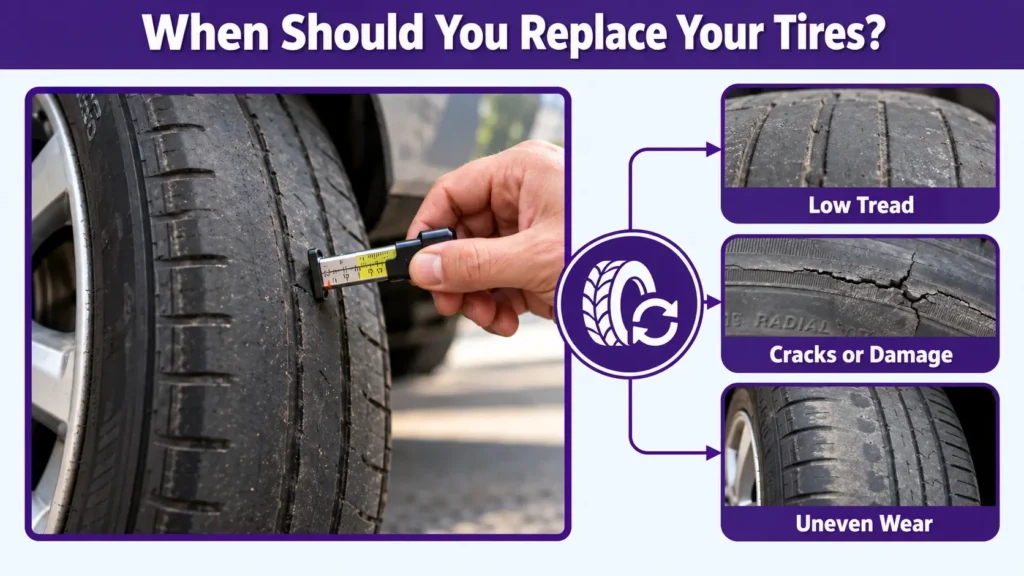
The quarter test helps determine when tire replacement may be approaching, but tread depth is only one factor.
Tires can also become unsafe because of structural damage, aging, or irregular wear.
Warning Signs That Your Tires Need Replacement
Look for the following problems during tire inspections:
- Low tread depth: Tread reaches approximately 4/32 inch, especially when wet-road performance matters.
- Minimum tread reached: Tread measures 2/32 inch or less.
- Visible damage: Sidewall bulges, exposed cords, or serious cuts indicate potential tire failure.
- Uneven tread wear: Significant differences between tread sections may indicate mechanical problems.
- Age-related deterioration: Cracking or other signs of aging should be assessed professionally.
Do not continue driving on a tire with exposed cords, bulges, or other severe damage.
How Often Should You Perform the Quarter Test?
You should check tire tread at least once a month, ideally when checking tire inflation pressure.
Additional inspections are useful before long journeys and during seasons with frequent rain or snow.
Checking tread regularly helps identify gradual wear before it affects vehicle performance.
If you notice unusual vibration, changing road grip, or accelerated tread wear, inspect your tires sooner.
FAQs
1. Is the Quarter Test Accurate for Tire Tread?
The quarter test is a useful approximate inspection method. It helps identify whether tread depth is near 4/32 inch, but it cannot provide the precision of a tread-depth gauge.
2. Is 4/32 Tire Tread Still Good?
Tires with 4/32 inch of tread may still have some usable tread, but wet-weather traction is reduced. Many tire specialists recommend planning replacement at this depth, particularly for frequent rainy-weather driving.
3. How Do You Put a Quarter in Tire Tread?
Insert a U.S. quarter into a main tread groove with Washington’s head upside down. If the tread covers the top of his head, approximately 4/32 inch or more remains at that location.
4. Is the Penny Test or Quarter Test Better?
The quarter test is better for identifying reduced tread depth earlier. It checks approximately 4/32 inch, while the penny test checks around 2/32 inch.
5. Can You Drive With 3/32 Tire Tread?
A tire with 3/32 inch of tread is above the common minimum threshold but has reduced wet-road performance. Replacement should be prioritized rather than waiting until the tread reaches 2/32 inch.