
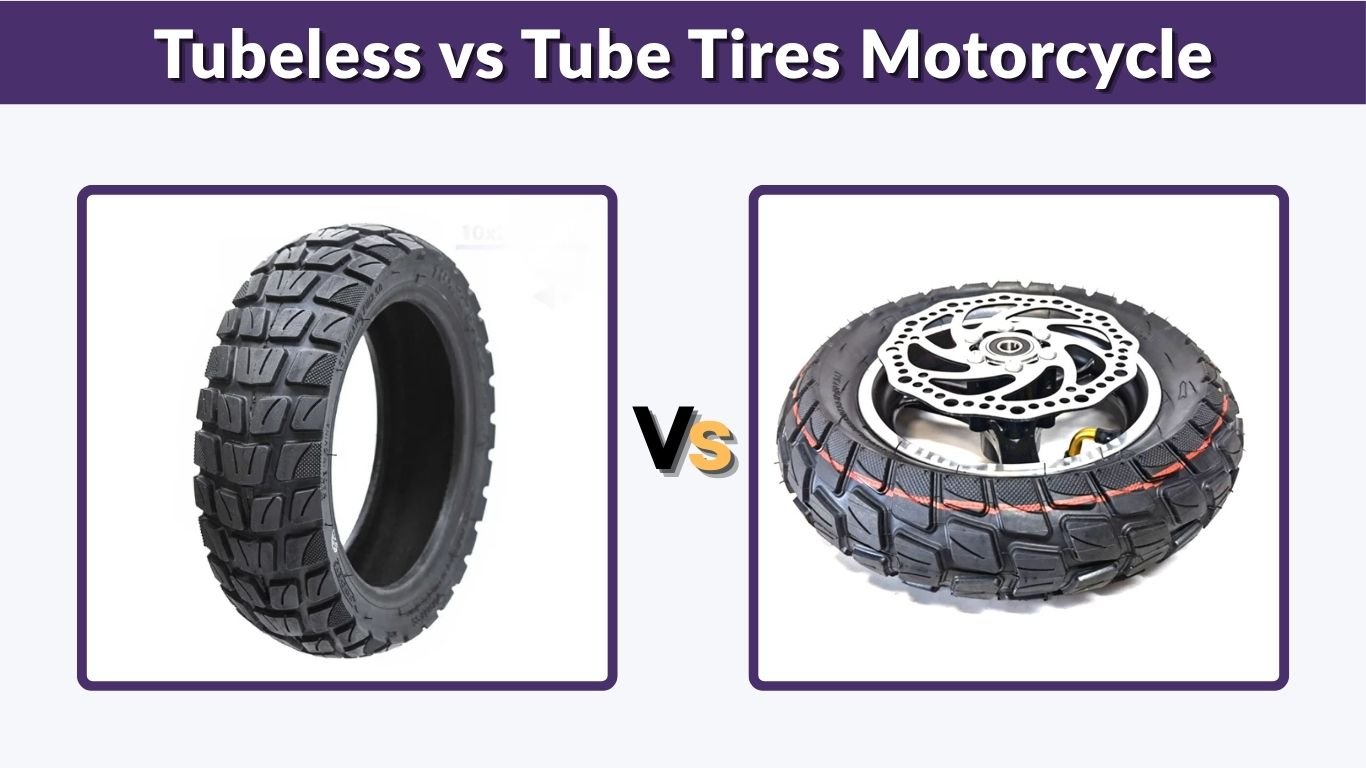
Motorcycle tires play a major role in safety, comfort, handling, and roadside convenience. Two common tire setups are tubeless and tube-type tires. Tubeless tires are widely used on modern street motorcycles, while tube tires are still common on dirt bikes, adventure bikes, and motorcycles with spoked wheels. Understanding the difference between tubeless vs tube motorcycle tires can help riders choose the right setup for their riding style.
What Are Tubeless Motorcycle Tires?
Tubeless motorcycle tires are designed to hold air without using an inner tube. The tire forms an airtight seal directly with the wheel rim. This setup is common on many modern motorcycles, especially sport bikes, touring bikes, cruisers, scooters, and commuter motorcycles with alloy wheels.
How Tubeless Tires Work
In a tubeless setup, the tire bead seals tightly against the rim. Air stays inside the tire cavity, and there is no separate inner tube. The valve stem is attached directly to the wheel rim instead of being part of a tube.
If a small nail or screw punctures a tubeless tire, air usually escapes slowly. In many cases, the object remains stuck in the tire and temporarily slows the leak. This gives the rider more time to notice the issue and stop safely.
Common Uses of Tubeless Tires
Tubeless tires are most common on motorcycles with cast alloy wheels. These wheels are easier to seal because they do not have spoke holes running through the rim bed.
You will often find tubeless tires on:
- Sport bikes
- Cruisers
- Touring motorcycles
- Scooters
- Commuter motorcycles
- Modern street bikes
Tubeless tires are popular because they are convenient, safer during many punctures, and easier to repair temporarily.
What Are Tube Motorcycle Tires?
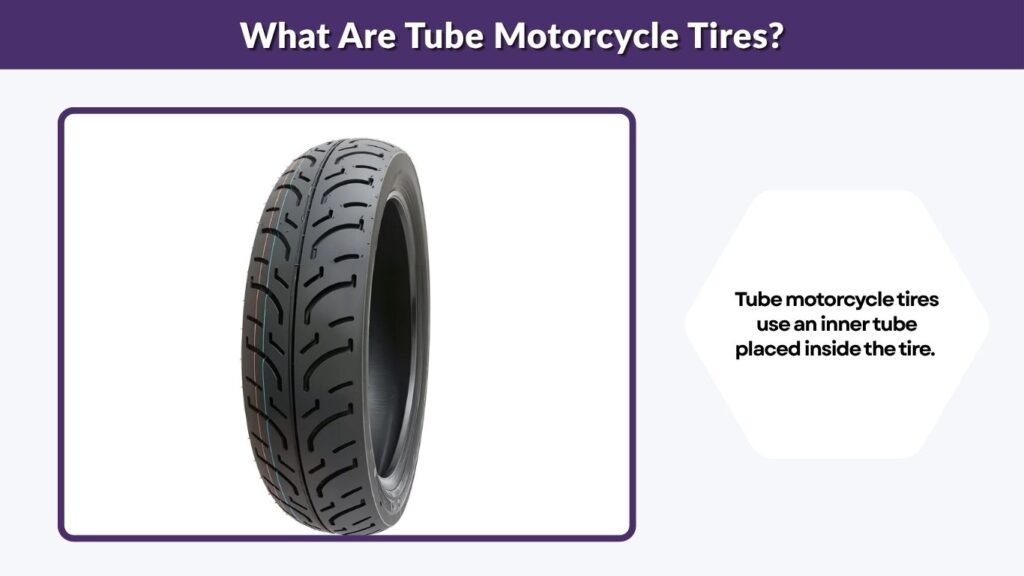
Tube motorcycle tires use an inner tube placed inside the tire. The tube holds the air, while the outer tire provides grip, structure, and protection. This setup has been used for many years and is still common on motorcycles designed for rough terrain.
How Tube Tires Work
In a tube-type setup, the inner tube sits between the tire and the rim. When the tire is inflated, the tube expands and presses the tire outward. The tube has its own valve stem, which passes through the rim.
If a sharp object punctures the tire and reaches the tube, the tube loses air. Depending on the damage, air loss can happen quickly. A pinched or torn tube can also cause a sudden flat.
Common Uses of Tube Tires
Tube tires are often used on motorcycles with traditional spoked wheels. Many spoked rims have holes for the spokes, making them harder to seal for tubeless use.
Tube tires are commonly found on:
- Dirt bikes
- Dual-sport motorcycles
- Older motorcycles
- Some adventure bikes
- Classic motorcycles
- Off-road motorcycles
Tube setups are still valued because they work well with flexible spoked wheels and are easier to repair in remote areas if the rider has tools and spare tubes.
Tubeless vs Tube Motorcycle Tires: Main Differences
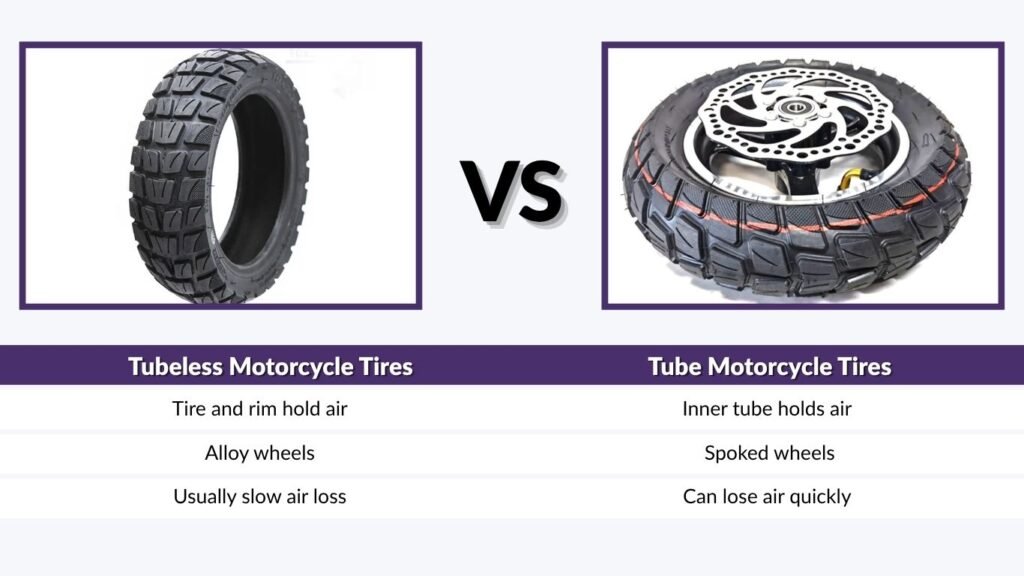
The biggest difference is how each system holds air. Tubeless tires hold air between the tire and rim, while tube tires rely on a separate inner tube.
| Feature | Tubeless Motorcycle Tires | Tube Motorcycle Tires |
|---|---|---|
| Air storage | Tire and rim hold air | Inner tube holds air |
| Common wheel type | Alloy wheels | Spoked wheels |
| Puncture behavior | Usually slow air loss | Can lose air quickly |
| Roadside repair | Often easier with plug kit | Usually requires wheel removal |
| Heat buildup | Lower | Higher due to tube friction |
| Cost | Often higher | Usually lower |
| Best use | Street, touring, commuting | Off-road, classic, adventure |
Safety During Punctures
Tubeless tires usually handle punctures better on paved roads. If a nail enters the tire, air often leaks slowly instead of escaping instantly. This gives the rider time to reduce speed and stop safely.
Tube tires can lose air faster when the inner tube is punctured. A small object may tear the tube or cause a rapid leak. At high speed, this can be more dangerous because the tire may deflate suddenly.
Repair Convenience
Tubeless tires are easier to repair temporarily. A rider can often use a tire plug kit without removing the wheel. This is a major advantage for touring, commuting, and long-distance riding.
Tube tires are more difficult to repair on the roadside. In most cases, the wheel must be removed, the tire bead must be broken, and the inner tube must be patched or replaced.
Heat and Performance
Tubeless tires generally produce less internal friction because there is no tube rubbing inside the tire. Less friction can mean less heat buildup, especially at highway speeds.
Tube tires can create more heat because the tube and tire move slightly against each other. This is usually not a problem for normal use, but it can matter during long, high-speed rides or heavy-load riding.
Pros and Cons of Tubeless Motorcycle Tires
Tubeless motorcycle tires offer many practical benefits, especially for riders who spend most of their time on paved roads.
| Pros of Tubeless Tires | Cons of Tubeless Tires |
|---|---|
| Slower air loss after many punctures | Requires compatible rim |
| Easier roadside repair with plug kit | Not ideal for all spoked wheels |
| Less heat buildup | Bead damage can cause air leaks |
| No inner tube needed | May cost more upfront |
| Better for highway riding | Harder to seat without proper tools |
Advantages of Tubeless Tires
The biggest advantage of tubeless tires is puncture control. Small punctures are often easier to manage, and many can be repaired without removing the wheel. This makes tubeless tires very convenient for daily riders and long-distance motorcyclists.
Tubeless tires also reduce the chance of sudden deflation. While they can still go flat, they often lose air more gradually than tube tires. This gives the rider more control in many emergency situations.
Another benefit is lower heat buildup. Since there is no tube inside the tire, there is less friction. This makes tubeless tires a strong choice for highway use, touring, and heavy motorcycles.
Disadvantages of Tubeless Tires
Tubeless tires require compatible wheels. Most alloy wheels support tubeless tires, but many traditional spoked wheels do not. Some spoked wheels are specially designed for tubeless use, but they are usually more expensive.
Another issue is bead sealing. If the rim is bent or the tire bead is damaged, air can leak. In remote areas, fixing a bead leak can be harder than replacing a tube.
Tubeless tires can also be harder to mount and seat properly without the right tools. Some riders may need a compressor or professional installation.
Pros and Cons of Tube Motorcycle Tires
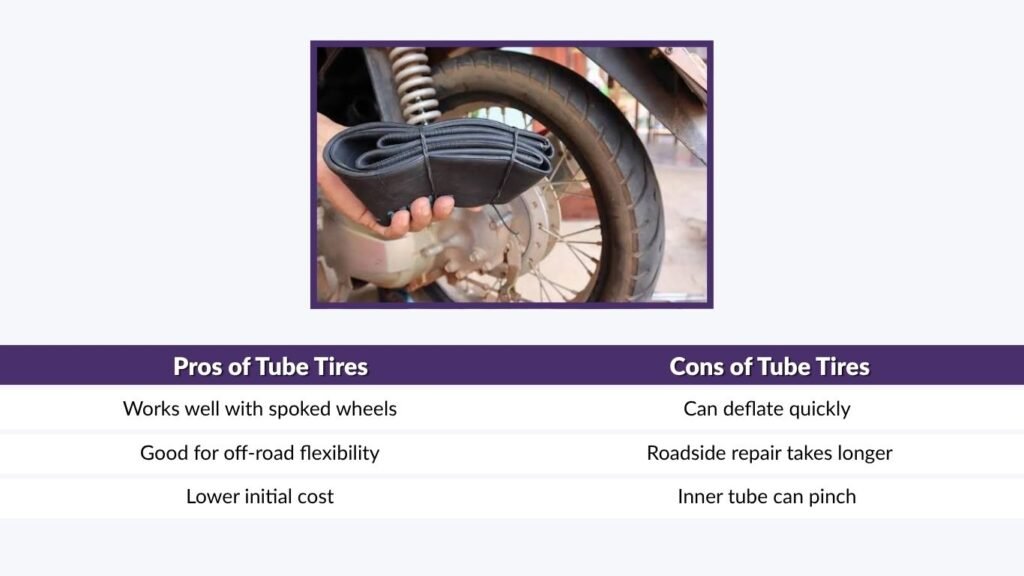
Tube tires are older technology, but they still have strong advantages for certain motorcycles and riding conditions.
| Pros of Tube Tires | Cons of Tube Tires |
|---|---|
| Works well with spoked wheels | Can deflate quickly |
| Good for off-road flexibility | Roadside repair takes longer |
| Easier to replace in remote areas | More heat buildup |
| Lower initial cost | Inner tube can pinch |
| Common on dirt and classic bikes | Requires spare tube or patch kit |
Advantages of Tube Tires
Tube tires are well suited for off-road riding. Many dirt bikes and dual-sport motorcycles use spoked wheels because they are more flexible and durable on rough terrain. Tube tires work naturally with this type of wheel.
Tube setups can also be practical in remote areas. If a tube is damaged, a prepared rider can remove it, patch it, or replace it. For adventure riders traveling far from service stations, carrying spare tubes can be a reliable backup plan.
Another advantage is cost. Tube-type tires and tubes are often less expensive than tubeless setups. For older motorcycles and basic off-road bikes, this can be an affordable solution.
Disadvantages of Tube Tires
The main disadvantage is puncture behavior. When the tube is pierced, the tire may lose air quickly. This is especially risky at higher speeds.
Tube tires are also harder to repair on the roadside. The repair process can be time-consuming and requires more tools. Riders may need tire levers, a pump, a patch kit, and sometimes significant physical effort.
Tube setups are also more prone to pinch flats. This happens when the tube gets squeezed between the rim and tire, often after hitting rocks, potholes, or sharp edges.
Which Tire Type Is Better for Street Riding?
For street riding, tubeless tires are usually the better choice. They are easier to repair, safer during many punctures, and better suited for highway speeds.
Daily Commuting
Commuters benefit from tubeless tires because punctures are easier to handle. If a small nail causes a leak, a plug kit may get the rider back on the road quickly. This is useful for riders who depend on their motorcycle every day.
Tube tires can still work for commuting, especially on older or smaller motorcycles. However, a flat tire can be more inconvenient because repair often takes longer.
Highway and Touring
Tubeless tires are strongly preferred for highway and touring motorcycles. Long-distance riders need reliability and easy repair options. A tubeless plug kit is small, lightweight, and simple to carry.
Touring riders also benefit from lower heat buildup. Since highway riding generates heat, tubeless tires are often more suitable for long rides at steady speeds.
Which Tire Type Is Better for Off-Road Riding?
For off-road riding, tube tires are still common and useful. Dirt bikes and many dual-sport motorcycles use spoked wheels, which handle rough impacts better than many alloy wheels.
Dirt Bikes and Trail Riding
Tube tires are common on dirt bikes because they work well with spoked rims. Off-road riders often lower tire pressure for better traction, and spoked wheels can absorb impacts from rocks, roots, and jumps.
However, tube tires can get pinch flats when pressure is too low. Some off-road riders use heavy-duty tubes, rim locks, or mousse inserts to reduce this problem.
Adventure Motorcycles
Adventure motorcycles can use either tube or tubeless tires, depending on wheel design. Some premium adventure bikes use tubeless spoked wheels, giving riders the benefits of both systems.
For riders who spend more time on highways and gravel roads, tubeless adventure tires are convenient. For riders going deep into remote trails, tube tires may be easier to service with basic tools.
Cost and Maintenance Comparison
Cost depends on the motorcycle, tire brand, wheel type, and riding conditions. Tubeless tires may cost more upfront, but they can save time and hassle during punctures.
Tubeless Tire Maintenance
Tubeless tires require regular pressure checks and rim inspection. The bead and valve stem must stay sealed properly. If the tire gets a small puncture, a plug repair may be possible.
Riders should carry:
- Tubeless plug kit
- Portable inflator
- Tire pressure gauge
- Valve core tool
- Emergency sealant if suitable
Tubeless maintenance is simple for most street riders, but serious tire damage still requires professional repair or replacement.
Tube Tire Maintenance
Tube tires require pressure checks, tire inspections, and occasional tube replacement. When replacing a tire, many riders also replace the tube to avoid future problems.
Riders should carry:
- Spare tube
- Patch kit
- Tire levers
- Portable pump
- Wrench tools for wheel removal
Tube tire maintenance is more hands-on, especially for off-road and adventure riders.
Can You Convert Tube Tires to Tubeless?
Some motorcycle wheels can be converted from tube to tubeless, but it depends on the rim design. Many standard spoked wheels are not naturally airtight because air can escape through spoke holes.
Conversion kits are available, but they must be installed carefully. A poor conversion can lead to air leaks or unsafe riding conditions.
When Conversion Makes Sense
A tubeless conversion may make sense if you ride mostly on roads and want easier puncture repair. Adventure riders sometimes convert rear wheels to tubeless because rear flats are harder to repair on the trail.
When to Avoid Conversion
Avoid conversion if the rim is damaged, heavily corroded, or not suitable for sealing. Also avoid DIY conversion if you are unsure about safety. Motorcycle tires handle high loads and speeds, so poor sealing can be dangerous.
For many riders, using the tire type recommended by the motorcycle manufacturer is the safest option.
Which One Should You Choose?
Choose tubeless motorcycle tires if you ride mostly on streets, highways, or long-distance routes. They offer easier puncture repair, better heat control, and slower air loss in many puncture situations.
Choose tube motorcycle tires if you ride off-road, use traditional spoked wheels, or own a classic motorcycle designed for tubes. They are practical, affordable, and still trusted for dirt and adventure riding.
The best choice depends on your motorcycle’s wheels and your riding needs. Tubeless is usually better for modern street motorcycles, while tube tires remain useful for off-road and classic motorcycles.
FAQs
Are tubeless motorcycle tires safer than tube tires?
Tubeless motorcycle tires are often safer during small punctures because they usually lose air more slowly. This gives the rider more time to stop safely. However, both tire types can be safe when properly installed, maintained, and used on compatible wheels.
Can I put a tube in a tubeless motorcycle tire?
Yes, in many cases, a tube can be installed inside a tubeless motorcycle tire as an emergency or compatibility solution. However, the tire and rim must be suitable for the setup. Always follow the motorcycle and tire manufacturer’s recommendations.
Why do dirt bikes use tube tires?
Dirt bikes often use tube tires because they have spoked wheels, which are strong and flexible for off-road impacts. Traditional spoked rims are not airtight, so they need inner tubes to hold air. Heavy-duty tubes are also common for rough terrain.
Can tubeless motorcycle tires go flat?
Yes, tubeless motorcycle tires can still go flat. Large cuts, bead leaks, valve damage, or severe punctures can cause air loss. The advantage is that many small punctures leak slowly and may be repaired with a plug kit.
Which tire is better for long-distance motorcycle touring?
Tubeless tires are usually better for long-distance touring because they are easier to repair on the roadside and produce less internal heat. A tubeless plug kit and portable inflator can help riders handle many common punctures without removing the wheel.