
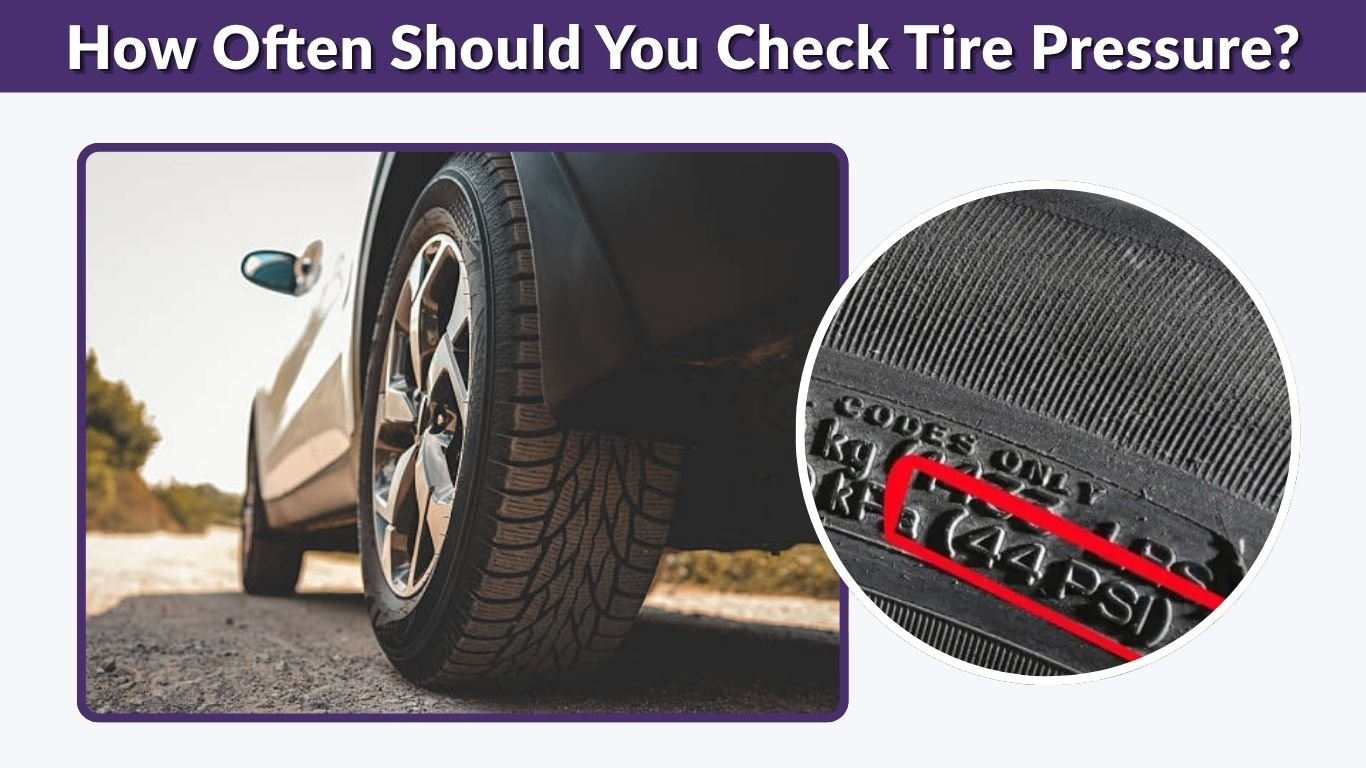
Maintaining the right tire pressure is one of the simplest ways to improve vehicle safety, fuel efficiency, and tire lifespan. However, many drivers overlook this essential maintenance task until a warning light appears. So, how often should you check tire pressure? The answer depends on driving conditions, temperature changes, and your vehicle’s needs. Understanding when and how to check tire pressure can help prevent premature tire wear, improve handling, and keep your vehicle running safely.
How Often Should You Check Tire Pressure?
You should check your tire pressure at least once a month and before every long road trip. The National Highway Traffic Safety Administration (NHTSA) recommends checking all tires, including the spare, when they are cold. Regular inspections help identify gradual air loss and prevent problems caused by underinflated or overinflated tires.
Recommended Tire Pressure Checking Frequency
Different driving conditions may require more frequent inspections. Following a consistent schedule helps maintain the correct inflation level.
| Driving Condition | Recommended Frequency |
|---|---|
| Normal daily driving | Once a month |
| Frequent or heavy driving | Every 1–2 weeks |
| Before long road trips | Before departure |
| During winter | Monthly and after major temperature drops |
| After hitting a pothole | Check immediately when safe |
| After a tire pressure warning | As soon as safely possible |
| Vehicle stored for several weeks | Before driving again |
These intervals provide a practical maintenance routine. Monthly checks are the general minimum, while additional checks are sensible when circumstances change.
Why Is Checking Tire Pressure Regularly Important?
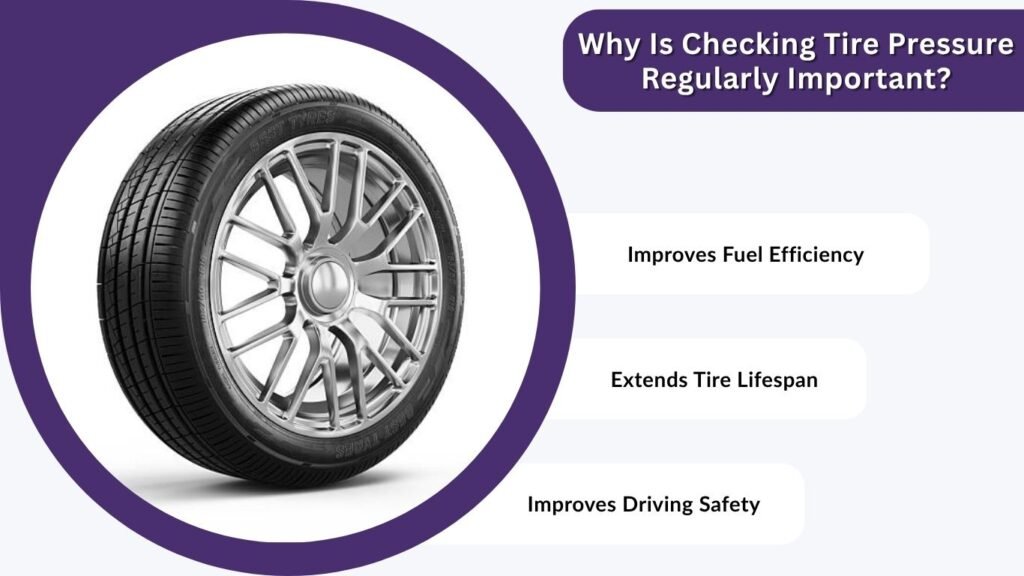
Tire pressure directly affects how your vehicle handles, brakes, and consumes fuel. Even a small pressure difference can affect tire performance over time. Tires naturally lose air through the rubber and may lose additional pressure because of temperature changes or minor leaks. Checking regularly allows drivers to identify problems before they become expensive or dangerous.
Improves Fuel Efficiency
Underinflated tires create additional rolling resistance, forcing the engine to work harder. This can increase fuel consumption, especially during frequent highway driving.
Maintaining the recommended pressure reduces unnecessary resistance and helps your vehicle operate efficiently.
Extends Tire Lifespan
Incorrect tire pressure causes uneven tread wear. Underinflated tires often wear more heavily along the shoulders, while overinflated tires can experience excessive wear near the center.
Proper inflation distributes the load more evenly across the tread, helping tires last longer and potentially reducing replacement costs.
Improves Driving Safety
Low tire pressure increases heat buildup and can contribute to tire failure. It may also reduce steering responsiveness and affect vehicle stability.
Overinflation can reduce ride comfort and make tires more vulnerable to certain road impacts. Correct pressure supports predictable handling and safer driving.
When Is the Best Time to Check Tire Pressure?
The best time to check tire pressure is in the morning before driving or after your vehicle has been parked for at least three hours. Tire pressure rises as the tires warm during driving, which can make readings higher than the recommended cold inflation pressure. Checking at the correct time helps you avoid unnecessary adjustments.
Check Tire Pressure When Tires Are Cold
A cold tire is generally one that has not been driven for at least three hours. Most vehicle manufacturers specify recommended tire pressure based on cold measurements.
For accurate results:
- Measure pressure before beginning your daily drive.
- Park the vehicle for at least three hours before checking.
- Use a reliable digital or mechanical pressure gauge.
- Compare the reading with the vehicle manufacturer’s recommended PSI.
Avoid releasing air from hot tires simply because the reading exceeds the recommended cold pressure.
Check Before Long Road Trips
Long-distance travel places additional demands on tires, particularly when the vehicle carries passengers and luggage.
Before traveling, inspect tire pressure, tread condition, sidewalls, and the spare tire. Follow any manufacturer-specified pressure adjustments for heavy loads.
How Often Should You Check Tire Pressure in Winter?
Cold weather can cause tire pressure to decrease, making regular inspections particularly important during winter. As temperatures fall, the air inside the tire contracts, reducing the measured pressure. This can activate the tire pressure monitoring system even when the tire has no puncture. Checking after significant temperature changes helps maintain proper inflation.
How Temperature Affects Tire Pressure
Tire pressure typically changes by approximately 1 PSI for every 10°F change in ambient temperature. For example, a tire measuring 35 PSI in warmer weather may measure about 32 PSI after a 30°F temperature drop.
This relationship is approximate and depends on conditions. Check pressure when tires are cold rather than relying on temperature calculations alone.
Should You Check Tire Pressure More Often in Winter?
Monthly checks remain the standard recommendation, but additional measurements are helpful after sudden cold spells.
If your tire pressure warning light appears during cold weather, measure all tires and inflate them according to the vehicle manufacturer’s specifications.
Do not intentionally overinflate tires to compensate for future temperature changes.
How to Check Tire Pressure Correctly
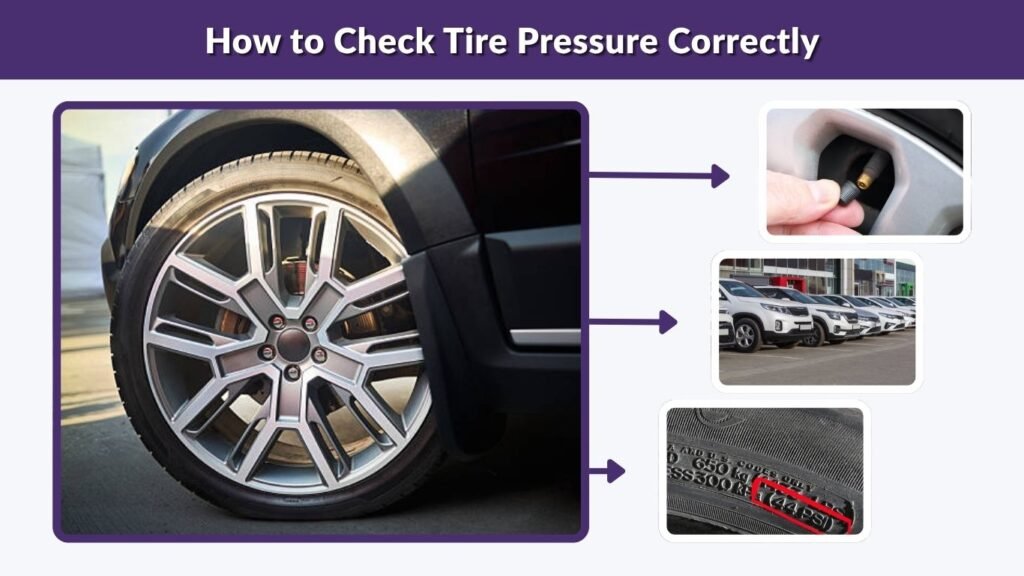
Checking tire pressure is a straightforward maintenance task that usually requires only a few minutes. You need an accurate pressure gauge and access to an air compressor if inflation adjustments are necessary. Understanding the correct procedure ensures reliable readings and prevents common mistakes, such as using the maximum tire pressure printed on the sidewall.
Step-by-Step Tire Pressure Checking Guide
- Find the recommended PSI: Look for the tire information sticker inside the driver’s doorjamb or consult your owner’s manual.
- Park your vehicle: Allow the tires to cool for at least three hours.
- Remove the valve cap: Unscrew the cap from the tire valve stem.
- Attach the pressure gauge: Press it firmly against the valve until you receive a stable reading.
- Compare the PSI: Check whether the measured pressure matches the recommended value.
- Adjust if necessary: Add air when pressure is low or carefully release air when pressure is excessive.
- Recheck and replace the cap: Confirm the correct PSI and repeat the procedure for every tire, including the spare when accessible.
Always follow the pressure recommendation for your specific vehicle rather than assuming all four tires require identical inflation.
What Happens If You Don’t Check Tire Pressure Regularly?
Neglecting tire pressure maintenance can gradually affect vehicle performance and create safety risks. Because many modern tires maintain their shape even when underinflated, visual inspection alone may not reveal a problem. Using a pressure gauge regularly helps identify changes before they cause excessive wear, handling difficulties, or unexpected tire failure.
Common Problems Caused by Incorrect Pressure
- Reduced fuel economy: Underinflation increases rolling resistance.
- Uneven tire wear: Incorrect inflation can shorten tread life.
- Poor vehicle handling: Steering and cornering responses may become less predictable.
- Increased tire temperature: Excessive heat can damage underinflated tires.
- Higher risk of tire failure: Continued driving with insufficient pressure can weaken tire structure.
If one tire repeatedly loses pressure faster than the others, arrange a professional inspection for punctures, valve damage, or wheel-sealing problems.
Do You Still Need to Check Tire Pressure With TPMS?
Yes. Even vehicles equipped with a Tire Pressure Monitoring System (TPMS) require manual pressure checks. Many systems primarily warn drivers when tire pressure becomes significantly low, rather than identifying every small pressure change. Therefore, relying exclusively on the dashboard warning light may allow gradual underinflation to continue unnoticed.
Why Manual Tire Pressure Checks Matter
A TPMS is a valuable safety feature, but it does not replace routine maintenance.
Some systems display individual tire pressures, while others provide only a general warning. System accuracy, warning thresholds, and operation vary by vehicle.
The NHTSA recommends continuing monthly manual checks even when your vehicle has TPMS.
What Is the Correct Tire Pressure for Your Vehicle?
The correct tire pressure depends on the vehicle manufacturer, tire specifications, and operating conditions. Many passenger vehicles have recommended cold pressures in the general range of 30–35 PSI, but this is not a universal requirement. Some cars, SUVs, and trucks require substantially different pressures, and front and rear recommendations may differ.
Where to Find Recommended Tire Pressure
The most reliable sources are the driver’s doorjamb tire information label and the vehicle owner’s manual.
Do not confuse the maximum pressure printed on the tire sidewall with the recommended operating pressure. The sidewall value is not necessarily suitable for your particular vehicle.
Follow the manufacturer’s specifications, including separate recommendations for heavy loads when provided.
FAQs
1. Should You Check Tire Pressure Every Week?
Weekly checks are generally unnecessary for normal passenger vehicle use, but they can be helpful for frequent drivers, vehicles operating under demanding conditions, or tires with suspected pressure loss. At least one monthly check remains the standard recommendation.
2. How Often Should You Put Air in Your Tires?
You should add air whenever a cold-pressure measurement falls below the manufacturer’s recommended PSI. There is no fixed inflation schedule because air loss varies with temperature, tire condition, and driving circumstances.
3. Can You Check Tire Pressure After Driving?
Yes, but the reading will usually be higher because the tires have warmed up. For the most accurate comparison with the recommended cold PSI, allow your vehicle to sit for at least three hours before measuring.
4. How Much Tire Pressure Loss Is Normal Per Month?
Tires commonly lose approximately 1 PSI per month through natural air permeation. Temperature changes can cause additional fluctuations. Rapid or repeated pressure loss in one tire may indicate a leak requiring professional attention.
5. Should You Check the Spare Tire Pressure?
Yes. Check the spare tire at least once a month and before long trips. Some compact spare tires require significantly higher inflation pressures than regular tires, so always follow their specific manufacturer recommendations.