
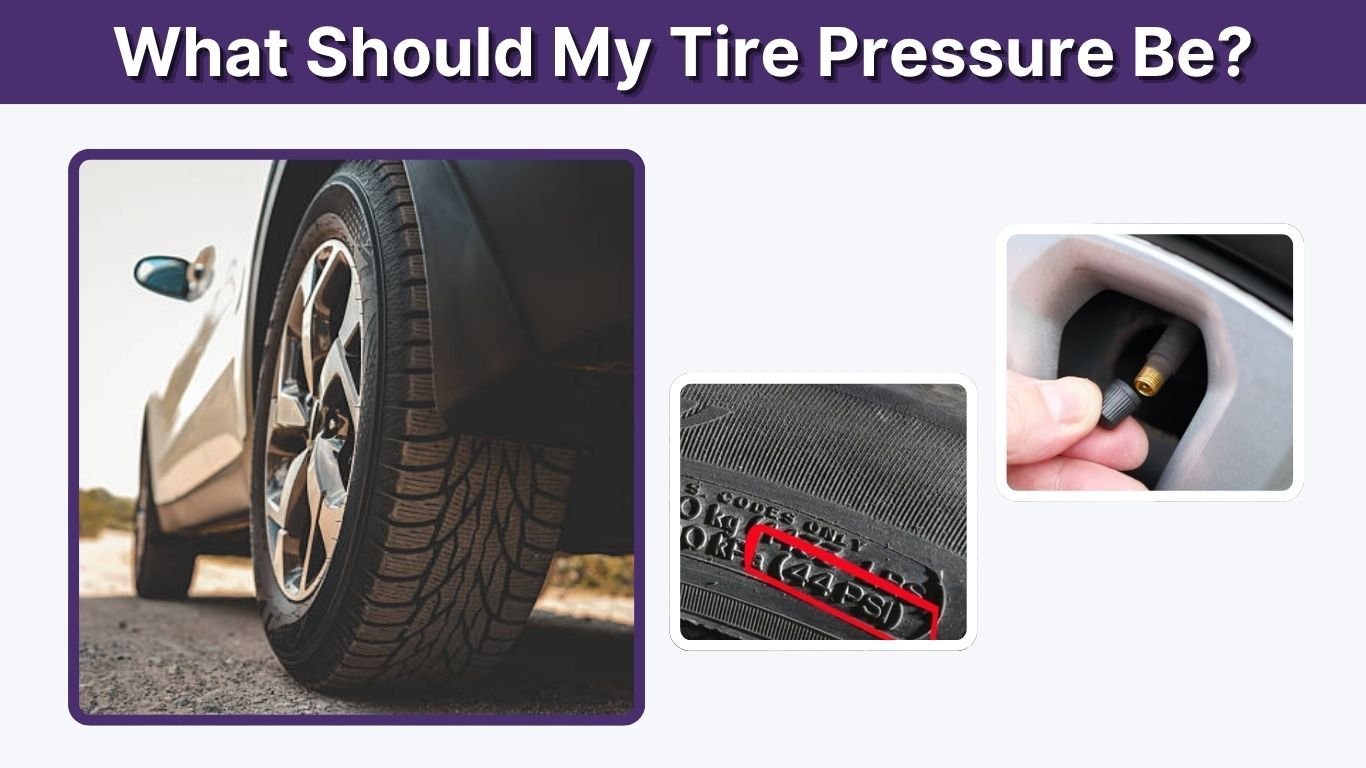
Your tire pressure might seem like a small detail, but it can make a big difference in how your vehicle handles, brakes, and uses fuel. So, what should my tire pressure be? For many passenger cars, the recommended pressure is around 30–35 PSI, although the correct number depends on your vehicle. Understanding how to find and maintain that pressure helps you drive safely, prevent uneven tire wear, and avoid unnecessary expenses.
What Should My Tire Pressure Be?
The correct tire pressure depends on your vehicle’s manufacturer recommendations, tire specifications, and loading conditions. Most everyday passenger vehicles use pressures somewhere around 30–35 PSI, but some require higher or lower values.
PSI stands for pounds per square inch, the measurement used to describe tire inflation pressure.
For accurate information, check the tire information sticker inside your driver’s door or consult your owner’s manual.
Recommended Tire Pressure by Vehicle Type
The following figures are general examples rather than specific vehicle recommendations.
| Vehicle type | Illustrative PSI range |
|---|---|
| Compact cars | 30–35 PSI |
| Sedans | 30–35 PSI |
| SUVs | 32–38 PSI |
| Minivans | 33–38 PSI |
| Light pickup trucks | 30–40 PSI |
| Heavy-duty trucks | Varies widely with tires and load |
Some trucks require substantially higher pressures, particularly when carrying heavy loads. Always follow the manufacturer’s instructions instead of relying on a general chart.
How to Find the Correct Tire Pressure for Your Car
Finding the correct pressure is easier than guessing whether your tires need more air. Vehicle manufacturers determine recommended inflation levels based on tire size, load capacity, and handling requirements. These recommendations provide the most reliable starting point for maintaining proper inflation during regular driving.
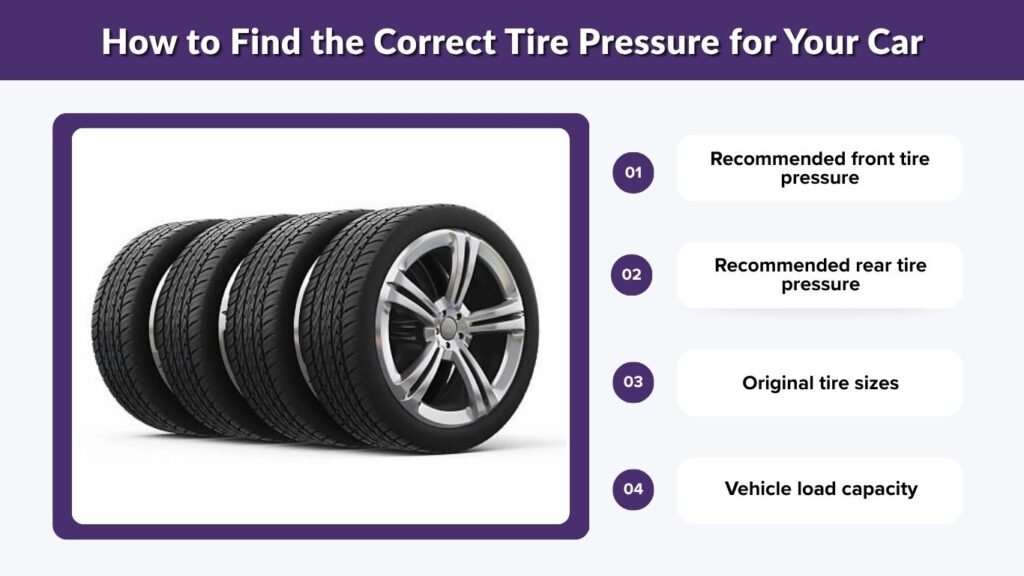
Open the driver’s door and locate the Tire and Loading Information label. It usually lists:
- Recommended front tire pressure
- Recommended rear tire pressure
- Original tire sizes
- Vehicle load capacity
For example, your sticker might recommend 33 PSI for the front tires and 32 PSI for the rear tires.
Those figures are examples only. Follow the numbers printed on your vehicle’s actual label.
Check Your Owner’s Manual
Your vehicle’s owner’s manual provides additional information about tire pressure, including recommendations for different loading conditions.
Some vehicles specify separate pressures for normal driving and heavy loads. These guidelines are particularly important when transporting passengers, luggage, or equipment.
Never Use the Tire Sidewall Maximum as Your Target
A tire sidewall may display a maximum pressure of 44 or 51 PSI. That doesn’t mean you should inflate the tire to that pressure for everyday driving.
The sidewall value indicates the tire’s maximum permitted inflation pressure, not the vehicle’s recommended operating pressure.
Is 30, 32, 35, or 40 PSI Good Tire Pressure?
Many drivers wonder whether a particular PSI reading is safe. The answer depends on the vehicle, not simply the number. A pressure that works perfectly for one car could cause poor handling or tire wear on another. Understanding these common readings can help you avoid unnecessary adjustments.
Is 30 PSI Too Low?
Not necessarily. If your vehicle recommends 30 PSI, that reading is correct.
However, if the manufacturer’s recommended pressure is 36 PSI, a reading of 30 PSI indicates underinflation.
Is 32 PSI a Good Tire Pressure?
Yes, 32 PSI is appropriate for many passenger cars. It provides suitable inflation when specified by the manufacturer.
However, you should never assume 32 PSI is correct for every vehicle.
Is 35 PSI Too High?
For many cars and SUVs, 35 PSI is a normal recommended pressure.
If your vehicle requires 30 PSI, though, inflating to 35 PSI could be excessive and affect ride comfort or tire wear.
Is 40 PSI Too High?
A cold reading of 40 PSI may be appropriate for certain vehicles, but too high for others.
If your vehicle recommends 33 PSI, you should not deliberately inflate your cold tires to 40 PSI.
How to Check Tire Pressure Correctly
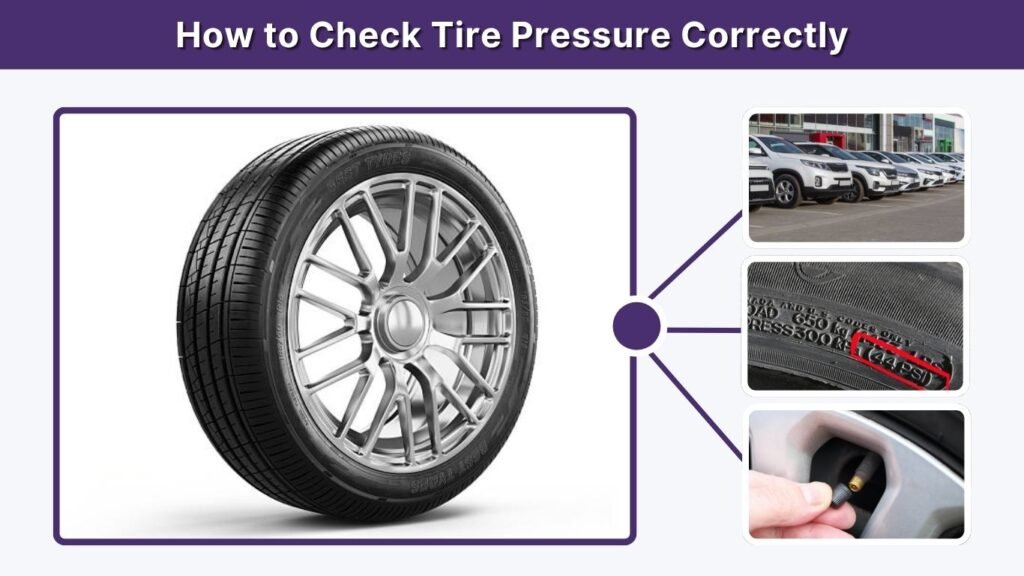
Checking tire pressure takes only a few minutes and requires a reliable tire pressure gauge. Regular inspections can reveal gradual air loss, help prevent uneven tire wear, and reduce the chances of driving on dangerously underinflated tires.
Step-by-Step Tire Pressure Check
- Park your vehicle: Check when the tires are cold, ideally before driving or after at least three hours of being parked.
- Find the recommended PSI: Read the driver’s door sticker or owner’s manual.
- Remove the valve cap: Unscrew the small cap from the tire’s valve stem.
- Attach the gauge: Press the gauge firmly onto the valve until you receive a reading.
- Compare the numbers: Determine whether the pressure matches the manufacturer’s recommendation.
- Adjust if necessary: Add air if pressure is low, or release air if the cold pressure is too high.
- Check again: Confirm the reading and replace the valve cap.
Repeat the process for all four tires and check your spare tire when applicable.
Should Tire Pressure Be Different in Winter and Summer?
Tire pressure changes naturally with temperature, which can make seasonal maintenance particularly important. Colder air generally reduces pressure, while warmer conditions increase it. However, drivers should continue following their vehicle manufacturer’s recommended cold tire pressure rather than choosing arbitrary seasonal settings.
Tire Pressure in Winter
Cold temperatures can make tires appear underinflated even when they were properly inflated during warmer weather.
As a general rule, tire pressure changes by approximately 1 PSI for every 10°F change in temperature.
For example, a tire measuring 35 PSI in warmer weather might drop to approximately 32 PSI after a 30°F temperature decrease.
Check pressure more frequently during major temperature changes and restore it to the recommended cold PSI.
Tire Pressure in Summer
Hot weather and driving increase tire temperature, which raises internal pressure.
This increase is normal. Avoid releasing air simply because a warm tire shows a higher reading than the manufacturer’s cold-pressure recommendation.
Check the tires after they cool before making routine adjustments.
What Happens If Tire Pressure Is Too Low or Too High?
Incorrect tire pressure can affect vehicle safety, tire longevity, and driving performance. Both underinflation and overinflation create problems, although their effects differ. Recognizing the warning signs can help you address problems before they result in expensive repairs or dangerous driving conditions.
Problems Caused by Low Tire Pressure
- Increased rolling resistance and fuel consumption
- Excessive heat buildup inside the tire
- Faster wear along the tire’s shoulders
- Reduced steering responsiveness
- Greater risk of tire damage or failure
Problems Caused by High Tire Pressure
- Harsher ride quality
- Potentially reduced ride comfort and traction
- Increased wear near the center of the tread
- Greater vulnerability to certain impact damage
- Changes in braking and handling performance
Proper inflation helps maintain the tire’s intended contact with the road.
How Often Should You Check Your Tire Pressure?
Drivers should check their tire pressure at least once a month and before long-distance road trips.
Additional checks are useful after significant temperature changes, hitting a pothole, or noticing unusual vehicle handling.
Even vehicles with Tire Pressure Monitoring Systems (TPMS) need regular manual inspections. TPMS warnings generally appear only after pressure falls significantly below the expected level.
If the warning light illuminates, inspect your tires promptly. If a tire is flat or visibly damaged, avoid driving until the issue is addressed.
Final Thoughts on Proper Tire Pressure
Knowing what your tire pressure should be is essential for safer, more comfortable driving. Although 30–35 PSI is common for many passenger cars, your vehicle’s recommended cold tire pressure is the number that matters most.
Frequently Asked Questions
1. What is the ideal tire pressure for everyday driving?
The ideal pressure is the manufacturer’s recommended cold PSI, commonly around 30–35 PSI for many passenger cars. Check your driver’s door sticker for the exact figure.
2. Should all four tires have the same PSI?
Not always. Some vehicles require different front and rear tire pressures. Follow the manufacturer’s specifications for each axle.
3. Is it safe to drive with 28 PSI?
It depends on the vehicle. If the recommendation is 35 PSI, a reading of 28 PSI is considerably low and should be corrected before continued driving.
4. Should I inflate my tires to the maximum PSI?
No. The tire’s maximum sidewall pressure is not the recommended operating pressure. Use the vehicle manufacturer’s cold inflation specification.
5. Why does my tire pressure keep dropping?
Tires naturally lose some air over time, and colder temperatures lower pressure readings. Repeated or rapid pressure loss may indicate a puncture, leaking valve, or damaged wheel.