
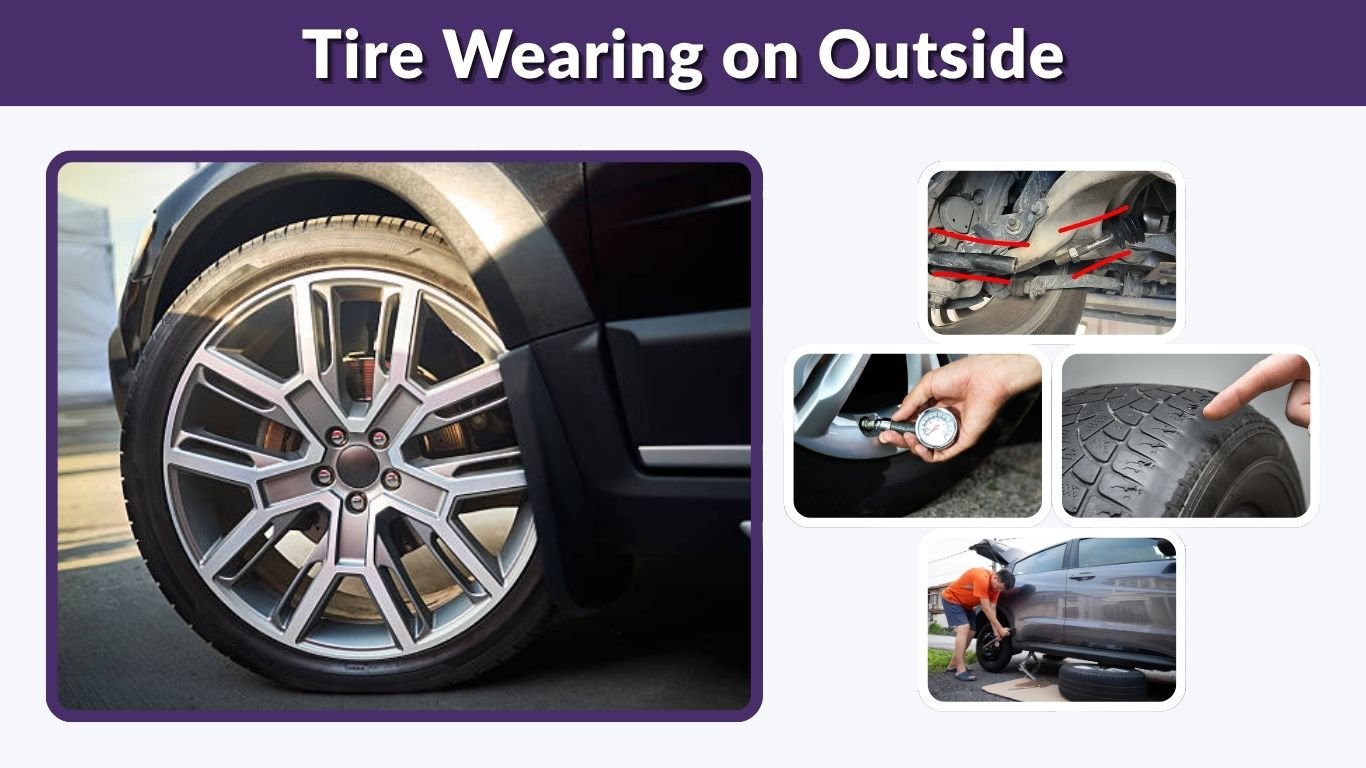
Tire wearing on outside edges is a common problem that can affect vehicle safety, handling, and tire lifespan. When the outer shoulder wears faster than the center or inner tread, it often indicates incorrect wheel alignment, improper tire pressure, or worn suspension components. Ignoring this uneven wear can lead to reduced traction and expensive tire replacements. Understanding why your tire is wearing on the outside helps you identify the underlying problem, choose the right repair, and prevent premature tire damage.
What Does Tire Wearing on the Outside Mean?
Outside tire wear occurs when the outer shoulder of a tire loses tread faster than the rest of its surface. This area is located near the outer sidewall, where the tread meets the side of the tire.
Normally, tire tread should wear relatively evenly across its width. However, excessive pressure or friction concentrated on the outer shoulder causes uneven deterioration.
Outside tire wear can appear in several patterns:
- Outer shoulder wear: Only the outer edge loses tread rapidly.
- Both-edge wear: The inner and outer shoulders wear faster than the center.
- Feathered wear: Tread blocks develop uneven, sharp edges.
- Patchy shoulder wear: Irregular worn areas appear around the tire.
Recognizing these patterns can help determine whether the problem involves alignment, inflation, suspension, or driving habits.
7 Common Causes of Tire Wearing on Outside

Several mechanical problems and driving conditions can cause excessive outer tire wear. Identifying the correct cause is essential because replacing a tire without correcting the underlying issue may result in the same wear pattern returning.
1. Incorrect Wheel Alignment
Incorrect wheel alignment is one of the most common causes of tires wearing on the outside edge. When wheels are not positioned according to manufacturer specifications, tires may scrub against the road instead of rolling smoothly.
Two important alignment angles are camber and toe.
Positive camber means the top of the wheel tilts outward, increasing pressure on the outer shoulder. Incorrect toe settings create sideways friction that can accelerate uneven tread wear.
A professional wheel alignment measures and corrects these angles. Proper alignment improves tire contact with the road and helps prevent premature shoulder wear.
2. Underinflated Tires
Low tire pressure changes how the tread contacts the road. When a tire contains insufficient air, its shoulders support more of the vehicle’s weight, causing both edges to wear faster than the center.
Underinflation also increases tire flexing, heat buildup, and rolling resistance.
Check tire pressure when the tires are cold and inflate them according to the vehicle manufacturer’s recommendations.
If only the outer shoulder is worn, low pressure may be a contributing factor, but alignment problems should also be investigated.
3. Worn Suspension Components
Suspension components help maintain proper wheel positioning during driving. When these parts become damaged or worn, the wheel may tilt or move excessively, causing uneven tire wear.
Common suspension components associated with abnormal tire wear include:
- Worn ball joints
- Damaged control arm bushings
- Weak shock absorbers
- Worn tie rod ends
- Damaged suspension arms
Suspension problems may also cause clunking noises, steering looseness, or vehicle instability.
A mechanic should inspect these components before performing an alignment because worn parts can prevent alignment settings from remaining accurate.
4. Excessive Positive Camber
Camber describes the inward or outward tilt of a wheel when viewed from the front of a vehicle.
Excessive positive camber causes the top of the tire to lean outward, concentrating more load on the outer tread shoulder.
Over time, this uneven contact accelerates wear along the outside edge while leaving more tread toward the center.
Positive camber problems may result from incorrect alignment settings, damaged suspension components, or impacts with potholes and curbs.
Correcting the camber angle according to vehicle specifications helps restore more even tire contact.
5. Aggressive Cornering
Frequent high-speed cornering can accelerate outside shoulder wear, particularly on front tires.
During turns, the vehicle’s weight shifts and lateral forces increase pressure on the tire shoulders. Aggressive steering and repeated hard cornering intensify friction.
Drivers who regularly take corners quickly may notice excessive shoulder wear even when alignment is reasonably close to specification.
Reducing cornering speeds and using smoother steering inputs can help minimize additional wear.
6. Overloading the Vehicle
Carrying excessive weight places additional stress on tires and suspension components.
When the vehicle exceeds its recommended load capacity, tires may flex excessively and operate at higher temperatures. This can accelerate tread wear, particularly when tire pressure is too low for the load.
Overloading can also affect suspension geometry and vehicle handling.
Always follow the manufacturer’s load capacity and tire inflation recommendations, including any specified pressures for carrying heavier loads.
7. Damaged Steering Components
Steering components control wheel direction and help maintain proper alignment.
Worn tie rods, damaged steering linkages, or loose joints can allow unwanted wheel movement. This may change toe alignment while driving and accelerate outer-edge tread wear.
Common warning signs include excessive steering play, unusual vibrations, and difficulty maintaining a straight path.
Replacing damaged steering components and completing a professional alignment can prevent continued tire damage.
Why Are Front Tires Wearing on the Outside?
Front tires often experience more outside shoulder wear because they handle steering forces and substantial cornering loads.
However, excessive wear on one front tire may indicate a specific mechanical or alignment problem.
Front Tire Alignment Problems
Incorrect front toe or camber settings can cause rapid shoulder wear. Hitting potholes or curbs may damage suspension parts or disturb wheel alignment.
A four-wheel alignment inspection can identify incorrect angles and determine whether adjustments or mechanical repairs are necessary.
Driving and Steering Conditions
Frequent sharp turns, aggressive cornering, and repeated low-speed maneuvering can contribute to front tire shoulder wear.
Front-wheel-drive vehicles also transmit engine torque through their front tires, adding another source of tire stress.
Why Is a Rear Tire Wearing on the Outside?
Rear tire outside-edge wear can occur when rear wheel alignment or suspension geometry is incorrect.
Some vehicles use independent rear suspension systems that allow rear camber and toe adjustments. Others require inspection or replacement of damaged components to correct alignment problems.
Worn bushings, bent suspension arms, or previous collision damage may contribute to rear tire wear.
If only one rear tire is wearing excessively, inspect that wheel’s alignment and suspension rather than assuming normal tire wear.
How to Fix Tires Wearing on the Outside
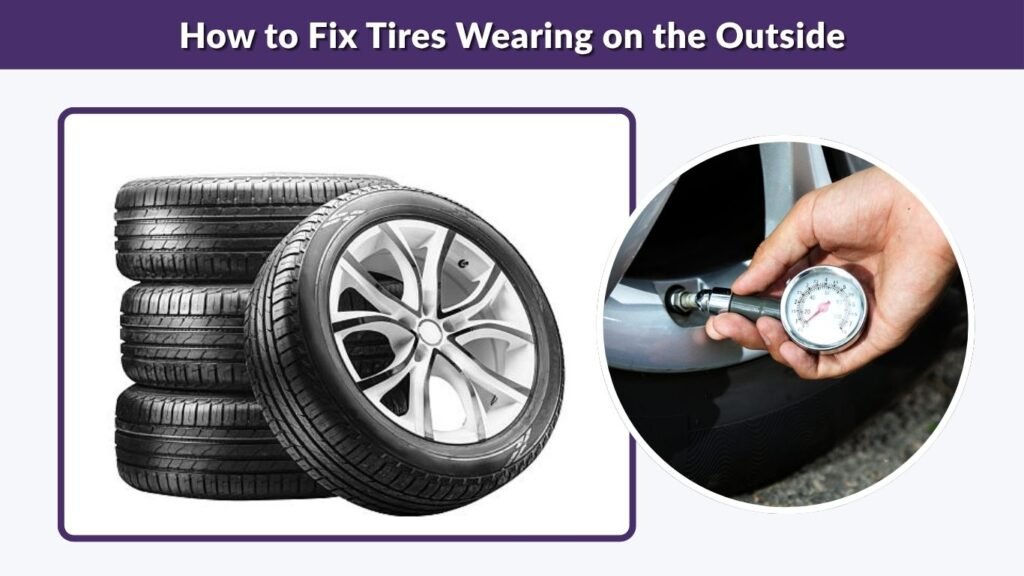
Fixing outside tire wear requires identifying the underlying problem before replacing damaged tires. The following steps can help prevent additional deterioration.
Check Tire Pressure
Measure tire pressure using a reliable gauge when the tires are cold.
Compare the readings with the recommended pressure listed on the driver’s door placard or in the owner’s manual.
Do not automatically use the maximum pressure printed on the tire sidewall.
Get a Wheel Alignment
Schedule a professional wheel alignment if the tire shows one-sided wear, feathering, or unusual steering behavior.
The technician should inspect camber and toe settings and check for damaged components before making adjustments.
Inspect the Suspension System
Have worn ball joints, tie rods, bushings, and shock absorbers inspected.
Replace damaged components before completing the final alignment.
Replace Severely Worn Tires
If the outside tread is below the applicable legal limit, the tire has exposed cords, or its structural integrity is questionable, replacement is necessary.
Correcting tire pressure or alignment will not restore rubber that has already worn away.
Outside Tire Wear vs. Inside Tire Wear
Outside and inside tire wear may look similar, but their underlying causes can differ.
| Tire wear pattern | Possible causes |
|---|---|
| Outside edge only | Excessive positive camber, incorrect toe |
| Inside edge only | Excessive negative camber, incorrect toe |
| Both shoulders | Underinflation |
| Center tread | Overinflation |
| Feathered tread | Incorrect toe alignment |
| Cupped or patchy tread | Suspension problems or wheel imbalance |
These patterns provide useful diagnostic clues, but they do not prove a single cause. A technician should confirm the problem through pressure checks, alignment measurements, and mechanical inspections.
Can You Drive With Tires Wearing on the Outside?
Driving with mild outside tire wear may still be possible if the tire has adequate tread depth and no structural damage.
However, continued driving with severe shoulder wear can reduce traction, particularly on wet roads.
Uneven wear may also contribute to vibration, steering problems, and decreased tire performance.
If the outer shoulder is bald, the tire has exposed cords, or the vehicle feels unstable, avoid driving until a qualified technician has inspected it.
How to Prevent Outside Tire Wear
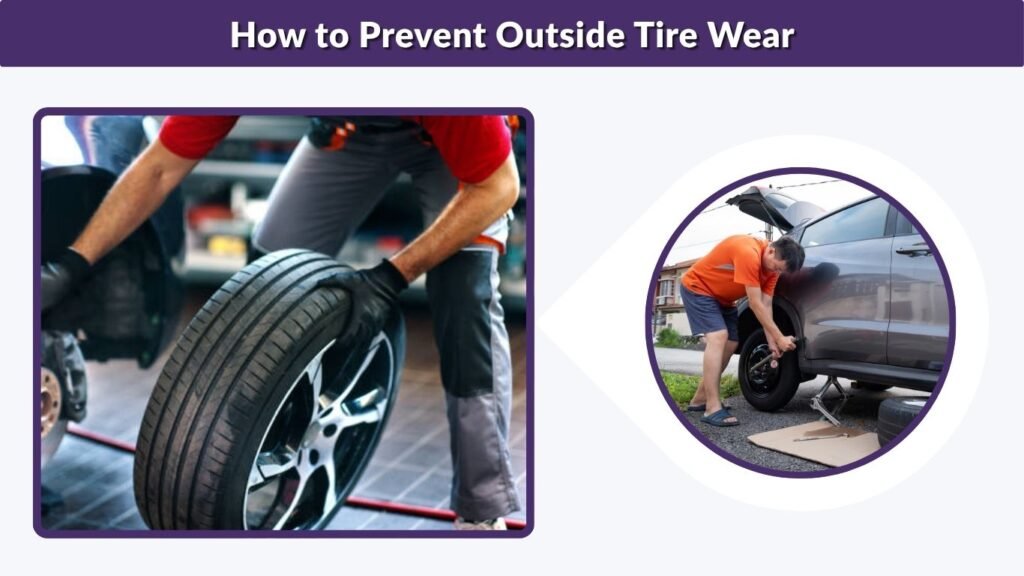
Preventive maintenance can significantly extend tire life and reduce unexpected replacement costs.
Check tire pressure at least once a month and before long trips. Inspect tread depth across the inner, center, and outer portions of every tire.
Rotate tires according to the vehicle manufacturer’s recommended schedule, provided the tires and vehicle support the proposed rotation pattern.
Avoid hitting potholes and curbs whenever possible. After a hard impact, consider an alignment inspection if the steering feels different or uneven wear develops.
Smooth cornering, reasonable vehicle loads, and prompt suspension repairs also help maintain even tread wear.
Conclusion
Tire wearing on outside edges is often caused by incorrect alignment, low tire pressure, damaged suspension components, or aggressive driving habits. The exact wear pattern provides important clues about the underlying problem. Checking inflation pressure, inspecting the suspension, and correcting alignment problems early can prevent additional tire damage. Regular maintenance and timely replacement of unsafe tires help improve handling, maintain traction, and extend tire lifespan.
Frequently Asked Questions
1. What causes a tire to wear only on the outside edge?
The most common causes include excessive positive camber, incorrect toe alignment, and worn suspension or steering components. Aggressive cornering can also contribute to outer shoulder wear.
2. Can low tire pressure cause outside tire wear?
Yes. Underinflated tires typically wear faster on both the inner and outer shoulders because insufficient pressure changes how the tread supports the vehicle’s weight.
3. Will a wheel alignment fix outside tire wear?
A wheel alignment can correct abnormal wear caused by incorrect wheel angles. However, it cannot restore existing tread damage, and worn suspension components must be repaired first.
4. Should I replace a tire worn on the outside?
Replace the tire if its tread is below the applicable minimum, cords are exposed, or a technician determines it is unsafe. Mild wear does not always require immediate replacement.
5. Why is only one front tire wearing on the outside?
One-sided front tire wear may indicate an alignment problem, damaged suspension component, or steering issue affecting that particular wheel. A professional inspection can identify the cause.