
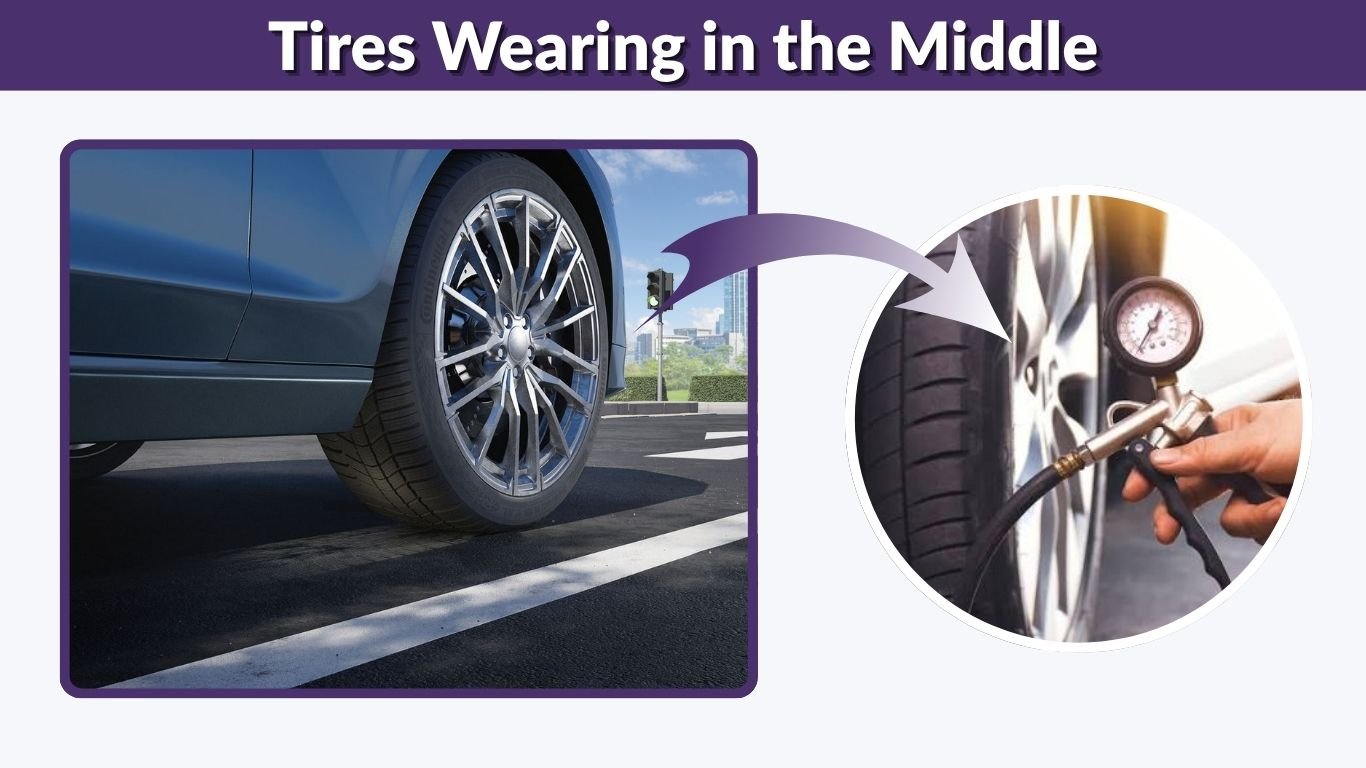
Tires wearing in the middle is a common problem that can reduce tire lifespan, affect vehicle handling, and increase replacement costs. This unusual wear pattern occurs when the center of the tire tread becomes thinner than the outer edges. Overinflated tires are the most common cause, although other factors may contribute to uneven tread wear. Understanding why your tires are wearing in the center can help you identify the problem early, make necessary adjustments, and maintain safer driving conditions.
Why Are My Tires Wearing in the Middle?
Tires typically wear in the middle when they contain more air pressure than the vehicle manufacturer recommends. Excessive inflation changes how the tire contacts the road, causing the center tread to carry a greater portion of the load.
Over time, this concentrated pressure accelerates wear in the middle while the outer edges retain more tread depth.
You may notice several warning signs:
- Center tread wear: The middle grooves become noticeably shallower than the outside grooves.
- Reduced ride comfort: Tires feel harder when traveling over bumps and uneven surfaces.
- Uneven tread depth: The center section wears faster than both shoulders.
- Reduced tire lifespan: Tires may require replacement earlier than expected.
According to Michelin, excessive center tread wear is a common indication of overinflation.
What Causes Tires to Wear in the Middle?
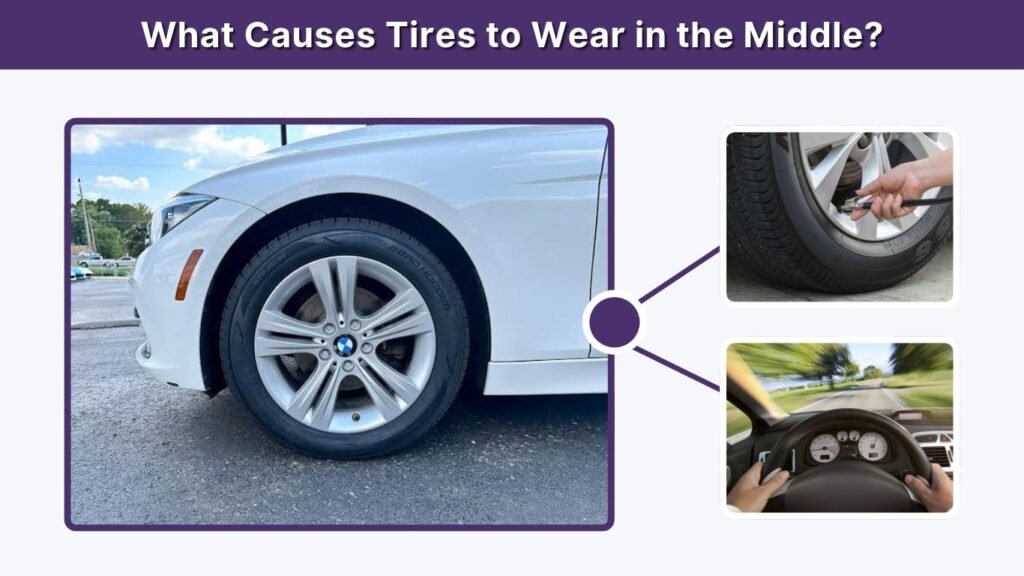
Several factors can contribute to tires wearing in the center. Identifying the actual cause is important before making adjustments or replacing damaged tires.
1. Overinflated Tire Pressure
Overinflation is the primary cause of center tire wear. When tires contain excessive air, their shape and contact-pressure distribution change, placing more stress on the central tread.
This concentrated loading causes the center rubber to wear faster than the edges. Overinflated tires may also provide a harsher ride and reduced traction under certain conditions.
Always follow the manufacturer’s recommended pressure rather than the maximum pressure printed on the tire sidewall.
2. Incorrect Tire and Rim Size
Using tires that are not compatible with the wheel’s rim width may affect the shape of the tire and its contact with the road.
A tire mounted on an unsuitable rim can develop an abnormal tread profile, potentially contributing to uneven wear.
Before installing replacement tires, check the approved tire sizes and wheel specifications for your vehicle. Proper tire-to-rim compatibility helps maintain the intended tire shape and handling performance.
3. Aggressive Driving Habits
Frequent hard acceleration, sudden braking, and high-speed driving can accelerate tire wear.
These behaviors increase friction and loading forces on the tread, particularly on driven wheels. Although aggressive driving does not always produce the classic center-wear pattern associated with overinflation, it can worsen existing tire wear.
Smooth acceleration, controlled braking, and maintaining appropriate speeds can help extend tire life.
4. Improper Tire Maintenance
Infrequent tire-pressure checks and missed rotations can allow uneven wear to develop unnoticed.
Tire pressure changes with temperature, meaning a tire inflated correctly under one condition may need adjustment later.
Regular maintenance helps identify unusual tread patterns before they become severe. However, tire rotation cannot reverse center wear that has already occurred.
How to Fix Tires Wearing in the Middle
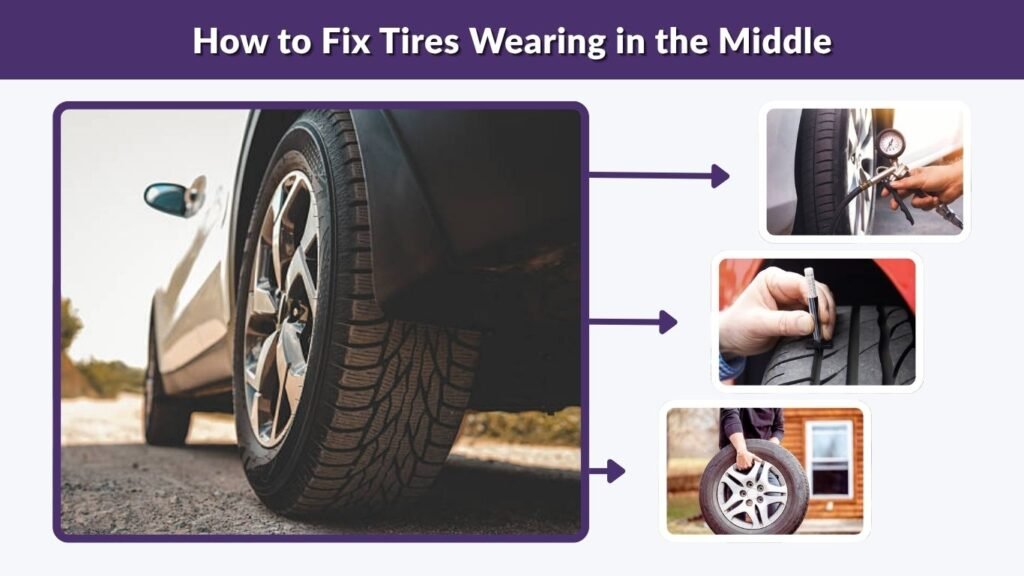
Fixing center tire wear involves identifying and correcting the underlying problem. The following steps can help prevent additional damage.
Check and Adjust Tire Pressure
Use a reliable pressure gauge to check your tires when they are cold, preferably before driving.
Find the recommended PSI on the driver’s door-jamb label or in the owner’s manual. If the pressure is too high, release air gradually until it matches the manufacturer’s recommendation.
Check all four tires because recommended front and rear pressures may differ.
Measure Tire Tread Depth
Use a tread-depth gauge to measure the center and both outer portions of each tire.
Compare the measurements to determine whether center wear is significantly greater than edge wear.
Tires should be replaced when tread depth reaches 2/32 inch in any main tread groove, according to the National Highway Traffic Safety Administration (NHTSA).
Inspect Tires and Wheels
If tire pressure is correct but center wear continues, have a professional inspect the tire size, wheel compatibility, and overall tire condition.
The technician can also check for other irregular patterns that may indicate alignment, suspension, or wheel-balance problems.
Replace Severely Worn Tires
If the center tread is excessively worn, correcting air pressure will not restore the missing rubber.
Replace tires that have reached the tread-wear indicators, have exposed cords, or show other serious damage.
Correct the original cause before installing replacements to avoid repeating the problem.
Is It Safe to Drive With Tires Worn in the Middle?
Driving with tires worn significantly in the middle can become dangerous, especially in wet conditions.
As the center tread becomes shallower, the tire loses some of its ability to channel water away from the contact area. This can increase the risk of hydroplaning.
The severity of the risk depends on the remaining tread depth, weather conditions, and overall tire condition.
Inspect the tires immediately if you notice extreme center wear. Avoid driving on tires with exposed cords or other serious damage, and arrange replacement when required.
Center Tire Wear vs. Edge Tire Wear
Different tire-wear patterns often indicate different maintenance problems.
| Wear pattern | Most common cause |
|---|---|
| Center wearing faster | Overinflated tires |
| Both outer edges wearing faster | Underinflated tires |
| Inner edge wearing faster | Wheel alignment issues |
| Outer edge wearing faster | Alignment or cornering-related wear |
| Cupping or uneven patches | Suspension or wheel-balance issues |
These patterns provide useful diagnostic clues, but a professional inspection may be necessary to confirm the cause.
How to Prevent Tires From Wearing in the Middle
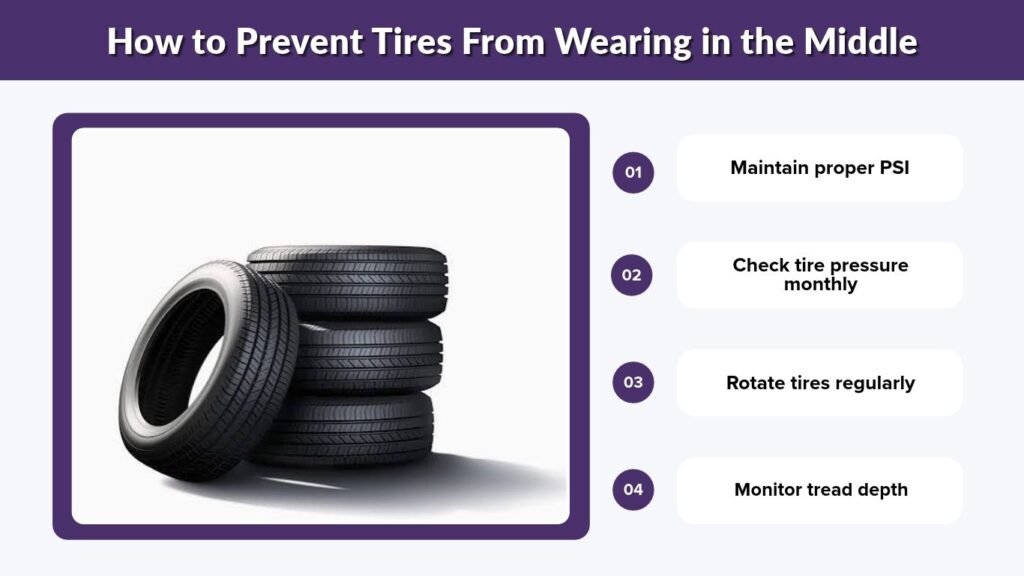
Preventing center tire wear is easier and less expensive than replacing damaged tires.
Follow these maintenance practices:
- Maintain proper PSI: Use the vehicle manufacturer’s recommended cold tire pressure.
- Check tire pressure monthly: Inspect pressure regularly and before long trips.
- Rotate tires regularly: Follow your owner’s manual for the recommended rotation schedule.
- Monitor tread depth: Compare the center and outer edges to identify unusual wear.
- Avoid aggressive driving: Accelerate smoothly and avoid unnecessary hard braking.
- Inspect tire condition: Look for uneven wear, cracks, bulges, or visible damage.
Regular maintenance helps improve tire performance, extend tread life, and identify potential safety problems early.
Frequently Asked Questions
1. Why Are My Front Tires Wearing in the Middle?
Front tires commonly wear in the middle because of excessive air pressure. Incorrect inflation can concentrate loading on the center tread. Check the recommended front tire PSI and compare tread depth across each tire.
2. Why Are My Rear Tires Wearing in the Center?
Rear tires may develop center wear due to overinflation, driving conditions, or vehicle-specific tire-loading characteristics. If the wear is excessive, check cold tire pressure and have the tires inspected.
3. Can Wheel Alignment Cause Center Tire Wear?
Wheel alignment problems usually cause one-sided wear, feathering, or irregular tread patterns rather than uniform center wear. Overinflation is a more common explanation when the middle wears faster than both edges.
4. Will Lowering Tire Pressure Fix Center Wear?
Reducing excessive pressure to the manufacturer’s recommended level can prevent further abnormal center wear. However, the existing tread damage is permanent and will not disappear after correcting tire pressure.
5. Do Tires Worn in the Middle Need Replacing?
Not necessarily. Replacement depends on remaining tread depth and overall tire condition. If the center tread reaches 2/32 inch, the tire needs replacement even when the outer edges still have deeper grooves.