
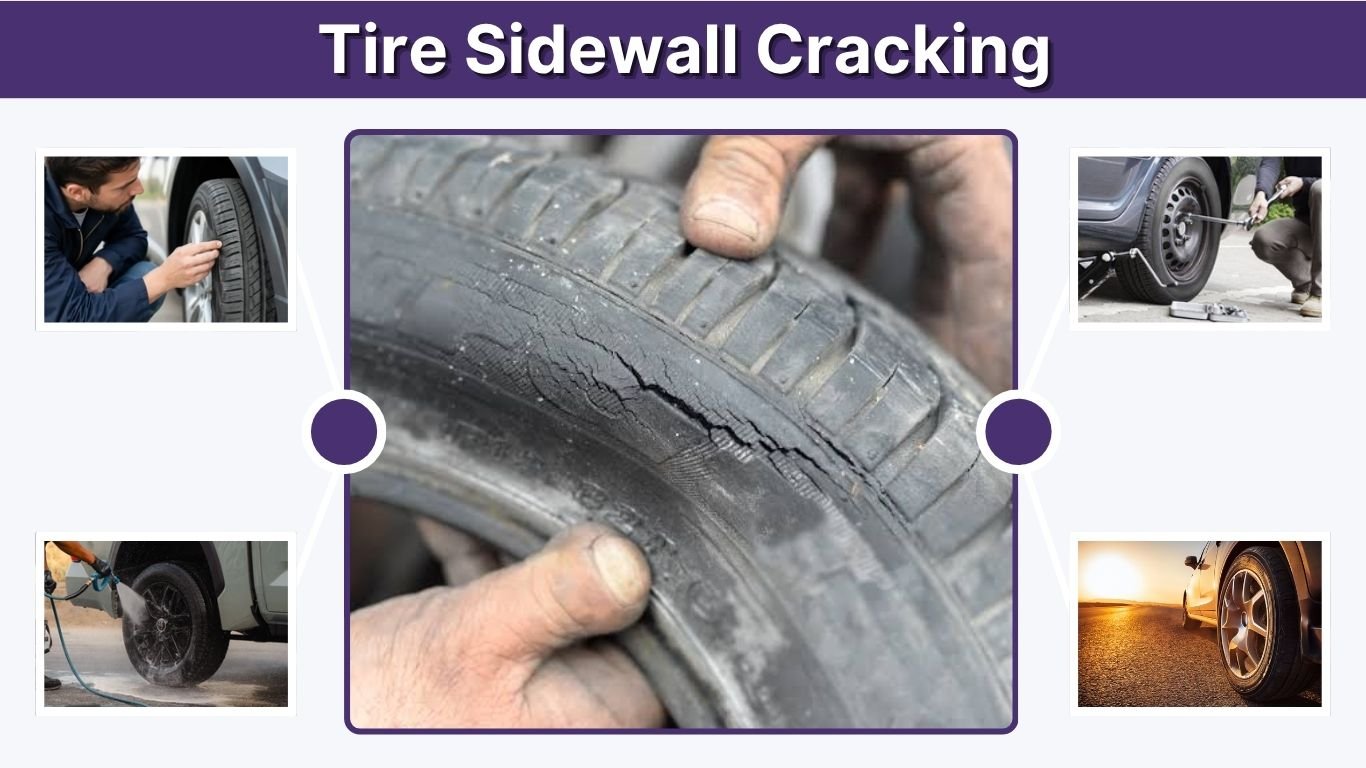
Tire sidewall cracking is a common problem that can affect both old and relatively new tires. These cracks often appear as thin lines along the rubber sidewall and may develop because of aging, sunlight exposure, extreme temperatures, or improper tire maintenance. While minor surface cracks may not cause immediate tire failure, deeper cracks can weaken the tire’s structure and increase the risk of a blowout. Understanding the causes of tire sidewall cracking, how to recognize dangerous damage, and when to replace your tires can help you maintain safer driving conditions.
What Is Tire Sidewall Cracking?
Tire sidewall cracking occurs when the rubber on the sides of a tire begins to deteriorate, creating visible splits or small fractures. These cracks may appear as fine lines, irregular patterns, or deeper openings extending into the rubber.
The sidewall is an important part of a tire because it provides flexibility, protects internal reinforcing materials, and supports the tire under vehicle loads.
As rubber ages, it gradually loses some of its flexibility. Environmental exposure and repeated flexing can accelerate this deterioration, leading to cracking.
Sidewall cracks generally fall into three appearance categories:
- Hairline cracks: Very thin, shallow lines on the rubber surface.
- Moderate cracks: More noticeable splits that may indicate progressing deterioration.
- Deep cracks: Significant openings that may expose internal materials or compromise the tire’s integrity.
Not every visible line represents a dangerous crack, but genuine sidewall damage should be evaluated carefully.
What Causes Tire Sidewall Cracking?
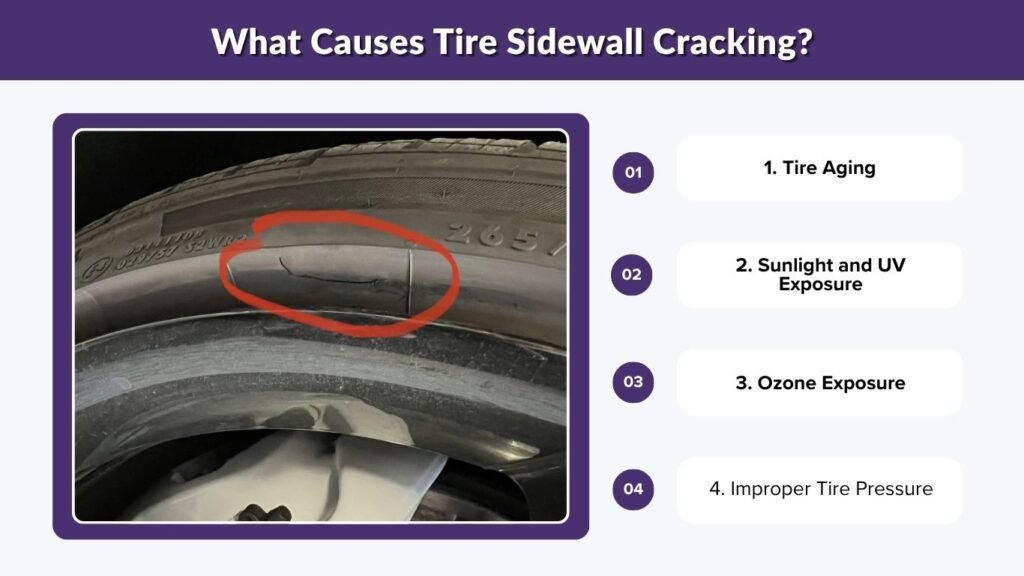
Tire sidewall cracks develop for several reasons, often involving a combination of environmental exposure, rubber aging, and driving conditions. Identifying the causes can help prevent premature tire deterioration.
1. Tire Aging
Rubber naturally deteriorates over time, even when a vehicle is rarely driven.
As tires age, their protective compounds gradually become less effective, making the rubber more vulnerable to cracking. Older tires may show small fractures around the sidewall lettering or near the wheel rim.
2. Sunlight and UV Exposure
Continuous exposure to sunlight can accelerate the deterioration of tire rubber.
Ultraviolet radiation contributes to material degradation, while prolonged outdoor parking exposes tires to additional heat and environmental stress.
3. Ozone Exposure
Ozone in the atmosphere reacts with certain components of tire rubber and contributes to cracking.
Although modern tires contain protective additives, ozone exposure can still cause deterioration over time, especially when tires are stored improperly.
4. Improper Tire Pressure
Underinflated tires flex excessively while driving, generating additional heat and stress.
Overinflation can also affect how a tire responds to road impacts. Maintaining the manufacturer’s recommended inflation pressure helps minimize unnecessary tire stress.
5. Extreme Temperatures
High temperatures accelerate rubber aging, while very cold conditions can temporarily reduce rubber flexibility.
Frequent temperature changes may contribute to deterioration, especially in tires already weakened by age or environmental exposure.
6. Long-Term Vehicle Storage
Vehicles parked for extended periods may develop tire problems because protective compounds are not redistributed through regular use.
Poor storage conditions, direct sunlight, and improper inflation can accelerate sidewall deterioration.
7. Chemical Exposure
Petroleum-based cleaners, solvents, oils, and incompatible tire dressing products may damage rubber compounds.
Repeated exposure can contribute to premature cracking and other surface deterioration.
Is Tire Sidewall Cracking Dangerous?
Tire sidewall cracking can be dangerous, particularly when cracks are deep, widespread, or accompanied by other signs of deterioration.
The sidewall repeatedly flexes during driving. Significant damage in this area can weaken the tire and increase the risk of sudden failure.
Potential dangers include:
- Tire blowouts: Severe sidewall deterioration may contribute to sudden tire failure.
- Air pressure loss: Deep cracks can eventually permit air leakage.
- Reduced structural integrity: Damage may extend toward reinforcing materials.
- Unpredictable handling: A weakened tire may behave abnormally under load.
- Increased accident risk: Tire failure at highway speeds can result in loss of vehicle control.
Fine, superficial surface cracks do not necessarily mean a tire will fail immediately. However, visual inspection alone cannot always establish the extent of deterioration.
If cracks expose reinforcing cords, appear deep, or occur alongside bulges or air loss, stop using the tire until it has been professionally assessed.
How Much Tire Sidewall Cracking Is Acceptable?
The severity of tire sidewall cracking depends on the depth, distribution, and condition of the surrounding rubber.
| Cracking condition | Safety concern | Recommended action |
|---|---|---|
| Fine surface lines | May be superficial aging | Professional inspection |
| Numerous shallow cracks | Possible progressive deterioration | Prompt inspection |
| Deep or widening cracks | Significant safety concern | Replace tire |
| Exposed reinforcing cords | Serious structural damage | Stop driving and replace |
| Cracking with bulges | Possible internal tire failure | Do not drive |
There is no universal crack-depth measurement that guarantees a passenger tire is safe. A tire professional should assess the damage according to the tire manufacturer’s recommendations.
How to Fix Tire Sidewall Cracking
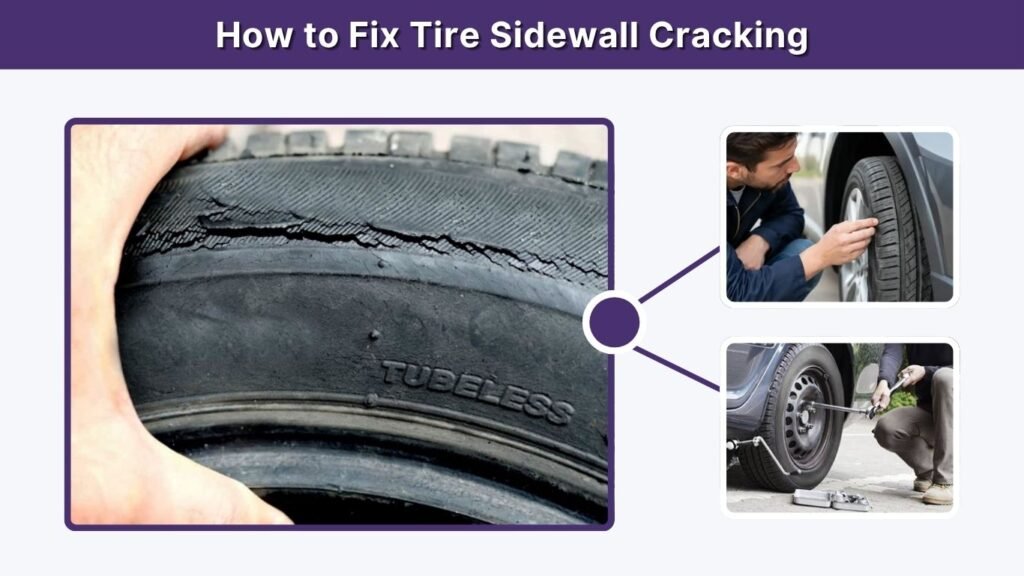
Unfortunately, damaged sidewall rubber cannot be permanently restored using ordinary tire repair methods. The appropriate action depends on whether the cracking is superficial or structurally significant.
Inspect the Cracks Carefully
Examine the tire’s outer sidewall for visible deterioration. If possible, have a technician inspect the inner sidewall as well.
Look for deep splits, bulges, exposed reinforcing cords, and unusual deformation. Check the tire’s age and inflation pressure.
Avoid Temporary Repair Products
Tire glue, rubber sealants, and cosmetic dressing products cannot restore deteriorated reinforcing materials or reverse rubber aging.
Applying these products may hide visible damage without improving safety.
Replace Severely Cracked Tires
If cracks are deep, extensive, or associated with structural damage, tire replacement is necessary.
Choose a replacement that meets your vehicle’s specified tire size, load rating, and speed rating.
When Should You Replace Tires With Sidewall Cracks?
Tire replacement becomes especially important when cracking is accompanied by significant aging, damaged reinforcement, air leakage, or sidewall deformation.
Some manufacturers recommend replacement after six to ten years, depending on their specific guidelines. Michelin recommends replacing tires at ten years from manufacture as a precaution, even when they appear usable.
You can identify a tire’s manufacture date using the final four digits of its DOT tire identification number. For example, 2522 indicates manufacture during the 25th week of 2022.
A tire may require replacement much earlier if its condition is unsafe.
How to Prevent Tire Sidewall Cracking
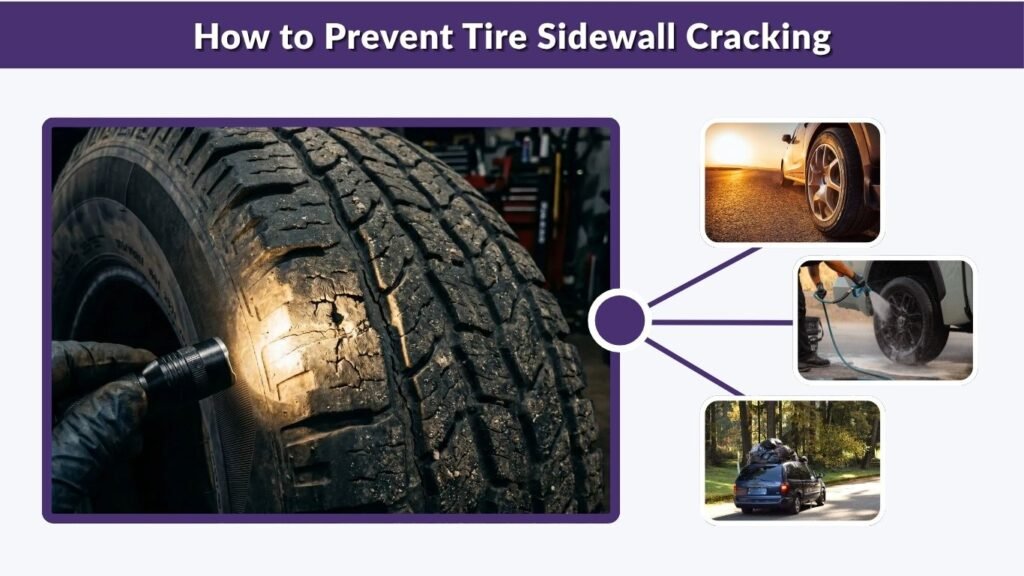
Preventive maintenance can help slow premature deterioration and extend the useful life of tires.
- Maintain correct inflation: Check tire pressure monthly and before long trips.
- Avoid prolonged sunlight: Park in shaded or covered locations when practical.
- Clean tires properly: Use mild cleaning products compatible with tire rubber.
- Inspect regularly: Look for developing cracks, bulges, and unusual wear.
- Store tires correctly: Keep unused tires in a cool, dry location away from sunlight and ozone-producing equipment.
- Avoid overloading: Follow the vehicle manufacturer’s load recommendations.
- Replace aging tires: Follow manufacturer age limits and professional inspection recommendations.
Even with excellent maintenance, tires gradually age and eventually require replacement.
FAQs
1. Can you drive with small cracks in tire sidewalls?
Small, superficial cracks do not always indicate immediate tire failure, but they can signal rubber aging. Their appearance alone cannot establish safety. Have the tire professionally inspected before continuing normal use, especially if the cracks are numerous or worsening.
2. Can tire sidewall cracking be repaired?
No reliable repair can reverse age-related tire sidewall cracking. Rubber glue, sealants, and tire dressings cannot restore the material’s original condition. Superficial cracks may only require monitoring after professional inspection, while significant cracking generally means the tire must be replaced.
3. Is tire sidewall cracking normal after five years?
Some tires develop fine surface cracks after several years because rubber naturally ages and experiences environmental exposure. However, cracking is not automatically acceptable simply because a tire is older. Its severity, maintenance history, and overall condition determine whether replacement is necessary.
4. Does tire sidewall cracking cause a blowout?
Severe sidewall cracking can increase the risk of tire failure, including a blowout. Deep cracks may indicate extensive rubber deterioration or compromised structural components. Minor surface cracking does not necessarily cause immediate failure, but damaged tires should be inspected promptly.
5. Can you prevent tire sidewall cracking completely?
Tire sidewall cracking cannot always be prevented because rubber naturally deteriorates with age. However, maintaining proper inflation, limiting prolonged sunlight exposure, avoiding harsh chemicals, and storing tires correctly can slow premature deterioration and help preserve their condition for longer.