
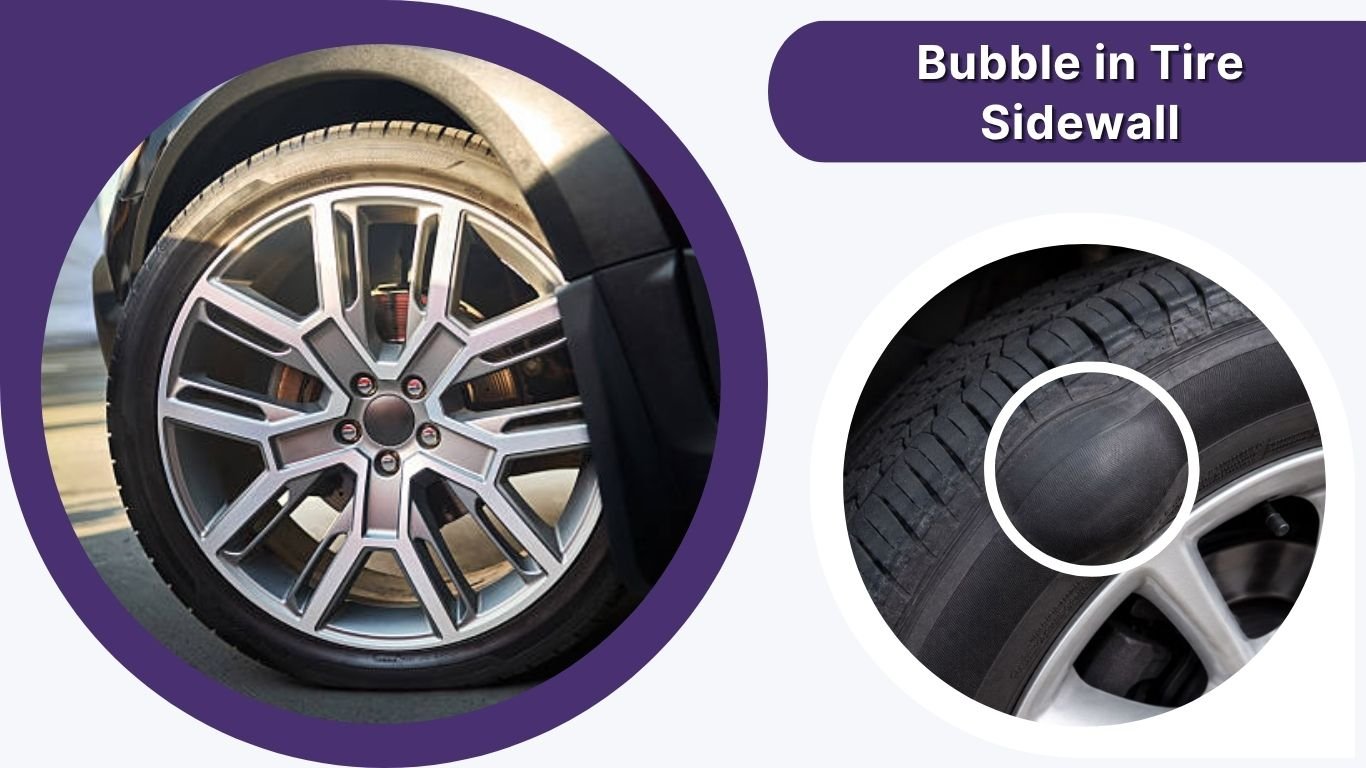
A bubble in tire sidewall is a serious warning sign that your tire may have internal structural damage. It usually appears as a small bulge or raised area on the side of the tire, often after hitting a pothole or curb. Although the bubble may look harmless, it can increase the risk of sudden tire failure while driving. Understanding what causes a tire sidewall bubble, whether it is safe to drive, and how to fix the problem can help you avoid dangerous situations and expensive vehicle damage.
What Is a Bubble in a Tire Sidewall?
A tire sidewall bubble is a noticeable outward bulge that forms when the tire’s internal reinforcing layers become damaged. These layers provide strength and help the tire maintain its shape under pressure.
When reinforcing cords break or separate, pressurized air can enter between the tire’s internal layers. This causes the rubber sidewall to expand outward, creating a visible bubble.
Unlike ordinary cosmetic damage, a sidewall bubble indicates a weakened tire structure. It can appear on new or old tires and may develop immediately after an impact or become noticeable later.
Even a small bubble should be treated as a serious safety concern because the damaged section can fail unexpectedly.
What Causes a Bubble in a Tire Sidewall?
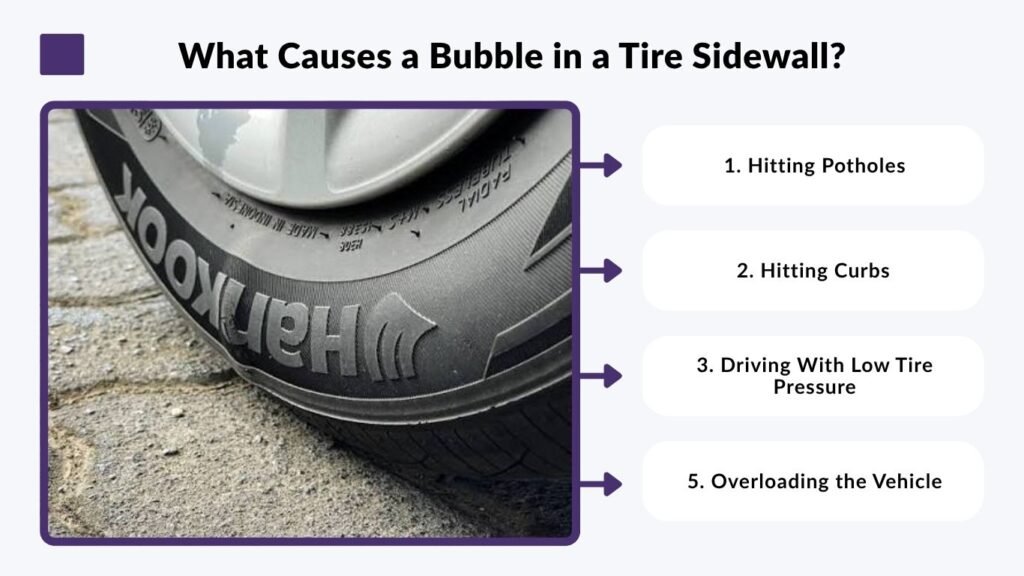
Several factors can damage a tire’s internal structure and lead to sidewall bubbling. Most cases involve sudden impacts, although manufacturing defects and improper tire use can also contribute.
1. Hitting Potholes
Potholes are among the most common causes of tire sidewall bubbles. When a tire strikes a deep pothole, it can become compressed between the road surface and the wheel rim.
This sudden compression may break internal reinforcing cords, creating a weakened area that eventually develops into a bubble.
2. Hitting Curbs
Accidentally striking a curb while parking or turning can damage the tire sidewall. The impact creates concentrated pressure that may weaken the internal tire structure.
Even when there are no visible cuts, internal damage can later produce a noticeable bulge.
3. Driving With Low Tire Pressure
Underinflated tires experience excessive sidewall flexing and heat buildup. They are also more vulnerable to impact damage when encountering potholes or road debris.
Low tire pressure does not automatically create a bubble, but it increases the likelihood of structural damage.
4. Manufacturing Defects
Occasionally, problems during tire manufacturing can cause separation between internal materials.
Although uncommon, defective tires may develop unusual bulges without an obvious road impact. A professional inspection can help determine whether a manufacturing issue is involved.
5. Overloading the Vehicle
Carrying more weight than the tires are rated to support increases stress on their internal components.
Combined with inadequate inflation or harsh road conditions, excessive loading may contribute to tire damage and premature failure.
Is It Safe to Drive With a Bubble in a Tire Sidewall?
No, driving with a bubble in the tire sidewall is unsafe, regardless of the bubble’s size.
A sidewall bubble means the tire has already lost some of its structural strength. Continued driving exposes the weakened area to repeated flexing, pressure, and heat.
Possible dangers include:
- Sudden tire blowout: The weakened sidewall may rupture without warning.
- Loss of vehicle control: Rapid air loss can make steering difficult.
- Highway accidents: Tire failure at higher speeds creates greater safety risks.
- Additional vehicle damage: A blowout may damage the wheel, suspension, or surrounding bodywork.
- Increased accident risk: Sudden tire failure can endanger passengers and nearby motorists.
If you discover a bubble while driving, avoid sudden steering or braking, pull over safely, and arrange a spare tire installation or roadside assistance.
Do not continue driving to a tire shop on the damaged tire.
How to Fix a Bubble in a Tire Sidewall
A genuine sidewall bubble cannot be safely repaired because the problem involves damaged internal reinforcement rather than a simple puncture.
The proper solution is to replace the affected tire.
Step 1: Stop Driving Immediately
Park your vehicle in a safe location away from moving traffic. Avoid unnecessary vehicle movement because continued driving can worsen the damage.
Step 2: Inspect the Tire
Look for visible bulges, cracks, exposed cords, or other abnormalities.
Check the remaining tires for similar damage, especially if your vehicle recently hit a pothole.
Do not press, puncture, or attempt to flatten the bubble.
Step 3: Install a Spare Tire
If you have a suitable spare tire and can change it safely, replace the damaged tire according to your vehicle manufacturer’s instructions.
Otherwise, contact roadside assistance.
Step 4: Replace the Damaged Tire
Visit a professional tire shop to install a replacement that meets your vehicle’s required size, load rating, and speed rating.
The technician should also inspect the wheel and suspension for impact damage.
Can You Repair a Small Bubble in a Tire Sidewall?
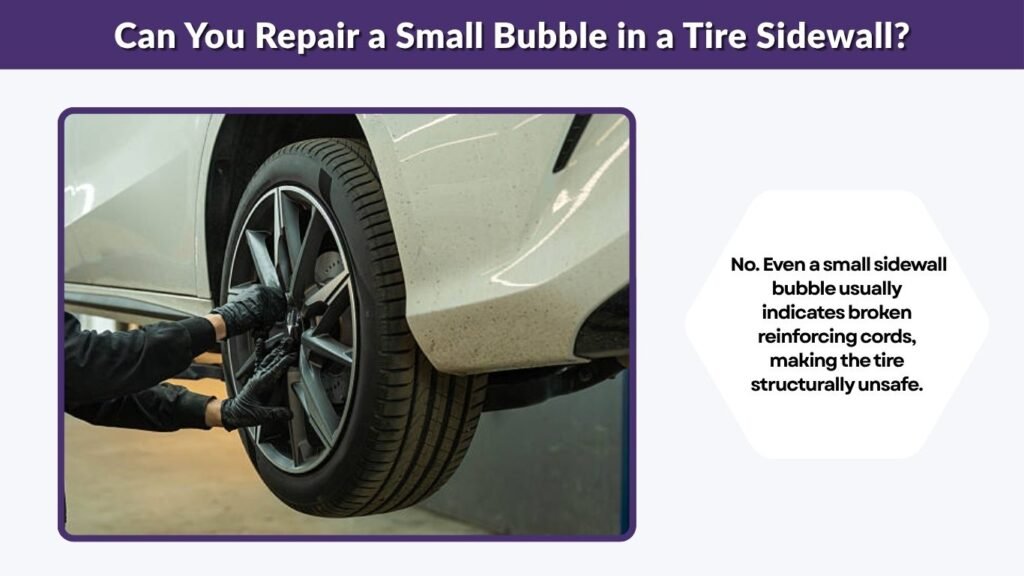
No. Even a small sidewall bubble usually indicates broken reinforcing cords, making the tire structurally unsafe.
A tire plug, patch, sealant, or rubber adhesive cannot restore damaged internal reinforcement.
The size of the bubble does not reliably indicate how serious the internal damage is.
However, some normal radial tires have slight sidewall indentations caused by overlapping reinforcing materials. These inward depressions differ from outward bubbles.
If you are uncertain whether the area is an indentation or a bulge, have the tire professionally inspected without driving on it.
How Much Does It Cost to Replace a Tire With a Sidewall Bubble?
Replacement costs depend on the tire’s size, brand, construction, and performance category. Larger wheels and specialty tires generally cost more than ordinary passenger-car tires.
The following are approximate U.S. tire prices, excluding installation and additional services.
| Tire type | Estimated price per tire |
|---|---|
| Economy passenger tire | $60–$120 |
| Standard all-season tire | $100–$200 |
| Performance tire | $150–$350 |
| SUV or truck tire | $150–$400+ |
Additional expenses may include tire mounting, balancing, disposal, and alignment if necessary.
Depending on tread wear and the vehicle’s drivetrain, replacing more than one tire may be recommended or required.
How to Prevent Tire Sidewall Bubbles
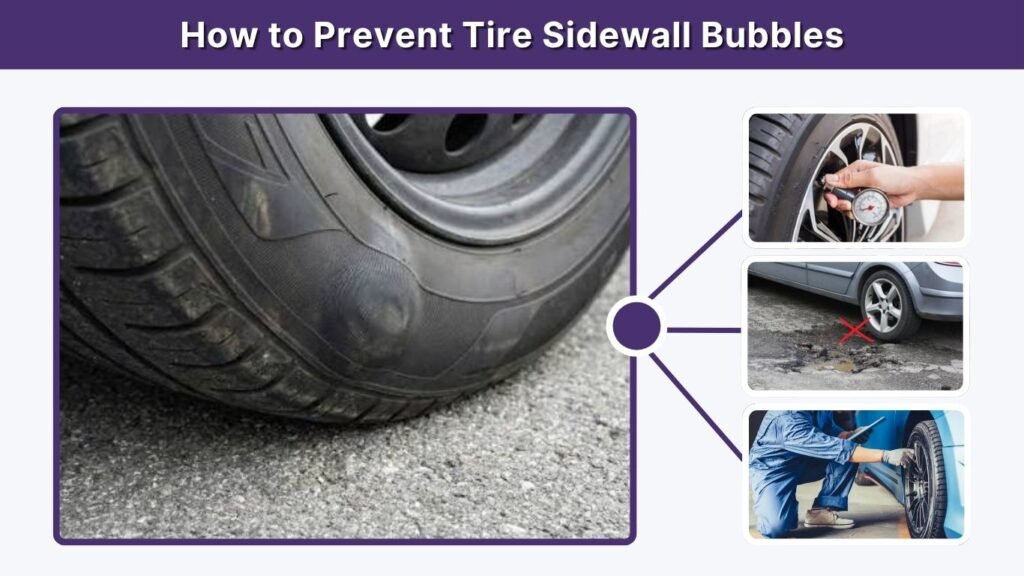
Although not every road hazard can be avoided, proper driving habits and routine tire maintenance can reduce the risk of sidewall damage.
Maintain Proper Tire Pressure
Check tire pressure regularly, preferably when the tires are cold.
Use the recommended pressure printed on your vehicle’s door-jamb label or specified in the owner’s manual rather than the maximum pressure displayed on the tire.
Avoid Potholes and Road Hazards
Reduce speed on damaged roads and avoid potholes whenever it is safe to do so.
Never make sudden, dangerous steering movements to avoid road hazards.
Be Careful Around Curbs
Maintain adequate clearance when parking or turning near curbs. Avoid allowing the tire sidewall to strike concrete edges.
Inspect Tires Regularly
Look for unusual bulges, cuts, cracks, or uneven wear.
Inspect both inner and outer sidewalls when possible, particularly after encountering a significant road impact.
Avoid Overloading
Follow your vehicle’s specified load capacity. Excessive weight can increase tire stress and reduce durability.
FAQs
1. Can a tire sidewall bubble go away on its own?
No, a genuine tire sidewall bubble cannot disappear naturally because the underlying reinforcing cords have already been damaged. Even if the bulge becomes less noticeable under changing conditions, the structural weakness remains. Replacing the tire is the only safe solution.
2. How long can you drive with a bubble in your tire?
There is no guaranteed safe driving distance with a sidewall bubble. The tire could fail unexpectedly, even during a short trip. Instead of driving to a repair shop, install a suitable spare tire or arrange roadside assistance to transport the vehicle safely.
3. Can a brand-new tire develop a sidewall bubble?
Yes, a new tire can develop a sidewall bubble after hitting a pothole, curb, or another road hazard. Occasionally, manufacturing defects may contribute. If the damage appears without an identifiable impact, contact the tire retailer to request an inspection and possible warranty evaluation.
4. Will a small bubble in a tire cause a blowout?
Yes, even a small tire sidewall bubble can increase the risk of a blowout because the internal reinforcement is weakened. Its appearance does not reliably predict when failure might occur. Tire replacement is necessary regardless of the bubble’s visible size.
5. Does a tire sidewall bubble mean I need a new tire?
Yes, a confirmed outward sidewall bubble generally means the tire needs immediate replacement. Repairs cannot reliably restore the damaged internal cords. A tire technician can verify the condition, recommend an appropriate replacement, and inspect the wheel for additional impact-related damage.