
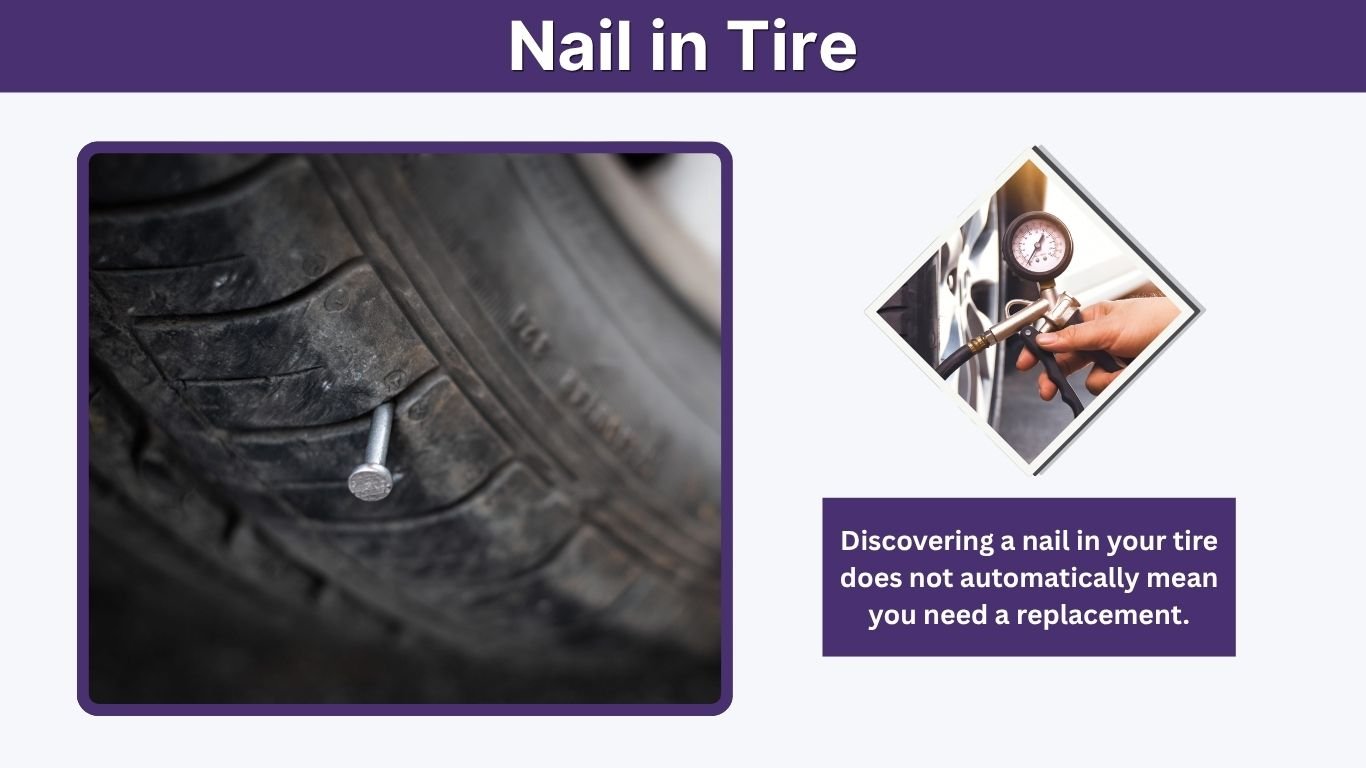
Finding a nail in your tire can be stressful, especially when you are away from home or planning a long drive. A nail may cause a slow air leak, an immediate flat tire, or no noticeable pressure loss at first. Knowing what to do when you have a nail in your tire can help prevent further damage and expensive repairs. Fortunately, many small punctures can be repaired without replacing the entire tire. This guide explains the safest steps, repair options, driving risks, and expected costs.
What to Do If You Find a Nail in Your Tire
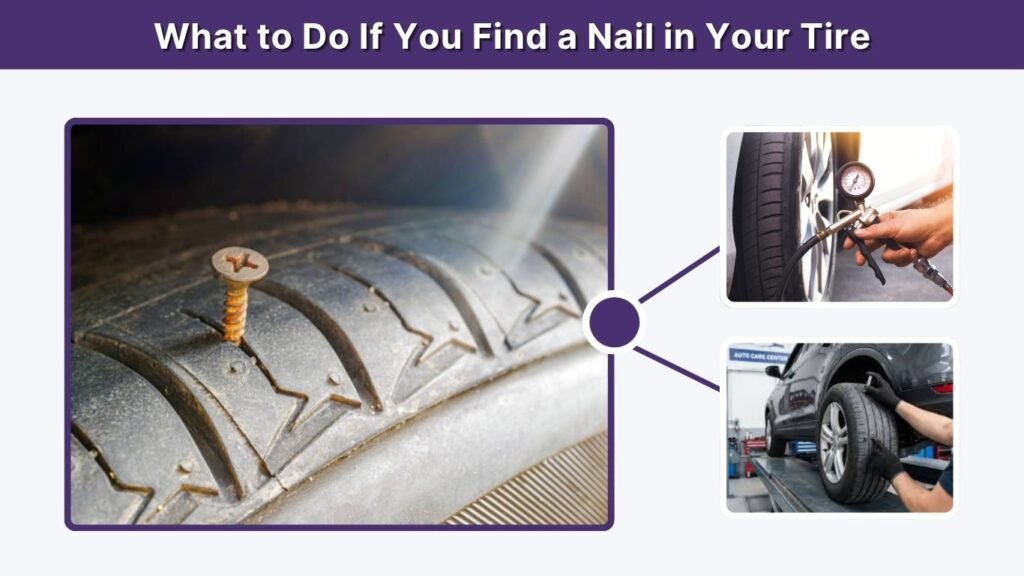
Discovering a nail in your tire does not automatically mean you need a replacement. However, taking the correct steps immediately is important. The safest response depends on the nail’s location, the tire’s condition, and whether air is escaping.
1. Park Your Vehicle Safely
Move your vehicle to a safe, level location away from traffic. Avoid sudden braking or sharp turns if you suspect the tire is losing pressure.
Once parked, inspect the affected tire without touching or pulling the nail. If the tire is visibly flat, avoid driving further.
2. Do Not Remove the Nail
You might feel tempted to pull the nail out immediately. However, removing it can cause air to escape rapidly if it has penetrated the tire.
Leave the nail in place until a tire professional can inspect the damage. The nail may temporarily restrict air leakage, but it does not make the tire safe.
3. Check the Tire Pressure
Use a tire pressure gauge to measure the air pressure. Compare the reading with the recommended PSI listed on your vehicle’s driver-side door placard.
Look for these warning signs:
- Tire pressure significantly below the recommended level.
- A visible nail embedded in the tread or sidewall.
- Hissing sounds indicating escaping air.
- A tire pressure monitoring system (TPMS) warning.
- Visible bulges, cuts, or unusual tire deformation.
If the tire is flat or rapidly losing air, install a spare tire or request roadside assistance.
4. Visit a Tire Repair Shop
Even when the tire appears properly inflated, arrange a professional inspection promptly. A technician can determine whether the nail caused a puncture and whether the damage is repairable.
Avoid unnecessary driving until the tire has been checked.
Can You Drive With a Nail in Your Tire?
Driving with a nail in your tire is risky because the puncture may worsen without warning. Some nails create small leaks, while others penetrate the rubber without immediately releasing air.
When Driving May Be Possible
If the tire maintains its recommended pressure, shows no visible damage, and the vehicle handles normally, carefully moving it a short distance to a nearby repair facility may be possible.
However, a normal pressure reading does not confirm that the tire is safe. Choosing roadside assistance is safer when you cannot determine the extent of the damage.
When You Should Never Continue Driving
Stop driving if the tire is visibly flat, loses pressure quickly, makes unusual noises, or causes steering instability.
Driving on an underinflated tire generates excessive heat and may damage its internal structure. Even if the puncture originally was small, this damage can make the tire impossible to repair.
Nail in Tire but Not Losing Air: What Does It Mean?
Sometimes, a nail becomes embedded in the tire without triggering a low-pressure warning. This situation is common when the nail has not completely penetrated the inner liner or temporarily blocks the puncture.
However, a nail in your tire without an air leak should not be ignored.
Why Your Tire May Hold Air
A short nail may be stuck only in the outer rubber. Alternatively, the nail might have penetrated deeper while creating a tight seal around itself.
Temperature changes, driving vibrations, and tire movement can eventually cause air leakage. A professional inspection is necessary to determine whether the tire has been punctured.
Should You Remove the Nail Yourself?
Avoid pulling out an embedded nail before the tire is properly inspected. Removing it could turn a slow leak into a rapid loss of pressure.
A technician can examine the puncture location, remove the object under controlled conditions, and determine whether a repair is necessary.
How to Fix a Nail in a Tire
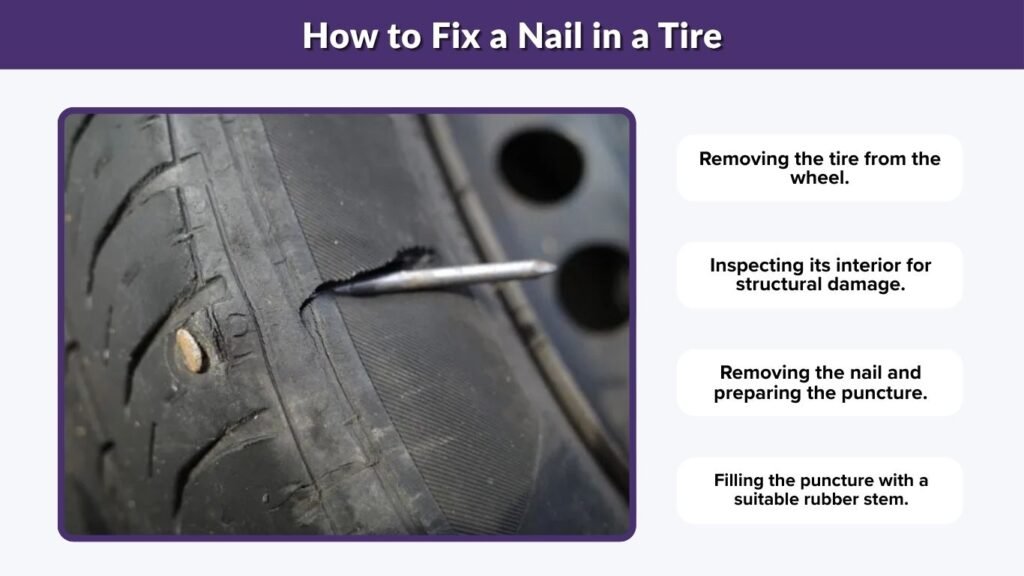
The correct tire repair method depends on the puncture’s size, location, and internal damage. Small holes in the central tread area are often repairable, provided the tire meets industry safety requirements.
Professional Patch and Plug Repair
A professional combination patch-and-plug repair is the recommended method for suitable punctures.
The repair procedure generally involves:
- Removing the tire from the wheel.
- Inspecting its interior for structural damage.
- Removing the nail and preparing the puncture.
- Filling the puncture with a suitable rubber stem.
- Sealing the inner liner using an internal patch.
- Reinstalling the tire and checking for leaks.
This method seals the inner liner and fills the puncture channel, helping protect the tire from air loss and moisture.
Can You Use a Tire Plug Kit?
A tire plug kit may provide temporary emergency assistance, but a plug installed from the outside is not considered a proper permanent repair.
A plug alone does not allow inspection for hidden internal damage. Have the tire professionally inspected and repaired or replaced as soon as practical.
When Does a Nail in a Tire Require Replacement?
Not every punctured tire can be repaired safely. The puncture location, hole diameter, remaining tread depth, and previous damage all influence whether replacement is necessary.
Signs You Need a New Tire
A tire typically requires replacement when:
- The nail punctures the sidewall or shoulder area.
- The puncture exceeds 1/4 inch (6 mm) in diameter.
- The tire has been driven while flat and sustained internal damage.
- The tread depth has reached 2/32 inch.
- Existing repairs overlap or an improper previous repair is present.
- The tire shows exposed cords, bulges, or serious structural damage.
Punctures in the central tread area are more likely to qualify for professional repair. Tire manufacturers may impose additional restrictions.
Nail in Tire Sidewall vs. Tread
A nail in the central tread area may be repairable because this section is designed to withstand road contact and can accommodate approved puncture repairs.
The sidewall flexes significantly during driving. A puncture here can weaken the structure, making conventional repairs unsafe.
For standard passenger tires, sidewall and shoulder punctures generally require replacement.
How Much Does It Cost to Fix a Nail in a Tire?
The cost of repairing a nail puncture varies depending on the repair shop, tire construction, location, and severity of the damage.
A minor tread puncture generally costs much less to repair than replacing the entire tire.
Average Tire Repair Costs
The following are approximate U.S. cost estimates, not guaranteed quotes.
| Service | Estimated Cost |
|---|---|
| Tire inspection | $0–$25 |
| Professional patch-plug repair | $20–$50 |
| Tire replacement | $100–$300+ |
| Mounting and balancing | $20–$50 |
Some tire retailers offer free puncture repairs to customers who purchased their tires there.
Is Repairing a Nail Puncture Worth It?
Repairing a tire is usually worthwhile when the puncture is small, centrally located, and professionally confirmed to be safe.
However, replacing a tire is the better choice when structural damage exists or the tread is already worn. Saving money on repairs should never come before driving safety.
How to Prevent Nails From Damaging Your Tires
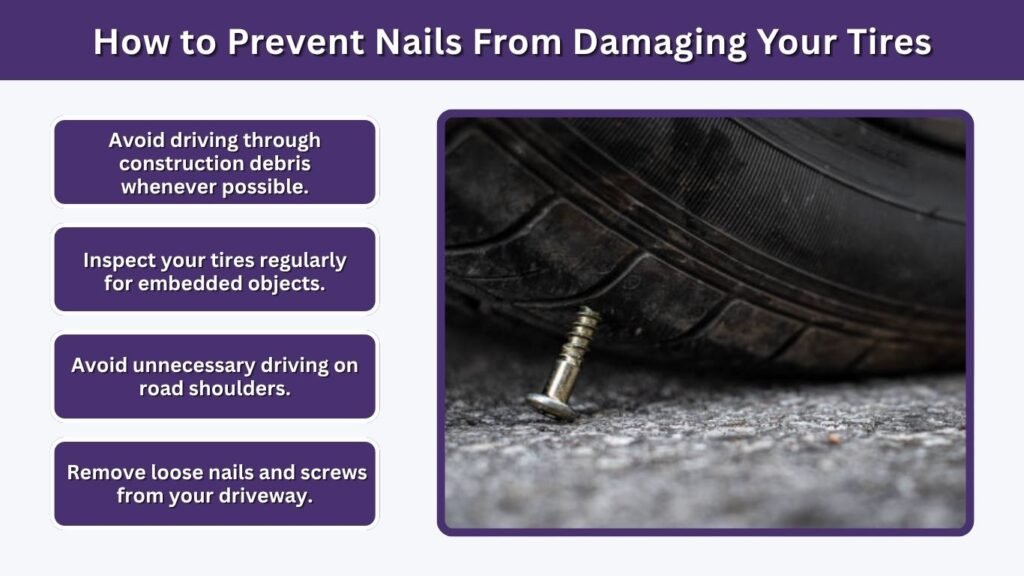
Although completely preventing tire punctures is difficult, a few driving and maintenance habits can reduce the risk.
Construction areas, parking lots, and road shoulders frequently contain nails, screws, and other sharp objects.
Practical Prevention Tips
- Avoid driving through construction debris whenever possible.
- Keep tires inflated to the manufacturer’s recommended pressure.
- Inspect your tires regularly for embedded objects.
- Avoid unnecessary driving on road shoulders.
- Remove loose nails and screws from your driveway.
- Replace severely worn or damaged tires promptly.
Regular inspections can help identify small punctures before they cause significant pressure loss.
Frequently Asked Questions
1. How Long Can You Drive With a Nail in Your Tire?
There is no guaranteed safe driving distance with a nail in your tire. It depends on the puncture, air pressure, and internal condition. Even if the tire holds air, arrange a professional inspection immediately and avoid unnecessary driving.
2. Should I Remove a Nail From My Tire?
No, you should generally leave an embedded nail in place until a tire technician examines it. Removing the nail may cause rapid air loss. If the tire is flat or leaking significantly, use a spare tire or roadside assistance.
3. Can a Nail in a Tire Cause a Blowout?
Yes. A nail can cause pressure loss, and driving on an underinflated tire may generate excessive heat and structural damage. These conditions increase the risk of tire failure, particularly during highway driving or when carrying heavy loads.
4. Can a Small Nail Hole in a Tire Be Repaired?
Yes, many small nail holes can be repaired when they are within the approved central tread area and no significant internal damage exists. A qualified technician should inspect the tire and use an appropriate combination patch-and-plug repair.
5. Will a Nail in a Tire Always Cause a Flat?
No. Sometimes a nail remains embedded without causing immediate air loss. It may not fully penetrate the tire, or it may temporarily seal the hole. However, the tire still needs inspection because leakage can develop later.