
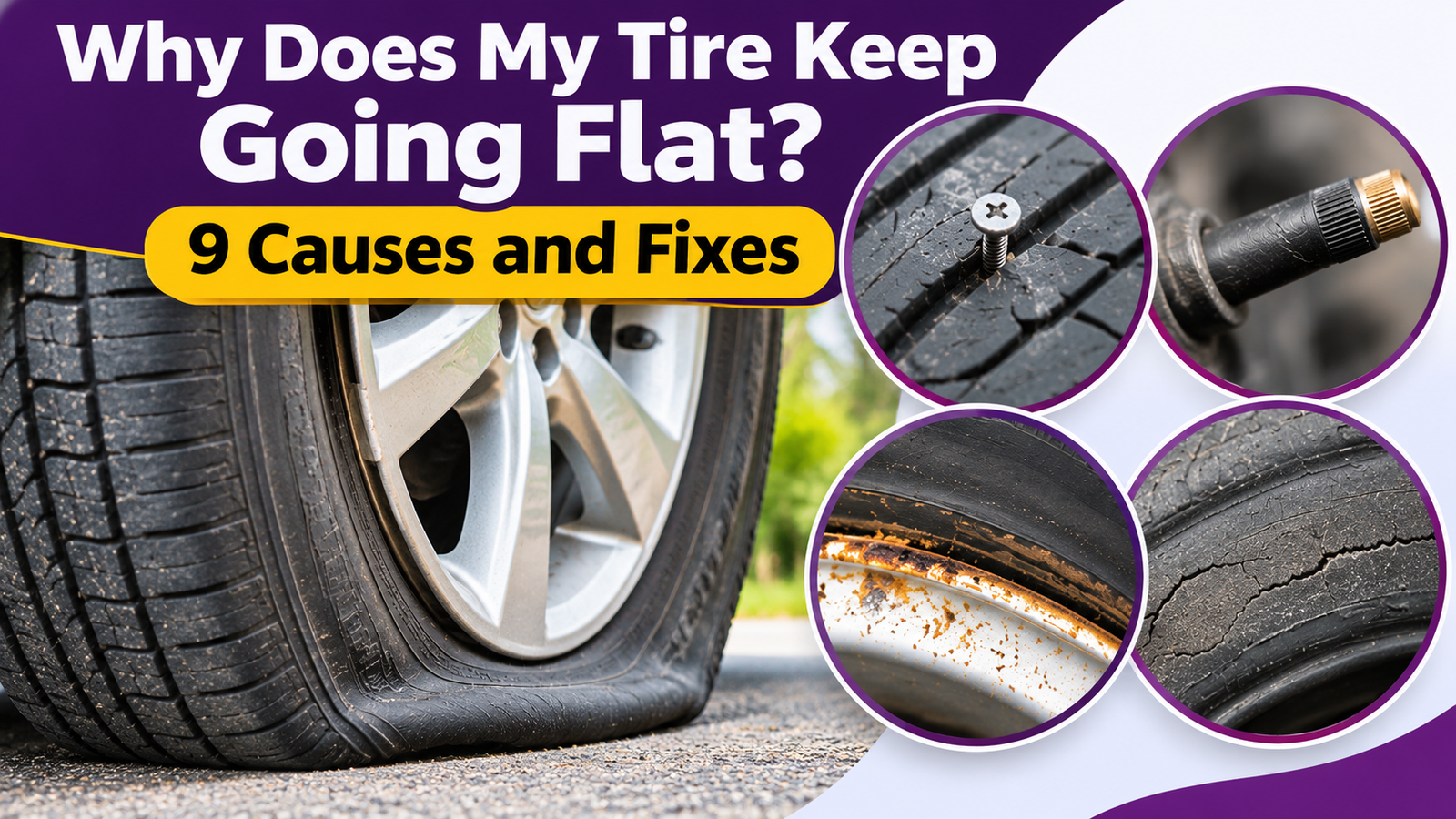
A tire that keeps going flat can be frustrating, especially when you have to refill it every few days. Sometimes, the problem comes from a small puncture, while other times, a damaged valve stem, bent wheel, or poor tire seal causes slow air loss. Understanding why your tire keeps going flat can help you identify the problem before it becomes dangerous. In this guide, we’ll explore nine common causes of recurring flat tires, how to find an air leak, and the best ways to fix the problem.
Why Does My Tire Keep Going Flat? 9 Common Causes
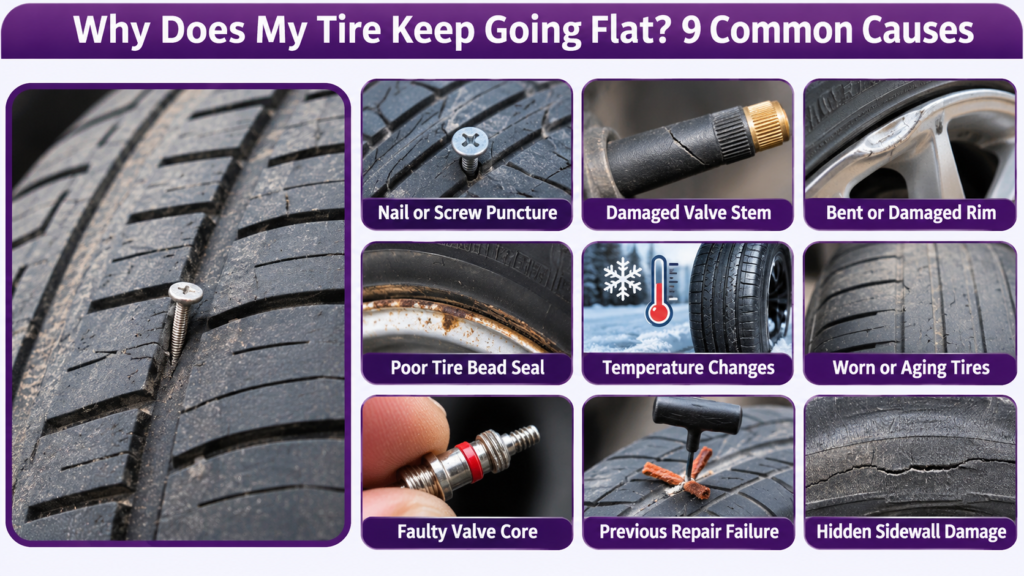
If your tire keeps losing air, there is usually an underlying problem that needs attention. Some leaks happen slowly over several days, while others cause a tire to go completely flat overnight. Identifying the source is important because repeatedly adding air will not solve most tire problems.
1. Small Nail or Screw Puncture
A small nail or screw embedded in the tire tread is one of the most common causes of slow air leaks. Sometimes, the object remains inside the rubber, allowing air to escape gradually. You might drive for several days before noticing the tire pressure dropping.
2. Damaged Valve Stem
The valve stem allows you to inflate your tire while preventing air from escaping. Over time, rubber valve stems can crack, loosen, or deteriorate. A damaged valve core can also cause a slow leak, even when the tire itself is in good condition.
3. Poor Tire Bead Seal
The tire bead is the section that seals against the wheel rim. Corrosion, dirt, or damage around this area can prevent proper sealing. As a result, air slowly escapes between the tire and the rim.
4. Bent or Damaged Wheel Rim
Hitting potholes, curbs, or road debris can bend a wheel rim. Even slight damage may create a small gap between the tire bead and the wheel, allowing air to escape. Cracked wheels can also develop leaks.
5. Temperature Changes
Cold weather causes tire pressure to decrease. Tire pressure typically drops about 1 PSI for every 10°F decrease in temperature. This does not necessarily mean the tire has a puncture, but repeated temperature changes can make an already underinflated tire appear flat.
6. Worn or Aging Tires
As tires age, their rubber gradually loses flexibility and may develop cracks. Severe wear, sidewall damage, and deterioration can create pathways for air leakage. Older tires may also develop sealing problems around the bead.
7. Faulty Valve Core
The valve core is a small component inside the valve stem that holds air inside the tire. If it becomes loose, dirty, or damaged, air can escape slowly. Fortunately, replacing a faulty valve core is usually inexpensive.
8. Previous Tire Repair Failure
A previously repaired puncture may begin leaking again if the repair was improperly performed or the damaged area was unsuitable for repair. An old plug-only repair, for example, may fail to provide a reliable long-term seal.
9. Hidden Sidewall Damage
Sidewall damage can occur after hitting a pothole or driving over sharp objects. Small cuts or cracks may allow air to escape without an obvious puncture in the tread. Sidewall punctures are generally not considered safely repairable.
Why Does My Tire Keep Going Flat Without a Hole?
Sometimes, your tire keeps losing air even when you cannot find a nail, screw, or visible puncture. This situation often confuses drivers because the tire appears completely normal.
Air Leaking Around the Rim
Corrosion around the wheel rim can interfere with the tire’s airtight seal. This problem is particularly common on wheels exposed to road salt, moisture, and harsh weather. A tire technician can inspect the bead area and determine whether cleaning or wheel repair is necessary.
Loose or Leaking Valve Components
A damaged valve stem or loose valve core may allow air to escape without any visible tire damage. Even a tiny leak can gradually reduce tire pressure over several days.
Natural Air Pressure Loss
Tires naturally lose small amounts of pressure over time because air can slowly permeate through rubber. However, a tire that becomes noticeably underinflated every few days usually has a leak requiring inspection.
Why Does My Tire Keep Going Flat Overnight?
A tire that loses significant pressure overnight typically has a more substantial leak than one that takes several weeks to become underinflated. The problem may involve a puncture, damaged valve, or poor bead seal.
Slow Punctures That Become Worse
A small puncture may initially release air slowly. However, driving can move the embedded object or enlarge the damaged area, increasing the rate of leakage. Eventually, the tire may lose most of its pressure overnight.
Temperature Drops During the Night
Cold nighttime temperatures can reduce tire pressure, especially during winter. However, temperature changes alone rarely explain a properly inflated tire becoming completely flat overnight. If this happens repeatedly, inspect the tire for an actual leak.
How to Find a Slow Air Leak in a Tire
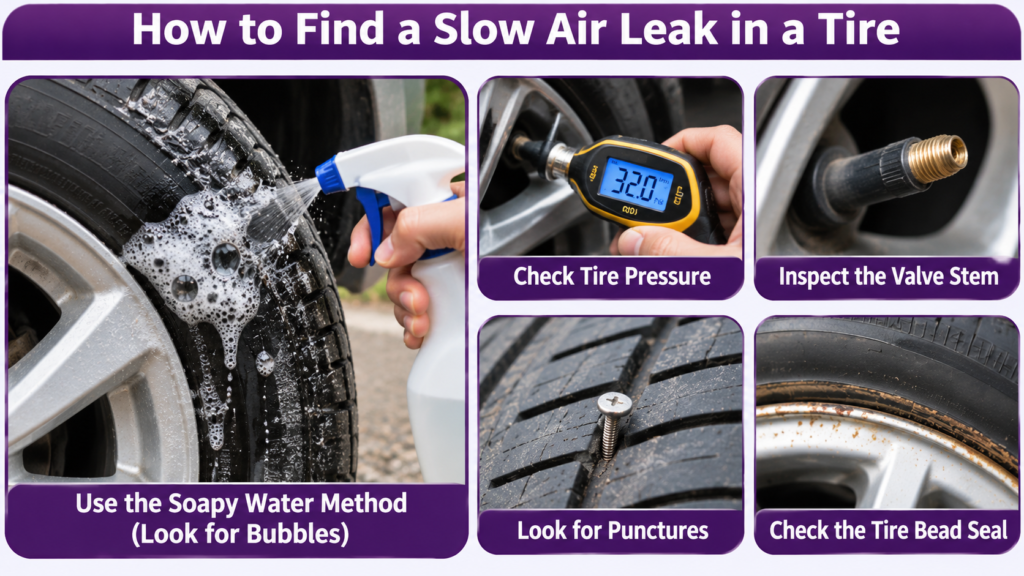
Finding the source of a slow leak can save time and prevent unnecessary tire replacement. Although some leaks require professional equipment, several basic inspection methods can help you identify the problem at home.
Check the Tire Pressure
Use a reliable tire pressure gauge to measure the pressure when the tire is cold. Compare the reading with the recommended pressure on your vehicle’s driver-side door placard.
Use the Soapy Water Method
The soapy water test is an effective way to locate many external air leaks.
- Mix dish soap and water in a spray bottle.
- Inflate the tire to the recommended pressure.
- Spray the mixture around the tread, valve stem, and accessible bead areas.
- Watch for continuously forming bubbles.
- Mark any suspected leak locations for professional inspection.
Do not remove embedded nails or screws before the tire is inspected, because doing so can cause faster air loss.
Inspect the Wheel and Tire
Look carefully for visible punctures, cracked rubber, bent wheels, and damaged valve stems. Some leaks are difficult to locate without removing the tire from the wheel, so professional inspection may still be necessary.
How to Fix a Tire That Keeps Going Flat
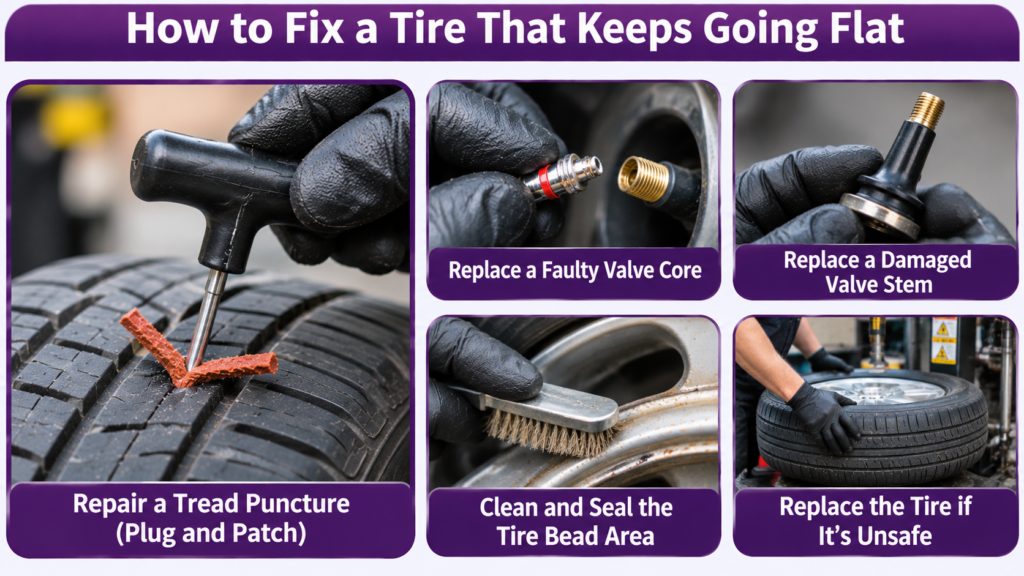
The correct repair depends on where the tire is leaking and how much damage has occurred. Some issues are relatively inexpensive to fix, while others require replacing the tire or wheel.
Repair a Small Tread Puncture
A small puncture located within the tire’s repairable tread area may be repaired professionally. A proper repair generally involves removing the tire, inspecting its interior, and using an approved combination plug-and-patch repair.
Replace a Damaged Valve Stem
If the valve stem is cracked or leaking, replacing it often solves the problem. Technicians can also replace faulty valve cores or service compatible tire pressure monitoring system components.
Repair Wheel Bead Leaks
A tire shop can remove the tire and examine the wheel’s bead-seating surface. Cleaning corrosion and restoring the sealing surface may stop the leak. Severely damaged or cracked wheels may need replacement.
Replace an Unsafe Tire
Tires with significant sidewall damage, exposed cords, severe deterioration, or damage outside approved repair areas generally require replacement. Tires driven while severely underinflated may also have hidden internal damage.
How to Prevent Your Tire From Going Flat Again
Regular tire maintenance can reduce the risk of unexpected air loss. Although punctures cannot always be prevented, maintaining proper inflation and inspecting your tires can help detect problems early.
Maintain Proper Tire Pressure
Check tire pressure at least once a month and before long road trips. Measure it when the tires are cold and follow the vehicle manufacturer’s recommended inflation pressure rather than the maximum pressure printed on the tire sidewall.
Inspect Tires Regularly
Check your tires for embedded objects, cracks, bulges, and unusual wear. Addressing minor problems early may prevent a sudden flat tire or more expensive damage.
Avoid Road Hazards
When safe, avoid potholes, sharp debris, and striking curbs. These hazards can damage tire sidewalls, bend wheel rims, and create leaks around the bead.
Is It Safe to Drive With a Tire That Keeps Going Flat?
Driving with a repeatedly underinflated tire is unsafe because low pressure increases heat buildup, reduces handling performance, and can damage internal tire components.
Even when the tire still holds some air, a slow leak may worsen unexpectedly. If the tire becomes completely flat, avoid driving on it because doing so can destroy the tire and damage the wheel.
If you notice frequent pressure loss, have the tire inspected promptly. A recurring flat should never be ignored simply because adding air temporarily restores its shape.
Frequently Asked Questions
1. Why does my tire keep going flat every few days?
A tire that goes flat every few days probably has a slow air leak. Common causes include small tread punctures, faulty valve stems, loose valve cores, and poor bead seals. A professional leak test can identify the exact problem.
2. Why does my tire keep losing air but no puncture is visible?
Air can escape through a damaged valve stem, leaking valve core, corroded wheel rim, or imperfect bead seal. These problems may not be visible during a basic inspection. A soapy water test can help locate the leak.
3. Can a tire go flat without a nail?
Yes. Tires can lose air because of damaged valve stems, wheel corrosion, cracked rims, sidewall damage, or leaking bead seals. Cold weather also reduces tire pressure, although it generally does not cause a healthy tire to become completely flat overnight.
4. How much does it cost to fix a tire that keeps going flat?
A simple puncture repair typically costs around $20–$50 in the United States. Valve repairs may cost less, while wheel damage or tire replacement costs more. Actual prices depend on the vehicle, damage, and local labor rates.
5. Should I replace a tire that keeps going flat?
Not always. Small tread punctures and valve leaks can often be repaired safely. However, tires with sidewall damage, serious internal damage, excessive wear, or unsuitable puncture locations generally need replacement. A qualified technician should determine whether repair is safe.