
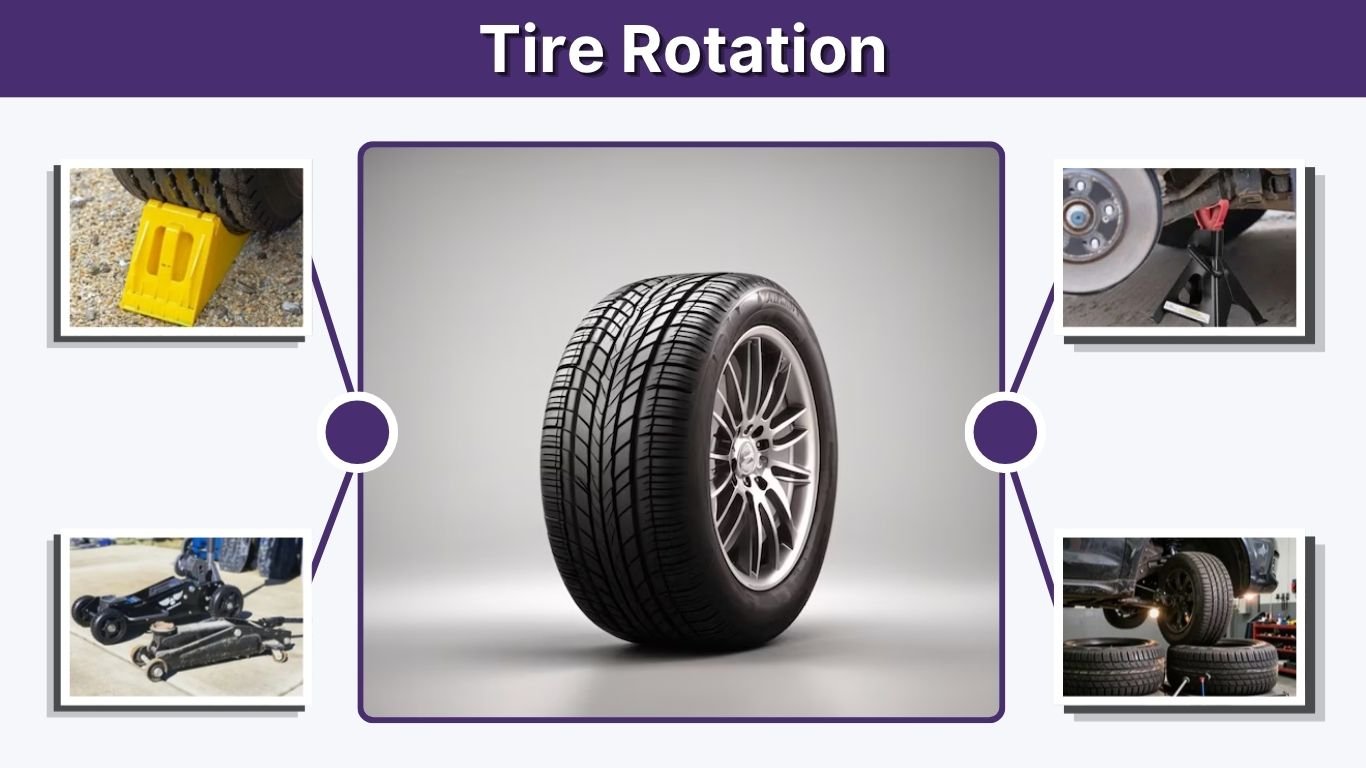
Tire rotation is a simple maintenance step that helps your tires wear more evenly and last longer. Because front, rear, left, and right tires carry different loads, they do not wear at the same speed. Rotating them at the right interval can improve handling, ride comfort, fuel efficiency, and safety. It can also help you avoid replacing tires earlier than necessary.
What Is Tire Rotation?
Tire rotation means moving each tire to a different position on the vehicle. For example, the front tires may move to the rear, or the left and right tires may switch sides depending on the vehicle’s drivetrain and tire type. The goal is to spread tire wear evenly across all four tires.
Tires do not wear evenly because each wheel position has a different job. Front tires usually handle steering and much of the braking force. On front-wheel-drive vehicles, they also pull the vehicle forward. Rear tires may wear differently because they support weight, stabilize the vehicle, or provide power on rear-wheel-drive models.
Why Tire Rotation Matters
Regular tire rotation helps protect both your tires and your vehicle. When one pair of tires wears faster than the other, your car may lose traction, pull to one side, or feel less stable in wet conditions.
Key benefits include:
- More even tread wear
- Longer tire life
- Better road grip
- Smoother driving
- Improved fuel economy
- Lower long-term tire replacement cost
- Better chance of keeping tire warranty coverage
Uneven tire wear can also make other problems easier to notice. If your tires wear strangely even after rotation, it may point to poor alignment, worn suspension parts, incorrect tire pressure, or aggressive driving habits.
How Often Should You Rotate Tires?
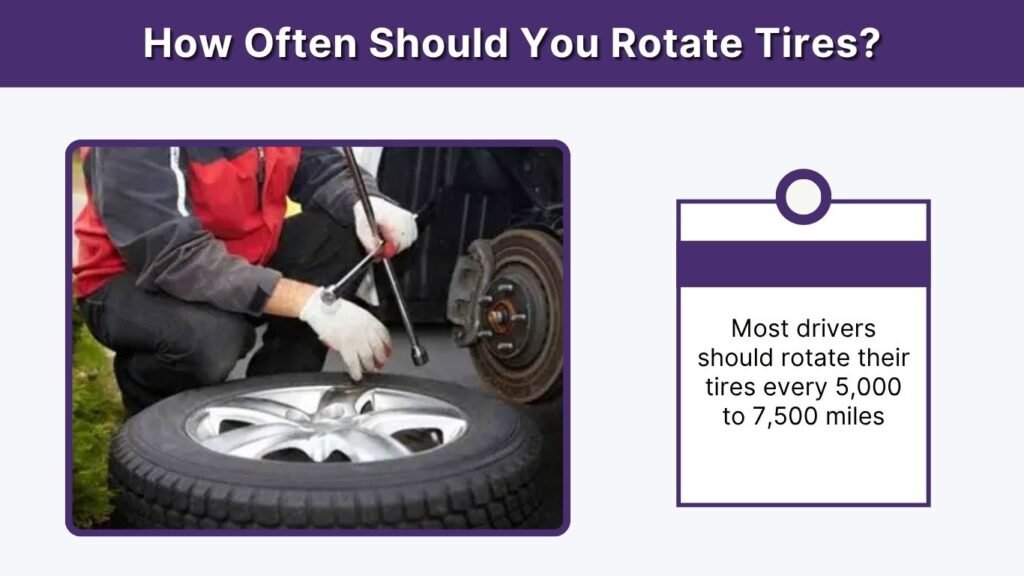
Most drivers should rotate their tires every 5,000 to 7,500 miles. Many vehicle owners rotate tires during every oil change because it is easy to remember and fits a normal maintenance schedule. However, the best interval depends on your vehicle, tire type, driving style, and manufacturer’s recommendation.
Some vehicles need more frequent rotation. For example, front-wheel-drive cars often wear front tires faster because the front wheels handle steering, braking, and power delivery. Electric vehicles and performance cars may also need closer attention because instant torque or heavier weight can increase tire wear.
Signs Your Tires Need Rotation
You should not wait only for mileage if the tires already show uneven wear. A quick visual check can help you know when rotation is needed.
Common signs include:
- Front tires look more worn than rear tires
- One tire edge is wearing faster
- Vehicle vibrates at higher speed
- Tires make more road noise than usual
- Steering feels less smooth
- Tread depth is uneven between tires
- Your vehicle pulls slightly while driving
If you notice vibration, severe pulling, or cupping wear, tire rotation alone may not solve the issue. In that case, tire balance, wheel alignment, or suspension inspection may also be needed.
Tire Rotation Patterns by Vehicle Type
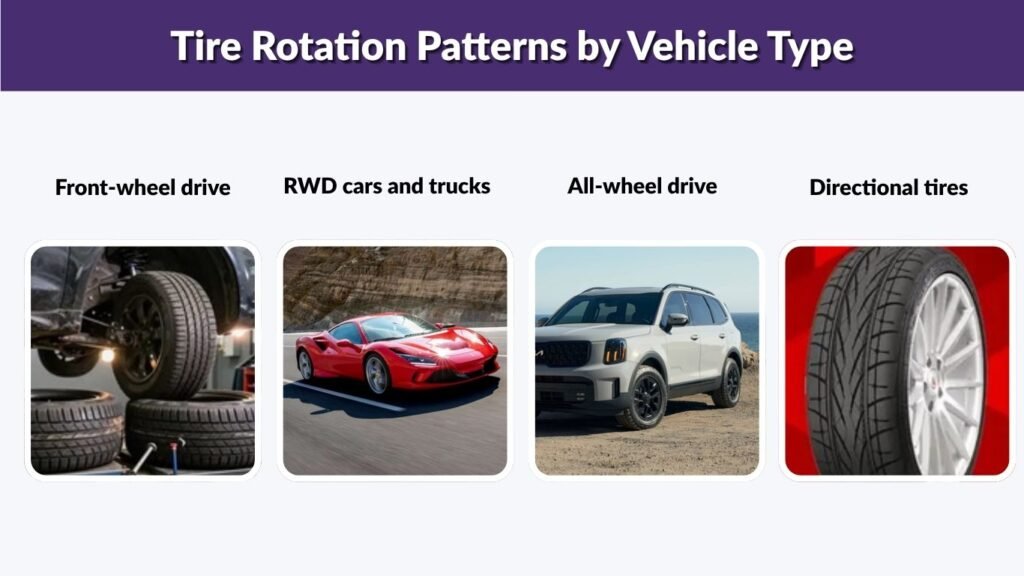
The correct tire rotation pattern depends on drivetrain, tire direction, and tire size. Using the wrong pattern may reduce tire performance or cause handling problems. Always check the owner’s manual before rotating tires yourself.
| Vehicle or Tire Type | Common Rotation Pattern | Best For |
| Front-wheel drive | Front tires move straight back; rear tires cross to front | Most FWD cars |
| Rear-wheel drive | Rear tires move straight front; front tires cross to rear | RWD cars and trucks |
| All-wheel drive | Tires usually cross in an X-pattern | AWD vehicles |
| Four-wheel drive | Often uses rearward cross or X-pattern | 4WD SUVs and trucks |
| Directional tires | Front and rear tires switch on same side only | Tires with one-way tread |
| Staggered tires | Side-to-side only if non-directional | Different front/rear tire sizes |
Front-Wheel-Drive Tire Rotation
On front-wheel-drive vehicles, the front tires usually wear faster. A common pattern is to move the front tires straight back to the rear, while the rear tires cross forward. This helps balance the heavier wear on the front axle.
For example, the front-left tire moves to the rear-left position, and the front-right tire moves to the rear-right position. The rear-left tire moves to the front-right, and the rear-right tire moves to the front-left.
Rear-Wheel-Drive Tire Rotation
Rear-wheel-drive vehicles send power to the rear tires, so rear tires may wear faster under acceleration. A common pattern is to move the rear tires straight forward and cross the front tires to the back.
This pattern helps even out wear between the front steering tires and rear driving tires. It is common on many trucks, sports cars, and larger vehicles.
AWD and 4WD Tire Rotation
All-wheel-drive and four-wheel-drive vehicles often need careful tire rotation because all four tires work together. Uneven tread depth can put stress on the drivetrain. Many AWD vehicles use an X-pattern, where each tire moves diagonally to the opposite corner.
AWD owners should be especially consistent with tire rotation. If one tire becomes much more worn than the others, it may cause drivetrain strain or require replacing more than one tire at a time.
How Much Does Tire Rotation Cost?
Tire rotation cost depends on where you go and whether it is included with another service. In many places, a basic tire rotation may cost around $20 to $50, but prices vary by shop, vehicle type, and location. Some tire shops offer free rotation if you bought the tires from them.
Dealerships may charge more than independent shops, but they may also check tire pressure, brakes, tread depth, and other maintenance items. Some oil change packages include tire rotation for a bundled price.
What Affects Tire Rotation Price?
Several things can change the final cost of tire rotation.
Main price factors include:
- Local labor rates
- Vehicle type and size
- Tire size and weight
- Whether balancing is included
- Whether rotation is bundled with oil change
- Whether tires were bought from the same shop
- Extra inspection services
- Special wheels or lug nut requirements
A simple tire rotation is usually affordable, but adding balancing, alignment, or tire repair will increase the cost. Always ask what the service includes before approving the work.
Tire Rotation and Balance
Tire rotation and tire balancing are different services. Rotation changes tire positions. Balancing corrects weight differences in the tire and wheel assembly. A tire can be rotated without being balanced, but balancing may be needed if there is vibration.
When a wheel is out of balance, the vehicle may shake at certain speeds. This is often felt in the steering wheel, seat, or floor. A technician balances the wheel by adding small weights to the rim.
When You Need Balancing Too
You may need tire balancing along with rotation if the ride feels rough or shaky. Rotation helps with wear, but it does not fix weight imbalance.
Balancing may be needed when:
- Steering wheel vibrates at highway speed
- Seat or floor shakes while driving
- Tires were recently installed
- A wheel weight fell off
- Tires show uneven patchy wear
- You hit a pothole or curb
- The ride feels rough after rotation
Balancing can make driving smoother and may reduce uneven tire wear. If vibration continues after balancing, the issue may involve alignment, tire damage, wheel damage, or suspension parts.
Tire Rotation and Alignment
Tire rotation is not the same as wheel alignment. Alignment adjusts the angles of the wheels so they meet the road correctly. Rotation moves the tires to different positions. Both services can help tires last longer, but they solve different problems.
If your vehicle pulls to one side, the steering wheel sits off-center, or the tire edges wear quickly, alignment may be needed. Rotation will not correct wheel angle problems.
Rotation vs Alignment
Tire rotation is normal maintenance. Wheel alignment is usually done when symptoms appear, after hitting a curb or pothole, or when replacing tires or suspension parts.
Important differences:
- Rotation changes tire position
- Alignment changes wheel angles
- Rotation helps even out tread wear
- Alignment helps the vehicle track straight
- Rotation is usually cheaper
- Alignment needs special equipment
- Both can protect tire life
A good maintenance plan may include regular tire rotation and occasional alignment checks. If your tires keep wearing unevenly after rotation, ask a technician to inspect alignment and suspension.
Can You Rotate Tires at Home?
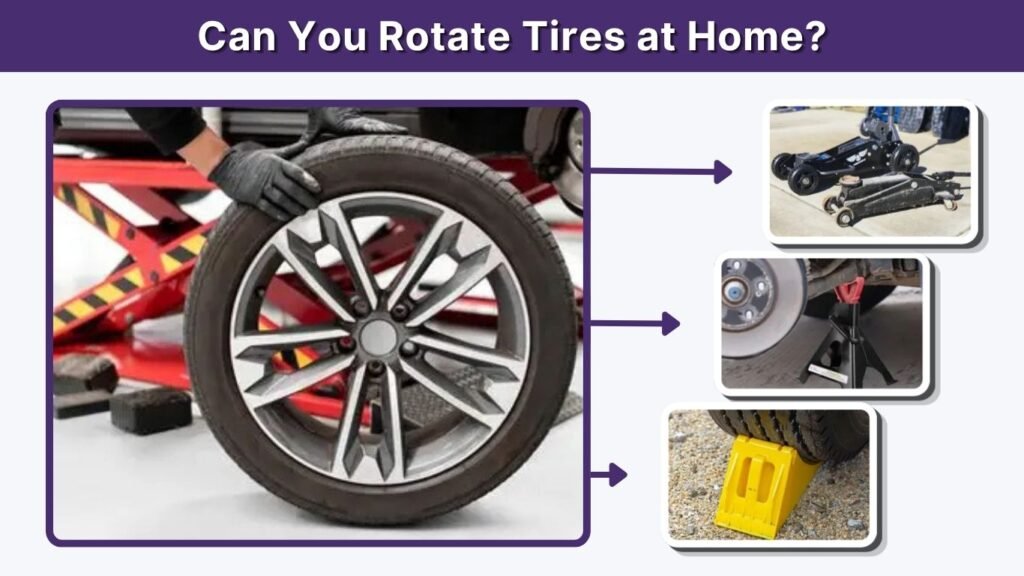
Yes, you can rotate tires at home if you have the right tools, enough space, and basic mechanical confidence. However, safety is very important. A car jack alone is not enough to support a vehicle while you work. You need jack stands and a flat, stable surface.
You should also know the correct rotation pattern for your vehicle. Directional tires, staggered tire sizes, and AWD vehicles may require special handling.
Basic Tools Needed
Before rotating tires at home, prepare the right tools and follow the vehicle manual.
Useful tools include:
- Vehicle owner’s manual
- Floor jack
- Jack stands
- Lug wrench or impact wrench
- Torque wrench
- Wheel chocks
- Tire pressure gauge
- Gloves
- Tread depth gauge
After rotating, tighten lug nuts to the correct torque specification. Do not guess. Over-tightening can damage studs, and under-tightening can be dangerous. After driving a short distance, it is also smart to recheck lug nut tightness.
How Long Does Tire Rotation Take?
A tire rotation usually takes about 15 to 45 minutes. The time depends on the shop, appointment schedule, vehicle type, and whether extra services are included. If you combine it with an oil change, brake check, tire pressure check, or balancing, it may take longer.
At home, it may take more time, especially if you are not used to lifting the vehicle or removing wheels. Safety setup, tool preparation, and torque checking can add time, but they are important steps.
What Happens If You Do Not Rotate Tires?
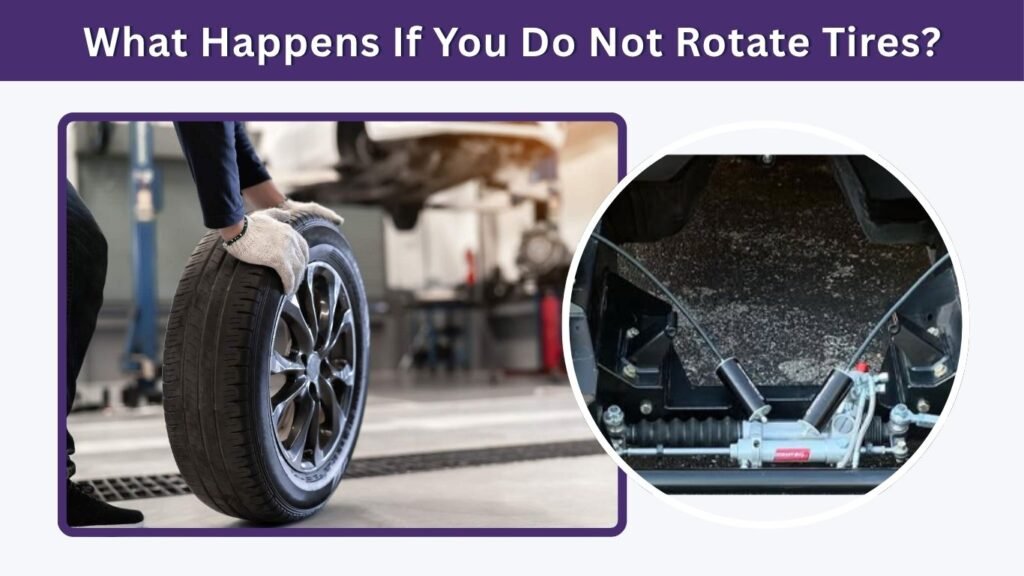
Skipping tire rotation can shorten tire life and reduce driving safety. The tires that work harder will wear out faster, while the others may still have useful tread. This can force you to replace tires earlier or in uneven pairs.
Uneven tires can also affect braking, steering, and traction. In rain, worn tires may lose grip more easily. On AWD vehicles, large tread differences can create extra stress on the drivetrain.
Regular tire rotation is a low-cost service compared with buying new tires too soon. It is one of the easiest ways to protect your tire investment.
FAQs
How often should tires be rotated?
Most tires should be rotated every 5,000 to 7,500 miles, but you should always check your vehicle owner’s manual. Some vehicles, especially AWD, electric, or performance models, may need more frequent rotation. If you drive on rough roads or notice uneven wear, rotate them sooner.
How much does a tire rotation cost?
A basic tire rotation often costs around $20 to $50, depending on the shop and location. Some tire centers rotate tires for free if you purchased the tires there. The price may be higher if balancing, inspection, oil change, or other services are included.
Is tire rotation really necessary?
Yes, tire rotation is necessary because tires wear differently based on their position. Front tires often wear faster due to steering and braking. Regular rotation spreads wear more evenly, improves tire life, supports safer handling, and may help maintain tire warranty coverage.
Can I rotate tires without balancing them?
Yes, tires can be rotated without balancing if there is no vibration or ride problem. However, if your steering wheel shakes, the seat vibrates, or the ride feels rough, balancing may be needed. Rotation helps with tread wear, while balancing fixes weight imbalance.
What is the best tire rotation pattern?
The best tire rotation pattern depends on your drivetrain and tire type. Front-wheel drive, rear-wheel drive, AWD, directional tires, and staggered tires may all require different patterns. The safest choice is to follow the pattern listed in your vehicle owner’s manual.