
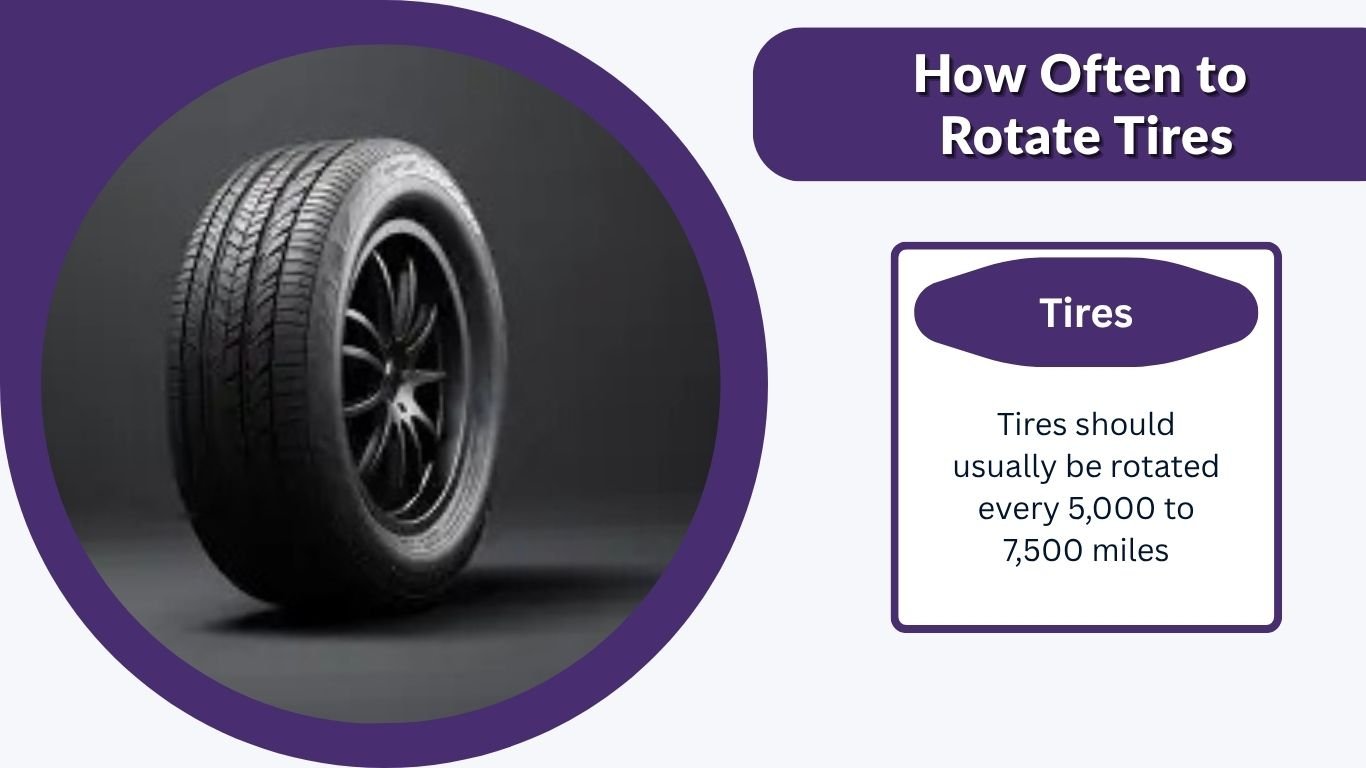
Tires should usually be rotated every 5,000 to 7,500 miles, but the right schedule depends on your vehicle, tire type, drivetrain, and driving habits. Regular rotation helps each tire wear more evenly, improves road grip, and may extend tire life. It is a simple maintenance step that can prevent early replacement, rough rides, and uneven tread wear.
What Does Tire Rotation Mean?
Tire rotation means moving tires from one wheel position to another. The front tires may move to the back, the rear tires may move forward, or the tires may switch sides depending on the vehicle and tire design. This keeps tread wear more balanced across all four tires.
Tires wear at different speeds because each wheel position handles different forces. Front tires usually deal with steering, braking, and cornering. On front-wheel-drive vehicles, they also pull the car forward. Rear tires support stability and may carry more load depending on the vehicle. Without rotation, one pair can wear down much faster than the others.
Why Tire Rotation Is Important
Regular tire rotation helps protect your tires and keeps your vehicle safer on the road. When tread depth stays more even, your vehicle can brake, steer, and grip the road more predictably.
Main benefits include:
- More even tread wear
- Longer tire lifespan
- Better traction in rain
- Smoother ride quality
- Less road noise
- Better fuel efficiency
- Improved handling
- Lower chance of early tire replacement
- Better support for tire warranty requirements
Uneven wear can also reveal deeper problems. If one tire keeps wearing faster even after rotation, your car may need an alignment, tire balancing, suspension inspection, or tire pressure correction.
How Often Should You Rotate Tires?
Most vehicles need tire rotation every 5,000 to 7,500 miles. For many drivers, this matches a regular oil change schedule, making it easier to remember. However, you should always check your owner’s manual because some vehicles need a different interval.
If you drive aggressively, carry heavy loads, use rough roads, or drive an AWD or EV model, you may need tire rotation closer to every 5,000 miles. If you drive mostly on smooth highways and your tires wear evenly, the longer end of the range may be acceptable.
Common Tire Rotation Schedule
Here is a simple guide for different driving situations:
| Vehicle or Driving Type | Suggested Rotation Interval |
| Most passenger cars | Every 5,000–7,500 miles |
| Front-wheel-drive cars | Every 5,000–7,000 miles |
| Rear-wheel-drive vehicles | Every 5,000–7,500 miles |
| AWD vehicles | Every 3,000–5,000 or 5,000–6,000 miles |
| 4WD trucks and SUVs | Every 5,000–7,500 miles |
| Tesla or EV tires | Around every 6,250 miles or sooner if wear differs |
| Low-mileage vehicles | Every 6 months or once a year |
| Heavy-load or towing use | Every 3,000–5,000 miles |
These are general ranges. The safest option is to follow the exact recommendation from the vehicle manufacturer or tire manufacturer.
How Often to Rotate AWD Tires
AWD tires often need closer attention than tires on two-wheel-drive vehicles. In an all-wheel-drive system, all four tires work together. If one tire has much less tread than the others, it can affect drivetrain performance and may create extra stress on mechanical parts.
Many AWD vehicles should have tires rotated every 3,000 to 6,000 miles, depending on the model. Some owners follow a 5,000-mile schedule to keep things simple. Subaru, Audi, Tesla dual-motor models, and many AWD SUVs can be sensitive to uneven tire wear.
Why AWD Rotation Matters More
AWD systems are designed to manage traction at all four wheels. When tire tread depths are uneven, the rolling diameter of each tire can be slightly different. That means the system may work harder than normal.
AWD tire rotation is important because:
- It keeps tread depth more equal
- It helps protect drivetrain parts
- It supports better wet-road traction
- It reduces the chance of replacing all tires early
- It helps the vehicle handle more evenly
- It may prevent vibration or pulling issues
If you own an AWD vehicle, do not wait until the tires look badly uneven. By that time, the tread difference may already be large enough to cause extra wear or replacement concerns.
How Often to Rotate FWD Tires
Front-wheel-drive vehicles often wear front tires faster than rear tires. This happens because the front tires handle steering, braking, and engine power. Because of this extra workload, FWD tires usually benefit from rotation every 5,000 to 7,000 miles.
If the front tires are visibly wearing faster, rotate them sooner. Waiting too long can leave you with front tires that are much more worn than the rear tires, which may reduce braking and cornering performance.
Best Pattern for FWD Tire Rotation
A common front-wheel-drive rotation pattern is called the forward cross pattern. In this pattern, the front tires move straight to the rear, while the rear tires cross to the opposite front positions.
For example:
- Front-left tire moves to rear-left
- Front-right tire moves to rear-right
- Rear-left tire moves to front-right
- Rear-right tire moves to front-left
This pattern helps spread wear from the front axle to the rear axle. However, directional tires may not be crossed from side to side, so always check the tire sidewall and owner’s manual.
How Often to Rotate RWD and 4WD Tires
Rear-wheel-drive vehicles usually send power to the rear tires, while the front tires handle steering. Because the rear tires manage acceleration force, they may wear faster than the front tires, especially on trucks, sports cars, and performance vehicles.
Most RWD vehicles should have tires rotated every 5,000 to 7,500 miles. Four-wheel-drive trucks and SUVs often follow a similar schedule, but vehicles used for towing, off-road driving, or heavy loads may need rotation sooner.
Best Pattern for RWD and 4WD Tires
A common pattern for rear-wheel-drive and four-wheel-drive vehicles is the rearward cross pattern. In this setup, rear tires move straight to the front, while front tires cross to the rear.
This helps balance the wear between steering tires and drive tires. Trucks, SUVs, and larger vehicles can be harder on tires because of weight, torque, and load demands, so regular checks are especially useful.
How Often to Rotate Tires If You Do Not Drive Much
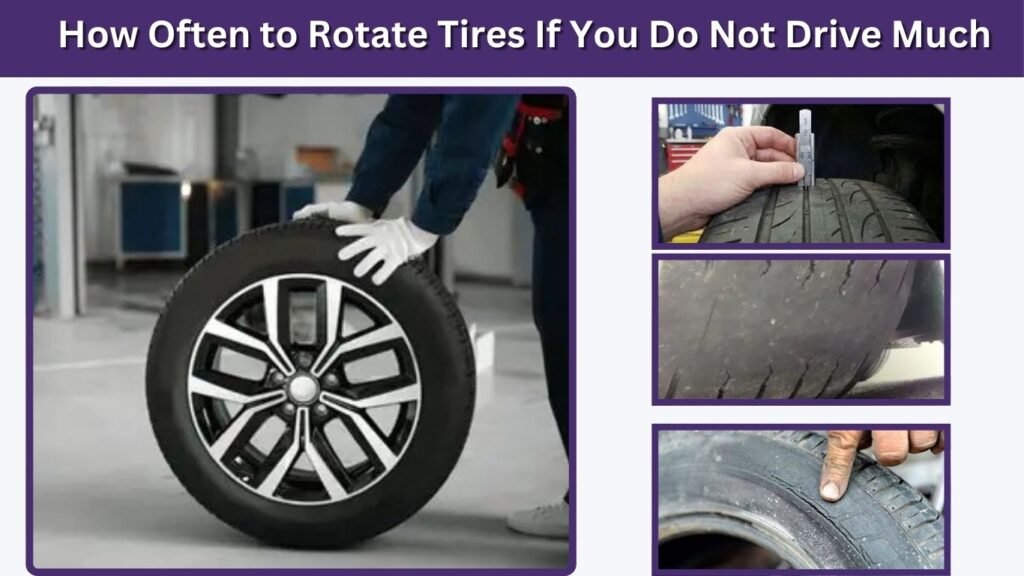
Low-mileage drivers still need tire rotation. Even if you do not drive many miles, tires can develop uneven wear from short trips, long parking periods, underinflation, or repeated local driving. A good rule is to rotate tires at least every 6 months to 12 months if you do not reach the mileage interval.
Cars that sit for long periods may also develop flat spots or tire aging issues. Rotation alone cannot stop age-related rubber damage, but it can help keep wear more even when the vehicle is used.
Signs Low-Mileage Tires Need Attention
Check your tires regularly even if the car is not driven daily. Low mileage does not always mean low risk.
Look for:
- Uneven tread depth
- Sidewall cracks
- Flat spots
- Low tire pressure
- Vibration after parking
- One tire losing air faster
- Dry or hardened rubber
- Tread wear on one edge
If the tires are older than six years, inspect them more carefully. Tire age can matter even when the tread looks acceptable.
How Often to Rotate Tesla and EV Tires
Electric vehicles can wear tires faster than some gas vehicles because they are often heavier and deliver instant torque. Tesla tires, for example, may need rotation around every 6,250 miles, but some drivers rotate sooner if tread depth differences appear.
EV owners should check tire pressure and tread depth often. Because EVs are quiet, tire noise, vibration, or uneven wear may become noticeable in different ways than in traditional vehicles.
EV Tire Rotation Tips
Electric vehicle tires need consistent maintenance to support range, comfort, and safety. Uneven wear may reduce efficiency and shorten tire life.
Useful EV tire care tips include:
- Check tire pressure monthly
- Rotate tires on schedule
- Measure tread depth regularly
- Watch for inner-edge wear
- Avoid hard acceleration when possible
- Keep alignment checked
- Use tires rated for EV weight and torque
If an EV tire wears unevenly or faster than expected, ask a tire shop to check alignment and suspension. Rotation helps, but it cannot fix mechanical or alignment problems.
Should You Rotate and Balance Tires Together?
Tire rotation and tire balancing are different services. Rotation changes the tire position. Balancing corrects uneven weight distribution in the tire and wheel assembly. You do not always need balancing every time you rotate tires, but it may be helpful if there is vibration.
A balanced tire spins smoothly. An unbalanced tire may shake at certain speeds, especially on highways. If your car feels smooth and your tires are wearing normally, rotation alone may be enough.
When Balancing Is Needed
Balancing may be needed when the ride feels rough or shaky. Tire rotation will not fix a wheel that is out of balance.
You may need balancing if:
- The steering wheel shakes
- The seat vibrates at highway speed
- The floor feels rough while driving
- Tires were recently replaced
- A wheel weight fell off
- Tires show patchy wear
- Vibration appears after rotation
Some drivers rotate and balance together for convenience, but it is not always required. If you are unsure, ask the technician to inspect tread wear and road-test the vehicle.
What Happens If You Do Not Rotate Tires?
If you skip tire rotation, your tires may wear unevenly and need replacement sooner. One pair may lose tread quickly while the other pair still looks usable. This can reduce safety, increase tire noise, and make the vehicle feel less stable.
Uneven tires can also affect wet-road braking and cornering. In heavy rain, worn tires are more likely to lose grip. On AWD vehicles, tread differences can create extra drivetrain concerns.
Skipping rotation can also make tire warranties harder to use. Some tire warranties require proof of regular rotation, so keeping service records is a smart habit.
Signs Your Tires Need Rotation Now
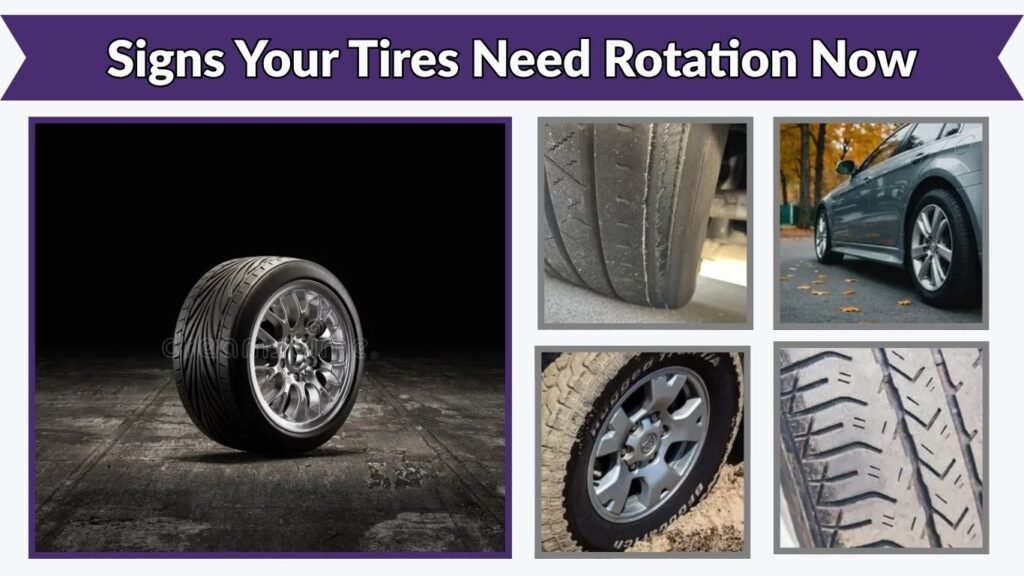
You do not have to wait for the exact mileage if your tires already show uneven wear. A quick check can tell you when rotation should happen sooner.
Common signs include:
- Front tires look more worn than rear tires
- One tire edge is wearing faster
- Vehicle pulls slightly to one side
- Road noise is louder than usual
- Steering feels less smooth
- Tread depth is uneven
- Tires vibrate at higher speeds
- You cannot remember the last rotation
If tire wear is severe, rotation may not fully solve the issue. You may also need alignment, balancing, new tires, or suspension repair.
Can You Rotate Tires Too Often?
Rotating tires too often is usually not harmful, but it may be unnecessary. If you rotate every 1,000 miles without a special reason, you may be spending extra time or money without much benefit. The goal is to rotate often enough to keep tread wear even.
For most drivers, every 5,000 to 7,500 miles works well. For AWD, EV, towing, or rough-road use, a shorter interval can be better. The best approach is to check tread depth and follow the vehicle’s maintenance schedule.
FAQs
How often should you rotate tires?
Most tires should be rotated every 5,000 to 7,500 miles. Some AWD, EV, performance, or heavy-use vehicles may need rotation sooner. Always check the owner’s manual because the correct interval can vary by vehicle, tire type, and driving condition.
How often should AWD tires be rotated?
AWD tires are often rotated every 3,000 to 6,000 miles, depending on the vehicle. Many owners use a 5,000-mile schedule to keep tread depth even. AWD systems can be more sensitive to uneven tire wear, so regular rotation is especially important.
Do tires need balancing every rotation?
Tires do not always need balancing every time they are rotated. Balancing is usually needed when there is vibration, shaking, uneven patchy wear, or a rough ride. Rotation helps even out tread wear, while balancing corrects weight imbalance in the tire and wheel.
How often should tires be rotated if I drive very little?
If you do not drive much, rotate tires every 6 to 12 months even if you do not reach the mileage interval. Low-mileage tires can still develop uneven wear, pressure issues, flat spots, or age-related problems, especially if the vehicle sits for long periods.
What happens if I never rotate my tires?
If you never rotate your tires, one pair may wear out much faster than the others. This can reduce traction, increase road noise, affect handling, and force earlier tire replacement. On AWD vehicles, uneven tread depth may also place extra stress on drivetrain components.