
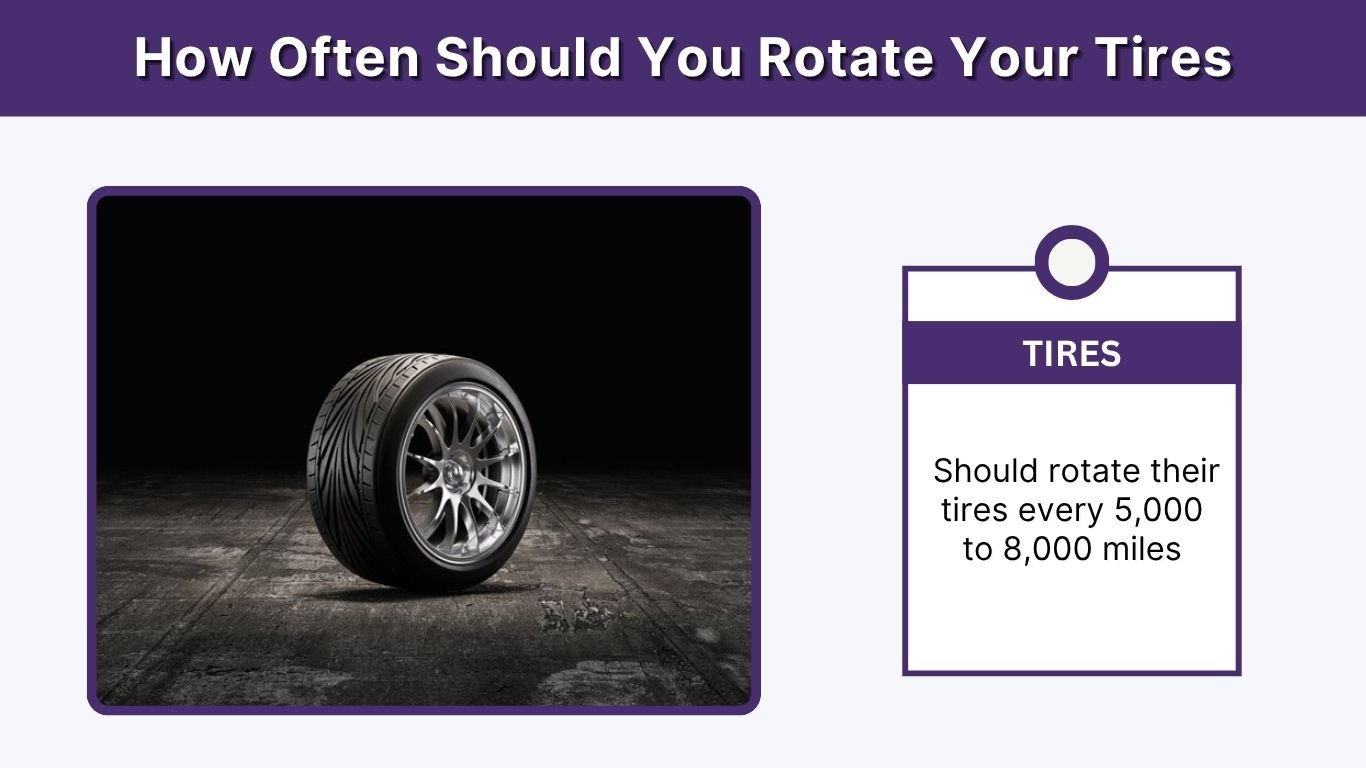
Tire rotation is one of the simplest ways to make your tires last longer and keep your car safer on the road. Most drivers should rotate their tires every 5,000 to 8,000 miles, but the right schedule depends on your vehicle, tire type, driving habits, and road conditions. Regular rotation helps reduce uneven tread wear, improve handling, and protect your tire warranty.
What Does Tire Rotation Mean?
Tire rotation means moving each tire to a different position on the vehicle. Front tires and rear tires do not always wear at the same speed. By changing their positions, you help all four tires wear more evenly over time.
Why Tire Position Matters
Your tires do different jobs depending on where they sit. Front tires often handle steering, braking pressure, and more turning force. On front-wheel-drive cars, they also pull the vehicle forward. Rear tires may wear more slowly, but they are still important for stability.
When tires stay in the same position for too long, one pair may wear down faster than the other. This can cause rough handling, poor traction, road noise, and shorter tire life. Rotation spreads the work across all four tires.
Main Benefits of Rotating Tires
Regular tire rotation can help you:
- Extend tire life
- Improve traction
- Keep handling more balanced
- Reduce uneven tread wear
- Support better fuel efficiency
- Protect tire warranty coverage
- Lower the chance of early tire replacement
A simple rotation schedule can save money because tires usually last longer when wear is even.
How Often Should You Rotate Your Tires?
Most cars need tire rotation every 5,000 to 8,000 miles. For many drivers, this lines up with every oil change or every second oil change, depending on the vehicle. Some manufacturers give a specific mileage in the owner’s manual, so that should always be your first guide.
Standard Tire Rotation Interval
For normal driving, the common rotation schedule is:
| Vehicle or Driving Type | Suggested Rotation Interval |
| Most passenger cars | Every 5,000–8,000 miles |
| AWD vehicles | Every 3,000–6,000 miles if wear is uneven |
| Trucks and SUVs | Every 5,000–7,500 miles |
| Electric vehicles | Around 5,000–6,250 miles |
| Heavy towing or rough roads | Every 3,000–5,000 miles |
| In kilometers | About every 8,000–13,000 km |
This is a general guide. Your owner’s manual, tire brand, and mechanic’s inspection may suggest a slightly different interval.
How Often Should You Rotate Tires in Months?
If you do not drive many miles, rotate your tires about every 6 months. Low-mileage drivers sometimes forget tire service because they do not reach 5,000 miles quickly. However, tires can still develop uneven wear from short trips, parking position, road conditions, or alignment problems.
A good habit is to check rotation during seasonal maintenance. For example, you can rotate tires before summer driving and again before winter.
Should New Tires Be Rotated?
Yes, new tires should still be rotated. Many drivers think fresh tires can stay in one position for a long time, but the first few thousand miles are important for setting an even wear pattern. If you rotate new tires on time, they are more likely to last close to their expected tread life.
Do not wait until the tread looks uneven. Tire rotation works best as prevention, not only as a repair step.
Tire Rotation by Vehicle Type
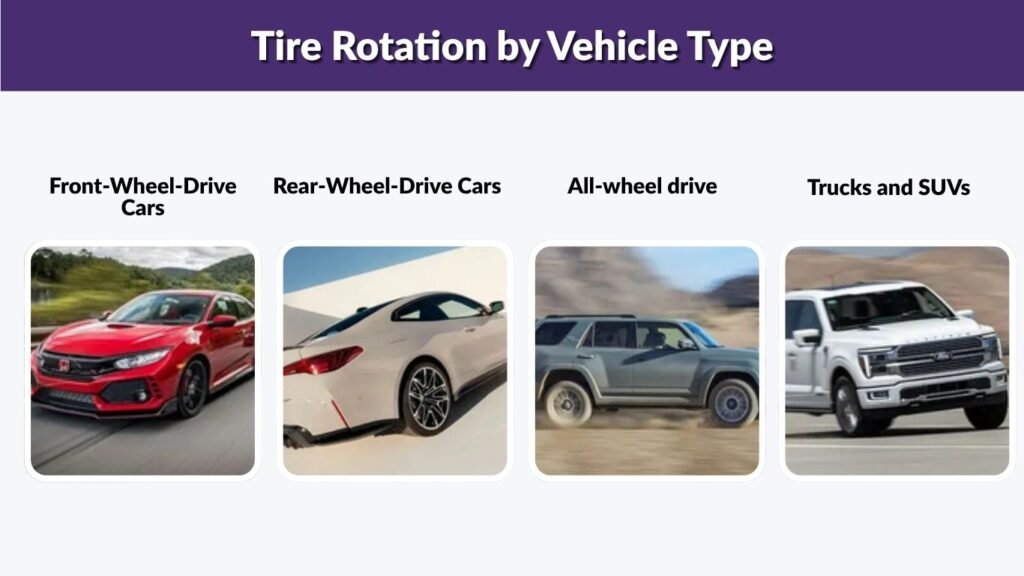
Different vehicles wear tires in different ways. A front-wheel-drive sedan, all-wheel-drive SUV, electric car, and pickup truck may not need the same exact schedule. The drivetrain affects how force moves through the tires.
Front-Wheel-Drive Cars
Front-wheel-drive cars usually wear front tires faster. The front tires handle steering, braking, and pulling the car forward. This means they carry extra stress during daily driving.
For most FWD cars, rotate tires every 5,000 to 7,500 miles. A common pattern is moving the front tires to the rear on the same side, then crossing the rear tires to the front. However, directional tires may need a different pattern.
Rear-Wheel-Drive Cars
Rear-wheel-drive cars send engine power to the rear tires, while the front tires handle steering. This can create different wear patterns between the front and rear axle.
Most RWD cars should follow a 5,000 to 8,000-mile rotation schedule. The usual pattern moves rear tires to the front on the same side and crosses the front tires to the rear. Sports cars with staggered tire sizes may not allow normal rotation.
All-Wheel-Drive Vehicles
AWD vehicles often need closer attention because all four tires work together through the drivetrain. Uneven tread depth can affect traction, handling, and drivetrain stress. Some AWD systems are sensitive to big tread differences.
For AWD vehicles, many drivers rotate tires every 5,000 miles. If you drive aggressively, carry heavy loads, or notice uneven wear, rotate sooner. Subaru, Tesla, and other AWD vehicle owners should always check the manual because some models have specific tire service rules.
Trucks and SUVs
Trucks and SUVs can wear tires faster if they tow, carry tools, drive off-road, or use larger tires. The weight of the vehicle also affects tread wear.
Rotate truck tires every 5,000 to 7,500 miles for normal use. If the truck is used for towing, hauling, mud terrain driving, or rough roads, rotation every 3,000 to 5,000 miles may be better. Heavy-duty use puts more pressure on tire shoulders and tread blocks.
Rotation, Balancing, and Alignment
Tire rotation, balancing, and alignment are related, but they are not the same service. Many drivers confuse them. Understanding the difference helps you know what your car actually needs.
Tire Rotation vs Tire Balancing
Tire rotation changes where the tires sit on the vehicle. Tire balancing corrects weight imbalance in the wheel and tire assembly. If a tire is not balanced, you may feel vibration in the steering wheel, seat, or floor.
You do not always need balancing with every rotation. However, balancing is useful if you notice vibration, uneven wear, or shaking at highway speed.
How Often Should You Rotate and Balance Tires?
A good rule is to rotate tires every 5,000 to 8,000 miles and balance them when needed. Some shops offer rotation and balancing together, especially when tires are new or vibration is present.
You may need balancing if:
- The steering wheel shakes
- The vehicle vibrates at certain speeds
- Tires were recently repaired
- New tires were installed
- A wheel hit a pothole hard
- Tread wear looks patchy or cupped
Balancing is not a replacement for rotation. Both services solve different tire problems.
Tire Rotation vs Wheel Alignment
Wheel alignment adjusts the angles of the wheels so they meet the road correctly. Poor alignment can make a car pull to one side and cause fast tire wear. Rotation cannot fix alignment problems.
You may need an alignment if the vehicle pulls left or right, the steering wheel is off-center, or one tire edge wears faster than the rest. Many drivers check alignment once or twice a year, especially after hitting potholes or curbs.
Signs Your Tires Need Rotation
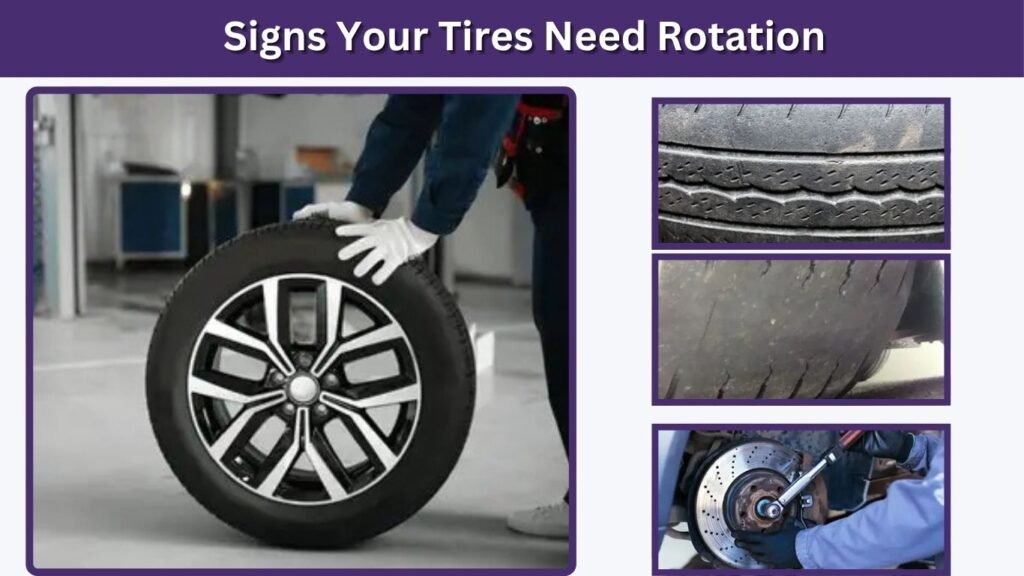
You should not rely only on mileage. Sometimes tires show signs that they need rotation earlier. Checking tread wear once a month can help you catch problems before they become expensive.
Uneven Tread Wear
Uneven tread is one of the clearest signs. One tire may look more worn than the others, or the front pair may look thinner than the rear pair. You may also see extra wear on the inner or outer edges.
If the tread is uneven, rotate the tires and ask a mechanic to inspect alignment, suspension, and tire pressure. Rotation helps even out normal wear, but it will not fix a mechanical issue by itself.
Road Noise or Vibration
Tires that wear unevenly may create humming, roaring, or vibration. Sometimes the sound gets louder as speed increases. This can happen when tread blocks wear in an uneven pattern.
If you hear new tire noise, do not ignore it. It may be a rotation issue, but it could also be a wheel bearing, alignment problem, or worn suspension part.
Poor Handling or Traction
If your car feels less stable in rain, turns, or quick stops, tire wear may be part of the problem. Tires with uneven tread may not grip the road evenly.
Watch for these warning signs:
- Car feels unstable in corners
- Braking feels longer than usual
- Wet-road traction feels weak
- Steering feels rough or loose
- One tire looks more worn than others
These signs mean the tires need inspection, even if you have not reached the normal rotation mileage yet.
Best Tire Rotation Patterns
The correct tire rotation pattern depends on tire type, drivetrain, and whether all tires are the same size. Not every vehicle can use the same pattern.
Common Rotation Patterns
Common tire rotation patterns include:
- Forward cross: Often used for front-wheel-drive cars.
- Rearward cross: Often used for rear-wheel-drive and four-wheel-drive vehicles.
- X-pattern: Sometimes used when all tires are the same size and non-directional.
- Front-to-rear: Used for directional tires.
- Side-to-side: Used for some staggered tire setups.
If your tires are directional, they are designed to roll in one direction. These tires usually move front to back on the same side only. If your vehicle has different front and rear tire sizes, normal rotation may not be possible.
Can You Rotate Tires Yourself?
Yes, some drivers rotate tires at home, but you need the right tools and safety steps. You need a jack, jack stands, lug wrench, torque wrench, and a safe flat surface. Never rely only on a jack while working under or around a vehicle.
After rotating, tighten lug nuts to the correct torque. Incorrect torque can be dangerous. If you are not confident, a tire shop or mechanic can rotate tires quickly.
When Tires Should Not Be Rotated Normally
Some vehicles need special handling. Do not use a standard rotation pattern if your car has directional tires, staggered tire sizes, damaged tires, or different tread depths that break manufacturer rules.
You should also avoid moving a badly worn tire to another position without inspection. If one tire is much more worn, there may be an alignment, suspension, or inflation problem.
What Happens If You Do Not Rotate Your Tires?
Skipping tire rotation can shorten tire life and make your car less safe. It may not cause a problem immediately, but the damage builds slowly over time. By the time uneven wear is easy to see, tire life may already be reduced.
Tires Wear Out Faster
When tires stay in one position, the hard-working tires wear down first. On many cars, the front tires wear faster. If the front pair becomes too worn, you may need to replace two tires early.
Regular rotation helps all four tires reach the end of their life more evenly. This makes replacement planning easier and often saves money.
Handling Can Become Less Predictable
Uneven tread can affect steering, braking, and wet-road grip. The vehicle may feel normal on dry roads but perform worse in rain or emergency stops.
Balanced tread depth helps the car respond more evenly. This is especially important for AWD vehicles, family SUVs, highway driving, and wet weather.
Tire Warranty Problems
Some tire warranties require regular rotation records. If you make a treadwear warranty claim, the tire company may ask for proof of proper maintenance. Missing rotation records can make the claim harder.
Keep receipts or write down the date and mileage each time tires are rotated. This simple record can help protect your warranty.
Simple Tire Care Tips Between Rotations
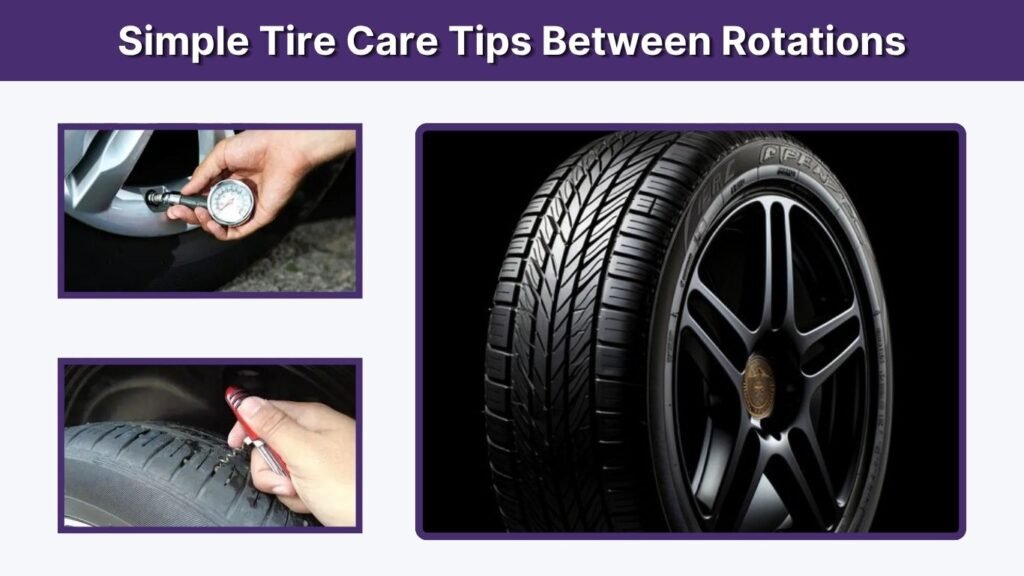
Tire rotation works best when combined with basic tire care. A rotation schedule cannot fully protect tires if pressure, alignment, or driving habits are poor.
Check Tire Pressure Monthly
Low tire pressure can cause shoulder wear, heat buildup, and poor fuel economy. High pressure can wear the center of the tread faster. Check pressure when tires are cold and follow the vehicle’s recommended PSI.
Do not use the number printed on the tire sidewall as your normal pressure target. That number is usually the maximum pressure, not the recommended daily driving pressure.
Inspect Tread Depth
Check tread depth regularly. You can use a tread depth gauge or ask a shop to inspect it during service. Look for uneven edges, cracks, bulges, nails, or exposed cords.
Good tire inspection habits include:
- Check all four tires once a month
- Look at inner and outer tread edges
- Watch for sidewall bubbles
- Remove small stones from tread grooves
- Check the spare tire if your car has one
If you see damage, get the tire inspected before driving long distances.
Drive Smoothly
Hard braking, fast cornering, quick acceleration, and rough roads can speed up tire wear. Smooth driving helps tires last longer and keeps the tread more even.
Avoid potholes when possible. If you hit a curb or pothole hard, inspect the tire and consider checking alignment. Small impacts can affect tire wear over time.
FAQs
How often should you get your tires rotated?
Most drivers should get their tires rotated every 5,000 to 8,000 miles. If you drive an AWD vehicle, tow heavy loads, or travel on rough roads, rotate them sooner. Always check your owner’s manual because some vehicles have a specific tire rotation schedule.
How often should you rotate your tires in km?
A common tire rotation interval is about 8,000 to 13,000 km. Some vehicles may need rotation closer to 8,000 km, especially AWD cars, EVs, trucks, or vehicles driven on rough roads. Your vehicle manual gives the most accurate schedule.
Should you rotate and balance tires at the same time?
You can rotate and balance tires at the same time, but it is not always required. Rotation should happen regularly, while balancing is usually needed when there is vibration, shaking, tire repair, or new tire installation. A mechanic can check if balancing is necessary.
How often should AWD tires be rotated?
AWD tires should usually be rotated every 5,000 miles, or sooner if tread wear is uneven. AWD systems work best when all four tires have similar tread depth. Uneven tires can affect traction and may place stress on the drivetrain.
Do I need an alignment every time I rotate tires?
No, you do not need an alignment every time you rotate tires. However, you should check alignment if the car pulls to one side, the steering wheel is off-center, or tire edges are wearing quickly. Rotation manages tread position, while alignment corrects wheel angles.