
All wheel drive tire rotation is important because AWD vehicles depend on all four tires working together. If one tire wears faster than the others, it can affect traction, handling, and even the drivetrain. Regular rotation helps keep tread depth even across all tires. Most AWD vehicles need tire rotation every 5,000 to 7,500 miles, but driving style, tire type, and road conditions can change the schedule.
What Is All Wheel Drive Tire Rotation?
All wheel drive tire rotation means moving the tires to different positions on an AWD vehicle. The goal is to make tire wear more even between the front and rear axles. AWD systems send power to all four wheels, so balanced tread depth is more important than it is on many two-wheel-drive vehicles.
Why Tire Rotation Matters on AWD Vehicles
AWD vehicles use all four tires to control power, grip, and stability. When tires wear unevenly, the system may have to work harder to manage wheel speed differences. This can create stress on drivetrain parts, especially if one tire has much less tread than the others.
Rotation also helps improve road grip. Tires with even tread depth respond better during cornering, braking, rain, and light snow. If the front tires are worn more than the rear tires, the vehicle may feel less stable. If the rear tires are too worn, traction can also become unsafe.
Do All Wheel Drive Cars Need Tire Rotation?
Yes, all wheel drive cars need tire rotation. In fact, AWD vehicles often need it more consistently than front-wheel-drive or rear-wheel-drive cars. Because all four tires are connected through the drivetrain, uneven tread can affect more than tire life.
Skipping rotation may lead to faster tire wear, poor handling, road noise, vibration, and extra drivetrain strain. Even if the tires look fine from the outside, small tread depth differences can build over time.
How AWD Tire Wear Happens
AWD tire wear is not always equal. Front tires may still wear faster because they handle steering and much of the braking force. Rear tires may wear differently depending on suspension design, cargo weight, and driving style.
Common causes of uneven AWD tire wear include:
- Hard cornering
- Fast acceleration
- Heavy braking
- Incorrect tire pressure
- Poor wheel alignment
- Worn suspension parts
- Long highway driving
- Rough roads or potholes
- Carrying heavy cargo
Rotation helps reduce these wear differences before they become serious.
How Often Should You Rotate Tires on All Wheel Drive?
Most all wheel drive vehicles should have tires rotated every 5,000 to 7,500 miles. Some AWD cars, SUVs, and electric vehicles may need rotation closer to every 5,000 miles. Always check your owner’s manual because some manufacturers give a specific service interval.
General AWD Tire Rotation Schedule
For normal driving, rotate AWD tires around every 5,000 miles. This is a safe schedule for many vehicles because it keeps tread wear under control. If your vehicle manual recommends 7,500 miles, you can follow that, but checking tire wear between services is still smart.
A simple AWD rotation schedule looks like this:
| Driving Condition | Recommended Rotation Interval |
| Normal city and highway driving | Every 5,000–7,500 miles |
| Rough roads or potholes | Every 3,000–5,000 miles |
| Heavy cargo or towing | Every 3,000–5,000 miles |
| AWD electric vehicles | Around every 5,000–6,250 miles |
| Low-mileage driving | Every 6 months |
| In kilometers | About every 8,000–12,000 km |
This table gives a general guide, but your tire brand and vehicle manual should always come first.
When to Rotate AWD Tires Sooner
You should rotate AWD tires sooner if you notice uneven tread, road noise, vibration, or handling changes. Do not wait for the normal mileage interval if the vehicle feels different.
Rotate earlier if:
- Front tires look more worn than rear tires
- One tire has a different tread depth
- Steering wheel vibrates
- Vehicle pulls to one side
- Tires make humming or roaring noise
- You drive on gravel or broken roads
- You tow or carry heavy loads often
Early rotation is cheaper than replacing tires early or repairing drivetrain damage.
How Often for Subaru, Audi, BMW, and Other AWD Cars?
Many AWD brands recommend regular tire rotation, but the exact mileage can vary by model. Subaru, Audi, BMW xDrive, Toyota AWD, Honda AWD, Mazda AWD, and similar vehicles may have different service guides.
A safe general rule is every 5,000 miles unless your manual says otherwise. Some performance AWD vehicles may also have directional tires or staggered tire sizes, which can limit rotation options. In that case, the tire rotation pattern must follow the tire and vehicle design.
Best All Wheel Drive Tire Rotation Pattern
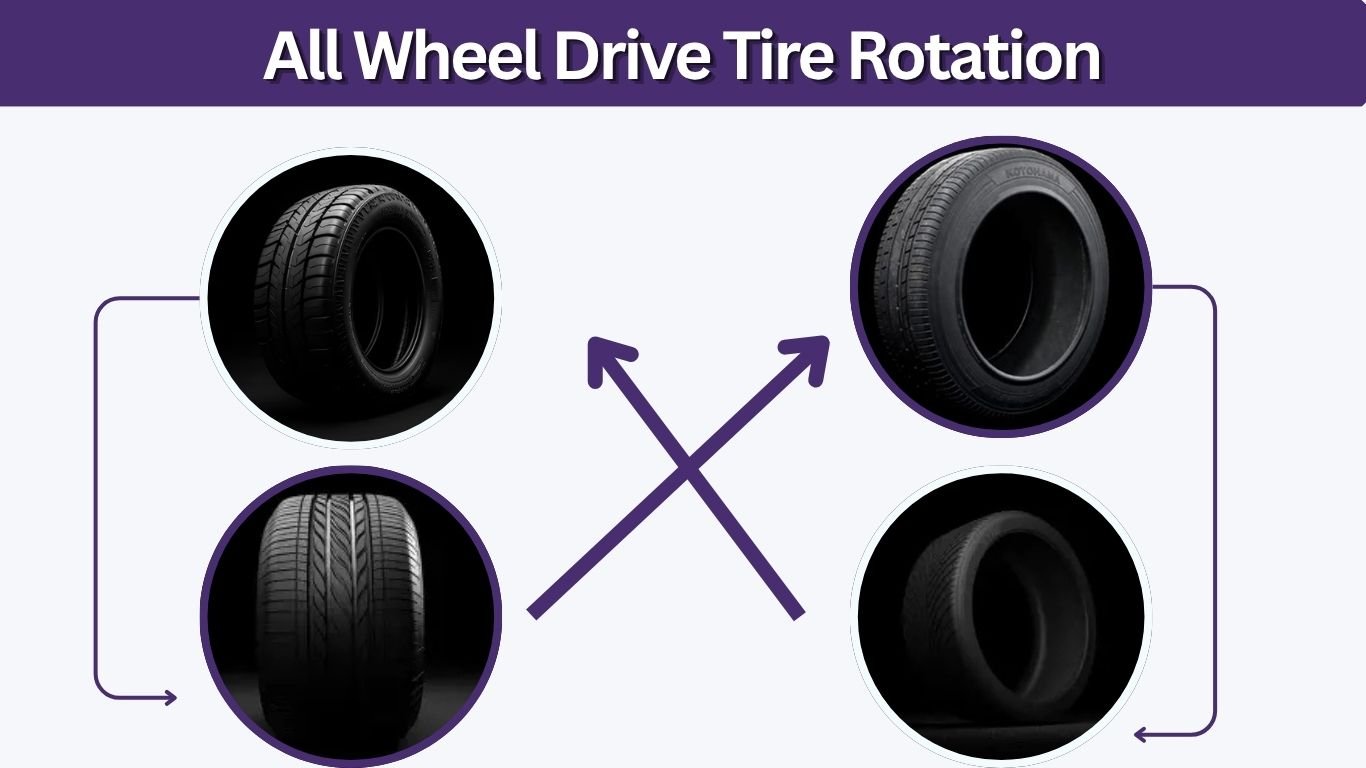
The best all wheel drive tire rotation pattern depends on the tire type. If all four tires are the same size and non-directional, the rearward cross pattern is often used. If tires are directional, they usually move front to back on the same side only.
Rearward Cross Pattern
The rearward cross pattern is commonly used for AWD and four-wheel-drive vehicles with non-directional tires. In this pattern, the rear tires move straight to the front. The front tires move to the rear but switch sides.
The pattern works like this:
- Left rear moves to left front
- Right rear moves to right front
- Left front moves to right rear
- Right front moves to left rear
This pattern helps balance tire wear across all four corners. It is one of the most common choices for AWD vehicles when all tires are the same size.
X-Pattern Rotation
The X-pattern moves each tire diagonally. The left front moves to the right rear, and the right front moves to the left rear. The rear tires also move diagonally to the front.
This pattern may be used on some vehicles with same-size, non-directional tires. However, many AWD vehicles use the rearward cross pattern instead. Always check the owner’s manual or ask a tire professional before choosing the pattern.
Front-to-Rear Pattern for Directional Tires
Directional tires are designed to roll in one direction. They often have an arrow on the sidewall showing the correct rotation direction. These tires should not be crossed from left to right unless they are removed from the wheel and remounted.
For directional tires, the usual pattern is:
- Left front moves to left rear
- Left rear moves to left front
- Right front moves to right rear
- Right rear moves to right front
This keeps each tire rolling in the proper direction.
How to Rotate Tires on an All Wheel Drive Vehicle
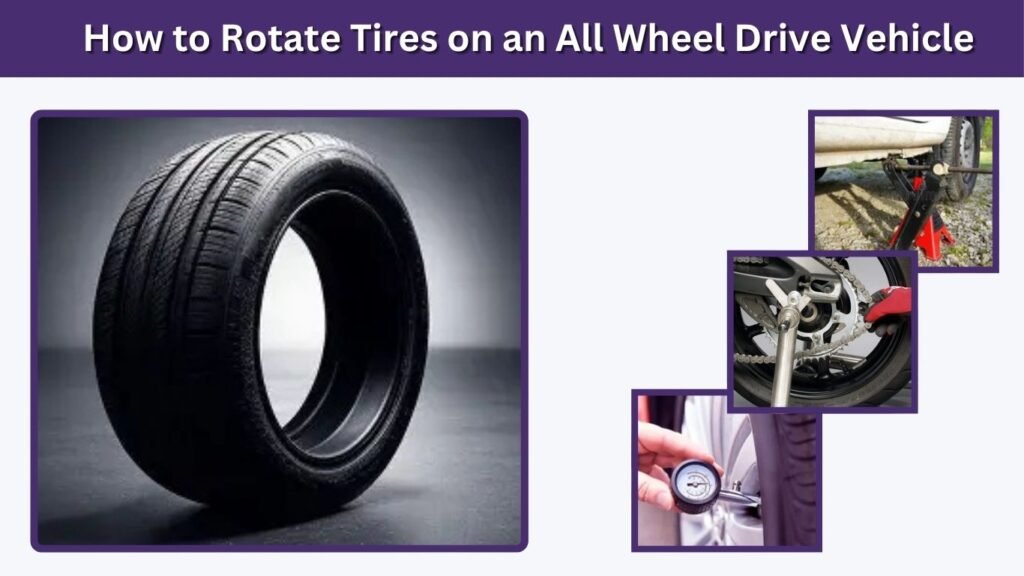
You can rotate AWD tires at home if you have the right tools and understand the correct pattern. However, many drivers prefer a tire shop because the service is quick and they can also inspect tread depth, tire pressure, balance, and alignment issues.
Tools Needed for Tire Rotation
Before rotating tires, make sure you have safe equipment. A car jack alone is not enough because it can fail or shift. Always support the vehicle properly.
You may need:
- Jack
- Jack stands
- Lug wrench
- Torque wrench
- Wheel chocks
- Tire pressure gauge
- Owner’s manual
- Gloves and a flat work area
The torque wrench is important because lug nuts must be tightened to the correct specification. Over-tightening or under-tightening can be unsafe.
Step-by-Step AWD Tire Rotation
First, park the vehicle on a flat surface and engage the parking brake. Loosen the lug nuts slightly before lifting the vehicle. Then lift the vehicle safely and place it on jack stands.
Next, remove the tires and move them according to the correct pattern. Check each tire for cracks, nails, uneven wear, bubbles, or sidewall damage. After installing the tires in their new positions, tighten the lug nuts by hand first.
Lower the vehicle and use a torque wrench to tighten the lug nuts in a star pattern. Finally, check tire pressure and reset the tire pressure monitoring system if needed.
Should You Rotate AWD Tires Yourself?
You can rotate AWD tires yourself if you are comfortable with basic car maintenance. However, a shop may be better if you are unsure about tire direction, torque settings, or safe lifting points.
Professional rotation also gives you a chance to catch other problems early. A mechanic can measure tread depth, inspect suspension parts, check for cupping, and suggest alignment if needed.
AWD Tire Rotation Chart and Sequence
An AWD tire rotation chart helps you understand where each tire should go. The correct sequence depends on tire size and tread design. Using the wrong pattern can cause problems, especially with directional tires.
Common AWD Rotation Sequence
For most AWD vehicles with same-size, non-directional tires, the rearward cross sequence is simple:
- Move rear tires straight to the front.
- Move front tires to the opposite rear positions.
- Check tire pressure.
- Tighten lug nuts to the proper torque.
- Record mileage and date.
This sequence helps all tires share front and rear axle wear over time.
AWD Tire Rotation With a Full-Size Spare
Some AWD vehicles have a full-size matching spare tire. If the spare is the same size, same tread type, and same wear level, it may be included in a 5-tire rotation. This can extend the life of all five tires.
However, do not include a temporary spare tire. Temporary spares are not designed for regular rotation. Also, avoid adding a full-size spare if its tread depth is very different from the other tires.
Rotation Pattern for Staggered AWD Tires
Some AWD vehicles have staggered tires, meaning the front and rear tires are different sizes. In that case, you usually cannot move front tires to the rear. Rotation may be limited to side-to-side only if the tires are non-directional.
If the tires are both staggered and directional, rotation may not be possible without remounting. Performance AWD vehicles often need special tire service, so always follow the manufacturer’s guide.
Tire Rotation, Balancing, and Alignment for AWD
Tire rotation is not the same as balancing or alignment. Each service solves a different problem. AWD vehicles may need all three at different times, especially if tire wear becomes uneven.
Tire Rotation vs Tire Balancing
Rotation changes tire positions. Balancing corrects weight differences in the wheel and tire assembly. If a tire is out of balance, you may feel vibration at certain speeds.
You do not need balancing every time you rotate tires, but it may be useful if there is shaking, road noise, or uneven wear. Balancing is also common when installing new tires or repairing a tire.
Tire Rotation vs Wheel Alignment
Alignment adjusts the angle of the wheels. Poor alignment can make the vehicle pull to one side or wear tire edges quickly. Tire rotation cannot fix an alignment problem.
Signs you may need alignment include uneven edge wear, off-center steering wheel, vehicle pulling left or right, or rapid tread wear. If these signs appear, get alignment checked before the tires become badly worn.
Should AWD Tires Be Balanced and Rotated Together?
They can be balanced and rotated together, but it is not always necessary. Rotation should happen regularly. Balancing should be done when symptoms appear or when tires are installed, repaired, or vibrating.
For AWD vehicles, it is also smart to measure tread depth during every rotation. If one tire is much different from the others, a tire professional can explain whether it is safe to keep using.
Mistakes to Avoid With AWD Tire Rotation
AWD tire rotation is simple, but the wrong method can cause tire or drivetrain issues. Avoiding common mistakes helps protect your vehicle and your tires.
Using the Wrong Rotation Pattern
Do not cross directional tires from one side to the other. Do not rotate staggered tires like normal same-size tires. Do not guess the pattern if the tire has special markings.
The correct rotation pattern depends on:
- Tire direction
- Tire size
- Tread design
- Vehicle drivetrain
- Spare tire type
- Manufacturer instructions
If you are unsure, check the manual or ask a tire shop.
Ignoring Tread Depth Difference
AWD vehicles are sensitive to tread depth differences. If one tire is much newer or more worn than the others, it may rotate at a slightly different speed. This can affect the AWD system.
If one tire is damaged, replacing only that tire may not always be ideal. Some AWD vehicles need tires with closely matched tread depth. In some cases, tire shaving or replacing a full set may be recommended.
Waiting Too Long Between Rotations
Waiting too long can create wear patterns that rotation cannot fully correct. Once tires become badly cupped, feathered, or uneven, they may stay noisy even after rotation.
It is better to rotate before problems become visible. A regular 5,000-mile habit is easier than trying to fix severe tread wear later.
FAQs
Do all wheel drive cars need tire rotation?
Yes, all wheel drive cars need tire rotation. AWD vehicles use all four tires to manage power and traction, so even tread depth is important. Regular rotation helps prevent uneven wear, improves handling, and may reduce strain on the drivetrain.
What is the best tire rotation pattern for all wheel drive?
The rearward cross pattern is commonly used for AWD vehicles with same-size, non-directional tires. Rear tires move straight to the front, while front tires cross to the rear. Directional or staggered tires may need a different pattern.
How often should you rotate tires on all wheel drive?
Most AWD tires should be rotated every 5,000 to 7,500 miles. If you drive on rough roads, tow, carry heavy loads, or notice uneven wear, rotate them sooner. Many AWD owners use a 5,000-mile schedule for better tread control.
Can you rotate tires on all wheel drive yourself?
Yes, you can rotate AWD tires yourself if you have the right tools and know the correct pattern. Use jack stands, a torque wrench, and the owner’s manual. If the tires are directional or staggered, professional service is safer.
What happens if you do not rotate AWD tires?
If you do not rotate AWD tires, they may wear unevenly and lose traction faster. Uneven tread can also cause noise, vibration, poor handling, and possible drivetrain stress. Regular rotation helps all four tires wear at a similar rate.