
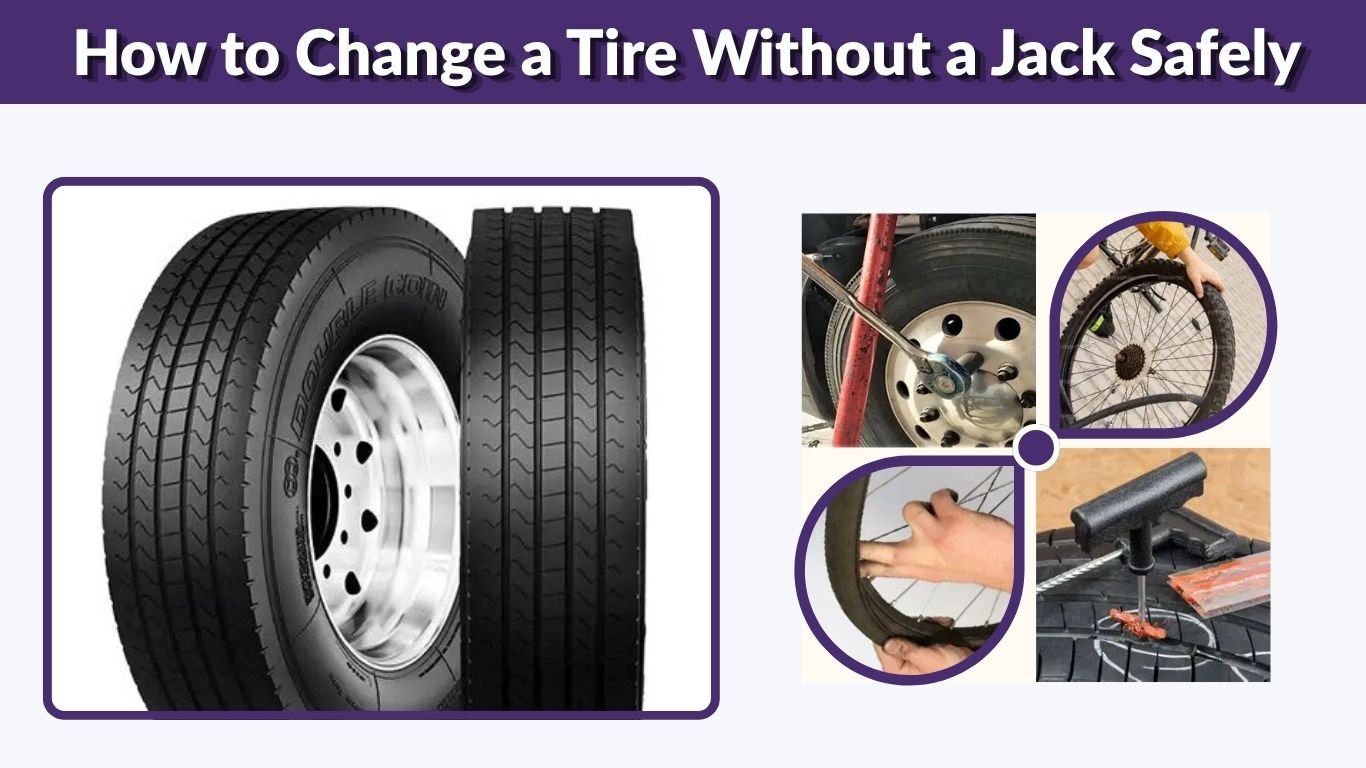
Changing a tire without a jack is risky, especially on a car, trailer, ATV, or motorcycle. A jack is the safest tool because it lifts the vehicle evenly and keeps it stable. However, in an emergency, there are limited ways to handle a flat tire without one. This guide explains safe options, what not to do, and when calling roadside help is the better choice.
Can You Change a Tire Without a Jack?
Changing a tire without a jack depends on the vehicle type, tire location, road surface, and tools available. For cars and trucks, it is difficult and sometimes unsafe. For bicycles, motorcycles, lawn tractors, and small trailers, it may be more possible with the right method.
The most important rule is simple: never put your body under a vehicle that is not properly supported. Even if the tire looks slightly raised, the vehicle can shift suddenly.
When It May Be Possible
You may be able to change or repair a tire without a jack in these situations:
- The vehicle is already partly lifted because of uneven ground.
- You are changing a bicycle tire or tube.
- You are working on a small trailer, mower, ATV, or dirt bike.
- You have ramps, blocks, wood, or another safe support.
- You only need to repair a puncture instead of removing the wheel.
- The tire is tubeless and can be plugged while still on the vehicle.
For a full-size car, the best option is usually not to remove the wheel without a jack. Instead, use a tire repair kit, inflator, roadside assistance, or a safe alternative lifting method.
When You Should Not Try It
Do not try to change a tire without a jack if the vehicle is on a slope, soft soil, wet ground, sand, or heavy traffic area. Also avoid this method if the tire is fully destroyed, the rim is touching the ground, or the lug nuts are too tight.
If the vehicle moves even slightly while you are working, stop immediately. A flat tire is stressful, but a falling vehicle can cause serious injury.
Safety Steps Before Touching the Tire
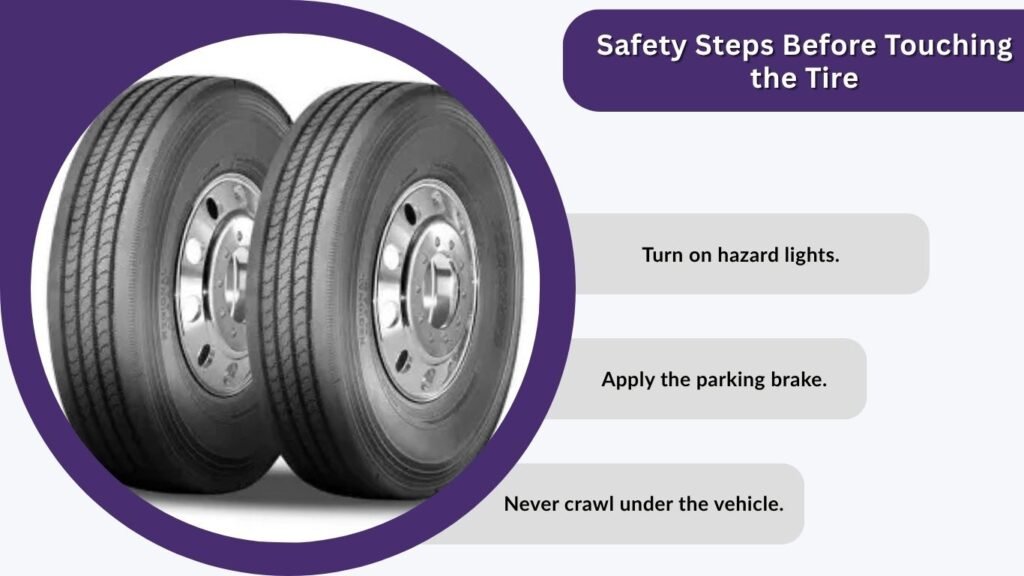
Before trying any tire change or repair, make the area safe first. Many accidents happen because the driver starts working too close to moving traffic or forgets to secure the vehicle.
If you are on a road, move as far away from traffic as possible. Turn on hazard lights and use warning triangles if you have them. At night, use a flashlight or phone light so other drivers can see you.
Basic Safety Checklist
Follow these steps before working on the tire:
- Park on the flattest, firmest surface available.
- Turn on hazard lights.
- Put the vehicle in park or first gear.
- Apply the parking brake.
- Place wheel chocks, stones, or wood behind the opposite tires.
- Keep passengers away from the road.
- Loosen lug nuts only before lifting or supporting the vehicle.
- Never crawl under the vehicle.
- Stop if the vehicle shifts, tilts, or feels unstable.
These steps matter even if you are only fixing a bicycle, motorcycle, or trailer tire. Stability always comes first.
Tools That Can Help
A jack is best, but some tools can help in emergencies. A tire inflator, tire plug kit, lug wrench, wood blocks, ramps, and wheel chocks are useful. For bicycles, tire levers are helpful, but many bike tires can be removed by hand if the bead is loose enough.
For cars, you usually need at least a lug wrench or tire iron to remove the wheel. Without a lug wrench, changing a spare tire is almost impossible unless another correct-size wrench is available.
| Situation | Best No-Jack Option | Risk Level |
| Car flat tire | Use plug kit or inflator | Medium |
| Car tire fully damaged | Call roadside help | High |
| Bicycle tube flat | Remove tire by hand | Low |
| Motorcycle tire | Use stand, blocks, or repair kit | Medium to high |
| Trailer tire | Use ramp or blocks carefully | Medium |
| Lawn tractor tire | Use wood blocks or ramps | Medium |
How to Change a Car Tire Without a Jack
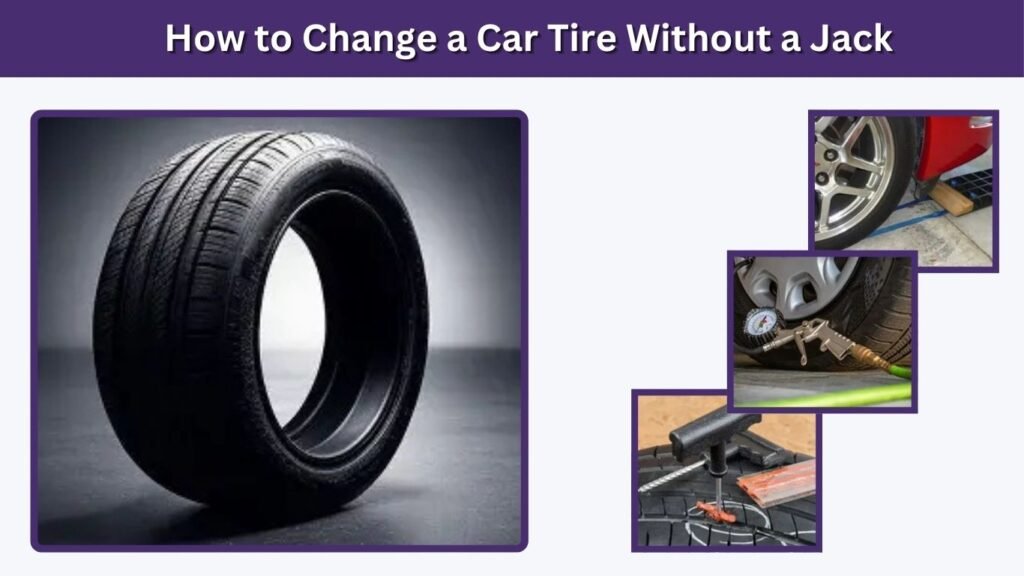
For a car, changing a tire without a jack should only be an emergency method. The safest solution is to avoid removing the tire if possible. If the tire still holds some air, you may be able to inflate it and drive slowly to a repair shop.
If there is a nail or small puncture in the tread, a tire plug kit can temporarily repair the tire without removing the wheel.
Option 1: Use a Tire Plug Kit
A tire plug kit is one of the safest ways to fix a flat tire without a jack. It works best for small punctures in the tread area. It does not work well for sidewall damage, large cuts, blowouts, or badly worn tires.
Steps:
- Find the puncture and remove the nail or screw.
- Push the reaming tool into the hole to clean it.
- Insert a rubber plug into the plug tool.
- Push the plug into the puncture.
- Pull the tool out, leaving the plug inside.
- Trim extra plug material if needed.
- Inflate the tire to the recommended pressure.
- Check for air leaks.
This is a temporary repair. After using a plug, drive slowly and visit a tire shop as soon as possible.
Option 2: Use an Inflator or Sealant
If the tire is not completely destroyed, a portable inflator may give you enough air to reach a safe location. Tire sealant can also help with small punctures, but it may not work on large holes or sidewall damage.
Attach the inflator to the valve stem, inflate the tire, and check whether it holds pressure. If air leaks out quickly, do not drive far. If the tire stays firm, drive slowly and avoid highways.
Sealant can make a tire messy inside, so tell the repair shop if you used it.
Option 3: Use a Ramp or Raised Surface
Some drivers use a strong ramp, curb, or wood blocks to raise one side of the vehicle. This method is risky and should only be used if the surface is stable and the vehicle can be supported safely.
The idea is to drive the good tire on the same side onto a ramp or thick wood block. This may lift the flat tire enough to remove it. However, the vehicle must be stable, the parking brake must be on, and the wheels must be blocked.
Never use loose bricks, weak plastic, or unstable stones. They can crack or slip.
How to Remove a Tire Without a Lug Wrench
Changing a car tire without a lug wrench is very difficult. Lug nuts are tightened with high torque, so small hand tools usually cannot loosen them. Using the wrong tool can round off the lug nuts and make the problem worse.
A correct-size socket with a breaker bar may work. Some vehicles also have locking lug nuts, which require a wheel lock key.
If You Lost the Lug Wrench
Try these options:
- Check under the trunk floor for the factory tire tool.
- Look under seats or side panels.
- Ask another driver for a matching lug wrench.
- Use a correct-size socket and breaker bar.
- Call roadside assistance.
- Contact a mobile tire service.
Do not use pliers, an adjustable wrench, or random tools on lug nuts. They can slip and damage the nut.
If You Lost the Wheel Lock Key
If the tire has a wheel lock and you do not have the key, changing the tire is not simple. Tire shops and roadside services may have special removal tools. You can also contact the vehicle dealer for a replacement key if you know the lock pattern.
Avoid hammering random sockets onto locking lug nuts unless it is a true emergency. It can damage the wheel.
How to Change a Bike Tire Without Tools
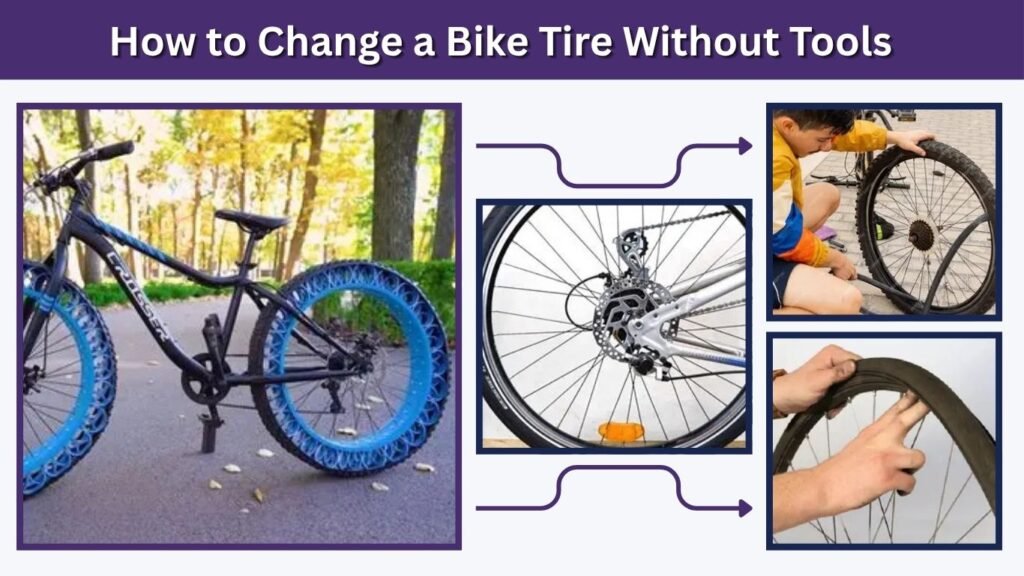
Changing a bike tire without tools is more realistic than changing a car tire without a jack. Many bicycle tires can be removed by hand, especially if the tire bead is not too tight.
Start by releasing all air from the tube. Then push the tire bead toward the center of the rim. This creates slack and makes it easier to pull one side of the tire over the rim.
Bike Tire Without Tire Levers
Follow these steps:
- Shift to the smallest rear gear if removing the back wheel.
- Release the brake if needed.
- Remove the wheel from the bike.
- Deflate the tube completely.
- Push both tire beads into the center channel of the rim.
- Use your thumbs to roll one side of the tire over the rim.
- Pull out the tube carefully.
- Check inside the tire for thorns, glass, or wire.
- Install the new or patched tube.
- Inflate slowly and check that the tube is not pinched.
To avoid pinching the tube, add a little air before putting it back inside the tire. The tube should hold its shape but still feel soft.
Changing a Bike Tube Without Removing the Wheel
Sometimes you can patch a bike tube without fully removing the wheel. This is easier on the front tire. For the rear tire, gears and chain make the job harder.
Open one side of the tire, pull out part of the tube, find the hole, patch it, and tuck the tube back into place. This is useful for quick roadside repairs, but removing the wheel usually gives better access.
How to Change Motorcycle or Dirt Bike Tires Without Special Tools
Motorcycle tires are harder than bicycle tires because the beads are tighter and the rims are stronger. A dirt bike tire may be changed without a tire machine, but it usually requires tire spoons, bead-breaking force, and patience.
Without proper tools, the better option is often to plug a tubeless tire or patch a tube only if you can safely remove the wheel.
Motorcycle Tire Without a Stand
If you do not have a stand, you may use strong blocks, a center stand, or a safe support point. Some riders carefully lean the bike or use a trail stand, but this can be unstable.
Before removing the wheel, make sure the motorcycle cannot fall. A falling motorcycle can damage the bike and injure you.
For tubeless motorcycle tires, a plug kit and mini compressor are often safer than removing the tire roadside.
Avoid Pinching the Tube
Tube-type motorcycle tires can pinch easily during installation. To reduce the risk, use small bites with the tire spoon, keep the opposite bead in the drop center, and slightly inflate the tube before final fitting.
Never force the tire aggressively. If it feels impossible, the bead is probably not sitting correctly in the center of the rim.
How to Change a Trailer Tire Without a Jack
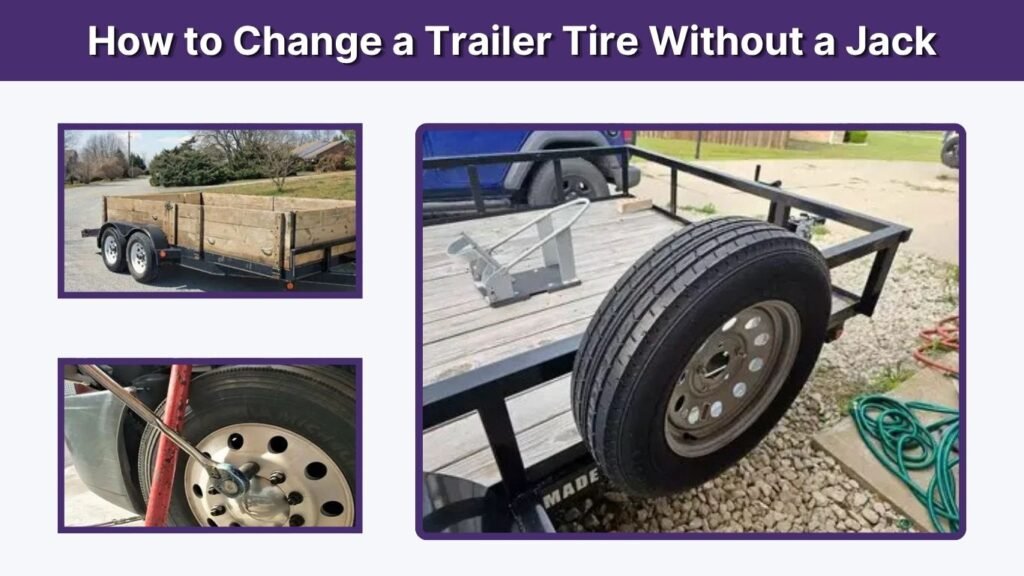
A trailer tire can sometimes be changed without a jack by using a ramp. This is common for dual-axle trailers. You drive the good tire on the same side up onto a ramp or strong block, which lifts the flat tire off the ground.
This method should only be done on level ground. The tow vehicle must stay connected, and the trailer wheels should be chocked.
Dual-Axle Trailer Method
Use this process carefully:
- Keep the trailer attached to the tow vehicle.
- Park on firm, level ground.
- Place a strong ramp or trailer aid in front of the good tire.
- Drive slowly onto the ramp.
- Stop when the flat tire lifts.
- Apply the parking brake on the tow vehicle.
- Chock the wheels.
- Loosen and remove the lug nuts.
- Replace the flat tire with the spare.
- Tighten the lug nuts in a star pattern.
- Drive slowly off the ramp.
- Retighten the lug nuts after a short distance.
This method is not ideal for single-axle trailers. For single-axle trailers, a jack or roadside help is usually safer.
Trailer Tire Safety
Trailer tires carry heavy loads, so never use weak blocks or unstable supports. If the trailer is loaded, the risk is higher. After replacing the tire, check air pressure and inspect the other tires for cracks, bulges, or uneven wear.
How to Change Tires at Home Without a Machine
Changing tires at home without a tire machine means removing the tire from the rim manually. This is different from changing a wheel on a vehicle. It can be done on some motorcycle, ATV, mower, and bicycle tires, but car tires are much harder.
Car tires need strong bead-breaking force and proper balancing after installation. Without balancing, the vehicle may shake at speed.
Basic Manual Tire Changing Steps
The general process is:
- Remove the wheel from the vehicle.
- Deflate the tire fully.
- Break the bead on both sides.
- Use tire irons or spoons to remove one bead.
- Remove the second bead.
- Lubricate the new tire bead.
- Mount the new tire carefully.
- Inflate until the bead seats.
- Check for leaks.
- Balance the wheel if needed.
For cars, this is not recommended unless you have proper equipment. Tire shops use machines because the bead is tight and the rim can be damaged easily.
How to Avoid Damaging Sensors
Modern cars may have TPMS sensors inside the wheel. These sensors can break if you push tire irons too deeply near the valve stem. When removing or installing a tire, keep tools away from the valve area and work carefully.
If you are not familiar with TPMS sensors, let a tire shop handle the tire removal.
What to Do If You Cannot Change the Tire
Sometimes the safest answer is not to change the tire at all. If you have no jack, no lug wrench, no spare tire, or no safe place to work, call for help.
A temporary repair is better than a dangerous tire change. A tow truck, mobile mechanic, roadside service, or nearby tire shop can solve the problem without risking injury.
Best Emergency Options
Use these options based on the situation:
- Use a tire inflator for a slow leak.
- Use a tire plug kit for a small tread puncture.
- Use tire sealant only as a temporary fix.
- Call roadside assistance for a damaged tire.
- Ask for help if lug nuts are too tight.
- Tow the vehicle if the rim is touching the ground.
- Do not drive on a completely flat tire.
Driving on a flat tire can destroy the tire, damage the rim, and reduce control of the vehicle.
FAQs
Can I change a car tire without a jack?
You usually should not change a car tire without a jack because the vehicle must be lifted safely. In an emergency, you may use a plug kit, inflator, or stable ramp method. If the tire is badly damaged, roadside assistance is safer than trying to remove the wheel.
How can I fix a flat tire without changing it?
If the puncture is in the tread, you may use a tire plug kit or tire sealant. After that, inflate the tire and check for leaks. This is only a temporary repair. A tire shop should inspect the tire as soon as possible.
Can I change a bike tire without tire levers?
Yes, many bike tires can be changed without tire levers. Deflate the tube fully, push the tire bead into the center of the rim, and roll one side of the tire off with your thumbs. Tight road bike tires may still need levers.
What if I do not have a lug wrench?
Without a lug wrench, removing car lug nuts is very difficult. A correct-size socket and breaker bar may work, but small tools can damage the nuts. Check your trunk for the factory tool kit or call roadside assistance if you cannot loosen them.
Can I change a trailer tire without a jack?
A dual-axle trailer tire can sometimes be changed using a ramp or trailer aid. Drive the good tire on the same side onto the ramp to lift the flat tire. This should only be done on level ground with the trailer secured and wheels chocked.