
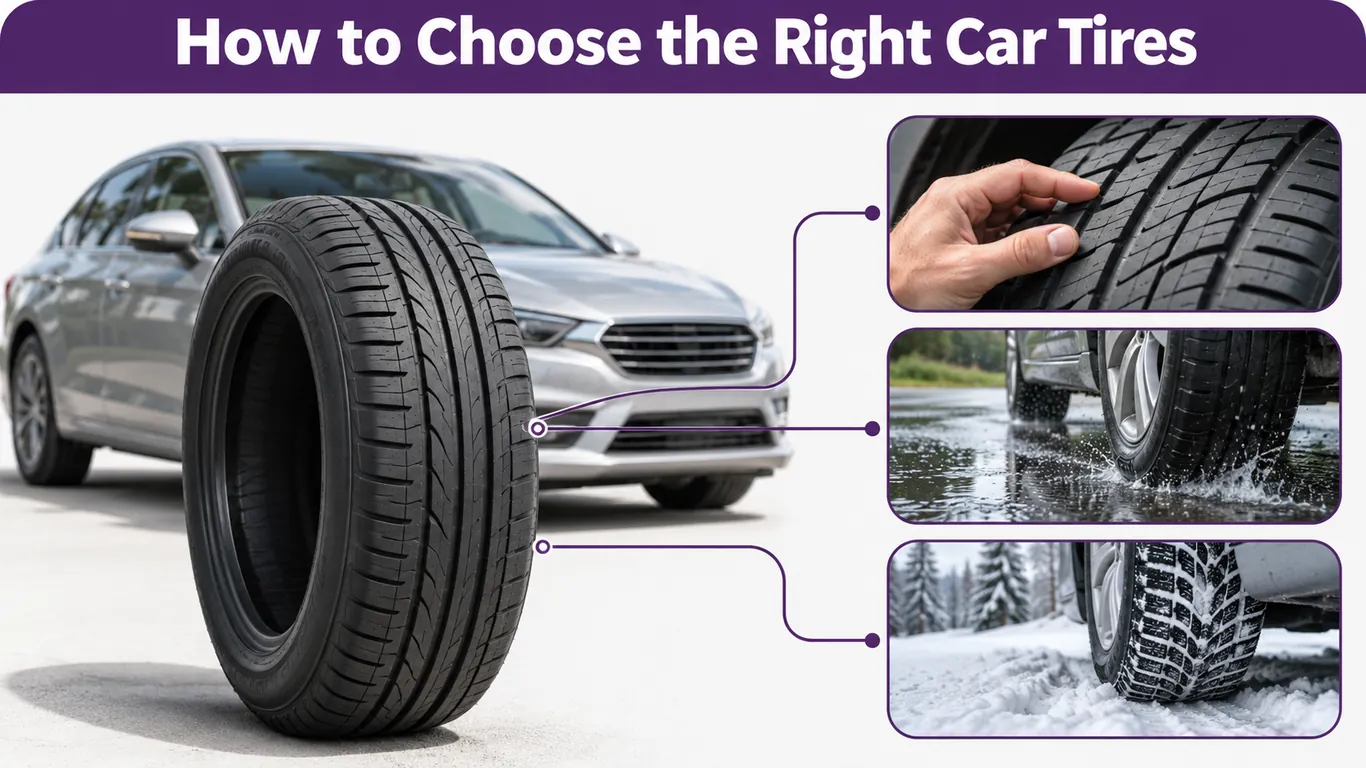
Choosing new tires can feel confusing when every brand promises better grip, longer life, and a quieter ride. The right choice starts with your vehicle’s requirements, then considers your climate, driving habits, and budget. A tire that suits a daily commuter in Florida may be unsuitable for someone facing snowy roads in Michigan. Understanding these differences helps you avoid paying for features you rarely need. This guide explains how to choose the right car tires, compare important specifications, and find a suitable set for everyday driving.
Quick answer: Match your vehicle’s approved tire specifications, choose a tire category for your climate, then compare wet braking, comfort, tread life, and the complete installed price.
Start With Your Vehicle’s Tire Requirements
Before comparing brands or prices, identify the specifications your vehicle requires. Tires must fit the wheels and support the vehicle correctly. Two tires can look almost identical while having different load capacities or performance limits. Starting with the approved specifications narrows your choices and helps prevent an expensive buying mistake.
Check the Door Placard and Owner’s Manual
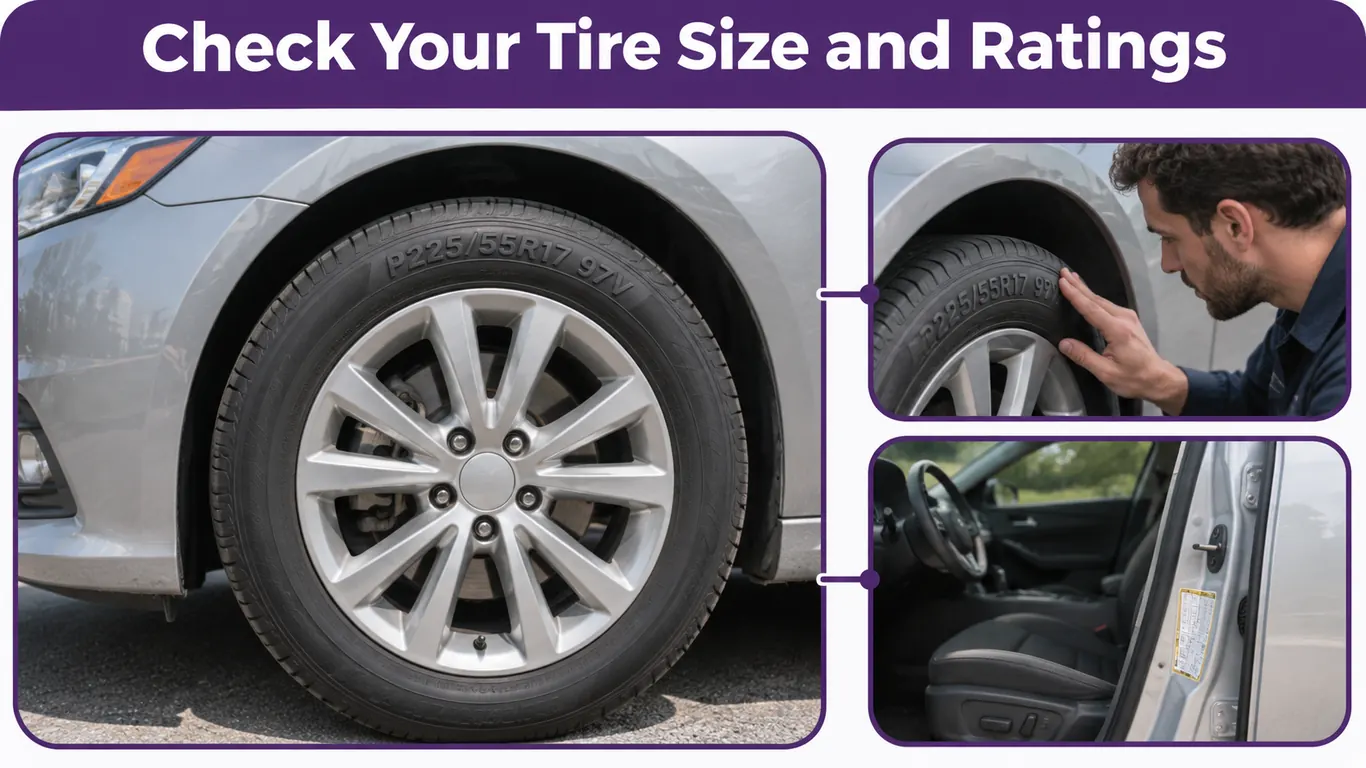
Find the tire information label, usually inside the driver’s door opening. Check the owner’s manual for additional requirements, including load capacity, speed rating, and any differences between front and rear fitments.
Use the existing sidewalls as a secondary reference because a previous owner may have installed a different size. If your car has aftermarket wheels, have a qualified installer verify the complete fitment before ordering. NHTSA’s tire safety guidance recommends checking the vehicle label or manual for the correct tire size.
Understand the Tire Size Code
A tire marked 225/55R17 97H contains several useful details. Our guide to what tire numbers mean explains these codes further.
- 225: Tire section width in millimeters.
- 55: Sidewall height as a percentage of tire width.
- R: Radial construction.
- 17: Required wheel diameter in inches.
- 97: Load index.
- H: Speed rating.
The wheel diameter must match exactly. Width and sidewall height also affect compatibility, so avoid changing them without confirming an approved alternative.
Choose a Tire Type That Matches Your Climate
Weather should strongly influence your tire choice. Consider the conditions you encounter throughout the year, including road trips and early morning commutes. Warm rain, occasional snow, and prolonged icy weather create different demands. Choosing a suitable seasonal category is more useful than assuming one tire can deliver equally strong performance everywhere.
All-Season and All-Weather Tires
All-season tires balance everyday comfort, tread life, and performance in moderate conditions. They can suit drivers who experience warm summers, rain, and occasional light snow.
All-weather tires offer another year-round option. Look for the three-peak mountain snowflake symbol, which indicates that the tire meets a standardized snow-traction requirement. This marking does not certify every aspect of winter performance, including ice braking. Compare the specific model’s capabilities against your usual conditions.
Summer and Winter Tires
Summer tires suit warm-weather driving and can provide strong dry and wet grip within their intended operating conditions. Their name does not mean they work only on dry roads.
Winter tires use compounds and tread designs intended for cold weather, snow, and ice. For drivers facing regular winter conditions, a dedicated winter set offers stronger seasonal capability. Install winter tires on all four wheels to maintain balanced traction, including on vehicles with all-wheel drive. Michelin’s seasonal tire guide explains these differences.
Match the Tires to Your Driving Habits
Once you identify the right size and seasonal category, think about how you actually use your car. Your normal commute matters more than an occasional drive on an unusual road. Decide whether comfort, handling, mileage, or challenging road conditions deserve the most attention. Clear priorities make comparisons easier and reduce the appeal of unnecessary upgrades.
Daily Commuting and Highway Travel
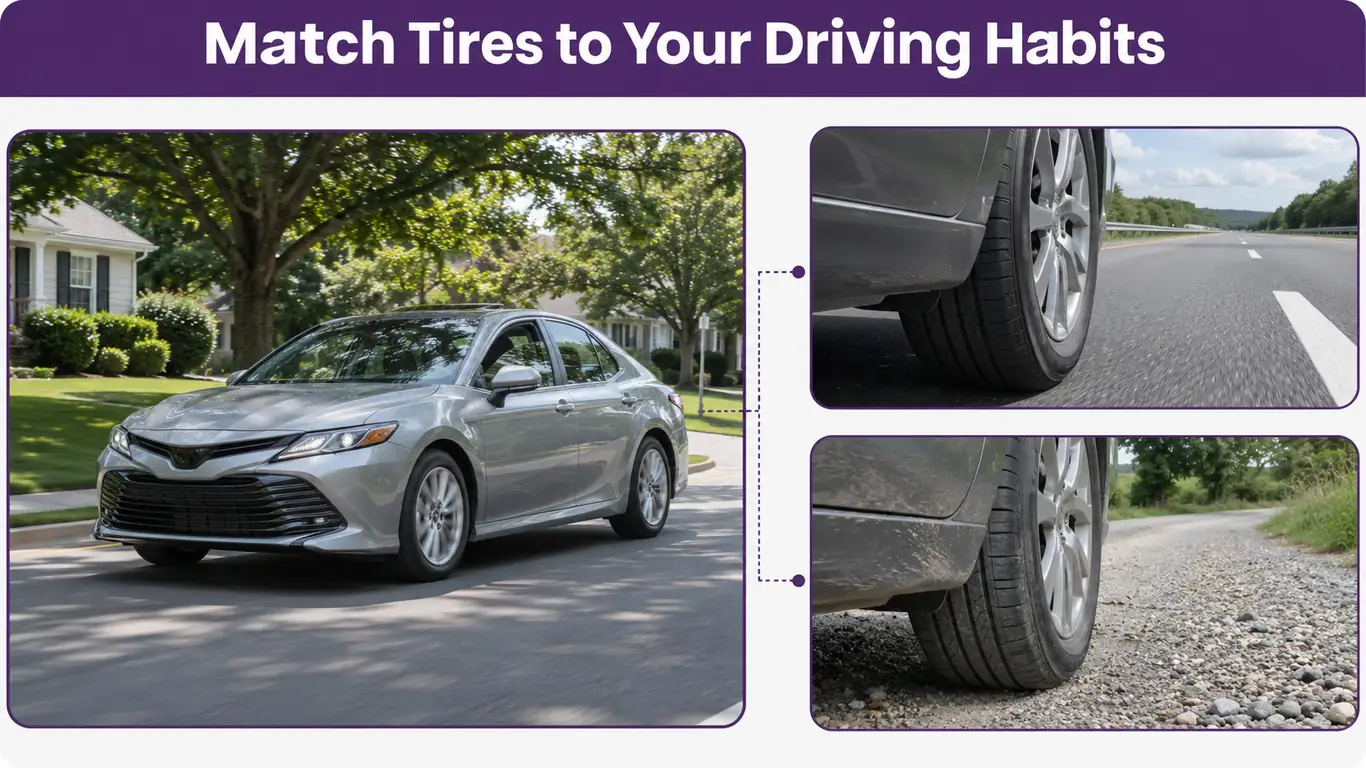
For routine commuting, consider touring tires that emphasize balanced road manners. Useful comparison points include:
- Wet braking and predictable handling.
- Ride comfort over broken pavement.
- Interior noise at highway speeds.
- Expected tread life and warranty conditions.
Read reviews of the exact tire model, preferably in a similar vehicle and size. A positive review from a different vehicle category may not reflect the experience you will have.
Sporty Driving and Rough Roads
If responsive steering and cornering matter, compare performance-oriented models. Check whether their expected ride quality, noise, and tread life fit your daily needs.
For frequent gravel or rough-road driving, discuss suitable options with an installer. Avoid buying an aggressive tread simply because it looks durable. Ask what benefit it offers on your actual routes and what compromises come with it.
Check Load Capacity and Speed Ratings
Correct dimensions are only part of proper tire selection. Load index and speed rating help determine whether a tire meets the vehicle’s operating requirements. These details matter even if you drive gently or rarely carry passengers. Check them before comparing prices so a cheaper tire does not enter your shortlist with unsuitable specifications.
Meet the Required Load Index
The tire load index corresponds to a tire’s rated carrying capacity under specified conditions. Replacement tires must meet the vehicle’s requirements.
Also check whether the vehicle requires extra-load tires or another particular specification. A tire that physically fits the wheel may still be unsuitable for the car. Follow the manufacturer’s guidance rather than assuming a matching size guarantees compatibility.
Follow the Required Speed Rating
A tire speed rating describes tested speed capability under specified conditions; it is not permission to exceed road speed limits.
Use the rating recommended by the vehicle manufacturer. Approved winter fitments can involve specific exceptions, so confirm those with the manual and installer. Do not independently choose a lower rating because your usual driving speed is modest.
Compare Performance Beyond Brand Names
A familiar brand can be a starting point, but the exact model matters more than the logo. Manufacturers offer different tires for different purposes, and their characteristics can vary considerably. Compare models within the same category and suitable fitment. This creates a more useful shortlist than comparing a comfort-focused touring tire with a sporty summer model.
Prioritize Relevant Test Results
Look for tests that explain their conditions, methods, and comparison group. Focus on:
- Wet braking: Stopping performance on wet pavement.
- Handling: Predictable responses during steering and cornering.
- Comfort and noise: Results relevant to everyday travel.
- Seasonal performance: Snow or ice testing where necessary.
Avoid treating a single overall score as the whole answer. A model’s strengths should match the conditions that matter most to you.
Understand Ratings and Warranties
Many passenger tires sold in the United States display Uniform Tire Quality Grading information. It covers relative treadwear, wet traction, and temperature resistance. These grades provide useful context but do not describe every aspect of performance.
Read mileage warranties separately. Check rotation requirements, exclusions, and whether coverage is prorated. A long advertised warranty should support your decision alongside performance evidence and ownership costs.
Set a Budget for the Complete Purchase
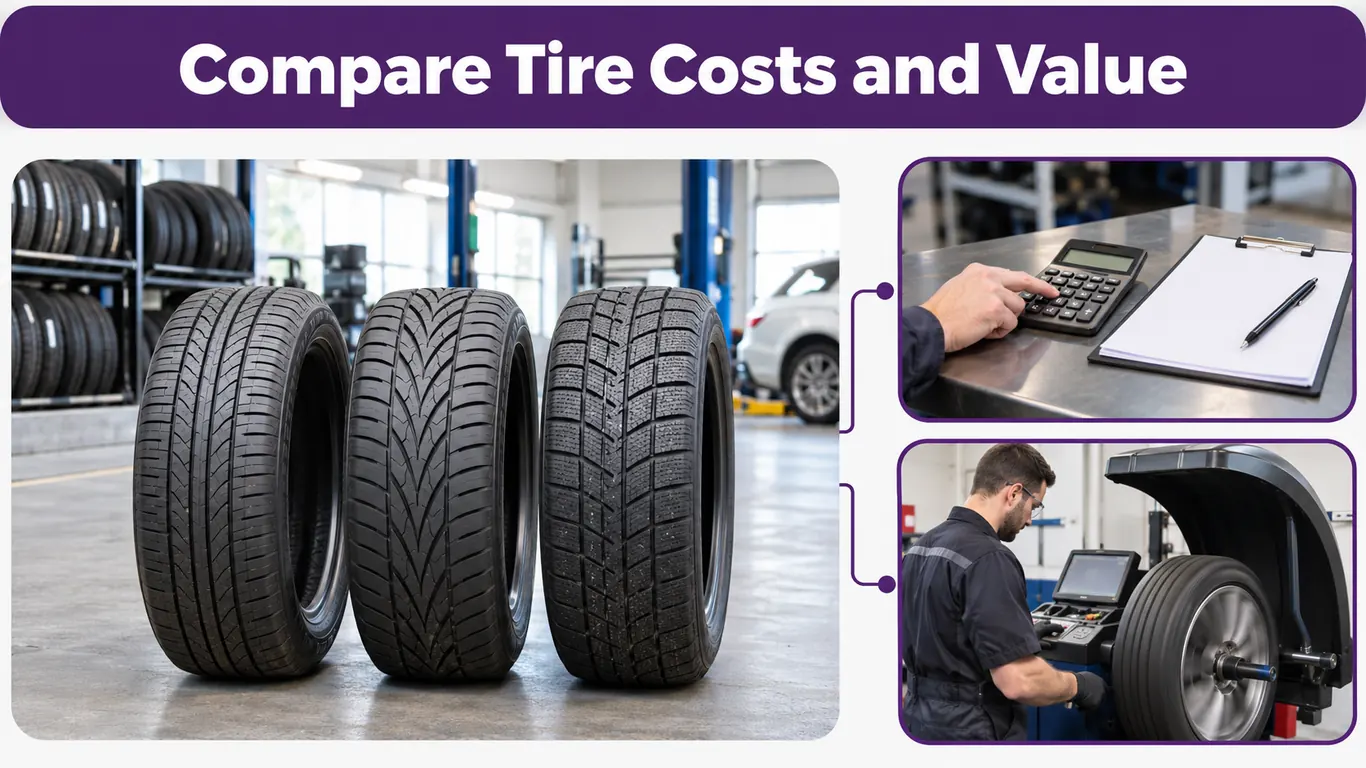
The advertised tire price may exclude several items needed to get your car back on the road. Compare complete written estimates so you know what each retailer includes. Also consider how long you expect to keep the vehicle and how much you drive. A useful budget balances the initial bill with suitable performance and realistic ownership needs.
Request an Installed Price
Ask whether the quote includes:
- Mounting and balancing.
- Valve stems or TPMS service parts.
- Disposal fees and taxes.
- Rotation services or optional protection plans.
Ask about alignment separately, particularly if the old tires show uneven wear or the vehicle pulls. Compare optional services carefully instead of assuming the most expensive package offers the best value.
Choose Value Within a Suitable Category
Start with tires that meet every vehicle requirement, then compare their performance and total cost. Eliminate unsuitable choices before looking for discounts.
For example, a commuter may reasonably prioritize wet-road performance and comfort over sharper steering response. A driver facing regular snow will make a different compromise. The best value depends on the job the tire needs to do.
Plan Replacement and Installation Carefully
Before placing the order, decide how the new tires will work with the rest of the vehicle. Replacing a full set is straightforward, but replacing fewer tires needs closer attention. Different tread depths, incompatible constructions, and vehicle-specific requirements can affect the decision. Confirm the plan with the installer before paying for the tires.
Check Requirements When Replacing Fewer Tires
The U.S. Tire Manufacturers Association recommends replacing all four tires together for optimal performance. When replacing only two is appropriate, its guidance places the new pair on the rear axle to support stability on wet roads.
Some AWD and 4WD vehicles have strict matching requirements and may need all four replaced. Follow the vehicle manufacturer’s instructions rather than applying a universal tread-depth allowance.
Confirm Special Equipment Compatibility
If your car uses run-flat tires, staggered sizes, or another specific fitment, discuss those requirements before changing tire types.
Ask the installer to confirm the exact model, size, load specification, and speed rating on the invoice. Also confirm the appropriate inflation settings and maintenance schedule for the installed fitment.
FAQs
Choosing tires becomes easier when you separate essential requirements from personal preferences. Size, load capacity, and approved fitment come first. Climate, performance priorities, and cost guide the remaining choice. These common questions address the practical decisions drivers often face when narrowing a shortlist or preparing to replace an existing set.
How Do I Choose the Right Tires for My Car?
Start with your vehicle’s approved size, load specification, and speed rating. Choose a seasonal category suited to your climate, then compare suitable models for wet braking, comfort, noise, and ownership costs. Request a complete installed quote and have the installer confirm compatibility before purchasing.
Are All-Season Tires Suitable for Every Climate?
All-season tires suit moderate conditions, but regular snow, ice, or prolonged cold calls for closer consideration of winter capability. Depending on your needs, compare all-weather models or dedicated winter tires. The right choice depends on your actual roads and weather rather than the category name alone.
Can I Use a Different Tire Size?
Use the manufacturer’s approved fitment unless a qualified professional confirms a suitable alternative. Changing width, sidewall height, or wheel diameter requires more than checking whether the tire fits physically. Any alternative must also meet the vehicle’s load, speed, clearance, and other applicable requirements.
Should I Buy the Same Tires That Came With My Car?
Original-equipment tires provide a useful starting point, especially if you liked their performance. You can compare alternatives that meet the vehicle’s requirements and better suit your priorities. Explain what you want to improve, such as comfort or seasonal traction, and verify compatibility before switching models.
Are Expensive Tires Always Better?
Price alone does not establish suitability. Compare the exact models, their relevant performance evidence, warranty terms, and installed costs. An expensive performance tire may offer characteristics you rarely use. Choose the tire that meets your vehicle’s requirements and performs well in the conditions you regularly encounter.