
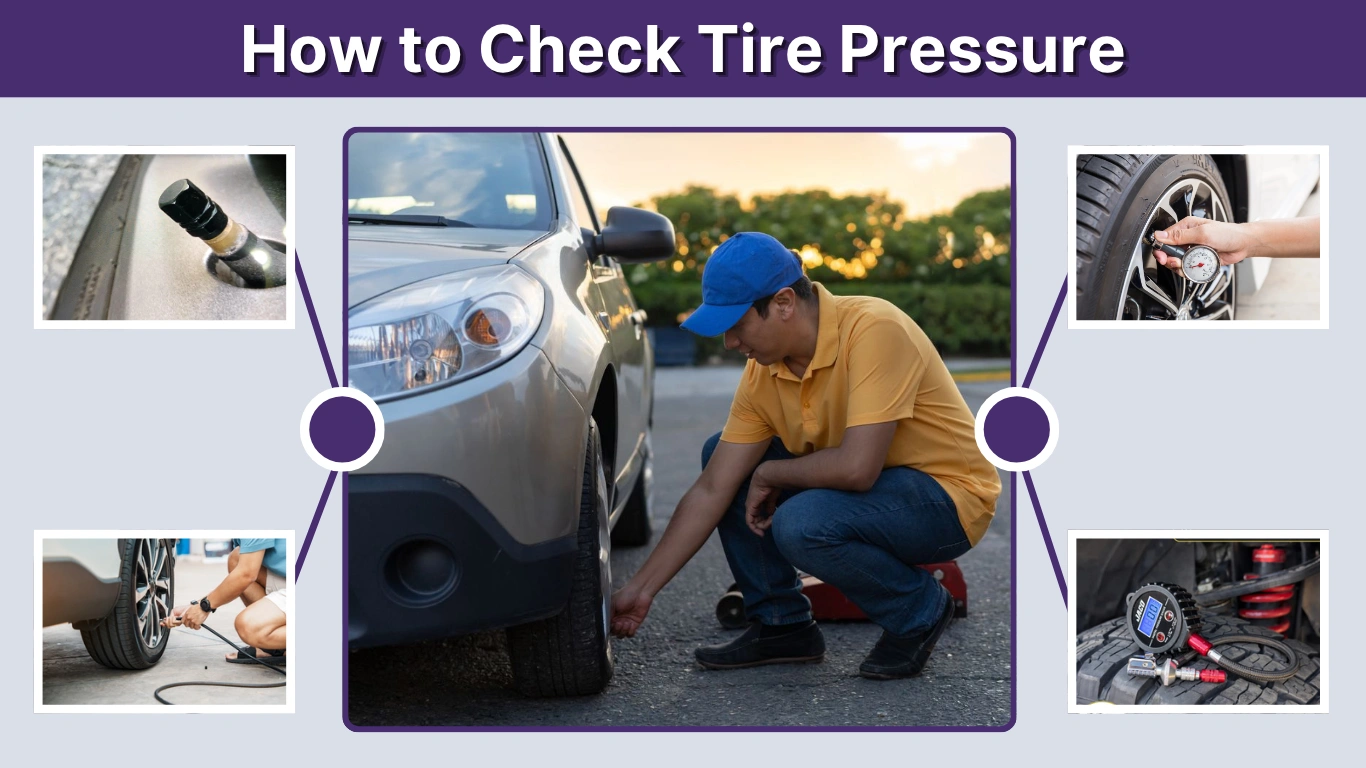
Maintaining the correct tire pressure is one of the simplest yet most important aspects of vehicle maintenance. Properly inflated tires improve safety, enhance fuel efficiency, and extend the lifespan of your tires.
Many drivers overlook this basic task, but checking tire pressure regularly can prevent accidents and costly repairs. In this guide, you’ll learn why tire pressure matters, what tools you need, and how to check it correctly step by step.
Why Checking Tire Pressure Is Important
Tire pressure directly affects how your vehicle performs on the road. Driving with incorrect pressure can lead to poor handling, increased wear, and even dangerous situations.
Improves Driving Safety
Proper tire pressure ensures better traction and control. When tires are inflated correctly, they maintain optimal contact with the road surface, which improves braking and handling.
Underinflated or overinflated tires can reduce stability, especially during sudden turns or emergency braking.
Helps Tires Last Longer
Incorrect tire pressure causes uneven wear. Low pressure wears down the edges of the tire, while high pressure wears out the center.
Maintaining the correct pressure helps distribute weight evenly, allowing your tires to last longer and perform better.
Saves Fuel
Tires with low pressure create more rolling resistance, which means your engine has to work harder. This leads to increased fuel consumption.
By keeping your tires properly inflated, you can improve fuel efficiency and save money over time.
What You Need to Check Tire Pressure
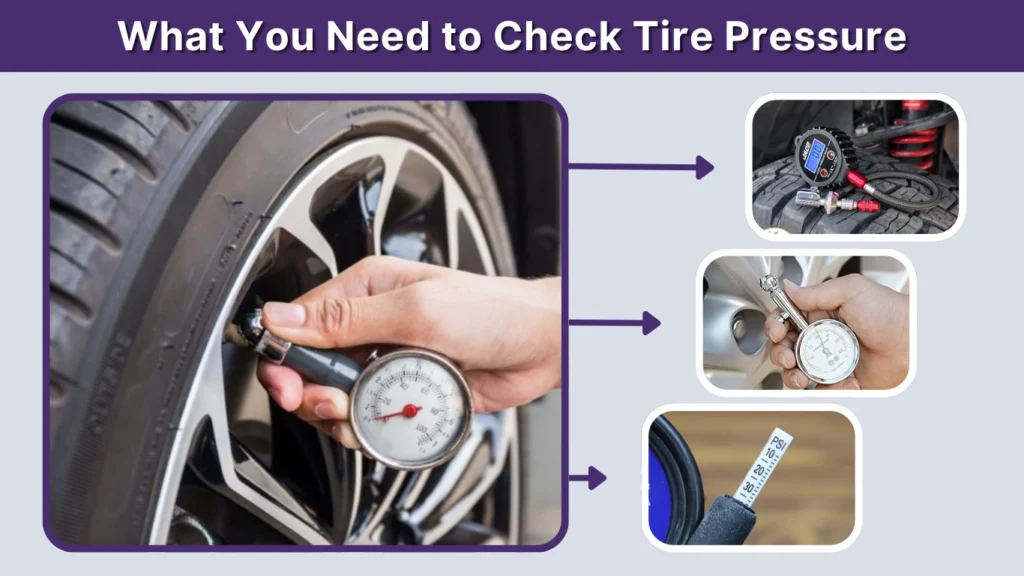
Checking tire pressure is quick and easy, especially when you have the right tools. Most of these items are affordable and widely available.
Tire Pressure Gauge
- Digital gauges provide quick and accurate readings
- Dial gauges are easy to read and durable
- Stick gauges are simple and budget-friendly
A tire pressure gauge is essential for getting an accurate measurement. Without it, it’s almost impossible to know the exact pressure.
Air Compressor or Gas Station Air Pump
You’ll need a way to adjust tire pressure after checking it. An air compressor at home or a gas station pump works well.
These tools allow you to add air if the pressure is low or adjust it as needed.
Vehicle Owner’s Manual or Tire Pressure Label
Your vehicle has a recommended tire pressure level, usually measured in PSI (pounds per square inch).
This information can typically be found on a sticker inside the driver’s door frame or in the owner’s manual.
Where to Find the Correct Tire Pressure
Knowing the correct tire pressure is just as important as checking it. Using the wrong number can lead to poor performance and safety risks.
Driver’s Door Sticker
Most vehicles have a sticker located inside the driver’s door or door frame. This sticker lists the recommended PSI for both front and rear tires.
It is the most reliable source for accurate tire pressure information.
Owner’s Manual
The owner’s manual also provides detailed tire pressure recommendations. It may include different values depending on load or driving conditions.
Referring to the manual ensures you follow the manufacturer’s guidelines.
Why You Should Not Use the Number on the Tire Sidewall
The number printed on the tire sidewall indicates the maximum pressure the tire can handle, not the recommended level for everyday driving.
Using this number can lead to overinflation, which reduces traction and makes the ride less comfortable.
Tire Pressure Guide Table
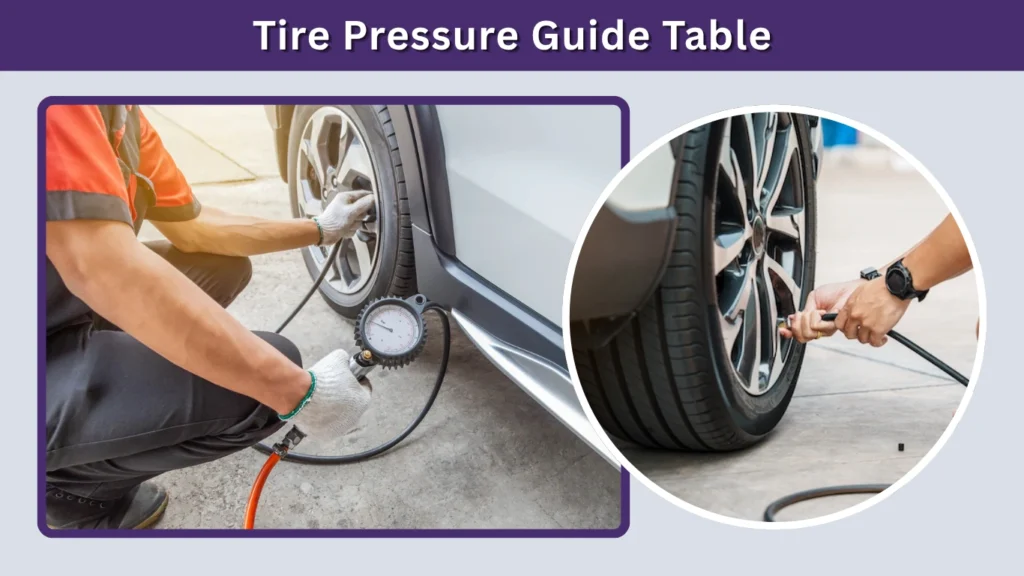
Understanding key tire pressure terms can help you check and adjust your tires more effectively.
| Tire Pressure Term | Meaning | What to Do |
| PSI | Pounds per square inch | Use the recommended PSI |
| Cold Tire Pressure | Pressure before driving | Check before driving |
| Low Pressure | Less air than needed | Add air |
| High Pressure | Too much air | Release air carefully |
| Sidewall PSI | Maximum pressure limit | Do not use as target |
How to Check Tire Pressure Step by Step
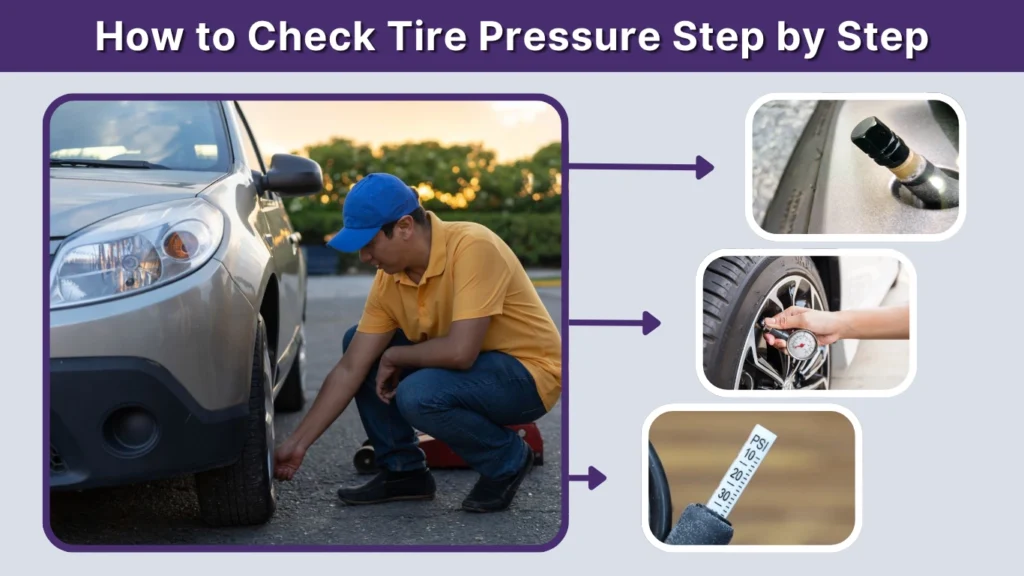
Checking your tire pressure is a simple process that takes only a few minutes. Following the correct steps ensures accurate results.
Step 1: Check Tires When Cold
Tire pressure should always be checked when the tires are cold. This means before driving or at least a few hours after the car has been parked.
Driving heats up the tires and increases pressure, which can give inaccurate readings.
Step 2: Remove the Valve Cap
Each tire has a small valve stem with a cap. Unscrew the cap and keep it in a safe place so it doesn’t get lost.
This exposes the valve where you will attach the pressure gauge.
Step 3: Press the Gauge Onto the Valve Stem
Place the tire pressure gauge firmly onto the valve stem. You may hear a brief hissing sound as air escapes, but it should stop once the gauge is properly sealed.
The gauge will display the tire pressure reading instantly.
Step 4: Compare the Reading With Recommended PSI
Once you have the reading, compare it with the recommended PSI listed on your vehicle’s door sticker or in the owner’s manual.
If the reading is lower than recommended, the tire needs more air. If it is higher, you will need to release some air to reach the correct level.
Step 5: Add or Release Air
If your tire pressure is too low, use an air compressor or gas station pump to add air. Add air in short bursts and check the pressure frequently to avoid overinflating.
If the pressure is too high, gently press the valve stem to release air. Do this slowly and recheck the pressure until it matches the recommended PSI.
Step 6: Recheck and Replace the Valve Cap
After adjusting the pressure, use the gauge again to confirm the correct reading.
Once everything is set, screw the valve cap back onto the stem tightly. The cap helps keep dirt and moisture out of the valve.
How Often Should You Check Tire Pressure?
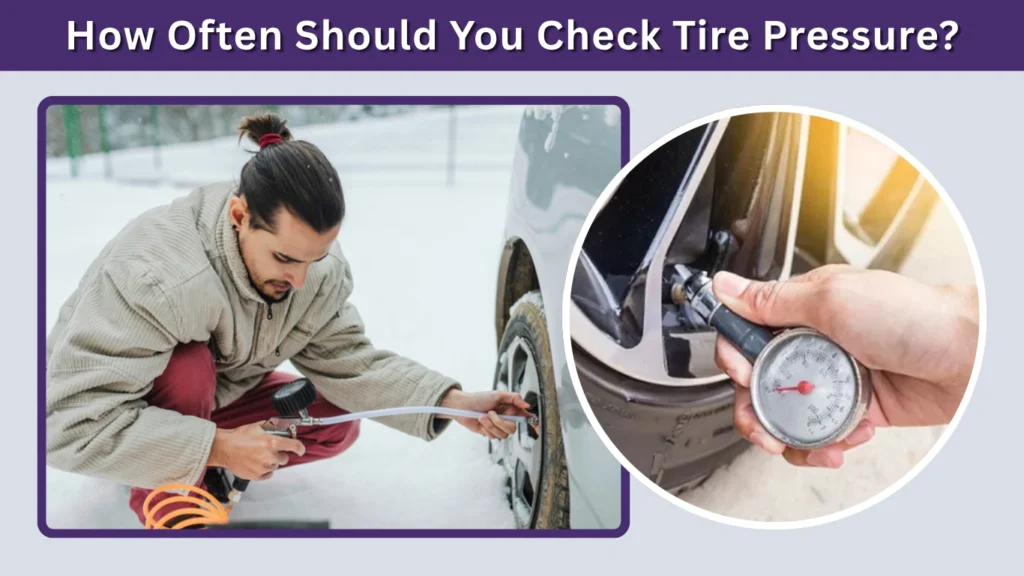
Tire pressure changes over time due to temperature and normal air loss. Regular checks help maintain safe driving conditions.
Monthly Tire Pressure Checks
Checking your tire pressure at least once a month is a good habit. Even properly inflated tires can lose a small amount of air over time.
Routine checks help catch issues early before they become serious problems.
Before Long Trips
Before going on a long drive, always check your tire pressure. Properly inflated tires improve safety and reduce the risk of breakdowns during travel.
It also ensures better fuel efficiency for long-distance driving.
During Weather Changes
Temperature changes can affect tire pressure significantly. Cold weather causes pressure to drop, while hot weather increases it.
Checking your tires during seasonal changes helps maintain the correct PSI.
Common Tire Pressure Mistakes to Avoid
Many drivers make simple mistakes when checking tire pressure. Avoiding these errors can improve accuracy and safety.
Checking Tires Right After Driving
- Warm tires show higher pressure than normal
- Readings may not be accurate
- Always wait until tires cool down
Checking tires immediately after driving can give misleading results, leading to incorrect adjustments.
Ignoring the Spare Tire
- Spare tires also lose air over time
- A flat spare won’t help in emergencies
- Check it regularly along with other tires
Many people forget about the spare tire until they need it, which can be a serious problem.
Using the Tire Sidewall PSI as the Target
- Sidewall PSI shows the maximum limit
- It is not meant for daily use
- Always follow the vehicle’s recommended PSI
Overinflating tires based on sidewall numbers can reduce grip and make driving uncomfortable.
What Happens If Tire Pressure Is Wrong?
Incorrect tire pressure can lead to several problems that affect both safety and performance.
Problems Caused by Low Tire Pressure
Low tire pressure increases rolling resistance, making your engine work harder and reducing fuel efficiency. It also causes the tire edges to wear faster and can lead to overheating.
In extreme cases, underinflated tires may fail or burst while driving.
Problems Caused by High Tire Pressure
Overinflated tires reduce the contact area with the road, which decreases traction. This can make braking less effective and create a rough driving experience.
High pressure also causes the center of the tire to wear out more quickly.
When to Get Professional Help
If you notice that a tire keeps losing pressure, it may have a puncture or leak. You should also seek help if the tire pressure warning light stays on even after adjusting the pressure.
A professional inspection ensures that any underlying issues are properly fixed.
FAQs
What is the correct tire pressure for my car?
The correct tire pressure varies by vehicle and is usually listed on a sticker inside the driver’s door or in the owner’s manual. It may also differ between front and rear tires, so always follow the manufacturer’s recommendation.
Can I check tire pressure without a gauge?
A tire pressure gauge is the only accurate way to measure pressure. Visual inspection alone cannot reliably tell if a tire is properly inflated, as even slightly low pressure may not be visible.
Should I check tire pressure hot or cold?
Tire pressure should always be checked when the tires are cold. Driving heats up the air inside the tires, which increases the PSI and can lead to inaccurate readings.
Why does my tire pressure warning light come on?
The warning light usually indicates that one or more tires are underinflated. It may also turn on due to sudden temperature changes or a faulty sensor. Always check your tire pressure as soon as possible.