
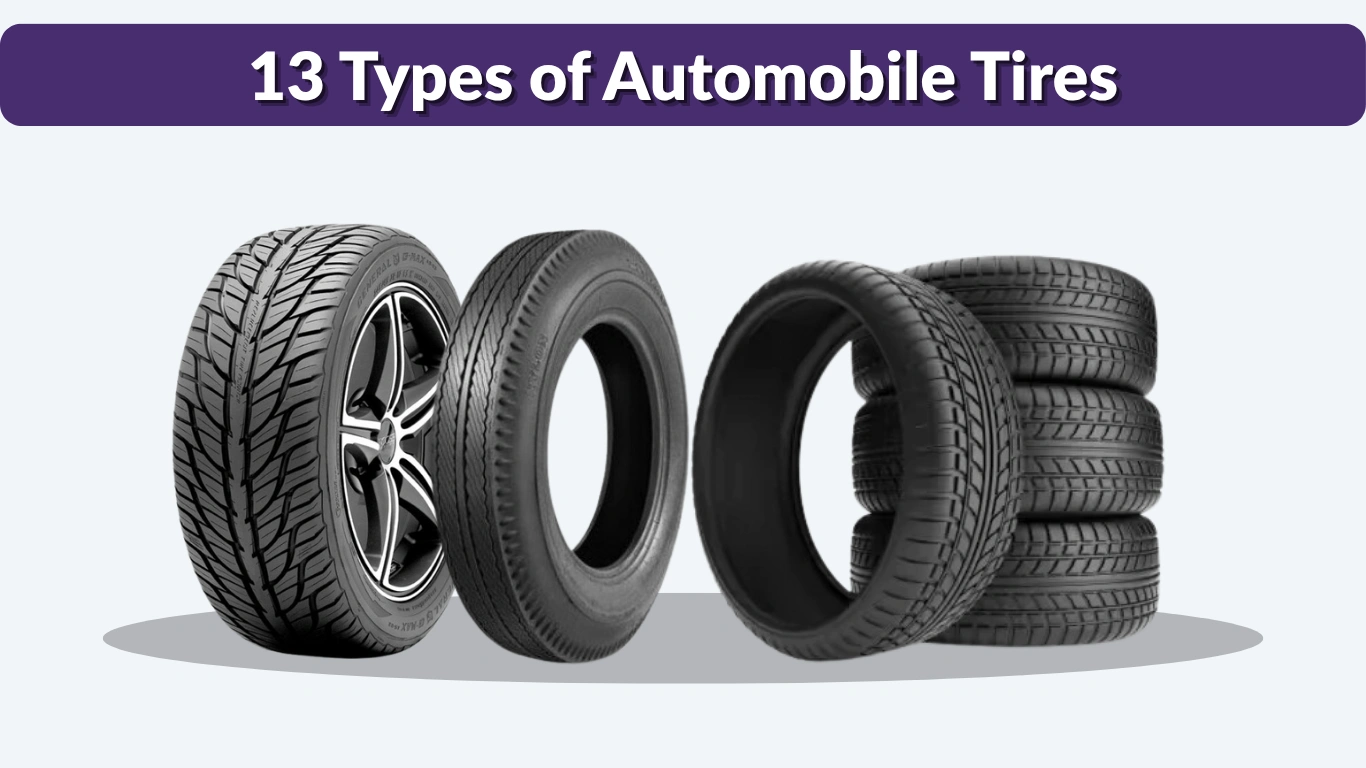
Choosing the right automobile tire is essential for ensuring safety, performance, and comfort while driving. Different types of tires are designed to meet specific needs, such as weather conditions, driving style, and road surfaces. From durable radial tires to high-performance and off-road options, each type offers unique benefits. Understanding these tire types helps drivers make informed decisions, improve vehicle efficiency, extend tire lifespan, and maintain better control in various driving situations.
1. Radial Tires
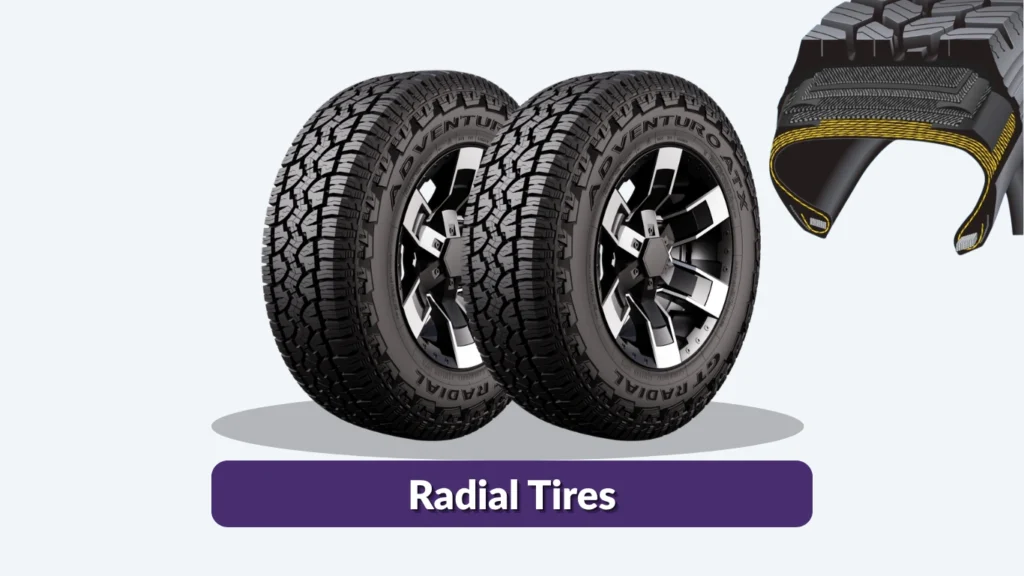
Radial tires are the most commonly used automobile tires today, known for their durability, fuel efficiency, and smooth ride. They are constructed with layers of cords arranged radially (at 90 degrees to the direction of travel), which improves flexibility and overall performance.
Key Features
- Radial ply construction for better flexibility
- Improved fuel efficiency due to lower rolling resistance
- Enhanced tread life and durability
- Better road grip and stability
- Reduced heat buildup during long drives
Purpose and Use
Radial tires are widely used in passenger cars, SUVs, and light trucks for everyday driving. They are ideal for city commuting, highway travel, and long-distance journeys. Their design supports better comfort and efficiency, making them a standard choice for most modern vehicles.
Performance in Different Conditions
On dry roads, radial tires provide excellent stability and smooth handling. In wet conditions, they offer reliable traction and control. They also perform well at high speeds due to reduced heat buildup. However, their performance depends on tread type when it comes to extreme conditions like snow or off-road terrain.
Advantages and Limitations
The main advantage of radial tires is their long lifespan, comfort, and fuel efficiency. They also provide better traction and handling compared to older tire designs. However, they can be more expensive than bias ply tires and may require proper maintenance to ensure maximum performance and safety.
2. Bias Ply Tires
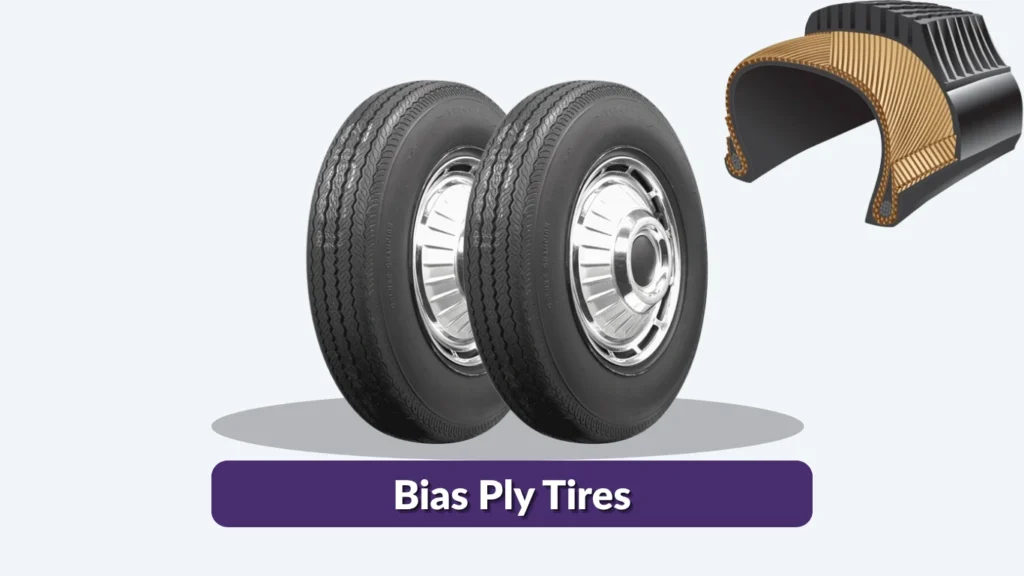
Bias ply tires are an older type of tire construction where layers of cords are arranged diagonally, overlapping each other. This design creates a strong and rigid structure, making these tires suitable for heavy-duty and off-road applications.
Key Features
- Diagonal ply construction for added strength
- Strong sidewalls for heavy load support
- Durable design for rough surfaces
- Better resistance to cuts and damage
- Cost-effective compared to radial tires
Purpose and Use
Bias ply tires are commonly used in heavy-duty vehicles, agricultural equipment, and some off-road vehicles. They are ideal for situations where strength and load-carrying capacity are more important than speed and comfort.
Performance in Different Conditions
On rough and uneven terrain, bias ply tires perform well due to their strong construction and resistance to damage. However, on paved roads, they offer less comfort and generate more heat, which can reduce efficiency and performance at higher speeds.
Advantages and Limitations
The main advantage of bias ply tires is their toughness and ability to handle heavy loads in challenging environments. They are also generally more affordable. However, they have shorter tread life, lower fuel efficiency, and less comfort compared to modern radial tires, making them less suitable for everyday passenger vehicles.
3. Tubeless Tires
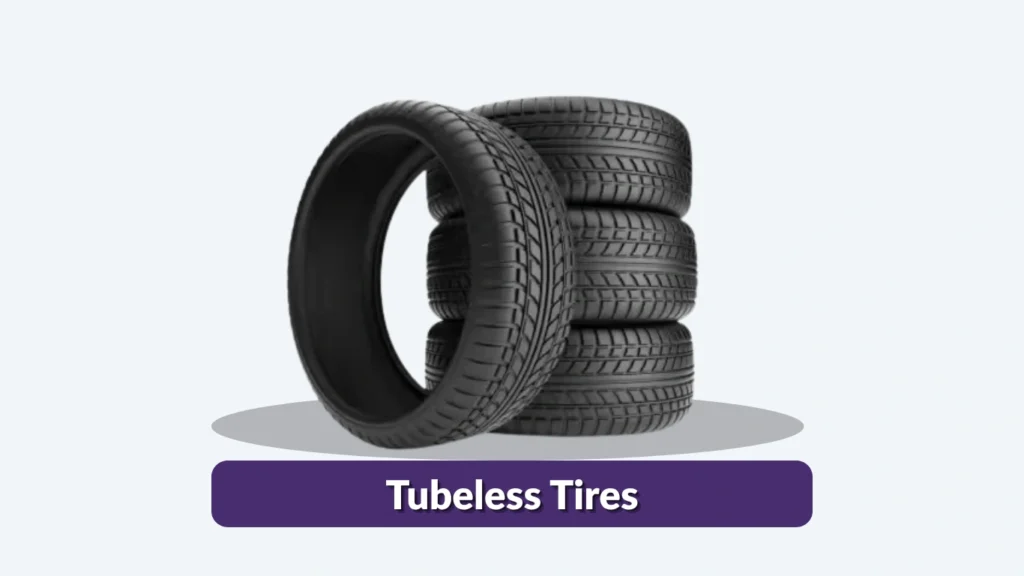
Tubeless tires are designed to operate without an inner tube, using an airtight seal between the tire and rim to hold air. This modern design improves safety, reduces puncture issues, and enhances overall driving performance.
Key Features
- No inner tube required
- Airtight seal with the rim
- Reduced risk of sudden air loss
- Better heat dissipation
- Improved fuel efficiency
Purpose and Use
Tubeless tires are widely used in modern cars, motorcycles, and SUVs. They are ideal for daily driving, highway travel, and long-distance journeys. Their design provides convenience and safety, making them a preferred choice for most vehicles today.
Performance in Different Conditions
In normal driving conditions, tubeless tires provide smooth handling and stable performance. In case of a puncture, air escapes slowly, allowing the driver to maintain control. They also perform well in both dry and wet conditions, depending on tread design.
Advantages and Limitations
The main advantage of tubeless tires is increased safety, as they reduce the chances of sudden tire deflation. They also offer better fuel efficiency and require less maintenance. However, they may be more expensive and require proper rim compatibility for effective performance.
4. Tube-Type Tires
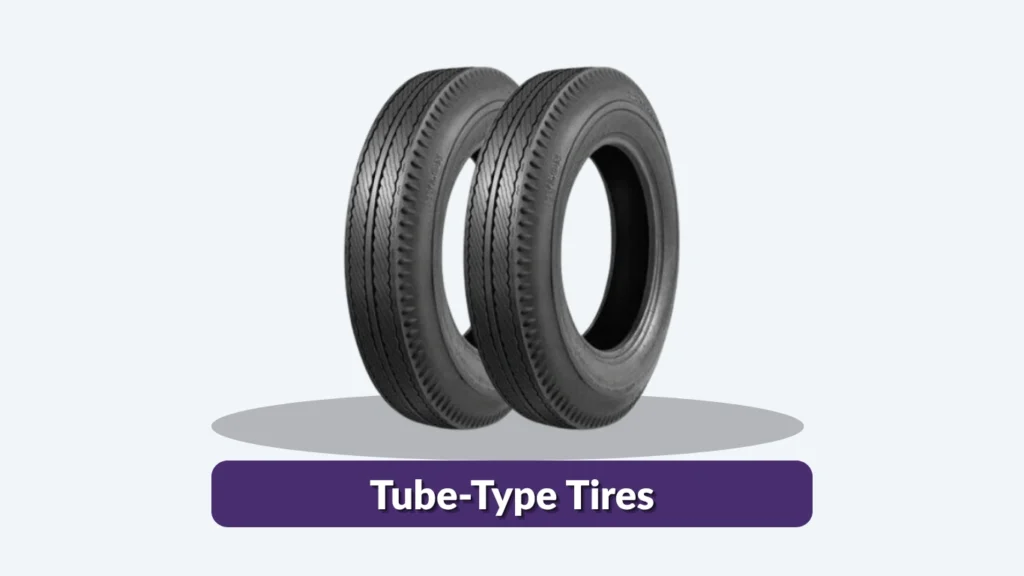
Tube-type tires are traditional tires that use an inner tube to hold air. The tube is placed inside the tire and inflated, while the outer tire provides grip and protection. These tires are still used in certain vehicles and applications where simplicity and cost-effectiveness are important.
Key Features
- Uses an inner tube to maintain air pressure
- Simple construction and easy to understand
- Cost-effective compared to tubeless tires
- Suitable for older vehicles and specific uses
- Easier to repair in basic conditions
Purpose and Use
Tube-type tires are commonly used in older cars, motorcycles, bicycles, and some heavy-duty or rural vehicles. They are ideal in areas where repair facilities are limited, as they can be fixed more easily with basic tools.
Performance in Different Conditions
In regular driving conditions, tube-type tires provide acceptable performance and grip. However, in case of a puncture, they can lose air quickly, which may reduce safety. They also tend to generate more heat at higher speeds compared to tubeless tires.
Advantages and Limitations
The main advantage of tube-type tires is their low cost and ease of repair, especially in remote areas. However, they have limitations such as higher risk of sudden air loss, lower efficiency, and less stability compared to modern tubeless tires, making them less common in newer vehicles.
5. Run-Flat Tires
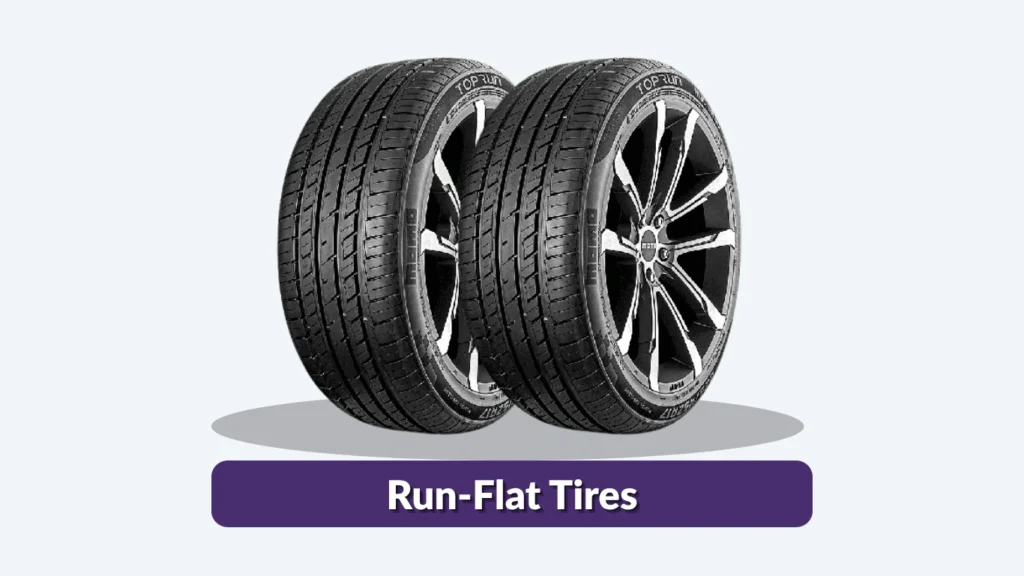
Run-flat tires are designed to continue functioning even after a puncture or complete loss of air pressure. They use reinforced sidewalls to support the vehicle’s weight, allowing drivers to continue driving for a limited distance without immediately changing the tire.
Key Features
- Reinforced sidewalls to support weight without air
- Ability to drive short distances after a puncture
- Maintains vehicle stability during air loss
- Eliminates need for immediate tire replacement
- Often used with tire pressure monitoring systems (TPMS)
Purpose and Use
Run-flat tires are ideal for drivers who prioritize safety and convenience. They are commonly used in modern cars, especially luxury and premium vehicles. These tires are useful for highway driving and situations where stopping immediately may be unsafe.
Performance in Different Conditions
Under normal conditions, run-flat tires perform similarly to standard tires, offering stable handling and good traction. After a puncture, they allow controlled driving at reduced speeds. However, due to their stiff construction, they may provide a slightly firmer ride.
Advantages and Limitations
The main advantage of run-flat tires is enhanced safety, as they reduce the risk of being stranded after a puncture. They also remove the need for a spare tire. However, they are more expensive, may offer less ride comfort, and usually need replacement rather than repair after damage.
6. Performance Tires
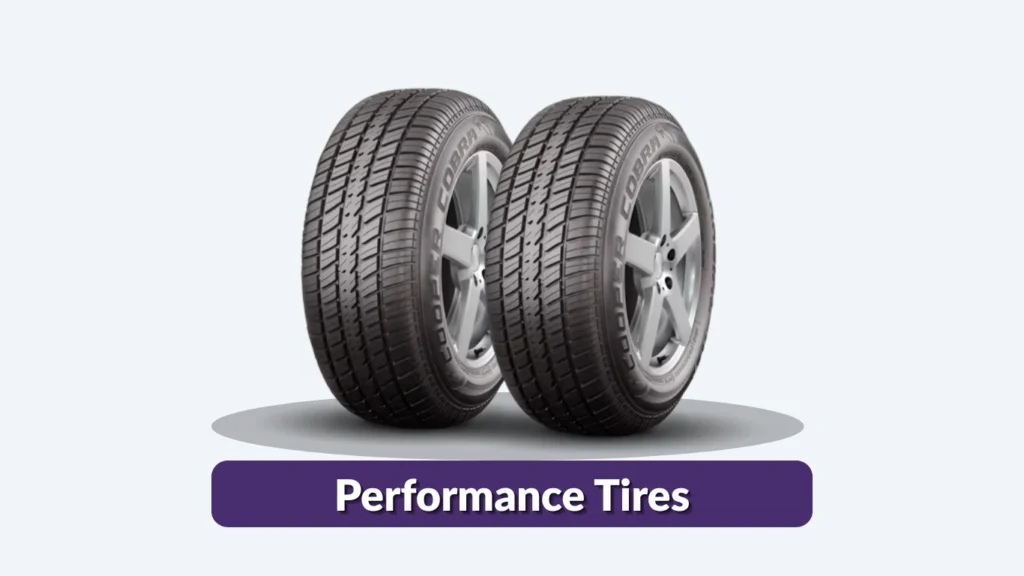
Performance tires are designed to deliver enhanced speed, handling, and driving precision. They are commonly used in sports cars and high-performance vehicles, offering superior grip and responsiveness, especially during high-speed driving.
Key Features
- High-grip rubber compounds for better traction
- Enhanced cornering and stability
- Shorter braking distances
- Responsive steering control
- Optimized for high-speed performance
Purpose and Use
Performance tires are ideal for drivers who want a more dynamic and engaging driving experience. They are commonly used in sports cars, luxury vehicles, and performance-focused sedans. These tires are best suited for smooth roads where speed and control are important.
Performance in Different Conditions
In dry conditions, performance tires provide excellent grip and sharp handling. In wet conditions, they still offer good traction depending on tread design. However, they are not suitable for cold weather or snow, as their rubber compounds can harden and reduce effectiveness.
Advantages and Limitations
The main advantage of performance tires is their superior handling, stability, and braking performance. They enhance driving confidence, especially at high speeds. However, they tend to wear out faster and are less effective in extreme weather conditions compared to specialized tires.
7. All-Season Tires
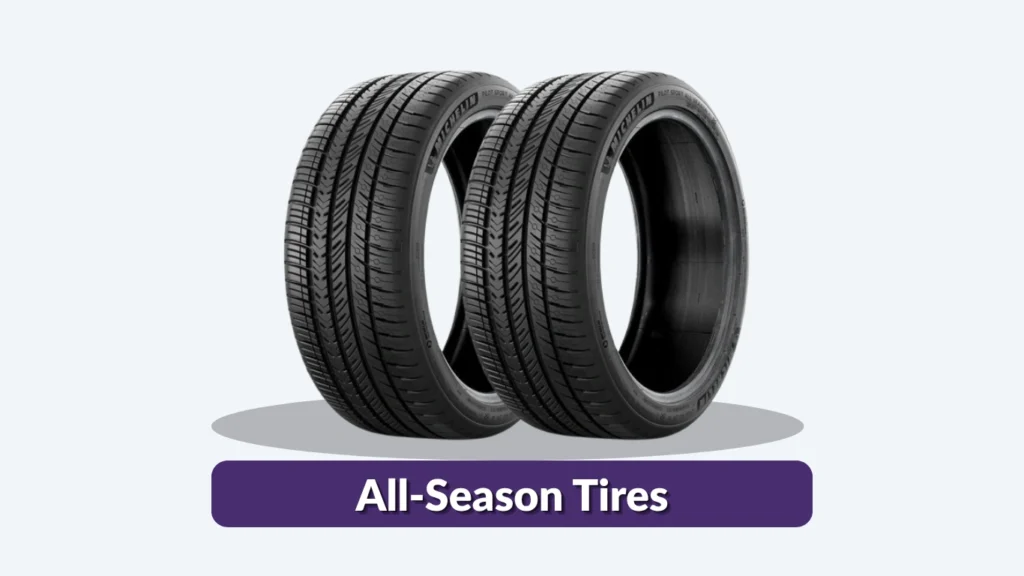
All-season tires are designed to provide balanced performance throughout the year in a variety of weather conditions. They combine features of both summer and winter tires, making them a convenient and practical option for everyday driving in moderate climates.
Key Features
- Versatile tread design for year-round use
- Good traction in dry and wet conditions
- Light snow capability
- Long tread life for durability
- Comfortable and quiet ride
Purpose and Use
All-season tires are ideal for drivers who want a single set of tires for daily use without seasonal changes. They are commonly used in passenger cars, SUVs, and light trucks for city driving, highway travel, and general commuting.
Performance in Different Conditions
In dry and wet conditions, all-season tires provide reliable grip and stable handling. They can handle light snow, but they are not suitable for extreme winter conditions. Their balanced design makes them effective for most everyday driving environments.
Advantages and Limitations
The main advantage of all-season tires is their convenience and versatility, eliminating the need to switch tires seasonally. They also offer good durability and comfort. However, they do not perform as well as specialized tires in extreme heat, heavy snow, or icy conditions.
8. Winter Tires
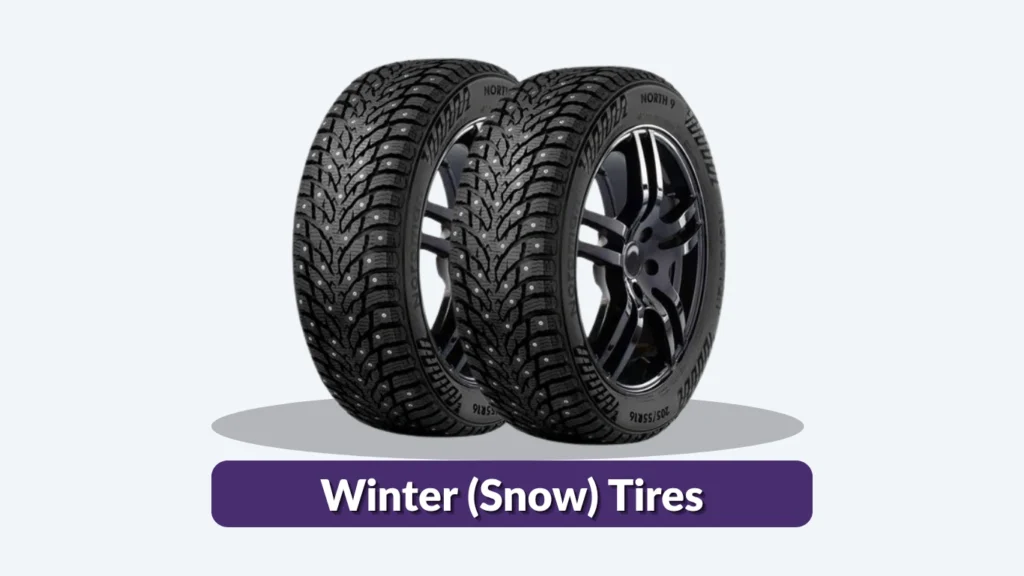
Winter tires are specially designed to provide maximum traction and safety in cold weather conditions. They use softer rubber compounds and unique tread patterns to remain flexible and grip effectively on snow, ice, and slushy roads.
Key Features
- Soft rubber compound for cold temperatures
- Deep tread patterns for snow traction
- Enhanced siping for better grip on ice
- Improved braking in winter conditions
- Designed for temperatures below 7°C (45°F)
Purpose and Use
Winter tires are ideal for drivers in regions with heavy snowfall and icy roads. They are commonly used during the winter season to improve control, safety, and driving confidence. These tires are essential for commuting and long-distance travel in cold climates.
Performance in Different Conditions
In snowy and icy conditions, winter tires provide excellent traction and stability, significantly reducing slipping. They also perform well on cold, dry roads. However, in warm weather, they wear out quickly and lose effectiveness due to their soft rubber design.
Advantages and Limitations
The main advantage of winter tires is their superior grip and safety in extreme cold conditions. They offer better braking and control compared to all-season tires in winter. However, they are not suitable for year-round use, as they wear faster in warm temperatures and may reduce fuel efficiency.
9. Summer Tires
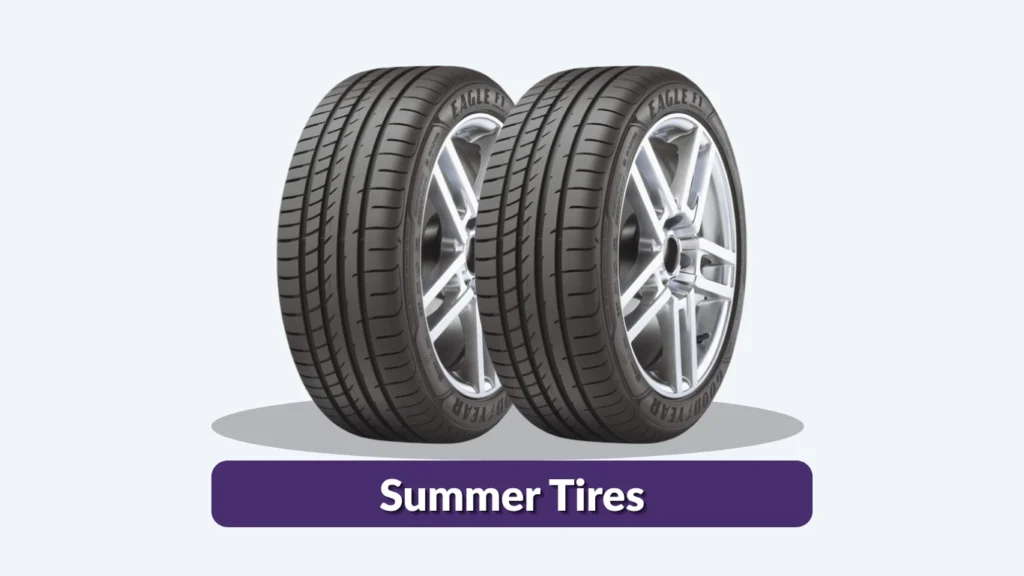
Summer tires are designed to deliver optimal performance in warm weather conditions. They provide excellent grip, handling, and braking on both dry and wet roads, making them ideal for drivers who prioritize performance during hotter months.
Key Features
- Soft rubber compound for enhanced grip
- Shallow tread patterns for better road contact
- Superior handling and cornering stability
- Excellent braking performance
- Not suitable for cold or snowy conditions
Purpose and Use
Summer tires are ideal for performance-focused drivers and vehicles such as sports cars and high-end sedans. They are commonly used in regions with warm climates where road conditions remain mostly dry or wet without extreme cold.
Performance in Different Conditions
In dry conditions, summer tires offer outstanding traction and precise handling. In wet conditions, they perform well by channeling water and reducing hydroplaning risk. However, in cold temperatures, the rubber hardens, reducing grip and making them unsafe.
Advantages and Limitations
The main advantage of summer tires is their superior performance in warm weather, providing better control and braking. They enhance driving precision and safety in ideal conditions. However, they are not suitable for winter use, as they lose flexibility and traction in low temperatures.
10. Touring Tires
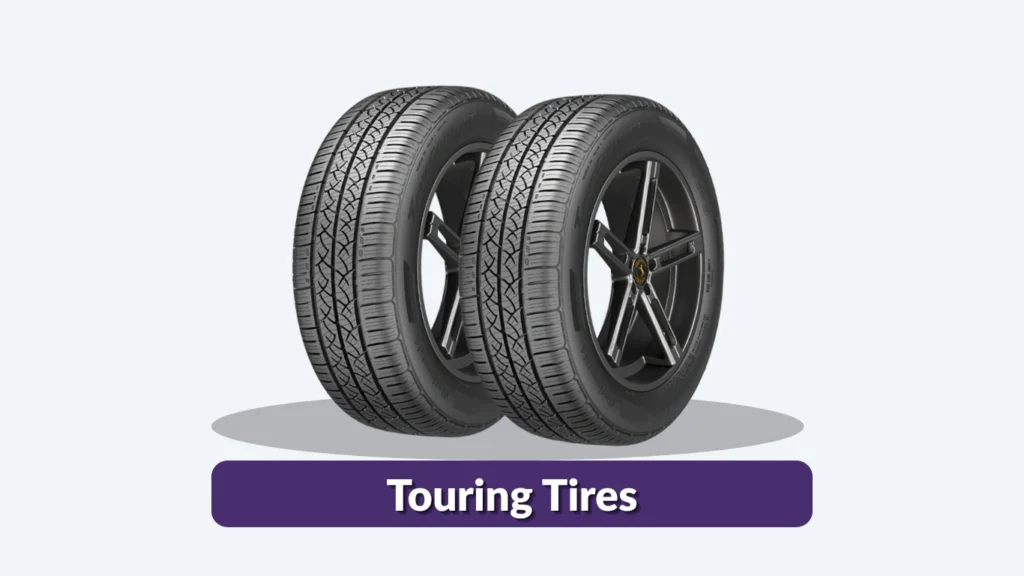
Touring tires are designed to provide a comfortable, quiet, and smooth driving experience while maintaining durability and long tread life. They focus on balanced performance, making them ideal for everyday driving and long-distance travel.
Key Features
- Long-lasting tread for extended mileage
- Reduced road noise for a quieter ride
- Smooth and comfortable driving experience
- Even tread wear for better durability
- Good fuel efficiency due to low rolling resistance
Purpose and Use
Touring tires are ideal for drivers who prioritize comfort and reliability over high-speed performance. They are commonly used in sedans, family cars, and SUVs. These tires are well-suited for daily commuting, highway driving, and long road trips.
Performance in Different Conditions
On dry roads, touring tires provide stable handling and a smooth ride. In wet conditions, they offer reliable traction and control. Some models can handle light snow, but they are not designed for extreme weather or off-road use.
Advantages and Limitations
The main advantage of touring tires is their comfort, quiet operation, and long lifespan. They are cost-effective for regular use and long-distance driving. However, they do not provide the high-performance grip of sports tires or the specialized capability needed for harsh weather conditions.
11. Off-Road Tires
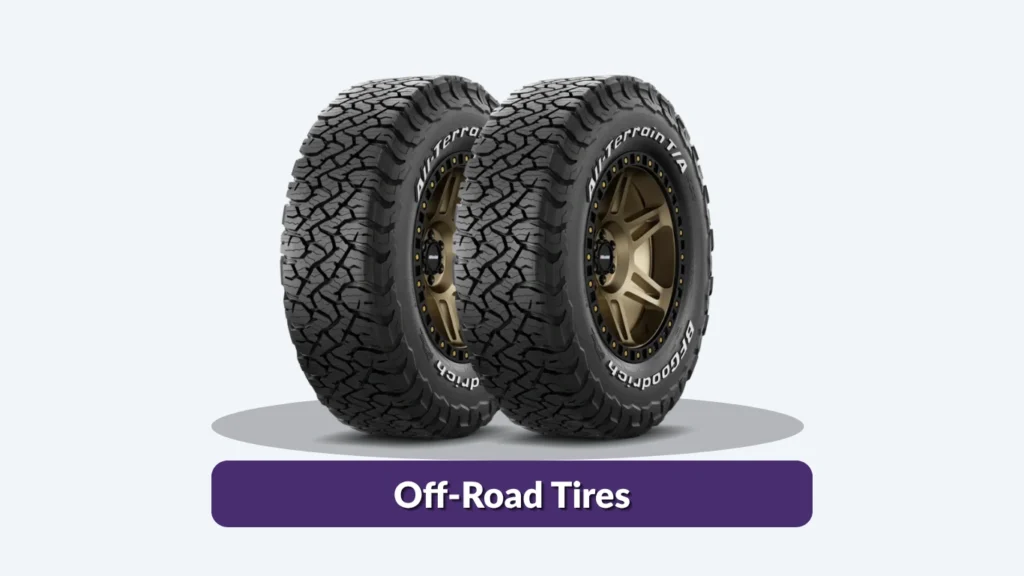
Off-road tires are specifically designed to handle rough and uneven terrains such as dirt, rocks, mud, and sand. They feature aggressive tread patterns and strong construction to provide maximum traction and durability in challenging environments.
Key Features
- Deep and aggressive tread for strong grip
- Reinforced sidewalls for durability
- Wide grooves for better traction on loose surfaces
- High resistance to cuts and punctures
- Designed for rugged terrain performance
Purpose and Use
Off-road tires are ideal for vehicles that frequently travel beyond paved roads. They are commonly used on SUVs, trucks, and 4×4 vehicles for adventure driving, construction work, and rural transportation. These tires are built to handle extreme conditions where regular tires cannot perform effectively.
Performance in Different Conditions
On rough terrains, off-road tires provide excellent traction and control, especially on rocks, dirt, and sand. They perform well in muddy conditions due to their deep tread design. However, on paved roads, they can be noisy and less comfortable compared to standard tires.
Advantages and Limitations
The main advantage of off-road tires is their ability to perform in extreme terrains with strong grip and durability. They are reliable for tough driving conditions. However, they tend to reduce fuel efficiency, create more road noise, and are less comfortable for regular highway driving.
12. Low Profile Tires
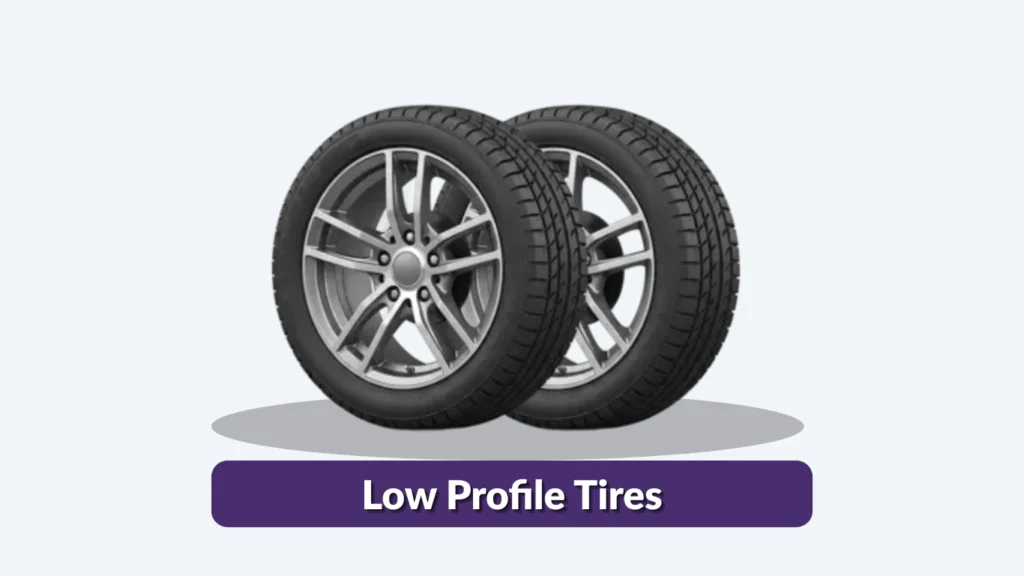
Low profile tires are designed with a shorter sidewall height and wider tread, giving vehicles a sporty appearance and improved handling. They are commonly used in performance cars and modern vehicles where style and control are important.
Key Features
- Short sidewall for better stability
- Wider tread for improved road grip
- Enhanced cornering and handling
- Sporty and stylish appearance
- Better steering responsiveness
Purpose and Use
Low profile tires are ideal for drivers who prioritize performance and aesthetics. They are commonly used in sports cars, luxury vehicles, and modified cars. These tires are best suited for smooth roads where precise handling and control are required.
Performance in Different Conditions
On dry roads, low profile tires provide excellent grip and sharp handling. In wet conditions, they perform well depending on tread design. However, due to their shorter sidewalls, they offer less cushioning, making them less comfortable on rough or uneven roads.
Advantages and Limitations
The main advantage of low profile tires is improved handling, stability, and visual appeal. They enhance driving precision and cornering performance. However, they can reduce ride comfort, are more prone to damage from potholes, and may wear out faster compared to standard tires.
13. High Performance Tires
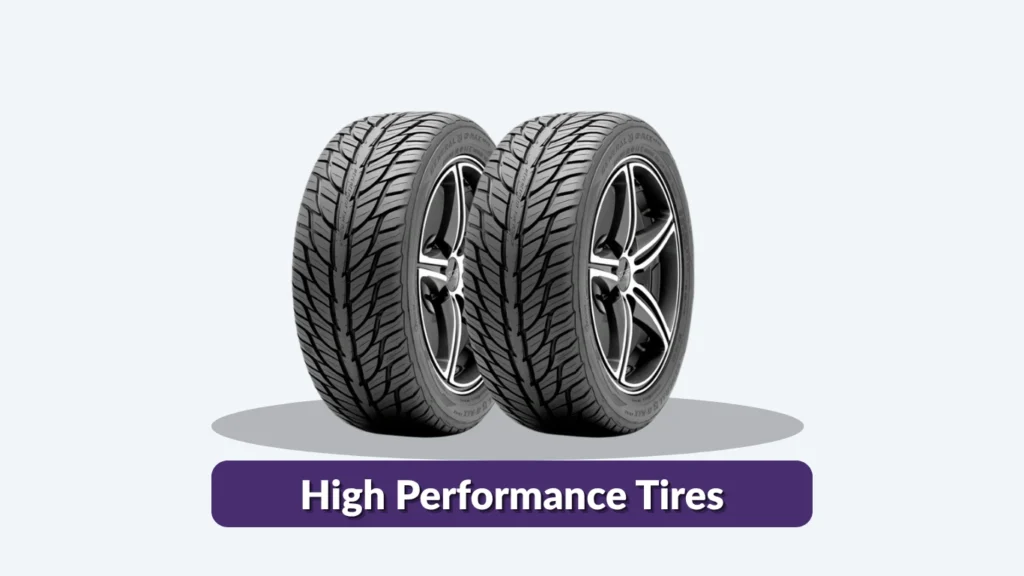
High performance tires are designed to deliver maximum speed, superior handling, and enhanced driving precision. They are engineered for vehicles that demand high levels of control and responsiveness, especially at higher speeds and during aggressive driving.
Key Features
- Advanced rubber compounds for superior grip
- Enhanced cornering and braking performance
- High-speed stability and control
- Responsive steering and handling
- Optimized tread design for performance driving
Purpose and Use
High performance tires are ideal for sports cars, luxury vehicles, and performance-oriented sedans. They are commonly used by drivers who seek a dynamic driving experience with better control and responsiveness. These tires are best suited for smooth roads and high-speed driving conditions.
Performance in Different Conditions
In dry conditions, high performance tires offer exceptional grip and precise handling, making them perfect for fast driving and sharp turns. In wet conditions, they provide good traction depending on tread design. However, they are not suitable for cold climates or snowy conditions, as performance decreases significantly.
Advantages and Limitations
The main advantage of high performance tires is their ability to enhance speed, control, and overall driving experience. They provide excellent braking and cornering capabilities. However, they tend to wear out faster, are more expensive, and are less effective in extreme weather conditions compared to specialized tires.
FAQs
What are the most common types of automobile tires?
The most common types include radial, tubeless, all-season, and touring tires. These are widely used in modern vehicles because they offer a good balance of comfort, durability, and performance for everyday driving conditions.
How do I choose the right tire for my car?
Choosing the right tire depends on your driving conditions, climate, and vehicle type. For general use, all-season tires work well, while winter or performance tires are better for specific conditions like snow or high-speed driving.
How long do automobile tires last?
Most automobile tires last between 3 to 6 years, depending on usage, road conditions, and maintenance. Regular inspection, proper inflation, and alignment can help extend tire life and maintain safety.
Are tubeless tires better than tube-type tires?
Yes, tubeless tires are generally better because they reduce the risk of sudden air loss and provide better safety and efficiency. They also require less maintenance compared to traditional tube-type tires.
Can I use the same tires in all weather conditions?
All-season tires can handle most conditions, but they are not ideal for extreme weather. For very hot or cold climates, using summer or winter tires is recommended to ensure better safety and performance.