
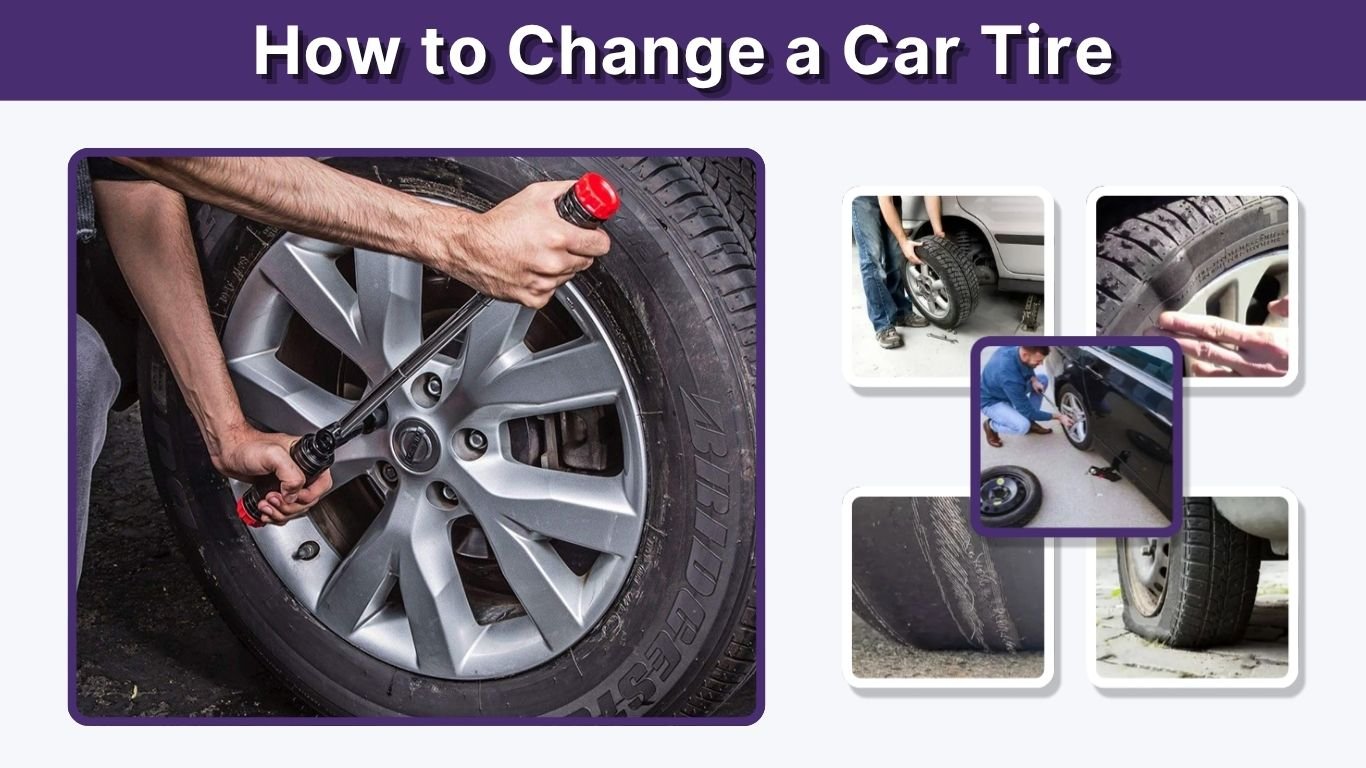
A flat tire can happen anywhere, but changing it is easier when you know the right steps. You need a safe location, a spare tire, a jack, a lug wrench, and a little patience. This guide explains how to change a car tire safely, how to use a car jack, and what mistakes to avoid before driving again.
Tools You Need to Change a Car Tire
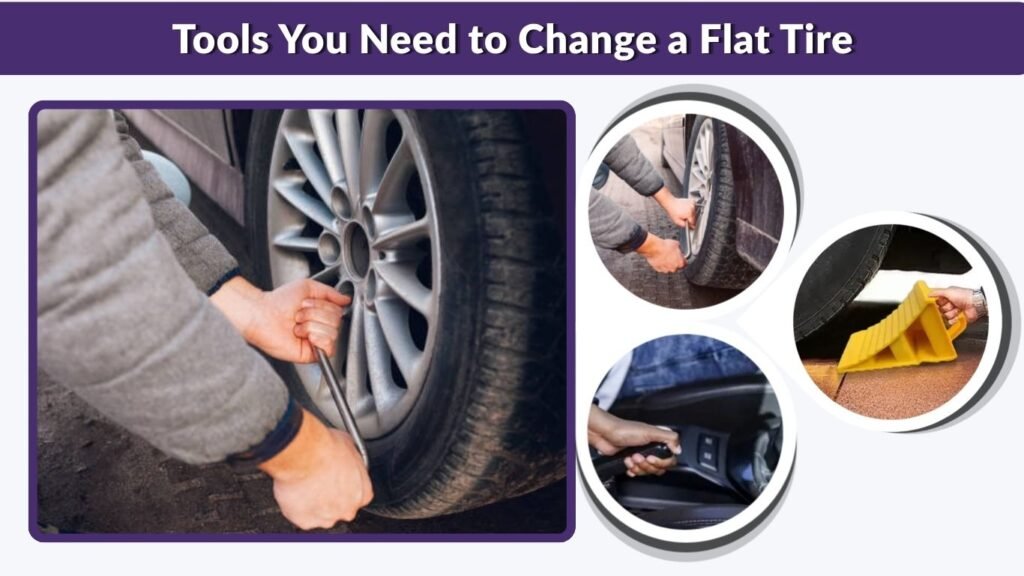
Before changing a tire, make sure you have the right tools in your vehicle. Most cars come with a spare tire, jack, and lug wrench, but it is smart to check them before an emergency happens. A missing tool can turn a simple tire change into a stressful roadside problem.
Essential Tire Changing Tools
- Spare tire: Usually stored in the trunk, under the vehicle, or behind a rear panel.
- Car jack: Used to lift the vehicle off the ground.
- Lug wrench: Used to loosen and tighten the lug nuts.
- Wheel wedges: Help stop the car from rolling.
- Gloves: Protect your hands from dirt and sharp parts.
- Flashlight: Useful if the flat tire happens at night.
- Owner’s manual: Shows the correct jack points for your car.
- Reflective triangle or hazard light: Helps other drivers see you clearly.
| Tool | Purpose | Important Tip |
| Spare tire | Replaces the flat tire temporarily | Check air pressure regularly |
| Jack | Lifts the car | Use only on proper jack points |
| Lug wrench | Removes and tightens lug nuts | Loosen nuts before lifting the car |
| Wheel wedges | Prevents rolling | Place them opposite the flat tire |
| Owner’s manual | Gives vehicle-specific instructions | Follow exact jacking points |
Where to Find the Spare Tire
In many cars, the spare tire is under the trunk floor. In SUVs and trucks, it may be mounted under the vehicle or on the rear door. Some modern cars do not include a spare tire and may only have a tire repair kit. Check your vehicle before you need it.
Check the Spare Before Using It
Do not assume the spare tire is ready. Look for cracks, low pressure, or visible damage. A compact spare tire, also called a donut tire, is only for temporary use. It usually has speed and distance limits, so drive slowly and replace it with a full tire as soon as possible.
How to Change a Car Tire Step by Step
Changing a car tire is not only about removing the flat tire. You must first make the vehicle stable and safe. The correct order is important because loosening the lug nuts after the car is lifted can make the vehicle unstable.
1. Park in a Safe Place
Move the car away from traffic if possible. Choose a flat, firm surface such as a parking lot or the shoulder of a quiet road. Avoid soft ground, hills, curves, and narrow roads. Turn on your hazard lights so other drivers can see your vehicle.
2. Apply the Parking Brake
Put the car in park if it has an automatic transmission. For a manual car, put it in first gear or reverse. Then apply the parking brake. This helps keep the car from moving while you are changing the tire.
3. Place Wheel Wedges
Place wheel wedges in front of or behind the tires opposite the flat tire. If the front tire is flat, place wedges behind the rear tires. If the rear tire is flat, place wedges in front of the front tires. Large stones or blocks can work in an emergency, but proper wedges are safer.
4. Remove the Wheel Cover
Some cars have a hubcap or wheel cover hiding the lug nuts. Remove it carefully before using the lug wrench. If you are not sure how it comes off, check the owner’s manual. Some covers pull off, while others are held by plastic clips or nuts.
5. Loosen the Lug Nuts
Use the lug wrench to turn the lug nuts counterclockwise. Do this before lifting the car. You may need to use your body weight if the nuts are tight. Loosen each nut about a quarter to half turn, but do not remove them completely yet.
6. Place the Jack Under the Correct Jack Point
Check your owner’s manual for the correct jack point. Most cars have reinforced metal areas near each wheel. Never place the jack under weak plastic panels, the floorboard, or random suspension parts. A wrong jack point can damage the car or cause it to fall.
7. Lift the Car
Raise the car slowly until the flat tire is about six inches off the ground. Keep your hands and feet away from under the vehicle. Never put any part of your body under a car that is supported only by a jack.
8. Remove the Lug Nuts and Flat Tire
Now remove the loosened lug nuts completely. Keep them in a safe place so they do not roll away. Pull the flat tire straight toward you. If it feels stuck, gently wiggle it from side to side until it comes loose.
9. Install the Spare Tire
Line up the holes in the spare tire with the wheel studs. Push the tire onto the hub until it sits flat. Put the lug nuts back on by hand first. Turn them clockwise and tighten them enough to hold the tire in place.
10. Lower the Car and Tighten the Lug Nuts
Lower the car until the spare tire touches the ground, but do not put full weight on it yet. Tighten the lug nuts in a star pattern. This helps the wheel sit evenly. Then lower the car fully and tighten the nuts again as much as you can with the lug wrench.
How to Use a Car Jack Safely
Using a car jack is one of the most important parts of changing a tire. A jack lifts a heavy vehicle, so it must be placed correctly. The car must also be on stable ground before you begin.
Best Safety Practices
- Park on level, firm ground before using the jack.
- Use the jack point recommended in the owner’s manual.
- Do not jack up the car on sand, mud, or soft grass.
- Never crawl under the vehicle while it is on a jack.
- Keep passengers out of the car during the tire change.
- Raise the car only as high as needed.
- Lower the car slowly and carefully.
Where to Jack Up a Car for Tire Change
Most vehicles have jack points near the wheels, often along the pinch weld under the side of the car. Some vehicles have specific marked areas. Trucks and SUVs may have different lift points, such as parts of the frame. Always follow the owner’s manual because each vehicle design is different.
Common Jacking Mistakes
One common mistake is placing the jack under a plastic side skirt or weak body panel. Another mistake is lifting the vehicle before loosening the lug nuts. Some people also forget to use the parking brake. These errors can make the job harder and unsafe.
What to Do After Changing the Tire
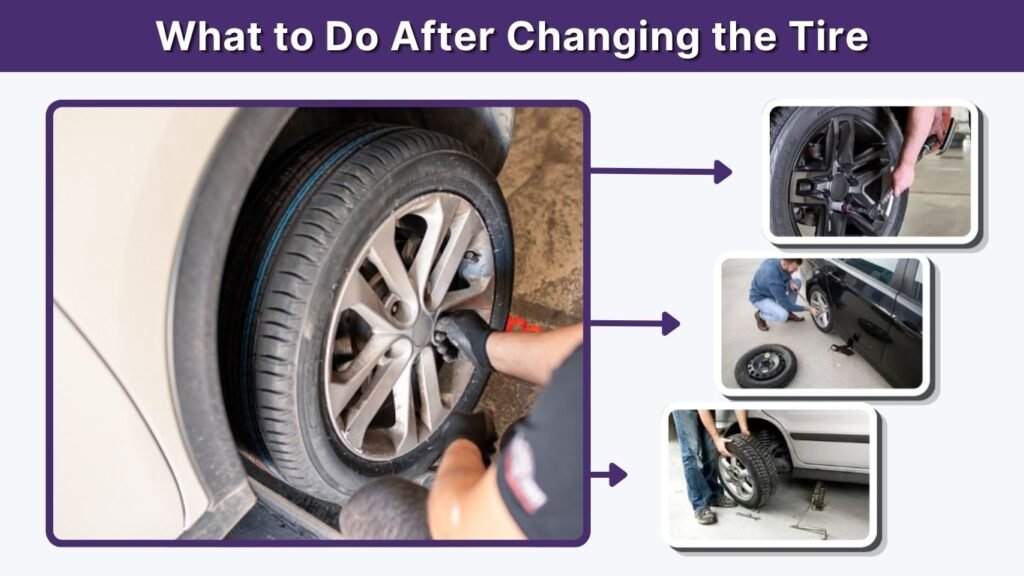
After installing the spare tire, your job is not fully finished. You still need to check the tire, drive carefully, and repair or replace the damaged tire soon. A spare tire is often not designed for long-distance driving.
Check the Lug Nuts Again
After driving a short distance, stop in a safe place and check the lug nuts again. If you have a torque wrench, tighten them to the recommended torque listed in your owner’s manual. If not, visit a tire shop or mechanic soon.
Drive Carefully on the Spare Tire
A compact spare tire is smaller than a regular tire. It can affect braking, handling, and stability. Avoid high speeds, sharp turns, and sudden braking. Many donut spare tires have a maximum speed limit, often around 50 mph, but always check the tire label.
Repair or Replace the Flat Tire
Take the flat tire to a repair shop as soon as possible. Some punctures can be repaired if they are in the tread area. Sidewall damage, large cuts, or old worn tires usually need replacement. Do not keep driving on a temporary spare longer than necessary.
How Long Does It Take to Change a Car Tire?
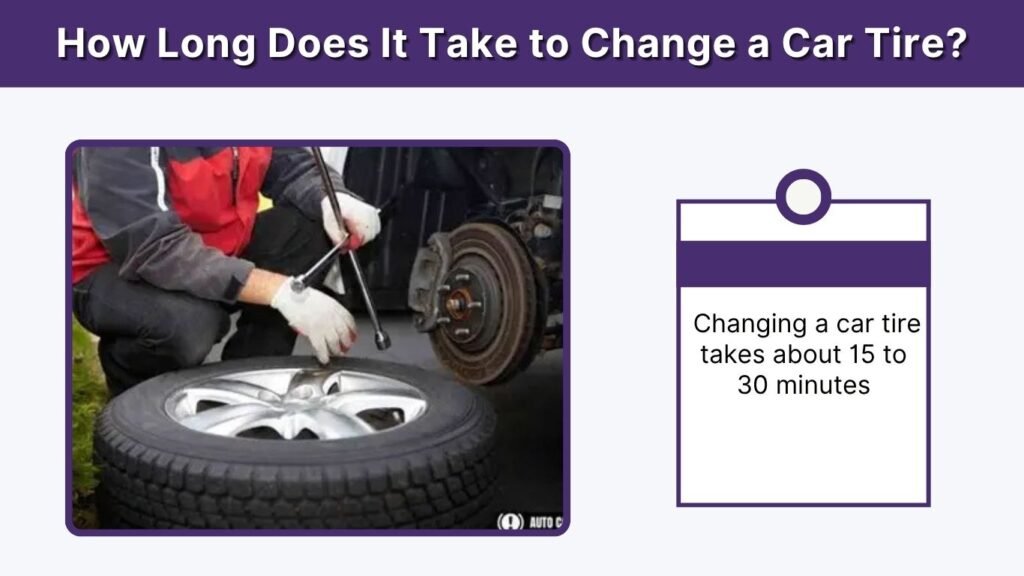
For most people, changing a car tire takes about 15 to 30 minutes. Beginners may take longer, especially if the lug nuts are tight or the spare tire is hard to access. The process becomes faster with practice, but safety should always come before speed.
What Can Make It Take Longer?
Bad weather, darkness, traffic, rusted lug nuts, or an unstable parking area can slow you down. Some spare tires are also difficult to remove from under the vehicle. Keeping your tools organized and checking your spare regularly can save time during an emergency.
When to Call Roadside Assistance
Call roadside assistance if you are on a busy highway, the car is on a slope, the jack is missing, or the lug nuts will not loosen. You should also call for help if the spare tire is flat, damaged, or unavailable. It is better to wait for help than risk injury.
Can You Change a Car Tire Without a Jack?
Changing a car tire without a jack is not recommended. A jack is needed to lift the vehicle safely. Trying to change a tire without proper lifting equipment can damage the car and put you in danger.
Safer Options If You Do Not Have a Jack
- Call roadside assistance.
- Contact a nearby mechanic or towing service.
- Ask another driver only if they have the correct jack.
- Use a tire repair kit if your car has one and the puncture is small.
- Move to a safe location and wait for professional help.
Why You Should Not Improvise
Using random objects to lift a car can be very dangerous. Bricks, wood blocks, or unstable stands can slip or break. A vehicle is heavy, and even a small movement can cause serious injury. Always use proper equipment.
Common Mistakes to Avoid When Changing a Tire
Even a simple tire change can go wrong if you rush. Most mistakes happen because drivers skip safety steps or use the jack incorrectly. Avoiding these errors will make the process safer and smoother.
Tire Changing Mistakes
- Changing a tire too close to moving traffic.
- Forgetting to turn on hazard lights.
- Lifting the car before loosening lug nuts.
- Using the wrong jack point.
- Putting hands or feet under the car.
- Installing the spare tire backward or unevenly.
- Tightening lug nuts in a circle instead of a star pattern.
- Driving too fast on a temporary spare.
- Forgetting to repair or replace the flat tire.
Why the Star Pattern Matters
Tightening lug nuts in a star pattern helps the wheel sit evenly against the hub. If you tighten one side fully before the others, the wheel may not seat correctly. This can cause vibration or unsafe driving conditions.
How Often Should You Change Tires on a Car?
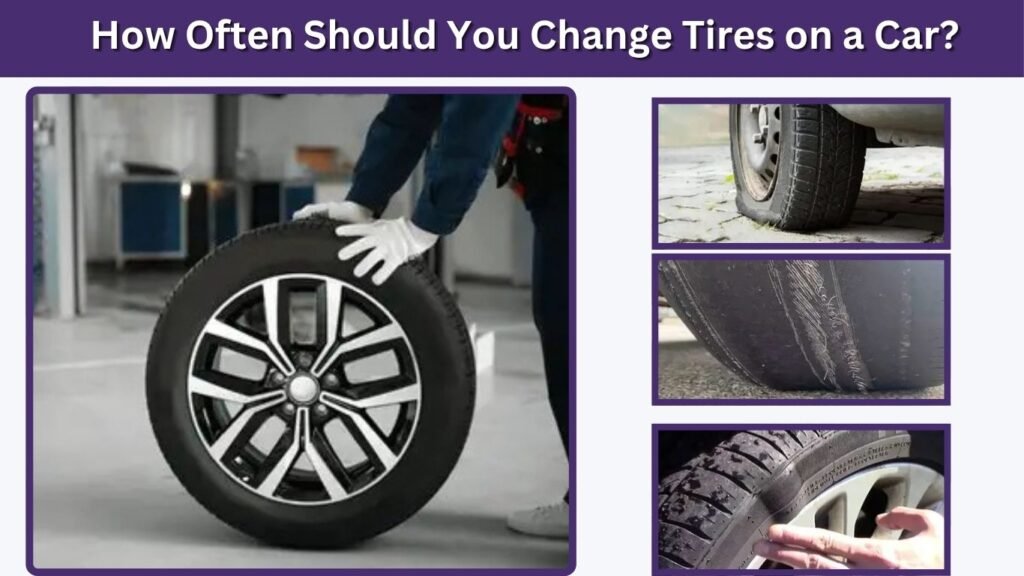
Changing a flat tire is different from replacing old tires. A flat tire is changed when it loses air or becomes unsafe. Regular tire replacement depends on tread depth, age, driving habits, road conditions, and tire damage.
Signs Your Car Tires Need Replacement
- The thread is too low.
- Cracks appear on the sidewall.
- Tires lose air often.
- The car vibrates while driving.
- Uneven wear appears on one side.
- The tire has bulges or bubbles.
- The tire is more than several years old.
Check Tire Pressure Regularly
Low tire pressure can cause poor handling, reduced fuel efficiency, and tire damage. Check tire pressure at least once a month and before long trips. Use the pressure listed on the sticker inside the driver’s door, not the number printed on the tire sidewall.
FAQs
Can I change a car tire by myself?
Yes, you can change a car tire by yourself if you have the correct tools and the car is parked in a safe place. Follow the owner’s manual, use the proper jack point, and avoid working near traffic. If the location feels unsafe, call roadside assistance.
How tight should lug nuts be after changing a tire?
Lug nuts should be tightened firmly in a star pattern. The best method is to use a torque wrench and follow the torque specification in your owner’s manual. If you do not have one, tighten them well and visit a tire shop soon for proper checking.
Can I drive normally after putting on a spare tire?
You should not drive normally on a compact spare tire. Drive slowly, avoid sudden braking, and do not travel long distances. Spare tires are usually temporary and may have speed limits. Replace or repair the flat tire as soon as possible.
Is it safe to change a tire on the highway?
Changing a tire on a busy highway can be dangerous. If possible, move to a safer area away from traffic. Turn on hazard lights and use reflective warning signs. If you cannot create a safe space, stay in the car or away from traffic and call roadside help.
Why won’t my lug nuts come loose?
Lug nuts may be stuck because they are over-tightened, rusted, or dirty. Try applying steady pressure with the lug wrench while the car is still on the ground. Do not jump on the wrench if it feels unsafe. If they still do not move, call a mechanic or roadside service.