
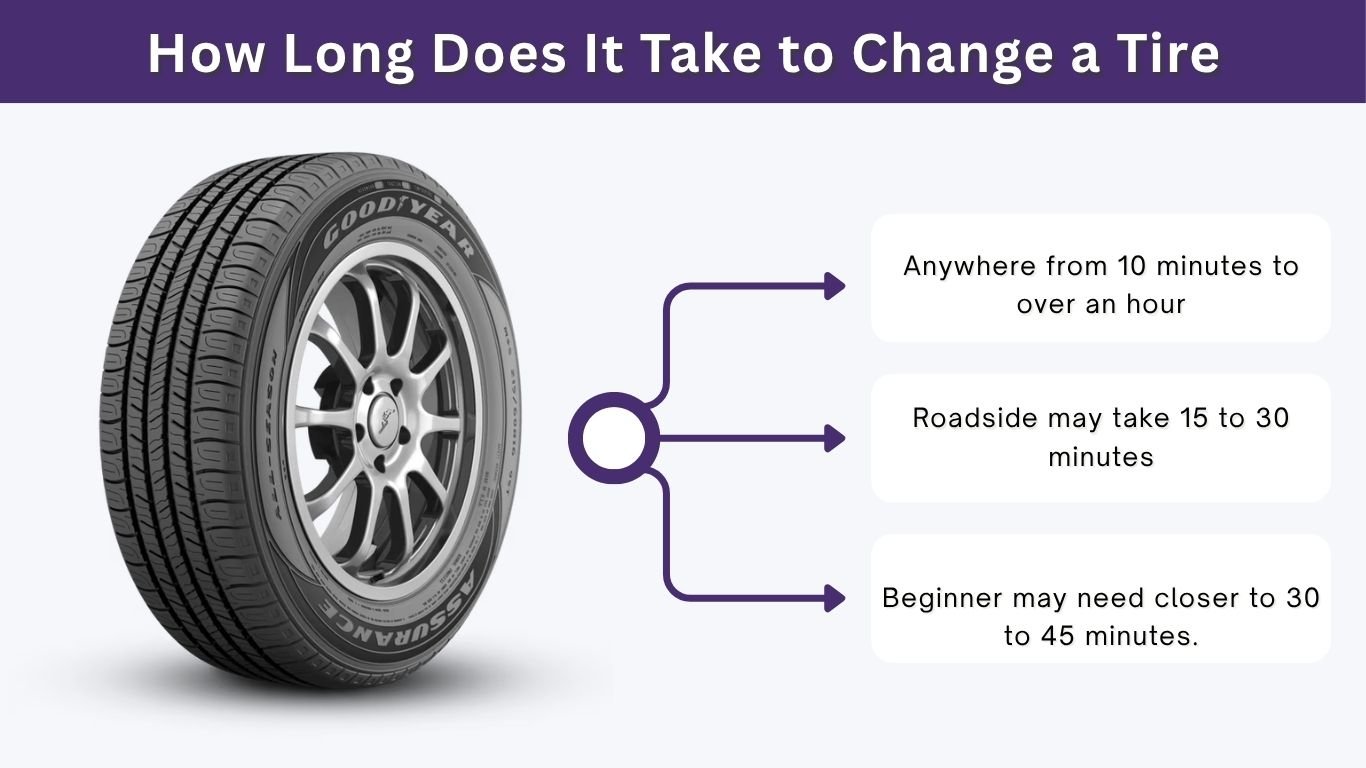
Changing a tire can take anywhere from 10 minutes to over an hour, depending on the situation. A simple spare tire change on the roadside may take 15 to 30 minutes, while a tire shop replacement can take longer if balancing, alignment, or sensor work is needed. The exact time depends on your tools, experience, vehicle type, and tire condition.
Average Time Needed to Change a Tire
The time it takes to change a tire depends on whether you are replacing a flat tire yourself, getting help from roadside assistance, or visiting a tire shop. A single tire change is usually faster than replacing a full set of tires, but delays can happen if lug nuts are stuck, the spare is hard to access, or the shop is busy.
For most drivers, changing a flat tire with a spare takes about 15 to 30 minutes. Someone experienced may do it in 10 to 15 minutes, while a beginner may need closer to 30 to 45 minutes. At a tire shop, replacing one tire often takes 30 to 60 minutes, depending on the service required.
| Tire Change Situation | Estimated Time |
| Experienced driver changing a spare tire | 10–20 minutes |
| Beginner changing a flat tire | 25–45 minutes |
| Roadside assistance changing a tire | 20–60+ minutes after arrival |
| Tire shop changing one tire | 30–60 minutes |
| Tire shop changing four tires | 45–90 minutes |
| Tire sensor replacement | 30–90 minutes |
| Motorcycle tire change | 30–90 minutes |
| Bike tire change | 10–30 minutes |
How Long Does It Take to Change a Flat Tire?
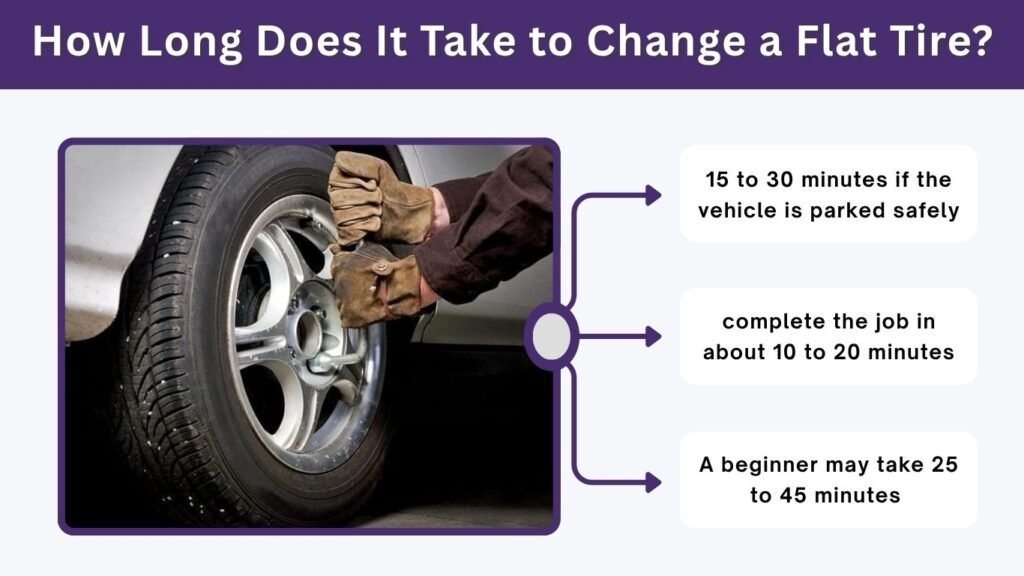
A flat tire change usually takes 15 to 30 minutes if the vehicle is parked safely, the tools are available, and the spare tire is ready to use. This includes loosening the lug nuts, lifting the car with a jack, removing the flat tire, installing the spare, tightening the lug nuts, and putting the tools away.
Time for an Experienced Driver
An experienced driver who has changed tires before may complete the job in about 10 to 20 minutes. They usually know where the jack points are, how to loosen lug nuts, and how to install the spare safely.
The process is faster when:
- The car is parked on level ground
- The spare tire is easy to access
- The lug nuts are not rusted or overtightened
- The jack and lug wrench are in good condition
- The driver already knows the steps
Time for a Beginner
A beginner may take 25 to 45 minutes to change a flat tire. This is normal because first-time drivers often need extra time to read the owner’s manual, find the correct jack point, and understand how the spare tire fits onto the wheel hub.
The main challenge for beginners is not the actual tire removal. It is usually making sure the vehicle is safely positioned and the jack is placed correctly. Rushing this step can be dangerous, so it is better to move slowly and carefully.
How Long Does It Take to Change a Spare Tire?
Changing a spare tire usually takes about the same amount of time as changing a flat tire because the spare is installed in place of the damaged tire. For most drivers, the process takes 15 to 30 minutes.
Temporary Spare Tire Installation
Many cars come with a temporary spare tire, often called a donut spare. These are smaller and lighter than regular tires, which can make them easier to install. However, they are not meant for long-term driving.
After installing a temporary spare, you should drive carefully and visit a repair shop as soon as possible. Temporary spares often have speed and distance limits, so they should only be used to reach a safe location or tire service center.
Full-Size Spare Tire Installation
A full-size spare may take slightly longer to handle because it is heavier than a donut spare. However, once installed properly, it may allow more normal driving than a temporary spare, depending on its condition and whether it matches the other tires.
Even with a full-size spare, it is smart to inspect the damaged tire quickly. The spare should not become a forgotten replacement unless it is truly safe, properly inflated, and suitable for regular use.
How Long Does It Take to Get a Tire Changed at a Shop?
Getting a tire changed at a shop usually takes 30 to 60 minutes for one tire. If you are replacing all four tires, the process may take 45 to 90 minutes. The total time depends on the shop’s workload and whether extra services are included.
What Happens During a Shop Tire Change?
A tire shop does more than simply remove one tire and install another. The technician may inspect the wheel, remove the old tire from the rim, mount the new tire, balance it, check tire pressure, and reinstall the wheel on the vehicle.
A shop visit may take longer if the technician also needs to:
- Replace the valve stem
- Reset or replace the tire pressure sensor
- Repair a puncture
- Check wheel alignment
- Rotate the tires
- Inspect uneven tire wear
Why a Tire Shop May Take Longer
Even if the tire change itself is quick, you may spend more time waiting. Tire shops often handle customers in order, and busy periods can increase the total visit time. Weekends, holidays, and bad-weather days are often busier because more drivers come in with tire problems.
If you need a specific tire size that is not in stock, the service could take much longer. In that case, the shop may need to order the tire before completing the replacement.
What Factors Affect Tire Change Time?
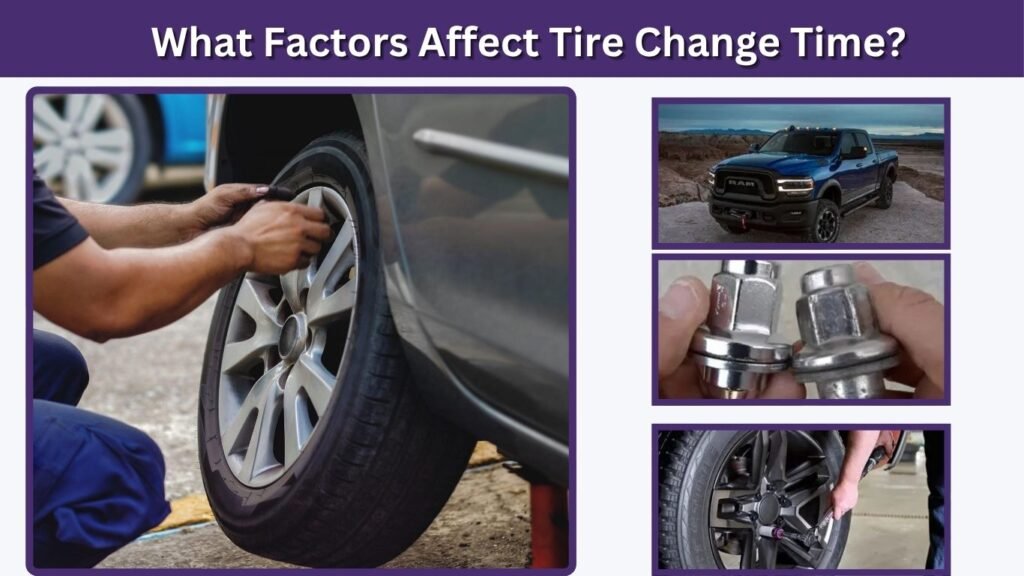
Not every tire change is the same. A simple job in a driveway can be quick, while a roadside tire change in bad weather can take much longer. Several factors can affect the total time.
Driver Experience
Experience makes a big difference. Someone who has changed tires before usually works faster and more confidently. A beginner may need to check each step carefully, especially when using the jack.
Vehicle Type
Small cars are often easier to lift and work on than trucks, SUVs, or vans. Larger vehicles may have heavier wheels, stronger lug nuts, and higher lift points. This can make the process more physically demanding.
Lug Nut Condition
Rusty, stuck, or overtightened lug nuts can add several minutes to the job. Sometimes they are difficult to loosen with a standard lug wrench. In extreme cases, professional tools may be needed.
Weather and Location
Changing a tire in a garage or driveway is much easier than changing one in rain, snow, darkness, or heavy traffic. Poor conditions slow the process and make safety more important.
Tool Quality
A good jack, proper lug wrench, gloves, flashlight, and wheel wedges can save time. Missing or damaged tools can make the job difficult or impossible.
How Long Does AAA or Roadside Assistance Take to Change a Tire?
Roadside assistance may change the tire in 10 to 20 minutes after arriving, but the total wait can be much longer. Depending on location, traffic, weather, and service demand, arrival may take 30 minutes to over an hour.
When Roadside Help Is Faster
Roadside assistance can be faster than doing it yourself if you are inexperienced, do not have the right tools, or feel unsafe. A trained technician can usually replace a flat with a spare quickly once they reach your vehicle.
When Waiting Takes Longer
The delay usually comes from waiting for the service vehicle. Rural roads, busy highways, storms, or peak travel times can increase the wait. If many drivers need help at the same time, response times may be slower.
Calling roadside assistance is still the safer choice if your car is near traffic, on a hill, or in a dangerous area.
How Long Does It Take to Change a Tire Yourself?
Changing a tire yourself usually takes 15 to 45 minutes. If you already know the process, it may take less than 20 minutes. If you are learning while doing it, expect the job to take longer.
Basic DIY Tire Change Steps
A standard tire change includes several steps. Each one matters for safety and proper installation.
- Park on level ground and turn on hazard lights
- Apply the parking brake and place wheel wedges
- Loosen the lug nuts before lifting the car
- Position the jack under the correct jack point
- Raise the vehicle until the tire clears the ground
- Remove the lug nuts and flat tire
- Install the spare tire
- Tighten the lug nuts in a star pattern
- Lower the vehicle and tighten again
- Store the tools and damaged tire
Why You Should Not Rush
Speed should not be the goal when changing a tire. A rushed tire change can lead to loose lug nuts, unstable jacking, or improper spare installation. Taking an extra few minutes is better than risking vehicle damage or a safety issue on the road.
How Long Does It Take to Change Different Types of Tires?
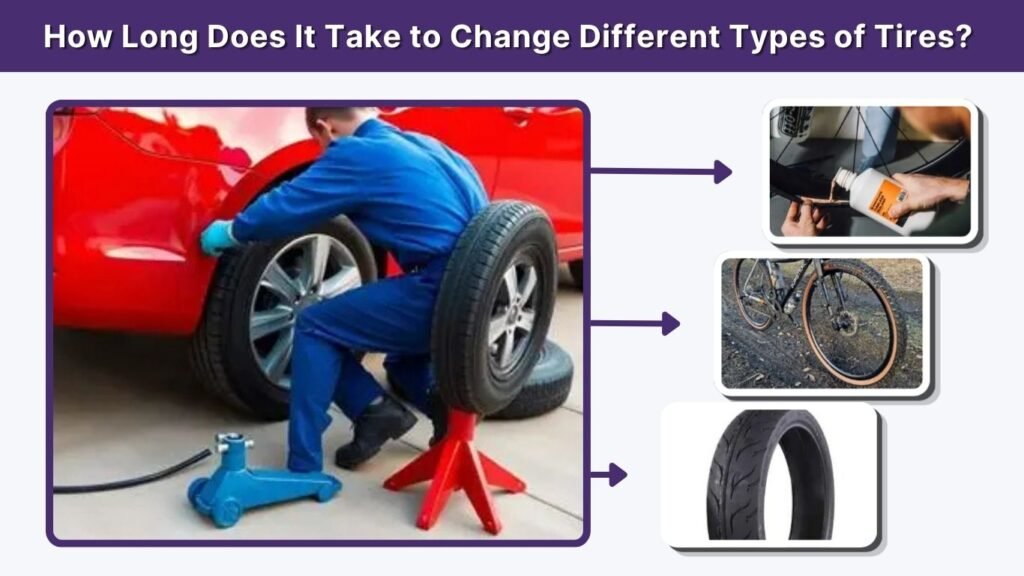
Different vehicles and tire types require different amounts of time. A car tire is not the same as a bike tire, motorcycle tire, truck tire, or airplane tire.
Car Tire
A car tire is usually the easiest for most drivers to understand because the tools are commonly included with the vehicle. A roadside spare change usually takes 15 to 30 minutes, while a shop replacement may take 30 to 60 minutes.
Motorcycle Tire
Changing a motorcycle tire can take 30 to 90 minutes, depending on the bike type and whether the wheel needs to be removed from the motorcycle. Mounting and balancing the tire may require specialized equipment.
Bike Tire
Changing a bike tire usually takes 10 to 30 minutes. The process is very different from changing a car tire because it usually involves removing the wheel, taking out the tube, patching or replacing it, and inflating the tire.
Semi, Bus, or Truck Tire
Large commercial vehicle tires take longer and usually require professional equipment. These tires are heavier, more difficult to handle, and often need specialized tools. A roadside commercial tire service may take much longer than a passenger car tire change.
Airplane Tire
Changing an airplane tire is a specialized maintenance job done by trained aviation technicians. The time can vary based on aircraft size, procedures, equipment, and safety checks. It is not comparable to a normal car tire change.
How Long Does It Take to Change a Tire Sensor?
Changing a tire pressure sensor can take about 30 to 90 minutes. The tire may need to be removed from the wheel so the sensor can be accessed, replaced, and programmed.
Why TPMS Service Adds Time
The tire pressure monitoring system, or TPMS, helps alert the driver when tire pressure is low. If the sensor is damaged or the battery fails, the shop may need to replace the sensor and reset the system.
This can take longer than a basic tire change because the technician may need to:
- Remove the tire from the rim
- Install the new sensor
- Reinflate and balance the tire
- Program or relearn the sensor
- Test the dashboard warning light
Can a Tire Change Take More Than an Hour?
Yes, a tire change can take more than an hour in some situations. This is common when extra work is needed or when conditions are difficult.
A tire change may take longer if:
- The lug nuts are stuck
- The spare tire is flat
- The jack is missing or unstable
- The vehicle is large or heavy
- The tire shop is busy
- The tire size is not in stock
- A sensor, valve stem, or wheel issue is discovered
- The vehicle needs balancing or alignment
In these cases, the delay is not always a bad thing. Extra time may be necessary to make sure the tire is installed safely.
How to Make a Tire Change Faster and Safer
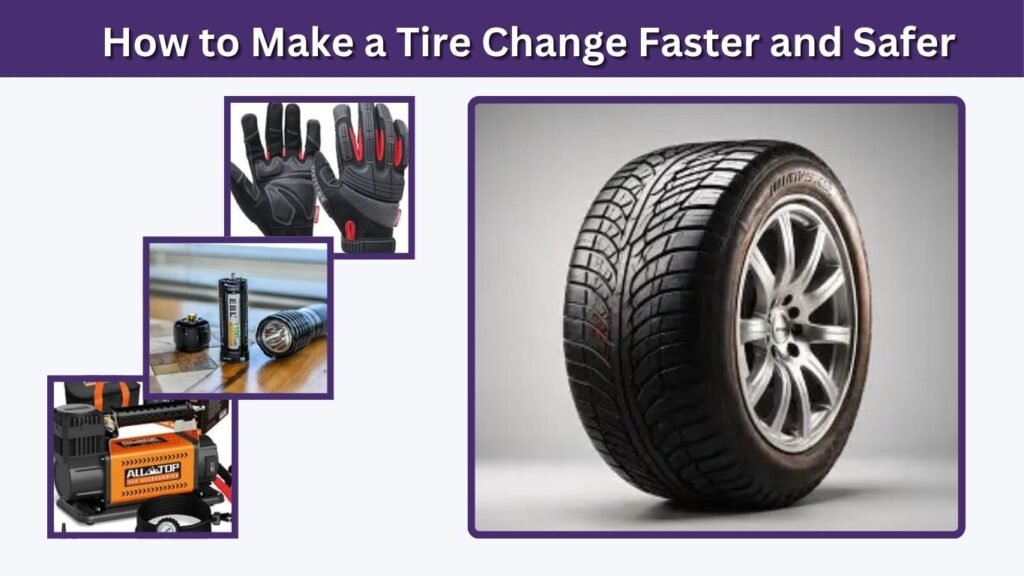
You can reduce tire change time by preparing before a flat happens. Many drivers only look for their jack and spare tire during an emergency, which adds stress and wastes time.
Prepare Your Vehicle in Advance
Check your tire-changing tools every few months. Make sure the spare is inflated, the jack works, and the lug wrench fits your vehicle. Also, read your owner’s manual so you know where the jack points are.
Keep Helpful Items in the Car
A few simple items can make a tire change easier, especially at night or during bad weather.
- Flashlight with fresh batteries
- Gloves
- Reflective triangles
- Tire pressure gauge
- Portable air compressor
- Wheel wedges
- Rain poncho
- Small mat or towel for kneeling
Practice Before an Emergency
You do not need to fully change a tire for practice, but it helps to locate the spare, jack, lug wrench, and jack points. Knowing where everything is can save time when you are stressed on the roadside.
FAQs
How long does it usually take to change a tire?
It usually takes 15 to 30 minutes to change a flat tire with a spare if the tools are ready and the vehicle is parked safely. A beginner may take 30 to 45 minutes. At a tire shop, replacing one tire often takes 30 to 60 minutes.
How long does it take to get a tire changed at a shop?
A tire shop usually takes 30 to 60 minutes to change one tire, depending on how busy the shop is and whether balancing, valve replacement, or tire sensor work is needed. Replacing all four tires may take around 45 to 90 minutes.
How long does it take to change a spare tire?
Changing a spare tire usually takes 15 to 30 minutes. The process may be quicker for an experienced driver and slower for someone doing it for the first time. Temporary spare tires should be used carefully and replaced with a regular tire as soon as possible.
How long does roadside assistance take to change a tire?
Once roadside assistance arrives, the actual tire change may take 10 to 20 minutes. However, the total time depends on how long it takes the technician to reach you. Location, weather, traffic, and demand can make the wait much longer.
Is it faster to change a tire yourself or call for help?
Changing a tire yourself can be faster if you have the tools, a safe location, and some experience. Calling for help may take longer because of the wait time, but it is safer if you are near traffic, unsure about the jack, or missing the proper equipment.