
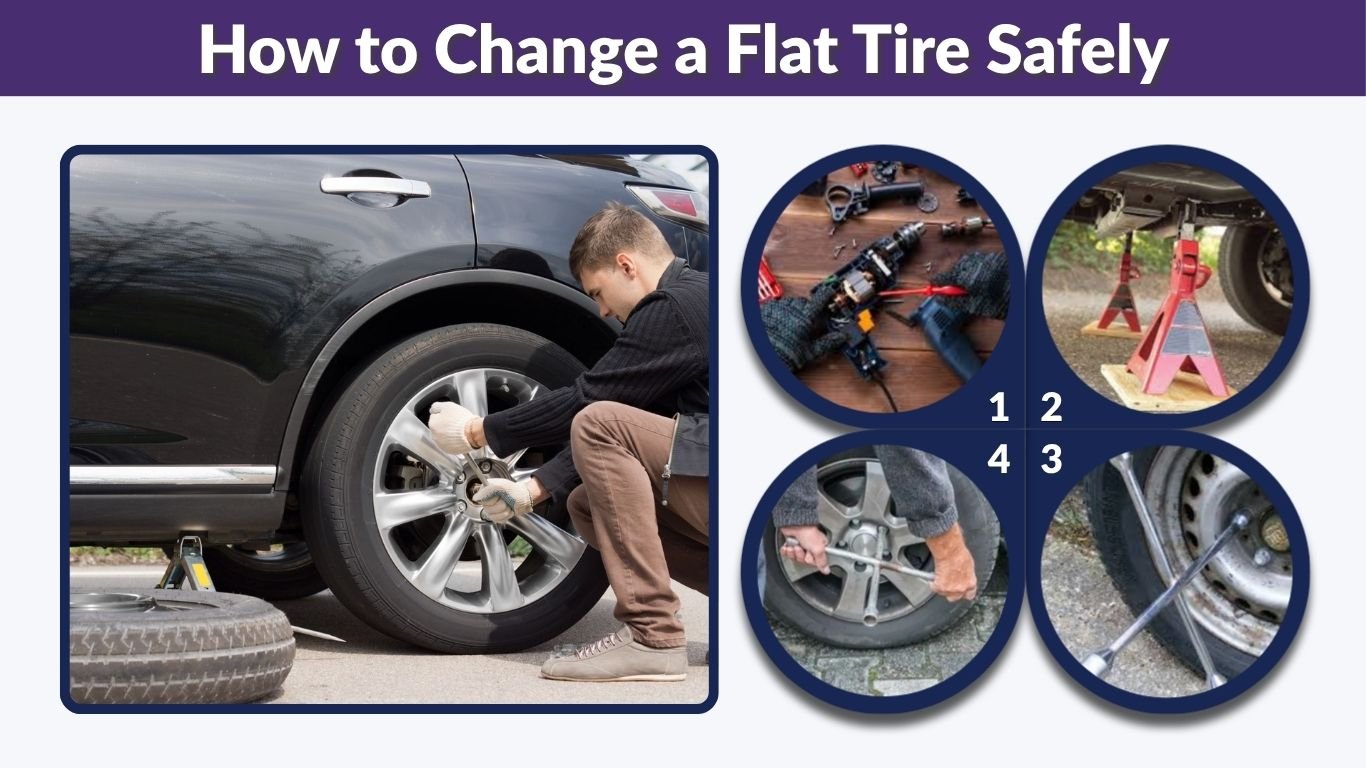
Knowing how to change a flat tire is one of the most useful driving skills you can learn. A flat can happen anywhere, from a quiet neighborhood street to a busy highway. With the right tools, a safe location, and a calm step-by-step approach, most drivers can replace a flat tire with a spare and get back on the road safely.
Before You Start: Make Safety Your First Priority
Changing a flat tire is not difficult, but it can become dangerous if you stop in the wrong place or rush the process. Before touching the jack or spare tire, focus on protecting yourself, your passengers, and other road users.
Pull Over in a Safe Location
As soon as you notice a flat tire, slow down gently. Do not brake suddenly or make sharp turns. Look for a flat, stable area away from moving traffic. A parking lot, wide shoulder, side street, or gas station is much safer than the edge of a busy road.
Once stopped, put the vehicle in park if it is automatic or in gear if it is manual. Turn on your hazard lights immediately so other drivers can see you. If you have reflective triangles or road flares, place them behind your vehicle at a safe distance.
Check Whether It Is Safe to Change the Tire
Not every flat tire should be changed by the driver. If your car is on a narrow highway shoulder, soft ground, a steep hill, or in poor visibility, it may be safer to call roadside assistance. Your life is more important than saving time or money.
Avoid changing a tire if:
- The car is too close to traffic
- The ground is soft, muddy, or uneven
- You do not have the correct jack or lug wrench
- The spare tire is missing or damaged
- You feel unsafe because of weather, location, or traffic
Tools You Need to Change a Flat Tire
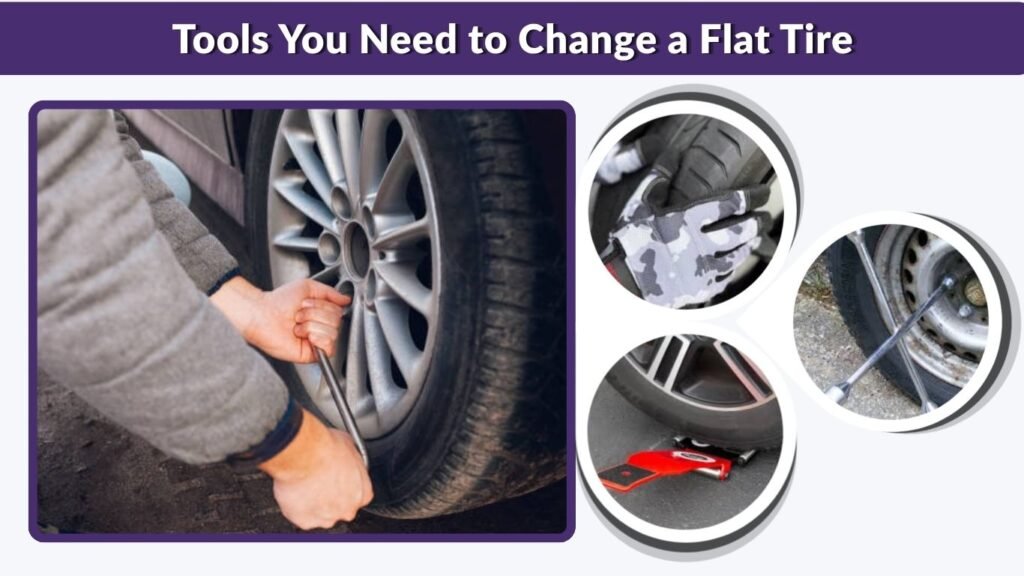
Most vehicles come with basic tire-changing tools, but they are often stored under the trunk floor, beneath the cargo area, or under the vehicle. Check your owner’s manual if you are not sure where they are located.
| Tool | Purpose |
| Spare tire | Replaces the flat tire temporarily |
| Jack | Lifts the vehicle off the ground |
| Lug wrench | Loosens and tightens the lug nuts |
| Wheel wedges | Help prevent the car from rolling |
| Owner’s manual | Shows jack points and vehicle-specific instructions |
| Gloves | Protect your hands while handling tools and tires |
| Flashlight | Helps if you are changing the tire at night |
Full-Size Spare vs Temporary Spare
Some vehicles have a full-size spare tire, while others come with a smaller temporary spare, often called a donut. A full-size spare may allow normal driving, but a temporary spare has limits. Most donut spares are designed for short-distance use at reduced speeds.
Always check the writing on the spare tire sidewall and your owner’s manual. If the spare says not to exceed a certain speed, follow that limit strictly.
How to Change a Flat Tire Step by Step
Once the car is parked safely and your hazard lights are on, you can begin the tire-changing process. Work slowly and follow each step in order.
Step 1: Secure the Vehicle
Place wheel wedges in front of or behind the tires to keep the car from rolling. If the flat tire is at the front, place the wedges behind the rear tires. If the flat tire is at the rear, place them in front of the front tires.
If you do not have wheel wedges, a large stone or solid block may help in an emergency, but proper wedges are safer.
Step 2: Remove the Hubcap or Wheel Cover
Some vehicles have a hubcap or wheel cover over the lug nuts. If yours does, remove it before loosening the nuts. You may be able to pry it off with the flat end of the lug wrench, but check your owner’s manual first to avoid damaging it.
If your lug nuts are already visible, you can skip this step.
Step 3: Loosen the Lug Nuts
Use the lug wrench to turn each lug nut counterclockwise. Do this before lifting the car with the jack. The tire is still touching the ground, which prevents it from spinning while you apply force.
Do not remove the lug nuts completely yet. Loosen each one about a quarter to half turn. If they are tight, press down carefully with your foot or use controlled body weight, but avoid sudden jerking motions.
Step 4: Position the Jack Correctly
Find the correct jack point under your vehicle. This is usually a reinforced metal area near the flat tire. Many cars have small notches or markings along the frame to show where the jack should go.
Using the wrong jack point can damage the car or cause it to slip. If you are unsure, check the owner’s manual before lifting.
Step 5: Lift the Vehicle
Raise the car slowly until the flat tire is about six inches off the ground. Make sure the jack stays straight and stable as the vehicle rises. Do not put any part of your body under the car while it is supported only by the jack.
If the car shifts, leans, or feels unstable, lower it carefully and reposition the jack.
Step 6: Remove the Lug Nuts and Flat Tire
Now remove the loosened lug nuts completely. Keep them in a safe place, such as your pocket, a cup holder, or inside the hubcap if it is available. Do not leave them loose on the ground where they can roll away.
Grip the tire with both hands and pull it straight toward you. If it feels stuck, gently wiggle it from side to side until it comes loose.
Step 7: Install the Spare Tire
Line up the holes in the spare tire with the wheel bolts. Push the spare straight onto the hub until it sits firmly in place. Then put the lug nuts back on by hand.
Tighten the lug nuts with your fingers first. This helps prevent cross-threading, which can damage the bolts.
Step 8: Lower the Car Slightly and Tighten the Lug Nuts
Lower the vehicle until the spare tire touches the ground, but do not lower it fully yet. The tire should have enough contact with the ground to stop it from spinning.
Use the lug wrench to tighten the lug nuts in a star pattern. This helps the wheel sit evenly against the hub. Do not tighten them in a circle one after another.
Step 9: Lower the Vehicle Completely
Lower the jack all the way and remove it from under the car. Once the full weight of the vehicle is on the spare tire, tighten the lug nuts again in the same star pattern.
Make each nut snug and secure. If possible, have the lug nuts checked later with a torque wrench to ensure they are tightened to the manufacturer’s specification.
Step 10: Store the Flat Tire and Tools
Put the flat tire, jack, lug wrench, wheel cover, and any other tools back in the vehicle. Do not leave anything on the roadside. Before driving away, check that the spare looks properly seated and inflated.
If the spare appears low, drive slowly to the nearest service station and add air if needed.
How Long Does It Take to Change a Flat Tire?
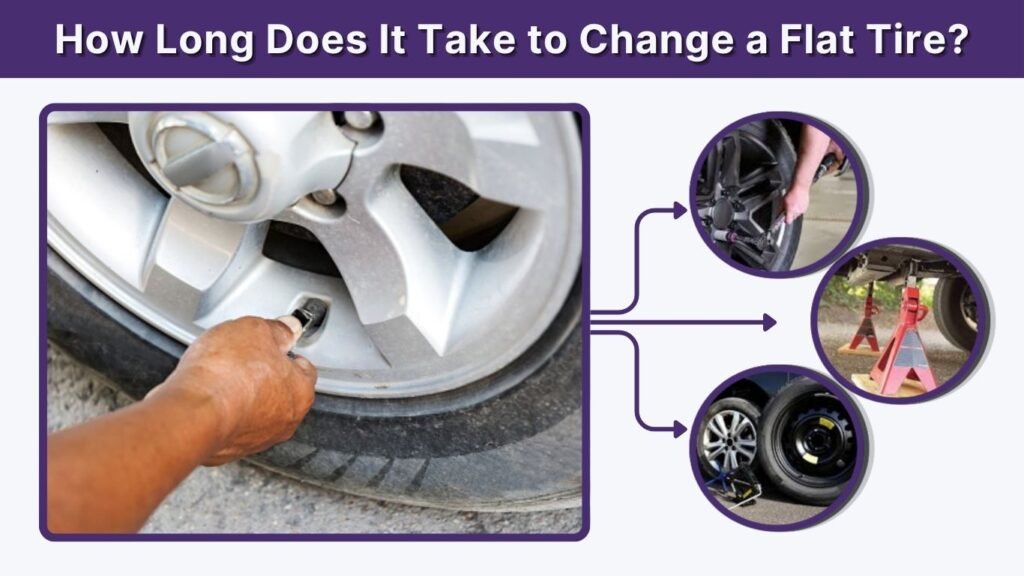
For most drivers, changing a flat tire takes about 15 to 30 minutes. Someone with experience and the right tools may do it faster, while a beginner may need more time.
Several factors can affect the time:
- Location and traffic conditions
- Weather and visibility
- How tight the lug nuts are
- Whether the spare tire is easy to access
- Your comfort level with the jack and tools
The goal is not to change the tire as quickly as possible. The goal is to do it safely and correctly.
How Much Does It Cost to Change a Flat Tire?
If you change the flat tire yourself using your spare, the immediate cost is usually nothing. However, you may still need to repair or replace the damaged tire afterward.
A simple puncture repair may cost less than replacing the tire, but the final cost depends on the damage, tire size, vehicle type, and local labor rates. If the sidewall is damaged, the tire usually cannot be safely repaired and must be replaced.
Roadside assistance may also charge a fee if you do not have coverage through your insurance, auto club, warranty, or credit card benefits.
Common Mistakes to Avoid When Changing a Flat Tire
Changing a tire is straightforward, but small mistakes can create safety risks. Avoid these common errors to protect yourself and your vehicle.
Jacking the Car in the Wrong Place
The jack must be placed under the correct lift point. Jacking the car from a weak area can bend the frame, damage body panels, or cause the vehicle to fall.
Removing Lug Nuts Too Early
Loosen the lug nuts before lifting the vehicle, but do not remove them until the tire is off the ground. Removing them too early can make the wheel unstable.
Forgetting the Star Pattern
Tightening lug nuts in a star pattern helps the wheel sit evenly. Tightening them randomly or in a circle may cause uneven pressure.
Driving Too Fast on a Spare
Temporary spare tires are not made for normal-speed driving. Follow the speed and distance limits printed on the spare or listed in your vehicle manual.
Can You Change a Flat Tire Without a Jack?
In most cases, you cannot safely change a flat tire without a jack. The jack is what lifts the vehicle high enough to remove the flat tire and install the spare. Trying to change a tire without one can damage the car and put you at serious risk.
If you do not have a jack, the safest option is to call roadside assistance, a tow service, or someone who has the correct equipment.
What About Changing a Flat Bike Tire?
Changing a flat bike tire is different from changing a flat car tire. A bicycle flat usually involves removing the wheel, taking out the inner tube, finding the puncture, patching or replacing the tube, and reinstalling the tire.
Bike tire repairs often require tire levers, a pump, and a spare tube or patch kit. Unlike a car, a bike does not need a heavy jack or lug wrench. Because car and bicycle repairs involve different tools and steps, they are best treated as separate repair tasks.
After Changing the Tire: What to Do Next
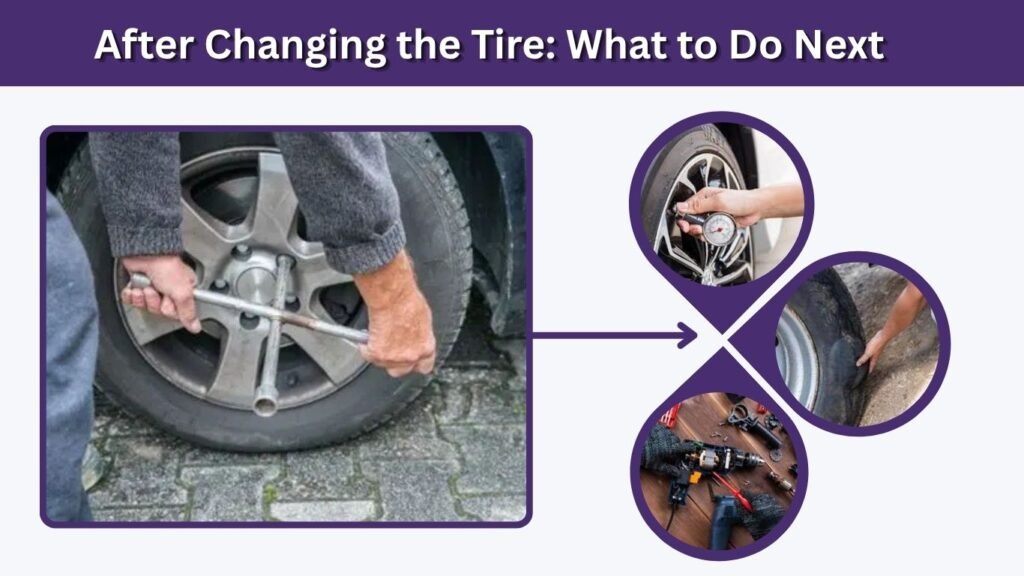
After the spare tire is installed, drive carefully. Avoid sudden braking, sharp turns, and high speeds. Go to a tire shop or mechanic as soon as possible to inspect the flat tire.
You should also:
- Check the spare tire pressure
- Repair or replace the damaged tire
- Ask a technician to inspect the wheel
- Replace any missing or damaged tools
- Put the repaired tire back in the spare area if needed
A spare tire is usually a temporary solution, not a permanent fix.
FAQs
How long can I drive on a spare tire?
You should drive on a spare tire only as long as necessary to reach a repair shop or safe destination. Temporary spare tires usually have speed and distance limits, often printed on the tire. Driving too far or too fast on a spare can reduce control and increase the risk of another tire problem.
Is it hard to change a flat tire?
Changing a flat tire is not very hard if you have the right tools, a safe location, and clear instructions. The most difficult parts are loosening tight lug nuts and positioning the jack correctly. Beginners should move slowly, follow the owner’s manual, and avoid working near traffic.
Can I change a flat tire on a hill?
Changing a flat tire on a hill is not recommended because the vehicle may roll or shift while lifted. If possible, move to a flat, stable surface before starting. If you cannot safely move the car, call roadside assistance instead of risking injury or vehicle damage.
Do I need to replace a tire after it goes flat?
Not always. Some flat tires can be repaired if the puncture is small and located in the tread area. However, tires with sidewall damage, large cuts, severe wear, or damage from driving while flat usually need replacement. A tire professional can inspect it and recommend the safest option.
Should I call roadside assistance instead of changing it myself?
Call roadside assistance if you are near heavy traffic, do not have the right tools, feel unsafe, or are unsure how to use the jack. You should also call for help during bad weather, at night in a dangerous area, or when the spare tire is missing or damaged.