
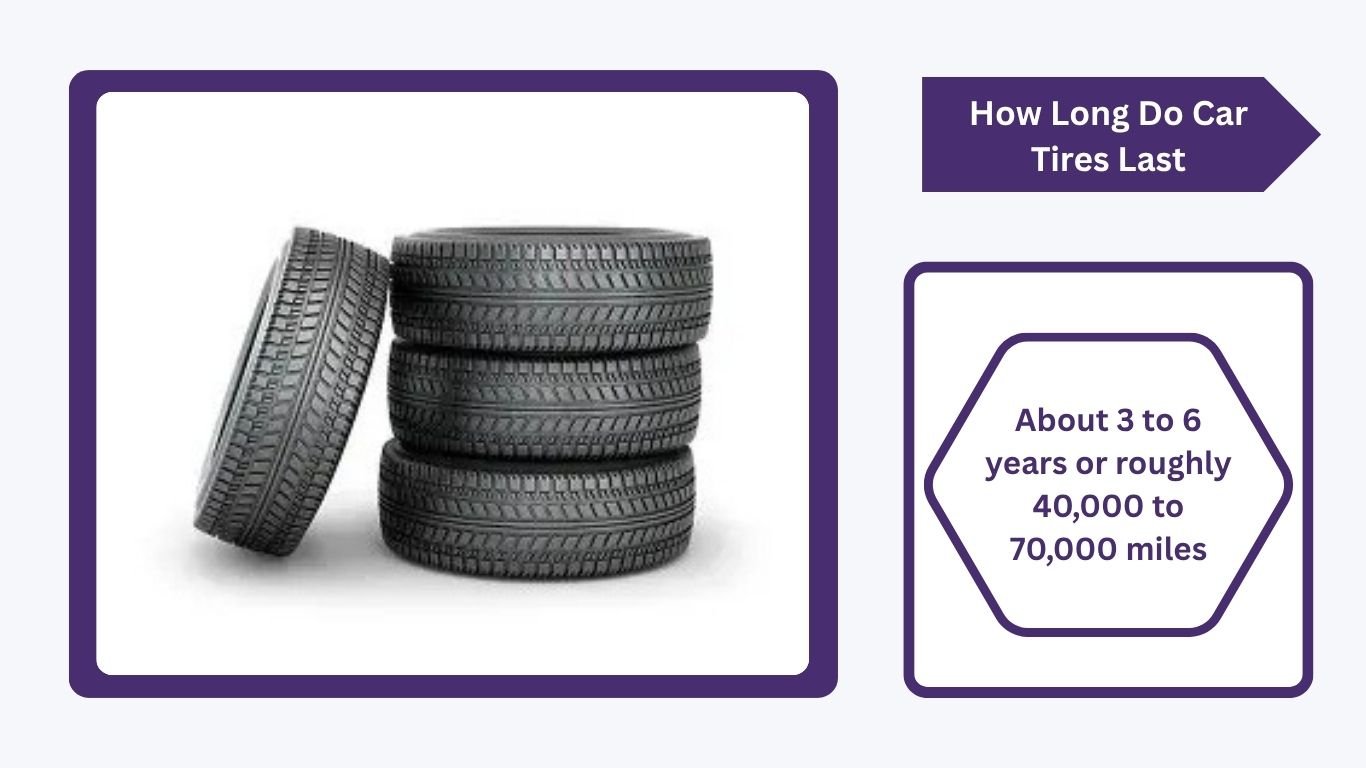
Most car tires last about 3 to 6 years or roughly 40,000 to 70,000 miles, but there is no single number that fits every driver. Tire life depends on tire quality, driving style, road condition, climate, vehicle type, tire pressure, alignment, rotation, and maintenance. Some performance tires wear out faster, while touring or all-season tires may last longer. Even if the tread still looks good, age and rubber cracking can make a tire unsafe over time.
How Long Do Car Tires Usually Last?
Car tires usually last several years under normal driving, but mileage can vary a lot. A gentle driver on smooth roads may get much more life from a set of tires than someone who drives aggressively, carries heavy loads, brakes hard, or drives on rough roads every day. Michelin explains that tire lifespan depends on tire design, driving habits, climate, road conditions, and maintenance, not mileage alone.
For many everyday cars, a practical estimate is:
| Tire Type | Average Lifespan |
| Standard all-season tires | 40,000–70,000 miles |
| Performance tires | 20,000–40,000 miles |
| Touring tires | 50,000–80,000 miles |
| SUV/light truck tires | 40,000–70,000 miles |
| EV tires | Often shorter than similar gas-car tires |
| Spare tires | Age out before wearing out |
These are general ranges, not guarantees. The safest way to judge tire life is to check tread depth, age, damage, and driving performance together.
How Long Do Car Tires Last in Years?
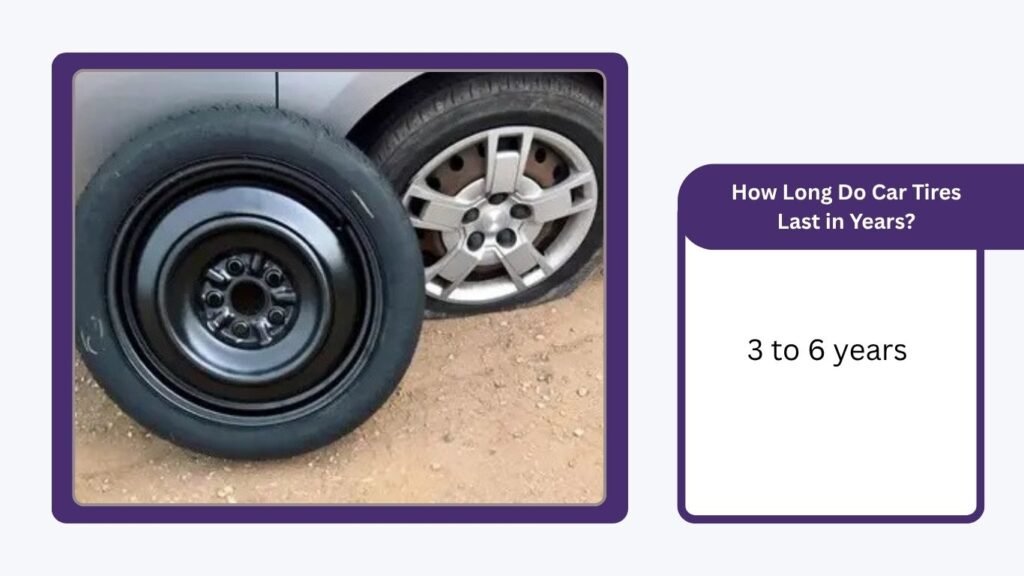
In years, many car tires last about 3 to 6 years in normal use. Low-mileage drivers may keep tires longer because they do not wear the tread quickly, but tire age still matters. Rubber can harden, crack, and weaken from heat, sunlight, ozone, and time.
Michelin recommends a professional tire inspection after five years of service and replacing tires ten years after the date of manufacture, even if the tread still looks usable. Continental also says tires more than ten years old, including spare tires, should be removed from service.
How to Check Tire Age
Look for the DOT code on the tire sidewall. The last four numbers show the manufacturing week and year. For example, a tire code ending in 3520 means the tire was made in the 35th week of 2020. Michelin and Continental both explain that the final four DOT digits identify the tire’s production week and year.
How Long Do Car Tires Last in Miles?
In miles, most regular passenger car tires last around 40,000 to 70,000 miles. Some cheaper tires may wear out closer to 30,000 miles, while premium touring tires may last longer with proper care. Performance tires often trade long life for better grip, so they may wear faster.
Mileage is only one part of tire life. A tire with 50,000 miles may still be safe if the tread is deep and the rubber is healthy. Another tire with only 20,000 miles may need replacement if it has uneven wear, cracking, bulges, or sidewall damage.
How Long Do New Tires Last on a Car?
Brand-new replacement tires often last longer than factory tires if you choose a tire with a strong treadwear rating and maintain it well. However, the actual life depends on the tire model and how the car is driven. A new set of tires can last several years, but it should still be checked monthly for pressure, tread, and damage.
NHTSA says proper tire pressure is important for safety, durability, and fuel consumption. It recommends checking all tires, including the spare, at least once a month when the tires are cold.
New Tires vs Factory Tires
Factory tires, also called original equipment tires, are the tires that come with a new car. They are chosen by the vehicle manufacturer for ride comfort, fuel economy, handling, noise, and cost. Some factory tires last a long time, while others wear faster than replacement tires with higher mileage warranties.
| Tire Situation | What to Expect |
| Brand-new replacement tires | Often 40,000–70,000 miles |
| Factory tires on a new car | Varies widely by vehicle and tire model |
| Performance factory tires | May wear faster |
| Touring replacement tires | Often longer-lasting |
| Poorly maintained new tires | Can wear out early |
If your new car tires wear out quickly, check alignment, tire pressure, rotation schedule, and driving habits before blaming the tire alone.
How Long Do Tires Last on Electric Cars?
Electric car tires may wear faster than tires on similar gasoline cars. EVs are often heavier because of the battery pack, and instant torque can increase tire stress during acceleration. Michelin notes that instant torque combined with heavier EV weight can increase tire wear.
That does not mean every EV tire wears out quickly. Many EV owners get good tire life by using EV-rated tires, maintaining pressure, rotating tires on schedule, and avoiding hard launches. If you drive an EV, check the owner’s manual because tire rotation and pressure recommendations may be especially important.
What Makes Car Tires Wear Out Faster?
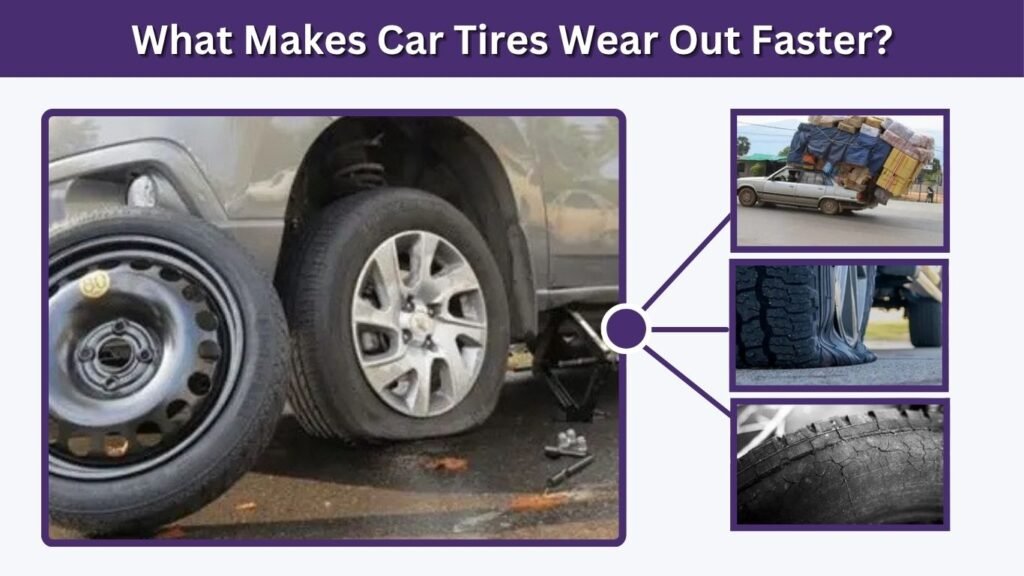
Several things can shorten tire life. Some are related to the road, while others are caused by poor maintenance or driving habits.
Common Causes of Short Tire Life
- Low tire pressure: Underinflated tires can overheat and wear unevenly.
- Overinflation: Too much air can wear the center of the tread faster.
- Bad alignment: Misalignment can quickly destroy the inner or outer edge.
- No tire rotation: Tires wear unevenly when they stay in the same position too long.
- Aggressive driving: Hard braking, fast cornering, and quick acceleration wear tread faster.
- Heavy loads: Extra weight increases heat and stress.
- Rough roads: Potholes, gravel, and broken pavement can damage tread and sidewalls.
- Hot climates: Heat speeds up rubber aging and cracking.
- Poor suspension: Worn shocks, struts, or bushings can create uneven tire wear.
NHTSA says rotation, balance, alignment, and proper inflation can help tires last longer, and it notes that properly inflated tires can extend average tire life by 4,700 miles.
When Should You Replace Car Tires?
You should replace car tires when the tread is too low, the tire is too old, or there are signs of damage. Do not wait for a flat tire or blowout. Tires are one of the most important safety parts on a car because they affect braking, steering, traction, and stability.
Signs You Need New Tires
- Tread depth is at or below 2/32 inch
- Treadwear bars are level with the tread
- Sidewall has cracks, cuts, bulges, or blisters
- Tire loses air repeatedly
- Car shakes or vibrates at speed
- Vehicle pulls to one side
- Wet-road grip feels worse than before
- Tires are old, even with decent tread
- Uneven wear appears on one edge or in patches
NHTSA says tires are not safe and should be replaced when tread wears down to 2/32 of an inch. It also recommends checking tire tread monthly and using treadwear indicators or the penny test.
How Long Do Tires Last in Storage?
Unused car tires can still age in storage. A tire stored indoors in a cool, dry, dark place may last longer than one stored outside in heat and sunlight. However, storage does not stop aging completely. Rubber can still dry out and lose flexibility over time.
Stored tires should be kept away from direct sunlight, moisture, electric motors, chemicals, fuel, and extreme heat. Before installing stored tires, check the DOT date, inspect for cracks, and ask a tire professional if the tires are several years old.
How Long Do Spare Tires Last on a Car?
Spare tires often age out before they wear out because they are rarely used. A full-size spare may look new, but it can still be too old to trust. Compact spare tires, also called donut spares, are meant for temporary use only.
Michelin’s ten-year replacement recommendation includes spare tires, and Continental also says spare tires more than ten years old should be replaced.
Check your spare tire pressure at least monthly with the other tires. NHTSA specifically recommends checking all tires, including the spare, when they are cold.
How to Make Car Tires Last Longer
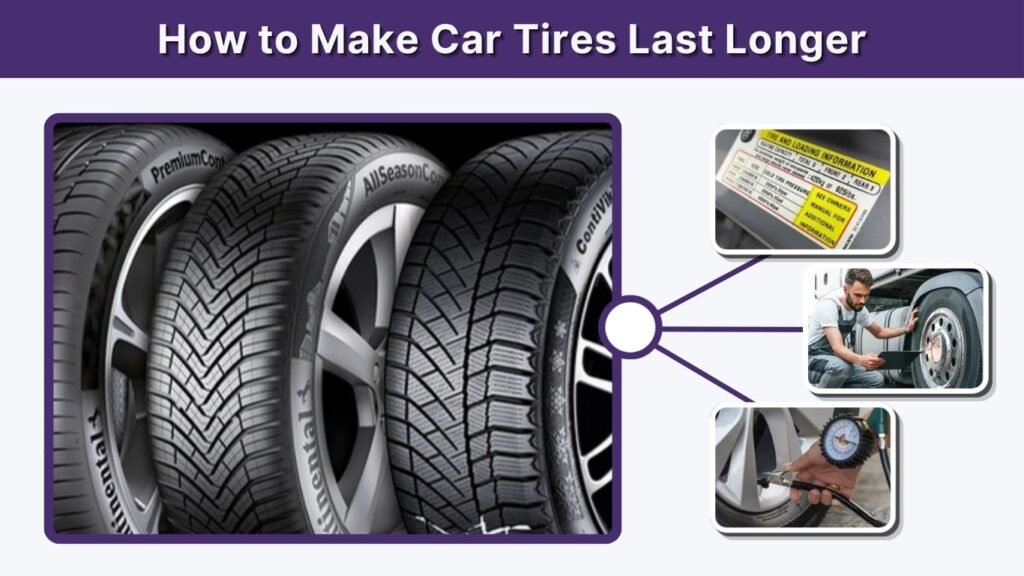
Good tire care can add thousands of miles to tire life. It also improves safety, braking, handling, and fuel economy.
Tire Life Extension Tips
- Check tire pressure once a month.
- Use the PSI listed on the driver-side door placard.
- Rotate tires according to the owner’s manual.
- Balance tires when new tires are installed.
- Get alignment checked if the car pulls or tires wear unevenly.
- Avoid hard braking and aggressive cornering.
- Slow down on potholes and rough roads.
- Do not overload the vehicle.
- Inspect tires before long trips.
- Replace damaged tires quickly.
NHTSA recommends using the vehicle manufacturer’s recommended tire pressure from the Tire and Loading Information Label or owner’s manual, not the number printed on the tire sidewall.
FAQs
How long do car tires last on average?
Most car tires last around 3 to 6 years or 40,000 to 70,000 miles. However, tire life depends on tire type, road condition, driving style, climate, pressure, alignment, and rotation. Always check tread depth and tire age instead of relying only on mileage.
How long do new car tires last?
New car tires can last several years, but factory tires vary widely. Some original tires last 30,000 miles, while others last much longer. Tire life depends on the tire model, vehicle weight, driving habits, and maintenance. Check tire pressure and rotate tires regularly.
How long do car tires last in storage?
Stored tires may last several years if kept in a cool, dry, dark place, but they still age over time. Heat, sunlight, moisture, and ozone can damage rubber. Always check the DOT date and inspect for cracks before using stored tires.
How long do electric car tires last?
Electric car tires may wear faster than tires on similar gas cars because EVs are heavier and produce instant torque. Tire life varies by model, tire type, and driving style. Regular pressure checks, rotation, and smoother acceleration can help EV tires last longer.
Should I replace tires after 5 years?
Not always, but tires should be inspected carefully after about five years of use. Michelin recommends annual professional inspections after five years and replacement at ten years from the manufacture date, even if the tire still has tread. Replace sooner if tread is low or damage appears.