
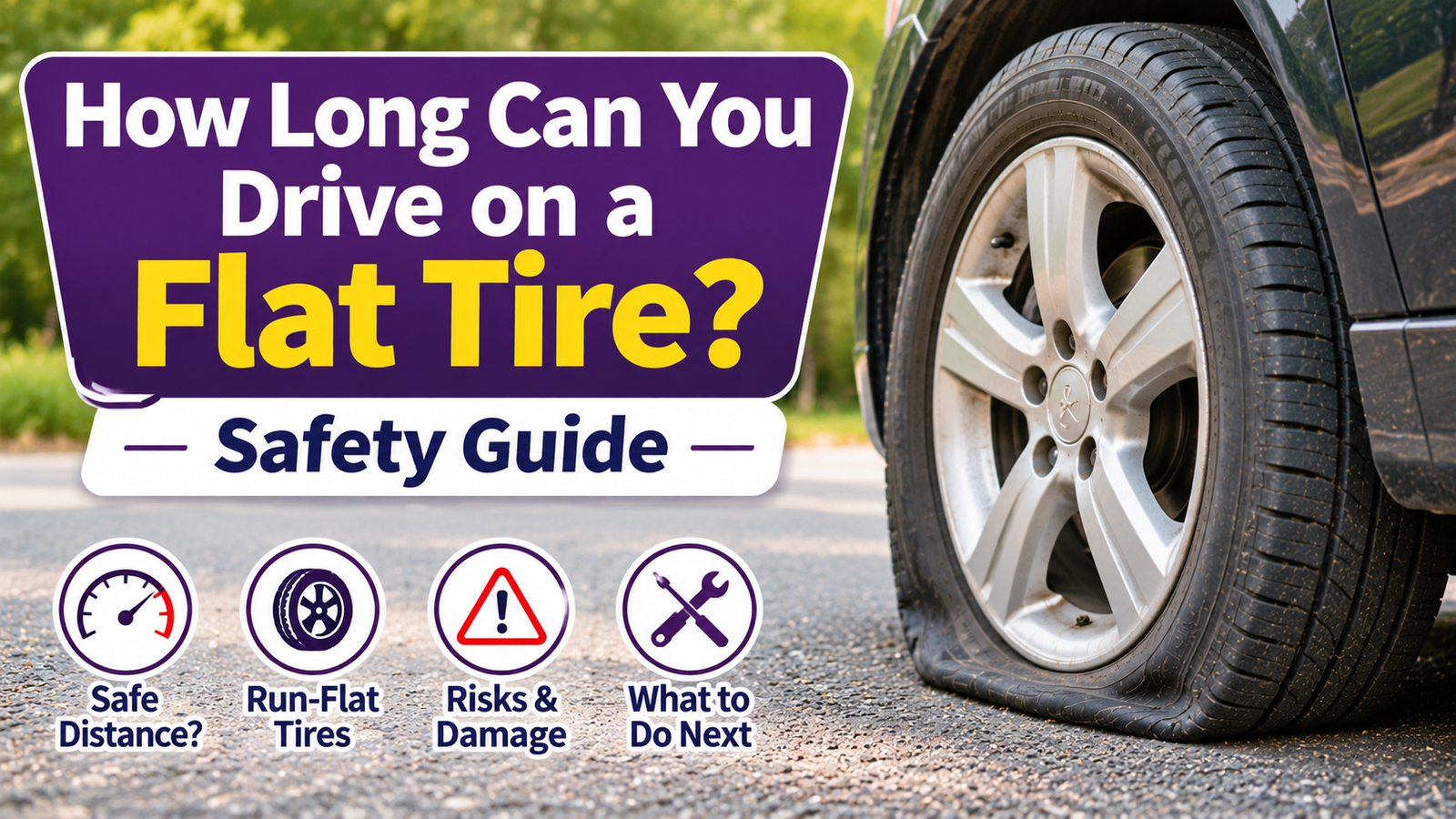
A flat tire can happen unexpectedly while driving, leaving you wondering whether you can continue to the nearest repair shop or need to stop immediately. The answer depends on the tire type, how much air remains, and the extent of the damage. While conventional tires should not be driven on when completely flat, run-flat tires offer limited mobility after losing pressure. Understanding how long you can drive on a flat tire, the potential risks, and the safest steps to take can help protect your vehicle and prevent an accident.
How Long Can You Drive on a Flat Tire?
You should not drive on a completely flat conventional tire. Even traveling a short distance can damage the tire’s internal structure, sidewalls, and wheel rim. If your tire suddenly loses pressure, pull over somewhere safe as soon as possible. However, certain run-flat tires are designed to travel a limited distance after losing air, giving drivers time to reach a suitable repair location.
1. Completely Flat Conventional Tires
If your conventional tire is completely flat, you should stop driving immediately. There is no guaranteed safe distance because the tire can become damaged within a very short distance.
Driving on a flat tire forces its sidewalls to support the vehicle’s weight without proper air pressure. This creates excessive friction and heat, potentially destroying the tire from the inside. It can also damage the wheel rim, suspension components, and other nearby parts.
Even driving a few hundred feet can cause significant damage, particularly if the vehicle is heavy or traveling at higher speeds.
2. Run-Flat Tires
Run-flat tires are specially designed to support a vehicle temporarily after losing air pressure. Their reinforced sidewalls allow them to carry the vehicle’s weight even when the tire has been punctured.
Many run-flat tires allow drivers to travel approximately 50 miles (80 kilometers) at a maximum speed of 50 mph (80 km/h) after losing pressure. However, these limits vary depending on the tire manufacturer, model, vehicle, and road conditions.
Always check your owner’s manual and tire manufacturer’s instructions before continuing to drive.
How Long Can You Drive on a Run-Flat Tire?
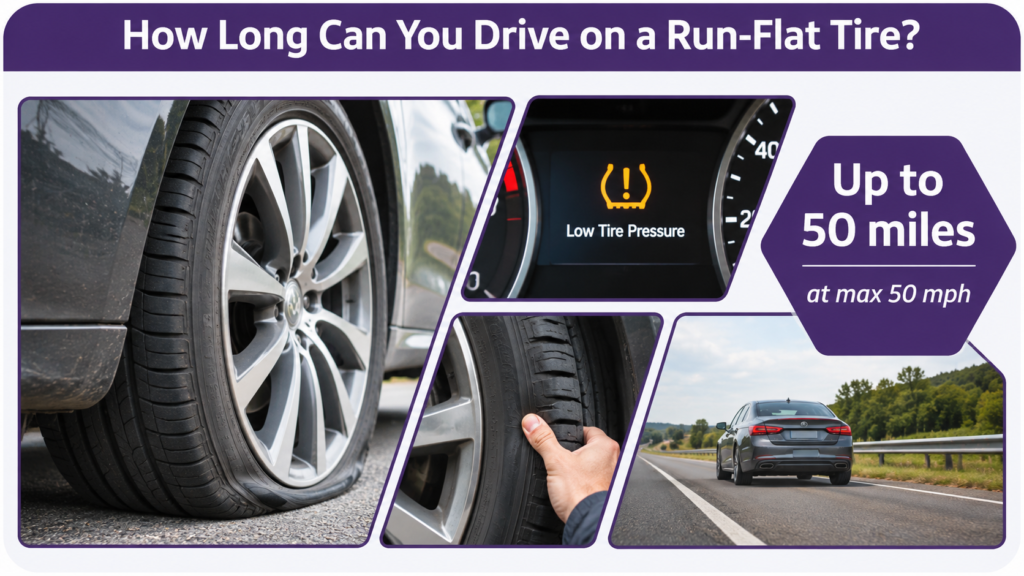
Most run-flat tires provide temporary mobility after a puncture, allowing drivers to reach a repair shop without immediately changing the wheel. However, they are not designed for extended driving with zero pressure. Their reinforced construction helps support the vehicle, but the tire can still become damaged if driven beyond its recommended limits.
1. Run-Flat Tire Driving Distance
A common guideline for many run-flat tires is up to 50 miles at speeds no higher than 50 mph. Some manufacturers may specify different limits, so you should never assume every run-flat tire offers the same performance.
Several conditions can reduce the available driving distance:
- Vehicle weight: Heavier vehicles place additional pressure on damaged tires.
- Road conditions: Rough roads, potholes, and uneven surfaces can increase tire damage.
- Driving speed: Higher speeds create more heat and stress.
- Puncture severity: Large cuts, sidewall damage, or extensive structural damage may make continued driving unsafe.
- Temperature: High temperatures can increase heat buildup inside an underinflated tire.
If your run-flat tire loses pressure, reduce your speed and head directly to a suitable repair facility. Avoid unnecessary trips or aggressive driving.
2. BMW Run-Flat Tires
Many BMW vehicles have been equipped with run-flat tires, allowing drivers to continue driving temporarily after a puncture. Depending on the tire and vehicle specifications, the typical guideline may be approximately 50 miles at a maximum speed of 50 mph.
BMW models can have different tire specifications, so check the vehicle’s owner’s manual and tire pressure monitoring system instructions.
If the tire has severe damage, unusual vibrations, or handling problems, stop driving rather than relying on its run-flat capability.
3. Mercedes Run-Flat Tires
Some Mercedes-Benz vehicles also use run-flat tire technology. These tires are designed to provide limited mobility following pressure loss, reducing the immediate need for roadside tire replacement.
The exact driving distance and speed restrictions depend on the installed tire and vehicle. Check the manufacturer’s recommendations before continuing.
Remember that run-flat technology is an emergency mobility feature, not a permanent solution. Have the tire inspected and replaced or repaired as soon as possible.
What Happens If You Drive on a Flat Tire?
Driving on a flat tire can cause more than just tire damage. Without adequate air pressure, the tire cannot maintain its intended shape or properly distribute the vehicle’s weight. This can affect handling, braking, and overall driving safety.
The most common problems include:
- Sidewall damage: The tire’s sidewalls become compressed and can crack, tear, or separate internally.
- Wheel rim damage: The metal wheel may contact the road, resulting in scratches, bending, or cracks.
- Loss of vehicle control: Steering becomes less predictable, particularly when turning or braking.
- Excessive heat: Friction between the damaged tire and road generates heat that can destroy its internal structure.
- Suspension problems: Severe impacts or prolonged driving may place additional stress on suspension components.
- Higher repair costs: A tire that might have been repairable can become completely unusable after being driven flat.
In some situations, continuing to drive can also cause damage to nearby vehicle components. This is why stopping early is usually much less expensive than attempting to reach a repair shop on a flat tire.
What Should You Do When Your Tire Goes Flat?
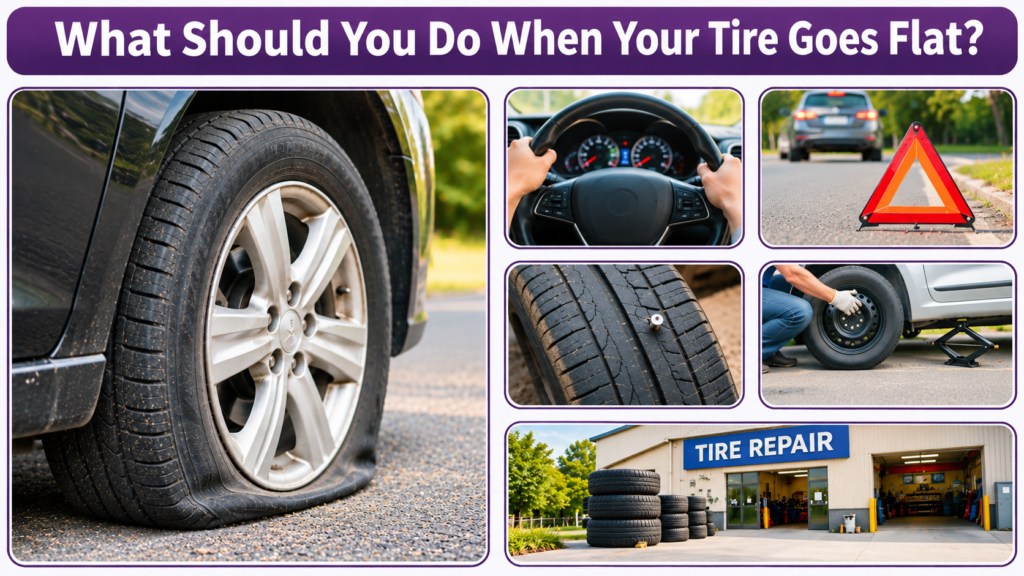
Knowing how to respond to a flat tire can help you avoid unnecessary damage and reduce the risk of an accident. Your first priority should always be finding a safe place to stop rather than trying to reach your destination.
Follow these steps when you notice a sudden loss of tire pressure.
1. Reduce Your Speed Gradually
If you feel the vehicle pulling to one side, hear unusual flapping noises, or notice vibrations, avoid sudden braking or sharp steering movements.
Keep a firm grip on the steering wheel and gradually reduce your speed. If a tire blows out while driving, maintain control and allow the vehicle to slow down before moving toward a safe stopping area.
2. Find a Safe Stopping Location
Move away from moving traffic whenever possible. A parking area, wide shoulder, or other safe location is preferable to stopping beside a busy road.
Turn on your hazard lights to alert other drivers. Avoid changing a tire in a location where passing vehicles create a serious risk.
3. Inspect the Tire
Once safely parked, inspect the damaged tire without placing yourself in danger.
Look for visible punctures, nails, cuts, sidewall damage, or signs that the tire has separated from the wheel. Do not touch sharp objects embedded in the tire or attempt to drive it again simply because it looks normal from the outside.
4. Install a Spare or Contact Roadside Assistance
If your vehicle has a spare tire and you can change it safely, follow the vehicle manufacturer’s instructions. Make sure the vehicle is parked on stable, level ground and the parking brake is engaged.
If you do not have a spare, or the tire and wheel are severely damaged, contact roadside assistance or arrange towing.
5. Visit a Tire Repair Shop
A professional technician can determine whether the tire is repairable or needs replacement.
Small punctures in the central tread area may sometimes be repaired, depending on their size and the tire’s condition. Sidewall damage and tires that have suffered severe structural damage generally require replacement.
Can You Drive on a Partially Flat Tire?
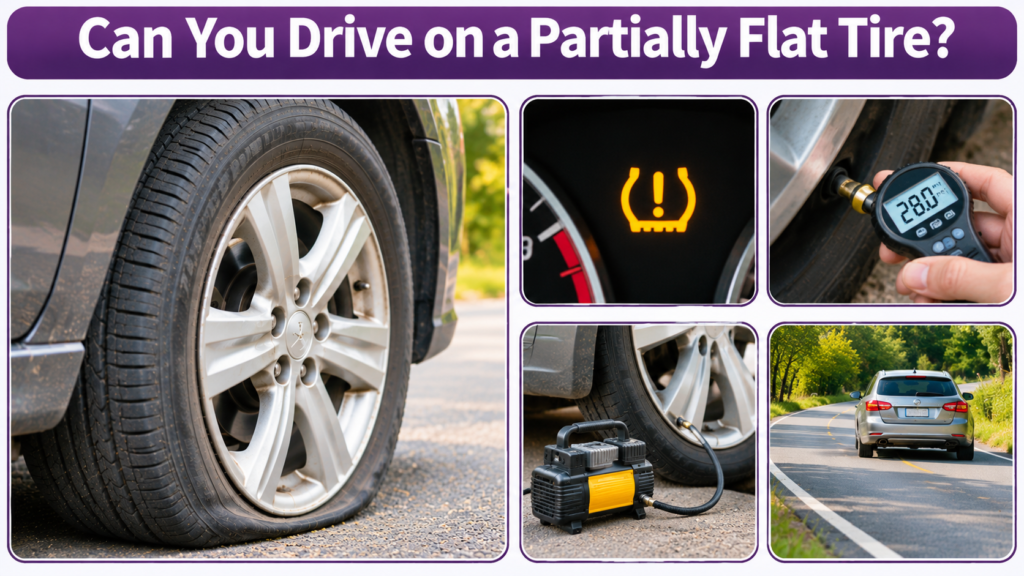
Driving on a partially flat tire is not necessarily safe, even if the vehicle still feels normal. A tire with low pressure has a larger contact area with the road and may generate excessive heat during operation.
If the tire pressure warning light comes on, find a safe place to stop and check the pressure using a reliable gauge. Compare the reading with the recommended cold tire pressure listed on the driver’s door placard.
If the tire is only slightly underinflated and has no visible damage, you may be able to inflate it to the recommended pressure and proceed cautiously to a repair facility. However, if the tire is losing air rapidly, visibly damaged, or cannot maintain pressure, do not continue driving.
Never rely on appearance alone. A tire can look reasonably normal while being significantly underinflated.
Can You Drive After Using Fix-a-Flat?
Fix-a-Flat and similar tire sealant products are designed to temporarily seal certain small tread punctures and help restore enough pressure for limited driving.
However, the amount of time and distance you can drive depends on the specific product. Always follow the instructions printed on the container, including its speed and distance restrictions.
These products are not suitable for every type of tire damage. Large punctures, sidewall cuts, damaged valve stems, and severely damaged tires may require professional assistance.
After using a sealant, visit a tire shop as soon as possible. Tell the technician which product you used because the sealant may affect the inspection and cleaning process.
FAQs
1. How long can you drive on a completely flat tire?
You should not drive on a completely flat conventional tire. Even a short distance can damage its sidewalls and wheel rim. Stop in a safe location and install a spare tire or contact roadside assistance.
2. Can you drive 1 mile on a flat tire?
Driving one mile on a completely flat conventional tire is not recommended. The tire may suffer irreversible internal damage, and the wheel rim could also be damaged. It is safer to stop and arrange assistance.
3. How long can you drive on a run-flat tire?
Many run-flat tires allow approximately 50 miles of driving at a maximum speed of 50 mph after losing pressure. However, the exact limits depend on the manufacturer, tire model, and vehicle specifications.
4. Can you drive on a partially flat tire?
Driving on a partially flat tire can be dangerous because reduced pressure increases heat buildup and affects handling. Check the pressure and inflate it if appropriate. If it continues losing air, arrange a repair or replacement instead of driving.
5. Will driving on a flat tire ruin the rim?
Yes. Driving on a completely flat tire can cause the wheel rim to contact the road, resulting in scratches, bending, or cracks. The severity depends on the distance, speed, vehicle weight, and road conditions.