
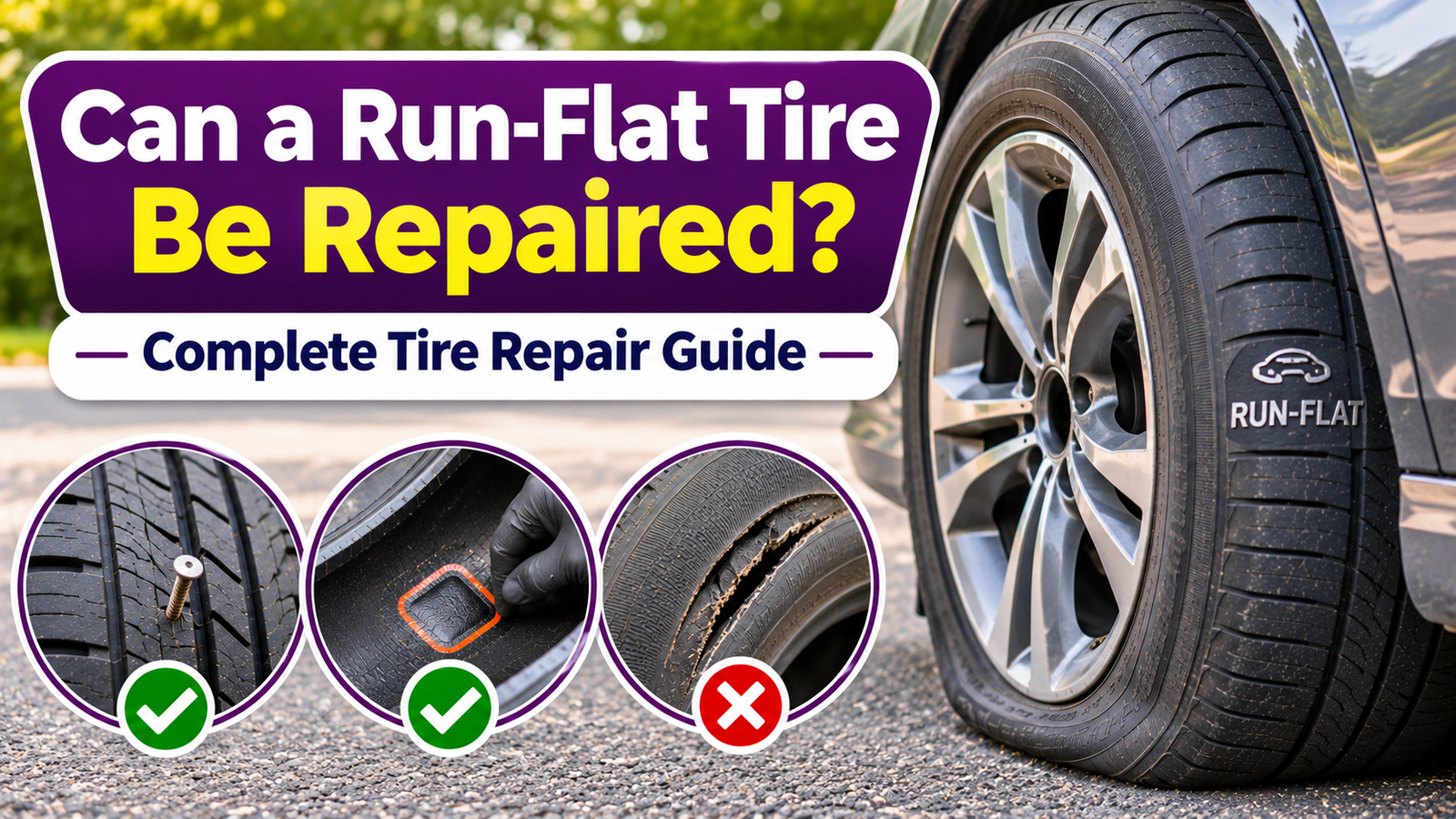
A damaged tire does not always need to be replaced, but whether it can be repaired depends on the location, size, and severity of the damage. Small punctures caused by nails or screws may be repairable, while sidewall damage, large cuts, and tire bulges usually require replacement. Run-flat tires also have special repair restrictions because their reinforced sidewalls can suffer hidden damage after losing pressure. Understanding which tire problems can be fixed can help you make a safer and more affordable decision.
Can a Run-Flat Tire Be Repaired?
Yes, some run-flat tires can be repaired, but it depends on the manufacturer’s recommendations and the condition of the tire. Unlike conventional tires, run-flat models have reinforced sidewalls designed to support a vehicle temporarily after losing air pressure. This construction makes professional inspection especially important before attempting a repair.
When Can a Run-Flat Tire Be Repaired?
A run-flat tire may be repairable when the puncture is small, located in the central tread area, and has not caused internal structural damage. Some manufacturers allow limited repairs under specific conditions, while others recommend replacing run-flat tires after any puncture.
A qualified tire technician should remove the tire from the wheel and inspect its interior before deciding whether a repair is safe.
When Should a Run-Flat Tire Be Replaced?
You should replace a run-flat tire if it has significant sidewall damage, a large puncture, internal structural damage, or evidence of overheating from driving with insufficient pressure.
If you have driven beyond the manufacturer’s recommended distance or speed after a puncture, the tire may no longer be safe to repair. Always follow the specific guidelines for your tire brand and model.
Can a Punctured Tire Be Repaired?
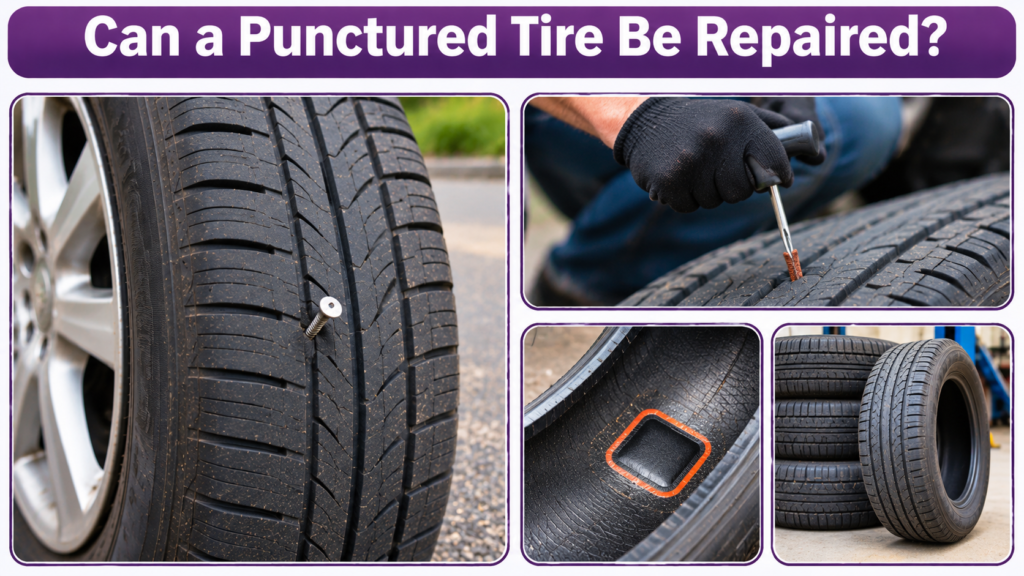
A punctured tire can often be repaired if the damage is small and located within the approved tread repair area. However, not every puncture is suitable for repair. Tire professionals consider the puncture’s size, location, internal condition, and previous repair history before recommending a solution.
Can a Nail in a Tire Be Repaired?
Yes, a tire with a nail in it can often be repaired if the nail has created a small hole in the central tread area. For many passenger tires, the commonly accepted maximum puncture diameter is 1/4 inch (6 mm).
However, the nail’s location is just as important as its size.
- Small tread puncture: Usually repairable if the tire has no additional damage.
- Large nail hole: May exceed the approved repair size and require replacement.
- Nail near the shoulder: Usually not repairable because this area experiences significant flexing.
- Nail in the sidewall: Not considered safely repairable.
- Multiple punctures: May be repairable only if their locations and spacing meet industry and manufacturer requirements.
A technician should remove the nail, inspect the tire internally, and determine whether a proper repair is possible.
Can a Tire With a Screw in It Be Repaired?
A tire with a screw in it may be repairable under the same conditions as a nail puncture. If the screw creates a small hole in the central tread area without damaging the internal structure, a professional may be able to repair it.
However, screws can create irregular holes, especially when they enter at an angle. If the damage is too large or extends into the shoulder or sidewall, replacement is generally necessary.
How Close to the Sidewall Can a Tire Be Repaired?
Tire punctures close to the shoulder are generally not repairable. The approved repair area is typically limited to the central tread, excluding the shoulder and belt-edge regions.
The exact boundary depends on the tire’s construction and applicable repair guidelines. A puncture near the edge may compromise the tire’s structural strength even if the hole looks small.
When Can a Flat Tire Not Be Repaired?
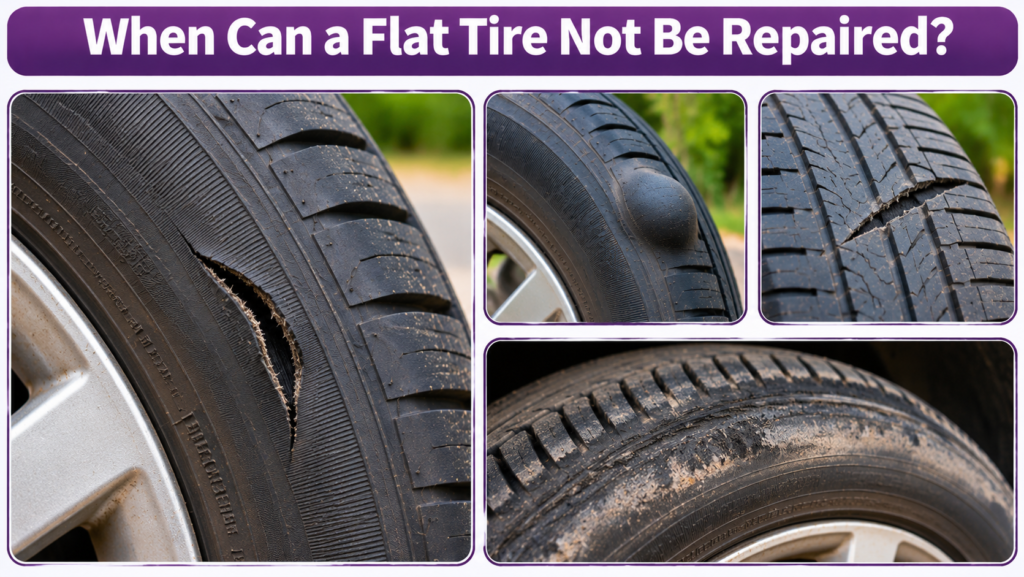
Not every flat tire can be restored to safe operating condition. Some damage affects the tire’s internal structure, making a patch or plug unreliable. Knowing the warning signs can help you avoid paying for an unsafe repair.
1. Sidewall Damage
A tire sidewall cannot generally be repaired safely. Unlike the central tread, the sidewall flexes continuously as the tire rotates and supports the vehicle.
Nails, cuts, tears, and punctures in this area can weaken the tire’s structure. Even a small sidewall hole may create a serious safety risk, so replacement is normally recommended.
2. Tire Bulges and Bubbles
A bulge or bubble on the tire usually indicates internal structural damage, such as broken cords or a separated layer. This can happen after hitting a pothole, curb, or other road obstacle.
A bulging tire cannot be safely repaired with a patch or plug. It should be replaced because the weakened area could suddenly fail while driving.
3. Large Cuts and Tears
Large punctures, deep cuts, slashes, and tears generally make a tire unsuitable for repair. These types of damage may extend beyond the tread’s outer rubber and affect the internal reinforcement.
A professional inspection is necessary, but replacement is usually the safest option when the tire has significant structural damage.
4. Severe Damage From Driving Flat
A completely flat tire is not automatically beyond repair. However, driving on it without sufficient air pressure can damage its internal structure.
If the sidewalls have been crushed, overheated, or weakened, the tire should be replaced even if the original puncture was small.
How Is a Tire Properly Repaired?
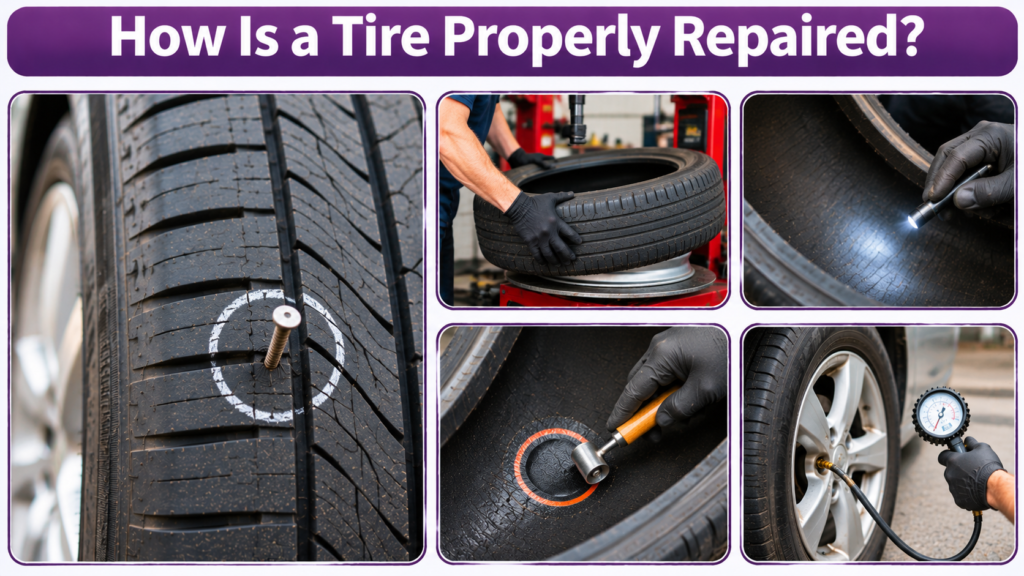
Professional tire repair involves more than inserting a rubber plug into a puncture. A proper repair requires removing the tire from the wheel, inspecting the internal structure, and using an approved repair method. This helps ensure that the damaged area is sealed and the tire can safely return to service.
1. Remove the Tire From the Wheel
The technician first removes the tire from the rim to inspect both its interior and exterior. This step helps identify hidden damage that cannot be seen while the tire is mounted.
2. Inspect the Damaged Area
The puncture’s location, size, and angle are examined. The technician also checks for internal rubber damage, separation, and signs of overheating caused by driving underinflated.
3. Prepare the Puncture
If the damage meets repair requirements, the technician prepares the affected area according to the repair product’s instructions. The goal is to create a clean surface for a reliable repair.
4. Install a Combination Plug-Patch
A proper repair for many passenger tires uses an approved combination plug-patch applied from inside the tire. The plug fills the puncture channel, while the patch seals the inner liner.
An external plug alone or an internal patch alone is not generally considered a complete permanent repair under standard industry guidelines.
5. Reinstall and Test the Tire
Finally, the tire is mounted, inflated to the recommended pressure, and checked for air leaks. The technician may also balance the wheel before returning the vehicle to service.
Can a Tire Be Repaired After Using Fix-a-Flat?
Yes, a tire may sometimes be repaired after using Fix-a-Flat or another tire sealant product. However, the technician must inspect the tire and remove the sealant as necessary before deciding whether a permanent repair is possible.
Some sealants can interfere with the inspection and repair process. Others may be unsuitable for certain tire types or damage conditions.
Always tell the technician which sealant you used. If the puncture is too large, located in the sidewall, or has caused internal damage, the tire will likely need replacement.
Can a Tire Be Repaired After Hitting a Pothole or Curb?
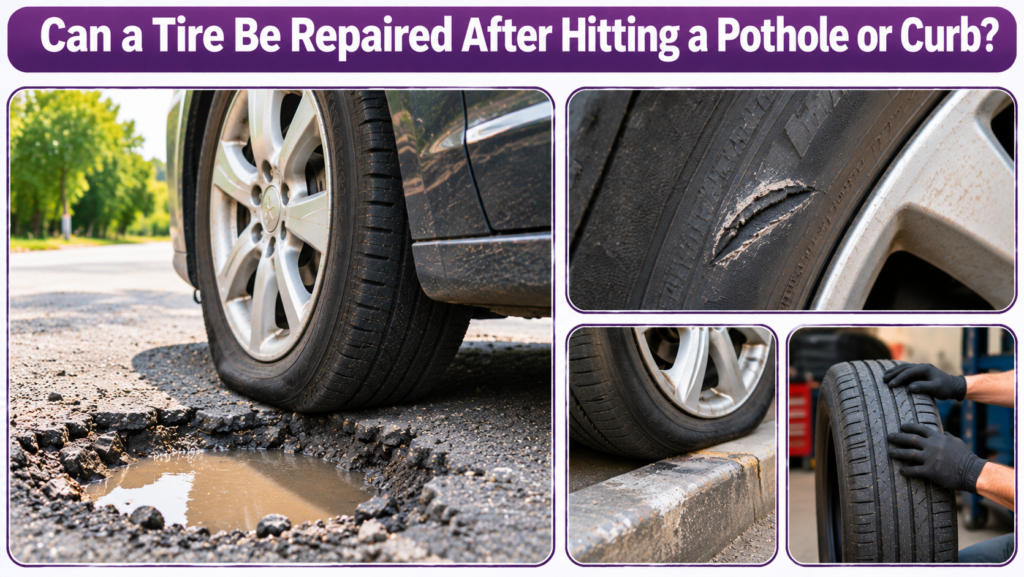
A tire damaged after hitting a pothole or curb may or may not be repairable. A small tread puncture caused by road debris could qualify for repair, but impact damage can also cause internal structural problems.
Inspect the tire for bulges, cuts, unusual vibrations, and air pressure loss. A bent wheel rim can also cause a tire to leak air around the bead.
If the wheel is cracked or severely bent, it needs professional assessment and may require replacement. Do not assume that fixing the tire alone will solve the problem.
FAQs
1. Can a completely flat tire be repaired?
Yes, a completely flat tire may be repairable if the original puncture is small and located in the approved tread area. However, driving on it while flat can cause internal damage that makes replacement necessary.
2. Can a tire with a nail in the sidewall be repaired?
No. A nail puncture in the sidewall is generally not repairable because this area flexes continuously during driving. A damaged sidewall can weaken the tire and increase the risk of sudden failure.
3. How many times can a tire be repaired?
There is no universal number of repairs for every tire. Some tires can receive multiple repairs if each puncture meets industry requirements and the repairs do not overlap or compromise structural integrity. Manufacturer guidelines should always be followed.
4. Can a tire with a slow leak be repaired?
Yes. A slow leak may result from a small tread puncture, damaged valve stem, loose valve core, or leaking bead. A technician can identify the source and determine whether a repair or replacement is necessary.
5. When should you replace a tire instead of repairing it?
Replace a tire when it has sidewall damage, a bulge, large cuts, severe internal damage, or a puncture outside the approved repair area. Tires that have suffered significant damage from driving while flat should also be replaced.