
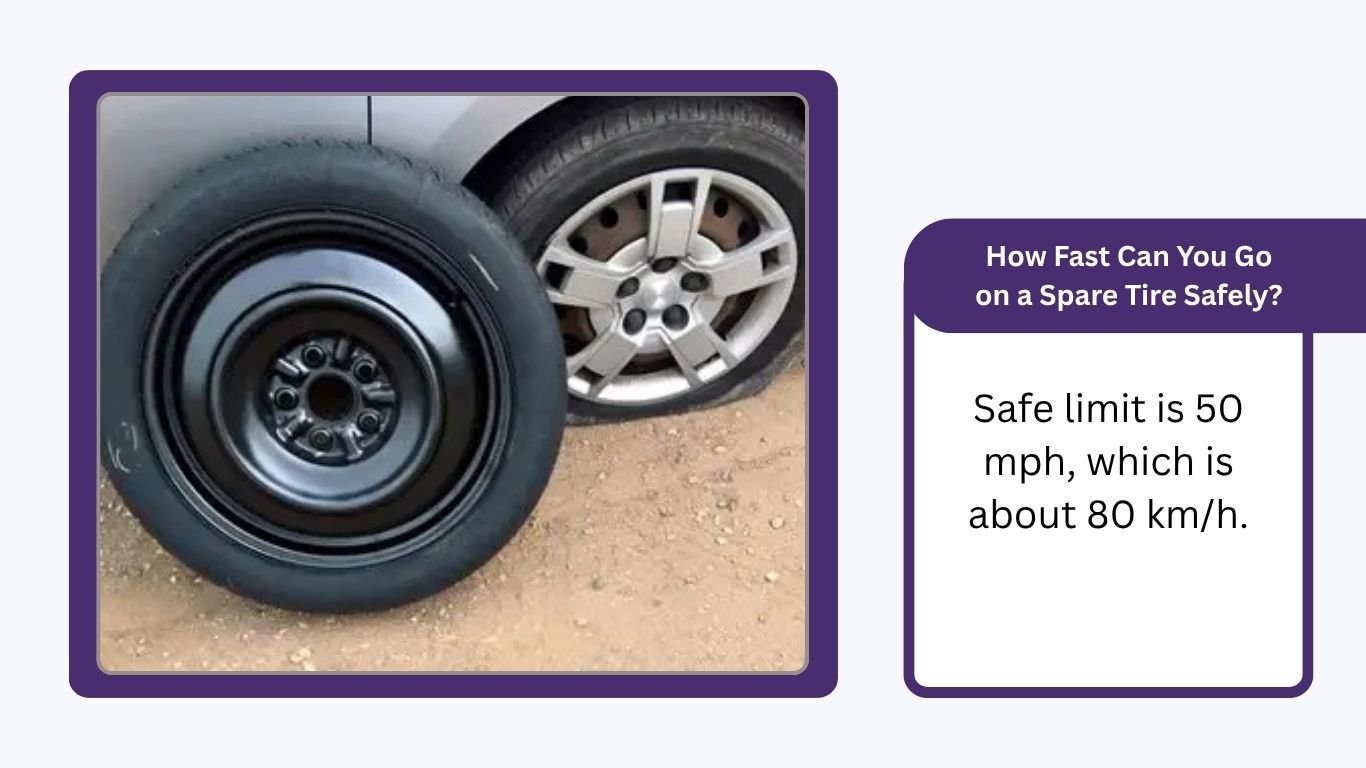
Most temporary spare tires are not made for normal-speed driving. If you are using a small spare tire, donut spare, or temporary spare tire, the common safe limit is 50 mph, which is about 80 km/h. You should also avoid long-distance driving and replace the spare with a regular tire as soon as possible. Full-size matching spares may allow normal driving, but only if they are properly inflated and in good condition.
How Fast Can You Go on a Spare Tire?
The safe speed depends on the type of spare tire. For most temporary or donut spare tires, you should not drive faster than 50 mph. In kilometers, that is about 80 km/h.
This limit exists because compact spares are smaller, narrower, and less durable than regular tires. They are designed only to help you reach a repair shop, not for daily driving or highway trips.
| Spare Tire Type | Safe Speed Limit | Best Use |
| Donut spare tire | Up to 50 mph / 80 km/h | Emergency short-distance driving |
| Temporary spare tire | Up to 50 mph / 80 km/h | Getting to a tire shop |
| Full-size matching spare | Usually normal speeds | Temporary regular use |
| Full-size non-matching spare | Drive cautiously | Short-term replacement only |
Why 50 mph Is the Common Limit
A donut spare has less tread, less road contact, and lower load capacity than a normal tire. At high speed, it can heat up faster and reduce your control while braking or turning. Michelin advises drivers not to exceed 50 mph on compact spares and to avoid aggressive acceleration, hard braking, and sharp cornering.
How Fast Can You Go on a Spare Tire in KM?
The common 50 mph spare tire limit equals about 80 km/h. So, if your dashboard or road signs use kilometers, stay at or below 80 km/h when driving on a donut or temporary spare.
How Fast Can You Go on a Donut Spare Tire?
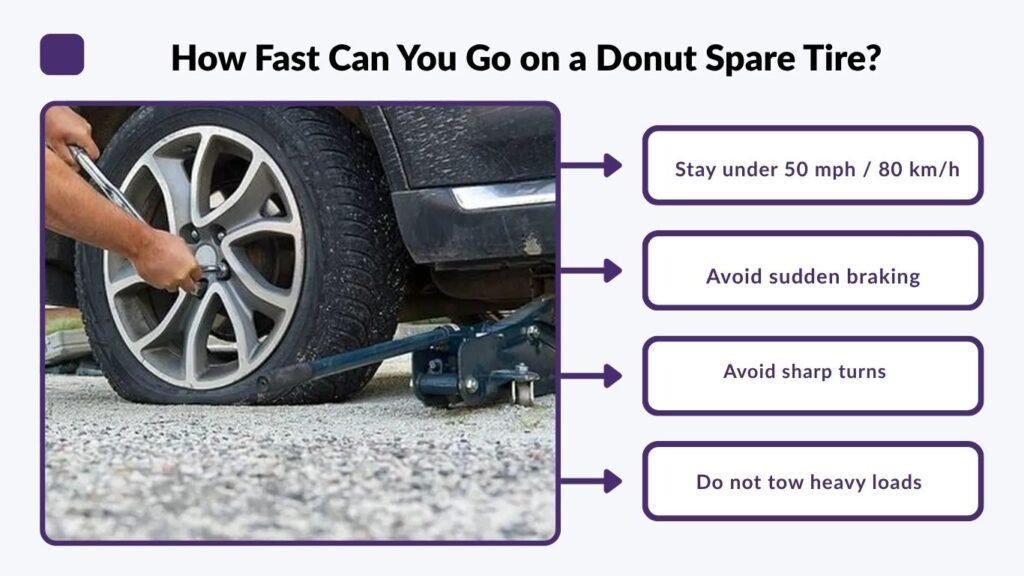
You can usually go up to 50 mph on a donut spare tire, but slower is safer when traffic, weather, or road conditions are poor. A donut spare is smaller than your normal tire and does not provide the same grip or stability.
A donut spare is also called a compact spare, temporary spare, or small spare tire. These all mean the tire is for emergency use only.
Donut Spare Tire Safety Rules
Follow these rules when driving on a donut spare:
- Stay under 50 mph / 80 km/h
- Avoid sudden braking
- Avoid sharp turns
- Do not tow heavy loads
- Do not drive long distances
- Replace it with a regular tire quickly
- Check the spare tire pressure before driving
Many drivers ask, “How fast can you really go on a spare tire?” The real answer is that you may be able to exceed 50 mph physically, but it is not safe or recommended for a temporary spare.
How Far Can You Drive on a Spare Tire?
Many temporary spare tires follow the common “50/50 rule”: drive no faster than 50 mph and no farther than about 50 miles. This is a general rule, not a replacement for your vehicle owner’s manual. Kelley Blue Book also describes this 50 mph and 50-mile rule for temporary emergency spares.
| Driving Situation | Recommendation |
| City driving | Keep speed low and drive carefully |
| Highway driving | Avoid if possible, or stay under 50 mph |
| Rainy weather | Drive slower than normal |
| Long road trip | Do not continue on a donut spare |
| Heavy load or towing | Avoid using a temporary spare |
Can You Drive on the Highway With a Spare Tire?
You can drive on the highway with a spare tire only if necessary, but it is better to avoid high-speed roads when using a donut spare. If you must use the highway, stay in the slow lane, keep extra distance from other vehicles, and do not exceed the spare tire speed limit.
Why You Should Not Drive Fast on a Spare Tire
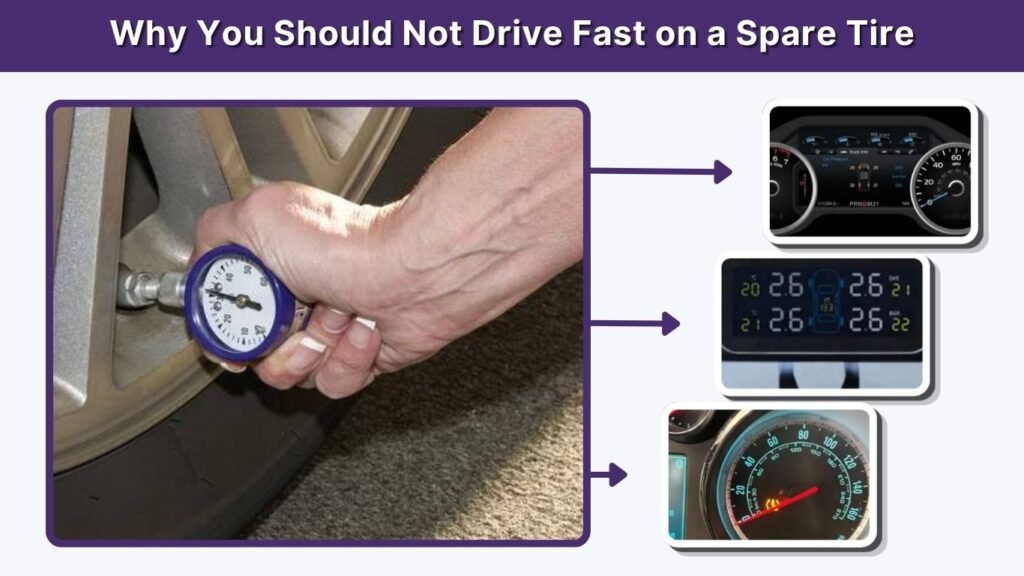
A temporary spare tire changes how your vehicle handles. It may affect braking, cornering, traction, and stability. This is especially important for SUVs, trucks, and vehicles carrying passengers or cargo.
Less Traction
A small spare tire has less contact with the road. This means reduced grip, especially in rain, snow, gravel, or emergency braking.
More Heat
Driving too fast can build heat inside the spare tire. Excess heat can damage the tire and increase the chance of failure.
Uneven Handling
A donut spare is usually smaller than the regular tire. This can make the vehicle pull slightly to one side or feel unstable during turns.
Possible Drivetrain Stress
On some vehicles, especially all-wheel-drive models, using a mismatched spare for too long may stress the drivetrain. Check your owner’s manual for exact rules.
Temporary Spare vs Full-Size Spare
Not all spare tires have the same speed limit. A full-size spare that matches your regular tires may be driven more normally. However, it should still be inspected for age, tread, pressure, and damage before use.
A full-size spare that does not match the other tires should be treated more carefully. Even if it fits, differences in tread depth or tire size can affect handling.
Check the Label First
Always check the writing on the spare tire sidewall. Many temporary spare tires are clearly labeled for temporary use and may show a maximum speed, such as 50 mph. NHTSA documentation includes examples of temporary spare tire labeling with “maximum speed 50 mph.”
What to Do After Installing a Spare Tire
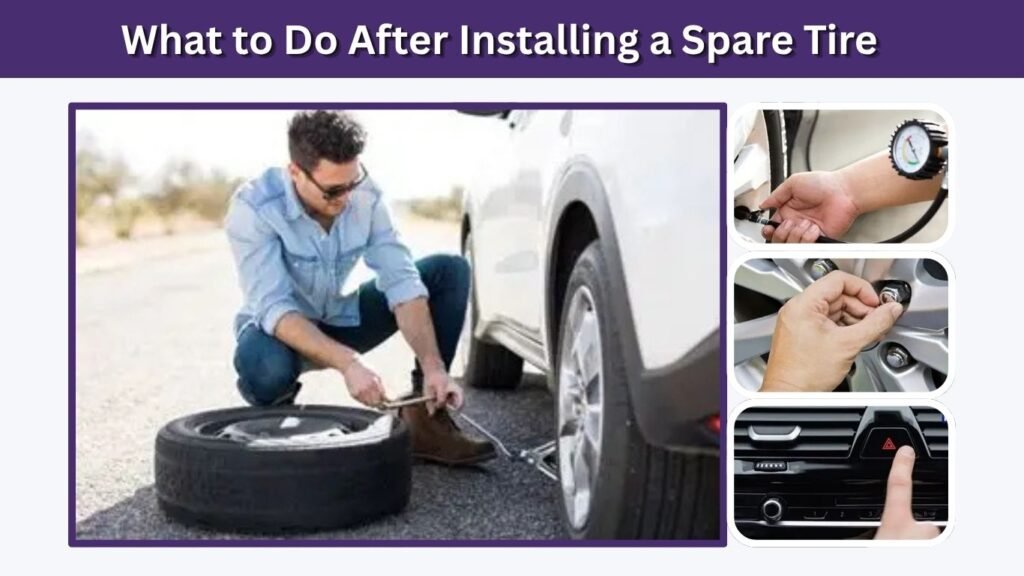
After installing a spare tire, your goal should be to reach a safe repair location. Do not treat the spare as a long-term replacement.
Safe Driving Steps
- Check that the lug nuts are tight.
- Inflate the spare to the correct pressure.
- Turn on hazard lights if driving very slowly.
- Stay below the recommended speed limit.
- Avoid sudden steering or braking.
- Go directly to a tire shop or safe repair place.
FAQs
How fast can you safely go on a spare tire?
For a donut or temporary spare tire, the common safe speed is 50 mph, or about 80 km/h. Some full-size spares may allow normal speeds, but you should always check the tire label and vehicle owner’s manual before driving faster.
How fast can you go on a donut spare tire?
You should usually drive no faster than 50 mph on a donut spare tire. Donut spares are smaller and weaker than regular tires, so high-speed driving can reduce control, increase heat, and raise the risk of tire damage.
Can you drive 70 mph on a spare tire?
You should not drive 70 mph on a temporary or donut spare tire. That is above the common 50 mph limit. Driving that fast on a compact spare can affect braking, handling, traction, and tire durability.
How fast can you go on a spare tire in km?
The common spare tire speed limit of 50 mph is about 80 km/h. If your vehicle uses kilometers, stay at or below 80 km/h when using a donut or temporary spare tire.
Can I use a spare tire for several days?
A temporary spare should not be used for several days unless there is no other safe option. It is made for emergency short-distance driving. Replace it with a repaired or regular tire as soon as possible to avoid safety and handling problems.