
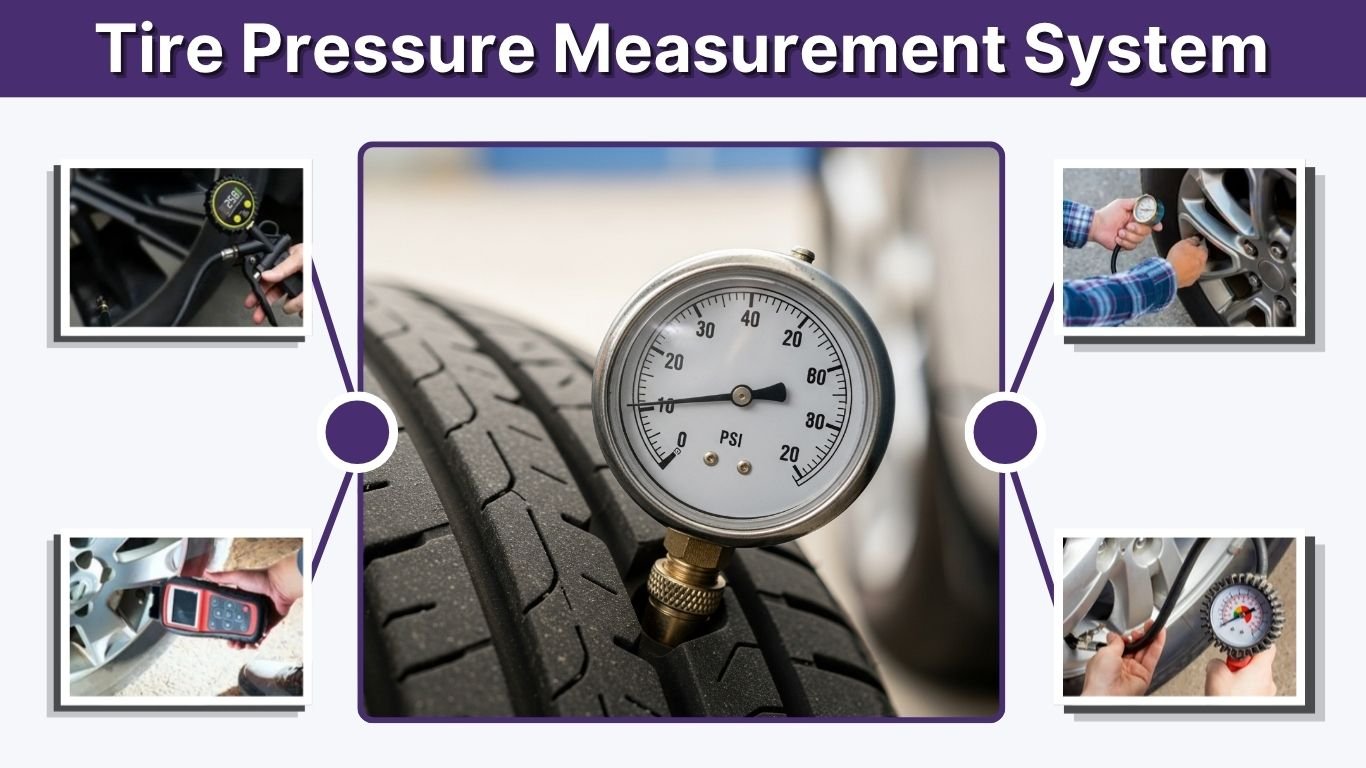
A tire pressure measurement system helps drivers monitor tire air pressure and detect underinflated tires before they become a safety risk. Also called a tire pressure monitoring system, or TPMS, it is now common in modern vehicles, SUVs, and trucks. These systems improve safety, fuel economy, tire life, and driving comfort by warning the driver when tire pressure drops below the recommended level.
What Is a Tire Pressure Measurement System?
A tire pressure measurement system is a vehicle safety feature that checks whether your tires have enough air pressure. When pressure becomes too low, the system sends a warning to the dashboard.
Some systems show only a warning light, while others display the exact pressure of each tire. Advanced tire pressure measurement systems may also show tire temperature, tire location, and real-time pressure changes while driving.
Main Purpose of TPMS
The main purpose of TPMS is to alert drivers when one or more tires are underinflated. Low tire pressure can cause poor handling, longer braking distance, uneven tire wear, and increased fuel use.
A working tire pressure measuring system helps prevent:
- Tire blowouts
- Poor fuel economy
- Uneven tread wear
- Reduced road grip
- Steering problems
- Overheating tires
Why Tire Pressure Matters
Tires are the only part of the vehicle that touches the road. When pressure is too low, the tire sidewall bends more than normal. This creates heat and stress, which can damage the tire over time.
Proper tire pressure keeps the tire shape stable, improves traction, and helps the vehicle carry weight safely.
How Does a Tire Pressure Measuring System Work?
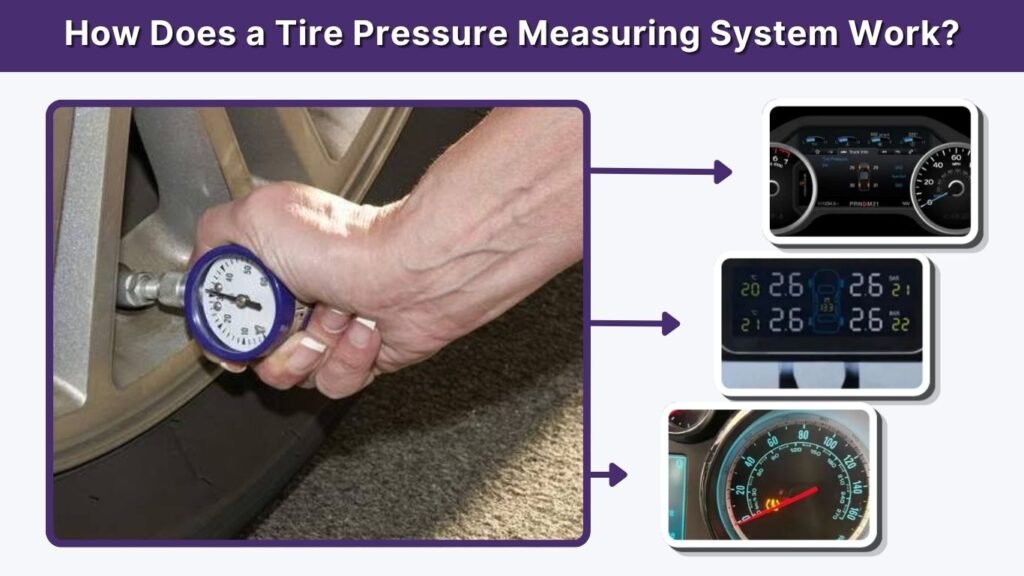
A tire pressure measuring system works by detecting tire pressure changes and sending that information to the vehicle’s computer. If the pressure falls below a safe level, the system turns on a dashboard warning light.
There are two main types of tire pressure monitoring systems: direct TPMS and indirect TPMS.
Direct Tire Pressure Measurement System
A direct tire pressure measurement system uses sensors inside each tire or wheel. These sensors measure the actual air pressure and send the data wirelessly to the vehicle’s control unit.
Direct TPMS is usually more accurate because it measures real air pressure inside the tire.
Common features include:
- Individual tire pressure readings
- Real-time pressure updates
- Low-pressure warning
- Sometimes tire temperature monitoring
- Dashboard display for each tire
Indirect Measurement Tire Pressure Monitoring System
An indirect measurement tire pressure monitoring system does not measure air pressure directly. Instead, it uses wheel speed sensors from the anti-lock braking system, or ABS.
When a tire loses air, its diameter becomes slightly smaller. This makes the tire rotate faster than the others. The system notices this difference and warns the driver.
Indirect TPMS is simpler and usually less expensive, but it may not show exact tire pressure numbers.
Direct vs Indirect TPMS
Both systems are useful, but they work differently. Direct TPMS gives actual pressure readings, while indirect TPMS estimates pressure problems based on wheel rotation.
| Feature | Direct TPMS | Indirect TPMS |
| Measures real tire pressure | Yes | No |
| Uses sensors inside tires | Yes | No |
| Uses wheel speed data | No | Yes |
| Shows exact PSI | Often yes | Usually no |
| Accuracy | Higher | Moderate |
| Maintenance cost | Higher | Lower |
Direct systems are better for drivers who want exact tire pressure numbers. Indirect systems are helpful for basic warning alerts but may need recalibration after tire rotation, replacement, or pressure adjustment.
What Do Tire Pressure Monitoring Systems Measure?
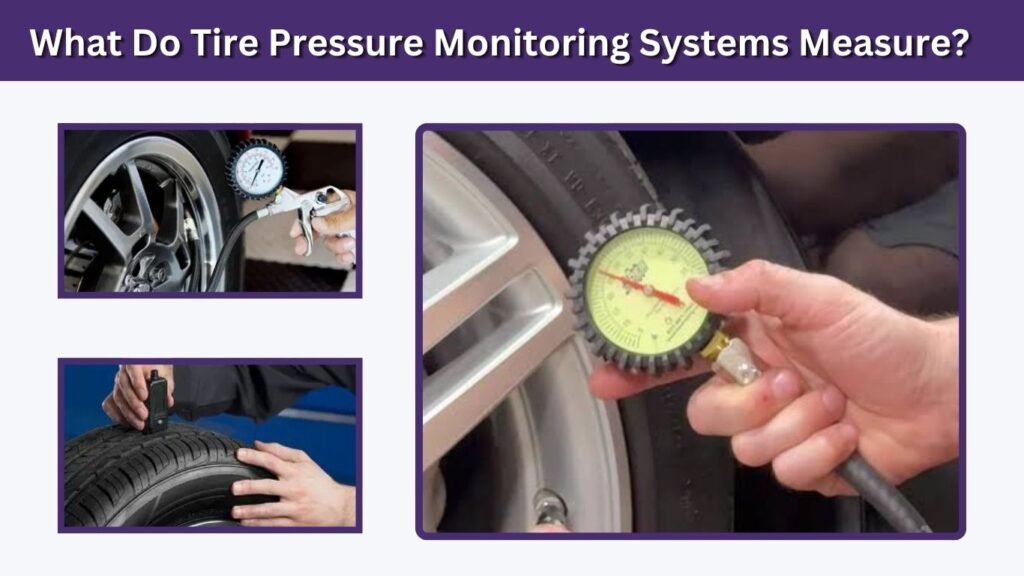
Tire pressure monitoring systems mainly measure whether tire pressure is within a safe range. In direct systems, sensors measure the actual PSI or kPa inside each tire.
In indirect systems, the vehicle does not measure pressure directly. It measures wheel rotation speed and compares tire behavior.
Common Measurements
A modern tire pressure measurement system may track:
- Tire air pressure
- Tire temperature
- Tire position
- Pressure loss rate
- Wheel rotation difference
- Sensor battery signal
Not every vehicle shows all of this information. Some only show a yellow tire pressure warning light, while others show live pressure for all four tires.
Tire Pressure Measurement System Display
Many modern vehicles include a tire pressure display on the dashboard or infotainment screen. This display may show the pressure of each tire separately, such as front left, front right, rear left, and rear right.
For example, people searching for a “tire pressure measurement system display for Highlander” are usually looking for where the Toyota Highlander shows tire pressure readings or how to reset the TPMS warning.
Where the Display Appears
Depending on the vehicle model, the display may appear in:
- Driver information screen
- Digital dashboard
- Infotainment system
- Vehicle settings menu
- Tire pressure menu
- Warning light panel
If the tire pressure light stays on after inflating the tires, the system may need time to update, or the TPMS may need resetting according to the owner’s manual.
Benefits of Tire Pressure Measurement Systems
A TPMS is more than just a warning light. It helps protect the vehicle, the tires, and the people inside.
Safety Benefits
Low tire pressure can make a vehicle harder to control, especially at highway speed. TPMS helps drivers respond before the tire becomes dangerously underinflated.
Fuel Economy Benefits
Underinflated tires create more rolling resistance. This means the engine must work harder, which can increase fuel consumption. Correct tire pressure helps the vehicle move more efficiently.
Tire Life Benefits
Tires with low pressure wear unevenly, especially on the outer edges. A tire pressure measurement system helps drivers maintain proper inflation and extend tire life.
Common TPMS Warning Light Causes
The TPMS warning light usually means one or more tires have low pressure. However, there are other possible causes too.
| Cause | What It Means |
| Low tire pressure | One or more tires need air |
| Cold weather | Pressure drops when temperature falls |
| Tire puncture | Slow leak from nail, screw, or damage |
| Faulty sensor | Sensor may need replacement |
| Dead sensor battery | Common in older direct TPMS sensors |
| Tire rotation issue | System may need relearning or reset |
Cold weather is one of the most common reasons the TPMS light turns on. Tire pressure naturally drops when the temperature decreases.
How to Use a Tire Pressure Measuring System Properly
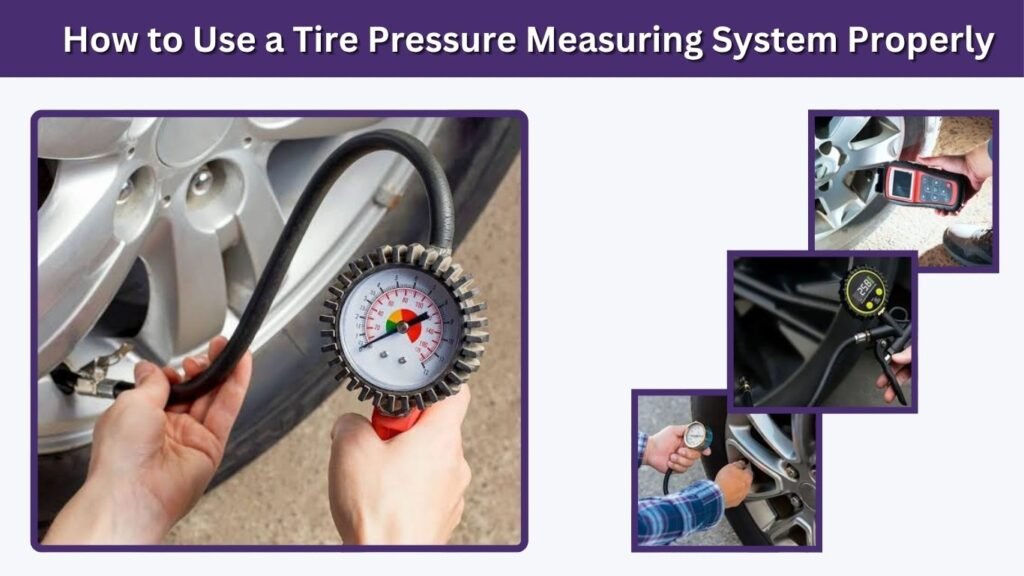
A TPMS is helpful, but it should not replace regular tire checks. Drivers should still check tire pressure manually with a tire gauge.
Basic Steps
- Check the recommended tire pressure on the driver-side door sticker.
- Measure tire pressure when tires are cold.
- Add air if pressure is below the recommended PSI.
- Do not use the maximum PSI on the tire sidewall as the normal setting.
- Reset or recalibrate TPMS if your vehicle requires it.
When to Check Tire Pressure
You should check tire pressure at least once a month and before long trips. Also check it when the weather changes suddenly, after hitting a pothole, or when the TPMS warning light appears.
FAQs
What is a tire pressure measurement system?
A tire pressure measurement system is a vehicle feature that monitors tire air pressure and warns the driver when pressure becomes too low. It helps improve safety, fuel economy, tire life, and handling by alerting the driver before serious tire problems develop.
What do tire pressure monitoring systems measure?
Direct TPMS measures actual tire air pressure using sensors inside the wheels. Some systems also measure tire temperature. Indirect TPMS does not measure pressure directly; it uses wheel speed data to detect possible pressure loss.
Is direct TPMS better than indirect TPMS?
Direct TPMS is usually more accurate because it measures real tire pressure. Indirect TPMS is simpler and often cheaper, but it usually does not show exact PSI readings. Both systems can warn drivers about possible tire pressure problems.
Why is my TPMS light on but my tires look fine?
A tire can look normal even when it is underinflated. The TPMS light may also turn on because of cold weather, a slow leak, a faulty sensor, or a system reset issue. Always check tire pressure with a reliable gauge.
Can I drive with the tire pressure warning light on?
You can drive a short distance carefully, but you should check tire pressure as soon as possible. Driving too long with low tire pressure can damage the tire, reduce control, and increase the risk of a blowout.