
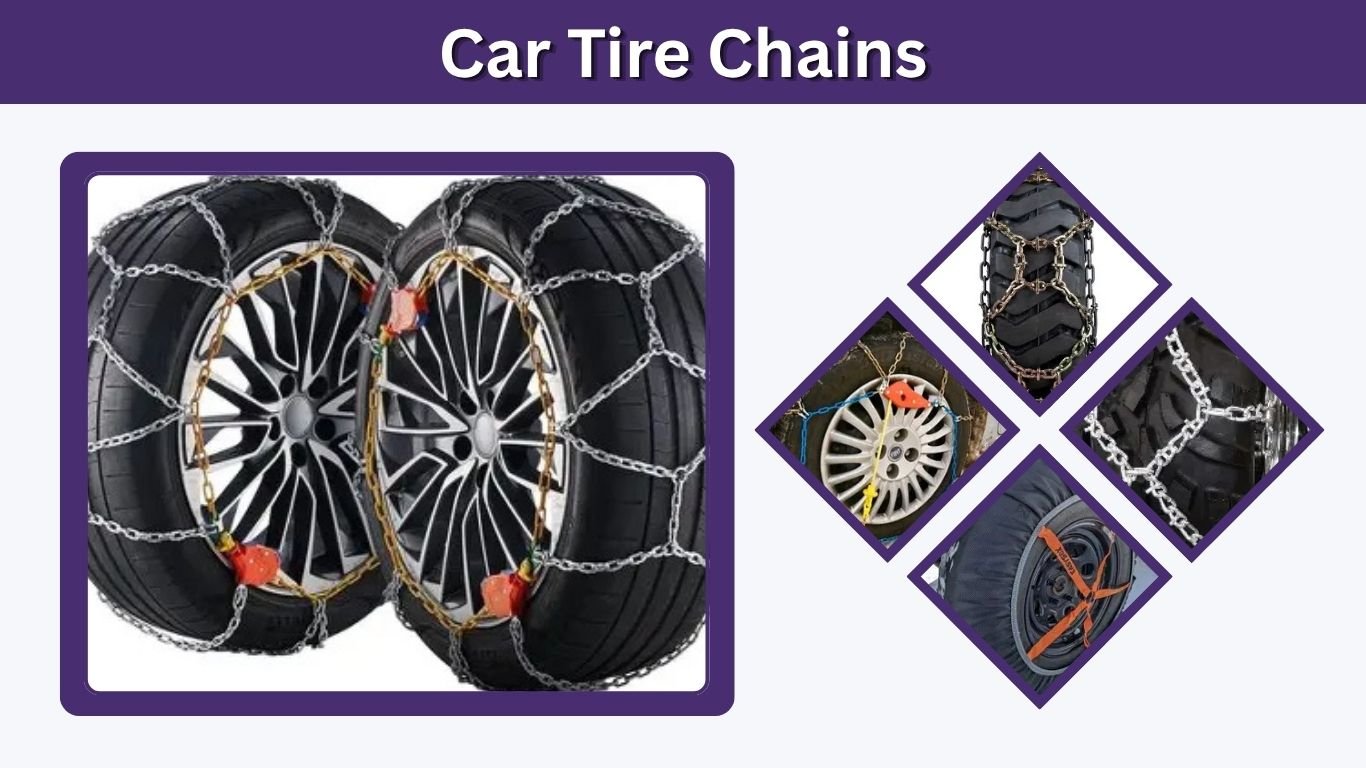
Car tire chains provide temporary traction when a vehicle must travel over packed snow or ice. They are especially valuable on steep mountain roads, during severe winter storms, and in areas where authorities require traction devices. However, chains must match the tire size, fit within the wheel well, and be installed on the correct wheels. This guide explains how to choose tire chains for cars, install them safely, and avoid damaging your tires or vehicle.
What Are Car Tire Chains?
Car tire chains are traction devices fitted around tires to help them grip snow- or ice-covered roads. Their cross chains or cables create biting edges that dig into slippery surfaces.
Chains are intended for temporary winter use, not ordinary driving on clear pavement. Local authorities may require drivers to carry or install chains when road conditions become dangerous. For example, California uses several levels of chain control, while Oregon may require chains or approved traction tires depending on conditions.
Tire chains are normally sold in pairs. The correct installation position depends on the vehicle’s drivetrain and the instructions in its owner’s manual.
Types of Tire Chains for Cars
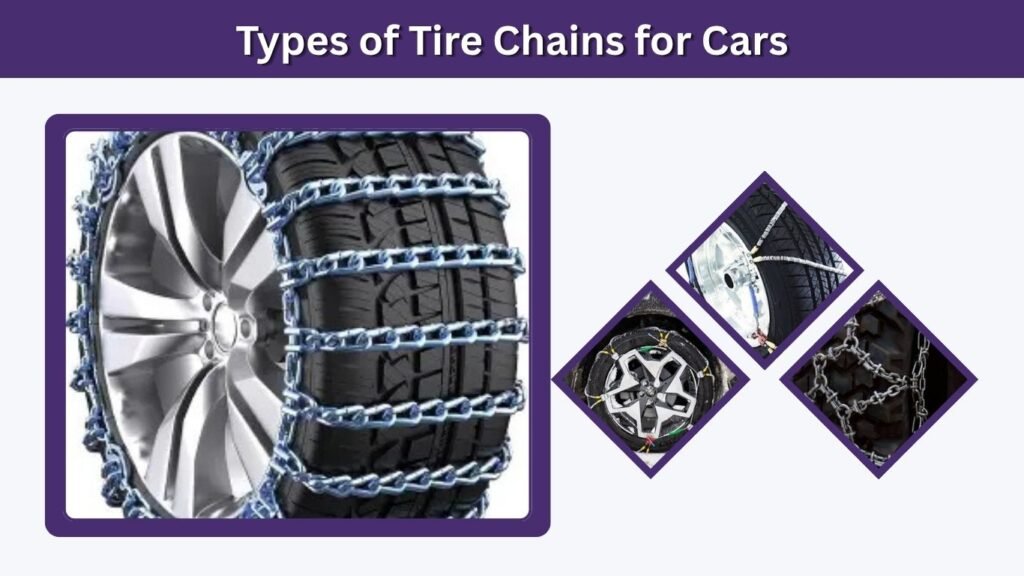
Several kinds of snow chains are available for passenger cars. The best option depends on tire size, wheel-well clearance, winter conditions, and installation difficulty.
| Traction device | Main advantage | Possible limitation |
| Traditional link chains | Strong traction and durability | Heavy and potentially difficult to install |
| Tire cables | Lightweight with lower clearance needs | Usually less aggressive than link chains |
| Diamond-pattern chains | Good forward and lateral grip | May cost more than basic ladder chains |
| Self-tightening chains | Easier installation and adjustment | Higher purchase price |
| Snow socks | Lightweight and easy to store | Wear quickly on exposed pavement |
| Plastic or composite devices | Light and corrosion-resistant | May not satisfy every chain law |
Link-Style Tire Chains
Traditional steel-link chains are suitable for deep snow, packed snow, and difficult mountain roads. They are often durable and aggressive, but they require sufficient space around the tire.
The chains must be correctly tensioned. A loose chain can strike the wheel well, suspension, brake components, or vehicle body.
Cable Tire Chains
Car tire cables use steel cables covered with traction rollers or coils. Their lower-profile construction may work better on passenger cars with restricted wheel-well clearance.
However, a cable product should not be purchased simply because it looks smaller. Check whether the vehicle requires an SAE Class S or another low-clearance device.
Self-Tightening Chains
Self-tightening chains use built-in tensioning systems that adjust as the wheel turns. They can make roadside installation easier because drivers do not have to reposition the vehicle several times.
Some products are designed to be installed without moving or lifting the car. Their instructions may also prohibit adding separate tensioners, so always follow the directions supplied with the device.
How to Choose the Best Car Tire Chains
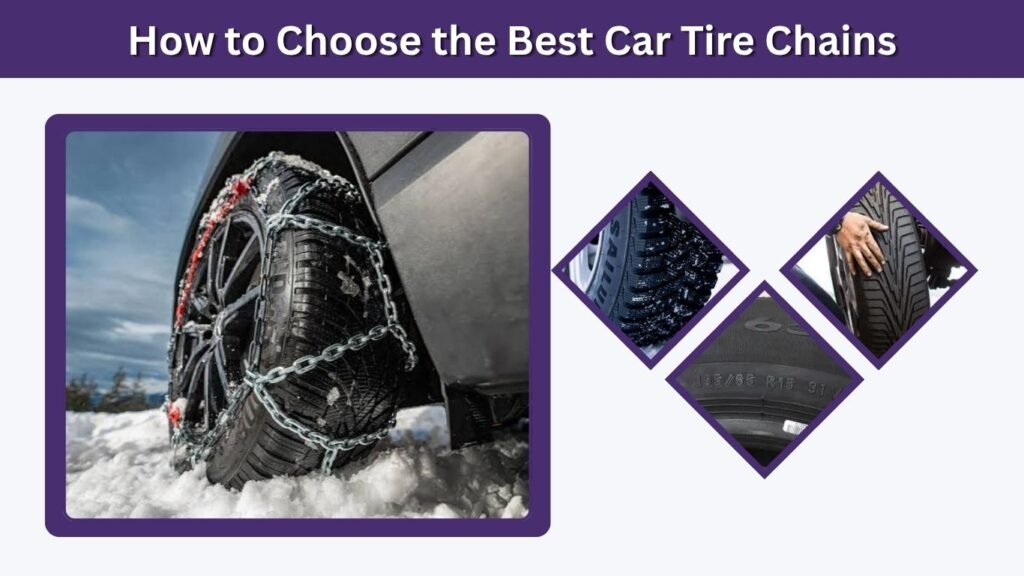
The best tire chains are not necessarily the most aggressive or expensive. They are the ones approved for your vehicle and properly matched to its tires.
Check the following before buying:
- Vehicle year, make, and model
- Tire size printed on the sidewall
- Owner’s manual restrictions
- Available wheel-well clearance
- Front-, rear-, or all-wheel drive
- Local traction-device laws
- Expected snow and ice conditions
- Ease of installation
- Maximum operating speed
- Replacement-part availability
Do not rely exclusively on a vehicle-search tool when ordering chains. Visually confirm the complete tire size because tires and wheels may have been changed after the car left the factory. Chain manufacturers also advise consulting the owner’s manual because some vehicles restrict or prohibit conventional chains.
Which Tires Should Chains Go On?
Chains generally go on a vehicle’s drive wheels, but manufacturer instructions take priority. Toyota, for example, advises owners to consult their model-specific manual and states that chains or cables are generally fitted to the drive wheels.
| Drivetrain | Typical chain position | Important caution |
| Front-wheel drive | Front tires | Confirm clearance near steering and suspension parts |
| Rear-wheel drive | Rear tires | Follow the manual for permitted chain dimensions |
| AWD or 4WD | Model-specific | Do not assume chains belong on all four tires |
| Dual-motor electric vehicle | Model-specific | Follow the manufacturer’s traction-device instructions |
Tire Chains for Front-Wheel-Drive Cars
Chains are generally fitted to the front tires on a front-wheel-drive car because those wheels deliver power to the road.
Using chains on the rear tires alone would not provide the necessary acceleration traction. Nevertheless, some cars have limited clearance around the front wheels and may permit only low-profile cables or specific traction devices.
Tire Chains for AWD Cars
AWD does not always eliminate chain requirements. Under severe controls, authorities may require chains even on AWD vehicles.
Do not automatically install chains on all four tires. Depending on the model, the manufacturer may specify the front axle, rear axle, all four wheels, or a particular low-clearance product. Oregon also warns that all vehicles may be required to use chains during exceptionally bad conditions, regardless of tire or vehicle type.
How to Put Tire Chains on a Car
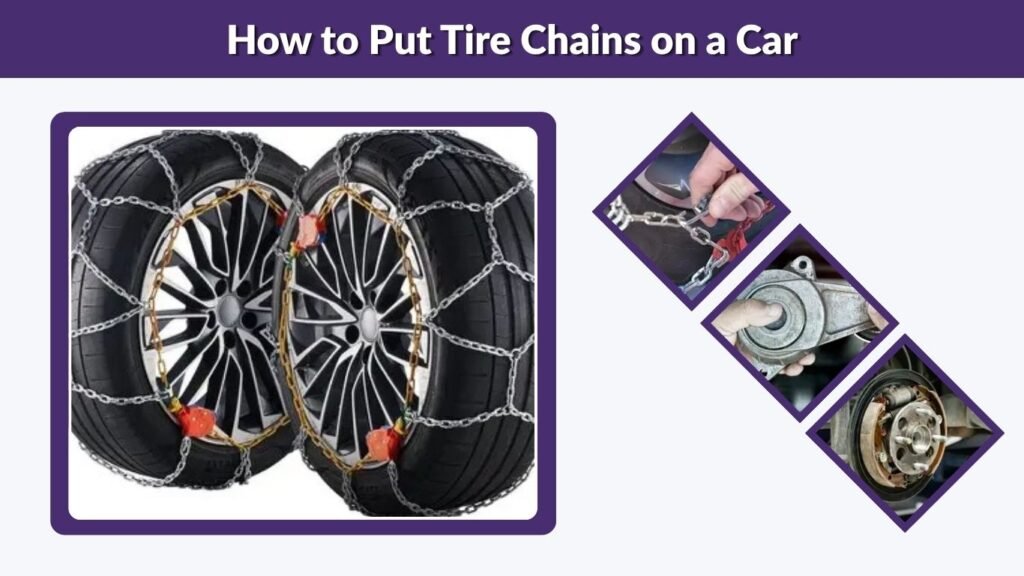
Practice installing your chains in dry, comfortable conditions before taking a winter trip. The National Park Service advises motorists to confirm that their chains fit and practice installation before they are needed.
Step-by-Step Installation
- Move completely off the roadway.
Use a designated chain-up area, parking lot, or safe turnout. Never stop in a traffic lane. - Set the parking brake.
Turn off the engine and keep the vehicle from moving while you work. - Untangle and inspect the chains.
Lay them flat and check for twisted cables, broken links, or damaged connectors. - Position them over the correct tires.
Center each chain over the tread with the fastening components facing outward. - Connect the inside fastener.
Reach behind the tire and secure the inner cable or chain connection. - Connect the outside fastener.
Pull the chain snugly across the tread and secure the outer connection. - Attach the tensioning system.
Use the supplied adjusters unless the manufacturer says the product is self-tightening. - Drive forward slowly.
Move a short distance, stop safely, and check the fit. - Retighten when required.
The chain should remain centered without loose sections striking the vehicle.
Some chain systems automatically tension themselves, while conventional designs may require manual retightening. Always use the procedure supplied with your specific product.
Safe Driving With Snow Chains
Driving with chains changes how a car accelerates, brakes, and steers. Begin slowly and leave considerably more space between vehicles.
Follow these safety practices:
- Obey the chain manufacturer’s speed limit.
- Avoid sudden acceleration and wheelspin.
- Brake early and gently.
- Make smooth steering movements.
- Avoid potholes and sharp impacts.
- Listen for striking or scraping sounds.
- Stop immediately if a chain becomes loose or breaks.
- Remove chains when you reach clear pavement.
Many passenger-chain manufacturers set a maximum speed of approximately 30 mph. Caltrans notes that posted speeds during chain controls are commonly 25 or 30 mph, but drivers may need to travel even slower when visibility and traction are poor.
Are Tire Chains Bad for Your Car?
Correctly fitted chains used on snow or ice should not normally harm a compatible vehicle. Damage becomes more likely when chains are loose, incorrectly sized, installed on prohibited wheels, or driven over bare pavement.
Improper chains can damage:
- Tires and wheels
- Wheel-well liners
- Brake hoses
- Suspension components
- Steering parts
- Fenders and body panels
- Electronic wheel sensors
Using the wrong combination of tire and chain can damage the vehicle body. Driving too fast or continuing with a broken cross chain can also damage the chains, tires, and car.
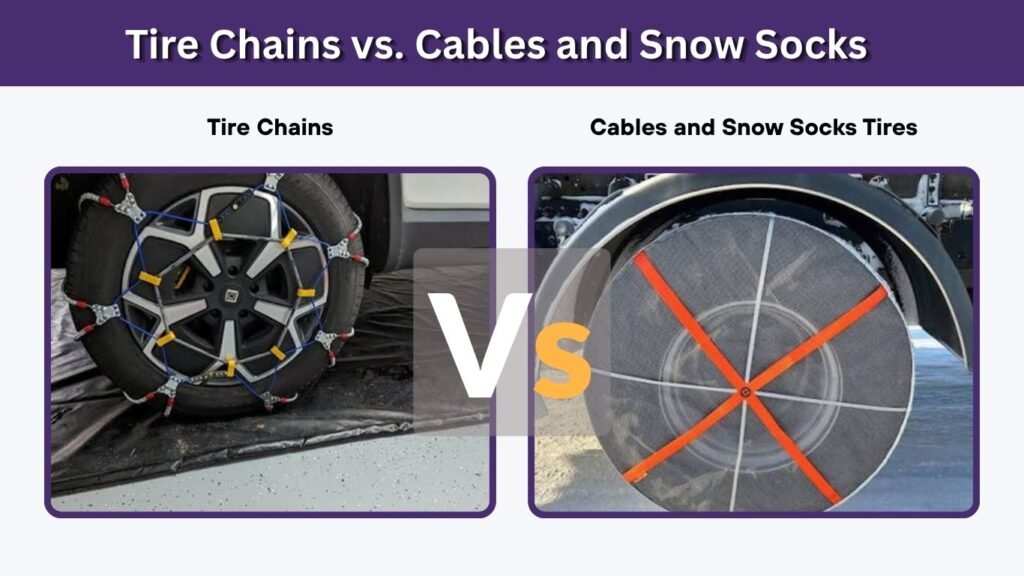
Tire Chains vs. Cables and Snow Socks
| Feature | Chains | Cables | Snow socks |
| Deep-snow grip | Excellent | Moderate to good | Moderate |
| Ice traction | Strong | Varies by design | Limited to moderate |
| Installation | Moderate difficulty | Often easier | Usually easiest |
| Wheel clearance | Requires more space | Better for tight clearance | Usually low profile |
| Durability | Generally highest | Moderate | Lowest on clear roads |
| Legal acceptance | Widely accepted | Varies | Varies significantly |
Chains are often the strongest choice for demanding conditions. Cables may suit vehicles with limited clearance, while snow socks can be convenient for occasional emergencies.
However, a traction device is useful only when local authorities recognize it. Check the rules for every state, province, country, mountain pass, or national park included in your route.
Can You Put Tire Chains on a Rental Car?
Rental-car chain policies vary by company, country, and location. Always obtain written permission before installing chains because unauthorized use may violate the rental agreement or make the renter responsible for vehicle damage.
Enterprise’s current U.S. policy states that it does not provide snow chains and generally does not permit traction devices unless state law requires them. The company makes a specific allowance during certain Colorado advisories. Policies may be different at international locations, so travelers should check directly with the pickup branch.
Where to Buy Car Tire Chains
Tire chains are commonly available from automotive stores, tire dealers, outdoor retailers, vehicle dealerships, and online sellers. Prices vary according to tire size, chain material, clearance rating, pattern, and tensioning system.
Before purchasing, verify:
- The complete tire size
- Vehicle-manufacturer approval
- Chain-law compliance
- Return and exchange policies
- Whether the package contains one pair
- Whether tensioners, gloves, and storage cases are included
Buying chains before reaching a mountain area provides more time to verify the fit and practice installation.
FAQs
Can you put tire chains on any car?
No. Some cars have insufficient wheel-well clearance or prohibit conventional chains. Others permit only cables or low-profile devices. Read the owner’s manual and verify the tire size before buying or installing any traction product.
Do AWD cars need chains on all four tires?
Not necessarily. Chain placement on an AWD car is determined by the vehicle manufacturer. Some models require one pair on a specified axle, while others permit or recommend four devices. Road authorities may also impose additional requirements during severe storms.
How fast can you drive with tire chains?
Follow the chain manufacturer’s limit and posted road signs. Many passenger-car chains should not exceed 30 mph, and slower speeds may be necessary in heavy snow, poor visibility, or congested chain-control areas.
Can tire chains be used on clear pavement?
Chains should be removed when the road is no longer covered by snow or ice. Bare pavement rapidly wears traction components and can increase vibration, reduce control, and damage the tires or vehicle.
Are tire cables as good as chains?
Cables are lighter and often fit vehicles with restricted clearance, but traditional chains generally provide more aggressive traction and durability. The better choice depends on vehicle restrictions, road conditions, and local chain laws.