
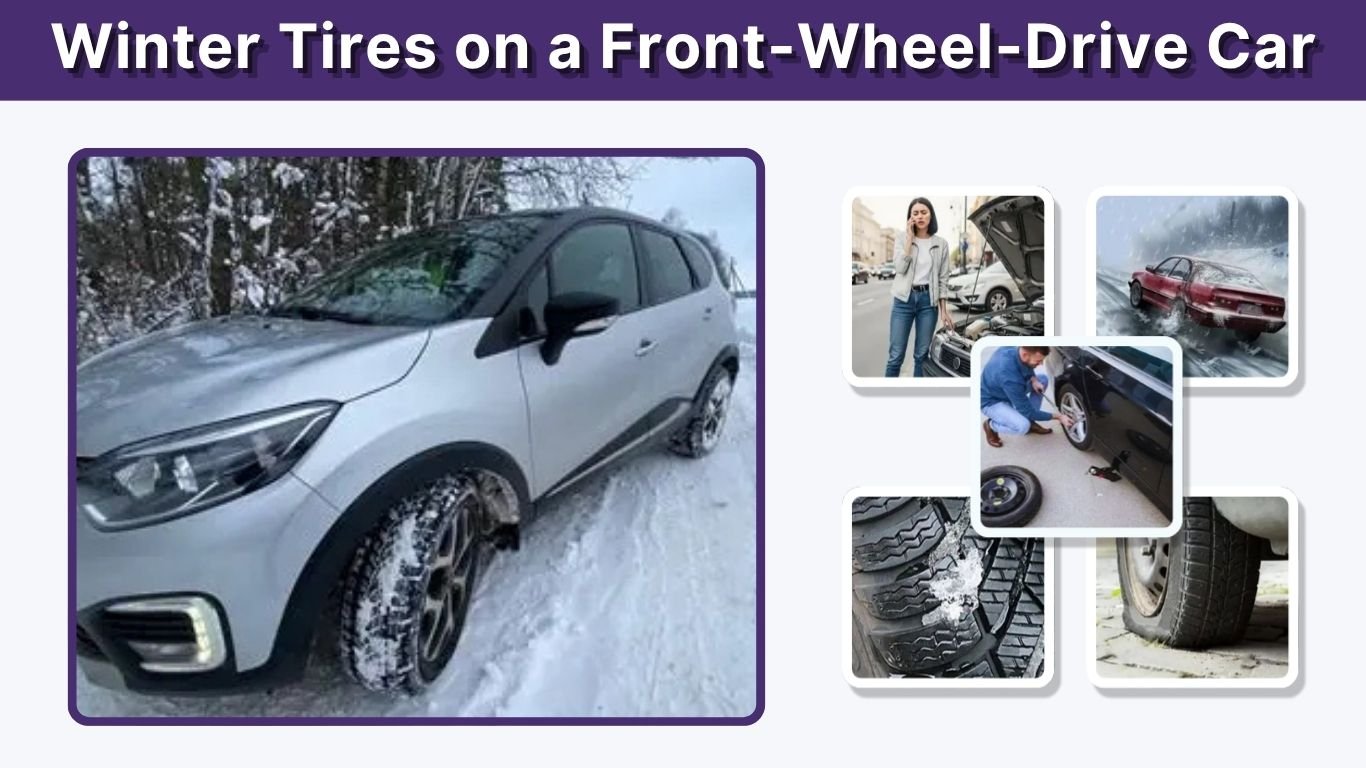
Installing winter tires on a front-wheel-drive car can significantly improve traction, braking, and control in snow, slush, and freezing temperatures. Because the front tires handle acceleration, steering, and much of the braking force, many drivers assume that placing winter tires only on the front axle is enough. However, mixing winter and all-season tires can create a dangerous imbalance. For the safest and most predictable winter performance, four matching winter tires are generally the best choice.
Do Front-Wheel-Drive Cars Need Winter Tires?
Front-wheel-drive cars often perform better in light snow than rear-wheel-drive vehicles because the engine’s weight is usually positioned over the driven wheels. This extra weight can help the front tires gain traction when accelerating.
However, front-wheel drive does not automatically provide safe winter handling. The vehicle still depends on all four tires for braking, cornering, and stability.
Winter tires are designed to remain flexible in cold temperatures. Their specialized tread patterns and rubber compounds help them grip:
- Packed snow
- Loose snow
- Slush
- Cold, wet pavement
- Icy road surfaces
- Roads below approximately 45°F or 7°C
All-season tires may become harder as temperatures fall, reducing their ability to grip the road.
How Winter Tires Help a Front-Wheel-Drive Car
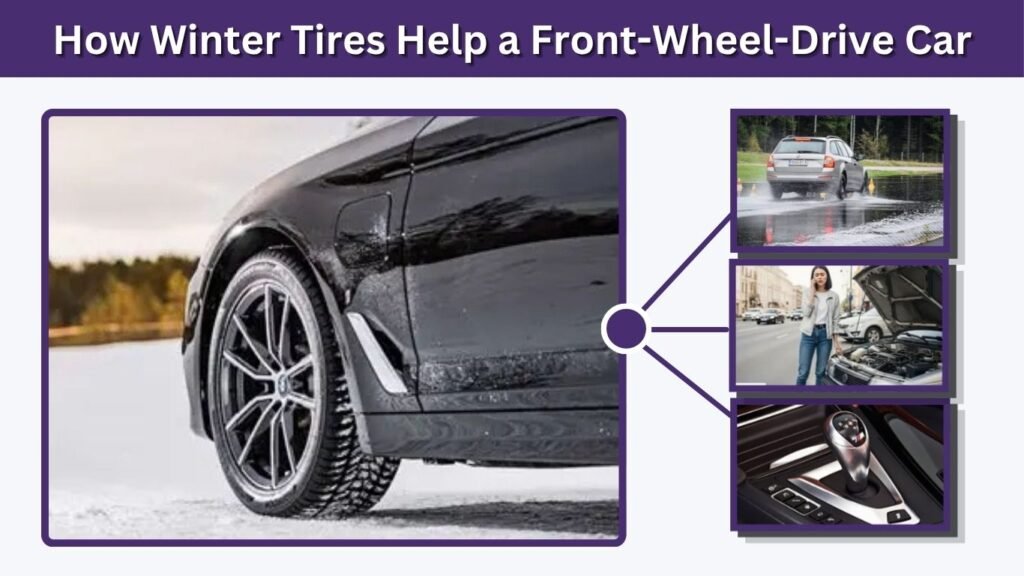
Winter tires improve several areas of vehicle performance. Their benefit is not limited to getting the car moving from a stop.
Better Acceleration
The front tires transfer engine power to the road. Winter tires provide additional biting edges that can help the vehicle accelerate without excessive wheelspin.
This is especially useful when starting on snowy hills, leaving unplowed parking spaces, or driving through deep slush.
Shorter Braking Distances
All four tires contribute to braking. Winter tires can provide better grip on cold and slippery surfaces, helping the vehicle stop more effectively.
Front-wheel drive may help with acceleration, but it does not shorten stopping distance unless the tires can maintain traction.
Improved Steering
The front tires control the direction of the vehicle. Winter tires can provide stronger steering response and make it easier to navigate corners, avoid obstacles, and maintain a chosen path.
Greater Stability
The rear tires play a major role in keeping the vehicle stable. Matching winter tires on the rear axle help prevent the back of the car from sliding outward during braking or cornering.
Can You Put Two Winter Tires on a Front-Wheel-Drive Car?
Technically, it is possible to install two winter tires on a front-wheel-drive car. However, placing winter tires only on the front axle is not considered the safest setup.
The front tires may have substantially more grip than the rear all-season tires. During a turn or emergency maneuver, the front of the car may respond correctly while the rear loses traction.
This can cause oversteer, which occurs when the rear of the vehicle slides outward. Oversteer can lead to spinning, especially on ice, packed snow, or wet roads.
Why Four Winter Tires Are Better Than Two
A complete set of four winter tires creates more balanced traction. Each tire reacts similarly to acceleration, braking, steering, and changing road conditions.
| Driving situation | Two front winter tires | Four winter tires |
| Accelerating in snow | Good front traction | Good, balanced traction |
| Braking | Front grip stronger than rear | More consistent braking |
| Cornering | Rear may slide | Improved stability |
| Emergency lane change | Unpredictable rear response | More controlled response |
| Driving downhill | Rear may lose grip | Better overall control |
| Highway driving | Greater handling imbalance | Predictable handling |
Four matching tires also allow traction control, stability control, and anti-lock brakes to work with more consistent grip levels.
Where Should Two Winter Tires Be Installed?
When only two winter tires are available, tire manufacturers and safety professionals commonly recommend placing the tires with the greatest traction on the rear axle, regardless of whether the car is front-, rear-, or all-wheel drive.
This recommendation may seem unusual for a front-wheel-drive car. Winter tires on the rear will not improve acceleration as much as winter tires on the front. However, they can help reduce the risk of the rear end sliding during turns and braking.
Even so, installing only two winter tires remains a compromise. The ideal solution is to use four winter tires of the same model, size, and similar tread depth.
What Happens With Winter Tires Only on the Front?
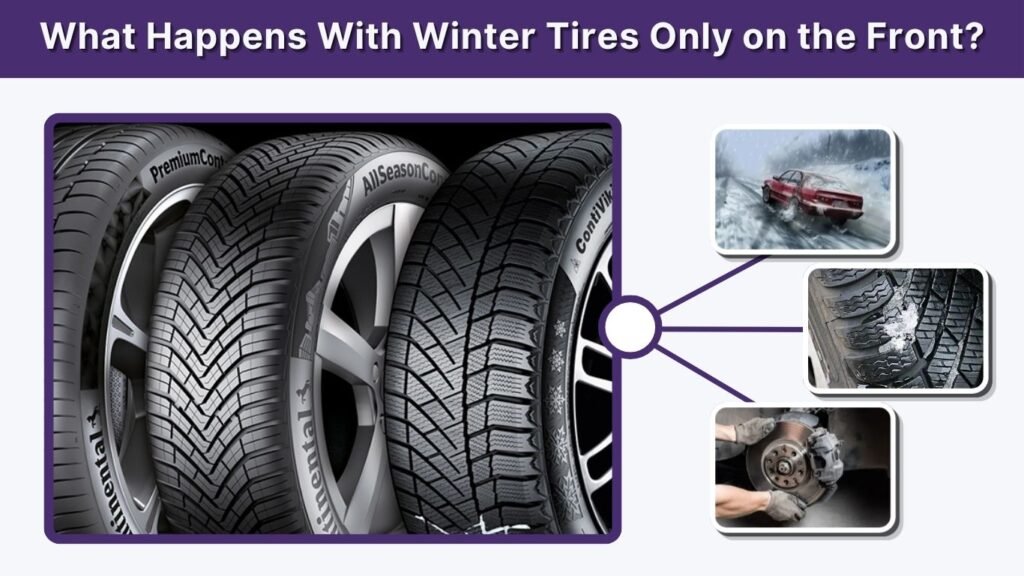
Installing two winter tires on the front of a front-wheel-drive car may make the vehicle feel capable when accelerating. This can give the driver more confidence than the car’s overall traction actually supports.
Problems may appear when the vehicle:
- Enters a slippery curve
- Brakes while turning
- Changes lanes suddenly
- Travels downhill
- Encounters black ice
- Moves from dry pavement onto snow
The front tires may grip while the rear all-season tires slide. Once the rear of the vehicle begins moving sideways, correcting the skid may be difficult.
The imbalance can be especially dangerous because the car may accelerate normally but fail to remain stable during more demanding maneuvers.
Front-Wheel Drive vs. All-Wheel Drive in Winter
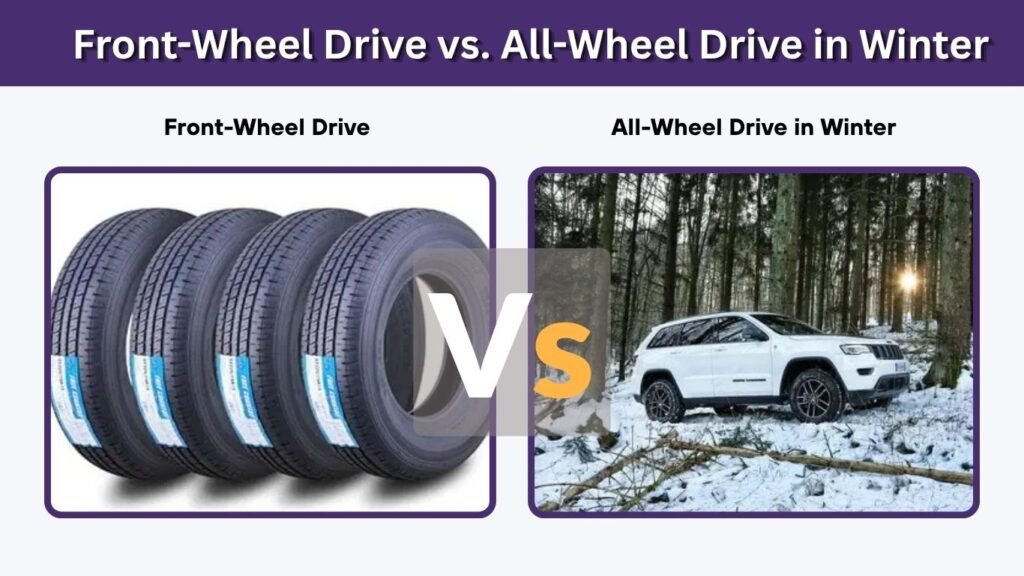
Many drivers believe all-wheel drive eliminates the need for winter tires. In reality, drivetrain and tire performance are separate factors.
Front-wheel drive and all-wheel drive determine which wheels receive engine power. Tires determine how effectively the vehicle can:
- Accelerate
- Brake
- Turn
- Maintain stability
- Grip ice and snow
All-wheel drive may help a vehicle move from a stop, but it cannot create traction when the tires lack grip. A front-wheel-drive car equipped with four quality winter tires may handle winter braking and cornering more safely than an all-wheel-drive vehicle using unsuitable tires.
How to Choose Winter Tires for a Front-Wheel-Drive Car
Not all winter tires offer the same level of performance. The right choice depends on local weather, road conditions, driving habits, and vehicle specifications.
Look for the Three-Peak Mountain Snowflake Symbol
The three-peak mountain snowflake symbol indicates that a tire has met a standardized level of snow-traction performance.
This symbol distinguishes qualified winter tires from ordinary tires marked only with “M+S,” meaning mud and snow.
Use the Correct Tire Size
Follow the tire size listed in the vehicle owner’s manual or on the driver-side door placard. Using the wrong size can affect handling, speedometer accuracy, braking, and clearance.
Some drivers use a narrower approved winter tire size because narrower tires may cut through loose snow more effectively. Any alternative size should be compatible with the vehicle.
Match All Four Tires
Use the same winter tire model on all four wheels whenever possible. Mixing tread patterns, brands, or performance categories can create inconsistent handling.
Tread depths should also be reasonably similar across the set.
Studded vs. Studless Winter Tires
Studless winter tires use specialized rubber compounds and tread designs to grip snow and ice. They are suitable for many drivers and are generally quieter than studded tires.
Studded tires contain metal studs that can provide added grip on hard ice. However, they may be restricted during certain seasons or prohibited in some locations. They can also create more road noise and wear on dry pavement.
When Should Winter Tires Be Installed?
Winter tires should usually be installed when average temperatures consistently fall below approximately 45°F or 7°C. There is no need to wait for the first major snowfall.
Cold pavement alone can reduce the performance of summer tires and some all-season tires. Installing winter tires early also helps avoid service delays when the first snowstorm arrives.
Winter tires should be removed when temperatures remain consistently above the recommended range. Warm weather causes their softer rubber to wear more quickly and may reduce dry-road responsiveness.
Should Winter Tires Have Separate Wheels?
Mounting winter tires on a separate set of wheels can make seasonal changes easier. It also reduces the need to repeatedly remove and remount tires from the same wheels.
Advantages of dedicated winter wheels include:
- Faster seasonal installation
- Lower long-term mounting costs
- Less risk of tire bead damage
- Protection for expensive factory wheels
- Easier storage and rotation
Steel wheels are commonly used because they are durable and relatively affordable. However, suitable alloy wheels can also be used.
Vehicles with tire-pressure monitoring systems may require compatible sensors in the winter wheels.
Tire Pressure During Winter
Tire pressure often decreases as outdoor temperatures fall. A tire that was correctly inflated in autumn may become underinflated during a cold spell.
Low pressure can reduce steering response, increase fuel use, and create uneven tread wear.
Check winter tire pressure at least once a month and before long journeys. Pressure should be measured when the tires are cold and adjusted to the vehicle manufacturer’s recommendation.
Do not use the maximum pressure printed on the tire sidewall as the normal operating pressure.
Driving Tips for a Front-Wheel-Drive Car in Snow
Winter tires improve traction, but they do not remove the need for cautious driving.
Accelerate Gradually
Apply the accelerator smoothly to reduce wheelspin. If the front wheels spin, ease off the throttle until they regain traction.
Increase Following Distance
Snow and ice can greatly increase stopping distance. Leave more space between your vehicle and the one ahead.
Brake Early and Smoothly
Avoid sudden braking whenever possible. Begin slowing down earlier than you would on dry pavement.
Reduce Speed Before Turning
Complete most braking before entering a corner. Accelerating or braking sharply while turning may cause the tires to lose grip.
Avoid Sudden Steering Movements
Make gradual steering corrections. Rapid lane changes can upset the balance of the vehicle, even with winter tires installed.
How Long Do Winter Tires Last?
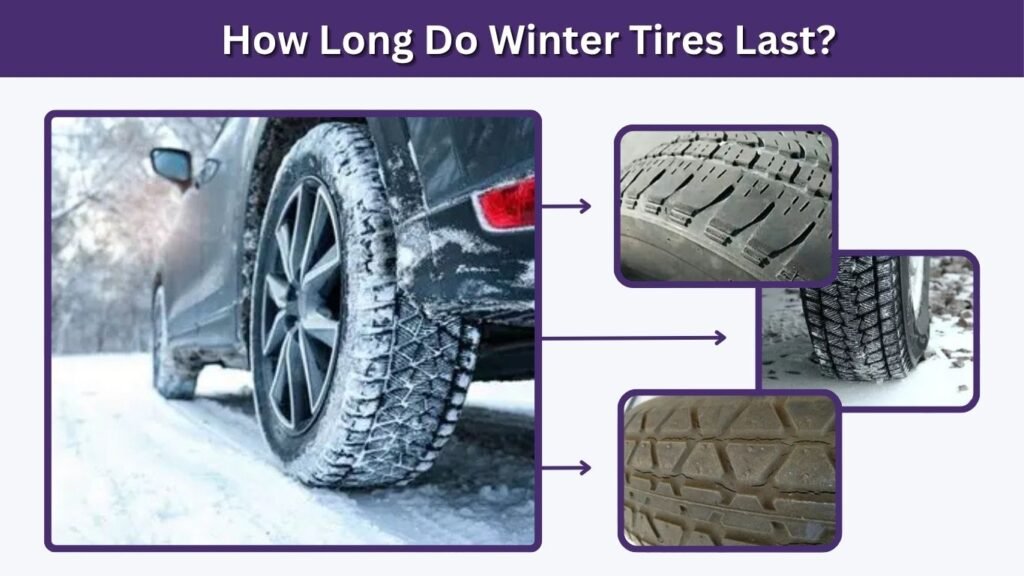
Winter tire life depends on mileage, road conditions, driving style, tire pressure, alignment, and storage. Many sets last several winter seasons when properly maintained.
Winter tires gradually lose snow performance as the tread becomes shallow. A tire may still meet the legal minimum tread depth but no longer provide strong winter traction.
Inspect tires for:
- Uneven tread wear
- Cracks in the rubber
- Bulges or cuts
- Missing tread blocks
- Exposed cords
- Significant differences in tread depth
Rotate the tires regularly according to the vehicle or tire manufacturer’s recommendations.
How to Store Winter Tires
Correct storage helps protect the rubber during warmer months. Clean and dry the tires before storing them.
Keep them in a cool, dry, and dark location away from:
- Direct sunlight
- Heat sources
- Electric motors
- Fuel
- Oil
- Solvents
- Standing water
Tires mounted on wheels may be stacked or hung from appropriate wheel supports. Unmounted tires are generally best stored upright and rotated occasionally.
Are Winter Tires Worth It on a Front-Wheel-Drive Car?
Winter tires are often worthwhile for drivers who regularly experience snow, ice, slush, or prolonged cold temperatures. Front-wheel drive helps the car move, but winter tires improve the contact between the vehicle and the road.
A set of four winter tires offers the strongest combination of acceleration, steering, braking, and stability. Installing only two winter tires on the front may improve forward traction while making rear-end grip less predictable.
FAQs
Are winter tires necessary for a front-wheel-drive car?
Winter tires are recommended when temperatures regularly fall below 45°F or 7°C or when roads frequently have snow and ice. Front-wheel drive helps with acceleration, but it does not provide the cold-weather grip needed for dependable braking and cornering.
Can I use two winter tires on a front-wheel-drive car?
Using two winter tires is possible, but it can create uneven traction. Placing them only on the front may allow the rear tires to slide during turns. Four matching winter tires provide safer and more predictable handling.
Should winter tires go on the front or rear?
When only two higher-traction tires are available, they are generally placed on the rear axle to improve stability and reduce oversteer. However, the recommended setup for a front-wheel-drive car is four matching winter tires.
Do winter tires improve braking on a front-wheel-drive vehicle?
Yes. Winter tires use cold-weather rubber and specialized tread patterns that improve grip while braking on snow, ice, slush, and cold pavement. Because all four tires contribute to braking, a complete set provides the best result.
Can I leave winter tires on throughout the year?
Winter tires can be used in warmer weather, but their soft rubber usually wears faster and may feel less responsive on hot pavement. They should generally be replaced with all-season or summer tires once temperatures remain consistently warm.