
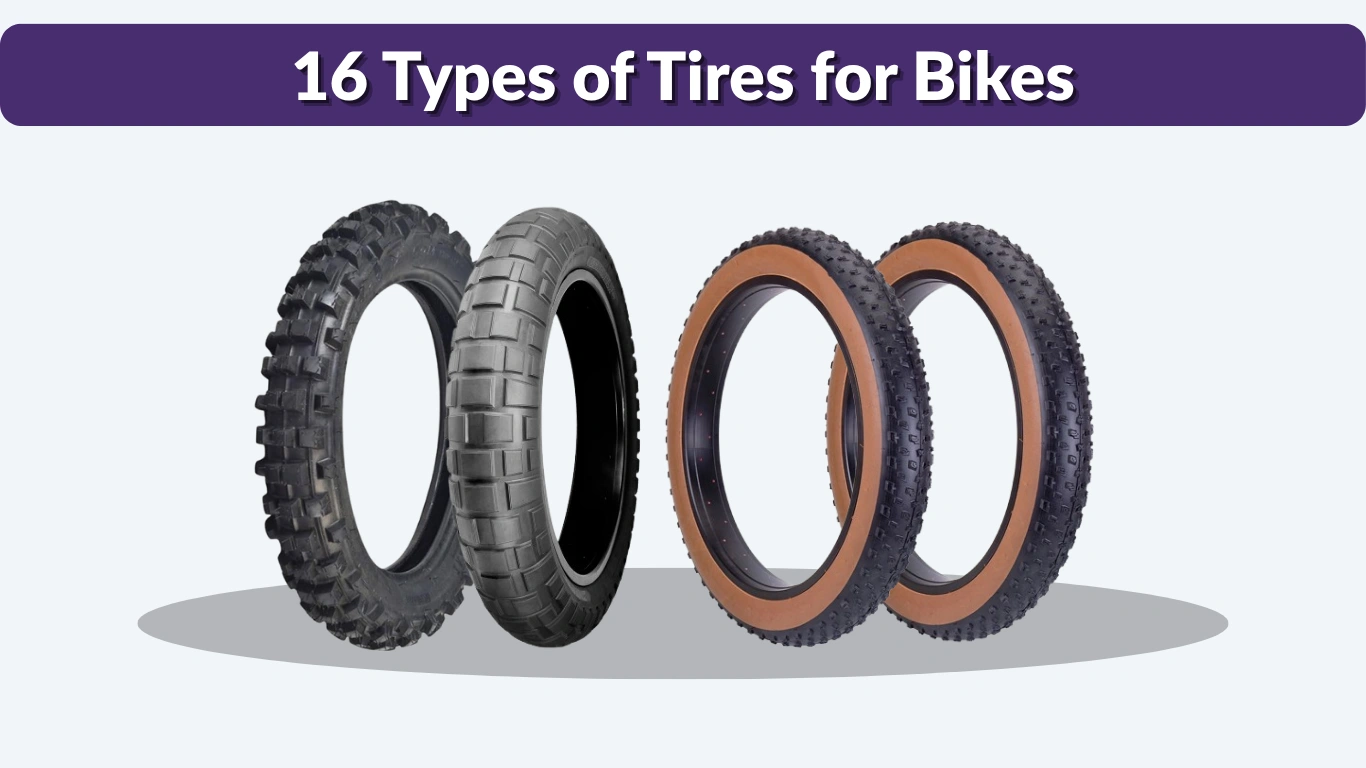
Choosing the right bike tire plays a crucial role in your overall cycling experience. Different types of bike tires are designed for specific terrains, riding styles, and performance needs. From smooth road tires built for speed to rugged mountain tires for off-road adventures, each type serves a unique purpose. Understanding these options helps you improve safety, comfort, and efficiency, ensuring you get the best performance whether you’re commuting, racing, or exploring new trails.
1. Road Bike Tires
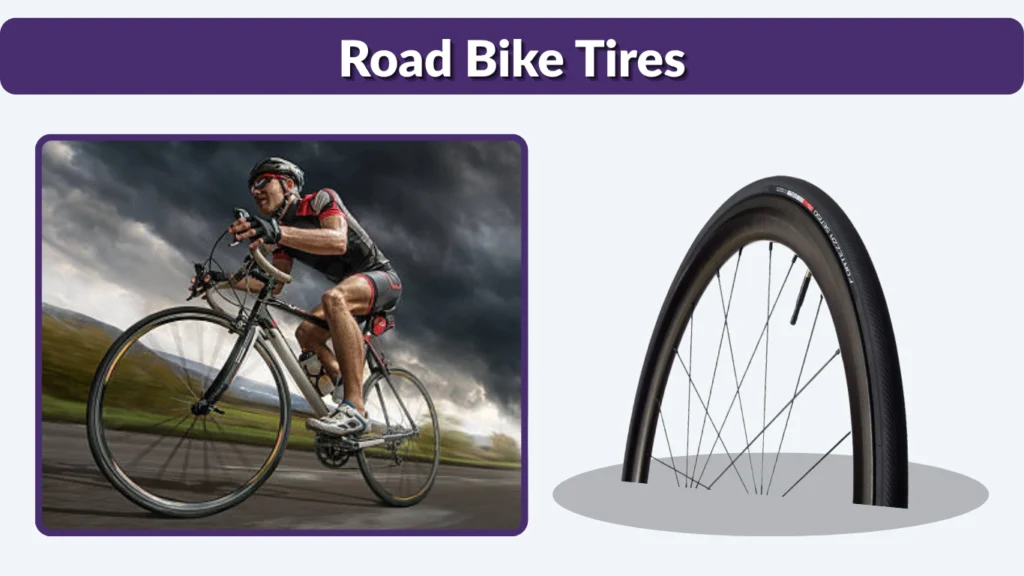
Road bike tires are designed for speed, efficiency, and smooth performance on paved surfaces. They are typically narrow with a smooth tread, allowing cyclists to ride faster with less resistance. These tires are ideal for fitness riding, commuting on roads, and competitive cycling.
Key Features
- Narrow width for reduced rolling resistance
- Smooth (slick) tread for better speed on pavement
- High air pressure capability for efficiency
- Lightweight construction for faster riding
- Minimal grip pattern for clean road contact
Purpose and Use
Road bike tires are built specifically for riding on asphalt and other smooth surfaces. They are commonly used by cyclists who focus on speed, endurance, and long-distance rides. Whether for daily commuting or professional racing, these tires help maximize efficiency and reduce effort while pedaling.
Performance in Different Conditions
On dry roads, road bike tires offer excellent speed and smooth handling, making them perfect for fast rides. In wet conditions, they still perform well, though riders must be cautious due to limited tread. However, these tires are not suitable for rough, muddy, or gravel surfaces, as they lack the necessary grip.
Advantages and Limitations
The biggest advantage of road bike tires is their speed and efficiency, allowing cyclists to travel longer distances with less effort. They also provide a smooth and quiet ride. However, their narrow design and limited tread make them less stable on uneven terrain and more prone to punctures compared to wider tires.
2. Mountain Bike Tires
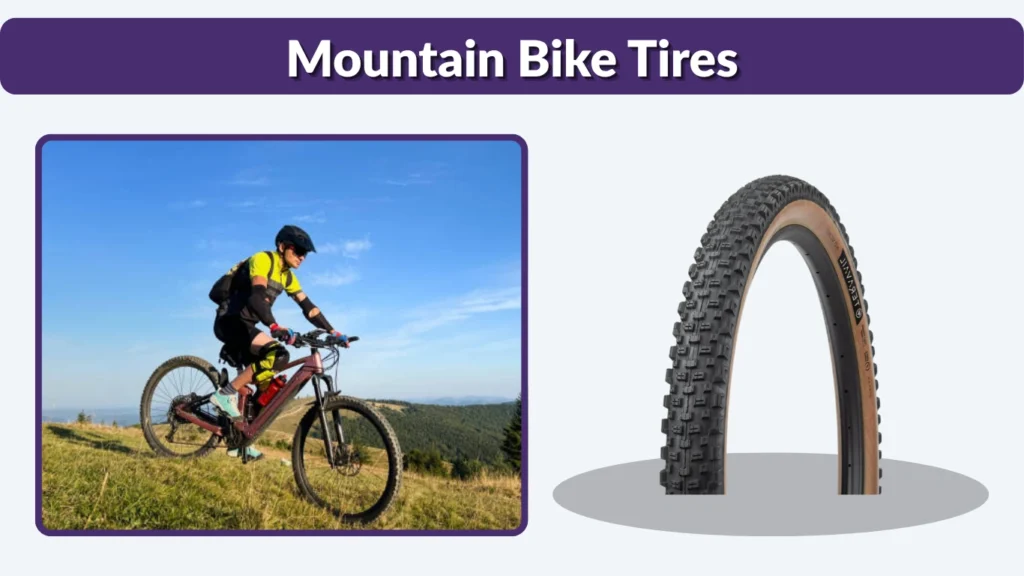
Mountain bike tires are built for durability and strong traction on rough and uneven terrains. They feature wider profiles and aggressive tread patterns, allowing riders to handle trails, rocks, mud, and steep paths with better control and stability.
Key Features
- Wide design for improved balance and grip
- Knobby tread pattern for off-road traction
- Strong sidewalls for durability and puncture resistance
- Lower air pressure for better shock absorption
- Enhanced control on loose and uneven surfaces
Purpose and Use
Mountain bike tires are designed for off-road cycling, including trails, forests, hills, and rocky paths. They are commonly used by adventure riders and outdoor enthusiasts who need reliable performance in challenging environments. These tires provide the stability and grip required for technical riding.
Performance in Different Conditions
On rough terrains like dirt, gravel, and rocks, mountain bike tires perform exceptionally well, offering strong traction and control. In muddy conditions, the deep tread helps maintain grip. However, on smooth pavement, they create more rolling resistance, making rides slower and less efficient.
Advantages and Limitations
The main advantage of mountain bike tires is their excellent grip and durability in off-road conditions. They provide better control and safety on difficult terrain. However, they are heavier and slower on paved roads, and their aggressive tread can increase effort during long-distance riding on smooth surfaces.
3. Hybrid Bike Tires
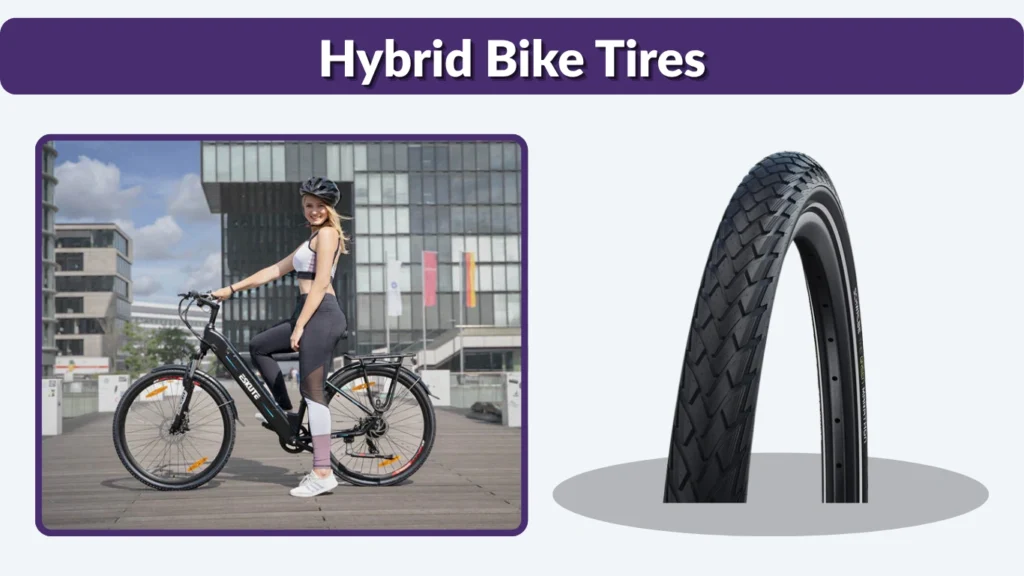
Hybrid bike tires are designed to offer a balance between road and mountain bike tires. They combine moderate width with a semi-smooth tread, making them suitable for both paved roads and light off-road paths. These tires are ideal for versatile riding needs.
Key Features
- Medium width for balance between speed and stability
- Semi-slick tread for mixed terrain performance
- Comfortable ride with moderate cushioning
- Durable construction for daily use
- Good grip on both pavement and light trails
Purpose and Use
Hybrid bike tires are perfect for riders who need versatility in their cycling routine. They are commonly used for commuting, casual rides, and light trail exploration. These tires suit cyclists who switch between city roads and park paths without needing specialized tires.
Performance in Different Conditions
On paved roads, hybrid tires provide a smooth and efficient ride, though not as fast as road bike tires. On light off-road surfaces like gravel or dirt paths, they offer decent grip and control. However, they are not ideal for extreme terrains or high-speed racing.
Advantages and Limitations
The main advantage of hybrid bike tires is their versatility, allowing riders to comfortably handle different surfaces. They offer a good mix of speed, comfort, and durability. However, they do not excel in specialized conditions, meaning they are less effective for aggressive off-road riding or high-speed road performance.
4. Touring Bike Tires
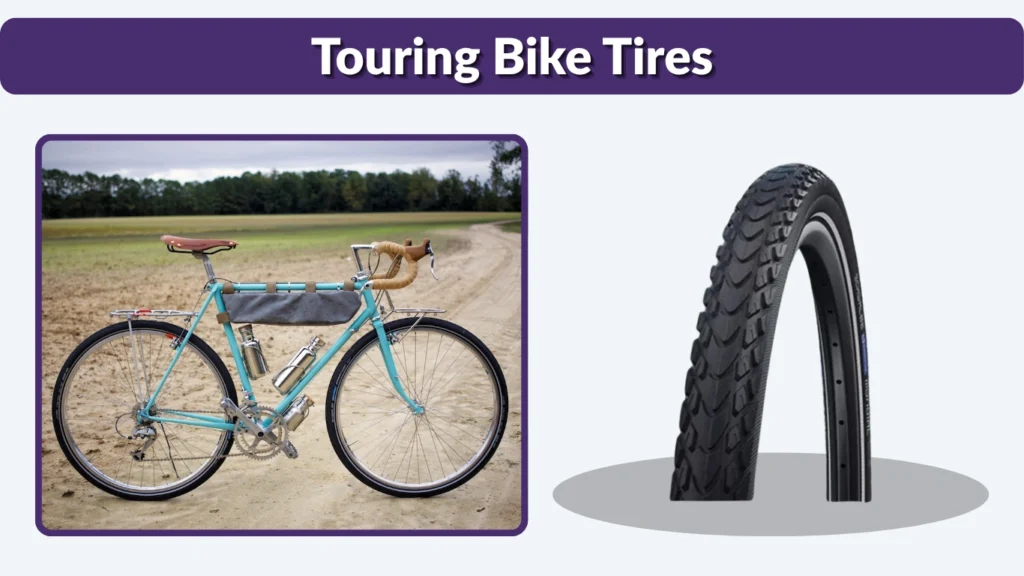
Touring bike tires are designed for long-distance cycling with a focus on durability, comfort, and load-carrying capability. They are built to handle extended rides on various road conditions while supporting extra weight from luggage or gear.
Key Features
- Strong and durable construction for long rides
- Puncture-resistant layers for added reliability
- Medium width for comfort and stability
- Long-lasting tread for extended use
- Designed to carry heavy loads
Purpose and Use
Touring bike tires are ideal for cyclists who travel long distances, often carrying bags or equipment. They are commonly used for bike touring, commuting, and endurance rides. These tires are built to handle both paved roads and occasional rough paths during extended journeys.
Performance in Different Conditions
On paved roads, touring tires provide a smooth and stable ride, even under heavy loads. They also perform well on light gravel and uneven surfaces. However, they are not designed for high-speed performance or extreme off-road conditions, as their focus is on reliability and comfort.
Advantages and Limitations
The main advantage of touring bike tires is their durability and ability to handle long journeys with extra weight. They offer a comfortable and dependable ride over time. However, they are heavier than standard road tires and may not provide the same speed or agility for performance-focused cycling.
5. Cyclocross Tires
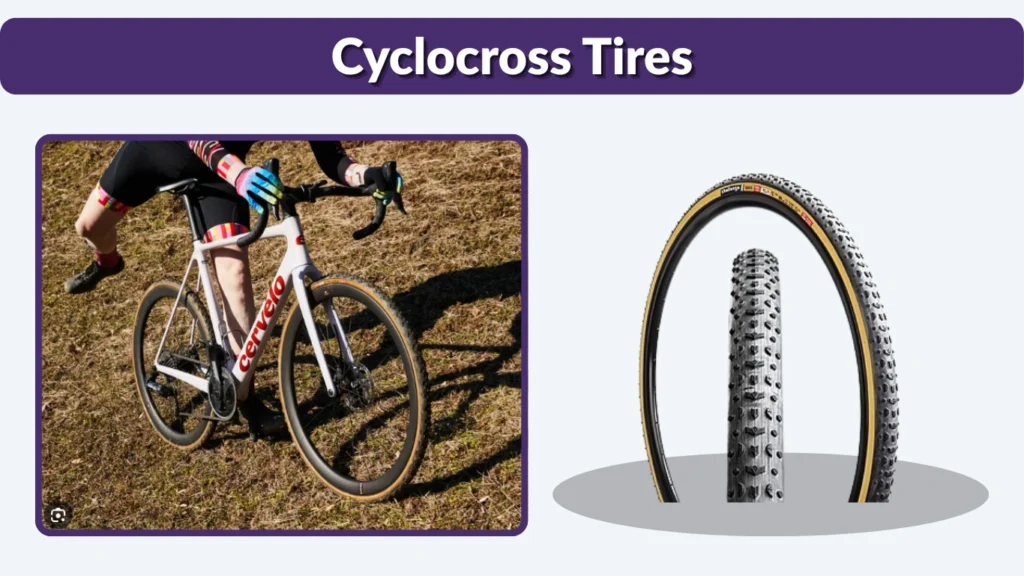
Cyclocross tires are designed for mixed-terrain racing and riding, including grass, mud, sand, and pavement. They are slightly wider than road tires and feature a knobby tread pattern to provide better grip on unpredictable surfaces.
Key Features
- Moderate width for balance between speed and control
- Knobby tread for traction on mixed terrain
- Lightweight design for racing efficiency
- Good mud-shedding capability
- Compatible with both dry and wet conditions
Purpose and Use
Cyclocross tires are mainly used in cyclocross racing, where riders encounter a variety of surfaces in a single course. They are also suitable for riders who enjoy off-road cycling on mixed terrains. These tires offer versatility for both competitive and recreational use.
Performance in Different Conditions
On grass, dirt, and muddy surfaces, cyclocross tires provide excellent grip and control. They also perform reasonably well on pavement, though not as efficiently as road tires. In very rough or rocky terrain, they may lack the durability of mountain bike tires.
Advantages and Limitations
The main advantage of cyclocross tires is their versatility across different surfaces, making them ideal for mixed-terrain riding. They provide good traction and control in challenging conditions. However, they are not the best choice for high-speed road cycling or extreme off-road trails due to their balanced design.
6. Gravel Bike Tires
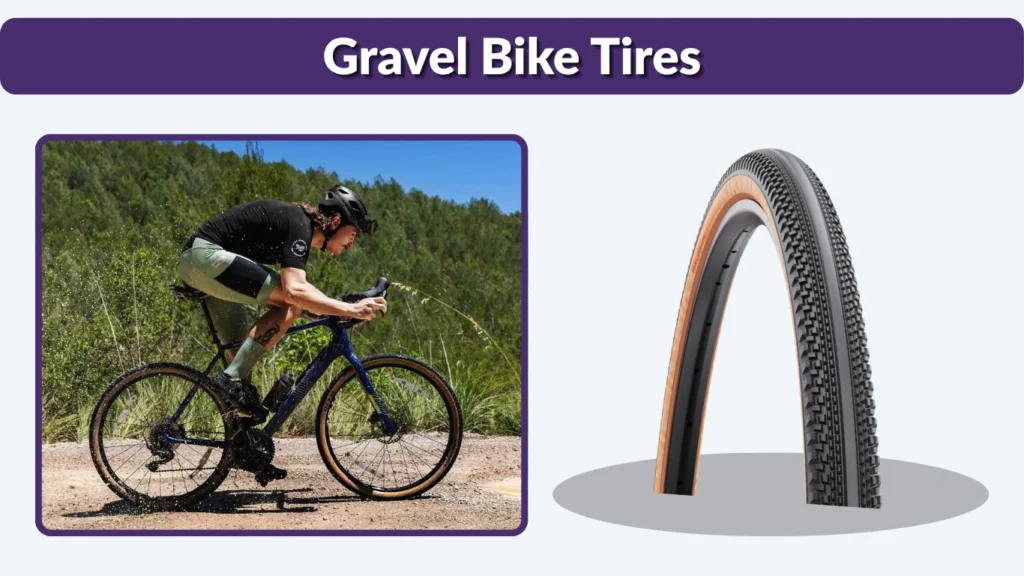
Gravel bike tires are designed for riding on mixed surfaces, including gravel roads, dirt paths, and pavement. They are wider than road tires and feature a tread pattern that provides both grip and efficiency, making them ideal for adventure and long-distance rides.
Key Features
- Wider profile for better stability and comfort
- Tread patterns designed for gravel and mixed terrain
- Strong sidewalls for puncture resistance
- Lower air pressure support for shock absorption
- Balanced design for both speed and traction
Purpose and Use
Gravel bike tires are perfect for cyclists who enjoy exploring beyond paved roads. They are commonly used for gravel riding, bikepacking, and long-distance adventures. These tires are suitable for riders who want flexibility to switch between roads and off-road paths.
Performance in Different Conditions
On gravel and dirt roads, these tires provide excellent grip and control, allowing for a stable ride. On pavement, they still perform efficiently, though slightly slower than road tires. They also handle light mud and uneven terrain well but are not ideal for extreme off-road trails.
Advantages and Limitations
The main advantage of gravel bike tires is their versatility, offering a smooth transition between different surfaces. They provide comfort and durability for long rides. However, they do not match the speed of road tires or the aggressive traction of mountain bike tires in extreme conditions.
7. Fat Bike Tires
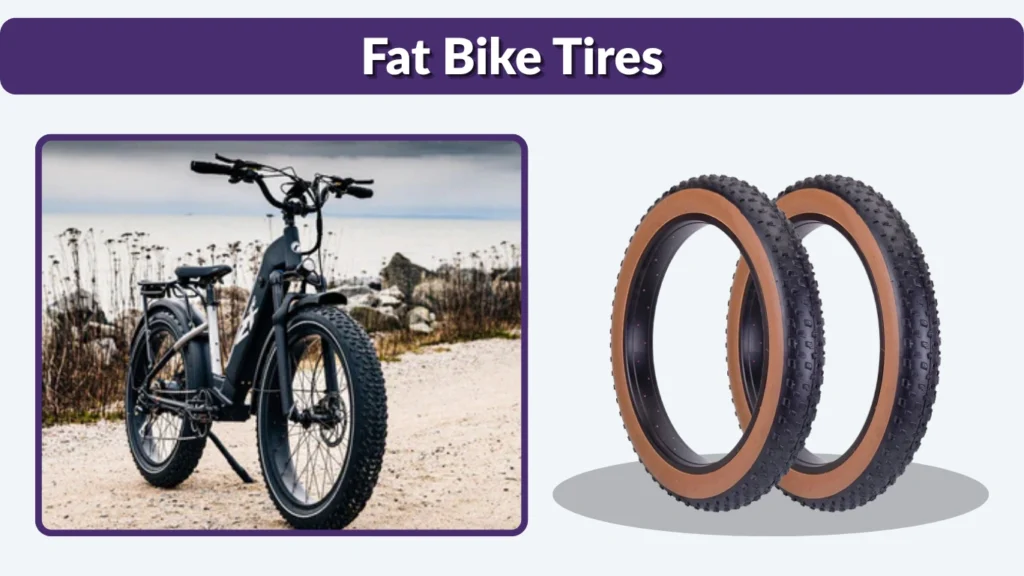
Fat bike tires are extremely wide tires designed for riding on soft and unstable surfaces like snow, sand, and loose dirt. Their large size and low air pressure provide excellent flotation and stability, allowing riders to travel where standard tires cannot.
Key Features
- Extra-wide design for maximum surface contact
- Low air pressure capability for better traction
- Deep tread for grip on soft terrain
- Enhanced shock absorption for comfort
- Strong construction for extreme conditions
Purpose and Use
Fat bike tires are ideal for riders who explore challenging environments such as snowy trails, beaches, and deserts. They are commonly used for adventure cycling and outdoor exploration. These tires allow cyclists to ride on surfaces that are typically difficult or impossible with regular bike tires.
Performance in Different Conditions
On soft surfaces like snow and sand, fat bike tires perform exceptionally well by distributing weight evenly and preventing sinking. They also provide a smooth ride over rough terrain. However, on paved roads, they are slower and require more effort due to increased rolling resistance.
Advantages and Limitations
The main advantage of fat bike tires is their ability to handle extreme and soft terrains with ease. They offer excellent stability and comfort. However, they are heavier and less efficient on smooth surfaces, making them less suitable for speed-focused or everyday road cycling.
8. BMX Tires
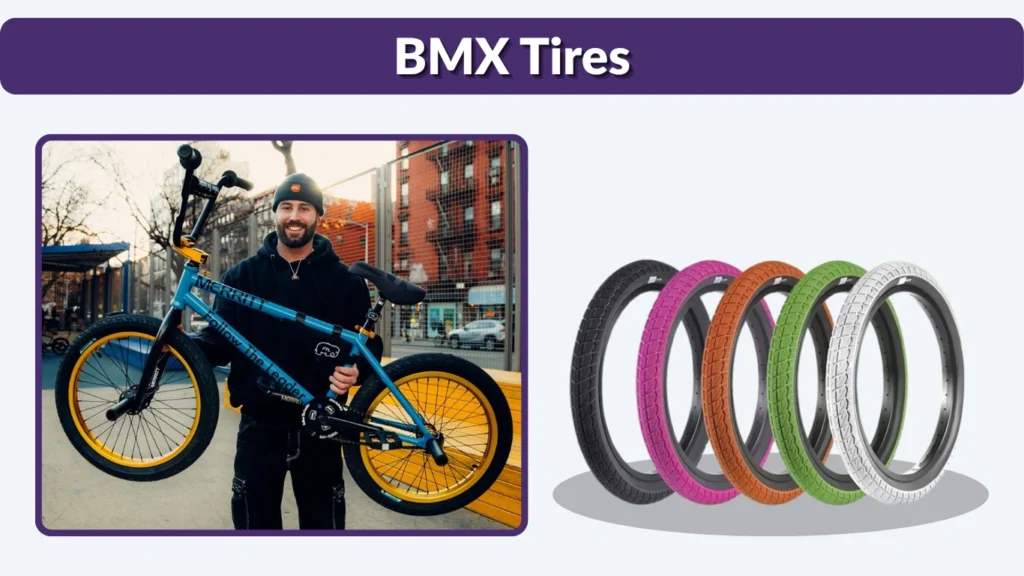
BMX tires are designed for short-distance, high-impact riding such as racing, freestyle tricks, and stunt performance. They are built to handle jumps, sharp turns, and rough landings while maintaining strong grip and control on compact surfaces.
Key Features
- Thick rubber construction for durability and impact resistance
- Compact size with wider profile for stability
- Tread patterns suited for grip on ramps and dirt tracks
- High-pressure capability for speed and responsiveness
- Reinforced sidewalls to handle jumps and tricks
Purpose and Use
BMX tires are primarily used in BMX bikes for racing, freestyle riding, and stunt activities. They are ideal for skate parks, dirt tracks, and urban environments where riders perform tricks, jumps, and quick maneuvers. These tires are built for strength and responsiveness rather than long-distance comfort.
Performance in Different Conditions
On smooth surfaces like concrete and skate parks, BMX tires provide excellent grip and control, allowing riders to perform tricks with precision. On dirt tracks, they offer good traction and stability. However, they are not suitable for long-distance rides or rough terrains, as they are optimized for short bursts of performance.
Advantages and Limitations
The main advantage of BMX tires is their durability and ability to withstand heavy impacts from jumps and tricks. They offer strong grip and control in compact riding environments. However, they are not designed for comfort or efficiency over long distances, and their performance is limited outside of specialized BMX use.
9. Folding Bike Tires
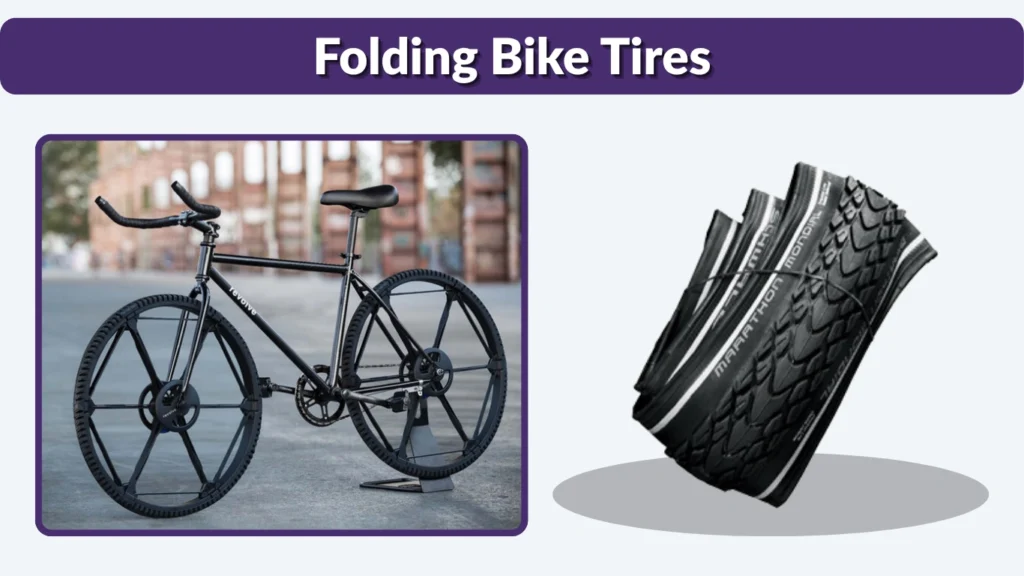
Folding bike tires are designed specifically for compact, foldable bicycles. They focus on portability, lightweight construction, and efficient performance, making them ideal for urban commuting and travel where convenience is important.
Key Features
- Lightweight design for easy portability
- Compact size to match smaller wheel frames
- Durable rubber for frequent folding and unfolding
- Smooth or semi-slick tread for city roads
- Easy installation and maintenance
Purpose and Use
Folding bike tires are mainly used on foldable bicycles that are popular among city commuters and travelers. These tires are perfect for short-distance rides, daily commuting, and situations where the bike needs to be carried or stored in small spaces, such as public transport or apartments.
Performance in Different Conditions
On paved city roads, folding bike tires provide smooth and efficient performance. They are well-suited for short urban trips and offer decent grip on dry and slightly wet surfaces. However, due to their smaller size, they may feel less stable on rough or uneven terrain.
Advantages and Limitations
The main advantage of folding bike tires is their convenience and portability, making them perfect for urban lifestyles. They are easy to manage and efficient for short rides. However, their smaller size limits speed, stability, and comfort compared to full-sized bike tires, especially on long or rough journeys.
10. Tubeless Tires
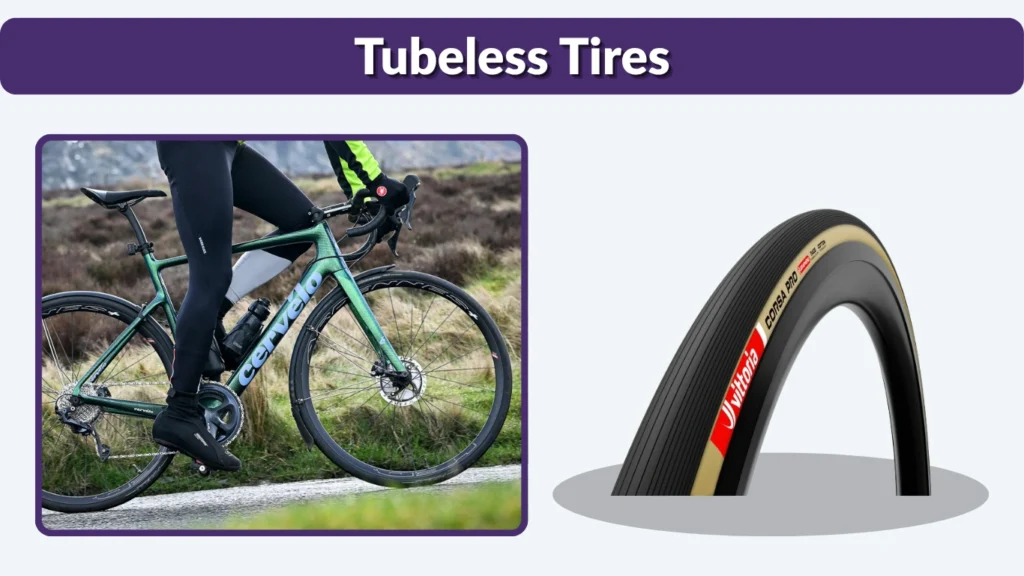
Tubeless tires are designed to operate without an inner tube, using a sealed rim and liquid sealant to hold air. This design reduces the risk of punctures and allows for lower air pressure, improving comfort and traction.
Key Features
- No inner tube required
- Sealant inside to automatically fix small punctures
- Lower air pressure capability for better grip
- Reduced risk of pinch flats
- Improved ride comfort and efficiency
Purpose and Use
Tubeless tires are popular among road cyclists, mountain bikers, and gravel riders who want improved performance and fewer punctures. They are ideal for long rides and rough terrains where reliability is important. These tires are commonly used by both recreational and professional cyclists.
Performance in Different Conditions
In off-road and rough conditions, tubeless tires perform exceptionally well due to better traction and shock absorption from lower pressure. On paved roads, they offer smooth and efficient performance. They also reduce the chances of sudden air loss, making rides safer.
Advantages and Limitations
The main advantage of tubeless tires is their puncture resistance and improved comfort. They allow for better control and fewer interruptions during rides. However, they can be more difficult to install and maintain, and require compatible rims and proper sealing to function effectively.
11. Clincher Tires
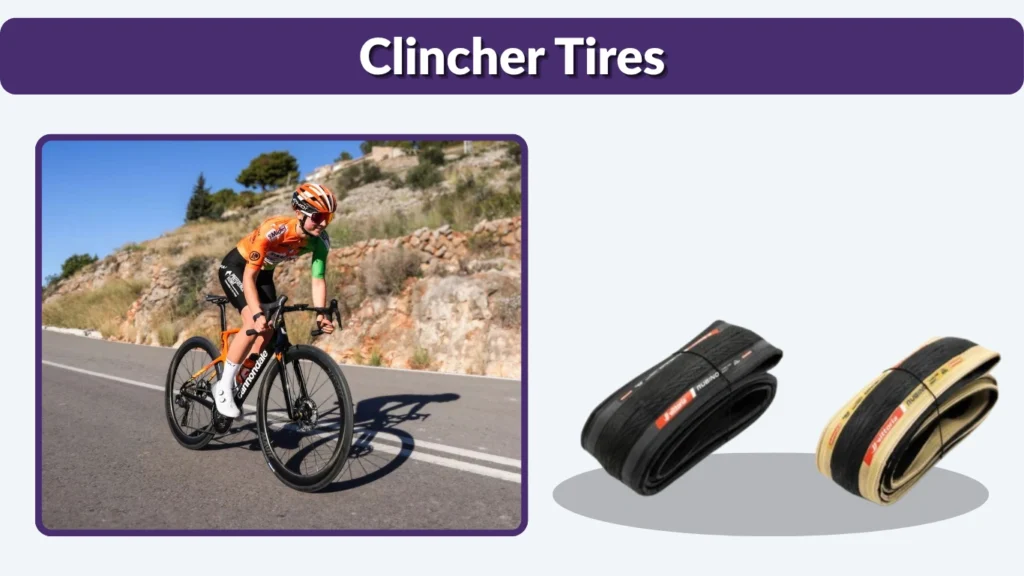
Clincher tires are the most common type of bike tires, designed to work with an inner tube and a rim with hooked edges. They are widely used due to their simplicity, affordability, and ease of maintenance, making them a popular choice for everyday cycling.
Key Features
- Uses an inner tube to hold air
- Bead edges that hook onto the rim securely
- Easy to install and replace
- Available in a wide range of sizes and styles
- Cost-effective and widely accessible
Purpose and Use
Clincher tires are suitable for a variety of bicycles, including road bikes, mountain bikes, and hybrid bikes. They are ideal for daily commuting, recreational riding, and general-purpose cycling. These tires are commonly chosen by beginners and experienced riders alike due to their convenience.
Performance in Different Conditions
Clincher tires perform well on both paved roads and light off-road surfaces, depending on the tread design. They offer reliable performance in dry and wet conditions. However, they are more prone to pinch flats compared to tubeless tires, especially when riding over rough terrain.
Advantages and Limitations
The main advantage of clincher tires is their ease of use and affordability. They are simple to repair, making them practical for most cyclists. However, they can be more susceptible to punctures and may not offer the same level of performance or comfort as tubeless or tubular tire systems.
12. Tubular Tires
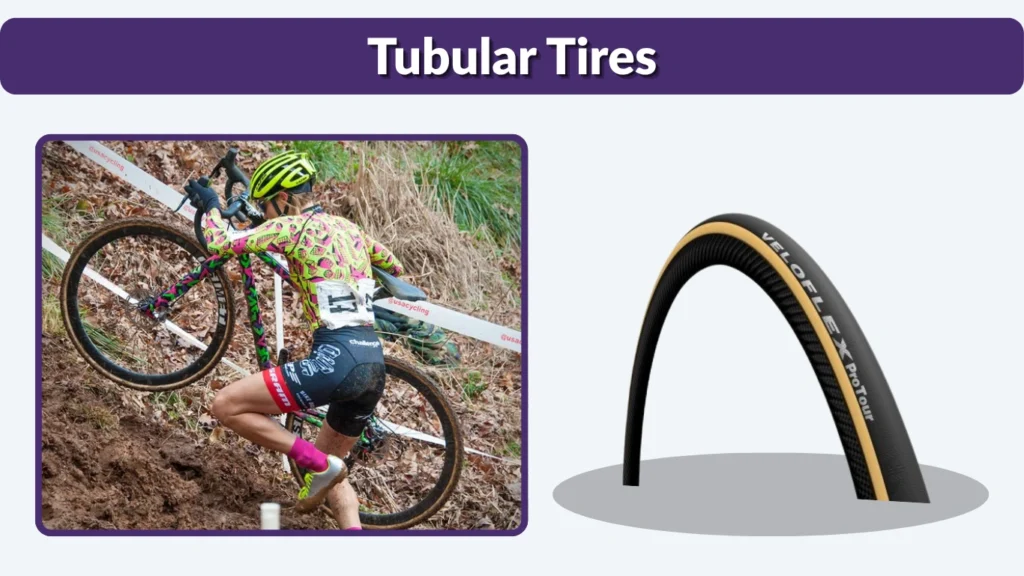
Tubular tires are a specialized type of bike tire where the inner tube is sewn directly inside the tire casing. These tires are then glued or taped onto a compatible rim, making them popular in professional racing due to their lightweight design and performance benefits.
Key Features
- Sewn inner tube integrated داخل tire
- Glued or taped onto the rim
- Lightweight construction for speed
- Smooth and round profile for better handling
- Reduced risk of pinch flats
Purpose and Use
Tubular tires are mainly used in professional road cycling and racing events. They are preferred by competitive cyclists because of their ability to provide a smooth ride and better performance at high speeds. These tires are ideal for race tracks and long-distance competitions.
Performance in Different Conditions
On smooth roads, tubular tires offer excellent rolling efficiency and comfort. They provide strong grip and stability, especially during high-speed cornering. However, they require proper installation and are not practical for rough terrains or everyday commuting.
Advantages and Limitations
The main advantage of tubular tires is their superior performance and reduced rolling resistance, making them ideal for racing. They also offer a smoother ride compared to clincher tires. However, they are more difficult to install and repair, and replacing them can be costly and time-consuming.
13. Slick Tires
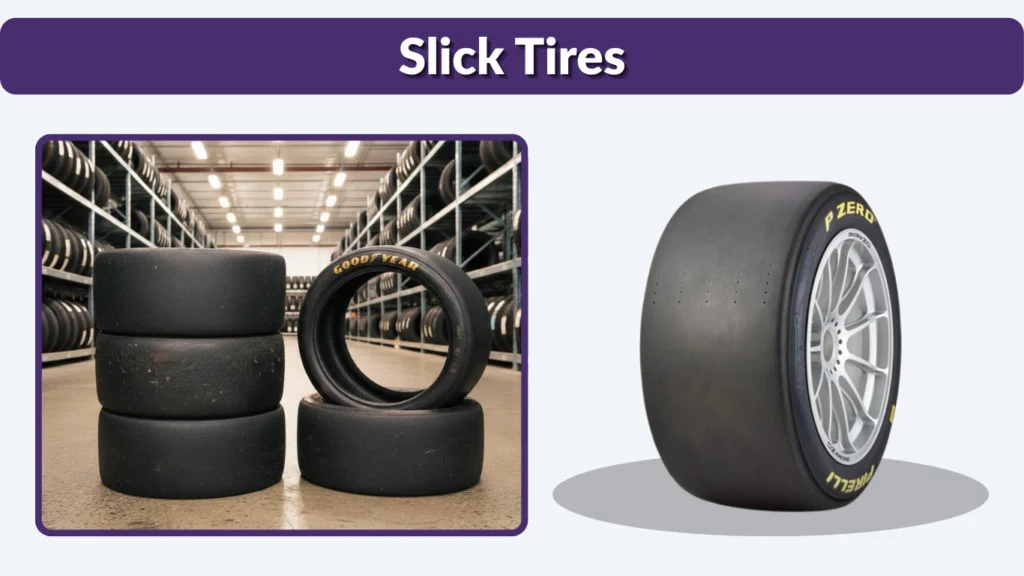
Slick tires are smooth-surface bike tires designed for maximum speed and efficiency on paved roads. Unlike knobby or treaded tires, they have little to no tread pattern, allowing for greater contact with the road and reduced rolling resistance.
Key Features
- Completely smooth or nearly smooth tread surface
- Maximum road contact for improved speed
- Low rolling resistance for efficient riding
- Lightweight design for better acceleration
- Optimized for dry and clean surfaces
Purpose and Use
Slick tires are primarily used for road cycling, racing, and urban commuting where speed is a priority. They are commonly found on road bikes and some hybrid bikes used in cities. These tires are ideal for riders who cycle on well-maintained roads and want a fast, smooth riding experience.
Performance in Different Conditions
On dry pavement, slick tires deliver excellent speed, efficiency, and control due to their full contact with the road. They also perform reasonably well on wet roads, as modern rubber compounds provide grip. However, they are not suitable for loose surfaces like gravel, sand, or mud, where traction becomes limited.
Advantages and Limitations
The main advantage of slick tires is their high speed and efficiency, making them perfect for road use and competitive cycling. They also provide a quiet and smooth ride. However, their lack of tread reduces grip on rough or uneven terrain, and they are more prone to slipping on loose surfaces, limiting their versatility.
14. Knobby Tires
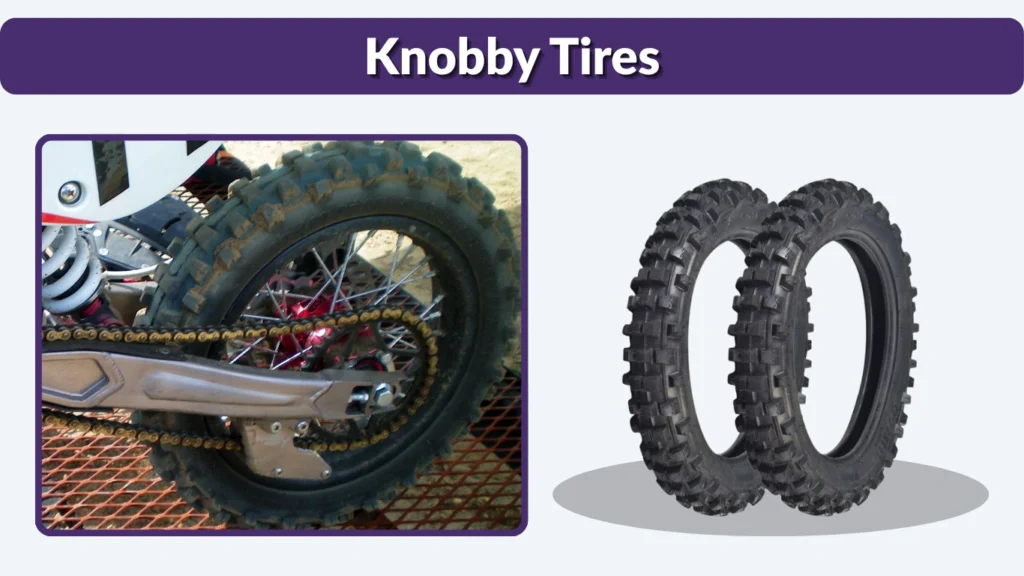
Knobby tires are designed with large, raised tread blocks (knobs) to provide maximum traction on loose and uneven surfaces. They are commonly used for off-road cycling, where grip and control are more important than speed.
Key Features
- Large, raised knobs for strong traction
- Wide spacing between knobs to clear mud
- Enhanced grip on loose surfaces like dirt and gravel
- Durable construction for rough terrain
- Improved control on steep and uneven paths
Purpose and Use
Knobby tires are mainly used for mountain biking and off-road cycling. They are ideal for trails, forests, rocky paths, and muddy environments. These tires are designed for riders who need reliable grip and control in challenging outdoor conditions.
Performance in Different Conditions
On dirt, mud, and rocky terrain, knobby tires perform exceptionally well by digging into the surface and providing strong traction. They also handle steep climbs and descents effectively. However, on paved roads, they are slower and produce more rolling resistance and noise.
Advantages and Limitations
The main advantage of knobby tires is their excellent off-road performance, offering superior grip and control. They are reliable in tough conditions and enhance rider confidence. However, they are less efficient on smooth surfaces, making them unsuitable for high-speed road cycling or long-distance paved rides.
15. Studded Bike Tires
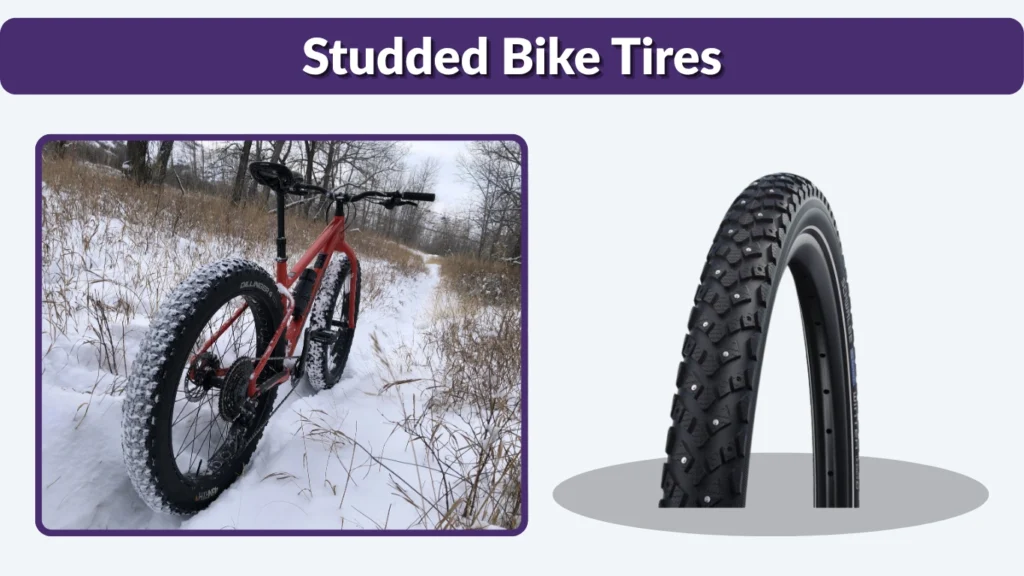
Studded bike tires are specially designed for riding in icy and extreme winter conditions. They feature small metal studs embedded into the tread, which dig into ice to provide superior grip and prevent slipping. These tires are essential for cyclists who continue riding in harsh winter environments.
Key Features
- Metal studs embedded in the tread for ice traction
- Deep and aggressive tread pattern for snow grip
- Durable rubber compound for cold weather flexibility
- Strong casing to handle harsh winter surfaces
- Enhanced braking and control on icy roads
Purpose and Use
Studded bike tires are primarily used in regions with heavy snowfall and icy roads. They are ideal for winter commuting, trail riding, and daily cycling in cold climates. These tires allow cyclists to maintain control and safety even when road conditions are extremely slippery.
Performance in Different Conditions
On ice and hard-packed snow, studded tires provide outstanding grip and stability, significantly reducing the risk of falls. They also perform well in slushy conditions. However, on dry pavement, they can feel slower and produce noticeable noise due to the metal studs making contact with the road.
Advantages and Limitations
The main advantage of studded bike tires is their unmatched traction on icy surfaces, making winter cycling much safer. They offer excellent control and confidence in extreme conditions. However, they are heavier, noisier, and less efficient on regular roads, and in some areas, their use may be restricted due to potential road wear.
16. Electric Bike (E-Bike) Tires
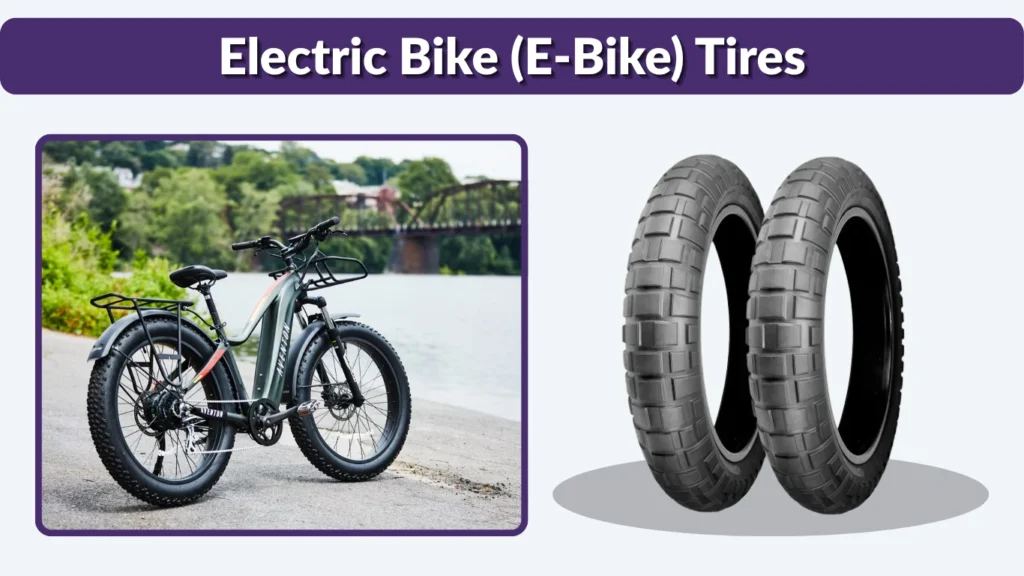
Electric bike (e-bike) tires are specially designed to handle the extra weight, speed, and torque produced by electric bicycles. They are built with stronger materials and enhanced durability to ensure safety, stability, and long-lasting performance under higher stress compared to regular bike tires.
Key Features
- Reinforced construction to support heavier loads
- Thicker rubber for improved durability and wear resistance
- Enhanced puncture protection layers
- Tread patterns optimized for speed and stability
- Designed to handle higher speeds of e-bikes
Purpose and Use
E-bike tires are used on electric bicycles for commuting, leisure riding, and long-distance travel. They are ideal for riders who rely on electric assistance and need tires that can safely support higher speeds and additional weight from the motor and battery.
Performance in Different Conditions
On city roads and highways, e-bike tires provide excellent stability, grip, and smooth handling even at higher speeds. They also perform well in moderate wet conditions. Some models can handle light off-road use, but performance depends on the tread design.
Advantages and Limitations
The main advantage of e-bike tires is their strength and reliability under demanding conditions. They offer better durability, safety, and puncture resistance compared to standard bike tires. However, they are generally heavier and more expensive, and may slightly reduce pedaling efficiency when used without electric assistance.
FAQs
What are the best bike tires for beginners?
Hybrid and clincher tires are great choices for beginners. They offer a good balance of comfort, stability, and ease of maintenance. These tires work well on city roads and light trails, making them suitable for new riders who want a simple and reliable cycling experience.
How often should bike tires be replaced?
Bike tires should be replaced every 2 to 5 years depending on usage, terrain, and maintenance. If you notice worn tread, cracks, or frequent punctures, it’s time to replace them. Regular checks help ensure safety and better riding performance.
Can I use one type of tire for all conditions?
While some tires like hybrid or gravel tires are versatile, no single tire performs best in all conditions. Specialized tires are designed for specific environments, so choosing the right type improves safety, comfort, and overall riding efficiency.
What is the difference between tubeless and clincher tires?
Tubeless tires do not use an inner tube and rely on sealant to prevent air loss, reducing punctures. Clincher tires use an inner tube and are easier to install and repair. Tubeless offers better performance, while clinchers are more convenient for everyday use.
Are wider bike tires better?
Wider tires provide more stability, comfort, and grip, especially on rough terrain. However, they create more rolling resistance, making them slower on smooth roads. The best choice depends on your riding style and the type of surface you ride on most often.