
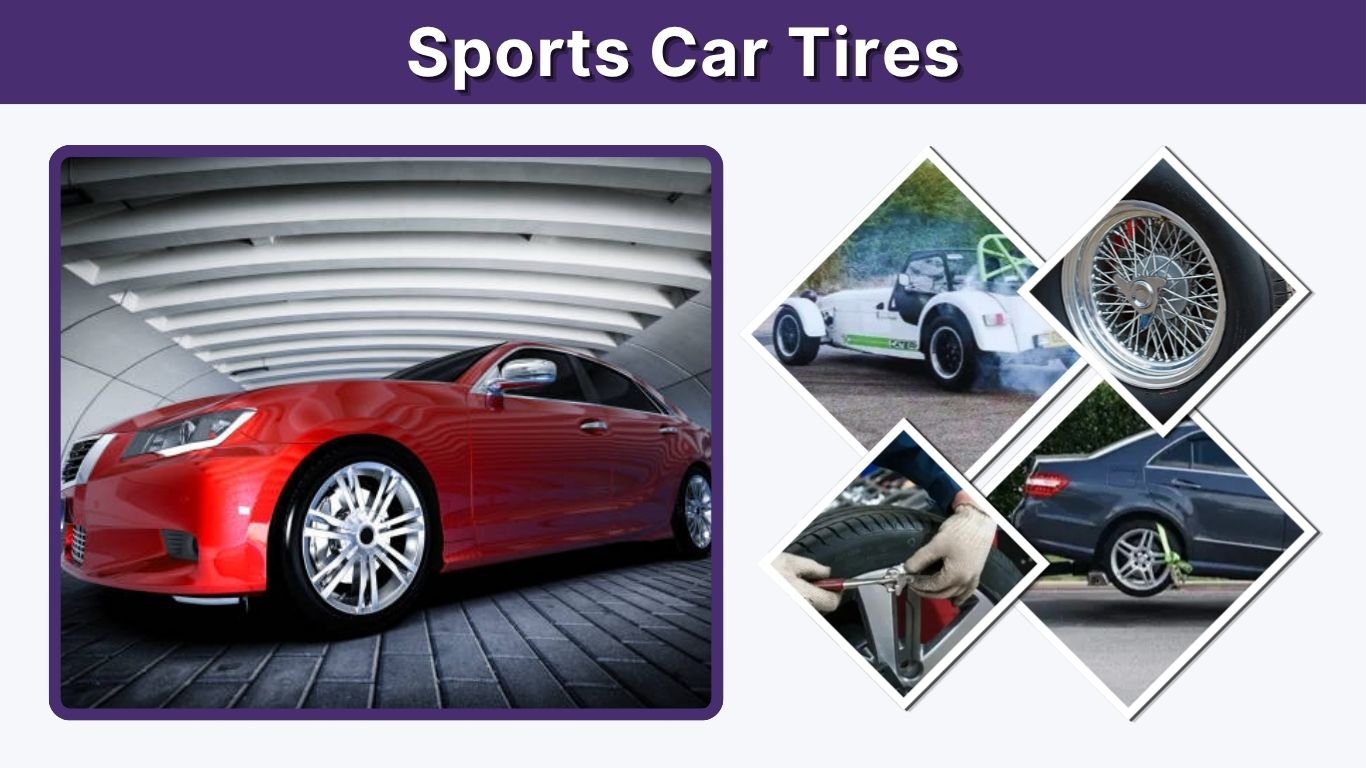
Sports car tires are designed to deliver precise steering, strong cornering grip, stable braking and reliable control at higher speeds. Unlike ordinary touring tires, performance tires usually prioritize responsiveness and traction over ride comfort and maximum tread life. Choosing the right set depends on your vehicle, climate and driving style—not simply the most expensive brand or the widest available size.
What Makes a Sports Car Tire Different?
A sports car places greater demands on its tires during acceleration, braking and cornering. Performance tires use specialized tread patterns, reinforced construction and grip-focused rubber compounds to respond quickly to steering inputs.
Typical characteristics include:
- Wide tread blocks for cornering stability
- Stiff shoulder areas for precise steering
- Lower-profile sidewalls
- Higher speed ratings
- Strong wet and dry braking performance
- Softer compounds that may wear faster
- Wider sizes on powerful vehicles
These features improve handling, but they can also produce a firmer ride, more road noise and shorter tread life than comfort-focused touring tires.
Types of Sports Car Tires
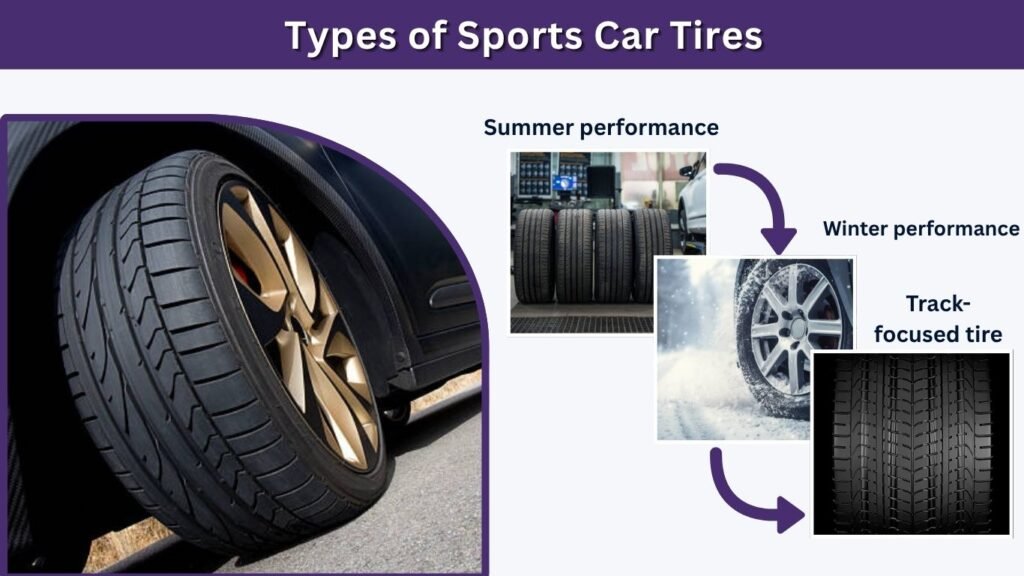
The best tire category depends mainly on temperature, weather and how the car is driven.
| Tire type | Best use | Main limitation |
| Summer performance | Warm-weather road driving | Unsuitable for freezing conditions |
| Ultra-high-performance all-season | Daily driving in changing weather | Less peak grip than a summer tire |
| Winter performance | Cold roads, snow and ice | Softer handling in warm weather |
| Track-focused tire | Track days and dry performance | Limited comfort and wet-weather ability |
| Touring performance | Long-distance driving | Less aggressive steering response |
Summer Performance Tires
Summer tires are usually the best choice for drivers seeking maximum warm-weather grip, braking and steering response. They work well on dry roads and can also provide strong wet-road performance when their tread is in good condition.
However, summer compounds lose flexibility as temperatures approach freezing. They should not be relied on for snow, ice or consistently cold winter conditions.
Ultra-High-Performance All-Season Tires
Performance all-season tires are designed for sports cars used throughout the year in moderate climates. They provide responsive handling while offering better cold-weather flexibility and light-snow capability than summer tires.
They are a practical choice for daily drivers, but there is normally a trade-off in maximum dry grip compared with dedicated summer performance tires.
Winter Tires for Sports Cars
A powerful rear-wheel-drive or all-wheel-drive sports car still needs suitable winter tires in cold climates. Acceleration technology cannot replace the braking and turning grip supplied by the correct rubber compound.
When temperatures regularly fall below about 45°F or 7°C, dedicated winter tires provide better cold-road performance than summer tires. Install winter tires on all four wheels to keep handling balanced.
Track-Day Tires
Track-focused tires are intended for drivers who prioritize lap times, dry grip and high-temperature stability. Some are road legal, but they may have shallow tread, reduced comfort and limited protection against standing water.
A serious track tire is usually a poor everyday choice for a car driven frequently in heavy rain, cold weather or long highway journeys. Michelin, for example, describes its Pilot Sport Cup 2 R as an ultra-high-performance track tire focused on lap-time performance.
How to Read a Sports Car Tire Size
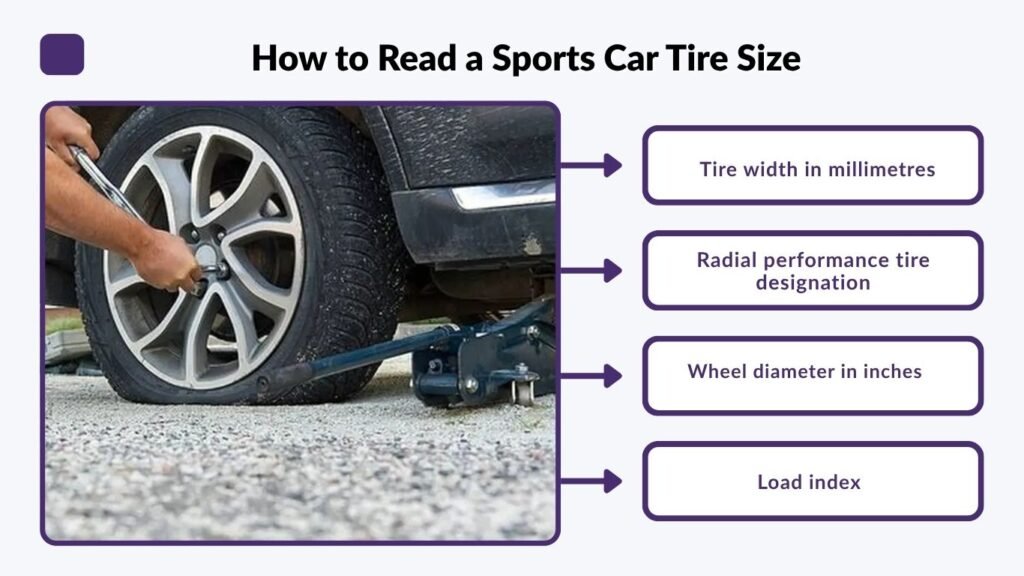
A sidewall marking such as 245/40ZR18 97Y XL contains important information.
- 245: Tire width in millimetres
- 40: Sidewall height as a percentage of the width
- ZR: Radial performance tire designation
- 18: Wheel diameter in inches
- 97: Load index
- Y: Speed rating
- XL: Extra Load reinforced construction
Replacement tires should normally match the vehicle manufacturer’s required size, load index and speed specification. This information appears on the driver’s door placard and in the owner’s manual.
What Does XL Mean?
XL stands for Extra Load. An XL tire is reinforced to carry more load at its specified pressure than a standard-load tire of a comparable size.
Many sports cars use XL tires because of their speed capability, vehicle weight or wheel-and-tire configuration. However, XL does not automatically mean better handling, and it should only be selected when suitable for the vehicle.
Understanding Speed Ratings
Performance cars commonly use V-, W- or Y-rated tires.
| Rating | Tested speed capability |
| V | Up to 149 mph |
| W | Up to 168 mph |
| Y | Up to 186 mph |
A speed rating indicates laboratory-tested capability under specified conditions. It is not permission to drive at that speed, and the tire must still have correct pressure, load and condition. Never install a tire with a lower rating than the vehicle manufacturer requires unless an approved winter-tire exception applies locally.
Best Tires for a Sports Car
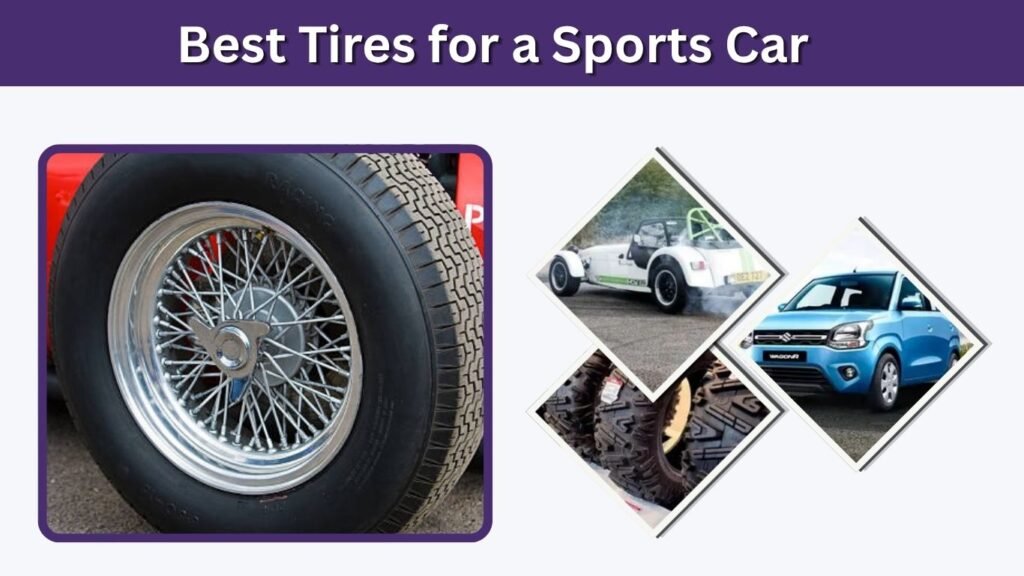
There is no single tire that is best for every sports car. A lightweight roadster, powerful rear-wheel-drive coupe and all-wheel-drive grand tourer may require different constructions and sizes.
Choose according to your main driving conditions:
Best for Maximum Road Grip
Select a premium summer performance tire when the car is used mainly in warm weather and sharp steering, braking and cornering are the main priorities.
Best for Daily Driving
Choose an ultra-high-performance all-season tire when you need sporty handling combined with year-round convenience, reasonable comfort and occasional light-snow capability.
Best for Track Days
Use a dedicated track or extreme-performance summer tire. Confirm that it is appropriate for road use when you plan to drive to and from the circuit.
Best for Winter
Choose four performance winter tires in the manufacturer-approved size. Narrower approved winter sizes sometimes provide better snow penetration, but wheel and brake clearance must be verified.
Best for Long-Distance Comfort
A performance touring tire may be better than the most aggressive summer model. It can offer quieter operation and longer tread life while preserving reasonable steering response.
Upgrading Sports Car Wheels and Tires
Larger wheels and lower-profile tires can sharpen steering response and improve cornering precision. They can also change the appearance of the vehicle. However, improper upgrades may reduce ride comfort, increase impact damage and cause clearance or alignment problems.
Before changing the original setup, consider:
- Overall tire diameter
- Wheel width and offset
- Brake and suspension clearance
- Load and speed ratings
- Fender clearance during steering
- Added wheel weight
- Tire availability and price
- Speedometer accuracy
- Alignment requirements
Avoid choosing an extremely low-profile tire only for appearance. Maintaining the original overall diameter helps protect gearing, electronic stability systems and speedometer accuracy.
Staggered Tire Setups
Some sports cars use wider rear tires than front tires. This is called a staggered setup and can improve rear traction on powerful vehicles.
Do not convert to staggered sizing without confirming manufacturer compatibility. Staggered tires cannot usually be rotated front to rear, which may increase replacement costs and uneven wear.
Performance Tires for RWD Sports Cars
Rear-wheel-drive sports cars often wear their rear tires faster because the same tires handle acceleration forces. Powerful cars can also break rear traction quickly in rain or cold weather.
Choose tires with strong wet grip and avoid mixing unrelated models between the front and rear. Mismatched grip levels can create unpredictable oversteer or understeer. When replacing only two tires, follow the tire manufacturer’s installation guidance and have the overall condition of all four checked.
Sports Car Tire Alignment
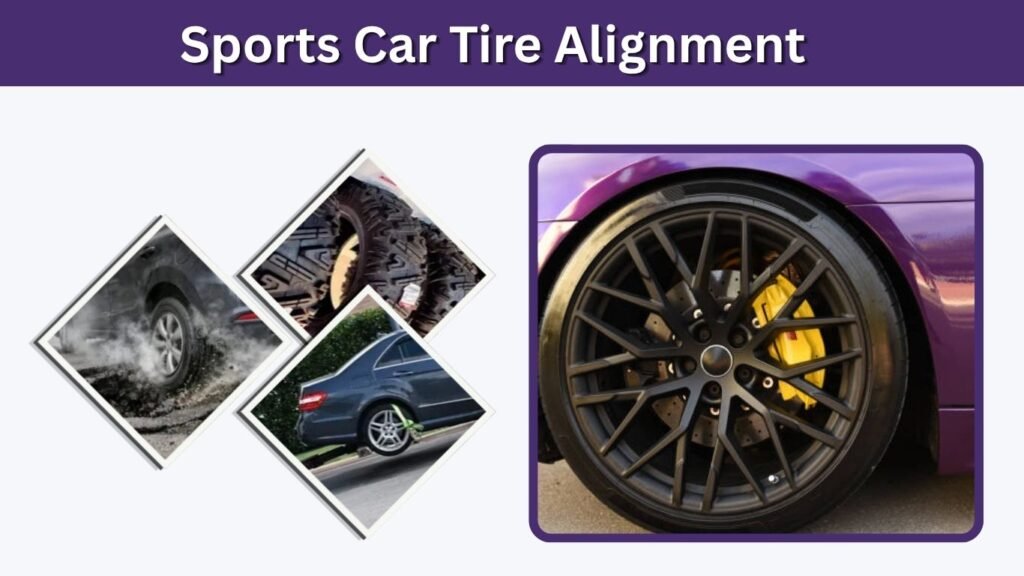
Accurate alignment is especially important on low-profile performance tires. Incorrect toe, camber or worn suspension components can quickly damage the inner or outer tread.
Have the alignment checked when:
- Installing new wheels or tires
- Lowering the suspension
- The car pulls to one side
- The steering wheel is off-center
- Tread wear appears uneven
- The car hits a large pothole or curb
- Steering response suddenly changes
Improper wheel fitment and alignment can affect handling, ride quality and tire wear.
Tire Valves and Pressure
Performance driving generates heat, causing tire pressure to rise. Always begin with the cold pressure listed on the vehicle placard—not the maximum number molded onto the tire’s sidewall.
Inspect rubber valve stems whenever tires are replaced. Metal or high-pressure valves may be required for certain wheels, tire-pressure monitoring systems or track applications.
NHTSA recommends inspecting pressure at least monthly while the tires are cold, meaning the car has been parked for at least three hours. Tires should also be checked for cuts, cracking, bulges and uneven wear.
FAQs
Are sports car tires good for normal daily driving?
Yes, provided you choose the correct category. Ultra-high-performance all-season or road-focused summer tires can work well daily. Extreme track tires may be noisy, wear quickly and perform poorly in cold or heavily wet conditions.
Do sports cars need special tires?
Sports cars require tires with the correct size, load index and speed rating. Ordinary tires with inadequate specifications may reduce steering response, braking performance and high-speed stability.
Are wider sports car tires always better?
No. Wider tires may increase dry-road grip, but they can also cost more, add weight, reduce clearance and become more vulnerable to standing water. Use manufacturer-approved sizes.
Can sports cars use winter tires?
Yes. Dedicated winter tires significantly improve cold-weather braking and cornering. They should be installed as a complete set of four rather than only on the driven wheels.
When should sports car tires be replaced?
Replace tires showing damage, cracks, bulges or severe uneven wear. NHTSA states that tires are unsafe once tread reaches 2/32 inch, although performance in heavy rain can decline before reaching that legal minimum.