
The average tire pressure for a passenger car is usually around 30–35 PSI when the tires are cold. However, this range is only a general reference. The correct pressure for your vehicle may be higher or lower depending on its weight, tire size, load capacity and manufacturer specifications. Always follow the pressure printed on the vehicle’s tire-information placard rather than guessing from an average or using the maximum number shown on the tire sidewall.
What Is the Average Tire Pressure for a Car?
Most passenger cars use a recommended cold pressure between approximately 30 and 35 PSI. Some compact cars may specify around 29–33 PSI, while heavier sedans, crossovers and performance vehicles may require 35–42 PSI.
| Vehicle type | Common pressure range |
| Compact passenger car | 29–35 PSI |
| Midsize sedan | 32–36 PSI |
| Sports car | 32–40 PSI |
| Crossover or small SUV | 33–38 PSI |
| Large SUV or pickup | 35–45 PSI |
| Compact temporary spare | Often 50–60 PSI |
These figures are examples, not universal requirements. Some vehicles use different pressures for the front and rear tires because weight distribution and tire sizes differ.
PSI, Bar and kPa
Tire pressure may be displayed in three common units:
- PSI: Pounds per square inch
- Bar: Commonly used in Europe and other regions
- kPa: Kilopascals
For reference, 35 PSI is approximately 2.4 bar or 241 kPa. Your gauge and vehicle placard may show one or more of these measurements.
Where to Find the Correct Tire Pressure
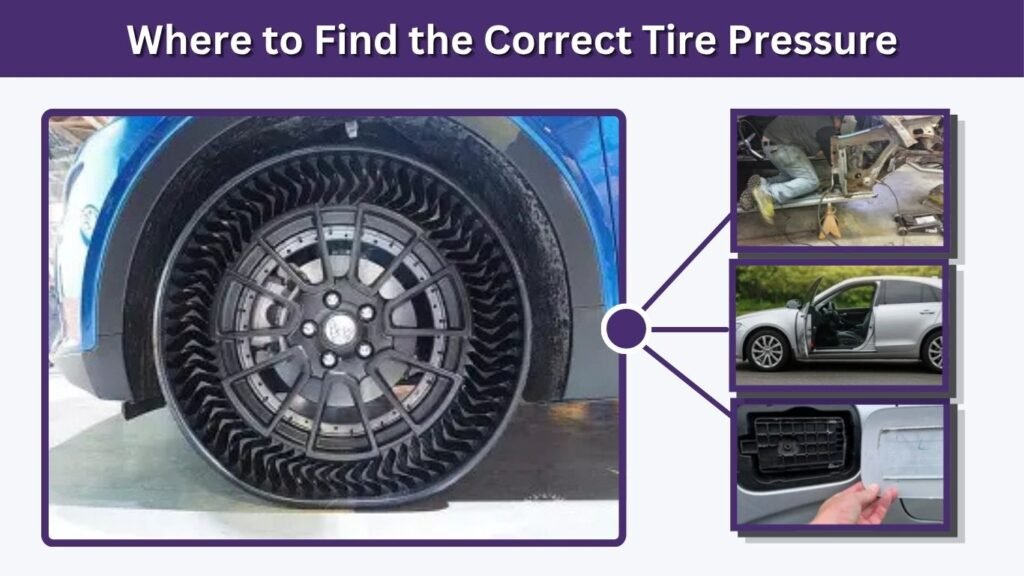
The safest pressure is the one selected by the vehicle manufacturer. It is based on the original tire size, vehicle weight, load capacity, braking, handling and fuel-efficiency requirements.
Look for the tire-information placard in one of these locations:
- Driver-side door jamb
- Driver-side door pillar
- Inside the fuel-filler door on some cars
- Glove compartment on some older vehicles
- Vehicle owner’s manual
The label normally lists the original tire size and recommended cold pressure for the front and rear tires. Some vehicles also provide a higher setting for carrying passengers, heavy cargo or towing.
Do Not Use the Tire Sidewall Number
The PSI molded into a tire’s sidewall is generally associated with its maximum load and inflation limits. It is not automatically the correct everyday pressure for your car.
Inflating every tire to the sidewall maximum can produce a harsh ride, reduce the intended contact with the road and alter handling. Follow the vehicle placard unless the manufacturer provides different instructions.
What Does “Cold Tire Pressure” Mean?
Cold pressure means the tires have not been significantly heated by driving. NHTSA defines cold tires as tires on a vehicle that has not been driven for at least three hours.
Driving creates heat through repeated tire flexing and contact with the road. As the air inside becomes warmer, its pressure rises. Checking immediately after a highway journey may therefore produce a higher reading than the actual cold pressure.
Should You Release Air From a Warm Tire?
Do not normally release air simply because a warm tire reads several PSI above the placard figure. The pressure is expected to rise during driving and will fall again as the tire cools.
When possible, wait until the following morning and recheck the tires cold. When a visibly underinflated warm tire must be filled immediately, add enough air for safe travel and adjust it accurately once cold.
How to Check Car Tire Pressure
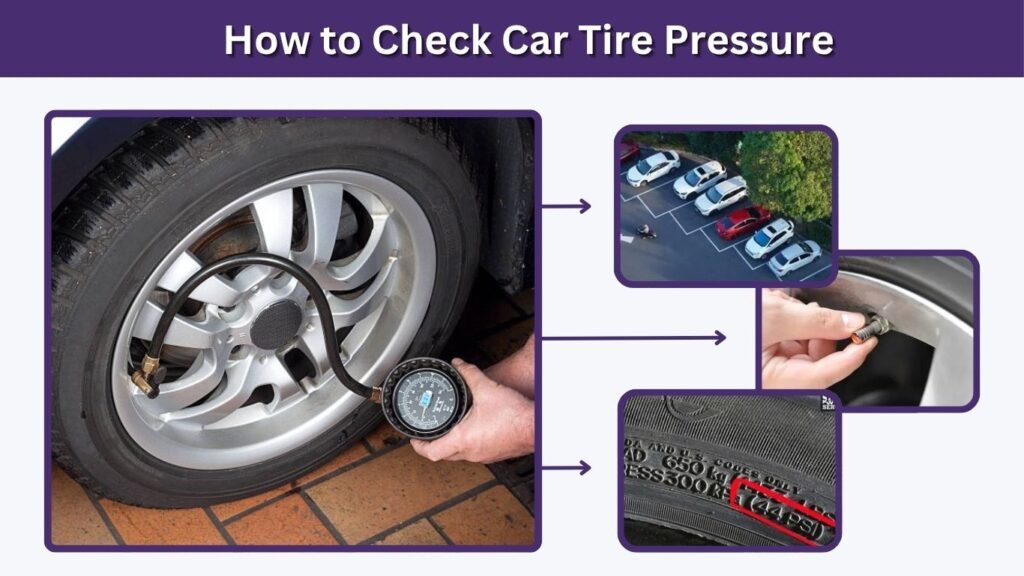
Checking the pressure takes only a few minutes and requires a reliable digital, dial or pencil-type gauge.
Step-by-Step Process
- Park the vehicle for at least three hours.
- Find the recommended cold PSI on the door placard.
- Remove the valve cap from the first tire.
- Press the gauge firmly onto the valve stem.
- Compare the reading with the placard.
- Add air when the reading is low.
- Release a small amount when it is too high.
- Measure again after making an adjustment.
- Repeat for all four tires and the spare.
- Reinstall the valve caps securely.
NHTSA recommends checking tire pressure regularly and before long trips. A manual gauge remains useful even when the car has a tire-pressure monitoring system.
Low Tire Pressure vs High Tire Pressure
Incorrect inflation changes how the tire contacts the road and may affect steering, braking, temperature and tread wear.
| Condition | Possible effects |
| Low pressure | Increased heat, sluggish handling, shoulder wear and higher failure risk |
| Excessive pressure | Harsher ride, reduced impact absorption and greater centre-tread wear |
| Correct pressure | Balanced handling, load support and more even tread wear |
Signs of Low Pressure
Common warning signs include:
- Tire-pressure warning light
- Heavy or slow steering response
- Vehicle pulling or feeling unstable
- Excessive wear on both tread shoulders
- One tire appearing visibly lower
- Repeated loss of several PSI
A tire that repeatedly loses pressure may have a puncture, damaged valve, cracked wheel or bead leak. Adding air repeatedly without finding the cause is not a permanent repair.
Signs of Excessive Pressure
An overinflated tire may create a firm, uncomfortable ride and may be more vulnerable to impact damage from potholes. Wear concentrated around the centre of the tread can sometimes indicate prolonged overinflation, although alignment, suspension and tire construction can also influence wear.
How Weather Affects Tire Pressure
Air pressure inside a tire changes with temperature. Cooler weather generally lowers the reading, while warmer weather raises it.
Check pressure when seasons change or after a sudden temperature drop. Do not intentionally overinflate in summer or underinflate in winter. Adjust the tires to the manufacturer’s cold specification under the current conditions.
A tire filled correctly during a warm afternoon may read lower on a cold morning. This does not always mean it has developed a puncture, but every unexplained or continuing pressure loss should still be investigated.
Average Pressure for a Spare Tire
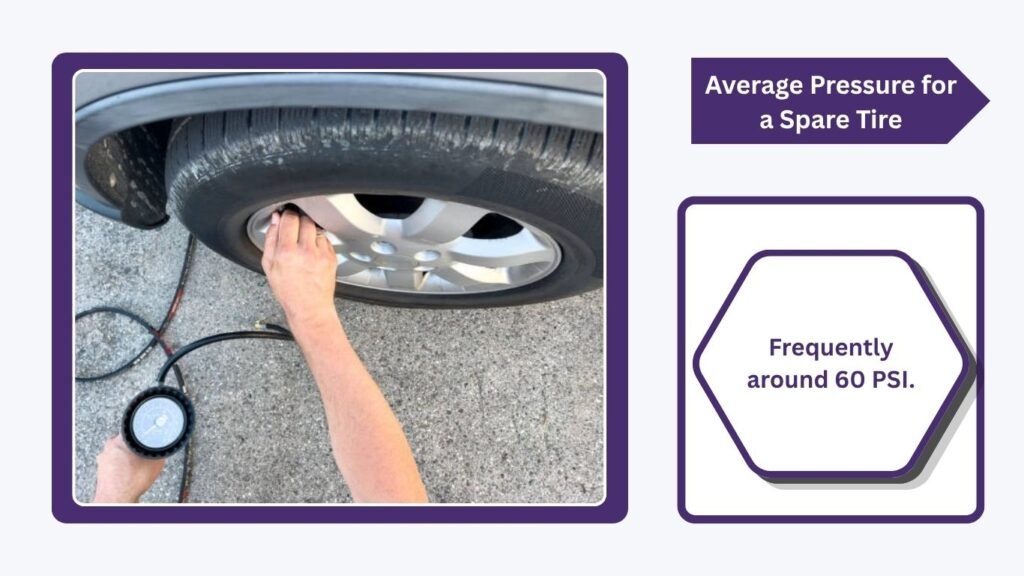
A full-size spare may use the same pressure as the other tires, but a compact temporary spare often requires substantially more pressure—frequently around 60 PSI.
Never assume the spare uses the same figure as the road tires. Check its sidewall, the vehicle placard and the owner’s manual. NHTSA specifically advises drivers not to forget the spare during routine pressure checks.
Can You Drive With the TPMS Light On?
A tire-pressure monitoring system warning means that one or more tires may be significantly underinflated or that the system has a fault. Slow down, avoid aggressive steering and check the pressure as soon as it is safe.
The warning should not be ignored merely because the tires appear normal. Radial tires can lose a substantial amount of pressure without looking obviously flat.
A flashing light that later remains illuminated often indicates a TPMS malfunction rather than pressure alone. The system should then be inspected while the tires are also checked manually.
FAQs
Is 32 PSI a normal car tire pressure?
Yes, 32 PSI is a common recommendation for many passenger cars. However, it is not correct for every vehicle. Confirm the required cold pressure on the driver-side door placard or in the owner’s manual.
Is 40 PSI too high for a car?
Not necessarily. Some cars, SUVs and low-profile tire setups specify close to 40 PSI. It is too high only when it exceeds the vehicle manufacturer’s recommendation without an approved reason.
Should all four tires have the same pressure?
Many vehicles use the same pressure on all four tires, but some require different front and rear values. Always copy the separate front and rear figures shown on the placard.
How often should tire pressure be checked?
Check it approximately once a month, before long journeys and after major temperature changes. The tires should be cold for the most accurate result.
Why is my tire pressure higher after driving?
Driving warms the tires and the air inside them, causing the pressure to rise. This is normal. Do not reduce a warm tire to the cold placard figure; recheck it after the vehicle has been parked for at least three hours.