
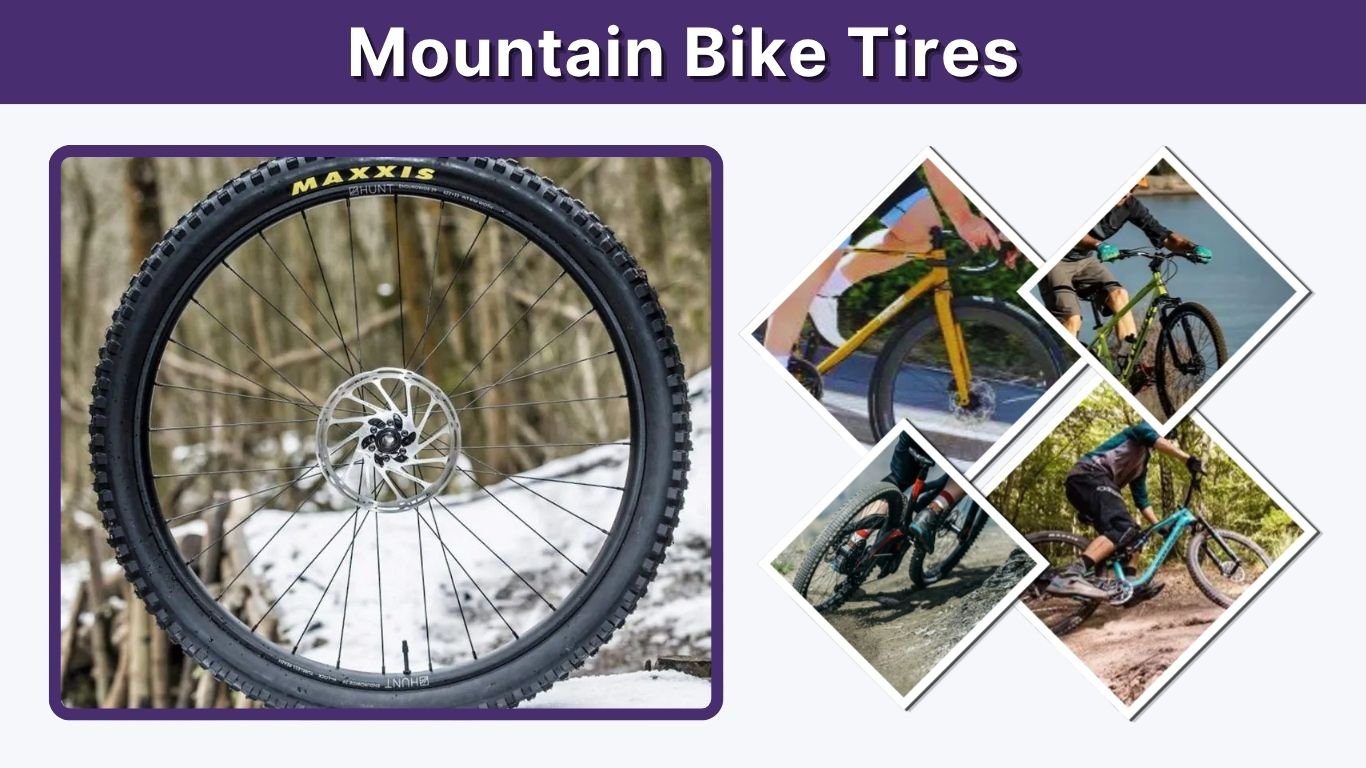
Mountain bike tires affect grip, speed, comfort, braking, and control on every trail. The right tire depends on your wheel size, riding style, terrain, tread pattern, and tire pressure. A cross-country rider may want a lighter, faster tire, while a downhill rider needs more grip and stronger sidewalls. This guide explains mountain bike tire sizes, pressure, tubeless tires, fat tires, road tires, and how to choose the best option for your bike.
What Are Mountain Bike Tires?
Mountain bike tires are wide, durable bicycle tires designed for dirt, rocks, roots, gravel, mud, sand, and rough trails. Unlike smooth road bike tires, they usually have tread knobs that help the tire grip uneven ground.
The main job of a mountain bike tire is to balance traction, rolling speed, puncture protection, and comfort. A tire with large aggressive knobs gives more grip but may roll slower. A tire with smaller knobs rolls faster but may slip more on loose or wet trails.
Mountain Bike Tire Sizes Explained
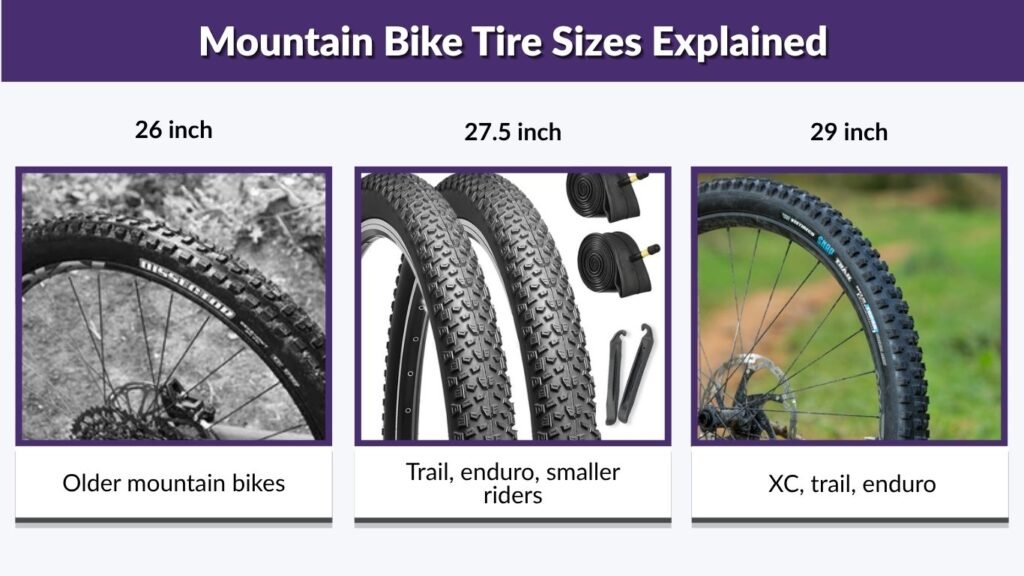
Mountain bike tire size is usually written as wheel diameter × tire width. For example, a 29 × 2.35 tire fits a 29-inch mountain bike wheel and is about 2.35 inches wide.
| Tire Size | Common Use | Best For |
| 26 inch | Older mountain bikes, kids’ bikes, some dirt jump bikes | Budget replacements, older frames |
| 27.5 inch | Trail, enduro, smaller riders | Quick handling and control |
| 29 inch | XC, trail, enduro | Speed, rollover ability, stability |
| 24 inch | Youth mountain bikes | Young riders |
| 20 inch | Kids’ mountain bikes | Small bikes |
| Fat bike tires | Snow, sand, soft ground | Maximum flotation and comfort |
26, 27.5, and 29 Inch Mountain Bike Tires
The most searched tire sizes are 26-inch, 27.5-inch, and 29-inch mountain bike tires. Each size has a different feel.
26 Inch Mountain Bike Tires
26-inch tires were once the standard for mountain bikes. They are still common on older bikes and some smaller frames. They feel quick and playful but do not roll over rocks and roots as smoothly as larger wheels.
27.5 Inch Mountain Bike Tires
27.5-inch tires sit between 26 and 29 inches. They offer a good balance of control, speed, and handling. Many trail and enduro riders like 27.5 tires because they feel more agile than 29-inch tires.
29 Inch Mountain Bike Tires
29-inch mountain bike tires are popular because they roll over obstacles better and carry speed well. They are common on cross-country, trail, and enduro bikes. Riders who want more stability often choose 29-inch tires.
Mountain Bike Tire Width
Tire width affects comfort, grip, and rolling resistance. Narrower tires are usually lighter and faster. Wider tires give more grip and cushion.
Common mountain bike tire widths include:
- 1.9–2.1 inches: older XC bikes and light trail use
- 2.2–2.4 inches: modern cross-country and trail bikes
- 2.5–2.6 inches: aggressive trail and enduro riding
- 2.8–3.0 inches: plus-size tires
- 3.8–5.0 inches: fat tire mountain bikes
A wider tire is not always better. It must fit your frame, fork, and rim width.
Mountain Bike Tire Pressure
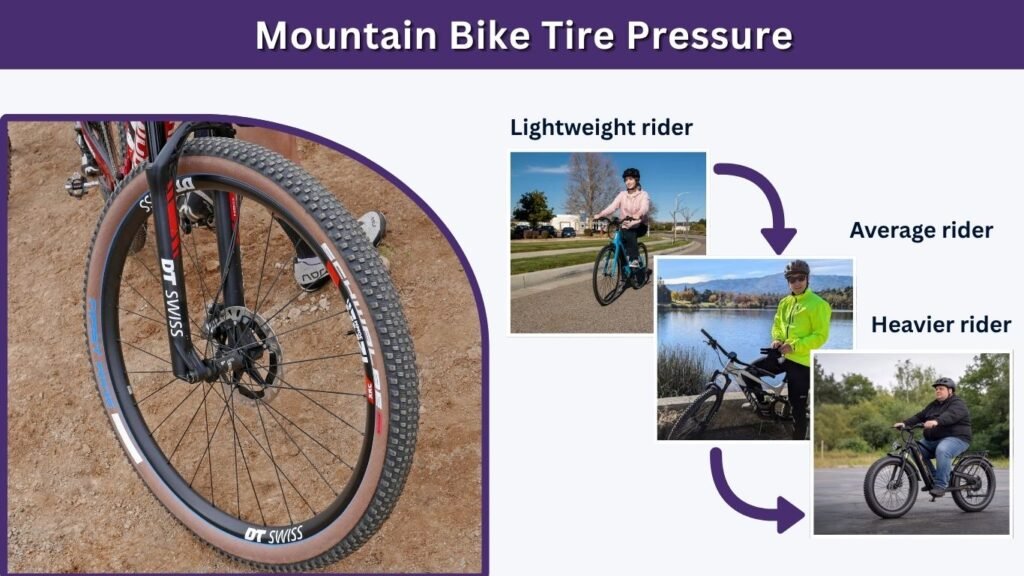
Mountain bike tire pressure is one of the most important setup choices. Too much pressure can make the ride harsh and reduce grip. Too little pressure can cause rim strikes, squirming, or pinch flats.
| Rider/Setup | Common PSI Range |
| Lightweight rider | 18–24 PSI |
| Average rider | 22–30 PSI |
| Heavier rider | 28–35 PSI |
| Tubeless tires | Often lower PSI |
| Tubed tires | Usually slightly higher PSI |
| Fat bike tires | Often 5–15 PSI |
These numbers are general starting points. The right pressure depends on rider weight, tire width, terrain, rim width, and riding style.
Mountain Bike Tire Pressure Tips
- Use lower pressure for loose dirt, roots, and rocks.
- Use higher pressure for hardpack, pavement, or heavier riders.
- Check pressure before each ride.
- Use a mountain bike tire pressure gauge for better accuracy.
- Tubeless tires usually allow lower pressure than tubes.
Tubeless Mountain Bike Tires
Tubeless mountain bike tires use sealant instead of an inner tube. The tire seals directly to the rim, and liquid sealant helps close small punctures while riding.
Benefits of Tubeless Tires
Tubeless tires are popular because they can improve grip and reduce flats.
Benefits include:
- Fewer pinch flats
- Better traction at lower pressure
- Smoother ride feel
- Sealant can fix small punctures
- Good option for trail and enduro riding
Downsides of Tubeless Tires
Tubeless setups also need maintenance. Sealant dries out over time and must be refreshed. Installation can also be harder than using a normal tube.
Fat Tire Mountain Bikes
Fat tire mountain bikes use very wide tires, usually around 3.8 to 5 inches. These tires are designed for snow, sand, mud, and soft surfaces where normal tires may sink.
Fat tires give excellent flotation and comfort, but they are heavier and slower on pavement or smooth trails. They are best for riders who need stability and traction in loose conditions.
Best Mountain Bike Tires by Riding Style
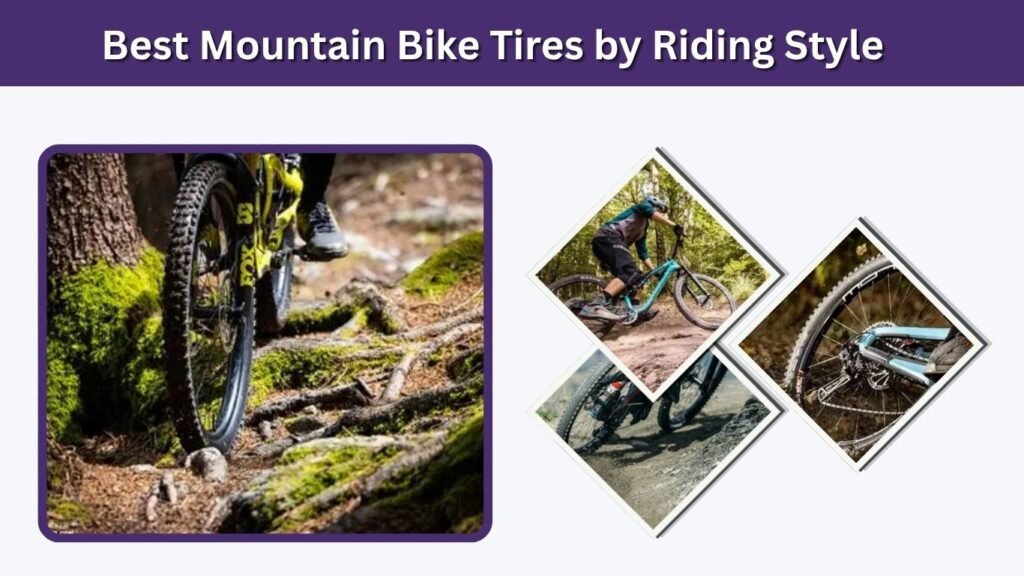
The best mountain bike tire depends on how and where you ride. A fast tire for smooth cross-country trails may not work well for downhill riding.
Cross-Country Tires
Cross-country mountain bike tires are lightweight and fast rolling. They usually have smaller knobs and thinner casings.
Best for:
- Racing
- Fitness riding
- Smooth trails
- Hardpack dirt
- Long-distance rides
Trail Tires
Trail tires are the most versatile choice for many riders. They balance grip, speed, and durability.
Best for:
- Mixed terrain
- Weekend trail riding
- Rocks and roots
- Moderate descents
- Everyday mountain biking
Enduro and Downhill Tires
Enduro and downhill tires are heavier, stronger, and more aggressive. They are built for grip and impact protection.
Best for:
- Steep descents
- Bike parks
- Rocky trails
- Aggressive riding
- Wet or loose terrain
Mountain Bike Tires for Road Use
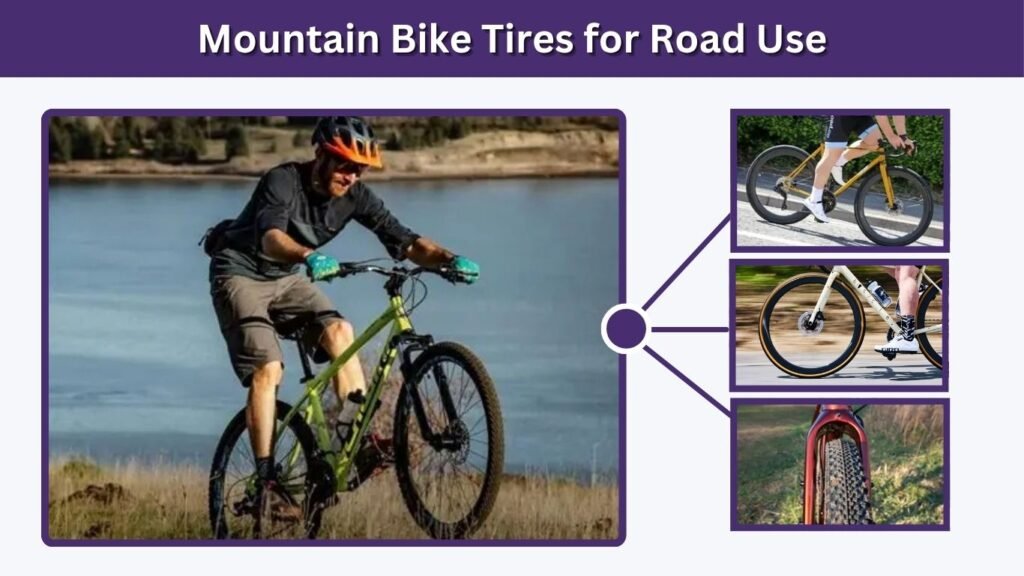
Some riders want road tires for a mountain bike because they ride mostly on pavement. In that case, slick or semi-slick mountain bike tires can make the bike faster and quieter on roads.
Road-style mountain bike tires are good for:
- Commuting
- Fitness riding
- Pavement
- Light gravel
- Hybrid use
However, slick tires have less grip on mud, wet grass, loose dirt, and rocky trails.
Popular Mountain Bike Tire Brands
Many riders search by brand because tire design varies a lot. Some popular mountain bike tire brands include Maxxis, Continental, Schwalbe, Kenda, Michelin, Pirelli, Specialized, and Goodyear.
Brand choice depends on riding style. For example, some riders prefer Maxxis for aggressive trail and enduro tires, while others choose Continental, Schwalbe, or Michelin for grip, durability, or rolling speed. The best brand is the one that matches your terrain and budget.
How to Choose Mountain Bike Tires
Choosing mountain bike tires is easier when you focus on size, terrain, and riding style first.
Check Your Wheel Size
Look at the sidewall of your old tire. It may say 26, 27.5, 29, or another size. Buy the same wheel diameter unless you are changing wheels.
Choose the Right Width
Make sure the tire fits your frame and fork. Wider tires need more clearance.
Match the Tread to Terrain
Use faster tread for hardpack and aggressive tread for mud, roots, and loose dirt.
Decide Between Tubed and Tubeless
Tubed tires are simple and cheaper. Tubeless tires offer better puncture protection and lower-pressure performance.
Think About Weight and Durability
Light tires climb faster, but strong tires survive rough trails better.
Mountain Bike Tire Repair and Maintenance
Good tire maintenance helps prevent flats and improves performance.
Important maintenance tips include:
- Check PSI before rides.
- Inspect tread for wear.
- Remove glass, thorns, or sharp stones.
- Replace tires with cracked sidewalls.
- Refresh tubeless sealant regularly.
- Carry a pump or CO₂ inflator.
- Keep a spare tube or repair kit.
- Use a tire gauge for accurate pressure.
A mountain bike tire repair kit is useful even if you ride tubeless. Sealant can fix small holes, but bigger cuts may need a plug, patch, or emergency tube.
When Should You Replace Mountain Bike Tires?
Replace mountain bike tires when the tread is worn, sidewalls are damaged, or grip feels poor. Rear tires often wear faster than front tires because they handle more pedaling force.
Signs you need new tires include:
- Rounded or missing knobs
- Cracked rubber
- Sidewall cuts
- Frequent flats
- Poor cornering grip
- Tire wobble or casing damage
- Tubeless tire no longer sealing well
FAQs
What size mountain bike tires do I need?
Check the numbers printed on your current tire sidewall. Common sizes include 26, 27.5, and 29 inches. You should match the wheel diameter and choose a width that fits your frame, fork, and rim.
What PSI should mountain bike tires be?
Many mountain bike tires run between 18 and 35 PSI, depending on rider weight, tire width, terrain, and whether the tire is tubed or tubeless. Tubeless tires can often run lower pressure for better grip.
Are tubeless mountain bike tires worth it?
Tubeless mountain bike tires are worth it for many trail riders because they reduce pinch flats, improve grip, and allow lower tire pressure. However, they need sealant maintenance and can be harder to install.
Can I put road tires on a mountain bike?
Yes, you can put road or slick tires on a mountain bike if they match your wheel size and rim. They are better for pavement and commuting but not ideal for mud, loose dirt, or rough trails.
Are 29 inch mountain bike tires better?
29-inch mountain bike tires roll over obstacles well and keep speed better on rough trails. They are great for cross-country, trail, and enduro riding, but some riders prefer 27.5-inch tires for quicker handling.