
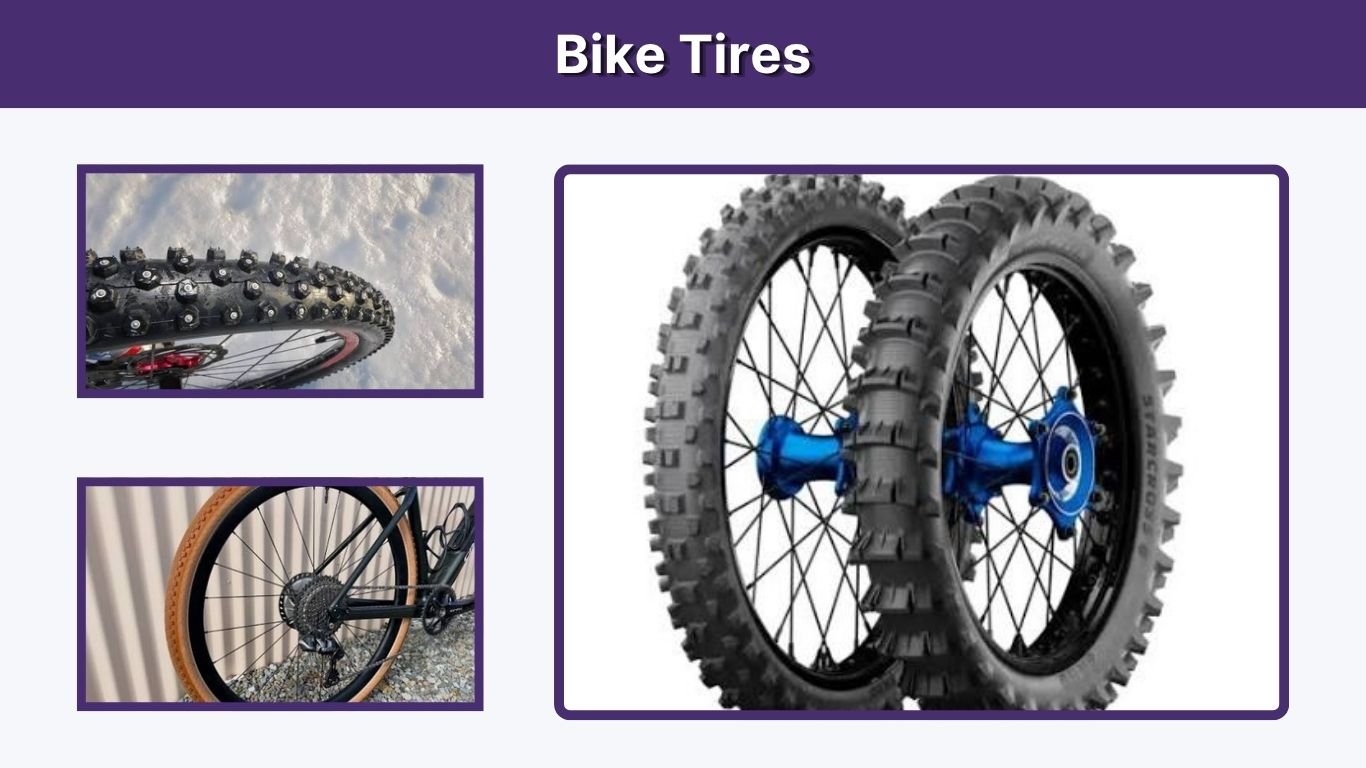
Bike tires may look simple, but they have a big effect on comfort, speed, safety, and control. The right tire can make your ride smoother, faster, and more reliable, while the wrong tire can cause poor grip, frequent flats, or a rough riding experience. Whether you ride a road bike, mountain bike, gravel bike, electric bike, BMX, or casual city bike, understanding bike tires helps you choose the best option for your riding style.
This guide explains the main types of bike tires, common bike tire sizes, tire pressure, valve types, repair tips, and when to replace your tires.
What Are Bike Tires?
Bike tires are the rubber outer part of a bicycle wheel that touches the ground. They provide grip, absorb bumps, protect the inner tube or tubeless system, and help control how the bike handles. Different bikes need different tires because road surfaces, speeds, rider weight, and terrain all change how a tire performs.
For example, road bike tires are usually narrow and smooth for speed. Mountain bike tires are wider with deep tread for grip on dirt, mud, rocks, and trails. Fat bike tires are extra wide for sand, snow, and soft ground. Choosing the right tire depends on where and how you ride.
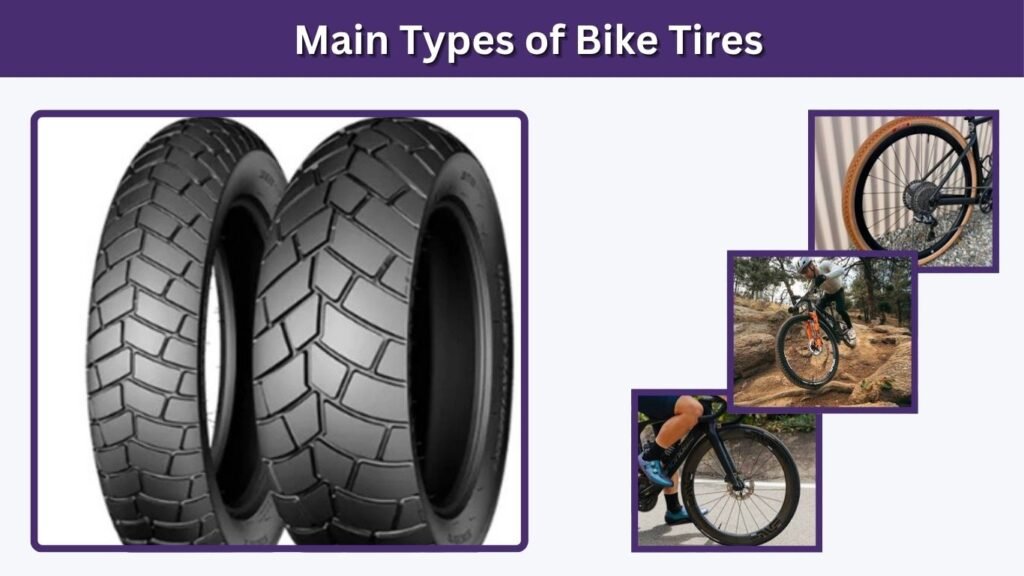
Main Types of Bike Tires
Road Bike Tires
Road bike tires are designed for speed on pavement. They are usually narrow, lightweight, and smooth. Many road bikes use 700c tires, which are common for racing, fitness riding, and long-distance cycling.
These tires roll quickly but may not be comfortable on rough roads. Wider road tires, such as 28mm or 32mm, have become popular because they offer more comfort and better grip while still feeling fast.
Mountain Bike Tires
Mountain bike tires are built for trails, dirt, rocks, roots, and uneven ground. They are wider than road tires and have aggressive tread patterns. The knobs on the tire help grip loose surfaces and improve control while climbing, braking, and cornering.
Common mountain bike wheel sizes include 26 inch, 27.5 inch, and 29 inch. A 29 inch mountain bike tire rolls over obstacles more easily, while 27.5 inch tires can feel more playful and easier to control for some riders.
Gravel Bike Tires
Gravel bike tires sit between road and mountain bike tires. They are wider than road tires but usually faster than mountain bike tires. They often have light tread or small knobs for riding on pavement, gravel roads, dirt paths, and mixed surfaces.
If you ride both roads and rough paths, gravel bike tires are a strong choice.
Fat Bike Tires
Fat bike tires are very wide, often around 3.8 inches or more. They are made for soft surfaces like snow, sand, mud, and loose dirt. Because they have a large air volume, they can run at lower pressure, giving the rider more flotation and comfort.
Fat tire bikes and fat tire electric bikes are popular for off-road riding, beach riding, winter riding, and casual adventure riding.
Electric Bike Tires
E-bike tires are often stronger than regular bike tires because electric bikes are heavier and faster. They may have reinforced sidewalls, puncture protection, and higher load ratings. If you ride an electric bike, it is best to choose tires made for e-bike use.
Bike Tire Sizes Explained
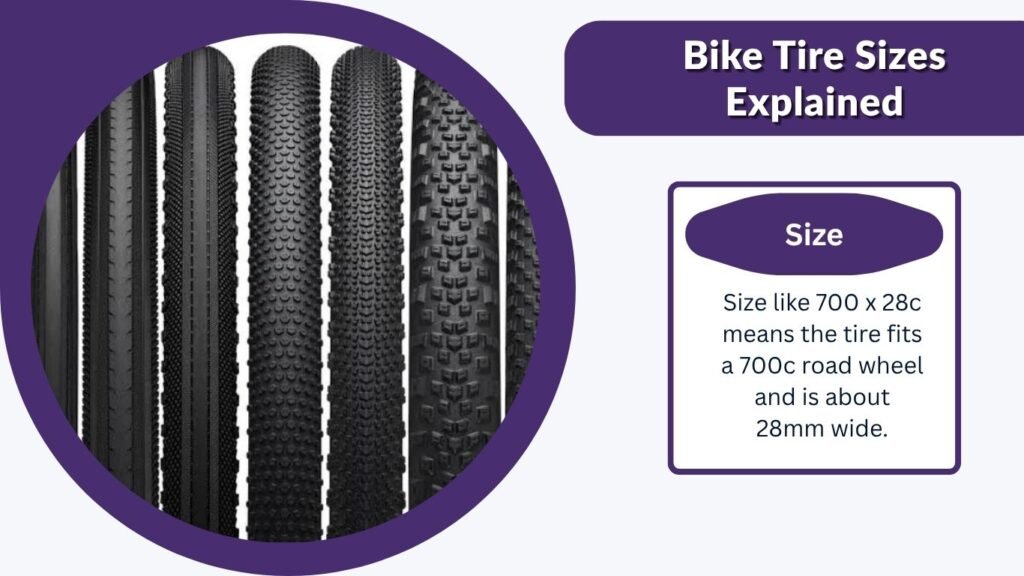
Bike tire sizes can be confusing because they may appear in inches, millimeters, or ISO measurements. Common examples include 26 inch bike tires, 29 inch mountain bike tires, 700c road bike tires, and 20 inch bike tires.
A size like 26 x 1.95 means the tire fits a 26 inch wheel and is about 1.95 inches wide. A size like 700 x 28c means the tire fits a 700c road wheel and is about 28mm wide.
Before buying a replacement bike tire, check the sidewall of your current tire. The size is usually printed there. You should match the wheel diameter exactly. The width can sometimes vary, but it must fit your bike frame, fork, and rim.
Bike Tire Pressure: How Much PSI Do You Need?
Bike tire pressure is measured in PSI, which means pounds per square inch. The right PSI depends on tire size, rider weight, riding surface, and tire type.
Road bike tires usually need higher pressure than mountain bike tires. Mountain bike and fat bike tires often use lower pressure for better grip and comfort. Gravel tires usually sit in the middle.
A higher PSI can feel faster on smooth roads, but too much pressure can make the ride harsh and reduce grip. A lower PSI can improve comfort and traction, but too little pressure can cause pinch flats, rim damage, or slow rolling.
The easiest rule is to check the recommended PSI range printed on the tire sidewall. Start in the middle of that range, then adjust based on comfort and performance.
Tube Tires vs. Tubeless Bike Tires
Tube Tires
Traditional bike tires use an inner tube. The tube holds air inside the tire. Tube tires are common, affordable, and easy to repair. If you get a flat, you can patch the tube or replace it.
Tube tires are a good choice for casual riders, commuters, and people who want simple maintenance.
Tubeless Bike Tires
Tubeless bike tires do not use an inner tube. Instead, the tire seals directly to the rim and uses liquid sealant inside. The sealant can close small punctures automatically while you ride.
Tubeless tires are popular among mountain bikers, gravel riders, and some road cyclists. They can reduce flats and allow lower pressure for better grip. However, they require compatible rims, tubeless valves, sealant, and careful setup.
Bike Tire Valve Types
There are two common bike tire valve types: Schrader and Presta.
Schrader valves are wider and look like car tire valves. They are common on mountain bikes, kids’ bikes, casual bikes, and some older bikes.
Presta valves are thinner and common on road bikes, gravel bikes, and many higher-end bicycles. They have a small nut at the top that must be loosened before pumping air.
Before buying a bike tire tube, pump, or pressure gauge, check which valve type your bike uses.
When Should You Replace Bike Tires?
You should replace bike tires when the tread is worn, the rubber is cracked, the sidewall is damaged, or the tire gets frequent flats. Road bike tires may become smooth or squared off in the center. Mountain bike tires may lose their knobs, which reduces grip on trails.
Also replace a tire if you see bulges, deep cuts, exposed threads, or dry rot. A damaged tire can fail while riding, which can be dangerous.
How to Repair a Flat Bike Tire
If your tire goes flat, first remove the wheel from the bike. Use bike tire levers to remove one side of the tire from the rim. Take out the inner tube and inspect it for holes. You can inflate the tube slightly and listen for escaping air.
Check the tire carefully for glass, thorns, nails, wire, or sharp objects. If you do not remove the object, the new or patched tube may go flat again.
You can repair the tube with a bike tire patch kit or replace it with a new tube. After putting the tube back inside the tire, make sure it is not pinched between the tire and rim. Then inflate slowly and check that the tire sits evenly on the wheel.
How to Choose the Best Bike Tires
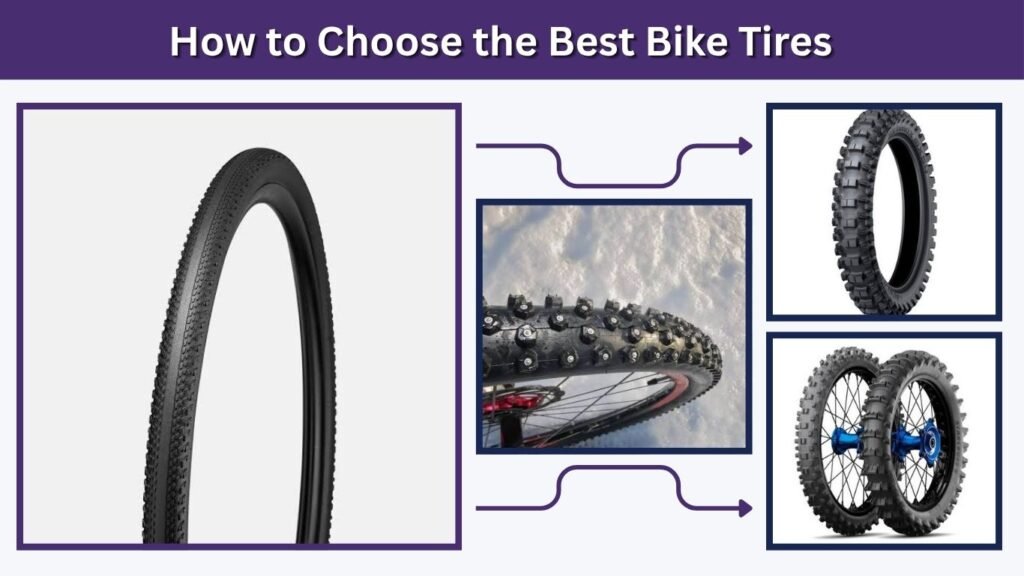
To choose the best bike tires, think about your riding style first. For fast road riding, choose smooth road tires. For dirt trails, choose mountain bike tires with good tread. For mixed surfaces, choose gravel tires. For snow, sand, or soft ground, choose fat bike tires.
Also consider puncture protection, tire width, tread pattern, rolling speed, comfort, and durability. If you commute daily, a tougher tire may be better than the lightest tire. If you race or ride for speed, weight and rolling resistance may matter more.
FAQs
1. What size bike tire do I need?
Check the sidewall of your current tire. The size will usually be printed there, such as 26 x 1.95, 29 x 2.25, or 700 x 28c.
2. How often should I replace bike tires?
Replace bike tires when the tread is worn, the sidewall is cracked, the tire has deep cuts, or you keep getting flats.
3. What PSI should bike tires be?
The correct PSI depends on tire type and rider weight. Check the PSI range printed on the tire sidewall and start near the middle of that range.
4. Are tubeless bike tires better?
Tubeless tires can reduce flats and improve grip, especially for mountain and gravel riding. However, they cost more and need compatible rims, valves, and sealant.
5. Can I put wider tires on my bike?
Sometimes, yes. But the tire must fit your bike frame, fork, brakes, and rims. Always check clearance before buying wider bike tires.