
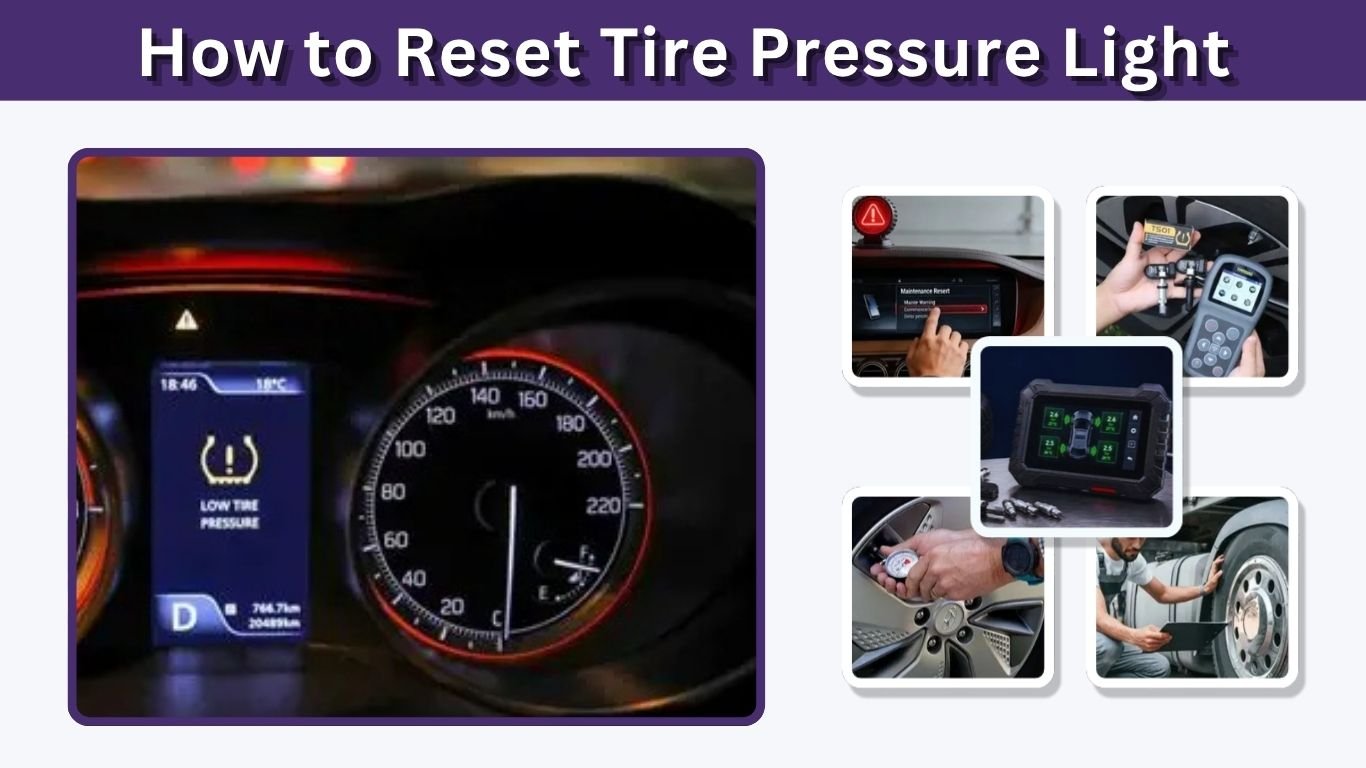
The tire pressure monitoring system (TPMS) warns you when one or more tires have low air pressure. After inflating your tires to the recommended PSI, the warning light should usually turn off automatically. However, sometimes the light stays on and must be reset manually. This guide explains how to reset the tire pressure light on most vehicles, why the light may remain on, and what to do if the reset doesn’t work.
What Is the Tire Pressure Light?
The tire pressure light is part of your vehicle’s Tire Pressure Monitoring System (TPMS). It monitors the air pressure in your tires and alerts you when pressure falls below the manufacturer’s recommended level.
A TPMS warning usually appears as:
- A horseshoe-shaped icon with an exclamation mark (!)
- The words “Low Tire Pressure”
- A TPMS warning message on the dashboard
Ignoring this warning can reduce fuel efficiency, shorten tire life, and affect braking and handling.
When Should You Reset the Tire Pressure Light?
You should reset the TPMS light only after:
- Inflating all four tires to the correct PSI
- Checking the spare tire (if monitored)
- Repairing or replacing a damaged tire
- Rotating tires (on some vehicles)
- Installing new TPMS sensors
Never reset the warning light without fixing the underlying tire pressure issue.
How to Reset the Tire Pressure Light
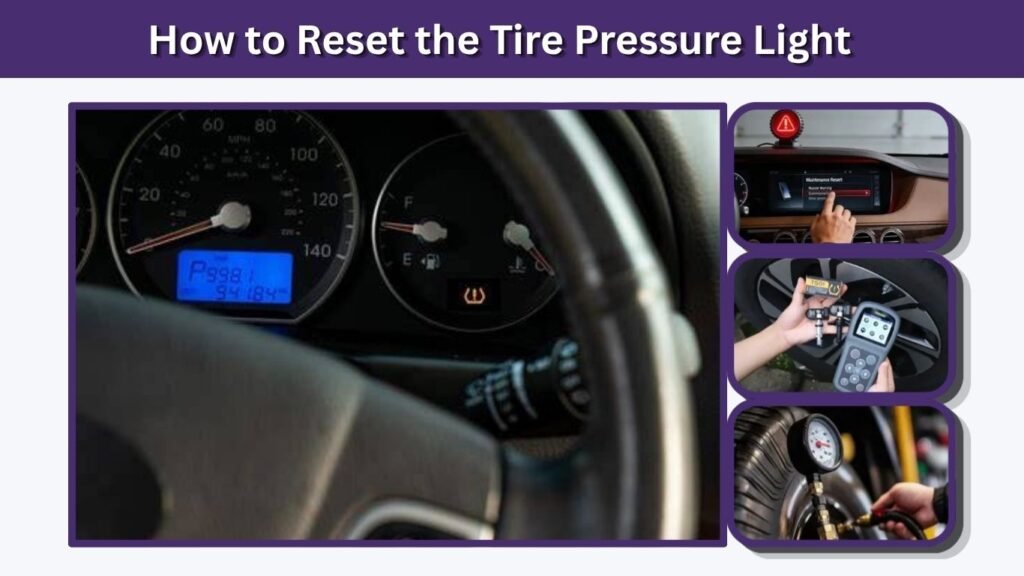
Most vehicles follow one of these methods.
Method 1: Drive the Vehicle
Many modern vehicles reset automatically.
- Inflate all tires to the recommended pressure.
- Start the engine.
- Drive at 30–50 mph (50–80 km/h) for 10–20 minutes.
If the TPMS detects normal pressure, the warning light usually turns off.
Method 2: Use the TPMS Reset Button
Many vehicles have a dedicated reset button.
- Turn the ignition to the ON position without starting the engine.
- Locate the TPMS reset button (often under the steering wheel or dashboard).
- Press and hold the button until the TPMS light blinks three times.
- Release the button.
- Start the engine.
- Drive for several minutes.
Method 3: Reset Through the Vehicle Menu
Newer cars often use the infotainment screen.
Typical steps include:
- Open Settings
- Select Vehicle Settings
- Choose TPMS
- Select Calibrate or Reset
- Confirm the reset
The exact menu varies by manufacturer.
How to Find the Correct Tire Pressure
Always use the pressure listed by the vehicle manufacturer rather than the maximum pressure printed on the tire.
You can usually find the recommended PSI:
- Inside the driver’s door jamb
- In the owner’s manual
- On the fuel door (some vehicles)
Check tire pressure when the tires are cold for the most accurate reading.
Why the Tire Pressure Light Stays On
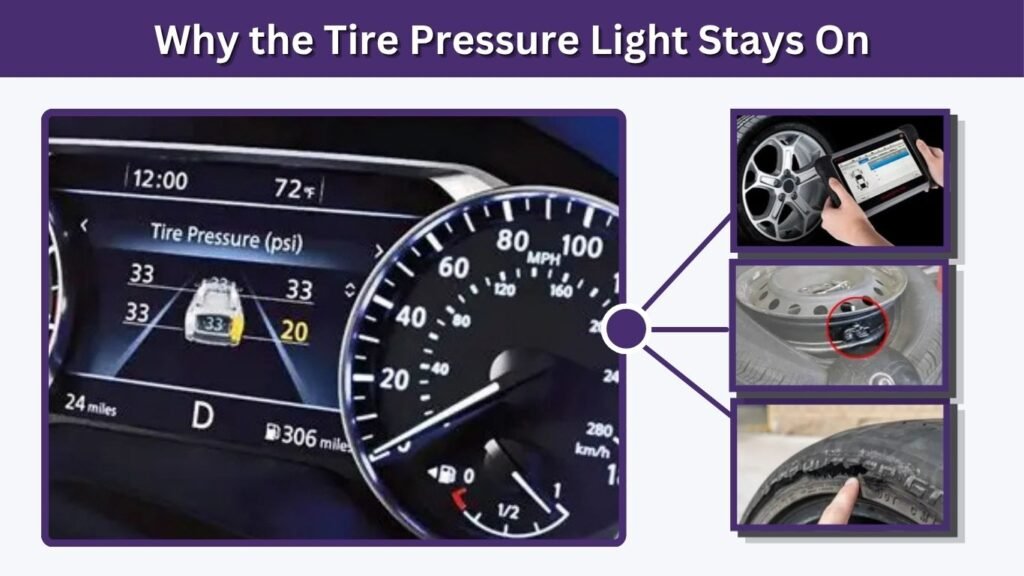
If the warning remains after inflation, one of these issues may be causing it.
Incorrect Tire Pressure
One tire may still be underinflated or overinflated.
Temperature Changes
Cold weather lowers tire pressure naturally.
A drop of about 10°F (5–6°C) can reduce tire pressure by approximately 1 PSI.
Faulty TPMS Sensor
Battery-powered TPMS sensors usually last:
- 5–10 years
A failing sensor may require replacement.
Damaged Sensor
Sensors can be damaged during:
- Tire changes
- Wheel replacement
- Road impacts
TPMS Needs Relearning
Some vehicles require recalibration after:
- Tire rotation
- Wheel replacement
- Sensor replacement
Brand-Specific Reset Tips
Honda
Most newer Honda models use the infotainment display.
Go to:
Settings → Vehicle → TPMS Calibration → Calibrate
Older Honda vehicles may have a TPMS reset button below the steering wheel.
Toyota
Many Toyota models have a TPMS reset button beneath the dashboard.
- Inflate all tires.
- Press and hold the reset button.
- Wait until the light blinks three times.
- Drive the vehicle.
Hyundai
Some Hyundai models reset automatically after driving, while others allow TPMS calibration through the settings menu.
Volkswagen (VW)
Many Volkswagen vehicles require:
- Correct tire pressure
- Opening the Car menu
- Selecting Tire Pressure Monitor
- Confirming “Set”
Ford
Most newer Ford vehicles automatically relearn tire pressure after proper inflation.
Some models require a TPMS training procedure if sensors are replaced.
What If the TPMS Light Blinks?
A blinking TPMS light usually indicates a system fault rather than low tire pressure.
Common causes include:
- Dead TPMS sensor battery
- Faulty sensor
- Communication error
- TPMS module issue
A diagnostic scan tool is usually needed to identify the problem.
Can You Drive With the Tire Pressure Light On?
Yes, but only if tire pressure has been checked and corrected.
If a tire is significantly underinflated:
- Pull over safely.
- Inflate or repair the tire.
- Avoid long-distance driving.
Driving on low-pressure tires increases the risk of tire failure and poor handling.
TPMS Maintenance Tips
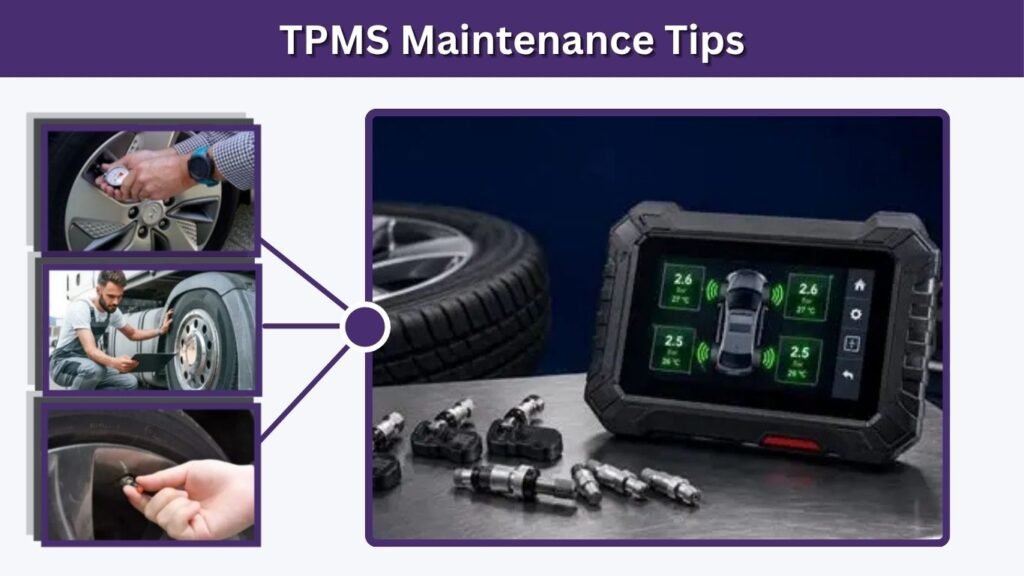
Keep your TPMS working properly by:
- Checking tire pressure monthly
- Inspecting tires before long trips
- Replacing damaged TPMS sensors
- Using quality valve caps
- Checking pressure whenever temperatures change significantly
Common TPMS Reset Mistakes
Avoid these common errors:
- Resetting before inflating the tires
- Ignoring the spare tire
- Using the tire sidewall PSI instead of the manufacturer’s recommendation
- Skipping the required drive cycle
- Assuming the light means the sensor is broken
FAQs
Why won’t my tire pressure light turn off after filling the tires?
The system may need a drive cycle, manual reset, or TPMS calibration. It could also indicate a faulty sensor or incorrect tire pressure.
How long does it take for the TPMS light to reset?
Many vehicles reset within 10–20 minutes of driving after proper inflation. Others require a manual reset using a button or the vehicle’s settings.
Is it safe to reset the TPMS light without fixing the tire pressure?
No. Always inflate the tires to the recommended PSI before resetting the system. Resetting without correcting the pressure can hide a real safety issue.
Can cold weather trigger the tire pressure light?
Yes. Lower temperatures reduce tire pressure naturally, which may activate the TPMS warning even if there is no puncture.
Do all cars have a TPMS reset button?
No. Some vehicles reset automatically, while others use the infotainment system or require a TPMS relearn procedure after maintenance.