
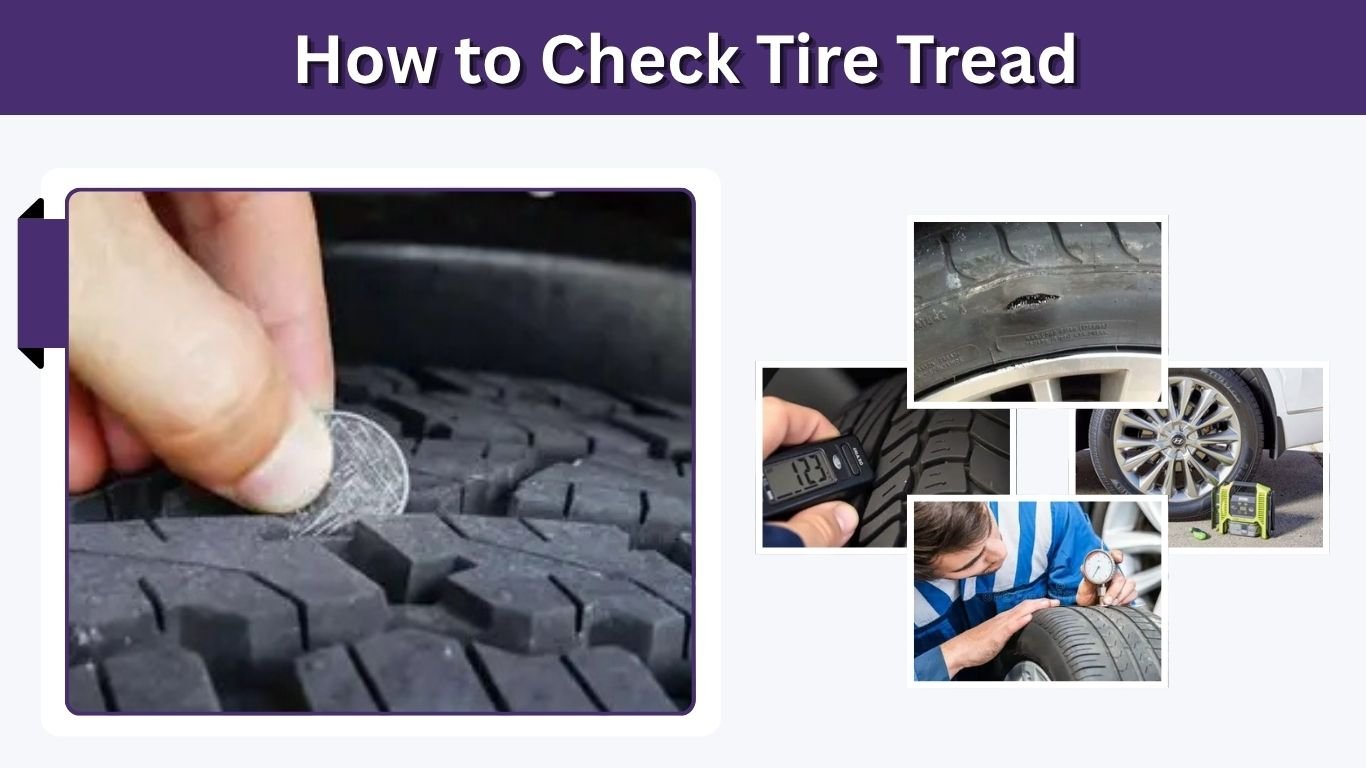
Tire tread helps your vehicle grip the road, stop safely, and move through rain, snow, or rough pavement. When tread gets too low, your tires can lose traction and increase the risk of hydroplaning or longer stopping distances. The good news is that you can check tire tread at home using a penny, quarter, tread depth gauge, or built-in wear bars. This guide explains each method clearly so you know when your tires are still safe and when they need replacement.
What Is Tire Tread and Why Does It Matter?
Tire tread is the patterned rubber surface that touches the road. The grooves, blocks, and channels in the tread help push water away, grip pavement, and keep your vehicle stable while turning, braking, and accelerating.
Tread becomes shallower as you drive. Once it wears down too far, the tire cannot perform the way it should. According to NHTSA, tires are not safe and should be replaced when tread reaches 2/32 of an inch.
What Tire Tread Does
Tire tread plays several important roles:
- Provides traction on dry, wet, snowy, or uneven roads.
- Channels water away to reduce hydroplaning.
- Improves braking control by keeping more rubber in contact with the road.
- Helps with steering stability during turns and lane changes.
- Supports safer driving in changing weather conditions.
Low tread can make a car feel less stable, especially during rain or emergency braking.
How to Check Tire Tread with a Penny
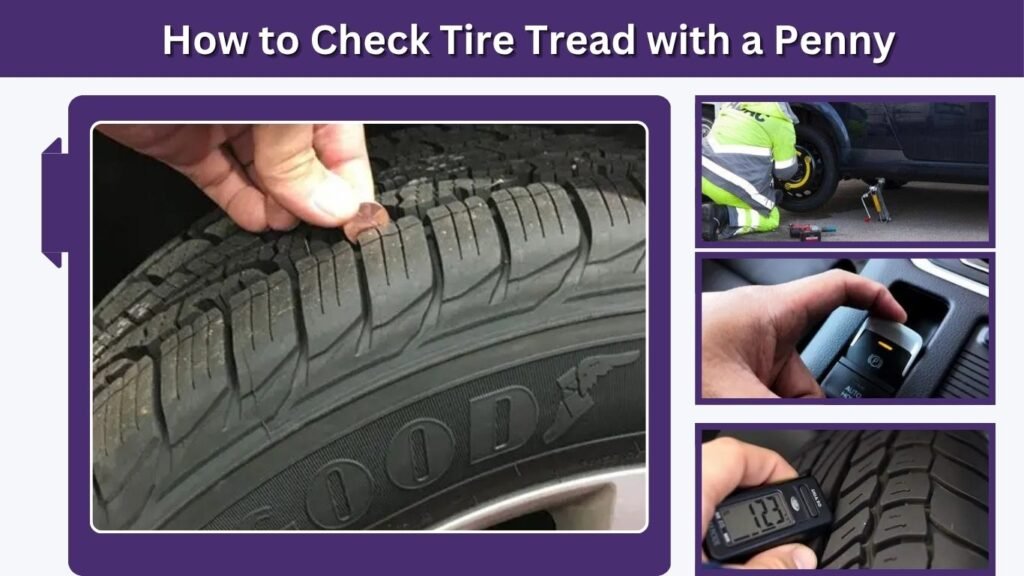
The penny test is one of the most common ways to check tire tread without a gauge. It is quick, free, and useful for checking whether your tread is near the legal minimum.
To do the penny test, place a penny into the tire groove with Lincoln’s head facing down. If part of Lincoln’s head is covered by the tread, your tire has more than 2/32 inch of tread. If you can see all of Lincoln’s head, the tread is too low and the tire should be replaced.
Steps for the Penny Test
- Park your car on a flat, safe surface.
- Turn off the engine and set the parking brake.
- Take a penny and place it into a main tread groove.
- Point Lincoln’s head downward into the tread.
- Check whether the top of Lincoln’s head is visible.
- Repeat the test in several grooves across the tire.
If any part of the tire fails the penny test, the tire should be replaced, even if other areas still look deeper. Bridgestone also recommends checking multiple spots around each tire because uneven wear can cause one area to fail before the rest of the tire.
What the Penny Test Means
| Penny Test Result | What It Means | What to Do |
| Part of Lincoln’s head is covered | Tread is above 2/32 inch | Keep monitoring |
| Lincoln’s full head is visible | Tread is at or below 2/32 inch | Replace the tire |
| One area fails but others pass | Uneven wear is present | Replace or inspect professionally |
The penny test is helpful, but it only checks the minimum tread level. A tire may still be legal at slightly more than 2/32 inch, but it may not perform well in rain or snow.
How to Check Tire Tread with a Quarter
The quarter test is another simple coin method. It gives an earlier warning than the penny test because it checks for about 4/32 inch of tread depth.
Place a quarter into the tread groove with Washington’s head facing down. If the tread covers part of Washington’s head, your tire has at least 4/32 inch of tread. If the top of his head is fully visible, it may be time to start shopping for new tires. AAA explains that the quarter test can help drivers identify when tires are getting close to the replacement zone.
Penny Test vs Quarter Test
The penny test tells you when the tire is near the legal minimum. The quarter test gives you more warning before the tread becomes dangerously low.
| Method | Approximate Tread Depth | Best For |
| Penny test | 2/32 inch | Checking minimum safety limit |
| Quarter test | 4/32 inch | Knowing when to plan replacement |
| Tread depth gauge | Exact measurement | Most accurate tread check |
The quarter test is especially useful before rainy seasons, long trips, or winter driving.
How to Check Tire Tread Depth with a Gauge
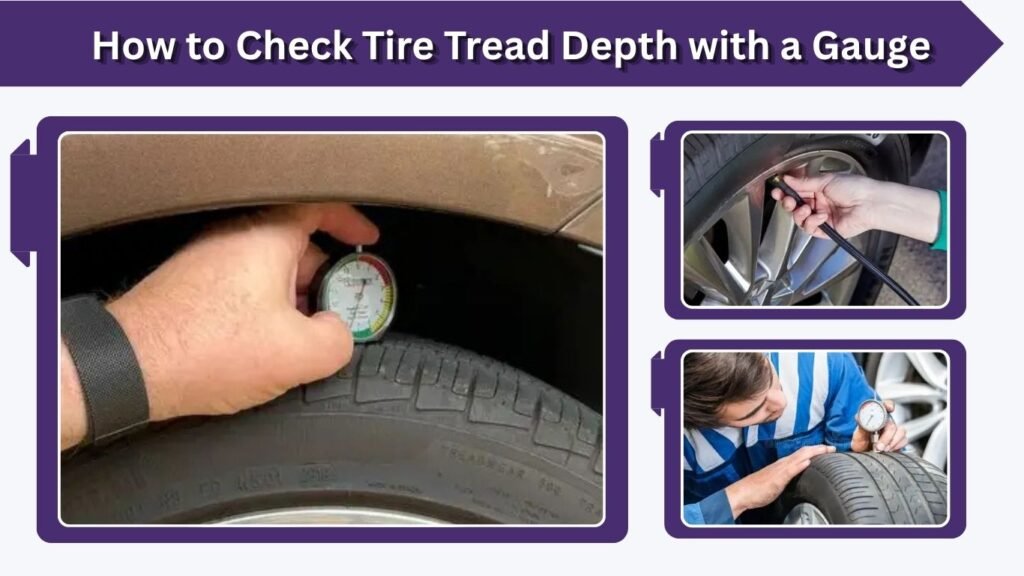
A tread depth gauge is the most accurate tool for checking tire tread. It is small, inexpensive, and easy to use. Most gauges measure tread depth in 32nds of an inch or millimeters.
To use a tread depth gauge, place the probe into the tread groove and press the base flat against the tire. Then read the measurement on the scale. Tire Rack recommends making sure the gauge is properly reset before measuring so the reading is accurate.
Steps to Use a Tread Depth Gauge
- Push the gauge probe fully down.
- Place the probe into a main tread groove.
- Press the gauge base flat against the tire surface.
- Read the tread depth number.
- Measure the inner, center, and outer areas of the tire.
- Repeat on all four tires.
For the best result, check each tire in at least three places: inside edge, center, and outside edge. This helps you spot uneven wear.
Tire Tread Depth Chart
| Tread Depth | Condition | Meaning |
| 8/32 inch or more | Good | Plenty of tread remains |
| 6/32 inch | Good to acceptable | Still usable for normal driving |
| 4/32 to 5/32 inch | Worn | Plan for replacement soon |
| 3/32 inch | Very low | Replace soon, especially for wet roads |
| 2/32 inch or less | Unsafe | Replace immediately |
AAA notes that 6/32 inch or deeper is generally good, 4/32 to 5/32 inch means replacement should be planned, and 2/32 inch or lower should be replaced immediately.
How to Check Tire Tread Wear Bars
Most modern tires have built-in tread wear indicator bars. These are small raised rubber bars located inside the tread grooves. When the surrounding tread wears down to the same level as the bars, the tire has reached about 2/32 inch of tread.
Look between the tread grooves for small horizontal bars. If the tread is flush with those bars, the tire is worn out and should be replaced.
Signs Your Wear Bars Are Showing
You may need new tires if:
- The tread is level with the wear bars.
- Multiple wear bars are visible across the tire.
- The tire looks smooth or bald in some areas.
- Wet-road traction feels weaker than before.
- The tire fails the penny test in any groove.
Wear bars are useful because they are built into the tire, but they should not be your only check. A gauge or coin test can give you a better idea before the tire reaches the final limit.
How Often Should You Check Tire Tread?
You should check tire tread at least once a month and before long road trips. You should also check tread after hitting potholes, driving on rough roads, or noticing changes in handling.
Tread can wear faster if your tires are underinflated, overinflated, misaligned, unbalanced, or not rotated regularly. Checking often helps you catch problems early.
Best Times to Check Tire Tread
Check your tire tread:
- Once every month.
- Before a long trip.
- Before winter or rainy season.
- After driving on rough roads.
- When your car pulls to one side.
- When you notice vibration or uneven handling.
- After a tire pressure warning light appears.
If one tire is wearing faster than the others, the issue may be alignment, suspension, tire pressure, or rotation schedule.
Signs Your Tire Tread Is Bad
Tread depth is important, but it is not the only thing to inspect. Tires can also become unsafe because of cracking, bulges, punctures, uneven wear, or age.
A tire with enough tread may still need replacement if the rubber is damaged. Always inspect both the tread surface and sidewall.
Common Tire Wear Patterns
| Wear Pattern | Possible Cause | What It Means |
| Center wear | Overinflation | Middle tread wears faster |
| Edge wear | Underinflation | Outer edges wear faster |
| One-side wear | Alignment issue | Tire leans unevenly on road |
| Cupping or patchy wear | Suspension or balance problem | Tire may vibrate or make noise |
| Bald spots | Hard braking or damage | Tire may be unsafe |
Uneven wear should not be ignored. It can reduce tire life and make your vehicle harder to control.
When Should You Replace Tires?
You should replace tires immediately when tread reaches 2/32 inch or lower. This is the common legal minimum in many places and the point where tires are considered unsafe by major safety sources. NHTSA and Tire Rack both identify 2/32 inch as the worn-out minimum tread depth.
However, many drivers should consider replacing tires before they reach that point. Wet braking and handling can get worse before the tire becomes legally bald. AAA reported that tires worn to 4/32 inch showed longer stopping distances and reduced handling compared with new tires in wet conditions.
If you drive often in rain, snow, or highway traffic, replacing tires around 4/32 inch may be safer than waiting until 2/32 inch.
How to Check Tire Tread at Home Safely
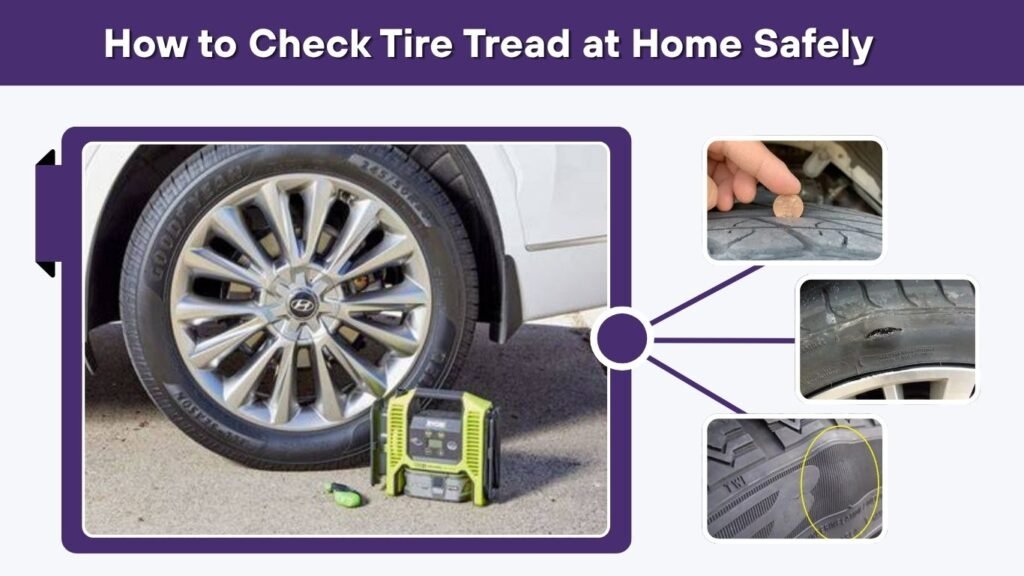
Checking tread at home is simple, but you should do it carefully. Park on level ground, avoid checking tires immediately after hard driving, and make sure you can see the tread clearly.
Use a flashlight if needed. Dirt, stones, and shadows can make grooves harder to read.
At-Home Tire Tread Checklist
- Park the car safely.
- Check all four tires, not just one.
- Look at the inner, center, and outer tread.
- Use a penny, quarter, or gauge.
- Inspect for cracks, cuts, nails, or bulges.
- Compare tread depth between tires.
- Schedule service if wear looks uneven.
Front and rear tires may wear differently depending on your vehicle. That is why checking every tire matters.
How to Check Tire Tread on Different Vehicles
The basic process is similar for cars, SUVs, trucks, and motorcycles, but the details can vary. Larger vehicles may need deeper tread for safe performance, especially if they carry heavy loads or drive in rough conditions.
Motorcycle tires need extra attention because they have less contact with the road and play a direct role in balance and cornering. If motorcycle tread is low, uneven, or damaged, replace the tire quickly.
Car, Truck, and Motorcycle Tips
For cars, use a penny, quarter, or gauge across all four tires. For trucks and SUVs, pay close attention to uneven shoulder wear, especially if the vehicle tows or carries heavy weight. For motorcycles, check the center tread and side tread because cornering wears different parts of the tire.
Winter tires also need more tread than regular tires to work well in snow. If snow tire tread is too shallow, the tire may lose its ability to grip slush and packed snow.
Tire Tread Depth in Inches and Millimeters
In the United States, tread depth is often measured in 32nds of an inch. In many other countries, it is measured in millimeters.
A tread depth of 2/32 inch is about 1.6 mm. A tread depth of 4/32 inch is about 3.2 mm. A tread depth of 6/32 inch is about 4.8 mm.
| Inches | Millimeters | Condition |
| 10/32 inch | 7.9 mm | New or near new |
| 8/32 inch | 6.4 mm | Good |
| 6/32 inch | 4.8 mm | Good/acceptable |
| 4/32 inch | 3.2 mm | Start planning replacement |
| 2/32 inch | 1.6 mm | Replace immediately |
A gauge with both inch and millimeter markings makes this easier.
Mistakes to Avoid When Checking Tire Tread
Many drivers only check one tire or one groove. That can miss uneven wear. A tire may look fine from the outside but be badly worn on the inner edge.
Another mistake is waiting until the tire is completely bald. By that point, the tire may already be unsafe in rain.
Avoid these common mistakes:
- Checking only one tire.
- Measuring only the center groove.
- Ignoring inner-edge wear.
- Waiting until tread is completely smooth.
- Forgetting to check tire pressure too.
- Assuming all tires wear at the same speed.
- Ignoring cracks, bulges, or vibration.
Tread checks work best when combined with regular tire pressure checks, rotation, alignment, and professional inspection.
FAQs
How do I check tire tread with a penny?
Place a penny into the tread groove with Lincoln’s head facing down. If part of his head is covered, your tread is above 2/32 inch. If you can see his whole head, the tire is too worn and should be replaced.
Is the penny test accurate for tire tread?
The penny test is useful for checking whether tread is near the 2/32-inch minimum, but it is not the most accurate method. A tread depth gauge gives a better measurement and helps you track wear earlier.
Is the quarter test better than the penny test?
The quarter test gives an earlier warning because it checks for about 4/32 inch of tread. The penny test checks the minimum replacement point, while the quarter test helps you plan before the tire becomes dangerously low.
What tread depth is considered unsafe?
Tires are generally considered unsafe at 2/32 inch or lower. At this depth, they should be replaced immediately. For wet or snowy driving, replacement may be wise before reaching that level.
How often should I check my tire tread?
Check tire tread once a month and before long trips. You should also inspect tread before rainy or winter weather and whenever you notice vibration, pulling, uneven handling, or visible tire damage.