
A spare tire is made to get you out of an emergency, not replace your regular tire for daily driving. How long you can drive on a spare tire depends on the type of spare, its condition, speed limit, and your vehicle’s owner’s manual. Most donut spare tires are only safe for short distances at reduced speeds. This guide explains how far you can drive, how fast you can go, and when to replace or repair your regular tire.
How Long Can You Drive on a Spare Tire?
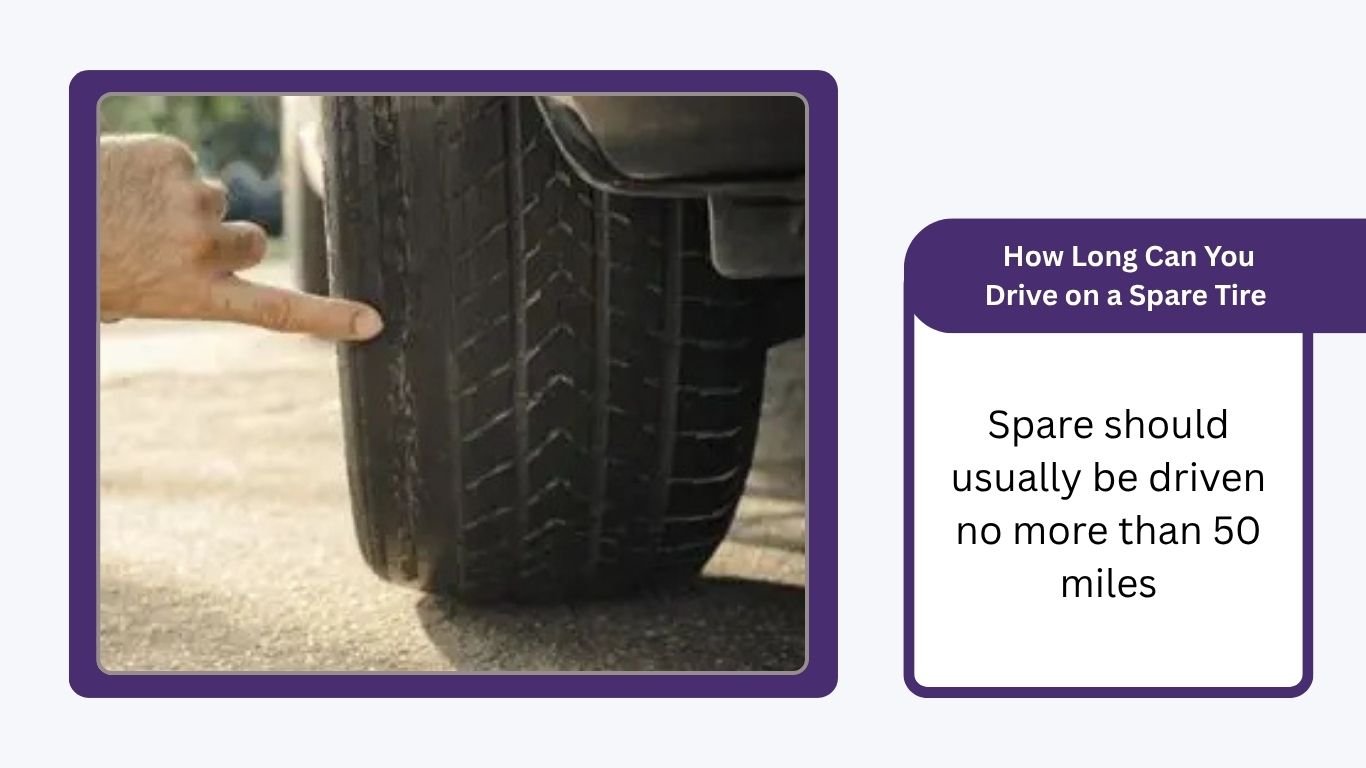
Most drivers searching this question want a clear number. The safest general rule is simple: a compact or donut spare should usually be driven no more than 50 miles and no faster than 50 mph.
AAA says drivers should not exceed 50 mph or drive more than 50 miles on a donut-type spare tire. Longer driving on this type of spare can potentially damage the tire, wheel, or vehicle components.
The 50/50 Rule
The 50/50 rule means:
- Drive under 50 mph.
- Drive less than 50 miles.
- Use the spare only to reach a tire shop, mechanic, or safe repair location.
- Avoid highways when possible.
- Replace or repair the damaged tire as soon as you can.
Discount Tire also explains that the 50/50 rule applies to most compact spare tires, also called donuts. Full-size spare tires may be different because they are usually closer to a regular tire.
How Far Can You Drive on a Spare Tire?
How far you can drive depends on whether your spare is a compact donut, full-size spare, folding temporary spare, or run-flat tire system.
A donut spare is smaller, lighter, and narrower than a normal tire. It is designed to save trunk space and help you reach service, not handle long-distance driving. Les Schwab recommends keeping speeds at or below 50 mph and driving no more than 50 miles before getting the flat fixed.
Spare Tire Distance by Type
| Spare Tire Type | Recommended Distance | Speed Limit | Best Use |
| Donut/compact spare | About 50 miles | Up to 50 mph | Emergency trip to repair shop |
| Full-size matching spare | Similar to regular tire if maintained | Normal limits may apply | Temporary replacement |
| Full-size non-matching spare | Short-term use | Drive carefully | Emergency use |
| Run-flat tire | Often up to 50 miles after pressure loss | Usually up to 50 mph | Reaching service without changing tire |
| Tire sealant kit | Short distance only | Varies | Small punctures only |
Goodyear notes that some run-flat systems are restricted to a maximum of 50 mph for up to 50 miles when driven in a deflated condition.
How Fast Can You Drive on a Spare Tire?
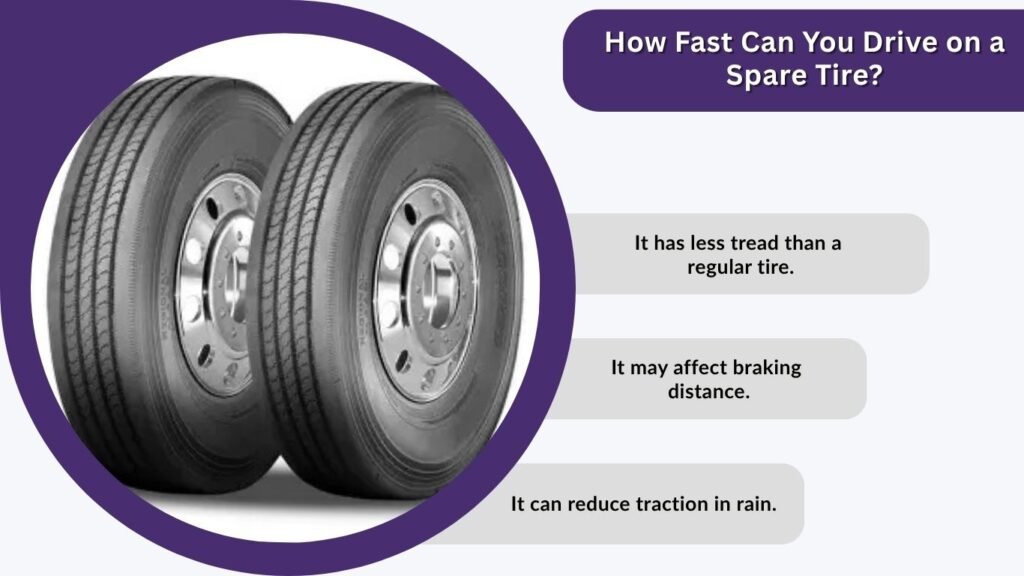
With a donut spare, the usual speed limit is 50 mph. Even if the road allows faster driving, the spare tire may not be built for highway speeds.
Driving too fast on a compact spare can create heat, reduce control, and increase the chance of tire failure. A smaller spare also changes how the vehicle handles, especially during braking, turning, and emergency maneuvers.
Why You Should Not Speed on a Donut Spare
A donut spare can feel normal at first, but it has major limits:
- It has less tread than a regular tire.
- It is narrower and has less road contact.
- It may affect braking distance.
- It can reduce traction in rain.
- It can put stress on the drivetrain.
- It is not designed for aggressive turns or sudden stops.
Kelley Blue Book also recommends following the 50/50 rule: drive less than 50 miles and keep speed under 50 mph when using a temporary emergency spare tire.
Can You Drive on a Spare Tire for a Week?
You should not drive on a donut spare for a week unless there is no other safe option. Even if you drive only short distances each day, the total mileage can quickly pass the recommended limit.
For example, driving 10 miles per day for five days already reaches 50 miles. At that point, the spare may be beyond its intended use. A compact spare should be treated as a short-term emergency tool, not a temporary weekly tire.
If you have a full-size spare that matches your other tires, you may be able to drive longer. However, you still need to check the tread depth, air pressure, age, and condition before treating it like a regular tire.
Donut Spare Tire vs Full-Size Spare Tire
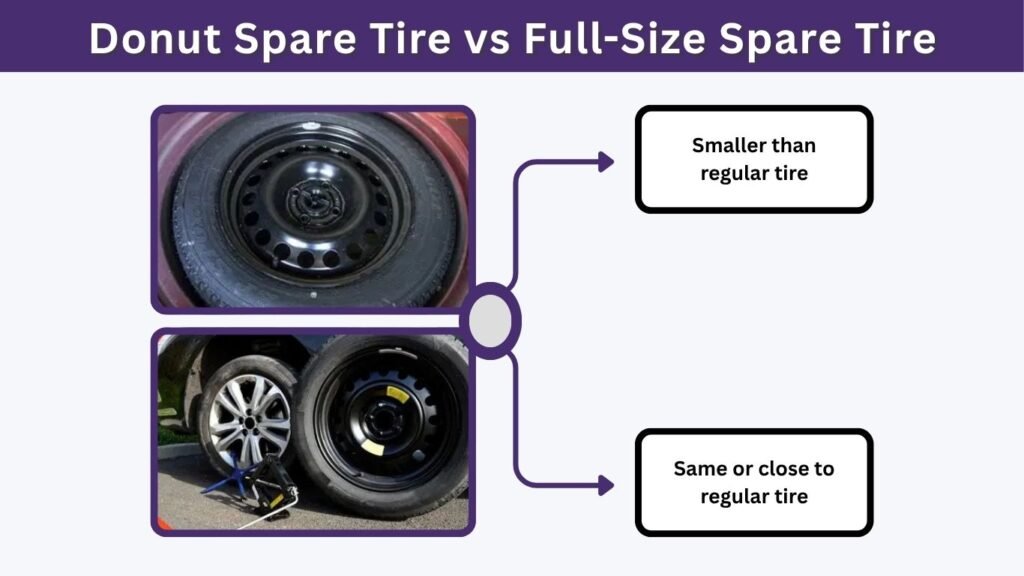
Not all spare tires are the same. This is why some drivers hear “50 miles,” while others hear that a spare can be used like a regular tire.
A donut spare is compact and temporary. A full-size spare is closer to a regular tire, but it may still have limits if it does not match your other tires in brand, size, tread depth, or load rating.
Key Differences
| Feature | Donut Spare Tire | Full-Size Spare Tire |
| Size | Smaller than regular tire | Same or close to regular tire |
| Weight | Lightweight | Heavier |
| Driving distance | Short distance only | Longer use if properly matched |
| Speed | Usually limited to 50 mph | May allow normal driving |
| Handling | Reduced stability | More stable |
| Storage | Saves space | Takes more room |
| Purpose | Emergency use | Temporary or regular-style backup |
Les Schwab explains that some full-size spares designed to match the other four tires can be used for longer distances and normal speeds, as long as the pressure and condition are correct.
What Happens If You Drive Too Long on a Spare Tire?
Driving too long on a compact spare can create safety and mechanical problems. The spare may overheat, wear out quickly, or fail. Your vehicle may also handle differently because one tire is a different size from the others.
This is especially important for all-wheel-drive and four-wheel-drive vehicles. A mismatched tire diameter can strain drivetrain parts. If your owner’s manual gives a specific spare tire limit, follow that guidance first.
Possible Risks
Driving too far on a spare tire may cause:
- Poor handling.
- Longer braking distance.
- Reduced traction in rain.
- Tire overheating.
- Uneven tire wear.
- Stress on suspension or drivetrain parts.
- Higher risk of losing control in an emergency.
A compact spare is meant to help you leave the roadside safely. It is not designed for commuting, road trips, towing, racing, or long highway drives.
What PSI Should a Spare Tire Have?
Spare tire PSI depends on the vehicle and tire type. Many compact spare tires require higher pressure than regular tires, often around 60 PSI, but you should always check the label on the spare tire or your owner’s manual.
A spare tire with low air pressure may not safely carry the vehicle’s weight. This is one reason drivers should check the spare before they actually need it.
How to Check Spare Tire Pressure
Check your spare tire pressure by following these steps:
- Find the recommended PSI on the spare tire label or owner’s manual.
- Use a tire pressure gauge.
- Check the spare when it is cold.
- Inflate it to the recommended level.
- Inspect the rubber for cracks, bulges, or dry rot.
- Check the jack and lug wrench at the same time.
Good Housekeeping notes that spare tires should be checked at least twice a year, especially before long trips, including inflation, visible cracking, and whether your jack and tools are usable.
How Long Does a Spare Tire Last?
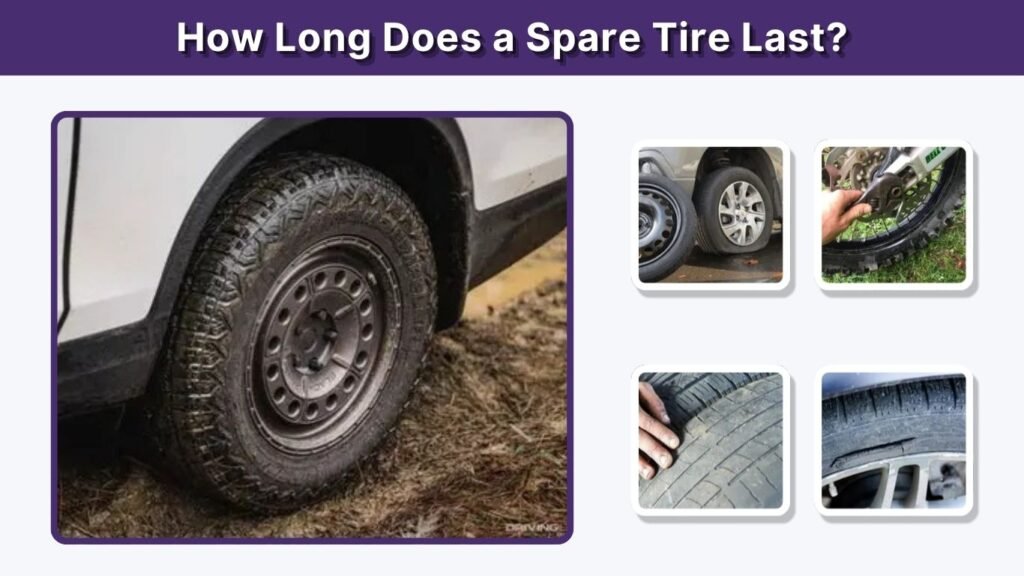
A spare tire can age even if it has never been used. Rubber dries out over time, especially when exposed to heat, moisture, road salt, and temperature changes.
Many spare tires may need replacement after several years, even if the tread still looks new. The best way to check age is to read the DOT date code on the sidewall.
When to Replace a Spare Tire
Replace your spare tire if:
- It is cracked or dry-rotted.
- It has bulges or sidewall damage.
- It cannot hold air.
- It has been driven beyond its recommended limit.
- It is too old according to the tire maker or vehicle manual.
- The tread is worn or uneven.
- The DOT date code shows it is past its safe service life.
A spare tire is easy to forget because it stays hidden in the trunk, under the vehicle, or on the rear door. But when you get a flat, an old or flat spare can leave you stuck.
Can You Use a Spare Tire on the Front?
In many cases, it is better to avoid using a donut spare on the front wheels if possible, especially on front-wheel-drive vehicles. The front tires handle steering, braking, and often power delivery.
If a front tire goes flat, some vehicle manuals recommend moving a good rear tire to the front and placing the compact spare on the rear. However, this depends on the vehicle. Always follow the owner’s manual because incorrect placement can affect handling and drivetrain safety.
What to Do After Installing a Spare Tire
After putting on a spare tire, your goal should be to reach a safe repair location. Do not continue normal driving as if nothing happened.
Drive carefully, avoid sudden braking, and keep extra distance from other vehicles. Turn off cruise control and stay in the slower lane if you must use a highway.
Safe Driving Tips
After installing a spare tire:
- Check that the lug nuts are tight.
- Drive slowly and smoothly.
- Keep speed under the spare tire limit.
- Avoid sharp turns.
- Avoid heavy loads or towing.
- Go directly to a tire shop or repair center.
- Replace the spare back in storage only after inspection.
If the spare feels unstable, noisy, or shaky, pull over safely and call roadside assistance.
Do New Cars Come With Spare Tires?
Not all new cars come with spare tires. Some vehicles now include tire repair kits, inflators, or run-flat tires instead. Automakers may remove spare tires to save weight, improve fuel economy, or create more cargo space.
Before a trip, check your trunk or cargo area. Make sure you know whether your car has a donut spare, full-size spare, sealant kit, or no spare at all.
If your vehicle does not have a spare, you may want to buy a spare tire kit that fits your exact make and model. This is especially useful for long trips, rural driving, or areas where roadside help may take time.
FAQs
How long can you drive on a spare tire?
Most donut spare tires should be driven no more than about 50 miles and no faster than 50 mph. A full-size spare may be used longer if it matches your other tires and is in good condition.
How far can you drive on a donut spare tire?
A donut spare tire is usually limited to around 50 miles. It is made for emergency use only, so you should drive directly to a repair shop or tire store.
Can I drive 70 miles on a spare tire?
Some sources mention 50 to 70 miles, but the safer rule for most donut spares is 50 miles or less. Check the warning label on the spare and your owner’s manual before driving farther.
Can I drive on a spare tire for a week?
You should not drive on a donut spare for a week. Even short daily trips can exceed the recommended mileage limit. Repair or replace your regular tire as soon as possible.
What is the speed limit on a spare tire?
Most compact spare tires have a speed limit of 50 mph. Some full-size spares may allow normal speeds, but only if they match the vehicle’s tire requirements and are properly inflated.