
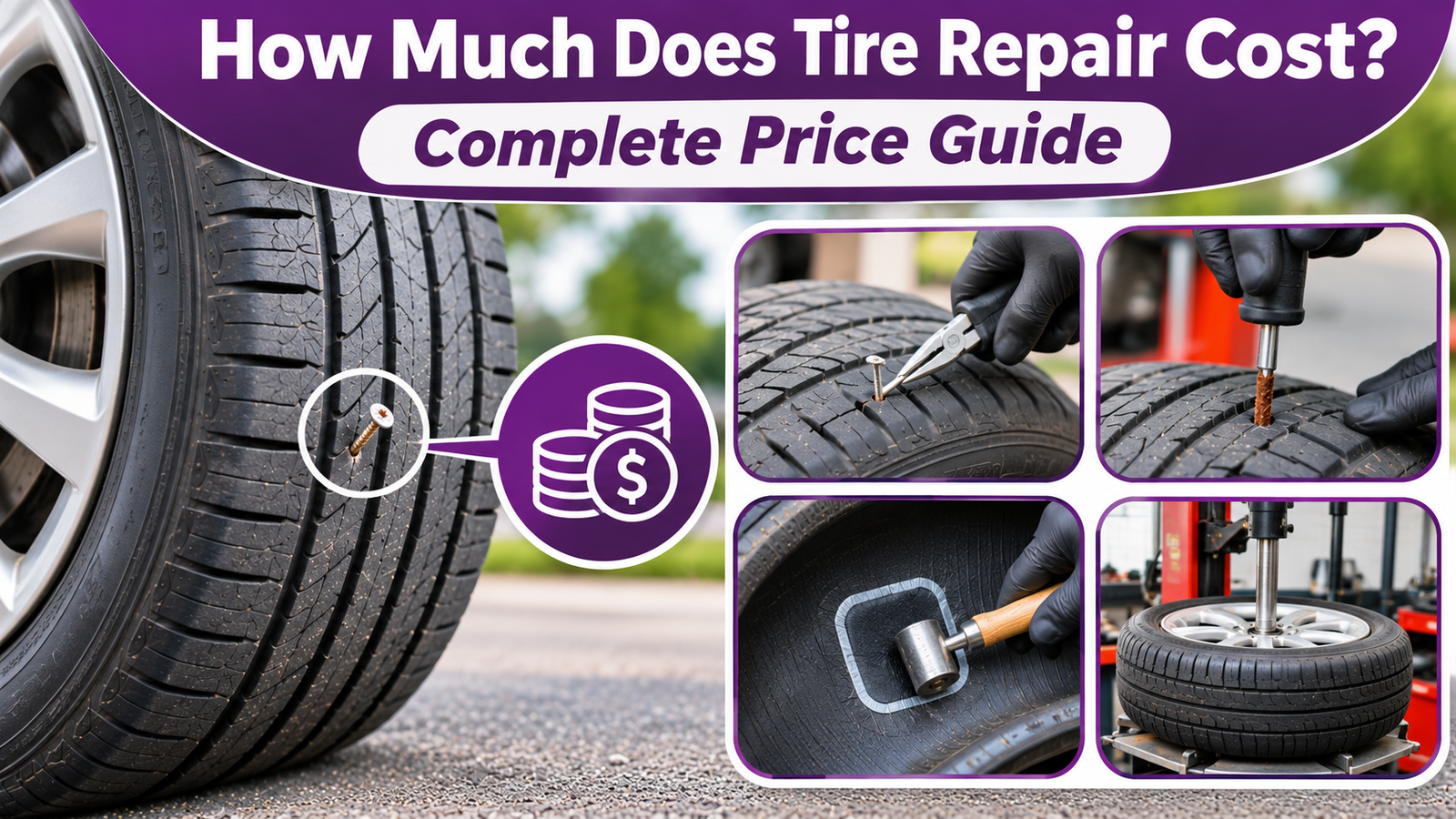
Tire damage can happen unexpectedly, whether you drive over a nail, hit a pothole, or discover a slow air leak. One of the first questions drivers ask is, how much does tire repair cost? In the United States, most standard tire puncture repairs cost between $20 and $50, although prices vary depending on the damage and repair method. Some tire shops even offer free puncture repairs. Understanding tire patch costs, plug prices, and replacement expenses can help you choose an affordable and safe solution.
How Much Does Tire Repair Cost?
The average tire repair cost typically ranges from $20 to $50 per tire for a straightforward puncture repair at a professional shop. However, prices depend on the tire type, damage severity, location, and required labor. Simple tread punctures are generally inexpensive to fix, while serious structural damage may require complete tire replacement.
Average Tire Repair Cost by Type
Different tire problems require different repair methods. The following table shows approximate tire repair prices in the United States.
| Tire Repair Type | Estimated Cost |
|---|---|
| Nail or screw puncture repair | $20–$40 |
| Professional patch-and-plug repair | $20–$50 |
| Basic plug-only service | $15–$30 |
| Tire valve stem replacement | $10–$30 |
| Slow air leak diagnosis and repair | $20–$60 |
| Run-flat tire puncture repair | $40–$75 |
| Tire replacement | $100–$400+ |
These estimates are general guidelines rather than guaranteed shop prices. Specialized tires, additional inspection, mounting, balancing, and regional labor rates can increase the final bill.
What Affects Tire Repair Prices?
Several factors influence how much a tire shop charges. The most important include puncture size, damage location, tire construction, and the labor needed to complete the repair.
A small puncture in the central tread is usually cheaper to repair than a complicated air leak. High-performance tires, run-flat tires, and low-profile tires may also require specialized handling, resulting in higher service costs.
How Much Does It Cost to Patch a Tire?
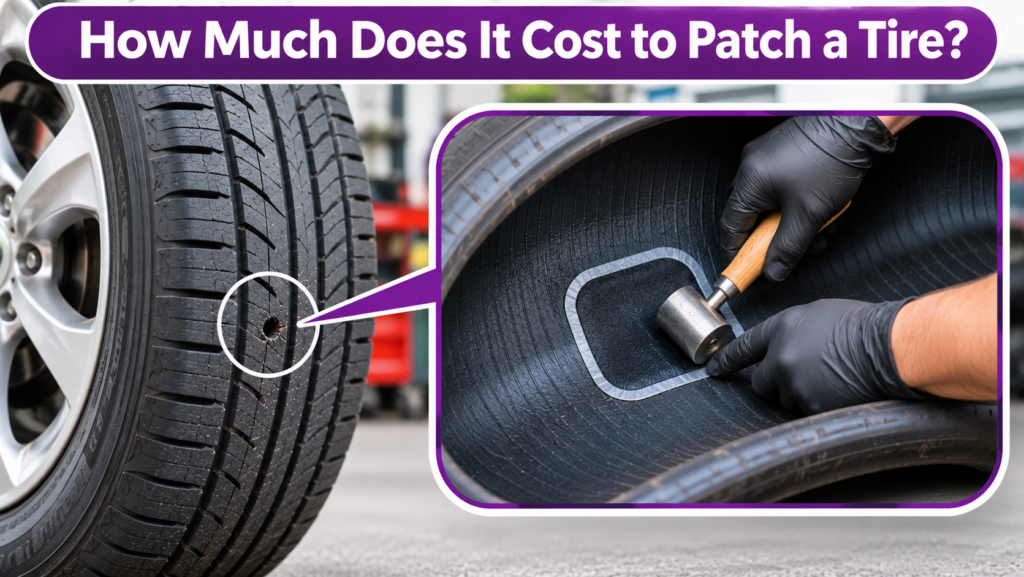
A professional tire patch repair generally costs between $20 and $50. Proper permanent puncture repair involves removing the tire from the wheel, inspecting its internal structure, and sealing the damaged area using an approved repair system.
Tire Patch Cost at a Repair Shop
Most professional shops charge for inspection, labor, and repair materials. The total cost depends on whether tire removal, remounting, and balancing are included.
A proper repair seals the inner liner and fills the puncture channel, often using a combination patch-and-plug. This method is intended to prevent air leakage and protect the exposed internal tire structure.
How Long Does a Tire Patch Last?
A properly installed tire repair can last for the tire’s remaining usable service life when the puncture meets repair requirements and no additional damage develops.
However, tire age, tread wear, driving conditions, and maintenance still affect overall lifespan. A tire with sidewall damage, internal deterioration, or excessive wear should be replaced rather than repaired.
How Much Does It Cost to Plug a Tire?
The cost to plug a tire commonly ranges from $15 to $30 at shops offering basic plug-only services. Although plugging can temporarily stop air leakage, an external plug alone is not considered an acceptable permanent passenger-tire repair.
Tire Plug vs. Patch Cost
Plug-only services may cost slightly less than professional combination repairs. However, choosing a repair method should depend on safety standards rather than price.
| Feature | Plug-Only Service | Professional Patch-and-Plug |
|---|---|---|
| Typical cost | $15–$30 | $20–$50 |
| Tire removal | Often not required | Required |
| Internal inspection | Usually not performed | Performed |
| Permanent repair | No | Yes, when properly applied |
| Recommended choice | Temporary emergency measure | Professional repair |
Is Plugging a Tire Worth It?
A temporary plug may help in certain roadside situations, but it should not replace a professional internal inspection and permanent repair.
For ordinary nail punctures, a professional combination repair usually offers better long-term value. The additional cost is relatively small compared with the expense of replacing a damaged tire.
How Much Does It Cost to Fix a Nail in a Tire?
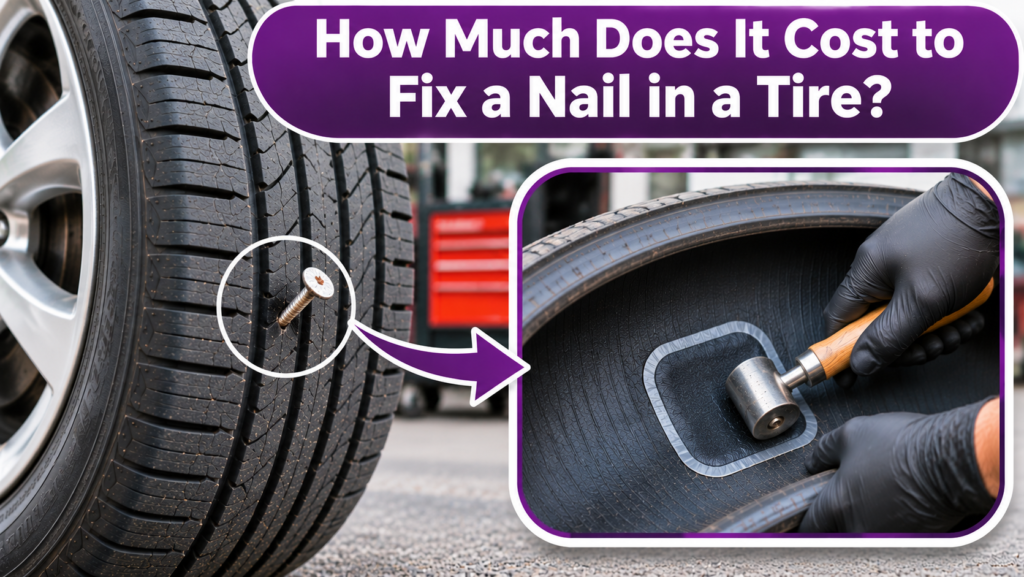
Fixing a nail puncture generally costs between $20 and $40, although some shops charge more. A nail or screw embedded in the central tread is among the most common tire problems.
Cost to Remove a Nail and Repair the Tire
Removing the nail itself is simple, but the complete repair involves examining the puncture and checking for hidden internal damage.
The technician may remove the tire from the wheel, inspect the inner liner, and install an approved combination repair. Small tread punctures no larger than approximately ¼ inch (6 mm) may qualify if the tire is otherwise safe.
Can You Drive With a Nail in Your Tire?
Driving with a nail in your tire is risky because air pressure may decrease suddenly or gradually. Continuing to drive on an underinflated tire can damage its internal structure.
If you discover a nail, avoid removing it yourself unless you are prepared for immediate air loss. Arrange a professional inspection and avoid driving if the tire is significantly underinflated.
How Much Does Flat Tire Repair Cost?
Flat tire repair usually costs between $20 and $50 for a repairable tread puncture. However, a tire that has been driven completely flat may have internal damage that prevents safe repair.
Slow Leak Tire Repair Cost
A slow tire leak may cost approximately $20 to $60 to diagnose and repair. Common causes include punctures, leaking valve stems, and air escaping around the wheel rim.
The technician must first identify the source of the leak. Some problems can be corrected easily, while severe corrosion, wheel damage, or tire deterioration may require additional services.
Sidewall Tire Damage Repair Cost
Passenger tire sidewall punctures, cuts, and bulges generally cannot be safely repaired. These areas experience significant flexing and support important structural loads.
In these situations, the expense becomes the cost of replacing the tire. Attempting an inexpensive sidewall repair can create serious safety risks.
Tire Repair Cost at Popular Tire Shops
Tire repair prices vary among national retailers, independent garages, and dealership service centers. Some businesses provide complimentary flat tire repairs as a customer service benefit.
Does Discount Tire Repair Tires for Free?
Discount Tire offers free flat tire repairs for punctures that meet its safety requirements, including tires purchased elsewhere.
However, not every damaged tire qualifies. Technicians must inspect the puncture location, size, tread condition, and internal structure before approving a repair.
Does Walmart Repair Flat Tires?
Participating Walmart Auto Care Centers offer tire-related services, although availability and pricing vary by location.
Eligible Walmart+ members may receive free repair of qualifying tire punctures. Drivers should confirm local services, eligibility requirements, and any additional charges before visiting.
Tire Repair vs. Replacement Cost
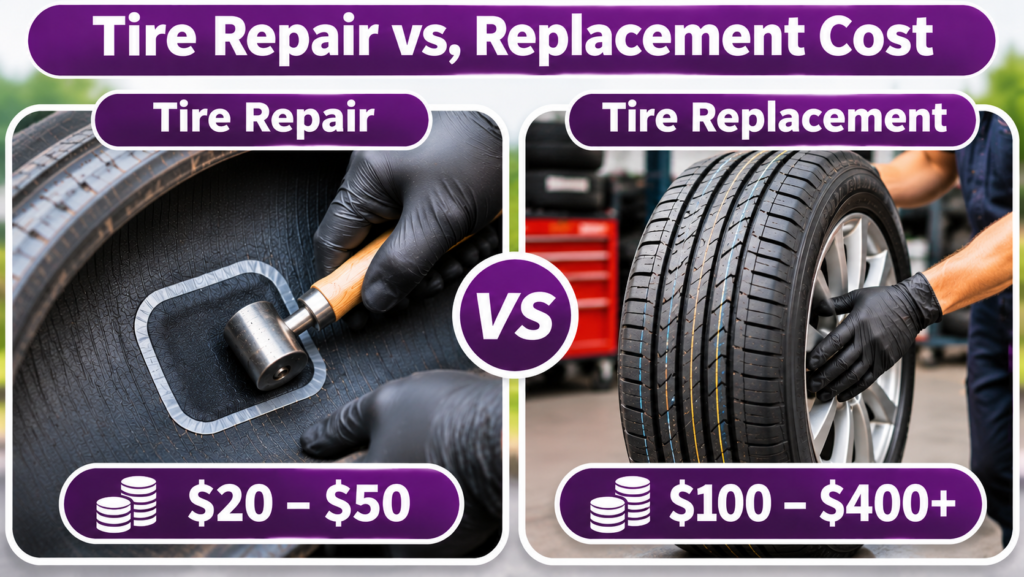
Repairing a tire is usually much cheaper than replacing it. However, safety depends on whether the tire remains structurally sound.
| Factor | Tire Repair | Tire Replacement |
|---|---|---|
| Average cost | $20–$50 | $100–$400+ |
| Best for | Minor tread punctures | Severe damage |
| Service time | Usually shorter | Depends on availability |
| Tire condition | Must pass inspection | New tire |
| Long-term use | Possible after proper repair | Normal new-tire service life |
A tire usually requires replacement when damage affects the shoulder or sidewall, the puncture exceeds approved limits, or internal structural damage is present.
Replacement is also appropriate when a tire is excessively worn, has significant age-related deterioration, or cannot safely support continued driving.
How to Save Money on Tire Repairs
Several simple practices can help drivers reduce tire repair expenses without compromising safety.
- Check tire warranties: Road-hazard protection may cover qualifying puncture repairs.
- Compare local tire shops: Prices and included services vary.
- Ask about free repairs: Some retailers provide complimentary puncture services.
- Maintain proper tire pressure: Correct inflation reduces avoidable tire damage.
- Repair punctures promptly: Delaying service may cause additional internal damage.
- Avoid unnecessary replacement: A professional inspection can determine whether repair is safe.
The cheapest service is not always the best option. Professional inspection and an approved repair method are more important than saving a few dollars.
Frequently Asked Questions
1. How Much Does It Cost to Repair a Tire With a Nail?
Repairing a tire punctured by a nail typically costs between $20 and $40. The exact price depends on the puncture location, repair method, and local labor rates. Some tire retailers offer free repairs for qualifying punctures. Sidewall damage or significant internal deterioration generally requires replacement.
2. Is It Cheaper to Patch a Tire or Replace It?
Patching a repairable tire is considerably cheaper than replacing it. Professional puncture repairs commonly cost $20–$50, while a new tire may cost $100–$400 or more. However, replacement is necessary when structural damage, unsafe puncture location, or excessive tread wear makes repair unsuitable.
3. How Long Does It Take to Repair a Tire?
A straightforward professional tire puncture repair often takes approximately 20–45 minutes. This includes removing the wheel when necessary, dismounting the tire, inspecting internal components, applying the repair, and reinstalling it. Shop workload, equipment availability, and additional damage can increase the overall service time.
4. Can a Tire Be Repaired More Than Once?
A tire may sometimes receive more than one repair, depending on the location and condition of previous repairs, manufacturer restrictions, and applicable safety requirements. Repairs must not overlap or compromise the tire’s structural integrity. A professional technician should inspect the tire before determining whether another repair is acceptable.
5. Is It Worth Repairing a Tire With a Slow Leak?
Yes, repairing a slow tire leak is generally worthwhile when the tire remains structurally sound. Minor punctures and certain valve-related leaks are often inexpensive to correct. However, persistent pressure loss, sidewall deterioration, or internal damage may indicate that replacement is safer than another repair attempt.