
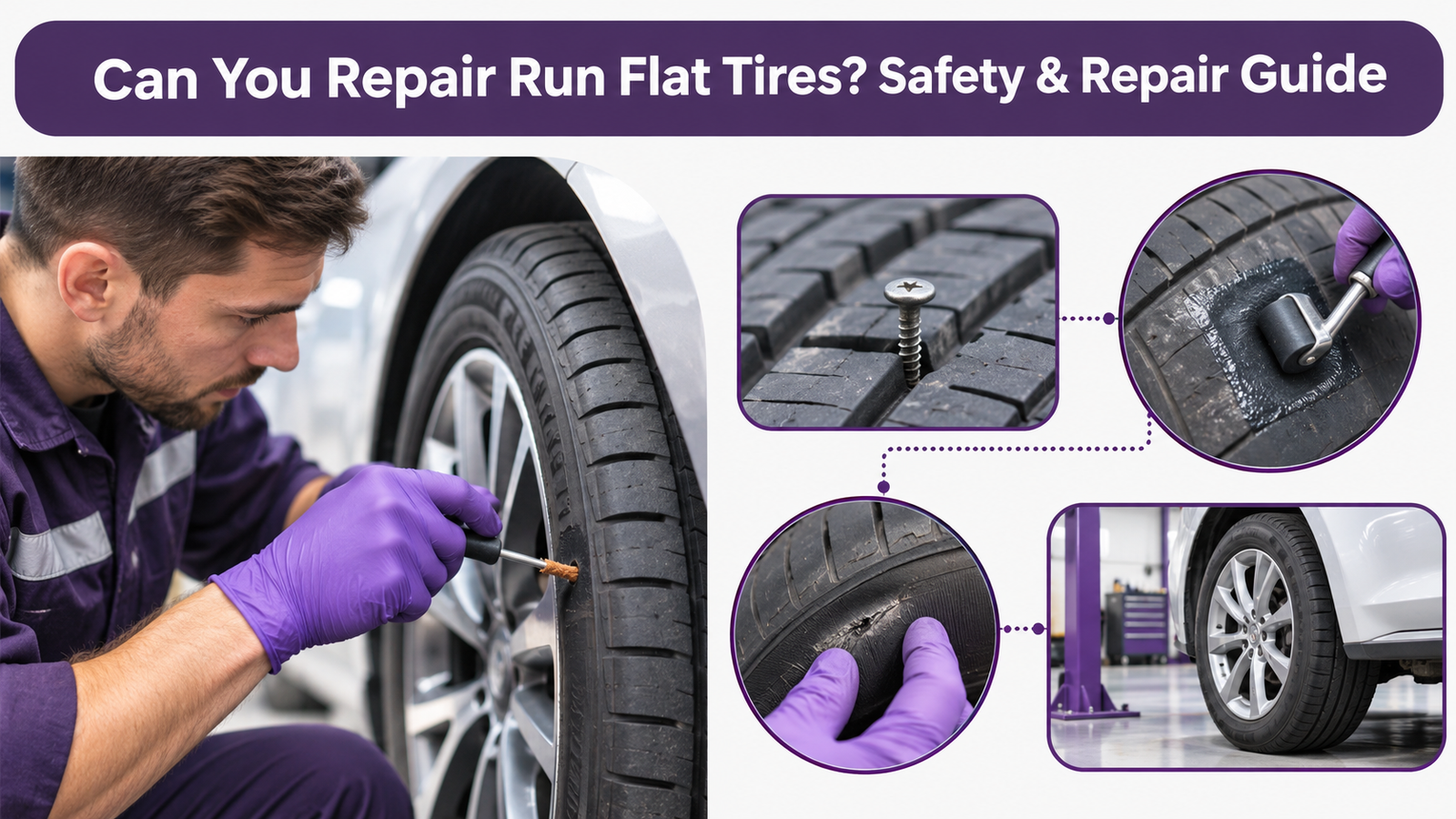
Run-flat tires are designed to keep your vehicle moving for a limited distance after losing air pressure. However, many drivers wonder, can you repair run flat tires after a puncture, or do they always require replacement? The answer depends on the location of the damage, tire condition, manufacturer guidelines, and how far the vehicle traveled after losing pressure. Some run-flat tires can be professionally repaired, while others must be replaced for safety reasons. Understanding these differences helps you avoid unnecessary expenses and dangerous tire failures.
Can You Repair Run Flat Tires?
Yes, some run-flat tires can be repaired, but not every puncture qualifies for a safe repair. Unlike conventional tires, run-flat tires have reinforced sidewalls that temporarily support the vehicle when air pressure drops. This special construction makes internal damage harder to identify without professional inspection.
A qualified technician must examine the tire before deciding whether repair is possible. Manufacturer restrictions, puncture size, and the tire’s operating history all influence that decision.
When Run-Flat Tires Can Be Repaired
Run-flat tire repair may be possible when the damage is limited to the central tread area and the tire remains structurally sound. The manufacturer must also permit repairs for that particular tire model.
Generally, repair may be considered when:
- The puncture is within the approved tread repair area.
- The puncture diameter is no greater than ¼ inch (6 mm).
- The tire has sufficient remaining tread depth.
- No internal sidewall or structural damage exists.
- The tire manufacturer permits professional puncture repairs.
- The tire has not experienced disqualifying low-pressure operation.
Even when these conditions appear favorable, only a complete professional inspection can establish whether the tire is repairable.
When Run-Flat Tires Cannot Be Repaired
Some punctures permanently compromise the tire’s internal structure, making replacement necessary. Driving after significant pressure loss can create damage that is invisible from the outside.
A run-flat tire generally requires replacement when its sidewall is damaged, internal reinforcement is compromised, or the manufacturer prohibits repair. Tires with substantial tread separation, severe overheating, or damage from prolonged underinflated driving should never be patched.
How Do Run-Flat Tires Work?
Run-flat tires use specialized construction to provide temporary mobility after a puncture. Most passenger vehicles equipped with run-flat tires use reinforced sidewalls that support the vehicle’s weight for a limited distance. Some specialized systems instead use an internal support ring. Both designs are intended to help drivers reach a safe location without immediately changing a tire.
Reinforced Sidewall Technology
Self-supporting run-flat tires contain strengthened sidewalls that resist collapsing after air pressure decreases. These reinforcements help maintain the tire’s shape and support the vehicle temporarily.
However, driving without sufficient air pressure still generates heat and mechanical stress. Excessive stress can permanently weaken the internal structure, even when the tire appears normal.
Run-Flat Driving Distance and Speed
Many run-flat tires are designed for limited operation at speeds up to 50 mph (80 km/h) for approximately 50 miles (80 km) after pressure loss. These are common limits, not universal guarantees.
The actual permitted distance depends on the tire manufacturer, vehicle load, temperature, and driving conditions. Drivers should follow their vehicle and tire manufacturer’s instructions rather than assuming every run-flat tire has identical capabilities.
What Types of Run-Flat Tire Damage Can Be Repaired?
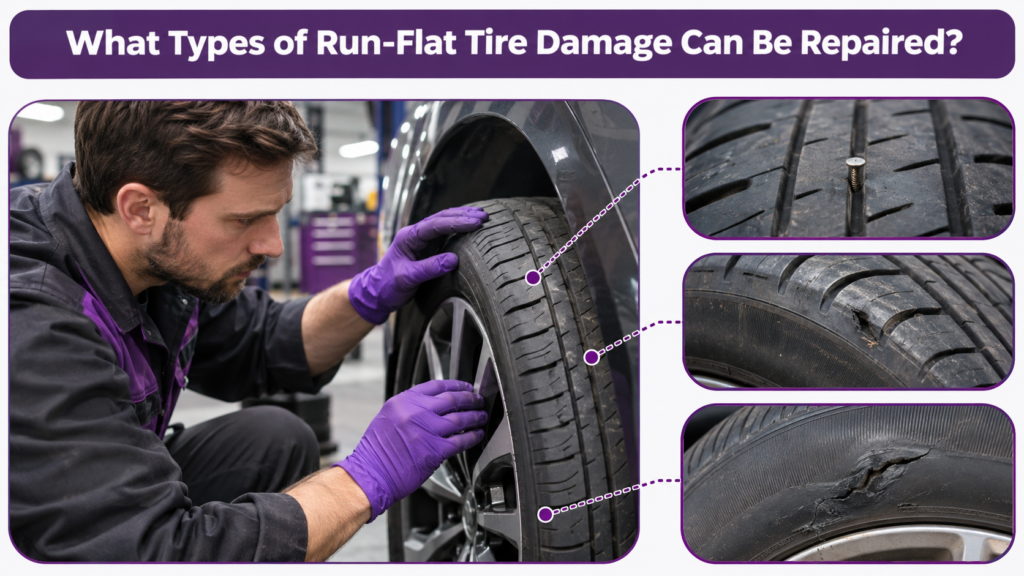
Different tire damage requires different repair decisions. Understanding the location and severity of a puncture helps determine whether professional repair is possible. While small tread punctures are sometimes repairable, shoulder damage and sidewall failures present much greater safety concerns.
Small Nail or Screw Punctures
A small nail or screw puncture in the central tread area may qualify for repair if the tire remains structurally sound. The technician must inspect the tire internally to identify hidden damage.
If the manufacturer permits repair, a properly installed combination patch-and-plug repair may restore the tire’s air retention.
Sidewall Damage
Sidewall cuts, punctures, bubbles, and tears generally cannot be safely repaired. The sidewall flexes continuously while driving and plays a critical role in supporting vehicle loads.
Because run-flat tires rely heavily on reinforced sidewalls, damage in this area is especially concerning. Replacement is the appropriate solution when structural sidewall damage is confirmed.
Shoulder and Large Tread Punctures
Punctures near the shoulder, where the tread transitions into the sidewall, are generally outside the approved repair area. This region experiences significant flexing and stress during normal driving.
Large punctures exceeding standard repair limits also require replacement. Attempting to repair these areas can create an unacceptable risk of tire failure.
How to Repair a Run-Flat Tire Safely
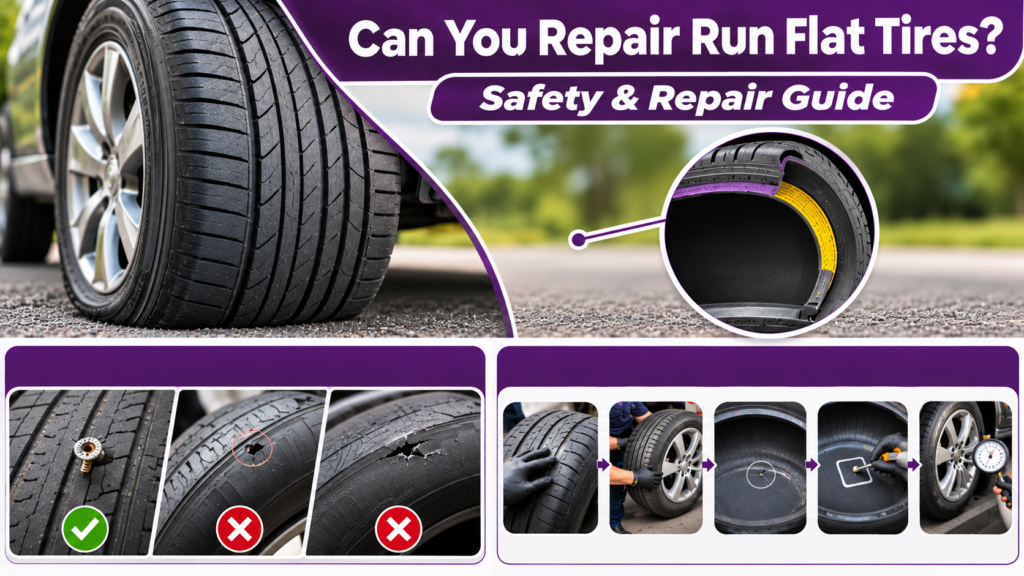
Professional run-flat tire repair requires more than sealing the visible puncture. Technicians must evaluate the tire’s internal condition, identify the damage, and follow the manufacturer’s approved repair procedures. Skipping these steps can leave hidden structural problems unresolved.
Step 1: Inspect the Tire
The technician checks the puncture location, size, tread condition, and visible signs of damage. They also determine whether the tire has been driven at significantly reduced pressure.
Step 2: Remove the Tire From the Wheel
A complete inspection requires removing the tire from the wheel. This allows the technician to examine the inner liner, sidewall structure, and other internal components.
Step 3: Check for Internal Damage
The technician looks for excessive heat damage, rubber deterioration, exposed cords, separation, and evidence of low-pressure operation. Any disqualifying structural damage makes the tire unsuitable for repair.
Step 4: Apply the Approved Repair
If the tire qualifies, the technician uses an appropriate repair system that fills the puncture channel and seals the inner liner. An external plug alone is not considered an acceptable permanent repair.
Step 5: Reinstall and Test the Tire
After repairing the puncture, the technician remounts and inflates the tire according to specifications. They check for leakage and verify that the wheel assembly is ready for service.
Can You Patch a Run-Flat Tire?
Yes, certain run-flat tires can be patched, provided the manufacturer allows repairs and the puncture meets established safety requirements. However, simply attaching a patch to the inside of the tire does not automatically make the repair safe.
A proper repair must seal both the puncture injury and the inner liner. This usually involves a combination patch-and-plug system installed by a trained professional.
Tire Patch vs. Tire Plug
A tire patch seals the damaged inner liner, while a plug fills the puncture channel. When used individually, these methods may leave part of the injury inadequately protected.
An approved combination repair addresses both areas. Nevertheless, even the best repair materials cannot restore a run-flat tire with damaged internal reinforcement.
Can You Repair a Run-Flat Tire After Driving on It?
Repairing a run-flat tire after driving with reduced air pressure is more complicated. The reinforced sidewalls allow temporary mobility, but they can experience internal damage from heat and repeated flexing.
The distance traveled, remaining air pressure, vehicle load, and driving speed all influence potential damage. Some manufacturers prohibit repairs after specified low-pressure conditions, while others permit them following a thorough inspection.
Signs of Damage After Driving Flat
A run-flat tire may show warning signs that indicate serious internal or external damage. Drivers should avoid relying on the tire’s appearance alone when assessing its condition.
Common warning signs include:
- Sidewall bulges, cuts, or visible deformation.
- Unusual vibrations while driving.
- Persistent pressure loss after inflation.
- Excessive heat or a burning rubber smell.
- Cracking, exposed cords, or rubber deterioration.
- Internal rubber dust or liner damage found during inspection.
These symptoms require professional evaluation. A tire may also be unsafe without displaying obvious external damage.
Run-Flat Tire Repair Cost vs. Replacement Cost
The cost of repairing a run-flat tire depends on the damage, local labor rates, tire size, and service provider. Professional repairs usually cost considerably less than replacing the entire tire, but inspection and specialized equipment may increase the service price.
How Much Does Run-Flat Tire Repair Cost?
In the United States, a straightforward professional puncture repair may cost approximately $25–$60, although prices vary widely. Some service centers charge additional fees for tire removal, inspection, balancing, or specialized run-flat handling.
The final price depends on the shop and whether the tire meets repair requirements. A repair should never be selected solely because it costs less.
How Much Does Run-Flat Tire Replacement Cost?
Run-flat tires are often more expensive than comparable conventional tires because of their specialized construction. Replacement prices may range from approximately $150 to more than $400 per tire, depending on the brand, size, and performance category.
Larger premium or performance run-flat tires may cost substantially more. Installation, balancing, and disposal charges can increase the final bill.
Run-Flat Tire Repair vs. Replacement: Which Is Better?
Choosing between repair and replacement requires balancing safety, tire condition, and overall expense. A professionally repaired tire can remain useful when the damage is minor and all manufacturer requirements are satisfied. However, replacement is the better choice whenever structural integrity is uncertain.
| Factor | Tire Repair | Tire Replacement |
|---|---|---|
| Cost | Usually lower | Usually higher |
| Suitable damage | Approved minor tread punctures | Severe or nonrepairable damage |
| Time required | Usually shorter | Depends on tire availability |
| Tire condition | Must pass inspection | New tire |
| Manufacturer approval | Required | Must meet vehicle specifications |
| Long-term use | Possible after proper repair | Normal service life of new tire |
If a tire has significant damage or has been driven beyond approved low-pressure limits, replacement is the safest option. Saving money on repair is not worth compromising vehicle safety.
How to Prevent Run-Flat Tire Damage
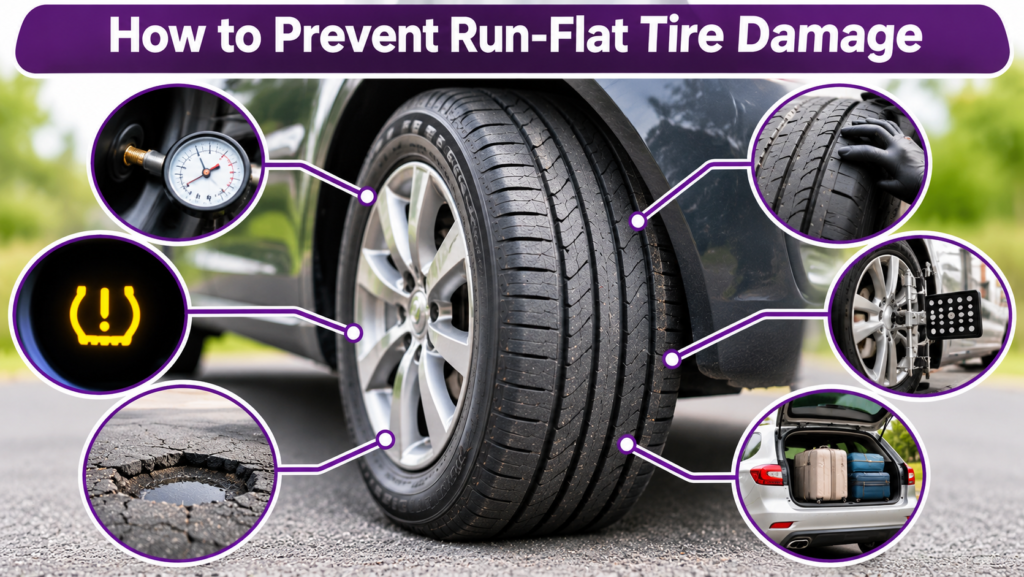
Proper maintenance can reduce unnecessary damage and help maximize the lifespan of run-flat tires. Although their reinforced construction offers temporary protection against sudden mobility loss, they still require regular tire care.
The following preventive practices are especially important:
- Maintain proper pressure: Check tire pressure regularly using the vehicle manufacturer’s recommendations.
- Monitor TPMS warnings: Investigate tire pressure monitoring system alerts promptly.
- Avoid road hazards: Reduce exposure to potholes, sharp debris, and damaged road surfaces.
- Inspect tire condition: Look for cuts, bulges, unusual wear, and embedded objects.
- Avoid overloading: Follow vehicle load capacity recommendations.
- Maintain wheel alignment: Correct alignment problems that produce uneven tire wear.
- Follow run-flat limits: Never exceed the manufacturer’s permitted speed or distance after pressure loss.
Regular inspections help identify problems before they become expensive or dangerous. Prompt attention to pressure warnings is particularly important because run-flat tires may not visibly appear deflated.
Frequently Asked Questions
1. Can You Repair Run-Flat Tires More Than Once?
Some manufacturers permit only one repair, while others have different restrictions or prohibit repair altogether. The number of permissible repairs depends on the tire model, puncture locations, condition, and manufacturer policy. Always have the tire professionally inspected before considering another repair.
2. Can You Plug a Run-Flat Tire?
An external plug alone is not an acceptable permanent tire repair. If the run-flat tire qualifies for professional repair, the technician should use an approved method that seals the puncture channel and inner liner after inspecting the tire internally.
3. How Long Does a Repaired Run-Flat Tire Last?
A correctly repaired run-flat tire may remain usable for the rest of its normal service life, provided its structure remains sound. Actual longevity depends on tread condition, maintenance, driving habits, and manufacturer restrictions. No repair guarantees a particular mileage.
4. Can You Drive on a Run-Flat Tire With a Nail?
A run-flat tire with a nail may retain air pressure, but continued driving can worsen the damage. Check the tire pressure and arrange prompt professional inspection. If significant pressure loss has occurred, follow the manufacturer’s emergency driving limits.
5. Do All Tire Shops Repair Run-Flat Tires?
No, not every tire shop has the necessary equipment, training, or manufacturer authorization to repair run-flat tires. Some shops decline these repairs because of safety policies. Choose a qualified service center experienced with your particular tire brand and model.