
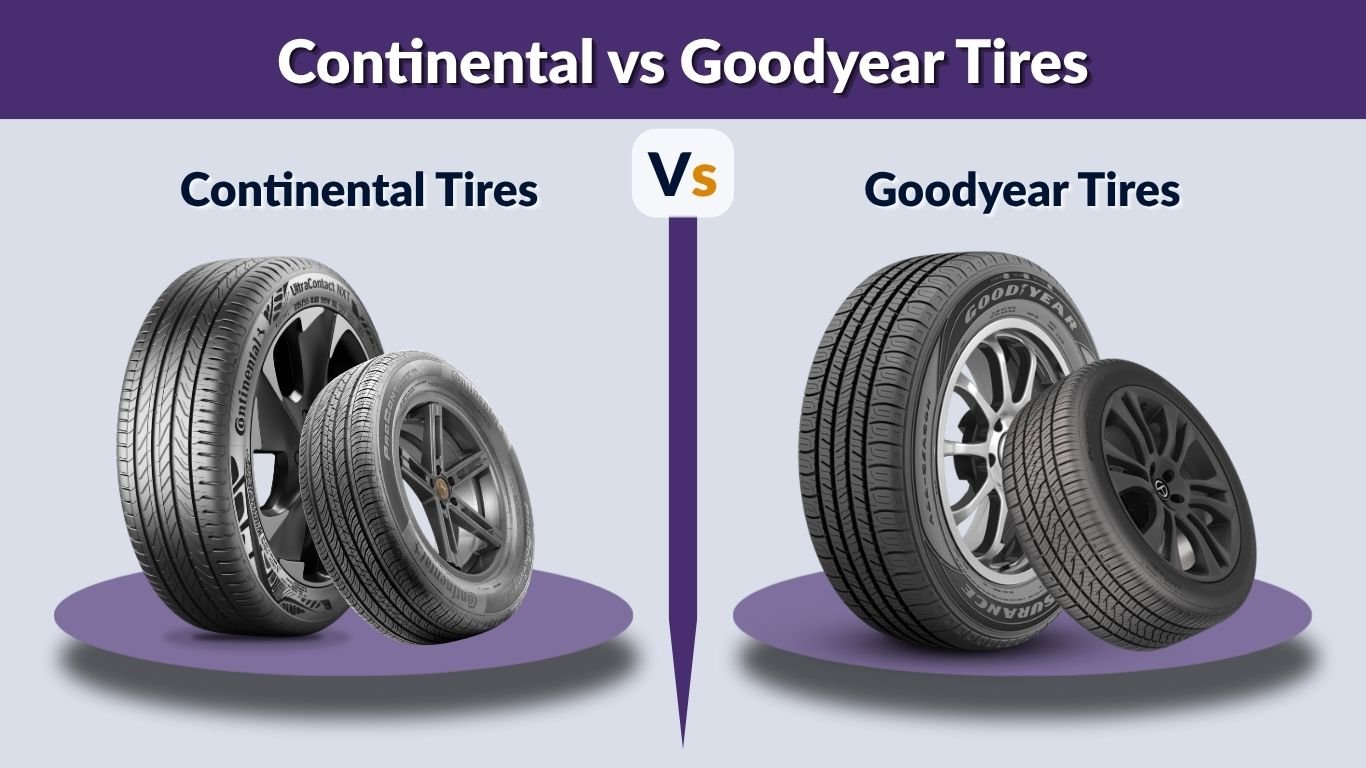
When it comes to buying new tires, choosing between Continental and Goodyear can be a tough decision for many car owners. Both of these well-established brands offer a range of tires suited for different driving conditions, vehicle types, and budgets. In this article, we will dive deep into comparing Continental and Goodyear tires, focusing on various aspects like comfort, wet performance, winter grip, durability, and price.
Quick Verdict: Are Continental or Goodyear Tires Better?
Choose Continental if you want:
- Better Wet-Road Confidence: Continental tires are known for their superior wet traction, offering enhanced control on rainy or slippery roads.
- Smooth and Quiet Ride: If comfort is a priority, Continental tires are designed to minimize road noise and provide a quiet, refined driving experience.
- Premium Touring Comfort: Continental offers premium models that excel in comfort, making long road trips more pleasant.
- Strong Original Equipment Tire Options: Many car manufacturers choose Continental for original equipment (OE) tires due to their reliable performance and safety features.
- Balanced Handling for Daily Driving: Continental tires offer balanced performance for a wide range of driving conditions, making them ideal for everyday use.
Choose Goodyear if you want:
- Strong Value for Money: Goodyear offers a range of tires that balance quality and price, making them a great option for those on a budget.
- Good All-Season Options: With a wide variety of all-season tires, Goodyear tires provide reliable performance throughout the year, handling everything from dry roads to light snow.
- Durable Commuter Tires: Goodyear’s tires are designed for long-lasting durability, making them a good choice for daily commuting.
- Reliable Winter Tire Options: Goodyear offers a solid lineup of winter tires, including the Ultra Grip series, designed for snow and ice traction.
- Wider Availability in Many Markets: Goodyear is widely available and offers a broad range of tire options, from economy to premium.
Overall Winner
When comparing Continental vs Goodyear tires, the best choice ultimately depends on your specific needs and driving conditions. Continental tends to be the better option for those seeking premium comfort, superior wet traction, and quieter tires. On the other hand, Goodyear shines in offering strong value, good all-season tires, and durable winter options for more budget-conscious consumers.
Continental Tires Overview
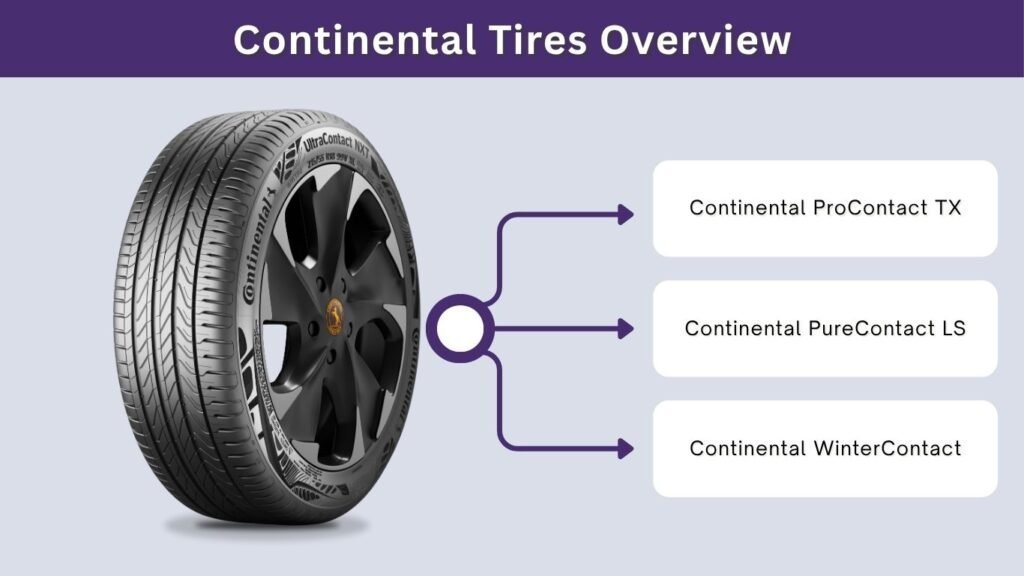
Continental is a leading tire manufacturer, known for its focus on safety, performance, and comfort. The brand produces a wide range of tires for different vehicle types, including passenger cars, SUVs, and trucks. Continental tires are often chosen by automakers for original equipment, which speaks to their quality and reliability.
Popular Continental Tire Models
- Continental ProContact TX: A premium all-season touring tire designed for passenger cars and crossovers. It offers a balance of comfort, fuel efficiency, and year-round traction. This tire is especially well-suited for drivers who prioritize a quiet, smooth ride and strong wet handling.
- Continental PureContact LS: This tire combines comfort and performance with EcoPlus Technology, providing better fuel efficiency, extended tread life, and improved wet braking performance. It’s an excellent choice for drivers who want a luxurious driving experience with excellent traction in various weather conditions. (
- Continental WinterContact: Specifically designed for winter driving, the WinterContact series delivers exceptional performance on icy and snowy roads. It offers precise handling and excellent braking capabilities in cold conditions, making it a top choice for drivers in colder climates.
Goodyear Tires Overview
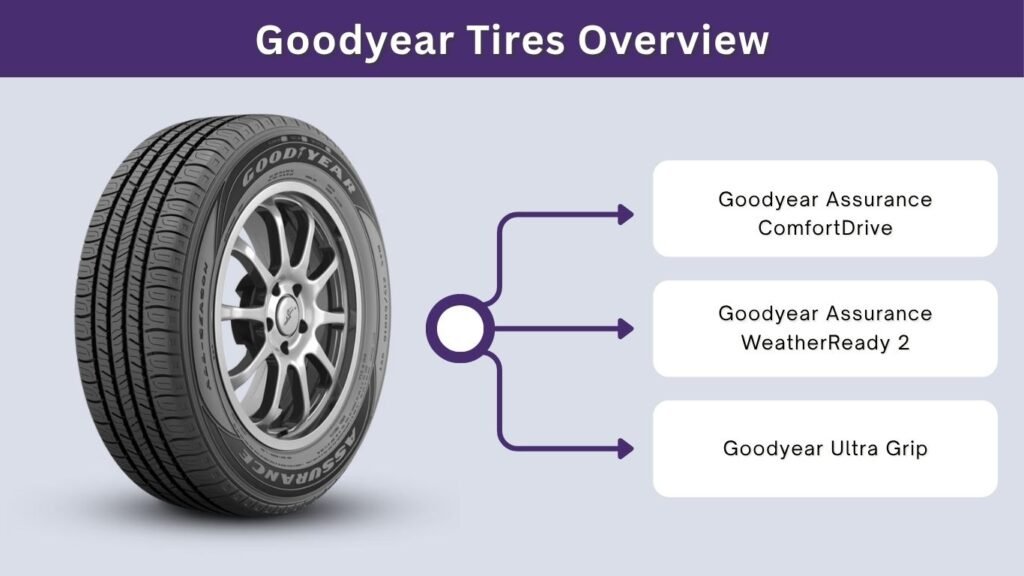
Goodyear is another tire giant known for offering reliable, durable, and performance-driven tires for various vehicles. Whether you’re looking for tires for your sedan, SUV, or truck, Goodyear has a tire suited for your needs. The brand is famous for providing a wide selection of tires at various price points, making them accessible for a broad range of drivers.
Popular Goodyear Tire Models
- Goodyear Assurance ComfortDrive: Known for its superior comfort and handling, this tire is designed for a smooth and quiet ride, especially on highways. It delivers reliable performance year-round and offers a comfortable experience for daily commuters.
- Goodyear Assurance WeatherReady 2: A versatile all-weather tire built to perform in dry, wet, and snowy conditions. With its severe snow designation, it provides excellent traction in winter conditions while still maintaining a solid performance during the other seasons.
- Goodyear Ultra Grip: Designed for winter driving, Goodyear’s Ultra Grip series provides exceptional traction in snowy and icy conditions. It is ideal for drivers living in areas that experience harsh winters and are looking for tires that will provide reliable performance throughout the season.
Continental vs Goodyear Tires Comparison
1. Dry Road Performance
When it comes to dry road performance, both Continental and Goodyear offer reliable options. Continental is often favored for its refined steering response and stable braking, while Goodyear provides good overall dry-road handling at a slightly more affordable price point. For those seeking a sporty driving experience, Continental tires might have the edge, but for daily driving, Goodyear’s dry performance is still quite commendable.
2. Wet Road Grip
Continental tires excel in wet traction, with many models designed to provide better hydroplaning resistance and superior braking in wet conditions. Goodyear also has models that perform well on wet roads, such as the Assurance WeatherReady, which is a strong competitor for all-season wet-weather performance. Overall, Continental might have a slight edge for those who live in particularly rainy regions, but Goodyear remains a strong contender for balanced performance across the seasons.
3. Winter Performance
When it comes to winter driving, both Goodyear and Continental offer excellent options. For snow, ice, and winter road conditions, the Goodyear Ultra Grip and Continental WinterContact are top choices.
- Goodyear Ultra Grip: Known for its superior traction on icy roads, providing excellent grip even in severe winter conditions. It offers a robust option for those who experience frequent snow and ice.
- Continental WinterContact: Designed for drivers who face frigid temperatures and snow, offering precise control and performance in icy conditions. It stands out for its braking performance and traction on snow-covered roads.
In summary, if winter driving is a major concern, both brands have highly capable options, but Continental’s WinterContact tires might provide a more well-rounded winter performance.
4. Comfort and Road Noise
When it comes to comfort, Continental generally has the upper hand. Their tires, like the PureContact LS, are designed with a focus on delivering a smooth, quiet, and comfortable ride, especially on highways. The tires are engineered to reduce road noise, providing a more serene driving experience for passengers.
On the other hand, Goodyear Assurance ComfortDrive also prioritizes comfort, offering a quiet and smooth ride, particularly for daily commuting. The ComfortDrive tires excel in absorbing bumps and providing a cushioned feel, making them a solid choice for those who spend a lot of time on the road. However, for a more luxurious feel, especially during long road trips, Continental tires might have a slight edge in terms of overall comfort.
5. Tread Life and Durability
Both Continental and Goodyear are known for their durability, but the longevity of the tires can depend on the specific tire model, driving style, and maintenance.
Goodyear is often considered a strong option for daily commuting, with many of its all-season tires offering long-lasting tread life. The Goodyear Assurance line, in particular, is well-regarded for its durability in normal driving conditions. For drivers looking for a more budget-friendly option that still offers solid longevity, Goodyear is a great choice.
Continental, on the other hand, focuses on premium options with long tread life. Tires like the TrueContact offer excellent wear resistance and are backed by warranties that guarantee long-term performance. While Continental may come at a higher price point, it’s often worth it for those who prioritize a premium tire with lasting durability.
6. Fuel Efficiency
Continental tires often come with technology designed to enhance fuel efficiency. For example, the PureContact LS features EcoPlus Technology, which reduces rolling resistance and improves gas mileage. This makes Continental a great choice for eco-conscious drivers or those looking to reduce fuel consumption over long-distance driving.
Goodyear also offers fuel-efficient models, such as the Assurance FuelMax series, which are designed to minimize rolling resistance while still providing all-season performance. While Goodyear’s fuel-efficient options are good, Continental’s EcoPlus Technology may offer a slight advantage in terms of fuel economy, especially for those driving hybrids or electric vehicles.
7. Price and Value
When comparing the price points of Continental and Goodyear, Goodyear typically comes out ahead in terms of overall value. Goodyear tires are widely available and offer good quality at a competitive price, making them a popular choice for budget-conscious consumers. For those looking for everyday tires that deliver dependable performance without breaking the bank, Goodyear is often the better choice.
However, Continental tires are positioned in the premium market and generally come at a higher price. While they may cost more upfront, they offer superior comfort, performance, and longer tread life, making them worth the extra investment for those who prioritize these factors.
It’s essential to compare the specific models from each brand to ensure you are getting the best value for your money. Keep in mind that some higher-end Goodyear models can still compete with Continental in terms of performance, so it’s not always about the price but the exact tire specifications.
Popular Model Comparisons
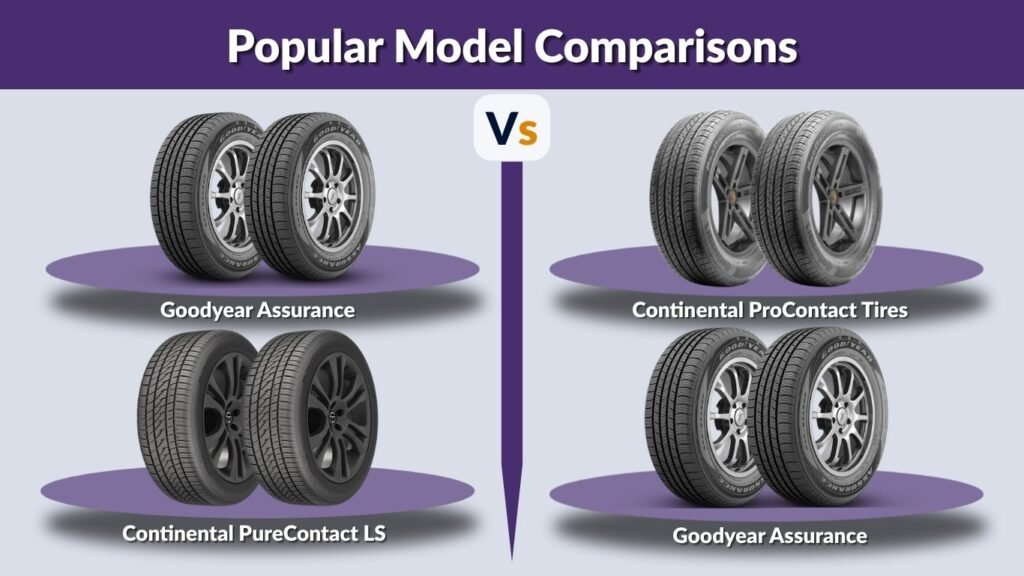
Goodyear Assurance vs Continental ProContact Tires
One of the most common comparisons between Goodyear and Continental is between the Goodyear Assurance and the Continental ProContact tires. Both are premium all-season touring tires, but there are some key differences:
- Goodyear Assurance: Known for its comfortable ride, low road noise, and reliable all-season performance. It’s a great choice for those who prioritize a smooth and quiet ride.
- Continental ProContact: Offers superior wet handling, responsive steering, and excellent braking performance. The ProContact series excels in providing a balanced driving experience with good performance in both dry and wet conditions.
For most everyday drivers, both tires are excellent choices. However, if you live in a region with frequent rain or wet conditions, the Continental ProContact may offer better wet-road traction.
Continental PureContact LS vs Goodyear Assurance
- Continental PureContact LS: This tire offers a balance of comfort, durability, and fuel efficiency. It’s ideal for luxury cars and drivers who want the best performance in dry and wet conditions, along with the option of light snow traction.
- Goodyear Assurance: The Assurance series also delivers good all-around performance with a focus on comfort. It may not be quite as luxurious as the PureContact LS, but it provides great value for the price.
Continental CrossContact vs Goodyear Assurance ComfortDrive
For those who drive SUVs or crossovers, comparing Continental CrossContact tires with Goodyear Assurance ComfortDrive is essential.
- Continental CrossContact: Ideal for SUVs, the CrossContact provides good handling on both wet and dry roads while offering a smooth, comfortable ride.
- Goodyear Assurance ComfortDrive: Also an excellent choice for SUVs, it’s designed for comfort, with a smooth and quiet ride, making it well-suited for long-distance driving.
Both are great choices for SUVs and crossovers, but Continental CrossContact may be the better option if you want a tire with more off-road capability.
Continental vs Goodyear Tires for Different Drivers
Best for Daily Commuting
For everyday driving, Goodyear Assurance and Continental ProContact both offer solid performance. Goodyear Assurance may be the better choice for budget-conscious drivers, while Continental ProContact excels in providing better overall wet traction and comfort.
Best for Rainy Weather
If you live in a rainy climate, Continental ProContact and Goodyear Assurance WeatherReady are both strong performers in wet conditions. However, Continental may have a slight edge due to its focus on wet traction and hydroplaning resistance.
Best for Snow and Winter
For winter driving, Goodyear Ultra Grip and Continental WinterContact are top choices. If you experience harsh winters with snow and ice, both brands offer reliable winter tires, but Goodyear Ultra Grip might be more specialized for icy conditions.
Best for Comfort
For a quiet and smooth ride, Continental PureContact LS and Goodyear Assurance ComfortDrive are both great options. Continental tends to offer a more premium comfort experience, but Goodyear ComfortDrive provides a close alternative with excellent ride quality.
Best for SUVs and Crossovers
For SUVs and crossovers, Continental CrossContact and Goodyear Assurance ComfortDrive are solid choices. Continental CrossContact is slightly better for off-road capability, while Goodyear Assurance ComfortDrive excels in providing comfort.
Best for Budget Buyers
For drivers looking for a more affordable option, Goodyear offers great value with a range of tires that perform well in most conditions. Continental tends to be priced higher, but its performance justifies the cost for those who prioritize premium features.
Final Verdict: Continental or Goodyear?
Choose Continental if you want a premium tire that offers superior comfort, wet-road handling, and overall performance. Continental tires are ideal for those who prioritize luxury, quiet driving, and long tread life.
Choose Goodyear if you want a reliable, budget-friendly option that provides good all-around performance. Goodyear offers great value for money and provides dependable winter options for those living in colder climates.
Ultimately, both brands offer excellent tires, and the right choice depends on your driving habits, vehicle type, and specific needs.
FAQs
Are Continental tires better than Goodyear?
Both brands offer great tires, but Continental may offer superior comfort and wet traction, while Goodyear excels in value and durability.
Are Goodyear tires good quality?
Yes, Goodyear is a well-respected tire manufacturer known for providing durable and reliable tires across various categories.
Which is better for winter: Goodyear or Continental?
Both brands offer excellent winter tires. For snow and ice, Goodyear Ultra Grip and Continental WinterContact are great choices.
Which tire brand is better for rain?
Continental tends to excel in wet traction, but Goodyear also offers reliable wet-weather performance with models like the Assurance WeatherReady.