
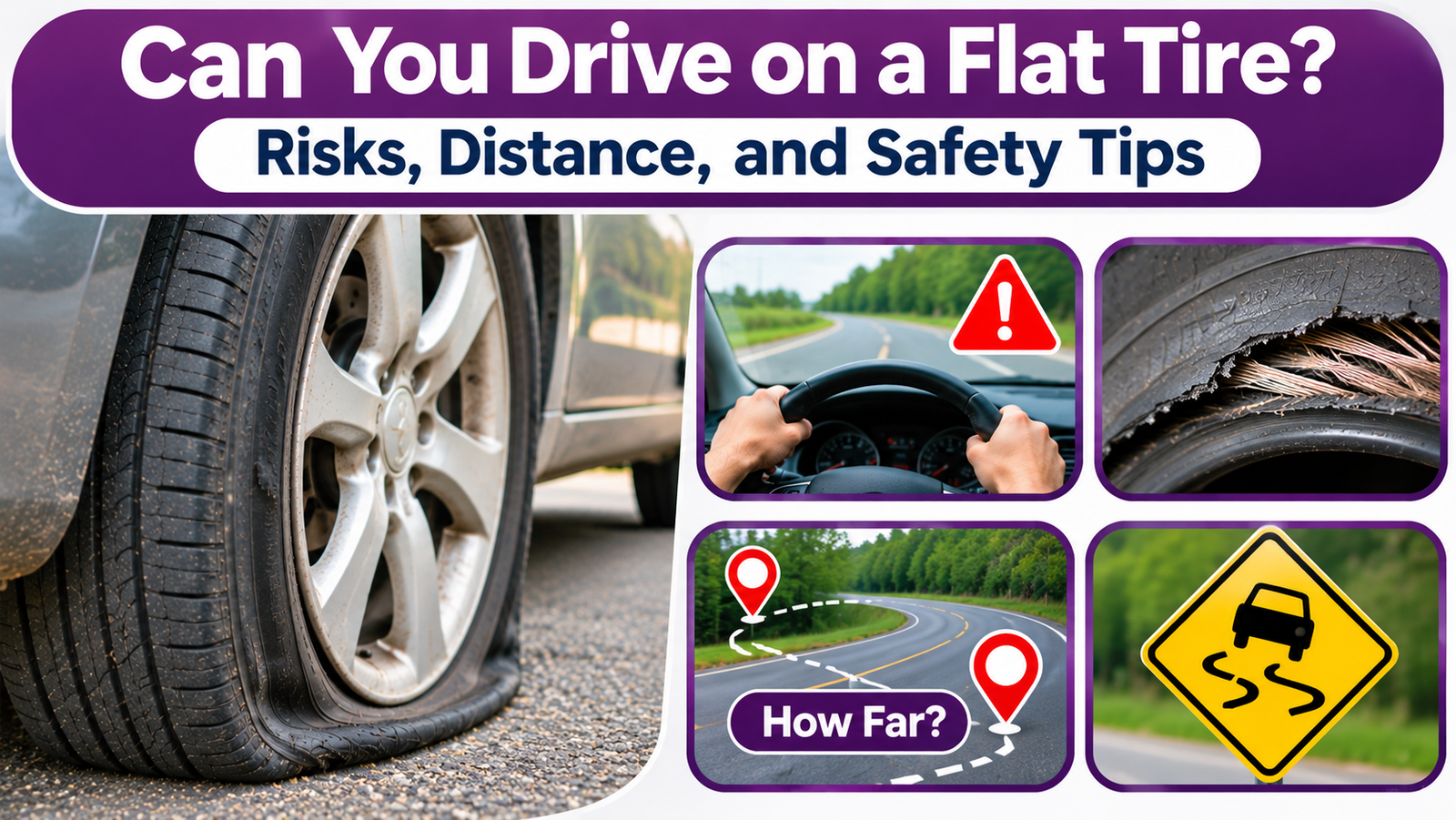
A flat tire can happen unexpectedly, leaving drivers wondering whether they can continue driving or need to stop immediately. Although a vehicle may still move with a flat tire, driving on it can damage the wheel, reduce vehicle control, and create serious safety risks. Even traveling a short distance may turn a repairable puncture into an expensive replacement. Understanding how far you can drive on a flat tire, what happens when you continue driving, and how to respond safely can help protect your vehicle and prevent accidents.
Can You Drive on a Flat Tire?
No, you should not drive on a flat tire under normal circumstances. A completely flat tire cannot properly support your vehicle’s weight, making driving dangerous. When air pressure drops significantly, the tire’s sidewalls collapse, and the wheel rim can begin pressing against the tire and road.
Although the vehicle may still move, even a short drive can cause permanent tire damage. The safest option is to pull over in a secure location as soon as possible.
What Happens When You Drive on a Flat Tire?
Driving with a flat tire affects several important vehicle components:
- Tire sidewall damage: The sidewalls bend and compress excessively, weakening the tire’s internal structure.
- Wheel rim damage: The metal rim may contact the road, resulting in scratches, bends, or cracks.
- Reduced steering control: The vehicle may pull toward the damaged tire, making steering more difficult.
- Poor braking performance: An unstable tire can reduce traction and affect braking control.
- Suspension damage: Continued driving may place additional stress on suspension and steering components.
- Increased accident risk: Tire failure and unpredictable handling can cause drivers to lose control.
A flat tire is more than an inconvenience. Continuing to drive can create serious mechanical problems and increase the risk of a collision.
How Far Can You Drive on a Flat Tire?
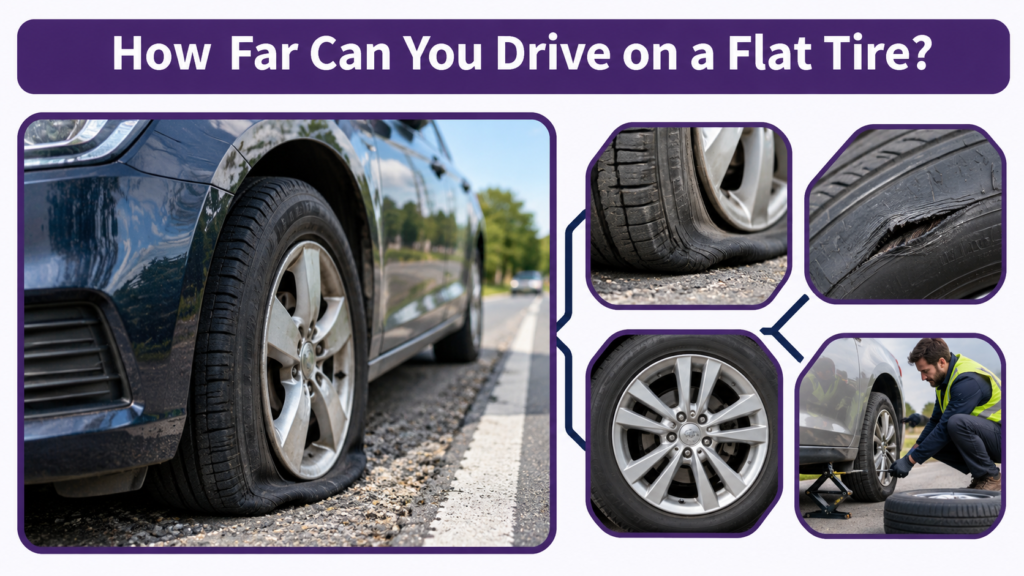
There is no guaranteed safe distance for driving on a completely flat conventional tire. Even traveling a few hundred feet can damage its sidewall or wheel rim, depending on vehicle weight, speed, road conditions, and tire construction.
If the tire suddenly loses pressure, focus on controlling the vehicle and reaching the nearest safe stopping location rather than attempting to reach a repair shop.
Can You Drive 1 Mile on a Flat Tire?
Driving one mile on a completely flat conventional tire is not recommended. The tire may suffer severe internal damage, while the wheel rim can become bent or scratched.
Even at a low speed, the tire may separate from the rim or lose additional structural integrity. If you are one mile from a repair shop, roadside assistance is usually safer than driving there.
Can You Drive 5 Miles on a Flat Tire?
Driving five miles on a completely flat conventional tire is extremely risky. By this distance, the tire may be destroyed, and the wheel could sustain significant damage.
Rather than attempting the journey, stop somewhere safe and arrange a tire change or towing service.
Can You Drive 10 Miles on a Flat Tire?
Driving ten miles on a flat conventional tire should be avoided. The combination of repeated sidewall compression, heat, friction, and poor handling can lead to major tire and wheel damage.
The distance is not worth the risk, even when the nearest tire repair shop is only ten miles away.
How Fast Can You Drive on a Flat Tire?
There is no recommended driving speed for a completely flat conventional tire. Lower speeds may reduce some risks, but they do not make driving on a flat tire safe.
If your tire becomes flat while driving, gradually reduce your speed, maintain control, and move toward a safe stopping area.
Is It Safe to Drive 10–20 MPH on a Flat Tire?
Driving at 10–20 mph on a completely flat tire is still dangerous. The tire can suffer structural damage, and steering or braking may become unpredictable.
If movement is absolutely necessary to escape immediate danger, such as stopping in an active traffic lane, travel only the shortest distance needed to reach a safer location.
Do not treat 10 or 20 mph as a safe operating speed for a flat tire.
Can You Drive on a Flat Tire With Run-Flat Tires?
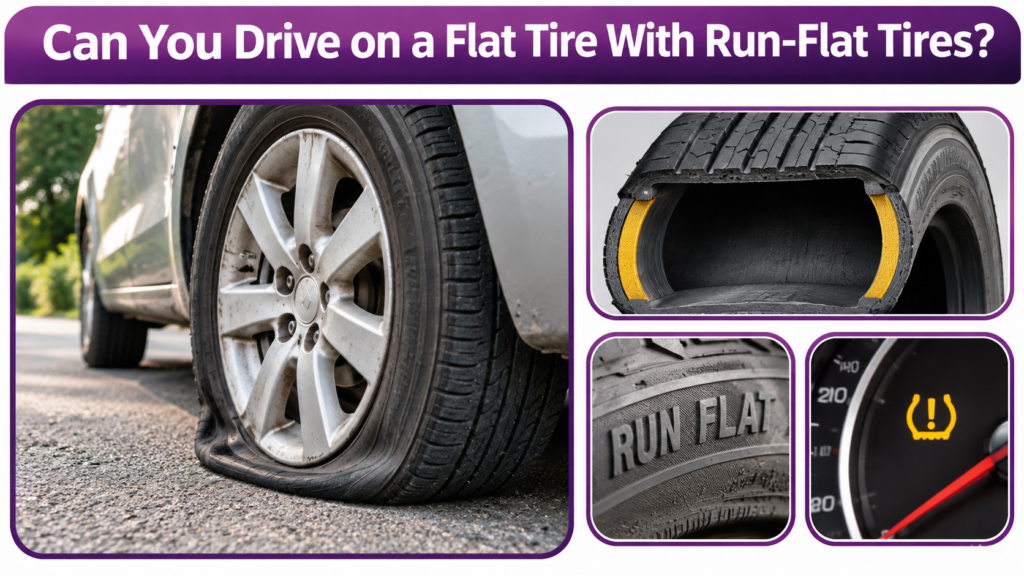
Run-flat tires are specifically designed to support a vehicle for a limited distance after losing air pressure. Unlike conventional tires, they have reinforced construction that helps maintain temporary support.
However, run-flat tires also have restrictions regarding speed, distance, vehicle load, and tire condition.
How Far Can You Drive on Run-Flat Tires?
Many self-supporting run-flat tires are designed to travel approximately 50 miles at a maximum speed of 50 mph after losing pressure. However, these limits vary by tire model and manufacturer.
Some run-flat tires may have shorter permitted distances or additional restrictions. Always follow the tire manufacturer’s instructions and your vehicle’s owner’s manual.
A run-flat tire that has been driven without pressure may also require replacement, depending on the damage and manufacturer guidelines.
Conventional Tires vs. Run-Flat Tires
| Feature | Conventional Tire | Run-Flat Tire |
|---|---|---|
| Driving after total pressure loss | Not recommended | Limited emergency travel |
| Reinforced sidewalls | Usually no | Often yes |
| Typical zero-pressure driving limit | No safe rated distance | Often up to 50 miles |
| Typical maximum zero-pressure speed | No safe rated speed | Often 50 mph |
| Repair after driving flat | Often impossible | Depends on manufacturer and condition |
Run-flat tires provide additional flexibility during emergencies, but they are not designed for unlimited driving without air pressure.
What to Do If You Get a Flat Tire While Driving
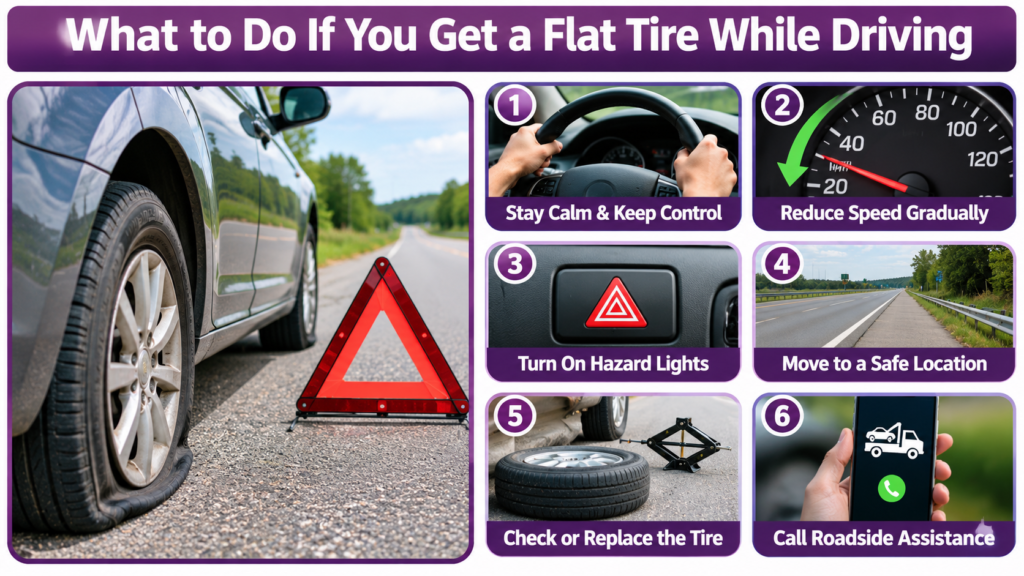
A flat tire requires a calm and controlled response. Sudden braking or sharp steering can make the situation more dangerous, particularly when traveling at highway speeds.
Following the correct steps can help you stop safely and prevent additional vehicle damage.
Steps to Take When Your Tire Goes Flat
- Stay calm: Keep both hands on the steering wheel and avoid sudden movements.
- Maintain control: Hold the steering wheel firmly because the vehicle may pull toward the flat tire.
- Reduce speed gradually: Ease off the accelerator and avoid hard braking.
- Turn on hazard lights: Alert other drivers that your vehicle is experiencing a problem.
- Find a safe location: Move toward a parking area, emergency stopping zone, or sufficiently wide shoulder.
- Stop completely: Park on stable, level ground when possible and activate the parking brake.
- Inspect the situation: Check the tire only when you can safely exit the vehicle.
- Call roadside assistance: Request professional help when changing the tire yourself would be unsafe.
If you are on a busy highway without a safe stopping location, follow local emergency guidance. Do not attempt to change a tire beside moving traffic.
How to Tell If You Have a Flat Tire
A flat tire is not always immediately obvious. Some punctures cause sudden pressure loss, while others release air slowly over several hours or days.
Recognizing the early warning signs can help prevent more serious damage.
Common Signs of a Flat Tire
- Vehicle pulling to one side: Uneven tire pressure may cause the steering to pull left or right.
- Thumping noises: A severely underinflated tire can produce repetitive flapping or thumping sounds.
- Heavy steering: The vehicle may become more difficult to control.
- Visible tire deformation: A tire may appear noticeably flattened or compressed.
- Tire pressure warning: The tire pressure monitoring system (TPMS) may illuminate.
- Unusual vibrations: A damaged tire can create vibrations through the steering wheel or vehicle body.
These symptoms may also indicate other mechanical issues. If you notice them, slow down and inspect the tires in a safe location.
Can Driving on a Flat Tire Ruin the Rim?
Yes, driving on a flat tire can permanently damage the wheel rim. A properly inflated tire creates a protective cushion between the wheel and road.
When the tire loses pressure, the wheel may come into contact with the pavement. This can produce scratches, bending, cracking, and other structural problems.
How to Prevent Wheel Damage
The most effective approach is to avoid driving on a completely flat tire.
If the tire becomes flat while traveling, stop as soon as it is safe. Replace the damaged tire with a suitable spare or arrange roadside assistance.
After driving on a severely underinflated tire, have a qualified technician inspect both the tire and wheel before returning the vehicle to regular use.
Can You Repair a Tire After Driving on It Flat?
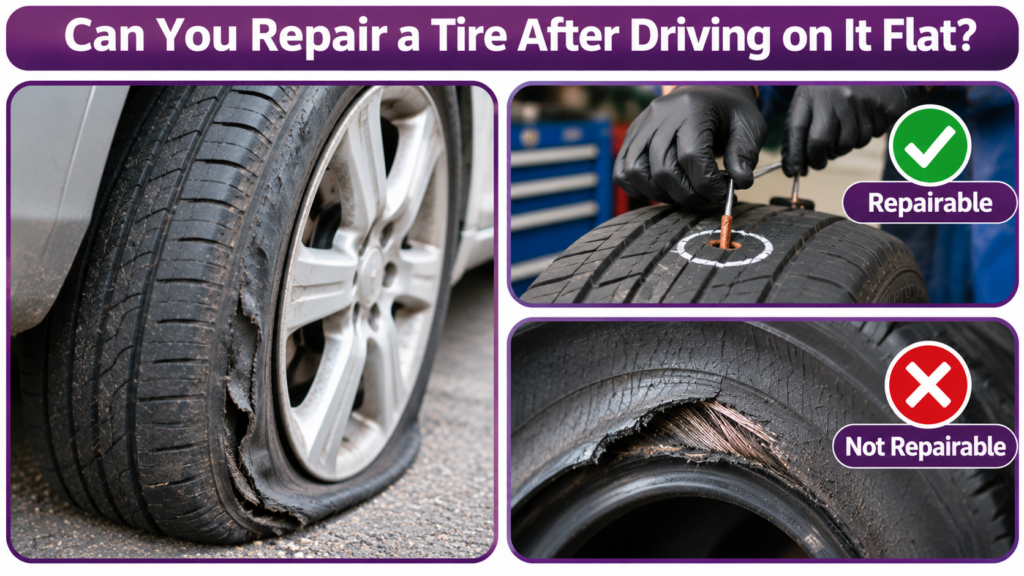
Sometimes a punctured tire can be repaired, but driving on it while completely flat significantly reduces that possibility.
When a tire rolls without sufficient pressure, its sidewalls flex excessively. This generates heat and can damage internal cords and rubber layers, even when the outside looks relatively normal.
A tire technician must remove the tire from the wheel to evaluate internal damage and determine whether repair is permitted.
When Does a Flat Tire Need Replacement?
Replacement is generally necessary when the tire has:
- Sidewall cuts, punctures, bulges, or structural damage.
- Internal damage caused by driving without adequate pressure.
- Exposed cords or significant rubber deterioration.
- A puncture outside the repairable tread area.
- Damage exceeding accepted repair limits.
- Excessive tread wear or other unsafe conditions.
A small puncture within the repairable tread area may be fixable if the tire has not suffered additional damage. Proper repairs generally require an internal patch-and-plug combination, not an external plug alone.
How to Prevent Flat Tires While Driving
Although not every flat tire can be prevented, routine maintenance can reduce the chances of unexpected tire failure.
Check tire pressure regularly, preferably when the tires are cold. Follow the vehicle manufacturer’s recommended pressure displayed on the driver’s door placard or in the owner’s manual.
Inspect your tires for nails, cuts, bulges, uneven wear, and embedded objects. Rotate the tires according to your vehicle’s maintenance recommendations and avoid overloading the vehicle.
Also, pay attention to potholes, sharp debris, and damaged road surfaces. Replacing worn tires before they become unsafe can further reduce the risk of tire failure.
FAQs
1. Can You Drive a Short Distance on a Flat Tire?
Driving even a short distance on a completely flat conventional tire can cause permanent damage. If the vehicle is in immediate danger, moving a minimal distance to reach a safe stopping area may be necessary. Otherwise, stop driving and request assistance.
2. Can You Drive on a Flat Tire to the Gas Station?
Driving on a completely flat conventional tire to a gas station is not recommended, even if the station is nearby. The tire may already be damaged beyond repair. A spare tire, roadside assistance, or mobile tire service is a safer alternative.
3. Can You Drive on a Flat Tire With a Nail in It?
If a nail causes a slow leak but the tire still maintains proper pressure, the puncture may be repairable. However, if the tire is completely flat, you should not drive on it. Have the tire inspected and repaired professionally.
4. How Long Can a Car Sit With a Flat Tire?
A vehicle can remain parked temporarily with a flat tire, but leaving it that way for an extended period may damage the tire’s sidewall. Repair or replace the tire promptly and avoid moving the vehicle until the tire problem has been resolved.
5. Will Driving on a Flat Tire Damage Your Car?
Yes, driving on a flat tire can damage the tire, wheel rim, and potentially nearby vehicle components. It can also reduce steering stability and braking performance. Stopping promptly and arranging professional assistance helps prevent expensive repairs and improves safety.