
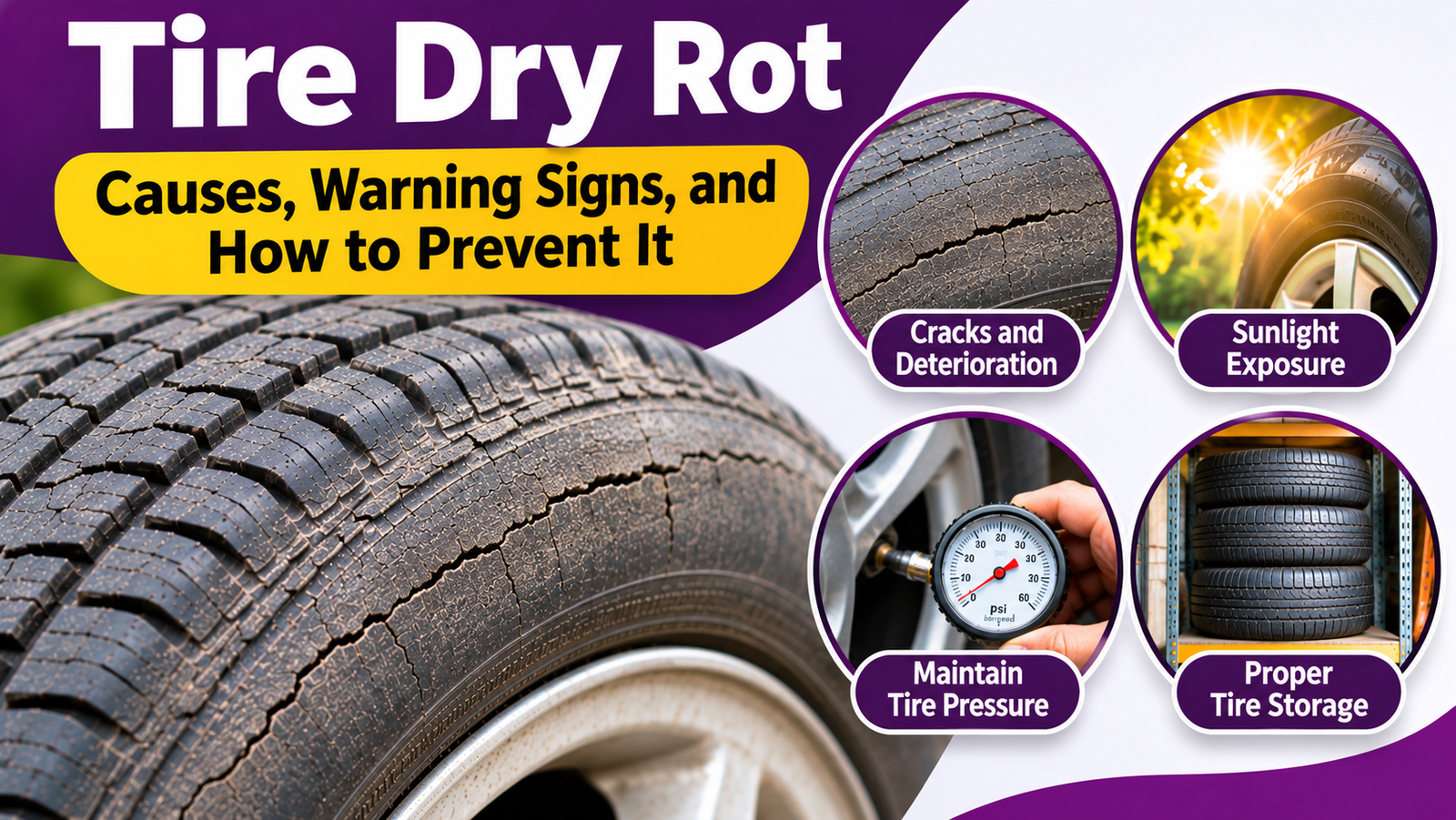
Tire dry rot is a common problem that affects the safety, durability, and performance of vehicle tires. It occurs when rubber gradually deteriorates, causing cracks, stiffness, and surface damage. Although tires may still have plenty of tread, dry rot can make them unsafe for driving. Sunlight, heat, aging, and improper storage are some of the main causes. Understanding what tire dry rot looks like, how quickly it develops, and when replacement becomes necessary can help drivers avoid unexpected tire failures and maintain safer driving conditions.
What Is Tire Dry Rot?
Tire dry rot refers to the deterioration of tire rubber caused by aging and environmental exposure. It is also called weather cracking or ozone cracking. Unlike wood rot, tire dry rot is not caused by fungal growth. Instead, chemical changes gradually reduce the rubber’s flexibility and resistance to cracking.
As the rubber ages, small cracks may appear along the sidewalls, tread grooves, or other exposed areas. These cracks can become deeper as deterioration progresses.
Tire dry rot can develop even when a vehicle is rarely driven. Cars, trailers, recreational vehicles, and stored tires are particularly vulnerable because prolonged storage and environmental exposure can accelerate rubber aging.
What Does Tire Dry Rot Look Like?
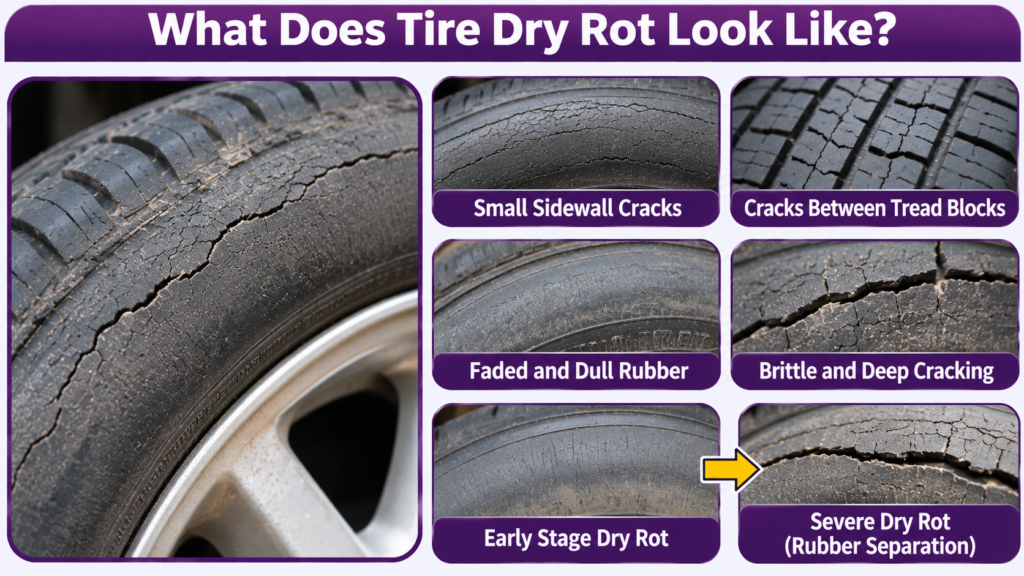
Dry rot usually begins with subtle changes in the rubber’s appearance. Early symptoms may resemble normal surface wear, but more advanced deterioration can affect tire safety.
Common Signs of Tire Dry Rot
- Small sidewall cracks: Thin lines or spiderweb-like cracks appear along the tire’s sidewalls.
- Cracks between tread blocks: Rubber begins splitting inside the tread grooves.
- Faded rubber: The tire develops a grayish or dull appearance instead of its original dark color.
- Brittle surface: The rubber becomes harder and less flexible.
- Deep cracking: Larger cracks develop and may expose underlying tire components.
- Rubber separation: Severely deteriorated rubber may split or separate from surrounding material.
Early Stage vs. Severe Tire Dry Rot
Early dry rot often appears as fine surface cracks that do not visibly extend deep into the rubber. However, the external appearance alone cannot reliably establish the tire’s internal condition.
Severe dry rot involves deeper cracks, significant deterioration, or exposed structural materials. Tires showing these symptoms should not remain in service.
Any visible cracking deserves professional inspection rather than assuming the tire is safe because the tread remains thick.
What Causes Tire Dry Rot?
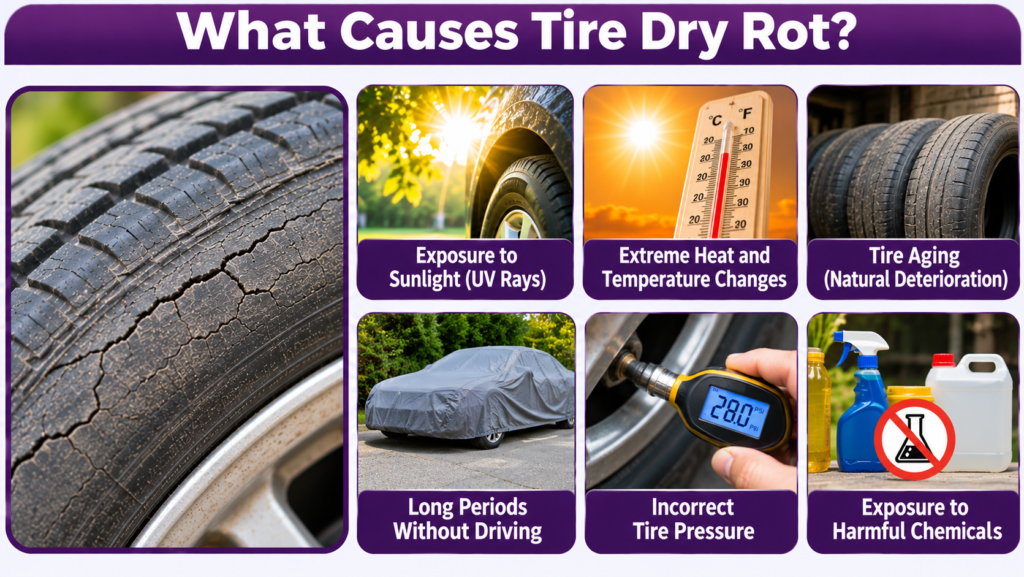
Several environmental and maintenance factors contribute to tire deterioration. Understanding these causes can help prevent premature damage and extend tire service life.
1. Exposure to Sunlight
Ultraviolet radiation from direct sunlight gradually damages tire rubber. Vehicles parked outdoors for extended periods experience continuous UV exposure, which can accelerate surface cracking.
2. Extreme Heat and Temperature Changes
High temperatures accelerate the chemical reactions responsible for rubber aging. Repeated exposure to extreme heat and temperature fluctuations can make tire rubber less flexible over time.
3. Tire Aging
Rubber naturally changes as it ages, regardless of how frequently the vehicle is driven. Protective compounds cannot completely prevent this process, so even unused tires have a limited service life.
4. Long Periods Without Driving
Vehicles stored for months may develop tire deterioration because of prolonged environmental exposure and static loading. Regular appropriate vehicle use helps avoid some storage-related problems.
5. Incorrect Tire Pressure
Underinflated tires experience excessive sidewall flexing and heat buildup during driving. This additional stress can accelerate deterioration and increase the risk of structural damage.
6. Exposure to Harmful Chemicals
Petroleum-based cleaners, solvents, and certain aggressive tire treatments may damage rubber or interfere with protective compounds. Repeated contact can contribute to premature cracking.
Is Tire Dry Rot Dangerous?
Yes, tire dry rot can become dangerous, particularly when cracking progresses beyond the rubber’s outer surface.
A tire’s sidewalls must flex repeatedly while supporting the vehicle’s weight. As the rubber deteriorates, its ability to withstand normal driving stresses may be compromised.
Severe tire deterioration can increase the risk of tire failure, including loss of air pressure or structural separation. Such failures are especially dangerous at highway speeds.
Even a tire with substantial remaining tread depth can be unsafe if its rubber or internal structure has deteriorated.
Drivers should avoid using tires with deep cracks, exposed cords, bulges, or evidence of separation. These conditions require replacement rather than continued driving.
Can You Drive on Tires With Dry Rot?
Driving on visibly dry-rotted tires is not recommended without a professional evaluation. The safety risk depends on the cracking severity, tire age, maintenance history, and internal condition.
Very fine surface cracking does not always indicate immediate structural failure, but it should never be ignored.
If a tire develops deep cracks, exposed reinforcement, bulges, or air-pressure problems, stop using it. Arrange professional assistance rather than attempting to drive it to a repair shop.
Dry rot does not always cause an immediate blowout. However, deterioration can progress unpredictably, making continued use increasingly risky.
How to Prevent Tire Dry Rot
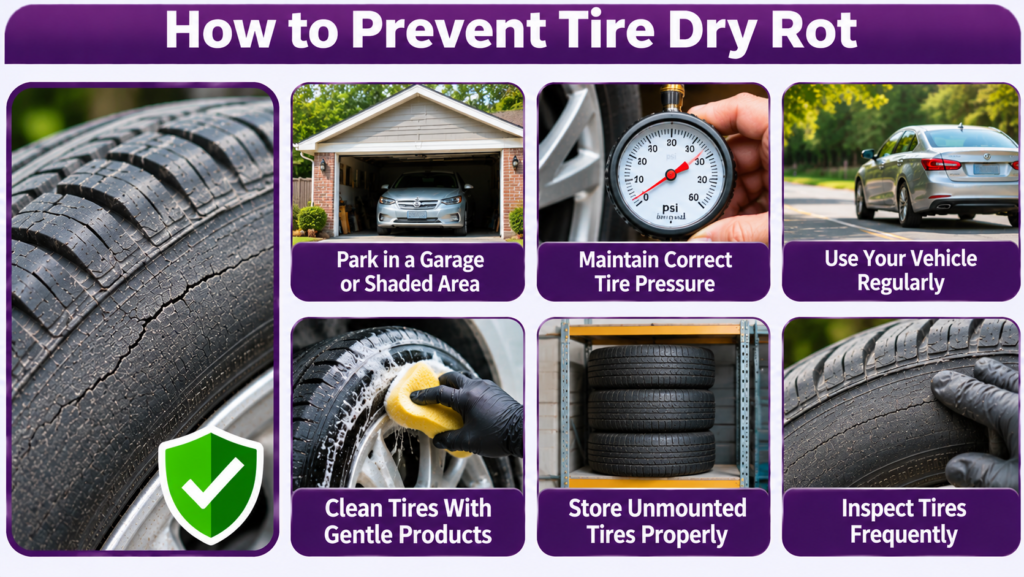
Although rubber aging cannot be completely stopped, proper maintenance and storage can help slow deterioration.
1. Park Away From Direct Sunlight
Whenever possible, park inside a garage or shaded area. Reducing prolonged UV exposure helps protect tire rubber from premature aging.
2. Maintain Correct Tire Pressure
Check tire pressure at least once a month and before long journeys. Use the recommended cold inflation pressure listed on the vehicle’s tire information placard.
3. Use Your Vehicle Regularly
Avoid leaving vehicles stationary for unnecessarily long periods. For vehicles requiring seasonal storage, follow the tire and vehicle manufacturers’ storage recommendations.
4. Clean Tires With Gentle Products
Use mild soap, water, and suitable tire-cleaning products. Avoid petroleum-based solvents or aggressive chemicals that could damage the rubber.
5. Store Unmounted Tires Properly
Keep spare or seasonal tires in a cool, dry, ventilated location protected from sunlight. Avoid storing them near ozone-producing electric motors or generators.
6. Inspect Tires Frequently
Examine sidewalls and tread grooves for cracking, bulges, unusual wear, and other damage. Regular inspections help identify deterioration before it becomes severe.
How to Fix Dry Rot on Tires
Unfortunately, tire dry rot cannot be permanently repaired or reversed. Once the rubber’s properties have deteriorated, applying chemicals or surface treatments cannot restore its original structural integrity.
Some tire dressings temporarily improve the appearance of faded rubber, but they do not eliminate cracks or repair internal damage.
Likewise, applying sealants or rubber conditioners over existing cracks does not make a damaged tire safe.
The appropriate solution for significant dry rot is tire replacement. For minor surface cracking, a qualified tire professional should assess whether continued service is acceptable.
When Should You Replace Dry-Rotted Tires?
Tires should be replaced when cracking or other damage compromises their safety. Tire age also matters because deterioration can occur without obvious visible symptoms.
The following conditions warrant particular attention:
- Deep or extensive cracks in the sidewalls or tread.
- Visible cords, reinforcement, or structural components.
- Bulging, splitting, or separation of rubber.
- Repeated air-pressure loss associated with deterioration.
- Tire age exceeding the manufacturer’s recommended service limits.
Some manufacturers recommend replacement between six and ten years, depending on their guidance and tire condition. Michelin recommends replacing tires at ten years from manufacture as a precaution, regardless of tread depth.
To determine tire age, locate the last four digits of the DOT tire identification number. For example, 2521 indicates manufacture during the 25th week of 2021.
FAQs
1. How Long Does It Take for Tires to Dry Rot?
Tire dry rot may develop over several years, although the timeline varies significantly. Sunlight, extreme temperatures, storage conditions, and maintenance practices influence deterioration. Some tires develop visible cracking relatively early, while others remain in good condition longer. Regular inspections are important regardless of tire age.
2. Can Tire Dry Rot Be Reversed?
No, tire dry rot cannot be reversed once rubber deterioration has occurred. Tire conditioners and dressings may improve surface appearance, but they cannot repair cracks or restore structural strength. Tires with significant cracking should be replaced rather than treated with products claiming to reverse dry rot.
3. Can Tires Dry Rot After Two Years?
Yes, tires can develop signs of dry rot after two years under unfavorable conditions. Excessive sunlight, ozone exposure, extreme heat, or improper storage may accelerate deterioration. However, noticeable cracking on relatively new tires should be evaluated by a tire professional to determine the cause.
4. Is Tire Dry Rot Covered Under Warranty?
Warranty coverage depends on the tire manufacturer, warranty terms, and reason for deterioration. Damage caused by environmental exposure or improper maintenance is often excluded. However, unusually early cracking may qualify for inspection under applicable warranty provisions if a manufacturing defect is suspected.
5. Do Unused Tires Develop Dry Rot?
Yes, unused tires can develop dry rot because rubber ages even when the tires are not driven. Prolonged exposure to sunlight, ozone, heat, and unsuitable storage conditions can accelerate cracking. Proper storage reduces deterioration, but it cannot completely stop the natural aging process.