
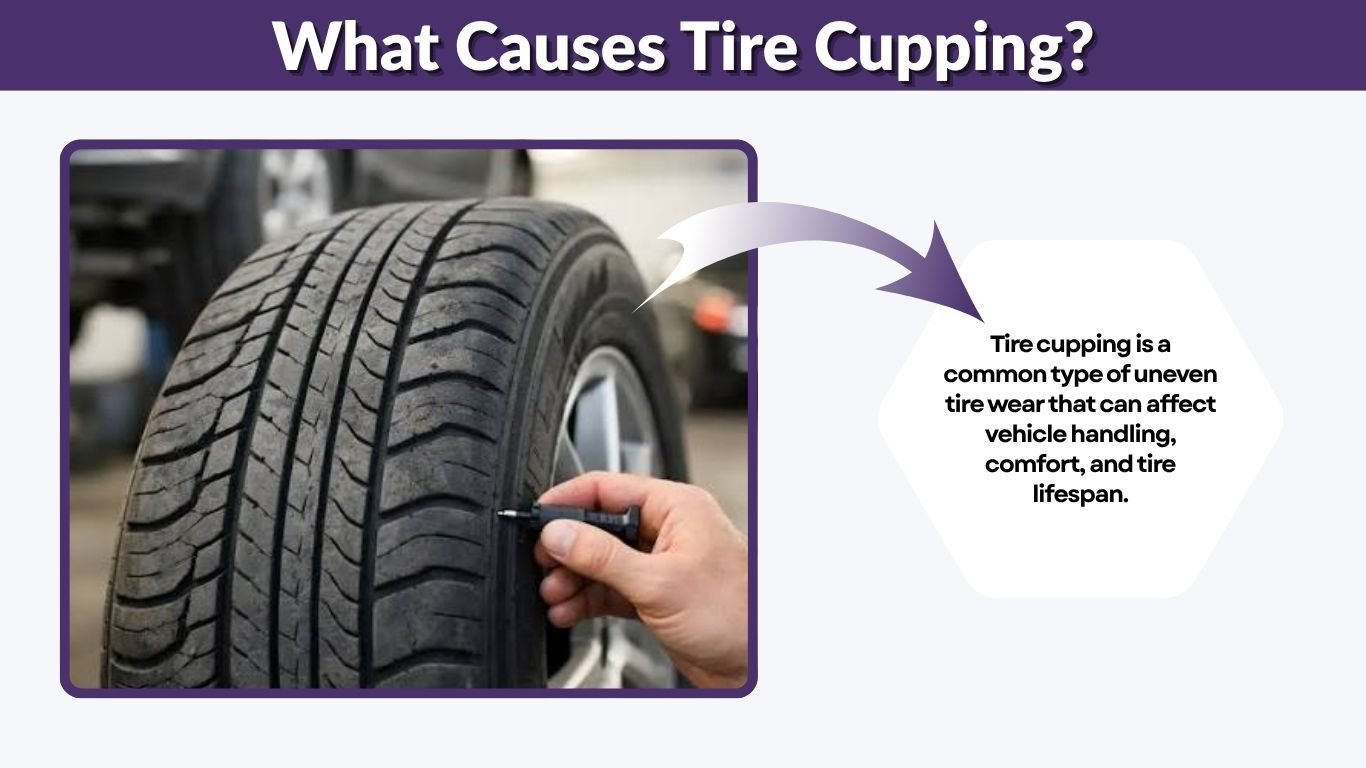
Tire cupping is a common type of uneven tire wear that can affect vehicle handling, comfort, and tire lifespan. But what causes tire cupping? The most common reasons include worn shock absorbers, damaged suspension components, unbalanced wheels, and improper wheel alignment. These problems prevent tires from maintaining consistent contact with the road, creating uneven, scooped-out patches across the tread. Understanding the causes, warning signs, and available solutions can help you prevent additional tire damage and maintain safer driving conditions.
What Is Tire Cupping?
Tire cupping, also called tire scalloping, is an irregular tread wear pattern that creates small dips or hollow spots around a tire’s circumference. These worn areas resemble sections scooped out of the rubber.
Unlike normal tire wear, which develops relatively evenly, cupping produces alternating high and low spots across the tread. The affected areas may appear along the tire’s edges or across the tread surface.
Cupped tires often produce unusual road noise, vibration, or a rough driving experience. The condition usually indicates an underlying mechanical or tire maintenance problem that requires attention.
What Causes Tire Cupping?
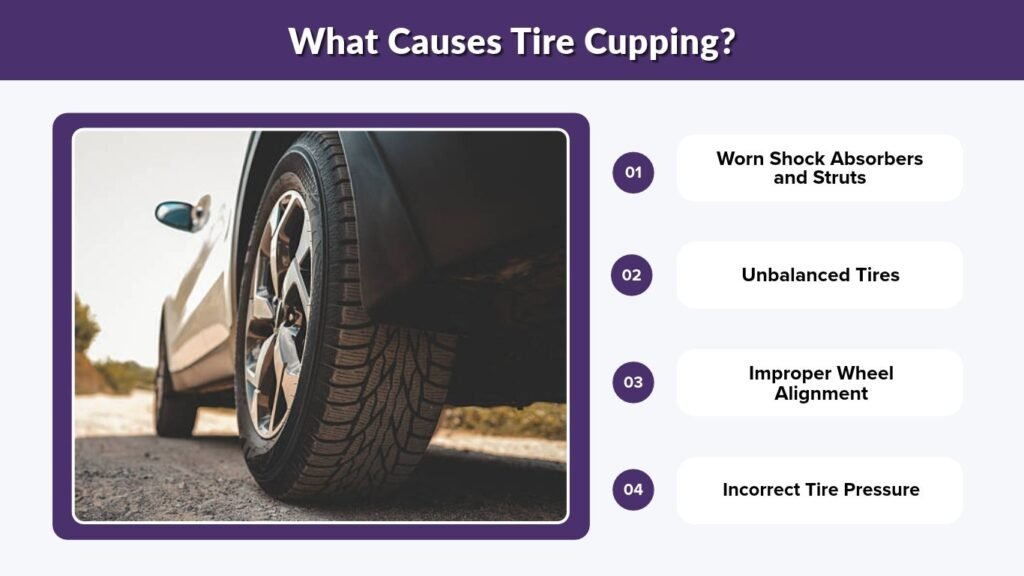
Several mechanical and maintenance issues can cause tire cupping. Most involve conditions that create uneven pressure or inconsistent contact between the tire and road. Identifying the exact cause is essential because replacing the tire without fixing the underlying problem may result in repeated damage.
1. Worn Shock Absorbers and Struts
Worn shock absorbers and struts are major causes of tire cupping. These suspension components control wheel movement and help keep tires firmly connected to the road.
When shocks or struts lose their damping ability, the wheels may bounce excessively while driving. This repeated movement creates uneven pressure on certain tread sections, gradually producing cupped areas.
Signs of worn shock absorbers include excessive bouncing, unstable handling, and uneven tire wear. A suspension inspection can determine whether replacement is necessary.
2. Unbalanced Tires
Wheel imbalance is another common cause of tire cupping. When weight is distributed unevenly around a tire and wheel assembly, the rotating wheel may generate vibration and inconsistent contact pressure.
Over time, these repeated forces can produce irregular wear patterns.
Drivers may notice steering wheel vibration, particularly at highway speeds. Professional wheel balancing helps correct uneven weight distribution and reduces the risk of additional tread damage.
3. Improper Wheel Alignment
Incorrect wheel alignment changes how tires contact the road. Misaligned wheels may roll at improper angles, causing uneven pressure and excessive tread wear.
Camber and toe alignment problems are especially important because they affect tire contact and rolling direction.
Common warning signs include a vehicle pulling to one side, an off-center steering wheel, and irregular tread wear. A professional alignment inspection can identify and correct these issues.
4. Worn Suspension Components
Damaged ball joints, control arm bushings, and other suspension components can contribute to tire cupping.
These parts help maintain correct wheel positioning during acceleration, braking, and cornering. When they become loose or worn, the wheels may move excessively.
This unwanted movement can create irregular tire contact and eventually cause scalloped tread wear.
5. Incorrect Tire Pressure
Improper tire inflation can contribute to uneven tire wear and may worsen cupping associated with other mechanical problems.
Underinflated tires typically experience increased wear along both shoulders, while overinflated tires often wear faster near the center.
Although these wear patterns differ from true cupping, maintaining the manufacturer’s recommended tire pressure helps prevent additional tread damage.
6. Lack of Regular Tire Rotation
Failure to rotate tires regularly can allow developing wear patterns to become more pronounced.
Front and rear tires experience different steering, braking, and load forces. Without rotation, some tires may wear faster or develop uneven tread patterns.
Regular rotation helps distribute wear across tire positions. However, rotation alone cannot correct worn suspension components or wheel imbalance.
What Are the Symptoms of Tire Cupping?
Tire cupping often becomes noticeable through changes in road noise, vehicle vibration, and tread appearance. Recognizing these warning signs early may prevent additional tire damage.
Common symptoms include:
- Uneven tread patches: Small scooped-out areas appear around the tire.
- Humming or roaring noise: Road noise becomes louder, especially at higher speeds.
- Steering wheel vibration: The steering wheel shakes while driving.
- Rough ride: The vehicle feels less smooth on normal roads.
- Uneven tire wear: Certain tread sections wear significantly faster than others.
These symptoms can also indicate other mechanical problems, so a proper inspection is important.
What Causes Tire Cupping on Front and Rear Tires?
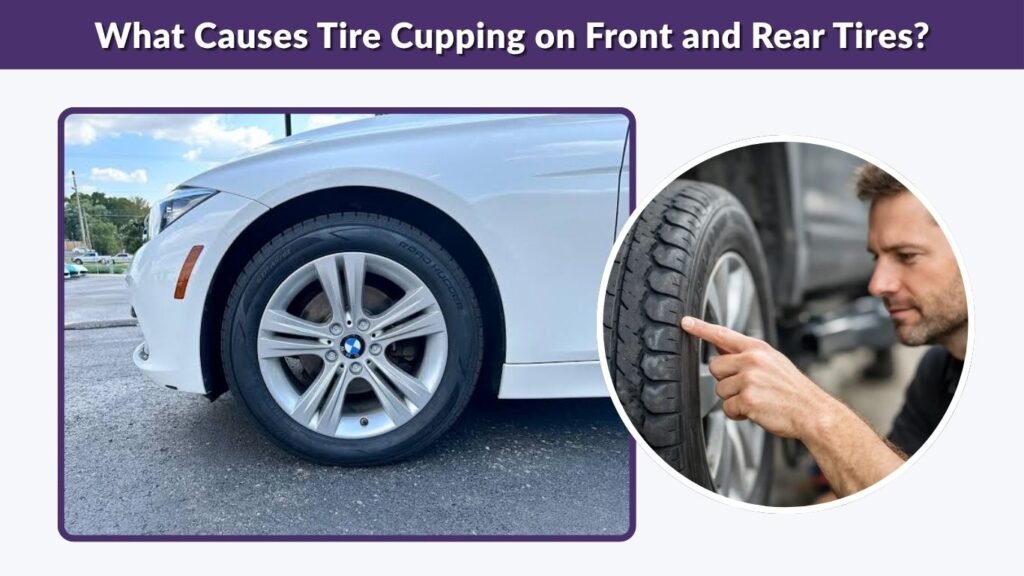
Tire cupping can affect either axle, although the contributing mechanical problems may differ.
Tire Cupping on Front Tires
Front tire cupping commonly develops because of worn steering or suspension components, weak shocks or struts, and wheel imbalance.
Front tires experience steering and substantial braking forces, making proper alignment and suspension condition especially important.
Tire Cupping on Rear Tires
Rear tire cupping can result from worn rear shock absorbers, damaged suspension bushings, incorrect rear-wheel alignment, or unbalanced wheels.
On vehicles with independent rear suspension, improper alignment angles may contribute to irregular tread wear.
Inspecting the affected axle helps identify the actual problem rather than assuming all cupping has the same cause.
How to Fix Tire Cupping
Fixing tire cupping requires identifying and correcting the underlying mechanical issue. Existing tread damage generally cannot be fully reversed, but appropriate repairs can prevent additional uneven wear.
Recommended repair steps:
- Inspect the suspension: Check shocks, struts, bushings, and ball joints for wear or damage.
- Balance the wheels: Correct wheel imbalance that may contribute to vibration and uneven tread wear.
- Check wheel alignment: Adjust alignment angles to the manufacturer’s specifications.
- Adjust tire pressure: Inflate tires according to the vehicle manufacturer’s recommendations.
- Evaluate tire replacement: Replace tires with severe cupping, unsafe tread depth, or unacceptable vibration.
Lightly cupped tires may remain usable after the underlying issue is corrected, depending on their condition. A tire professional should evaluate whether continued use is safe.
Is Tire Cupping Dangerous?
Yes, severe tire cupping can affect driving safety. Irregular tread contact may reduce handling consistency, increase vibration, and contribute to unpredictable tire performance.
Cupped tires may also produce excessive road noise and accelerate wear in already damaged tread sections.
Mild cupping does not automatically mean a tire is unsafe, but the condition should never be ignored. Have the tire and suspension inspected promptly, particularly if vibration or handling problems are present.
How to Prevent Tire Cupping
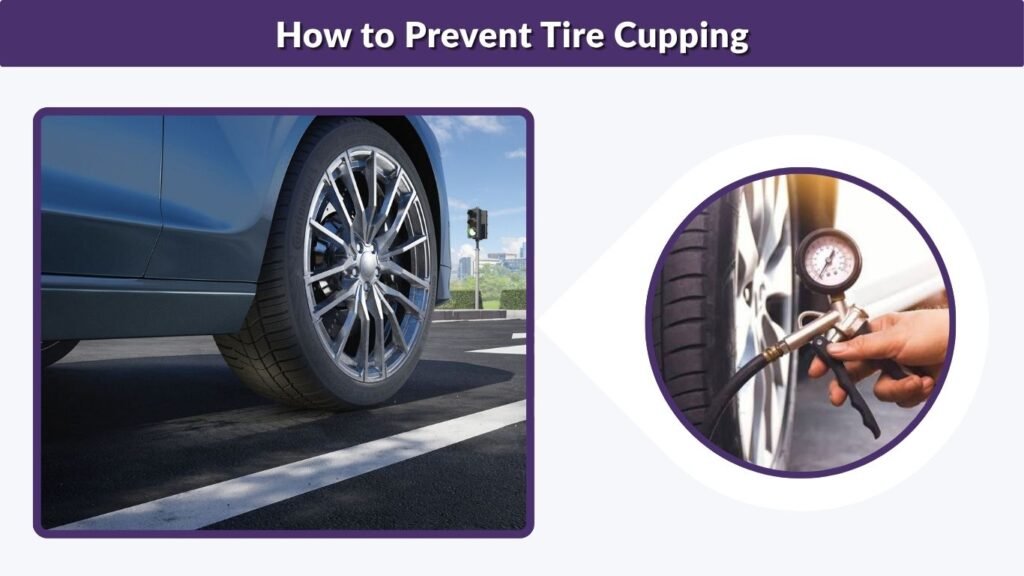
Preventing tire cupping involves maintaining the tires, wheels, steering components, and suspension system.
Important preventive measures include:
- Check tire pressure monthly and before long trips.
- Rotate tires according to the vehicle manufacturer’s schedule.
- Balance wheels when necessary, especially if vibration develops.
- Inspect shocks, struts, and suspension components regularly.
- Check alignment when uneven wear or steering problems appear.
- Avoid hard impacts with potholes and curbs whenever possible.
- Examine tire tread periodically for early signs of unusual wear.
Routine maintenance reduces the likelihood of developing serious irregular tire wear and helps extend tire service life.
Frequently Asked Questions
Can Bad Shocks Cause Tire Cupping?
Yes. Worn shock absorbers can allow excessive wheel movement, resulting in irregular tire contact and cupped tread wear. However, other causes should also be inspected.
Can Tire Cupping Be Fixed Without Replacing Tires?
Minor cupping may remain manageable after the underlying mechanical problem is repaired. However, existing tread depressions cannot be restored, and severely damaged tires may require replacement.
Can Wheel Alignment Cause Tire Cupping?
Yes. Incorrect wheel alignment can contribute to tire cupping by creating uneven contact pressure and abnormal tread wear. Suspension damage or wheel imbalance may also be involved.
Does Tire Cupping Cause Road Noise?
Yes. Cupped tires commonly produce humming, roaring, or rhythmic road noise. The noise may become more noticeable as vehicle speed increases.
Will Rotating Tires Stop Cupping?
Tire rotation may help distribute minor wear, but it cannot fix mechanical problems. Worn shocks, unbalanced wheels, or incorrect alignment must be corrected to prevent further cupping.