
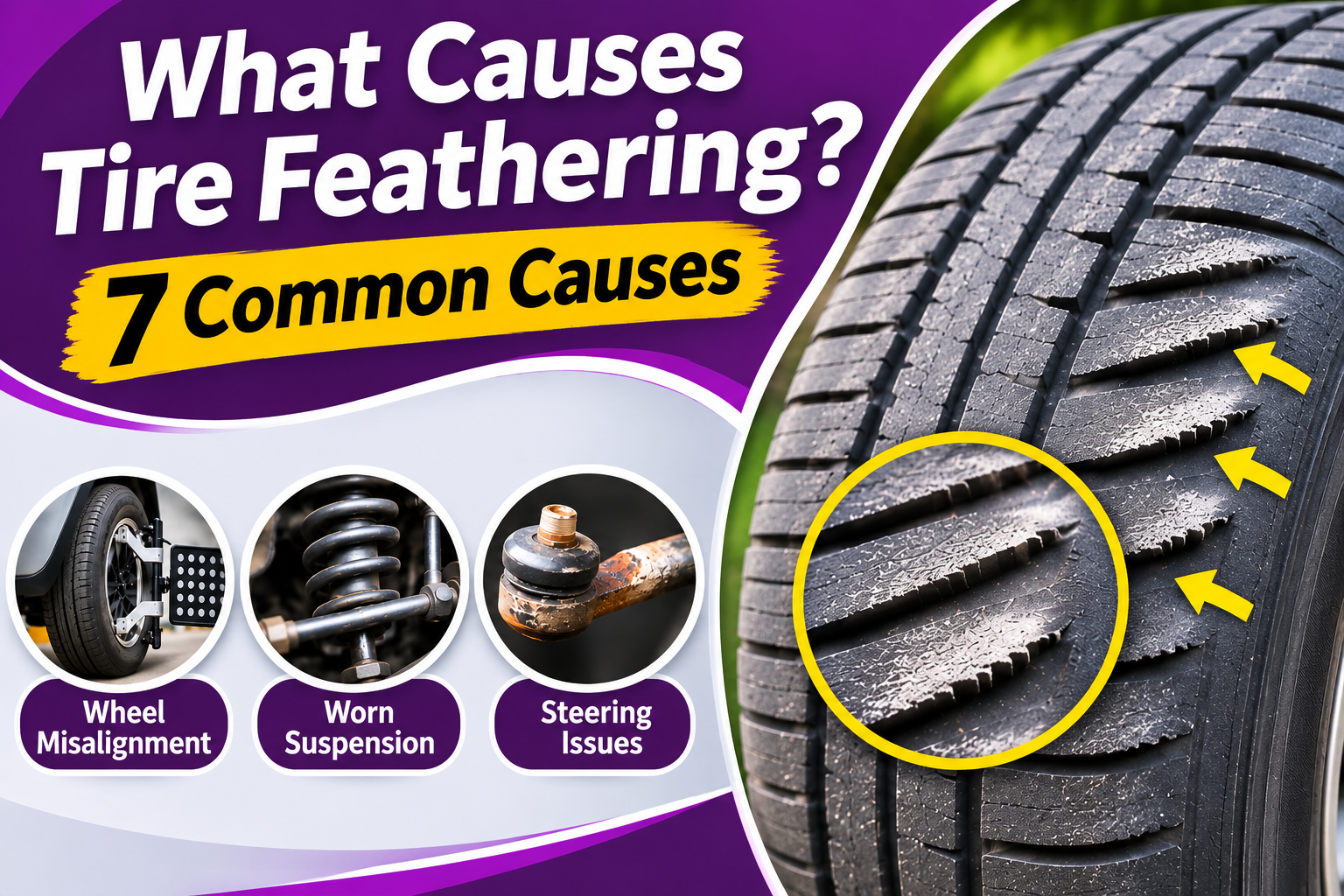
Tire feathering is a common type of uneven tire wear that can reduce tire lifespan and affect driving comfort. It occurs when one edge of a tread rib becomes smooth or rounded while the opposite edge remains sharp, creating a feather-like texture. The most common cause is incorrect wheel alignment, especially improper toe settings. However, worn suspension components and poor tire maintenance can also contribute. Understanding what causes tire feathering, how to identify the warning signs, and how to fix the problem can help prevent expensive tire replacements and improve vehicle safety.
What Is Tire Feathering?
Tire feathering is an irregular tread wear pattern in which the edges of tread ribs wear unevenly. One side feels smooth when touched, while the opposite side feels sharp or raised. This creates a sawtooth-like texture across the tire surface.
Feathering develops when tires experience excessive sideways scrubbing against the road instead of rolling smoothly. It commonly appears on front tires but can also affect rear tires.
Unlike normal tread wear, feathering suggests that the tire is not maintaining proper contact with the road during operation. Michelin identifies toe misalignment as a primary cause of this wear pattern.
What Does Tire Feathering Look Like?
A feathered tire may appear relatively normal during a quick visual inspection. However, closer examination can reveal uneven tread rib edges.
Common signs include:
- Sharp edges along one side of the tread ribs.
- Smooth or rounded edges on the opposite side.
- A sawtooth texture when moving your hand across the tread.
- Uneven wear concentrated on certain tread ribs.
- Increased road noise as the wear becomes more pronounced.
These symptoms can help distinguish feathering from other types of uneven tire wear.
What Causes Tire Feathering? 7 Common Causes
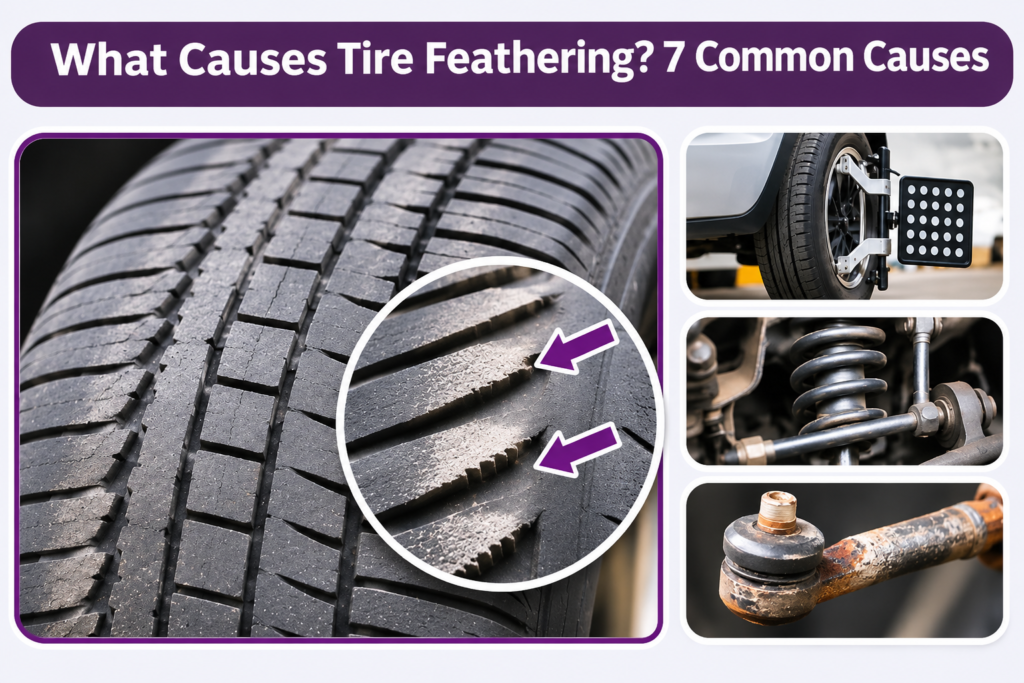
Tire feathering usually results from improper wheel alignment, but several mechanical and maintenance problems can contribute to its development. Understanding these causes makes it easier to identify the underlying issue before the tire becomes severely damaged.
1. Incorrect Toe Alignment
Incorrect toe alignment is the leading cause of tire feathering. Toe refers to the direction the wheels point relative to the vehicle’s centerline when viewed from above.
When the wheels point excessively inward or outward, the tires scrub sideways against the road during driving. This friction gradually wears one edge of each tread rib faster than the other.
Two common toe problems are:
- Excessive toe-in: The front edges of the wheels point too far toward each other.
- Excessive toe-out: The front edges of the wheels point too far away from each other.
Both conditions can cause feathered tire wear. Professional wheel alignment restores the toe settings to the vehicle manufacturer’s specifications.
2. Worn Suspension Components
Worn suspension parts can allow unwanted wheel movement, contributing to feathered tire wear.
Suspension components help maintain proper wheel positioning as the vehicle travels over uneven surfaces. When these parts deteriorate, the wheels may shift slightly while driving.
Common components that can contribute include worn control arm bushings, ball joints, and suspension joints.
Damaged or deteriorated bushings are particularly important because they can allow toe angles to change under load. Replacing worn components before performing an alignment helps prevent the problem from returning.
3. Loose or Damaged Steering Components
Steering components maintain wheel direction and stability. Loose or damaged parts can cause alignment angles to change during vehicle operation.
Worn tie rods, steering linkages, or related components may prevent the wheels from maintaining consistent toe alignment.
Drivers may also notice loose steering response, wandering, or unusual movement while driving.
A mechanic should inspect the steering system for excessive play before adjusting wheel alignment. Simply correcting the alignment without repairing loose components may not provide a lasting solution.
4. Incorrect Camber and Other Alignment Angles
Camber describes the inward or outward tilt of a wheel when viewed from the front of the vehicle.
Excessive positive or negative camber primarily causes one-sided shoulder wear rather than classic feathering. However, multiple incorrect alignment angles can occur together.
For example, a vehicle with improper toe and camber settings may develop feathering alongside accelerated wear on one shoulder.
Caster and other suspension geometry problems can also affect vehicle tracking and contribute to unusual tire wear.
A complete alignment inspection helps identify combined problems instead of focusing on only one measurement.
5. Poor Tire Rotation Practices
Neglecting regular tire rotation can allow developing wear patterns to become more noticeable.
Front and rear tires experience different steering, braking, and driving forces. Rotating tires according to the vehicle manufacturer’s recommendations helps distribute wear more evenly.
However, tire rotation alone does not correct the alignment problem responsible for feathering.
If tires already show feathered edges, the underlying mechanical issue should be inspected before relying on rotation as a solution.
6. Improper Tire Pressure
Incorrect tire pressure is not usually the direct cause of classic feathering, but it can contribute to other irregular wear patterns.
Underinflated tires often wear faster along both shoulders, while overinflated tires may experience increased wear near the center.
Incorrect pressure can also change how the tire flexes and contacts the road.
Maintaining the recommended pressure supports even tread wear and reduces unnecessary stress on the tire.
Always use the pressure listed on the driver’s door placard rather than the maximum pressure printed on the tire sidewall.
7. Damaged Suspension After Hitting Potholes
Severe potholes, curbs, and road impacts can damage suspension or steering components and disturb wheel alignment.
A strong impact may bend a tie rod or control arm, changing the position of the wheel.
If the resulting damage creates excessive toe misalignment, tire feathering can develop over time.
Drivers should consider an alignment and suspension inspection after a significant impact, particularly if the steering wheel becomes off-center or the vehicle begins pulling to one side.
How to Identify Tire Feathering
Detecting tire feathering early can prevent additional tread damage and unnecessary replacement costs. A simple visual inspection combined with a careful tread examination can reveal the characteristic pattern.
Check the Tire Tread by Hand
With the vehicle safely parked and the tires stationary, gently move your hand across the tread width in both directions.
Feathered tread ribs often feel relatively smooth in one direction but noticeably sharper in the opposite direction.
Inspect several tread ribs rather than relying on one section. Use care around sharp debris or damaged rubber.
Look for Uneven Tread Edges
Examine the tread under good lighting and compare the edges of neighboring ribs.
Feathering often produces repeated sharp and rounded edges rather than isolated patches.
A tread depth gauge can help identify uneven wear, although it cannot diagnose the exact mechanical cause.
Pay Attention to Driving Symptoms
Feathered tires may generate additional road noise, particularly at certain speeds.
Other symptoms, such as steering pull, wandering, or an off-center steering wheel, can indicate an alignment or suspension problem.
These symptoms do not prove that feathering is present, but they justify a professional inspection.
Tire Feathering vs. Other Tire Wear Patterns
Different types of uneven tire wear can look similar, but their typical causes vary.
| Tire wear pattern | Appearance | Common cause |
|---|---|---|
| Feathering | Sharp edge on one side of tread rib, smooth on the other | Excessive toe misalignment |
| Cupping | Repeated high and low spots around the tire | Suspension or wheel balance problems |
| Camber wear | One shoulder wears faster | Incorrect camber |
| Center wear | Middle of tread wears faster | Excessive inflation pressure |
| Both-edge wear | Both shoulders wear faster | Underinflation |
| Heel-and-toe wear | Tread blocks develop uneven leading and trailing edges | Rotation, loading, or mechanical factors |
Identifying the correct pattern helps determine whether the vehicle needs alignment, suspension repairs, pressure correction, or another service.
How to Fix Tire Feathering
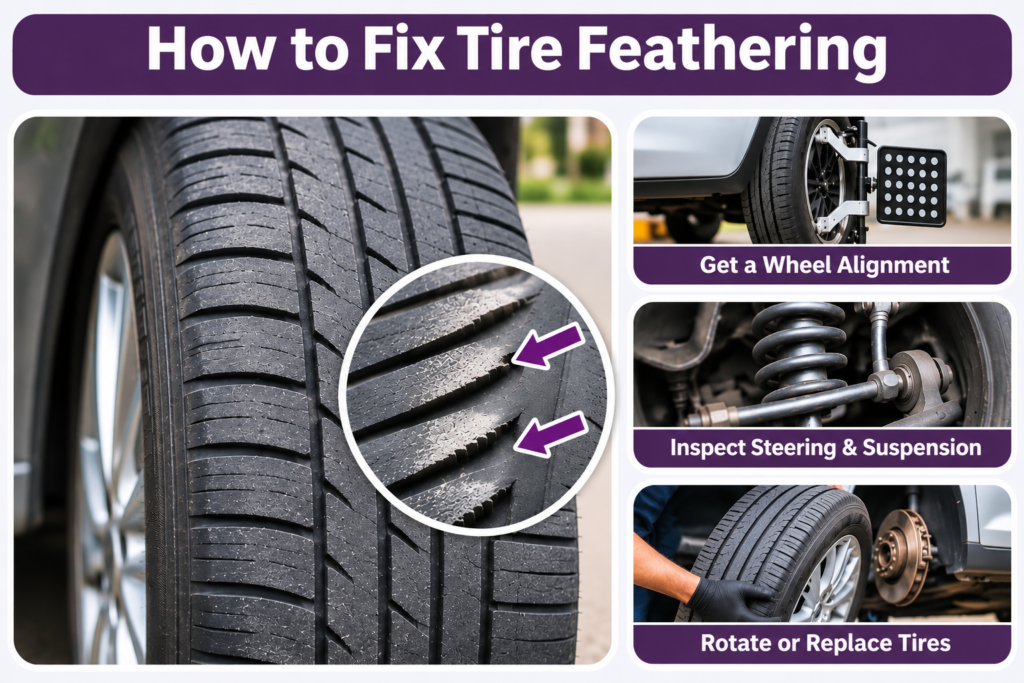
Fixing tire feathering requires correcting the underlying mechanical problem. Although existing tread damage cannot be instantly reversed, appropriate repairs can prevent the pattern from becoming worse.
Get a Professional Wheel Alignment
A professional wheel alignment is usually the first corrective step.
A technician measures the vehicle’s toe, camber, and caster angles and compares them with manufacturer specifications.
Correcting excessive toe reduces sideways tire scrubbing and helps prevent continued feathering.
Inspect Steering and Suspension Parts
Before completing an alignment, inspect tie rods, control arm bushings, ball joints, and other relevant components.
If these parts are worn, they may need replacement before accurate alignment adjustments are possible.
A complete mechanical inspection is especially important when feathering returns shortly after an alignment.
Rotate or Replace Damaged Tires
Tire rotation may help distribute future wear after the mechanical problem has been corrected, provided the tires remain serviceable.
However, heavily feathered tires may continue producing road noise because the uneven rubber has already worn away.
Replace tires with insufficient tread depth, exposed cords, structural damage, or other unsafe conditions. In the United States, 2/32 inch is a commonly used minimum tread-depth threshold, although applicable regulations and conditions vary.
A tire technician can determine whether continued use is appropriate.
How to Prevent Tire Feathering
Preventing tire feathering is generally less expensive than replacing prematurely worn tires. Regular maintenance helps maintain proper wheel alignment and reduces irregular tread wear.
Follow these preventive practices:
- Check wheel alignment: Inspect alignment when uneven wear or steering problems develop.
- Rotate tires regularly: Follow the manufacturer-recommended rotation schedule.
- Maintain tire pressure: Check cold tire pressure at least monthly.
- Inspect suspension components: Repair worn bushings, tie rods, and joints promptly.
- Avoid severe impacts: Reduce speed around potholes and road hazards when safe.
- Monitor tread wear: Check tire surfaces for sharp edges and abnormal wear patterns.
These habits help improve tire longevity and maintain predictable vehicle handling.
Frequently Asked Questions
Can Tire Feathering Be Fixed?
The underlying cause of tire feathering can usually be corrected through wheel alignment or mechanical repairs. However, the existing uneven tread wear cannot be restored. Mildly feathered tires may remain usable after inspection, while severely damaged tires may require replacement.
Is Tire Feathering Dangerous?
Tire feathering is not automatically dangerous, but it signals abnormal wear that requires attention. Severe tread damage, reduced tread depth, or an underlying steering problem can affect vehicle safety. Have the tires and alignment inspected when feathering develops.
Does Tire Feathering Cause Vibration?
Feathered tires can sometimes contribute to vibration or increased road noise, especially when wear becomes severe. However, noticeable vibration can also result from wheel imbalance, damaged tires, or suspension problems. A professional inspection can identify the actual cause.
Can Bad Shocks Cause Tire Feathering?
Worn shock absorbers are more commonly associated with tire cupping or scalloping than classic feathering. However, suspension problems can contribute to irregular wear. Because feathering is strongly associated with toe misalignment, wheel alignment and steering components should also be inspected.
Should You Replace Feathered Tires?
Not every feathered tire requires immediate replacement. If the wear is mild, tread depth remains sufficient, and the tire has no structural damage, continued use may be possible after repairs. Severely worn or unsafe tires should be replaced following a professional inspection.